



Abstract
Janice McCabe interviews Elijah Anderson.
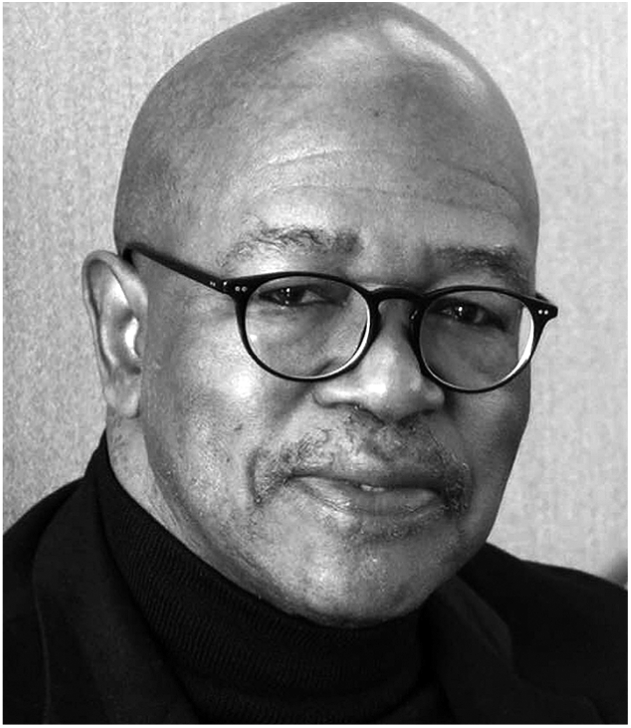
Forty years after publishing A Place on the Corner, Elijah Anderson was awarded the 2018 W.E.B. Du Bois Career of Distinguished Scholarship Award from the American Sociological Association. Whether in corner bars in segregated Chicago or Reading Terminal in Philadelphia, Anderson interrogates public space in a way that, with his sociological revelations, sets him apart from other scholars. I sat down to talk with him over breakfast during his visit to Dartmouth College. Anderson is Sterling Professor of Sociology and African American Studies at Yale University.
Elijah Anderson
Courtesy Elijah Anderson
The Corner
One thing you can see in A Place on the Corner is this long sociological question about social structure and agency. What do you say about the role that individuals have in coping with poverty versus the structure that’s causing the actions?
What you get in the book, ultimately, is not just a simple expository statement about the Black men I studied on that Chicago street corner so many years ago. You also get a sense of how they see and understand themselves in the larger social world. You get a sense of their social organization and how they come together on the street corner to make and remake their local stratification system in everyday life, how they express this status order in face-to-face social interaction.
The book, which was my dissertation, foreshadowed and shaped my whole career. It provided me with a sense of the sociological question that has persisted in my work to this day—aspects and concerns that appear in my later work, including Streetwise, Code of the Street, and The Cosmopolitan Canopy. That early work inspired me to create this body of sociological work on the city. A Place on the Corner was the germ, and the rest might be thought of as the germination of my work.
The Cosmopolitan Canopy
Has this recent work—The Cosmopolitan Canopy and your work on White space and Black space—been received differently than your earlier work?
[It] is a timely work that speaks to the ways that Americans live race today. The city today might be conceived as comprising “Black space,” “White space,” and racially mixed space. These public spaces are naturally in flux, changing from White to Black, Black to White—what one person might perceive as White space might seem to others as racially mixed or even as cosmopolitan space. But one thing is plain: White people tend to avoid Black space, while Black people are required to navigate White space as a condition of their existence.
In Philadelphia, “the cosmopolitan canopy” is this island of racial civility, until it is not—until the inherent fault lines (racial, but also ethnic, gender, sexual preference) erupt and disturb the “canopy’s” local order. It is typically located in the sea of racial segregation. People often think that Black people and White people are always adversarial, but this is not always the case. There is often a lot more surface civility between Blacks and Whites than many are willing to acknowledge. Tensions do occur, but especially when White people perceive Black people to be “out of their place.” This is when the most ethnocentric or racist people draw the color line and remind the Black interlopers of “their place,” as that person sees it.
Most people, in their approach to civil society, behave with a certain surface civility. As Erving Goffman used to say, they employ an element of “social gloss”—being polite, or politically correct to help smooth their way. Afterwards, they may retreat to their segregated enclaves, where they may find a certain comfortability.
Philadelphia is the ninth-most-segregated city in this country, and yet places like Rittenhouse Square and the Reading Terminal Market are excellent examples of “the cosmopolitan canopy.” However, the infamous Starbucks incident occurred in the Rittenhouse Square neighborhood. When the barista denied the two Black men the use of the restroom, they experienced what many Black people refer to as the “N-word moment,” a moment of acute and racialized disrespect. The barista effectively drew the color line, telling and reminding those men that they did not belong, contrary to what they might have assumed about the Starbucks. This is just one of… a recent spate of reports of White people calling the police on Black people. In today’s urban America, the canopy may be “canopy-like” until it is not, when an ethnocentric or bigoted White person draws the color line. When this happens, the space is revealed to be not so much a “canopy,” but as an exclusive White space.
There are times when people get along and times they don’t, even within the canopy.
So much of today’s civil society is effectively “White space,” and many Black people perceive it this way. For, awaiting Black people there is always the possibility of the “N-word moment.” To “live while Black” is to experience these moments constantly. Black people most often endure and tolerate the small incidents, which can be annoying. The big incidents are more serious, and can be lethal, resulting in the death of a Black person.
The Iconic Ghetto
I was struck by the article you wrote in Vox. You gave an example where Trump, in his answer to a question on the campaign trail, assumed all Black people are from places with very high unemployment rates and disorder—the iconic ghetto.
Slavery established the Black body, especially in the minds of the White population, at the bottom of America’s racial order. When Black people migrated to cities of the North and South, they were contained in what came to be ghettos. White people historically became socially invested in the lowly place of Black people and conflated the ghetto with that place, and this positionality has been passed on from racist generation to racist generation. Hence, the Black ghetto, as an institution, reinforced what slavery established.
Today, in the minds of many White people, to be Black is to be lowly, and because of this “master status,” as Everett C. Hughes wrote many years ago, Black people, compared to their White counterparts, typically navigate the White space with a deficit of credibility. One of the interesting sociological questions is: How do Black people manage themselves in this space? How do Black students, professors and other professionals deal with this conundrum of being an American citizen and being Black at the same time.
To navigate “White space,” a Black person is encouraged to disabuse White people of their negative stereotypes of Black people. And for this, a performance, or what some Black people derisively call a “dance,” is often required. One way Black people perform is by placing a high premium on propriety, or the act of “being proper” or being correct. If you’re effective, you [can] disabuse Whites of their negative stereotypes. But this is constant work. After a day, the Black person is typically spent. For when s/he finishes with a formally ignorant person, here comes another such person to be edified. As I indicated in The Cosmopolitan Canopy, the Black person is often left with a provisional status, or “something more to prove.”
Living while Black is essentially to carry this burden—breathing while Black, driving while Black, walking while Black, being a student while Black, or being a professor while Black. This is one of the most complex and urgent issues facing American society today.