



Abstract
Skewing polls, fumbling Title V funding, and fathering in the age of mass incarceration: New research from the journals.
Who Participates in Online Political Polls?
After the results of the 2016 presidential election were announced, many big-data political prediction organizations and news sites were left scratching their heads. Their online polling had heavily favored a different outcome in the presidential election. Social scientists Eszter Hargittai and Gokce Karaoglu suggest in research recently published in Socius that the results should not have been so surprising, given the known biases associated with online political polls.
According to Hargittai and Karaoglu, certain groups are more likely than others to take online political polls. Investigating a national online survey of U.S. adults 18 years and older during the summer of 2016, they note that the average respondent was about 50 years old with an annual income over $70,000. Older respondents, males, and Whites were significantly more likely to take an online poll than their younger, female, non-White counterparts. Moreover, when controlling for other factors, the authors found that women, Asian Americans, African Americans, and those with less than a high school education were among the least likely respondents in online political polls.
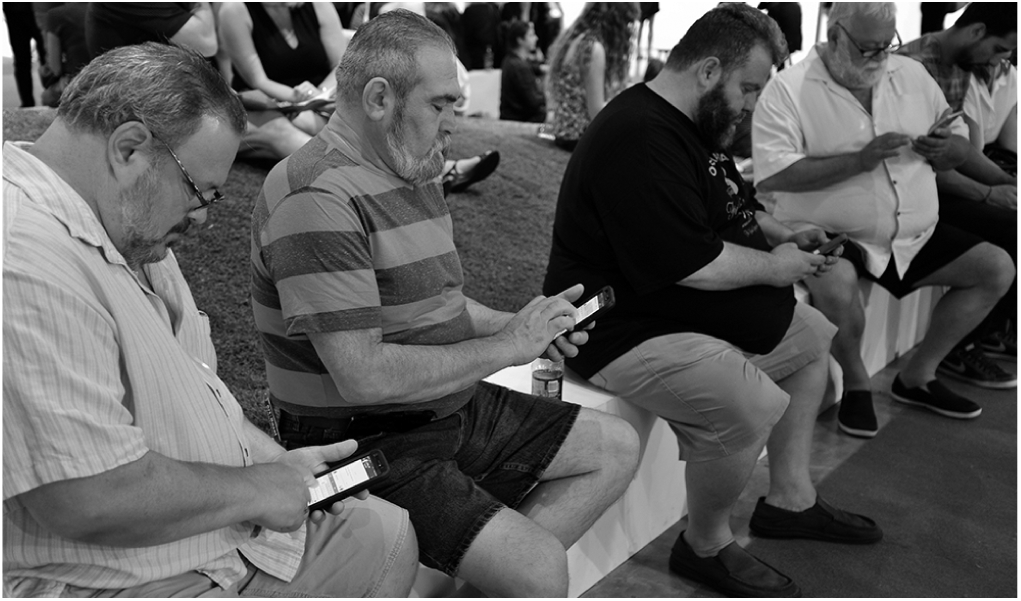
Older White men are swaying the results of online political polls.
Emilio Labrador, Flickr CC
The results are in: We can’t put much trust in the accuracy of election projections based on online survey data.
The Whiter the University
Hispanic Serving Institutions (HSI)—those not-for-profit colleges and universities with undergraduate student enrollment that is at least 25% Hispanic/Latinx—are eligible to apply for federal Title V grants. But as the number of HSIs increased from 104 in 1992 to 492 and counting today, the number of available Title V grants has failed to keep pace. In Socius, Nicholas Vargas considers which HSIs are most likely to be awarded these increasingly competitive grants.
Using 2011-2015 data from the National Center for Education Statistics, Vargas analyzed 377 HSIs to see which received Title V grants and noted that only the racial makeup of their student bodies and the number of years each had been designated an HSI seemed tied to the likelihood of receiving a grant. An institution that was designated an HSI in 1992 has 115% higher odds of receiving a Title V grant than an institution designated an HSI in 2015. Yet, paradoxically, the larger its non-Hispanic White population, the more likely an HSI is to get Title V funding. An HSI with a 60% White student body has 100% higher odds of receiving funding than one with only a 10% White student body. HSIs with a larger Black student body are disadvantaged in the competition for Title V funding, too.
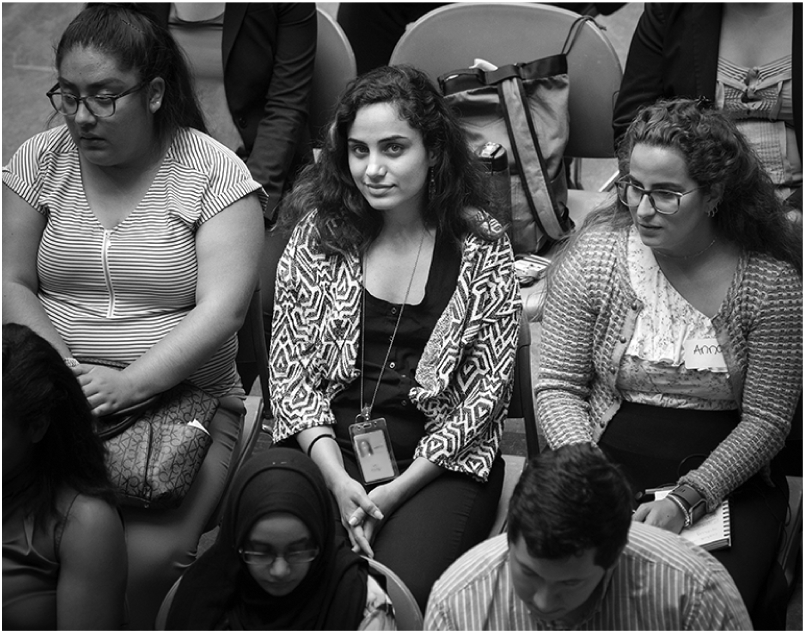
HSI students serve as summer interns with the USDA.
US Department of Agriculture
Latinx leaders have advocated for HSI classification and Title V grants with the goal of alleviating inequalities over time through targeted financial support of institutions that serve Latinx students. Instead, HSIs whose student bodies are proximal to Whiteness and distant to Blackness are rewarded, leading even the Title V program to mirror unequal patterns of resource distribution colored by systemic racism.
Dreams Deferred
The Deferred Action for Childhood Arrivals (DACA) program was created by President Barack Obama in response to the failure of Congress to pass the DREAM Act, intended to protect undocumented people who were brought to the United States as children. DACA’s beneficiaries are colloquially known as the Dreamers, and the program was designed to help Dreamers work and go to school in the United States. Its authors fear, however, that its legacy will be marred by unintended consequences. In Demography, Amy Hsin and Francesca Ortega examine how DACA’s implementation has shaped Dreamers’ educational outcomes.
Finances figure into the barriers undocumented youth face in accessing and completing college degrees. Undocumented students, often first-generation college students, are not eligible for federal financial aid, may be expected to contribute to household income, and face uncertain returns from their education because after college, they may not be able to legally work in the United States. DACA allows Dreamers to apply for two-year work permits and provides protection from deportation, but is the program compatible with full-time education? The authors analyzed administrative data from a large university system that grants in-state status to undocumented immigrants who can verify their residency status. Unlike most datasets, this one allowed the authors to differentiate between undocumented and documented immigrant students.
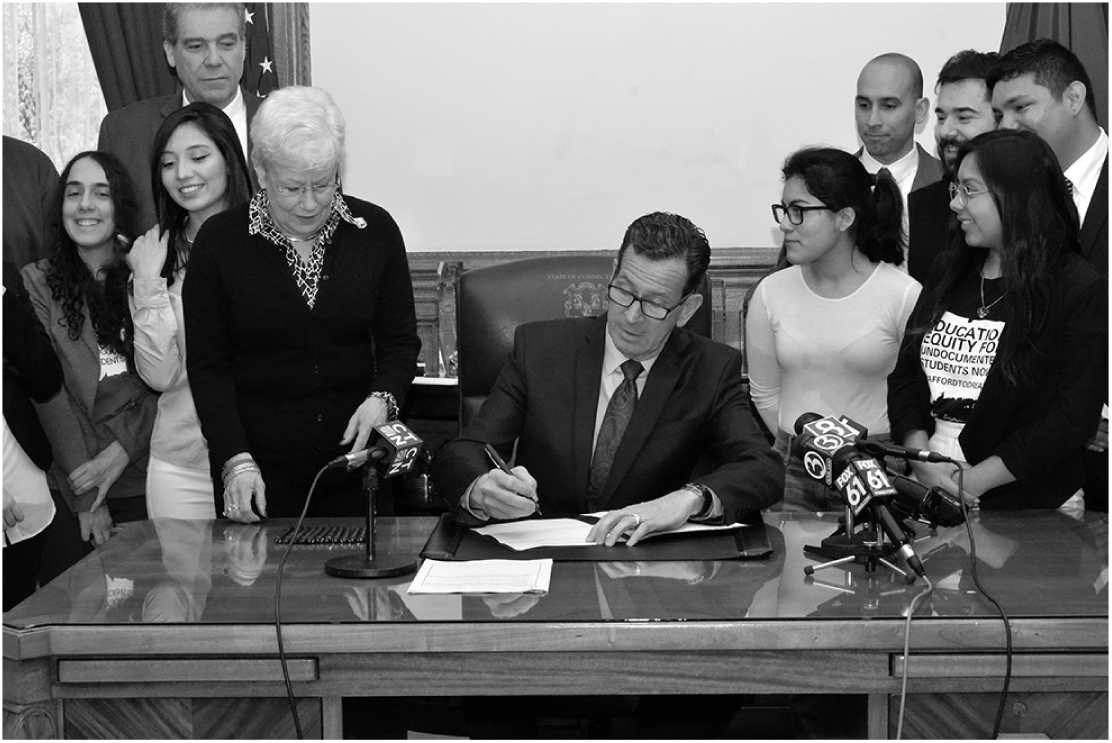
The governor of Connecticut signs a 2018 bill allowing Dreamers to qualify for state financial aid.
Dannel P. Malloy, Flickr CC
Hsin and Ortega found that after DACA was enacted, there was a significant increase in undocumented, full-time, four-year college attendees’ dropout rates. At community colleges, undocumented students’ full-time standing decreased, but dropout rates remained the same. These findings underpin the authors’ claim that DACA incentivizes work over opportunities to increase human capital—in other words, DACA may be forcing students to choose between full-time school and work. While students can still obtain degrees by going to school part-time, neither choice fulfills the dream.
Understanding Corruption in Vietnam
Amy Wardlaw, Flickr CC
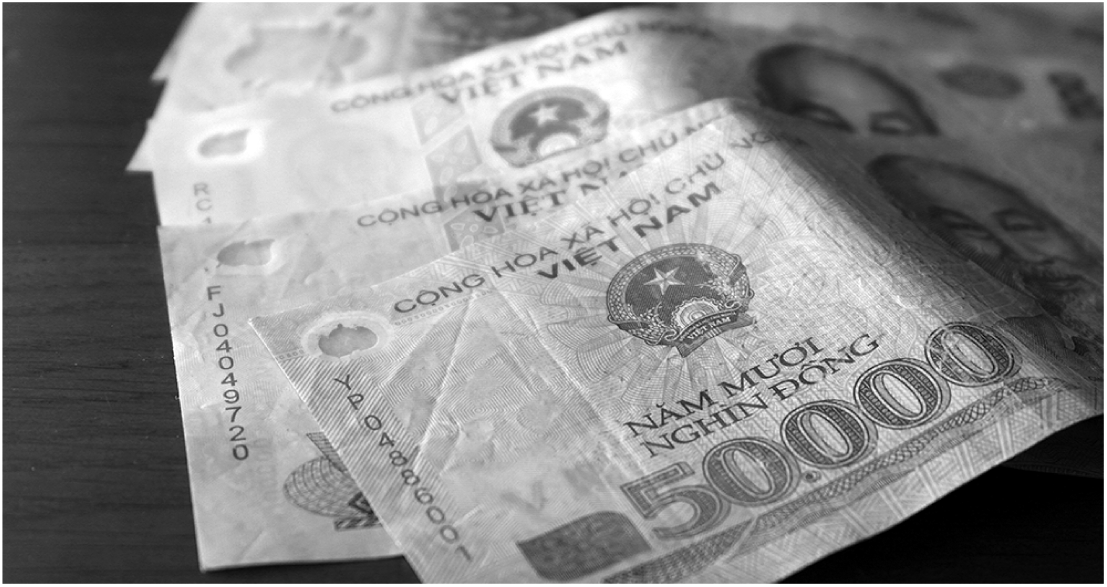
How do investors enter and navigate corrupt and ambiguous real estate markets? In the American Sociological Review, Kimberly Kay Hoang looks to Vietnam. The country’s rapidly growing, emerging economy is characterized by weak formal institutions, limited information access, corruption, distrust, and state-controlled land.
Based on 100 interviews with local, regional, and global investors in Vietnam’s real estate market, Hoang finds that investors from different regions experience differential access to government officials. To overcome these limits, investors try to either forge relationships or create boundaries between themselves and political elites. Investors in Vietnam know that bribes are both illegal and necessary to get business moving, but how they navigate this cost-of-doing-business differs based on the regulations in their own countries, social ties, cultural matching, and stage of investment.
Corrupt systems can be navigated through strategies such as gift-giving, brokerage, and bundling. Local investors, who share a common language and culture with political elites, use gift-giving to create personal connections to gain information, while aiming to avoid accusations of bribery because of the extremely personal nature of the gifts. Regional investors face language and cultural barriers when trying to forge relationships with local elites. They most often engage in third-party brokerage in order to gain access to crucial information. To manage their ties with local elites, regional investors use gift-giving and partake in “bundling,” by which they hire local elites’ children to gain information and favors and ensure that both parties will be implicated if their business dealings fail. Global investors are constrained by their countries’ relatively stricter anti-corruption laws and avoid gift-giving and bundling practices. Instead, global investors use brokerage by hiring third parties to buffer risk and enter the market at the later phases, after most of the risk has already been taken.
By highlighting the complex ways in which investors participate in a corrupt system without technically engaging in corrupt practices, Hoang adds complexity to the simple narrative of corruption in Vietnam’s real estate market.
Fathering in the Age of Mass Incarceration
U.S. parents’ child support debt ballooned from $11.3 billion in 1987 to $115 billion in 2017. And as federal involvement in child support increased, new enforcement tools were implemented, such as mandatory payback for families receiving public benefits. At the same time, some 2.2 million people are confined in prisons and jails across the country. In the American Journal of Sociology, Lynne Haney examines the intersection of these systems, or what she calls “incarcerated fatherhood.” Combined, she argues, these laws, policies, and institutional practices shape low-income fathers’ parenting styles.
Haney analyzes national child support policies, conducts court observations, and interviews incarcerated men to look at how child support debt and punishment operate in a cycle: the “debt of imprisonment” and “the imprisonment of debt.” Incarcerated men accumulate child support-related debt while they are locked up and are subsequently punished for not being able to pay. Haney then looks at how child support debt affects these men’s parenting styles. Roughly 20% of the men in the study were able to fulfill strict child support regulations and be actively involved in their children’s lives, while 10% of the men were not committed to being involved in their children’s lives and did not pay support. The remaining 70% of fathers landed somewhere in between: simply broke and wanting to change their situations, but unable to because of crushing debt and imprisonment.
High levels of imprisonment obviously inhibit fathers’ involvement with their children, and punishment related to non-payment of child support—via enforcement tools meant to ensure fathers’ involvement rather than curtail it—frequently exacerbates the problem. In the meantime, the men in Haney’s study seek dignity and a revision of what it means to be a “good father,” so that state institutions stop seeing them as failed fathers, labor market rejects, and broken work machines. Like the fathers interviewed in Jennifer Randles’ Contexts feature (Spring 2018), Haney’s respondents want to be freed from institutionally mandated parenting ideals that reduce fatherhood to breadwinning.
The men in Haney’s study seek dignity and a revision of what it means to be a “good father” to their children.
Georgie Pauwels, Flickr CC

Gendered Impacts of Social Support
Does social support benefit the self-rated health of men and women differently? In the Journal of Health and Social Behavior, Katharine Donato and colleagues study this question by using data from 3,000 hospitalized heart disease patients. They break their research into two main questions. First, does the frequency of contact with non-marital family members, friends, and neighbors influence the self-rated health of men and women with heart disease differently? Second, does gender influence the effect of social support in the same way at early and later stages of disease progression?
Donato and colleagues find that women report greater improvement in health than men when they have increased contact with non-marital family members, whereas men do not report changes in health as family contact increases. However, only when the heart disease is newly diagnosed does being a woman increase the effect of having more contact with non-marital family members. Among patients with pre-existing diagnoses, more frequent contact with friends and neighbors is associated positively with self-rated health, but this effect is not related to gender.
Previous studies’ inconsistent findings about gender differences in the benefits of social support for health may, the authors conclude, owe to researchers’ oversight regarding the timing of diagnosis as well as unobserved differences in the types of support offered by family, friends, and others.
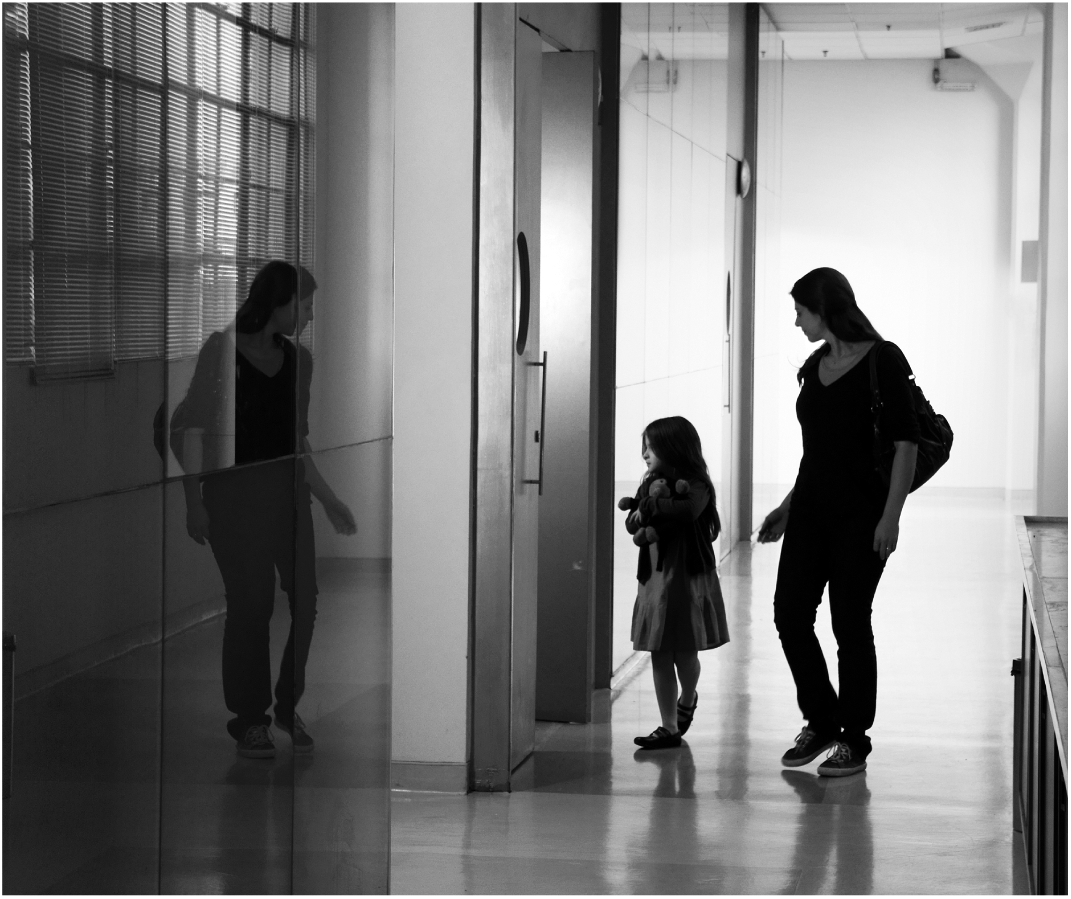
Visiting hours.
Carlos Ebert, Flickr CC
Inmates, Social Networks, and Health
Past research has found that being highly integrated with others has health benefits; little is known about whether this remains true in prison settings. In the Journal of Health and Social Behavior, Dana L. Haynie and colleagues approach the question, arguing that the health effects of integration work differently in prisons. The authors note that prisons bring together people who have a history of poor health and provide few opportunities to access health resources once they are inside. Additionally, prisons exert extreme control over their populations. When these factors coincide, they may take away from the positive effects that social integration has on the health of those outside prison walls.
The authors use survey data collected from inmates in a medium-security Pennsylvania men’s prison to draw conclusions about the effects of social networks on inmate health. Health outcomes were measured by whether the prisoner smoked, was depressed, exercised daily, was perceived as muscular, and reported that their overall health had improved while in prison. Those prisoners with the highest measures of health—who rarely smoked, exercised daily, had greater muscularity, and self-reported overall better health—were the most integrated. In fact, the healthiest group in this prison were Black men who practiced Islam and exercised daily. This finding suggests that organizing around a shared identity and group norms regarding health behaviors are important contributors to positive health outcomes, even in prisons.
Urban Upkeep
Does living in a city change how heterosexual married men and women divide up chores? In Gender & Society, Natasha Quadlin and Long Doan investigate whether location affects the gendered division of household labor.
American society has long stereotyped certain household tasks as “female-typed chores,” such as cooking, laundry, dishes, grocery shopping, and cleaning, and others as “male-typed chores,” like automobile maintenance, repairs, and outdoor work. Quadlin and Doan explain that because people living in urban areas typically have less outdoor space and fewer vehicles than people in rural and suburban areas, these male-typed chores hold less relevance for city-dwellers. So does this mean married urban men take on more female-typed chores to balance housework duties with their female spouses? In a word: no.
Using data from time diaries, the researchers found that heterosexual married men in urban areas did spend fewer minutes per day on male-typed chores compared to men in rural and suburban areas, but they spent roughly the same amount of time per day—a little over 30 minutes—on female-typed chores. By contrast, women across rural, suburban, and urban areas spent significantly more time on female-typed chores: over 100 minutes per day on average (with a dip among the highest-income women).
The bottom line? Married women’s zip code doesn’t lighten their workload.
Zip codes don’t lighten women’s workloads.
Anne Worner, Flickr CC

In Public Office, Out of the Public Eye
The 2018 election cycle was hailed as “the year of the woman,” as record numbers of women candidates ran for office. These women defied political norms and many got considerable time in the spotlight. After the polls closed, however, even those women who won saw news cameras turned the other way. In Socius, Morgan Johnstonbaugh explores why women’s media underrepresentation continues, despite their increasing presence in politics.
Because journalists rely on political dialogue to gauge what is newsworthy, Johnstonbaugh suggests, gendered expectations that dissuade women from engaging in the same ways as men may translate into less airtime for women lawmakers. Traits that make men more appealing as politicians and leaders, such as talking often, aggressively, or passionately, negatively impact perceptions of women as politicians and leaders. To measure the relationship between engagement in political dialogue and news coverage, John-stonbaugh conducted a content analysis of tweets and press releases from members of the U.S. House of Representatives, as well as newspaper articles and TV news transcripts about the 2015 bills on the Iran Deal and Planned Parenthood. The media underrepresentation of women politicians mirrored their underrepresentation in the House on both issues, despite men and women representatives’ roughly equivalent rates of tweets and press releases. Holding about 19% of House seats, women got about 17.4% of TV mentions and 22.5% of newspaper mentions.
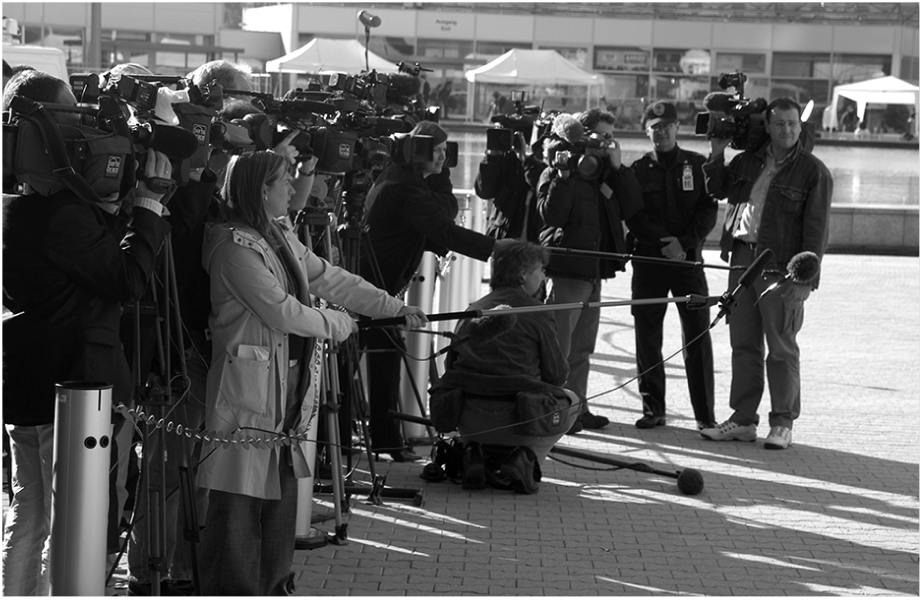
When media cameras point to power, it reinforces the status quo.
Dean Calma/IAEA, Flickr CC
Johnstonbaugh notes that, while women’s media representation appears proportional to their share of seats, the reality of politics is that seniority and committee memberships translate to power. This puts women, who have generally held office for shorter periods and are often assigned to less prominent committees, at a disadvantage in terms of both legislating power and media representation. Dismantling the barriers that have prevented women from higher status positions within politics will increase both.
Christian Nationalism, Race, and Policing
The era leading up to and during the Trump presidency has included intense conflict and dialogue surrounding issues of police brutality. In their new article in Sociology of Race & Ethnicity, Samuel Perry, Andrew Whitehead, and Joshua Davis investigate what factors influence perceptions about Blacks’ mistreatment (or lack thereof) by police. They specifically focus on the role of Christian nationalism.
Christian nationalism aligns America with an evangelical Christian God. People who adhere to this ideology are likely to draw rigid and prejudicial boundaries between White and racial minority groups. These may be the result of generalized views of minorities as threatening, violent, or criminal. This perceived threat then corresponds to support for punitive punishment, perceptions that police treat Blacks and Whites equally, and beliefs that abusive policing of minorities is a result of those minorities’ supposed propensity for violent and criminal behavior.
Christian nationalism is tied to perceptions that minorities are threatening, violent, or criminal.
Ellen Godfrey, Flickr CC

The authors use a nationally representative survey of American adults containing measures of Christian nationalism, attitudes toward police treatment of Black Americans, and personal characteristics. They carefully differentiate “White evangelical” identity from Christian nationalism to ensure that the latter is not a proxy for White evangelical conservatism. Their findings show that respondents’ higher levels of Christian nationalism corresponded to greater agreement both that police treat Black and White people the same and that police shoot Blacks more often because they are more violent than Whites. Two of their highlighted findings include the fact that those who reported higher religious activity were less likely to agree with both statements and that Christian nationalism is a significant predictor of these views regardless of the respondent’s racial/ethnic background. This paper underscores the importance of differentiating Christian nationalism from other religious identities in studies of their effects on racial views.