



Abstract
The election on Mee Moua, the first U.S. Hmong legislator, illustrations the transformation of ethnic capital into resistance capital.
Mee Moua
Publicity photo by Andrew Seng
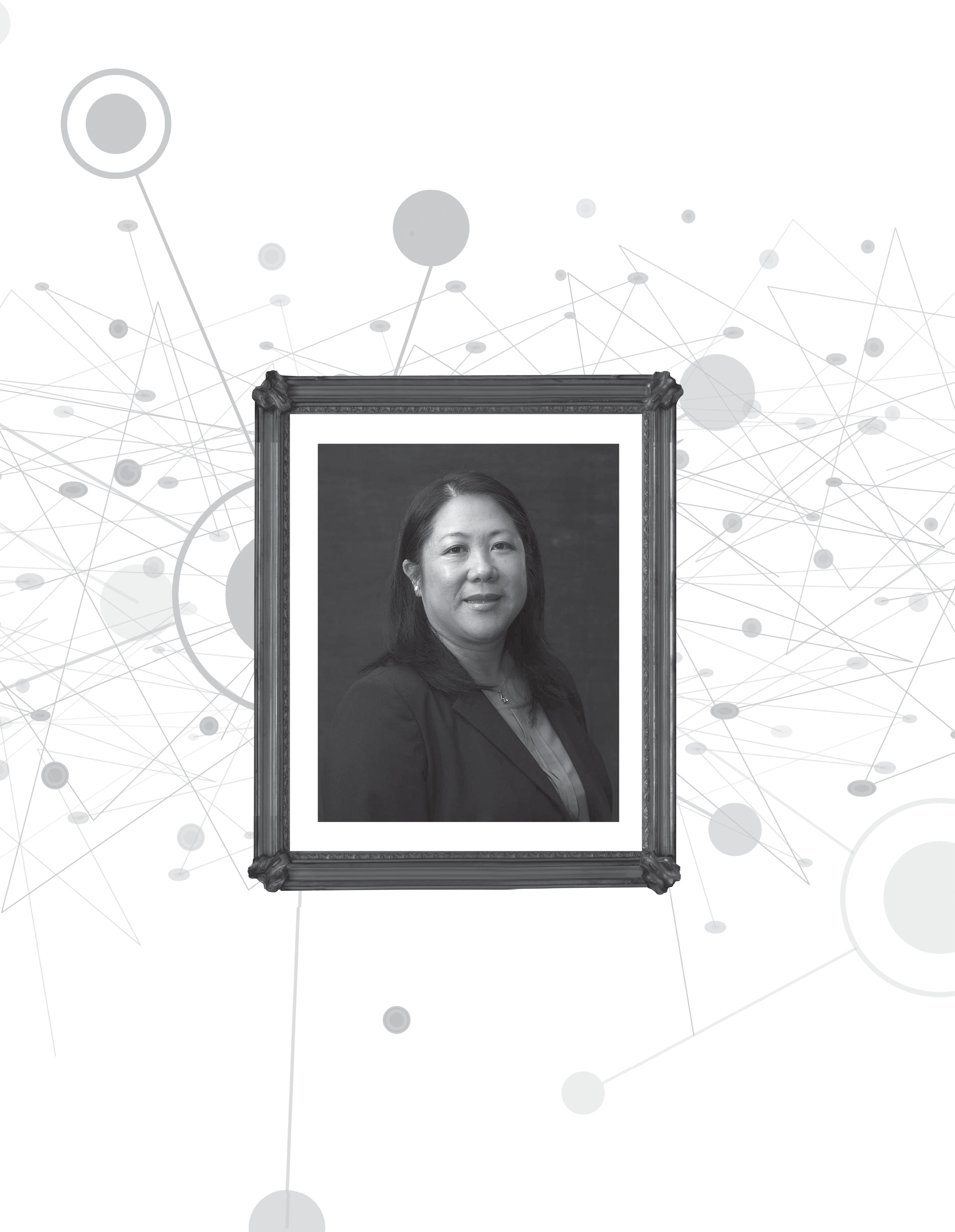
In January 2002, Mee Moua made history: she was the first Asian American woman elected to the Minnesota Legislature, the first Southeast Asian American elected to any state legislature, and the first elected state senator of Hmong descent. How was this electoral victory possible for a member of a political refugee community that had experienced decades of concentrated poverty and racial segregation and comprised only 5% of Ramsey County and less than 1% of Minnesota’s population?
Prior to their international migration to the U.S., the Hmong of Laos experienced six decades of intermittent war (anti-French colonial war, First Indochina war, Second Indochina war), decades of forced displacements, and decades living as impoverished refugees. It was not until the spring of 1976 that the first major group of Hmong political refugees from Laos miraculously made their way to the United States—miraculous because, in 1975, the United States had no plans to ever admit Hmong refugees, even though the United States had used them as their primary covert fighters throughout the 15-year Secret War in Laos. According to some U.S. officials, Hmong were “too primitive” to assimilate in America, let alone hold office as its elected leaders.
Hmong refugees who migrated to the United States in the late-1970s and early ‘80s encountered serious challenges, including the complete absence of existing co-ethnic communities, a bifurcated job market undergoing an economic recession, and apprehensive reception by state governments and local residents. The inability of many Hmong refugees to obtain jobs that might adequately support their families exacerbated their dire economic situations. On top of concentrated poverty, Hmong refugees experienced new racial traumas, including physical violence and xenophobia in their contexts of resettlement. Throughout the 1990s and 2000s, Hmong Americans were more likely to live in inner cities than in suburbs and, within some U.S. metropolitan areas, they were just as racially segregated, if not more segregated than Blacks. Currently, Hmong Americans comprise no more than 2% of the Asian American population. These conditions might lead us to assume that electoral politics is out of reach for Hmong former refugees and their children. Nevertheless, sometimes communities with little political power can organize people and resources to increase their political representation. I argue that Hmong Americans’ electoral success, so well demonstrated by Senator Mee Moua, has had much to do with Hmong American candidates’ ability to form insurgent political networks that can mobilize politically relevant resources within and outside of their ethnic communities.
Research by political scientists and sociologists tells us that resources, such as money, time, and civil skills, matter for people’s ability to participate in politics. However, resources are not equally distributed across groups. To understand how racially marginalized, economically disadvantaged communities may be able to engage in politics (including electoral politics), it is important to understand how they amass and use ethnic capital. Scholars Min Zhou and Mingang Lin define ethnic capital as the set of financial, human, and social capital that can emerge from within ethnic immigrant communities. Financial capital refers to tangible resources such as money and assets; human capital refers to skills such as English proficiency, job skills, and education skills or credentials; and social capital refers to the resourceful connections created when people become members of closed groups or social networks, and it can be called upon when members need to achieve a goal. Zhou and Lin suggest that an ethnic group, in response to discrimination and exclusion from the mainstream society, can mobilize ethnic capital to counter the negative effects of their adverse socioeconomic conditions. Although Zhou and Lin use this notion to understand immigrants’ agency in response to economic conditions, ethnic capital can also be useful in political situations, under the right circumstances.
To be useful in politics, ethnic capital needs to be transformed into resistance capital. Insurgent political networks mobilize around improving marginalized groups’ social conditions and political opportunities.
To be useful in politics, ethnic capital needs to be transformed into resistance capital. Aldon Morris’s concepts of liberation capital and insurgent intellectual networks are useful not only for understanding how marginalized Blacks such as W. E. B. Du Bois were able to create and sustain the first American school of sociology in the face of entrenched systems of racial and economic oppression, but also for understanding more broadly how economically and racially oppressed groups can mobilize ethnic capital specifically toward political ends. Morris conceives of liberation capital as intellectual capital produced by oppressed professionals and their assistants in insurgent intellectual networks (networks that have been excluded from elite intellectual networks). Liberation capital refers to the intellectual weapons of liberation such as programmatic innovations derived from the voluntary work of professional and amateur researchers who design research methods, gather data, and produce theoretical insights about the conditions of their oppressed group. In the context of U.S. politics, ethnic minority candidates are often excluded from elite political networks.
In response to their own exclusion and the exclusion of their communities, ethnic candidates may recruit other ethnic professionals to form insurgent political networks—politically self-conscious groups of people willing to receive further political training and work together, without pay, to challenge political marginalization. The core members of insurgent political networks, in turn, provide the necessary intellectual labor and political skills to train other volunteers to engage in a concerted effort to mobilize ethnic capital for political purposes within their marginalized communities. In political campaigns, mobilization often entails marshalling politically relevant resources such as potential voters, money, and endorsements that a candidate needs to win political office. However, members of insurgent political networks care not simply about winning offices, but also improving the social conditions and political opportunities of oppressed groups.
Mee Moua’s political campaign and election provides us an opportunity to examine how an ethnic minority candidate, in response to political marginalization, formed an insurgent political network to mobilize capital both within and outside of the Hmong American community to produce a specific political outcome.
The Campaign
In 2002, Mee Moua was campaigning to represent District 67 (St. Paul, MN)—a district with a population of 73,176 comprising 61% non-Hispanic White, 39% minority (16% Asian, 12% Black, 9% Hispanic, 2% American Indian), and 2% other. Hmong made up the vast majority of the Asians in District 67. However, among the 11,000-plus Hmong in District 67, only some 500 were registered voters. Moua’s opponents were Republican Greg Copeland, a former county commissioner, Independent Jack Tomczak, and Green Party candidate Jeff Davis. Her campaign’s success was owed, in large part, to her ability to recruit and form an insurgent political network out of political indifference and indirect exclusion.
Moua’s campaign manager, Pakou Hang, recalls, “When Mee Moua called all her friends active in Minnesotan politics to join her campaign team, no one returned her phone calls. …Without anyone willing to help, Moua called in her 70-plus first cousins.” According to Hang, Moua organized a campaign team of young Hmong professionals, many of whom held leadership positions at their jobs and sat on statewide and national boards. Moua’s core campaign team included Louansee Moua (communications director), Tou Ger Xiong (field organizer), ThaoMee Xiong (communications director), Hang, and others. Moua and her husband, Yee Chang, who served as a senior advisor and field organizer, both had more political experiences than their recruits, and they personally trained members of the core group on their roles and duties. Together, then, the campaign’s core team trained volunteers to help educate Hmong Americans and other marginalized people about the specifics of the voting process, about Moua, and about her goals to address key issues in Minnesota. In this way, Moua formed an insurgent political network that initiated, sustained, and advanced her campaign.
The role of educated, bilingual, politically conscious professionals in Moua’s political network is worth noting. It is members of this segment who were born in Laos or in the refugee camps of Thailand but grew up in the United States (often referred to as the 1.5 generation) who, as Hang recognized, best understood the issues of Hmong elders and possessed the vocabulary “to express and respond to the unjust power dynamics they live under.” Many, if not most, Hmong grew up in poverty and had witnessed racism. Some had witnessed or participated in protest movements against racist incidents. In fact, some members of Moua’s insurgent political network were Hmong American activists in Minnesota who formed the social movement organization, Community Action Against Racism (CAAR) after local radio station KQRS aired racist remarks about Hmong culture and a Hmong young woman who stood accused of killing her newborn son. Tou Ger Xiong, a member of CAAR, was a core member of Moua’s campaign team, and Va-Megn Thoj, who founded the organization, volunteered in her campaign. During its protest against KQRS, CAAR engaged in a sustained campaign that persuaded over half a dozen corporate sponsors to pull ads from KQRS and eventually compelled the stubborn station to issue a public apology, abolish a racist character from its show, publish a nondiscriminatory policy, and agree to air a segment about Hmong history and Hmong contributions to the U.S. during the Vietnam War.
The fact that many of the young professionals who were supporting Moua’s campaign were her first cousins is remarkable, but perhaps not surprising. After all, kinship ties play important social and cultural roles in Hmong American society. Hmong persons, families, and lineages who are related to each other through kinship are expected to maintain good relations and come to each other’s aid. The large families of the older, traditional Hmong gave each person more first cousins. And first cousins are especially expected to cultivate relations of trust and reciprocity. Moua’s campaign suggests that kinship networks can play a vital role in organizing political action. Recent works such as Carolyn Wong’s Voting Together have, in fact, shown that Hmong’s clan structure can facilitate political activities such as voting.
An insurgent political network with strong leadership is especially important in electoral politics. As noted above, Mee Moua and Yee Chang had been organizing leaders for many years and were more politically experienced than most of the professionals who made up their insurgent political network. Moua, for example, was an officer with the St. Paul City Democratic-Farmer-Labor Party and had worked on many local campaigns. Pakou Hang also played a crucial role in training throughout Moua’s campaign. Three years prior to leading Moua’s campaign, Hang had graduated from Yale University with a bachelor’s in political science. By the time she became Moua’s campaign manager, Hang was already the deputy political director of U.S. Senator Paul Wellstone’s 2002 reelection campaign (hired to “build political consciousness in the Hmong community”). Importantly, as Wellstone’s deputy political director, Hang build experience in explaining to ordinary people how the ballot works, what the issues are, and how those issues connect with a specific candidate.
The available evidence suggests that ethnic social capital may have played a more vital role than did ethnic financial capital in Moua’s election.
Community Formation and Ethnic Capital
The available evidence suggests that ethnic social capital may have played a more vital role than did ethnic financial capital in Senator Mee Moua’s election. Although only a small portion (2.7%) of Senator Moua’s total campaign contributions ($46,701) came from individual Hmong contributors, it is clear that Senator Moua’s campaign benefited from the existing networks of self-conscious, young Hmong American professionals and Hmong American volunteers in the Twin Cities.
Moua’s campaign team helped her mobilize over 250 volunteers, including Hmong young people, parents, and older adults. Adults and parents provided transportation for young people who disseminated over 30,000 pieces of literature across St. Paul’s East Side, informing residents about where to vote and what to bring with them to the polls. Adult volunteers also made phone calls and solicited campaign contributions—tasks that young people found difficult—and their concerted efforts proved effective. By the time of Moua’s victory, there were over 5,000 Hmong names in the Minnesota voter file; over 500 of these had come from the Senate District 67 special election. According to Lee Pao Xiong, then-president of the Urban Coalition, “This is the first time that some people actually went to the polls and voted.” While it is not possible to ascertain exactly how many of the 500 Hmong registered voters in Mee Moua’s 67th District voted for her, it is reasonable to assume that many gave her their vote.
Nor did Moua’s insurgent political network exclusively mobilize capital from within the Hmong American community. Yee Chang tells me, “It was just as important to win over disenfranchised White voters as it was to get new immigrant votes from the community.” According to Pakou Hang, “Moua was committed to reaching out to the disenfranchised and marginalized voter and even at one point stated, to the surprise and dismay of her staff, that she did not care if she lost, as long as she was able to bring people out to the polls.” In the end, Moua won by a landslide—51% of the vote. Her major opponent, Republican Greg Copeland, won 29%, while Tomczak and Davis won 18% and 2% of the votes, respectively.
For members of the insurgent political network to work together, they must believe that they share certain experiences and goals. All this work takes passion, sharp intellect, courage, and sacrifice—but liberation requires it.
Moua’s networks of professionals and volunteers did not materialize out of thin air. Rather, they were possible because of the existence of the significant Hmong American community in the Twin Cities and because of the educational and economic opportunities that allowed Hmong individuals to become professionals in the first place. Whereas in the late 1970s, the Twin Cities were home to only a few thousand Hmong, by the early 2000s, at least 40,700 Hmong lived there. In 1990, Hmong Americans’ home ownership rate in the Minneapolis-St. Paul area was only 12.2%, but by 2000, it was 54.3%. Although not all of Moua’s 250 plus volunteers were Hmong Americans, and although it is conceivable that Moua’s campaign team could have recruited a largely non-Hmong volunteer base, it is also quite possible that the election’s outcome might have been very different for Moua had non-Hmong volunteers and voters been her only options. The truth of the matter is, Moua’s core group of Hmong professionals emerged in response to outsider indifference, if not indirect exclusion or hostility, to her campaign. Moua had few options but to turn to members of her ethnic community, including her Hmong American relatives, for intellectual and material support.
Ethnic community formation and ethnic capital constitute necessary conditions for insurgent political networks and their undertaking of collective political actions. The formation of ethnic community and the development of ethnic capital go hand-in-hand, since the successful formation of an ethnic community could give rise to more and higher quality ethnic capital. Sufficient kinds and amounts of ethnic capital could, in turn, be used to further develop existing ethnic institutions or create new ones. However, the presence of developed ethnic institutions and the availability of ethnic capital remain insufficient to build and sustain collective actions, such as the mobilization of a political campaign. For collective action to occur, a community needs networks of people who can mobilize and deploy the forms of capital that are most relevant in politics. Not just any person can effectively mobilize or deploy politically relevant capital. Not just anyone can do the work by themselves. Politically informed, self-conscious groups of people willing to work together, even without pay, for a larger cause are vital in this politically contentious arena. In other words, insurgent political networks are vital to collective political action, but for members of the insurgent political network to work together effectively, they must believe that they share certain experiences (such as exclusion from and marginalization within dominant networks) and certain goals (such as overcoming political marginalization and underrepresentation). All this work takes passion, sharp intellect, courage, and sacrifice—but liberation requires it.
Although Hmong Americans’ progress has often been measured by the economic yardstick, their success in electoral politics offers us a different way of thinking about group progress. Between 1990 and 2018, Americans elected 47 persons of Hmong descent into 56 public offices throughout the United States At the time of this writing, at least six new Hmong American political candidates have won primary elections and are moving on to compete in 2018’s general elections. Currently, 25 Hmong Americans hold public offices in the United States (about half in city council offices). Only two Hmong Americans (Senator Foung Hawj and Representative Fue Lee) hold state legislature positions, both in the state of Minnesota. In 2018, two Hmong Americans campaigned for state legislature positions in California and Wisconsin, but both lost in the primaries.
Hmong American candidates’ chances of winning future political offices will probably depend on their ability to form insurgent political networks that can effectively mobilize politically relevant forms of capital inside as well as outside of ethnic communities. Given the real differences in ethnic groups’ interests, the intense competition between ethnic groups for important decision-making positions and the constraints that racial and class segregation pose to interethnic/interracial coalition building, the professionals and volunteers of Hmong insurgent political networks will probably continue to be drawn primarily from their ethnic communities. Formal organizations that sponsor or organize political trainings for candidates, professionals, and volunteers could help to facilitate electoral mobilization. Given Hmong’s present population size, their racialized identity, and the elaborate practices of social closure in the U.S. political system, Hmong Americans’ ability to achieve greater descriptive representation will depend on their ability to forge lasting coalitions with other ethnic/racial minority groups especially those willing to share political power. The perennial challenge for Asian Americans (and other racial minorities) is achieving substantive representation within key positions and levels of the government and its major bureaucratic agencies. This work will take time, and it will require strategic collaborations especially collaborations between insurgent political networks, ethnic communities, like-minded elected representatives, and relevant social institutions.