




Abstract
Soma Chaudhuri on Indian efforts to stem domestic abuse.
Kumvar, a Hindu wage laborer and single mother of four daughters, lives in rural Gujarat, India. Her husband abandoned the family shortly after the birth of their youngest daughter. He beat Kumvar daily; he blamed her for delivering only daughters. The family wanted to get rid of Kumvar and her children so that the husband could marry again and have a son from the new wife. Her in-laws also pressured Kumvar to hand over her two oldest daughters so they could be sold through a local arranged marriage practice called satta. Kumvar’s brother, who had initially promised to care for these two daughters, is now looking for an opportunity to sell the girls. He wants to use the money to find a good marriage match for his son.
Sugra, a divorced Muslim woman and a mother of two teenaged children, lives a few kilometers from Kumvar’s village. Sugra’s stepmother married her off through satta as the third wife of a much older man. Her husband and his second wife regularly abused Sugra and her young children. They were beaten, starved, and denied medical treatment for the injuries. Sugra was repeatedly raped. When the violence became too much for her to bear, Sugra confided in her brother and father, who helped her find a lawyer. She filed for divorce on the grounds of torture.
Kumvar and Sugra’s stories are not unique in rural and urban India. In my research, I ask: How can women, who are structurally oppressed through both religious and cultural norms favoring men, break free of abuse? Women’s lives are controlled by informal rules of conduct that restrict their access to education, employment, and human rights—the very things most important in creating opportunities for independence. Failure to adhere to such codes of conduct comes with high social costs for these women and their children, including social ostracism and excommunication. Women who live in abusive relationships are particularly vulnerable, and it is very hard to imagine what intervention would look like in such dire conditions.
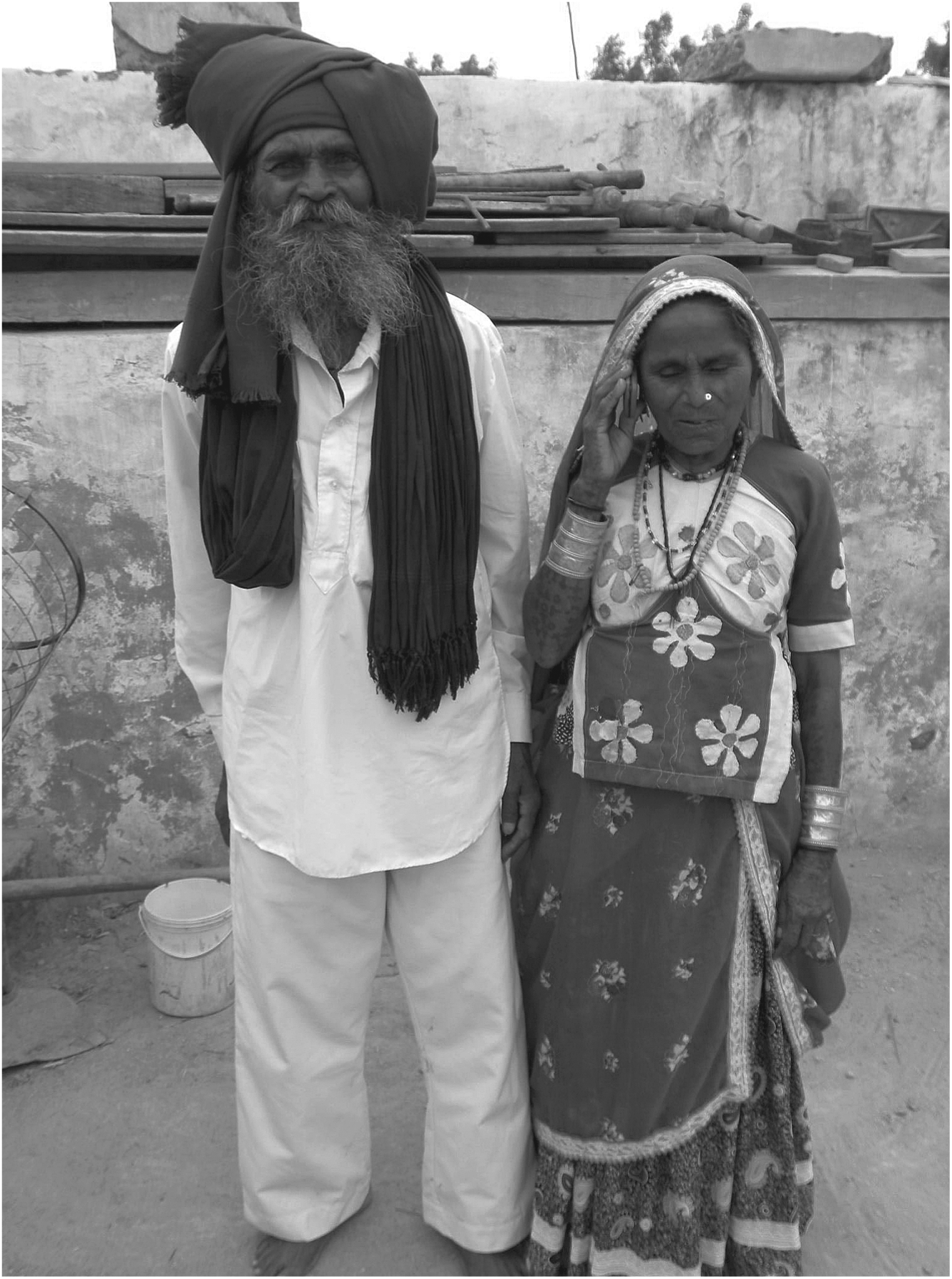
Navi Ben, an AWAG leader, with her husband.
Author courtesy
In Sugra’s example, the local Muslim body, which oversees wellbeing of community members under the guidance of religious laws, struck a deal through her lawyer to negotiate terms of the divorce. The deal was: if Sugra dropped the torture case against her husband, she would be granted the divorce along with one thousand rupees ($18 U.S.) each month to support her and her children. Sugra signed the papers without understanding that the deal allowed her abuser to get away. Nor was the financial agreement ever fulfilled. Without a way to support her children, Sugra had to take them along with her, moving in with her father and his family.
Sugra’s case reflects the plight of abused women in weak democracies, where, while there are laws in place to combat violence against women, negligible implementation allows this violence to continue. So, while Sugra had approached the local governing body and the legal system to seek justice, the patriarchal nature of the state meant it failed to provide her justice.
A big problem is that women are not often aware of their rights or the social and economic resources they might have access to in the community. Corruption in the local government, where nepotism and bribery prevent the implementation of polices in place to protect women’s rights and improve gender equality, mean that most women are unaware that domestic violence is a crime punishable by law and they have almost no information on the existence of shelters and women’s organizations. Domestic violence is socially normalized. Reflecting back on the daily abuse that she witnessed within her own family and community, Kumvar explained how the control of women took place: “The men said it was okay to hit us; whether we get hurt or die it does not concern anyone else. We are their wives.”
In her 2014 book, Credit to Capabilities: A Sociological Study of Microcredit Groups in India, sociologist Paromita Sanyal argues that women’s agency is crucial to ending patriarchal privilege. Particular to the context of developing communities, she finds that grassroots economic empowerment programs such as microcredit loans have enormous social impacts on women’s autonomy within both their communities and households. Women who participate in microcredit groups, she finds, experience less restrictions on mobility and have greater freedom to make financial decisions affecting household welfare. Most importantly, Sanyal argues that these women can collectively negotiate for better public goods, like repairing roads, and are better able to protect other women in their communities by intervening in domestic violence disputes.
How can women, who are structurally oppressed through both religious and cultural norms, break free from abuse?
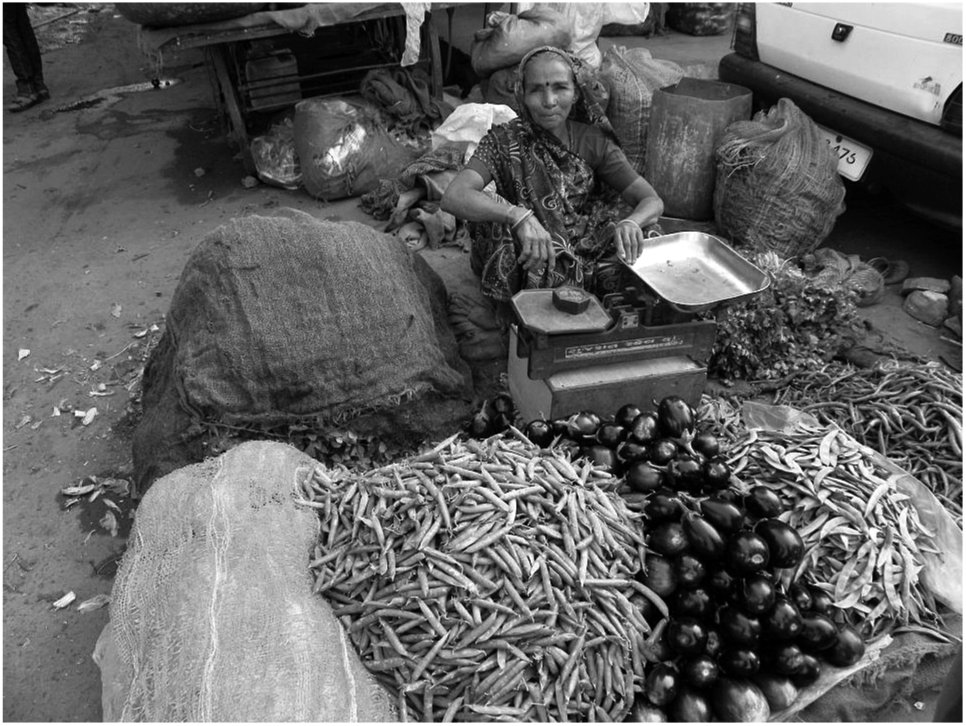
A SEWA vegetable vendor.
Author courtesy
Today, there are a wide variety of empowerment programs, including microfinance programs alongside political programs focused on educating women in leadership-building and collective bargaining. Other programs address women’s rights and organizing trade unions for semi-skilled, self-employed women workers. The impact of these programs, run by non-governmental organizations, goes far beyond their intents, as Sanyal’s research suggests.
Throughout 2018 and 2019, I am following participants in two programs in the state of Gujarat. These focus on developing leadership qualities for community women, although they have other effects, too. The Self Employed Women’s Association (SEWA) is a trade union that supports women who operate in the informal economy of home-based businesses, such as kite and incense stick production, selling vegetables or fruit in pushcarts, and picking up garbage. These women have no representation in formal trade unions. And the state does not recognize them as workers, so they don’t carry employment licenses or government issued identity cards important in protecting their right to sell goods. A small group of SEWA women are trained as leaders who recruit self-employed women in the community to the trade union, bargain collectively for employment rights with the government, and fight against police who regularly harass their members.
Ahmedabad Women’s Action Group (AWAG), an organization whose sole goal is to empower women against domestic violence, runs the second program I follow in my research. AWAG trains select women to become community leaders against domestic violence, intervening through through their access to organizations, shelters, and police stations. To explore how these women become empowered through program participation, resist cultural norms that perpetuate women’s severe oppression, and empower survivors, let’s return to Kumvar and Sugra’s cases.
AWAG ran an empowerment program for women in Sugra’s village some years ago. Village men discouraged women from attending the workshop, telling them the programs were bait to lure them into prostitution. Many women in the village stayed home, but more because they feared repercussions at home than because they believed they were being lured into sex work. Sugra, who was divorced and living with her parents at the time, attended the program meetings out of curiosity—and because the program offered attendees a monetary incentive. As part of the program, participants took a field trip to the local police stations and courthouse. And for Sugra, who had never been inside either building, the trip was an eye-opener. She told me, “I realized that this NGO can help us if they are taking us to police stations and making contacts. We had never visited a police station, spoken to police, or seen the inside of the court. Our cases were in the courts but I never went inside one. AWAG took us to these places, and we interacted with the ‘powerful’ people.”
Encouraged, Sugra enrolled in AWAG’s leadership training program. With the help of the organization and their lawyers, the court reopened Sugra’s maintenance case; after a few years, she received a small portion of the money her husband owed her. The charges of torture against her husband and in-laws, however, never came to fruition. Still, seeing how women can achieve some justice through her own experience, Sugra started to help other women. She noted: “After becoming a leader, I am not afraid to go to the police station, to go before the magistrate in the court. If I have to speak up in front of them, I speak up. I am not afraid. The magistrate asked me ‘How long did you attend school?’ I replied I have never attended school. He did not believe me. He thought I was lying, because of my fearless attitude.”
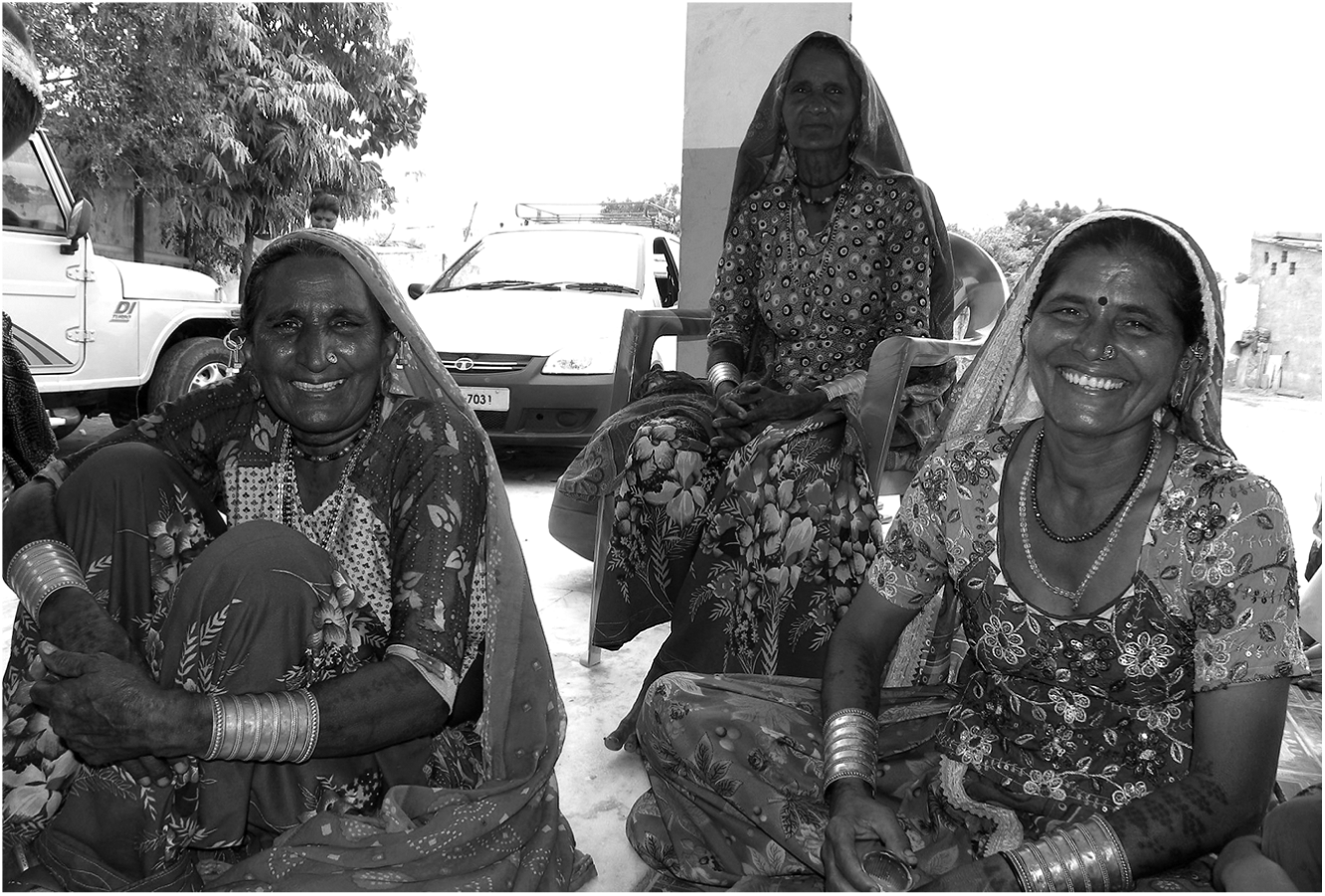
AWAG Leaders.
Author courtesy
In her new leadership role, Sugra came across Kumvar’s case. She helped Kumar file formal cases against her husband at the local police station. She also filed cases against her husband’s family, and her brother, who tried to sell her daughters. Sugra arranged to meet Kumvar’s in-laws to negotiate an amiable divorce with the help of other leaders in the village. The talks never materialized, though, as Sugra found out that the family was planning to kill her and Kumvar at the meeting place.
Kumvar has yet to recover maintenance from her husband, despite having a court order in her favor. Her interactions with Sugra have, however, given her a renewed sense of purpose in life. After all, with Sugra’s support, she found the strength to register the court cases and realized domestic violence is a crime—things Kumvar would not have accomplished without Sugra’s help. She feels empowered to fight for her and her daughters’ rights to live independently; and today, Kumvar sends her daughters to school and does not want them to marry as minors.
On the surface, Sugra and Kumvar’s, lives may not seem to have improved much. They struggle to make ends meet, experience social ostracism, and manage regular threats of violence from their husband’s families. But the women now understand that they have rights. They venture independently into police stations, court houses, and local governing bodies—spaces that are typically male dominated—with the support of networks offered by programs like AWAG and SEWA. They know what questions to ask and who to go to for help.
In communities where women do not have a voice or any decision-making power, the awareness of rights and legal resources and the ability to mobilize new knowledge to register formal complaints against abusers is no small thing. Through collective action, these programs tap ordinary women such as Sugra and Kumvar, providing them the tools they need to push cultural boundaries, support women’s rights in daily life, and create changes against the patriarchal privilege that legitimizes horrific abuse against women and their daughters.