Abstract
How do serial killers get away with murder? For years, law enforcement, true crime writers, and journalists have portrayed serial killers as criminal masterminds. But, a closer look at serial homicide cases reveals a different story: Serial killers are opportunists who target marginalized and vulnerable populations. Specifically, they target street sex workers, who become “easy prey” because of their precarious legal status.
Alex Zizka, Flickr CC
On February 2, 2009, Christine Ross and her dog Ruca found a large, partially buried bone as they walked along the West Mesa, a sprawling desert on the outskirts of Southwest Albuquerque. Christine thought the bone looked unusual and texted a photo of it to her sister, a nurse. Her sister replied that the bone looked like a human femur. Ross immediately contacted Albuquerque Police, who launched an investigation of the area.
Soon, officers were working around the clock. With heavy machinery and cadaver dogs, they undertook a massive excavation of the 92-acre Mesa west of the Rio Grande. When the dust settled, they had dug up the skeletal remains of 11 women.
Forensics teams first identified Victoria Chavez. She was 26 and had 4 prostitution convictions at the time of her disappearance. Cinammon Elks was the next to be identified. She was 32 when she disappeared and had been arrested 19 times for prostitution. The cops then identified the remains of Julie Nieto, who had gone missing at 23 and had 4 prostitution convictions.
As bodies were exhumed and identified, police noticed a pattern: All of the victims were women. Most were women of color who sold sex or did drugs along Central Avenue, a seedy stretch along Route 66 known for flophouses, easy drugs, and late night johns looking for action. Of the 11 women found in the shallow graves, 8 had previously been reported as missing to the Albuquerque Police.
These discoveries sent shockwaves through the city of Albuquerque. Local and national news jumped on the story, describing the grisly crime scene. Reporters linked these deaths to a phantom serial killer they dubbed the “West Mesa Bone Collector.”
It’s been more than nine years since Christine Ross and her dog Ruca found Victoria Chavez’s remains. Since then, police have received hundreds of tips, investigated countless suspects, and interviewed family members and friends of the slain. At its peak, there was a 40-person task force dedicated to solving the city’s largest serial homicide case. And yet, the case remains unsolved.
A closer look at the West Mesa Bone Collector case sheds light on how serial killers get away with murder. For years, law enforcement, true crime writers, and journalists have portrayed serial killers as smart and cunning criminals who outsmart police. From true crime accounts of unsolved serial homicide mysteries like Zodiac by Robert Graysmith, to TV shows and movies featuring genius serial killers like Hannibal Lecter, our culture is filled with representations of serial killers as criminal masterminds. They are assigned headline-ready nicknames and tracked by police and amateur sleuths even as the names and lives of their victims are obscured, overlooked, and dismissed.
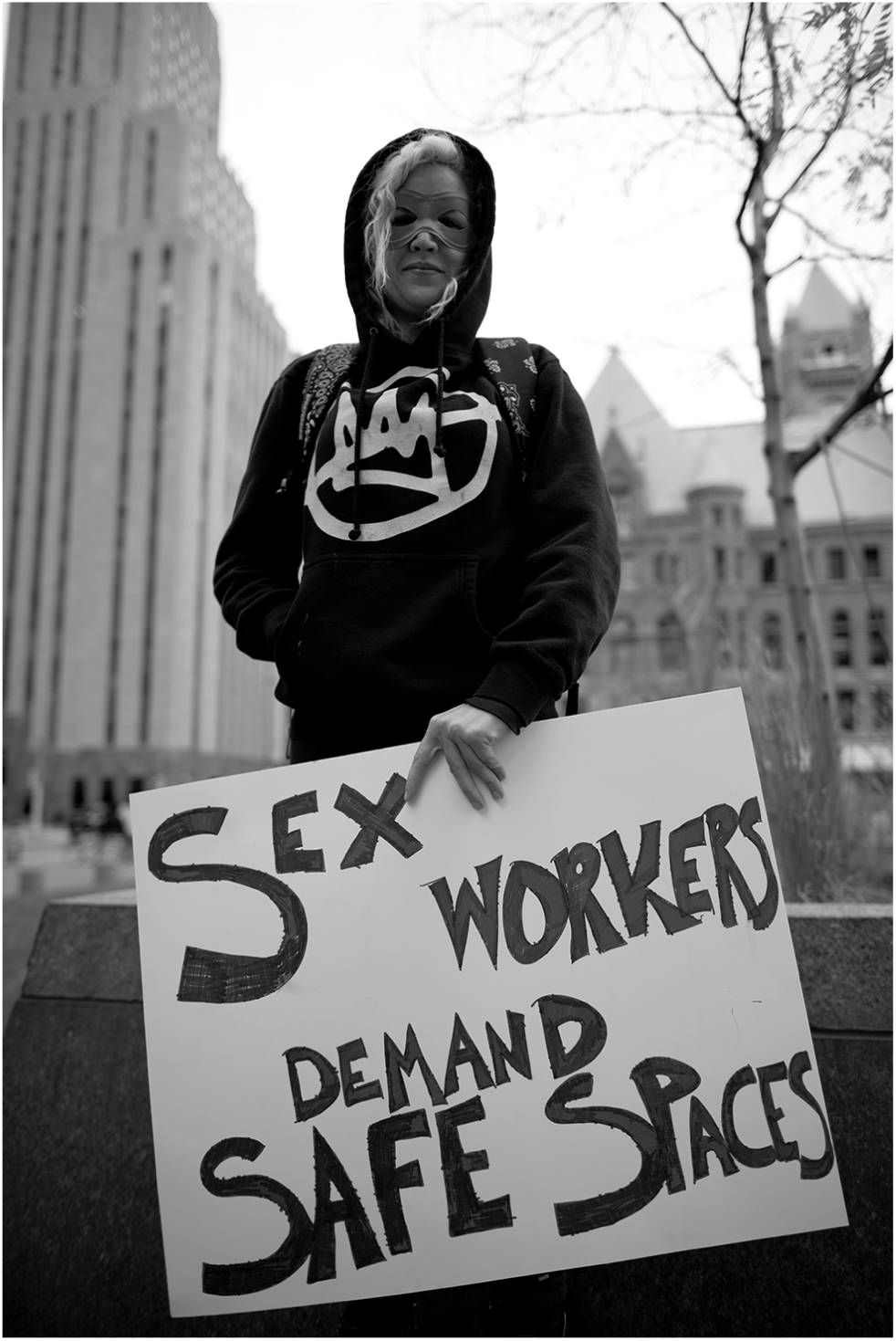
A 2016 protest in Minneapolis, Minnesota following a raid the headquarters of Backpage.com.
Fibonacci Blue, Flickr CC
These images are misleading and gloss over the social context of serial killing. As the unsolved West Mesa Bone Collector case shows, serial killers are also opportunists who target marginalized and vulnerable populations. These victims’ disappearances aren’t likely to arouse suspicion among law enforcement or even loved ones. Sex workers are often vulnerable people whose precarious legal status pushes them into risky contexts where they become “easy prey.”
Why do Serial Killers Target Sex Workers?
Serial killers have been targeting sex workers since the 19th century, when “Jack the Ripper” killed five women, all of whom sold sex in the East End of London. This pattern continues across time. Among others targeting sex workers, we can look to Richard Cottingham, “The Torso Killer,” who raped, killed, and dismembered six sex workers around Times Square in Manhattan from the late 1960s-1980s. In the 1970s, English serial killer Peter Sutcliffe, the “Yorkshire Ripper,” bludgeoned to death 13 women. Robert Hansen, “The Butcher Baker,” abducted, hunted, and killed at least 17 sex workers in the wilderness of Anchorage, Alaska in the 1970s and early 1980s. In the late 1980s, Arthur Shawcross, “The Genesee River Killer,” strangled and mutilated 12 women—most of whom were sex workers—in the Rochester area of New York. Chester Turner, the “Southside Slayer”, strangled and dumped 14 women—many sex workers and drug users—in “South Central” Los Angeles during the late 1980s and 1990s. And between 2007-2009, Anthony Sowell, also known as the “The Cleveland Strangler,” murdered 11 women, many of whom had agreed to trade sex for drugs in his East Cleveland neighborhood.
These cases are a small part of the FBI’s ever-evolving database on serial murder, which they define as the unlawful killing of two or more people with a “cooling off” period between kills. This definition distinguishes the serial killer from mass killers (those who kill multiple people in a single event) and spree killers (who kill two or more people without a cooling off period).
According to FBI data, women account for three-fourths of the 1,398 known serial homicide victims since 1985. The gender distribution of victims of serial homicide is significantly higher than national homicide rates, for which women make up about 22% of the annual homicide victims. The data also shows that female sex workers are 18 times more likely to be killed by a serial killer than someone who does not participate in sex work.
The FBI’s research also gives us insights into the minds of serial killers. Surveys and in-depth interviews with incarcerated serial killers reveal how dark sexual fantasies evolve into compulsive killing. For instance, in an interview with an FBI profiler, Long Island serial killer Joel Rifkin spoke about harboring strangulation fantasies for years. He was a frequent client of sex workers in Manhattan’s lower east side and recalled wondering what it would be like to strangle one of these women to death. He compared his fantasies to the 1972 Alfred Hitchcock serial killer film Frenzy, which features a serial killer who terrorizes London by raping and strangling women to death.
FBI interviews also reveal the practical reasons for why serial killers get away with murder. For example, in a 2003 court statement, Gary Ridgeway—a long-haul truck driver nicknamed the “Green River Killer” by news media—said: “…[T]hey were easy to pick up without being noticed. I knew they would not be reported missing right away and might never be reported missing. I picked prostitutes because I thought I could kill as many of them as I wanted without getting caught.” Ridgeway described to investigators how he would rape, strangle, and dump the bodies of women that he picked up on the road in Washington during the 1980s and ‘90s.
Ridgeway was right. In “Serial Murder: Pathways for Investigations,” FBI researchers write: “…[T]he murder of a prostitute can be very challenging for law enforcement investigators to solve. The covert nature of the sexual activities, coupled with the number of interactions with strangers makes identification of any customers who may be critical witnesses extremely difficult.”
But, sex workers aren’t only vulnerable because of their movements between police jurisdictions or because their ties to family and friends who might notice and report their disappearance may be frayed. They’re also vulnerable because many are reluctant to report violence to police. A recent study by the Urban Justice Center found that 30% of the street sex workers reported violence at the hands of police. Others reported that police did nothing when they reported information about sexual assaults.
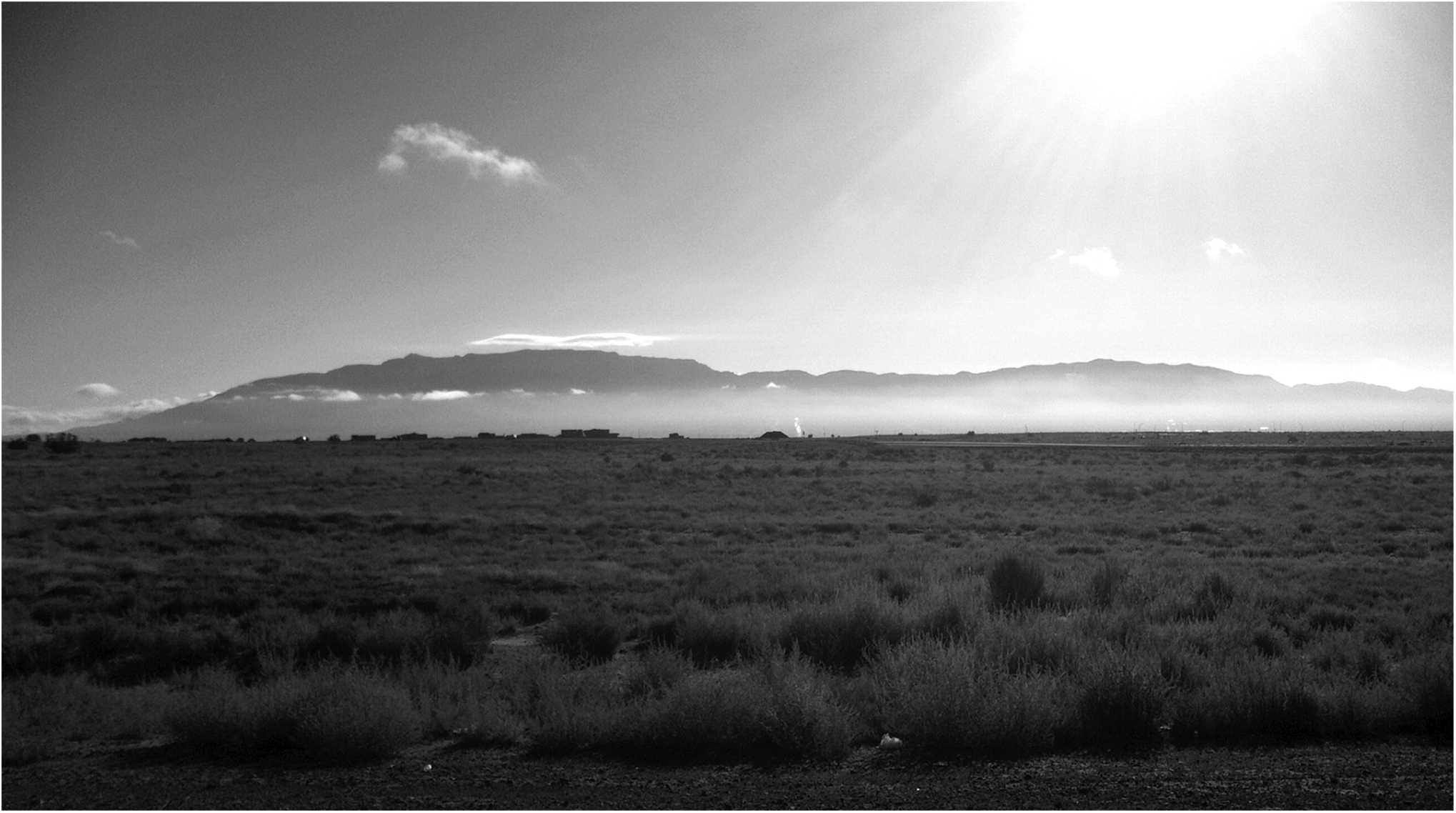
Albuquerque’s West Mesa.
Sue Ruth, Flickr CC
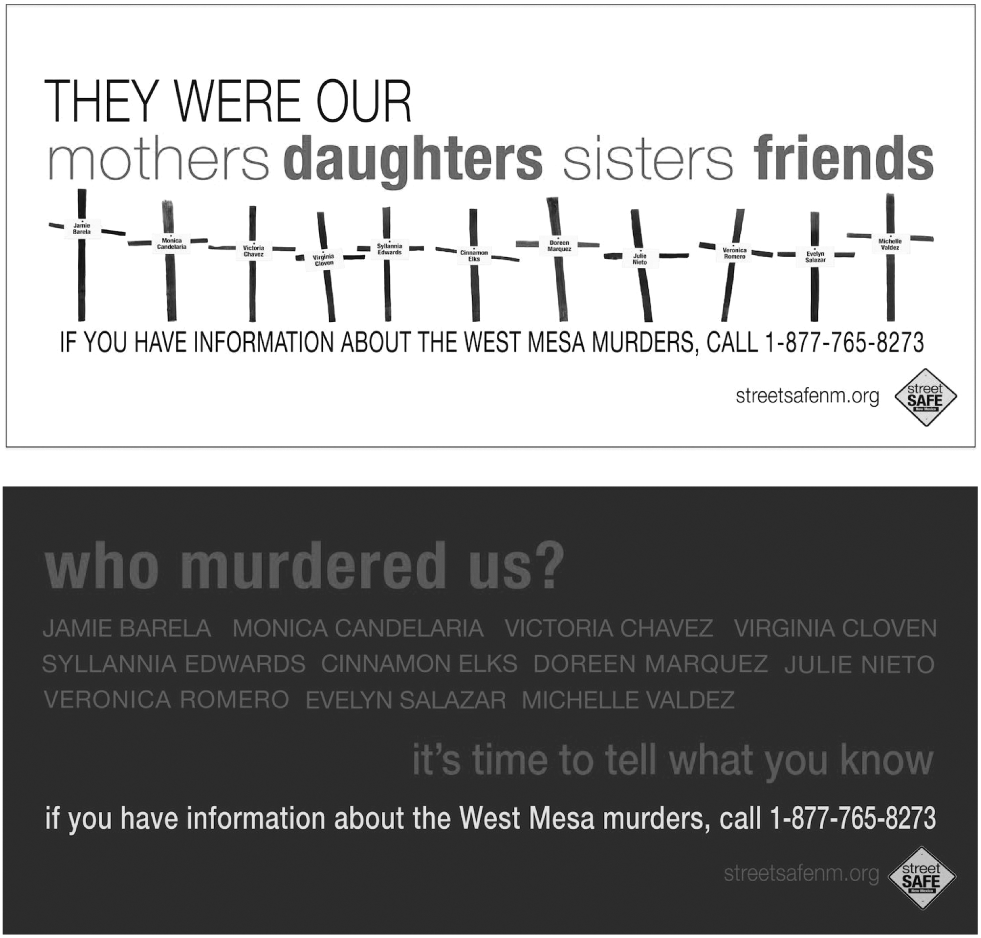
Street Safe New Mexico has erected a number of billboards in Albuquerque, seeking information in the West Mesa murders. The group also publishes “Bad Guy Lists” to help sex workers warn each other of violent and dangerous johns.
Street Safe New Mexico, used with permission
Sometimes police fail to intervene even when a sex worker shows signs of physical abuse by an assailant; victims’ reports can be dismissed as the consequences of a “risky lifestyle.” For instance, in 1997 a woman (who remained unnamed in subsequent criminal hearings) showed up in an emergency room with serious stab wounds and handcuffs still attached to her wrist. She told investigators that she had fought for her life after Robert Pickton stabbed her and tried to handcuff her at his pig farm in Port Coquitlam, British Columbia.
Doctors later found the keys to the handcuffs on Robert Pickton, who was also being treated for stab wounds received during a prolonged knife fight. Yet, learning that the woman was a sex worker with a long history of drug abuse, police and prosecutors declined to pursue criminal charges against Pickton. Today, police believe that Pickton went on to kill more than 40 women before he was finally arrested.
Pickton’s story and the stories of other victims who narrowly escaped serial killers point to a larger pattern of police neglect. Police do not prioritize searches for missing sex workers. Their lives are not valued like the lives of missing middle-class White women like Natalee Holloway and Elizabeth Smart, both of whom became focal points for police manhunts and TV shows about their tragic disappearances. This past fall, the Oxygen Network ran a 6-part documentary series called “The Disappearance of Natalee Holloway.” Each hour-long episode covered her life, the disappearance, and the ongoing manhunt to find her or her remains. The show debuted with 1.1 million viewers, which marked it the most watched true crime series in network history.
The same attention was not paid to Pickton’s victims, who were from indigenous communities in which young women have gone missing for decades along the “Highway of Tears,” a 450-mile long section of Highway 16 between Prince George and Prince Rubert, British Columbia. Since the late 1960s, 40 or more women have either gone missing or been found dead along the highway, which zigzags through dense forests in the northwestern side of British Columbia.
It is much the same for African-American women who have had close run-ins with serial killers in marginalized communities in the U.S. In Tales of the Grim Sleeper, documentarian Nic Broomfield interviews women who knew Lonnie Franklin Jr., also known as “The Grim Sleeper.” Franklin terrorized sex workers and drug users in “South Central” LA for two decades before he was caught. Pam Brooks, a former sex worker who knew Franklin, remarks about the case, “The police don’t care because these are Black women… It’s not like Lonnie killed no high-profile White folk. We don’t mean nothing to them. We’re Black.”
An Ecology of Violence
Sex workers’ lives aren’t only shaped by the faraway chance of becoming a serial killer’s next victim, they also face routine types of violence selling sex. In one study, 81% of women working outdoors reported violence at the hands of clients. Of these, 33% had been beaten, 30% had been threatened with weapons, 25% had been choked, 27% had been raped vaginally, and 9% had been slashed or stabbed. Between 45 and 75% of sex workers report violent experiences over their lifetimes, with 32 to 55% reporting violence in the past year.
Police do not prioritize searches for missing sex workers. Their lives are not valued like the lives of missing middle-class White women
Sex workers are not only at risk with clients, but with pimps, who use force, coercion, psychological manipulation, extortion, and violence for control. In a recent study of 100 women who worked for pimps, 85% reported verbal abuse; 75% that their pimp made them live/stay in a certain place; 69% that their pimps took all of their money; 68% that their pimps threatened them with violence; and 52% that they had been raped by their pimps.
Sex work advocates, Amnesty International, and the World Health Organization have long argued that violence against sex workers is linked to the criminalization of sex work. By turning sex work into a punishable criminal offense, they argue, lawmakers push already vulnerable populations into the shadows. Without legal rights and formal protections, many sex workers are left to fend for themselves in a risky underground economy for sex.
The Toronto Police “Bad Date Hotline” helps sex workers report violent clients and rapes.
Toronto Police

These issues are a continued source of political contention, as President Donald Trump recently signed into law the Fight Online Sex Trafficking Act and Stop Enabling Sex Traffickers Act (FOSTA-SESTA), which holds social media platforms liable for content that “…promote[s] or facilitate[s] the prostitution of another person.” Sex workers have widely critiqued this bill, arguing that it does not differentiate between forced trafficking and consensual sex work, and that it restricts their ability to vet clients online.
The data out there suggest that decriminalizing sex work increases the likelihood of sex workers reporting crimes against them to the police. For example, a government commissioned study of the 2003 decriminalization of sex work in New Zealand found that 70% of the sex workers surveyed said that they were more likely to report violence to the police after decriminalization. Other studies have found that 90% of these women felt that the passage of these laws gave them employment, legal, and health and safety rights. A full 64% said that they found it easier to refuse services to clients, and 54% reported that police attitudes toward sex have changed for the better. It’s impossible to generalize from a single case, but these results are cause for measured optimism: decriminalization appears to make sex work safer by improving communication between sex workers and police.
Making Sex Work Safer
In the years following the excavation of the West Mesa, local sex work activists in Albuquerque organized to reduce violence against sex workers. For instance, Street Safe New Mexico hosts a website that contains information about sex trafficking, a blog with stories about sex workers, and free pepper spray giveaways to sex workers.
They have also created a “Bad Guy List” that compiles information about violent clients in Albuquerque since 2008. Entries warn women about johns who are into “weird stuff” or who force unconsented sex acts upon them. Others are more graphic and warn women of men who have attempted kidnappings; a guy who drives around with torture equipment, including a “rib spreader,” in his truck; a serial rapist who threatens to kill women with a loaded firearm if they do not perform oral sex on him; and a man who recently kidnapped a woman, telling her he would kill and leave her body in the West Mesa.
Grassroots efforts like these are important safeguards. But, the criminalization of sex work ultimately limits their efficacy. Women are still breaking the law when they sell sex on the streets. Adding to the risk of attack and brutalization by pimps and clients, women are at risk of arrest and incarceration. That ultimately deters many from even reporting violence to police. Johns often rely on the fact that they can get away with violence because sex workers are easy prey.
When there are deaths and injuries in other industries, lawmakers often consider policies to make working conditions safer for all. This was the logic behind some of the modern-day safeguards in place in industrialized farms, factories, and in the modern office space.
We need a similar shift in sex work, too. This begins by changing popular ideas about the trade. Instead of treating sex work as a taboo and relegating sex workers to the margins, we should decriminalize sex work and provide workers with basic services like access to healthcare, affordable housing, and other social services.
The West Mesa Bone Collector story shows us that the war on sex work has been a colossal failure in the United States. In addition to making it more difficult for police to investigate foul play, it has also created a uniquely risky context for all who sell sex. Violent johns, pimps, police are the most immediate causes of violence against women selling sex on the streets, but there are bigger fish to fry. Missing and murdered women represent an extreme cross-section of the consequences of a much larger, misogynistic culture that views women as sex objects who were “asking for it” or who “got themselves assaulted.” Until society contends with these attitudes, there is little hope for stopping violent offenders of all stripes.
As areas like New York City’s 42nd Street—once infamously known as “the Deuce”—are “cleaned up,” sex workers are pushed further to the margins.
Eden, Janine, and Jim, Flickr CC