



Abstract
Empathy gaps, women’s work and leisure, gun shops and big data: New research from the journals.
Another Cost of Kids
Valerie Hinojosa, Flickr CC

While women, on average, earn less than men, there is clear evidence that a “motherhood penalty” further separates mothers’ wages from other women’s. In American Sociological Review, Wei-hsin Yu and Janet Chen-Lan Kuo look at the structural characteristics of women’s jobs to understand how they contribute to pay variation. Adding nuance to our understanding of the motherhood wage penalty, their article considers job strain and work-family conflict, employer discrimination, and the potential trade-offs between pay and non-monetary job benefits.
Using longitudinal data on over 4,000 women now in their thirties, the authors first established a significant pay gap between mothers and non-mothers and noted that it increased with each additional child. Next, they considered occupational characteristics and whether factors relating to the types of jobs these women held might drive pay differences between mothers and non-mothers. Yu and Kuo found no relationship between non-monetary benefits (like workplace safety and work schedule predictability) and the wage gap, nor did the amount of on the job training necessary for an occupation (which the authors believed could exacerbate gaps, given employers’ possible expectations about employee turnover tied to motherhood) affect the disparity.
Consistent with the job strain and work-family conflict approach to the salary difference between mothers and non-mothers, the authors found that occupations requiring teamwork and greater competition were associated with wider gaps and occupations with more autonomy were linked to smaller gaps. Because such occupation-level characteristics can reduce or exacerbate the disadvantage faced by mothers in paid work, the authors note that policymakers must consider the relationship between work-related burdens and caregiving can help to narrow the gap in income for mothers and childless women.
For Cops, Big Data is a Big Gamble
Law enforcement agencies would love to prevent rather than respond to crime, and they’re using big data analytics to try. In the American Sociological Review, Sarah Brayne looked at how the Los Angeles Police Department is working to transition from reactive to proactive policing with the promise of big data.
Interviews and observation allowed Brayne to identify the key to LAPD’s logic: they believe that a small number of offenders commit the majority of crimes. By surveilling “hot” locations and targets, compiling the trace data left behind from prior crimes, and quantifying individual crime risks, the hope is that police may stop potential offenders.
Many believe such innovative policing practices might reduce racial biases in policing. However, Brayne found that the algorithms the LAPD is employing may reproduce extant biases: “hot” locations are frequently low-income neighborhoods with higher crime rates. Consequently, the algorithms being developed may target racial minorities, not because they commit more crime but because they are more likely to live in “hot” neighborhoods and to be surveilled as a result.
LAPD officers in 2010.
Chris Yarzab, Flickr CC

The LAPD’s actuarial approach to crime reduction has very real consequences. Officers might successfully prevent crime, but they may also unfairly target an innocent individual simply because they live in or near a “hot” area. Brayne concludes that the use of big data has created a sense of objectivity and scientific crime prevention while also reifying the racial biases long-since embedded in policing.
Looking “Illegal”
“When Mexico sends its people, they’re not sending their best. They’re sending people that have lots of problems, and they’re bringing those problems with us. They’re bringing drugs. They’re bringing crime. They’re rapists.” Since this statement in June 2015, Donald Trump’s rhetoric has only intensified the Latino Threat, by which anti-immigrant attitudes toward Latinx and Hispanic individuals in the U.S. are intensified. It has also provided the underpinnings of San Juanita García’s latest article in Sociology of Race and Ethnicity.
In the U.S., looking Latinx is increasingly considered looking “illegal.”
Ted Eytan, Flickr CC
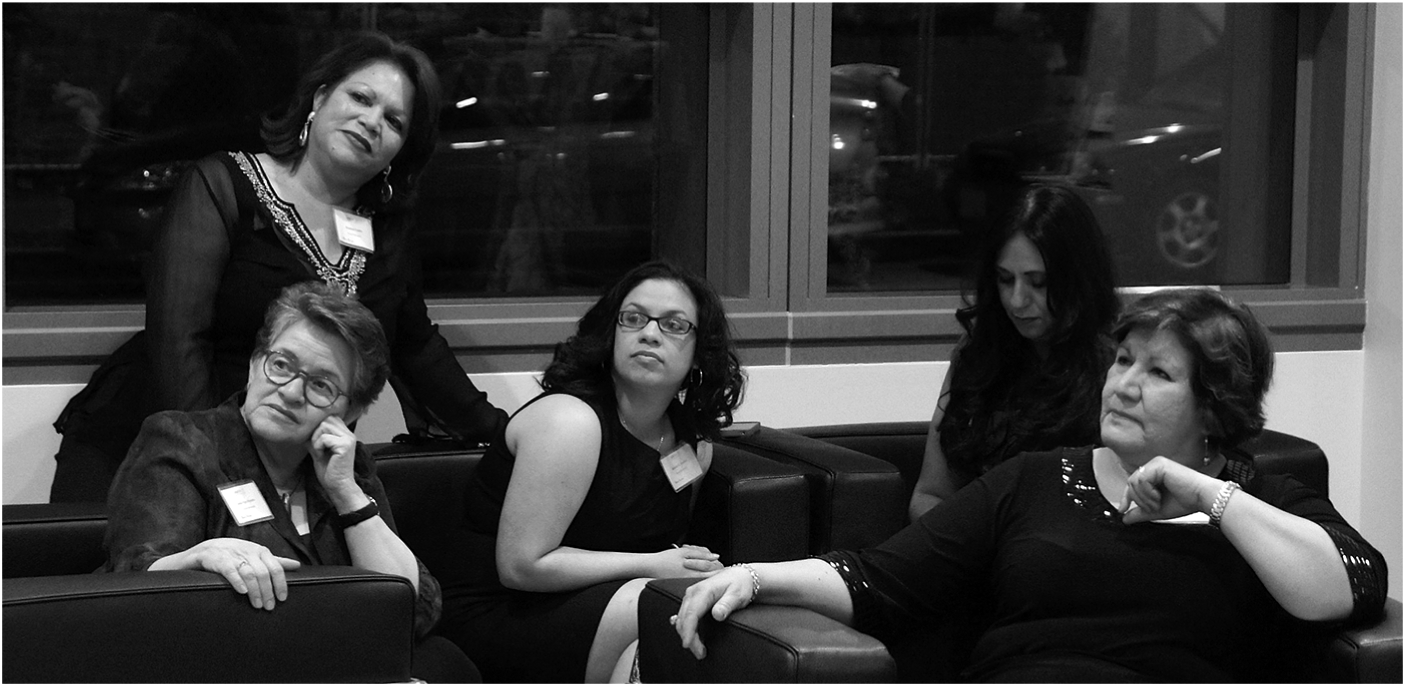
García wanted to understand how Mexican-origin women experience racialization in an anti-immigrant climate and what that means for their sense of belonging or exclusion. She interviewed 60 Mexican-origin women residing in Houston, Texas; 30 were Mexican immigrants and 30 were Mexican Americans. García found that anti-immigrant attitudes resulted in all Mexican-origin women experiencing treatment as “illegal” regardless of their time in the U.S., generation, or legal status. She calls this process of attaching an assumption about documentation to a person’s phenotypical appearance racializing “illegality,” and women in her study reported being perceived and treated as undocumented in the workplace, criminal justice system, education system, and with healthcare professionals. They were continually asked whether they spoke English, were called wetback, and had their childbearing intentions questioned. García demonstrates how anti-immigrant attitudes have contributed to the often spurious conflation of race, legal status, nativity, and generation for Mexican-origin women.
García ends with a caution: since the 2016 presidential election, scholars have documented a rise in harassment and intimidation of those perceived to be “illegal,” and it shows no signs of abating. She calls on academics to delve more deeply into the ways racialization and “illegality” unfold in the lives of immigrants and other vulnerable populations.
Gun Shops and Crime
As activists, politicians, law enforcement, and everyday citizens seek ways to cut gun violence, it seems everyone wants to know: How do we make our neighborhoods safer? Recent research from Trent Steidley and his co-authors suggests an unusual answer.
In Social Forces, the authors examine neighborhood-level and metropolitan-level data across three databases for 89 large U.S. cities. Prior research has established that the presence of local institutions such as bars may directly affect crime by attracting outsiders to a neighborhood and concentrating larger numbers of potential targets in a small area and indirectly signalling to residents that a neighborhood is unsafe and discouraging local social control efforts. Thus Steidley and his co-authors set out to test the direct and indirect effects of gun shop prevalence on local crime rates.
Steve Snodgrass, Flickr CC

Measuring crime through neighborhood-level counts of homicides and robberies, the authors reveal that local homicide and robbery rates increase alongside the number of gun shops in a neighborhood, even after accounting for other factors associated with higher homicide rates. However, the relationship between crime and gun shop prevalence appears to be entirely local, with gun shops only affecting crimes in their own neighborhoods. For communities and policymakers, the research is a reminder that both national and local efforts will be needed if we are to address America’s abysmal record of gun violence.
Reclaiming her Time
Mothers need breaks, but the type of break they take and how long depends heavily on their marital status. In a recent article in The Journal of Marriage and Family, Passias and colleagues explored the impact of marriage on the leisure activities of mothers. Using the American Time Use Survey, they focused on passive leisure such as watching TV, social leisure such as going out with friends, and active leisure such as going to the gym. The researchers also examined socially-isolated leisure, which can include passive or active leisure, but is done alone at home.
The amount of leisure time each person has depends on how much time they spend doing paid and unpaid work, household labor, and normal activities of daily living. Passive and socially isolated leisure are considered to be low quality, while active and social leisure are considered to be high quality, due to their association with improving health and building social and cultural capital.
The authors found that never married mothers had the most leisure time, but it was lower quality leisure time than married or divorced mothers. Married and divorced mothers prioritized household work, family activities, and couple activities over their own leisure time, but when they took a break, they were more likely than single moms to spend that time exercising or going out with friends. A mother’s race also contributes: compared to White and Hispanic mothers, Black mothers spend the most time on passive and socially-isolated leisure, and they are more likely than White mothers to have never been married. Hispanic mothers have less total leisure time than both White and Black mothers.
Racking up some high quality leisure.
Cultura de Red, Flickr CC

Previous studies have linked low quality leisure with negative health outcomes and higher stress levels. This study highlights how marital status can serve as a proxy for structural inequalities and gendered behaviors that have long lasting impacts on the health of mothers.
On Inequality and Empathy
Are poor people seen as less deserving? According to Nicholas Heiserman and Brent Simpson, the answer has everything to do with inequality. In a recent article published in Social Psychology Quarterly, these authors found that more unequal societies, like the United States, generate larger gaps in perceived merit, where the rich are seen as more deserving and groups with less are likely to be seen as deserving less.
Because earlier research has shown that, in small groups, the most highly compensated individuals are typically seen as being the most competent, Heiserman and Simpson posit that macro-level reward distributions might affect attitudes about group-based merit. In other words, the rich, as a group, are more likely to be seen as deserving of their riches and the poor, as a group, are more likely to be seen as deserving of their poverty.
Where legacies of inequality run deep, so, too, does the sense that people deserve their unequal outcomes.
Tyler Merbler, Flickr CC
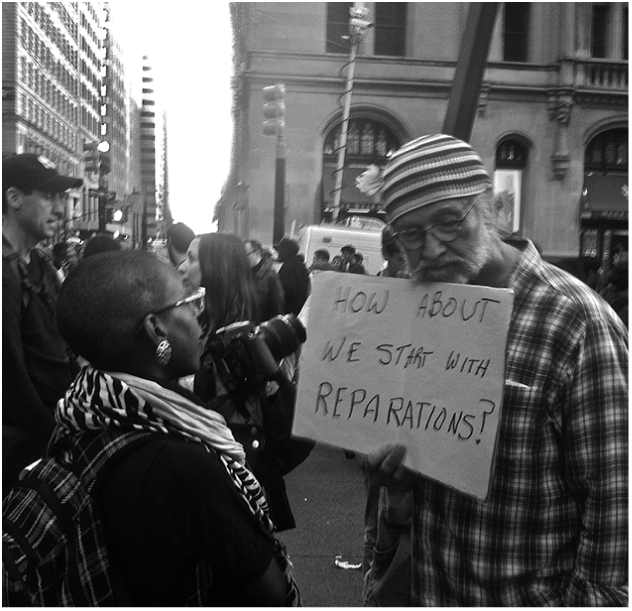
To examine this proposition, the authors asked U.S. study participants to read about three fictitious countries with different levels of inequality: high (with an income gap similar to the U.S.), medium, and low (with an income gap similar to Sweden). Participants were then randomly assigned to answer questions about either the high or low inequality country. Those who answered questions about the country similar to the U.S. felt that poor people in that country were less deserving than their rich counterparts. In the low-inequality condition, respondents thought poor people were as deserving as the rich. Finally, comparing people from each country, the respondents rated the poor people from the most unequal country least competent of all.
That inequality can shape perceptions of merit reveals a troubling paradox: because the poor are likely seen as least deserving in the most unequal societies, efforts to alleviate poverty are unlikely to gain traction in the very places that need them the most.
How the Fight for Black Lives Colors Dating
The Black Lives Matter (BLM) movement has inspired many dissenting opinions as it has grown in prominence. But how might discussions of racial issues be used to filter unsavory partners out of the dating pool? Shantel Gabrieal Buggs answers in her new Sociology of Race and Ethnicity piece.
Conducting 30 interviews with self-identified multiracial or multiethnic women who use the online dating site OkCupid, Buggs explored how BLM and race relations in America are being discussed (or not discussed) in the process of finding a relationship partner. While she initially didn’t separate or identify the women by skin tone, this proved to be a major factor in how multiracial and multiethnic women discussed race with potential partners.
Women of color report using social justice issues as vetting strategies in online dating searches.
See-ming Lee, Flickr CC

Women who could pass as White or did not identify as Black were more likely to discuss issues such as feminism than race relations when gauging political compatibility. Conversely, women who described themselves as “visibly brown-skinned” were more likely to use discussions of BLM and race relations to engage in what Buggs calls a “vetting strategy.” For these women, it was important that their partners display some degree of “racial literacy” and did not hold sentiments of anti-Blackness. The fact that skin tone adds complexity to the emotional labor involved in looking for love is but one more reminder of the demands placed on people of color in everyday American life.
Major Selection and Post-College Financial Obligations
Imagine telling your family you hope that you or your child majors in philosophy. Feel the blank stare. Watch the slow head-nod. Researcher Natasha Quadlin knows this is an odd scenario because the major is considered wildly unmarketable. But perhaps this is actually a good sign: perceived financial obligations after college may affect students’ major selection during college.
Using data from the National Longitudinal Survey of Youth 1997, Quadlin’s new Social Forces piece investigates how three funding sources (loans, family contributions, and grants) affect students’ choice of study. Quadlin sorts majors into either applied or academic—where applied fields are oriented to a specific job, such as nursing or engineering, and academic fields fall typically in the social sciences and humanities—and into STEM and non-STEM.
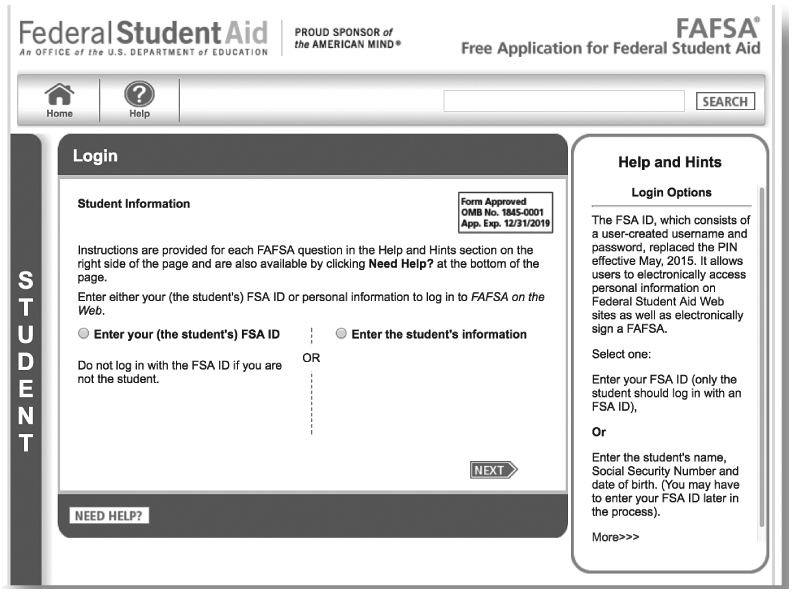
Quadlin found that students who anticipate post-graduation financial obligations are more likely to choose applied majors, with higher student loan debt increasing the adoption of “applied non-STEM” fields, such as business or nursing. Yet, because students pursuing academic majors are more likely to attend graduate school, students with greater loan obligations may be untentionally opting-out of post-graduate work. Students who receive more family financial contributions and expect little debt after college are more likely to perceive these years as a period of intellectual exploration and remain undeclared with respect to a major in their first year of enrollment. Grant money emerged as an outlier, with little effect on students’ major and course selections.
Education is often referred to as “the great equalizer,” but this study adds to the litany of ways education may inadvertently increase inequality. Prior work has shown that students from different socioeconomic backgrounds choose different majors, and different degrees yield different occupational outcomes and lifetime earnings. The earning gap between those with college degrees can be larger than the earning gap between high school and college graduates. Funding sources not only shape the decisions students make in pursuing a degree, but their work lives as a whole.