



Abstract
rene almeling on the framing of sex cell donations.
Transferring eggs and sperm from one body to another is part of the multi-billion dollar fertility industry. As the market for egg and sperm donors has grown, so have questions about the ethics of commodifying human reproduction. How is this market organized? Who is allowed to donate? And what kinds of experiences do people have selling their cells? To find out, I interviewed staff and donors at egg agencies and sperm banks around the United States. My findings highlight the role of gender stereotypes in their day-to-day operations: egg agencies frame paid donation as a “gift,” while sperm banks consider it a “job.” I argue that these frames influence not only the structure of the market but also how donors see themselves and their relationship to the genetic material they sell.
Language used by donation programs amounts to more than empty rhetoric. It shapes how donors understand the exchange of sex cells for money.
Egg agencies and sperm banks are similar in that they are in the business of recruiting “sellable” donors who will attract recipient clients. They receive hundreds of donor applications every month, so they can be picky about whose DNA they choose to sell. Medical evaluations are required for all potential donors and include a family health history going back three generations. But that is where the similarity ends. Egg donors must conform to rigorous height/weight ratios; sperm donors do not. Women over 30 are unlikely to be accepted as donors; men can donate until they are 40. Sperm banks require that men be at least 5’8” tall; egg agencies do not set height minimums. Most sperm banks require that men be enrolled in college or have a college degree; egg agencies do not. Most egg agencies require psychological evaluations to assess how women feel about having children out in the world; sperm banks do not require that men discuss this possibility with a mental health professional.
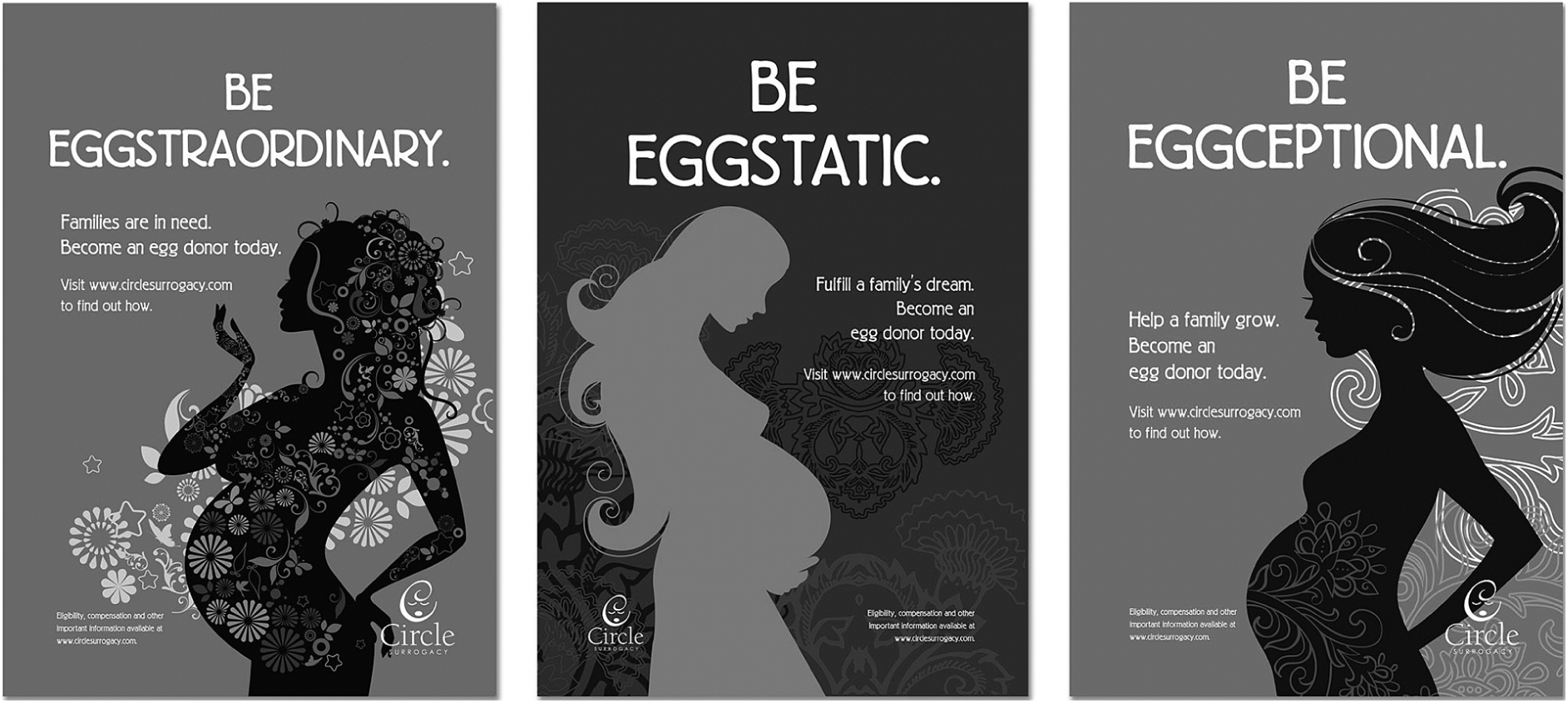
In addition to these differences, egg agencies and sperm banks assume women and men have different motivations for providing sex cells. While my interviews with egg and sperm donors reveal that most are motivated by money, staff portray the transactions in highly gendered terms. Drawing on the stereotype of women as nurturing caregivers, egg agencies emphasize the plight of infertile couples in selecting women who want to “help” people by giving the “gift of life.” In contrast, sperm banks encourage men to earn money with an easy “job”—as one cheeky ad puts it, “Get paid for what you’re already doing!”
Once men and women are approved to provide sex cells, they craft profiles for agencies and banks to post in online “donor catalogs.” To attract potential clients, donation programs strive for donor diversity, especially along lines of race and ethnicity. Sperm banks pay all men the same rate, usually around $100 per “deposit.” In contrast, some egg agencies will adjust a donor’s compensation based on her personal characteristics, including race. African-American and Asian-American egg donors are perceived as difficult to recruit, so they are sometimes paid a few thousand dollars more than White women. This higher valuation of women of color is unexpected, given that the opposite is often true in other markets, such as the labor market or adoption market. But staff in egg agencies consider race to be a biological characteristic, and eggs from women of color are understood as scarce, which contributes to their increased value.
Advertisements for egg donors focus on altruism and making dreams come true.
To donate eggs, women must inject themselves with powerful fertility medications for several weeks before undergoing outpatient surgery. Sperm donors certainly have an easier time. They do not face any physical risks and their donation takes place in small, private rooms stocked with pornographic magazines and videos. But many people do not realize that men must typically donate at least once a week for a year. Screening donors is costly, so sperm banks have to make sure donors produce enough salable samples to cover the up-front costs of physical evaluations and medical testing. Still, neither biology nor technology explains why producing eggs for money is framed as a gift, while selling sperm is considered a job.
Language used by donation programs amounts to more than empty rhetoric. It shapes how donors understand the exchange of sex cells for money. Egg agencies are constantly thanking women for the wonderful difference they are making in the lives of recipients, so egg donors speak with a great deal of pride about helping people have children. Some egg donors even describe the money they received as a “gift” in return for the gift they have given to someone else. All of the rhetoric reinforces notions of women as “naturally” selfless and generous. Sperm banks treat men more like employees expected to clock-in on a regular basis, and so sperm donors call the money the receive “income” or “wages.” Some even describe themselves as “assets” or “resources” for the sperm bank, revealing a sense of self-objectification. Though they make much more money than men (on a per-donation basis), egg donors do not talk about themselves as employees or assets.
One of my most surprising findings concerns how donors think of their parental contributions. Sperm donors have a straightforward view of themselves as fathers, but egg donors insist they are not mothers. This is the opposite of what many people would expect, given the greater physical commitment of egg donation and cultural beliefs about maternal instinct. Women and men each provide half the genetic material to create an embryo, so why do donors relate so differently to their biological offspring? It begins to make sense when you take into account the emphasis that egg agencies place on recipients.
Egg donors consider the recipient to be the “real mother,” because she will carry the pregnancy, give birth, and raise the child. Women can make this distinction because, thanks to technology, maternity is more easily separated into parts than paternity. One woman can provide the egg, another can carry the pregnancy, and a third (or more) can raise the child. All of these women can claim or choose not to claim the label of “mother.” Fatherhood is more often reduced to a cultural equation in which sperm equals dad. Sperm donors rely on just this definition of fatherhood, particularly because banks do not ask them to think much about the people who use their donations to become parents.
“How does it feel to have children running around out there?” Donors are often asked this question by family and friends, and their responses are influenced not only by the sales pitches of fertility agencies, but also by longstanding cultural understandings of reproduction. The ancient Greeks thought of men as providing the generative seed and women the nurturing soil, so I suspect they would recognize the gendered messages spread by contemporary egg agencies and sperm banks. Sperm donors think of their seed as essential, so they downplay the role of the recipients in conceiving, gestating, and rearing the baby. Egg donors do just the opposite. The business of egg and sperm donation, in short, builds on very old stereotypes in organizing the market for sex cells. And those ideas affect every single person who is part of this market: the donors, the recipients, the staff at fertility clinics, and the children who will be born into these brave new families.
