



Abstract
Amy McDowell on a subgenre of punk that isn’t fighting for the right to party or partying for the right to fight, but making music to fight the right (wing, that is).
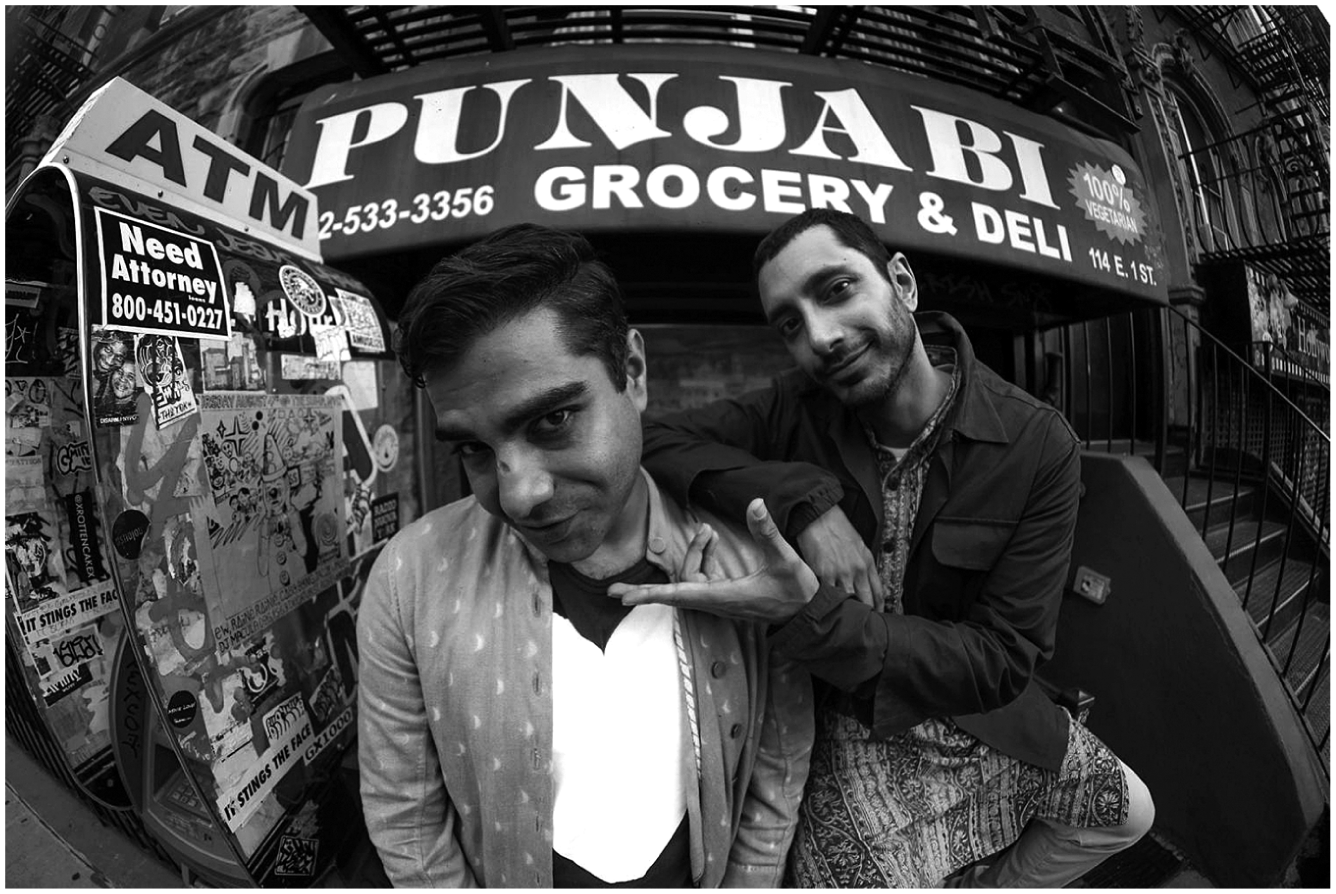
The Swet Shop Boys, Heems and Riz Ahmed.
Promotional Photo, Erez Avissar
The Kominas, a U.S. punk rock band made up of South Asian (mostly) Muslim youth, shatter the assumption that religion and punk are like oil and water. “When the far right is trying to criminalize your very being,” one band member notes in an MTV interview, “it’s nice to have a scene that’s all about being yourself.” This punk scene provides safe spaces for marginalized youth who rebuke the mold of White Christian conservatism. In it, they are resurrecting the fiercely political edge of punk rock to stake their claim as Americans. And they do this by placing Muslim identity at the forefront of their revolt.
A growing sector of the U.S. public believes Muslims are either oppressed or radicalized by Islam and are not really American. In 2016, the Pew Research Center found that almost half of the U.S. population believes that “some” Muslims are actually “anti-American.” Surveys like these reveal that non-Muslims read Muslims—and those they perceive to be Muslim—through a racialized lens, using stereotypes about “inherent” barbarism and misogyny in Islam to justify anti-Muslim attitudes. And these attitudes are sometimes expressed through ferocious acts of violence. In 2015, 91 anti-Muslim assaults were reported to the FBI, and this number is soaring as the Trump administration tries over and over to bar Muslim immigrants from the country. On December 16, 2016, the Council on American-Islamic Relations (CAIR) reported a startling 111 bias incidents against Muslims in just five weeks after the presidential election, and, on the day Trump signed his first “travel ban,” January 27, 2017, a woman in a headscarf was kicked at New York’s JFK airport before her White assailant got down on his knees to mimic a Muslim prayer and shouted, “Trump is here now. He will get rid of all of you!” The next day, a mosque was burnt to the ground in Victoria, TX.
The idea that Muslims are anti-American is rooted in a dominant societal narrative that upholds White Protestant Christianity as the standard of American goodness and freedom. This narrow, exclusionary perception inspires songs like The Kominas’ “Sharia Law in the USA,” Its poppy-punk melody fuses Bollywood and Rockabilly while poking fun at a senseless fear of Muslims that the U.S. Patriot Act helped establish: “I am an Islamist. I am the anti-Christ. Most squares don’t make the Most Wanted list, but my-my how I stay in style!” The tongue-in-cheek claim that these young men are on the “Most Wanted list” confronts head-on the White (and Christian) gaze that criminalizes and dehumanizes Brown bodies through social scrutiny.
Messages like these are characteristically Taqwacore. A subgenre of punk, the name fuses taqwa, an Arabic word meaning God consciousness, with core from hardcore punk. Michael Muhammad Knight coined the term with his 2003 novel about a Muslim punk house in Buffalo, NY, The Taqwacores. Real-life Taqwacores, The Kominas did not live in a Muslim punk house, but they proudly adopted the title as they toured the U.S. back in 2007. The tour brought together a diverse and dispersed community of Muslim and non-Muslim White, Brown, and biracial punks who tackled racism, immigration, religion, and war in their music, art, films, and books. Through my 2009-2011 research in the Taqwacore scene, I learned about their politics. And while Taqwacore has reportedly “died,” today the creators of Taqwacore aesthetics, sounds, and ideas are still creating media that confronts what it means to be Muslim or mistaken as Muslim in a White, Christian, conservative culture.
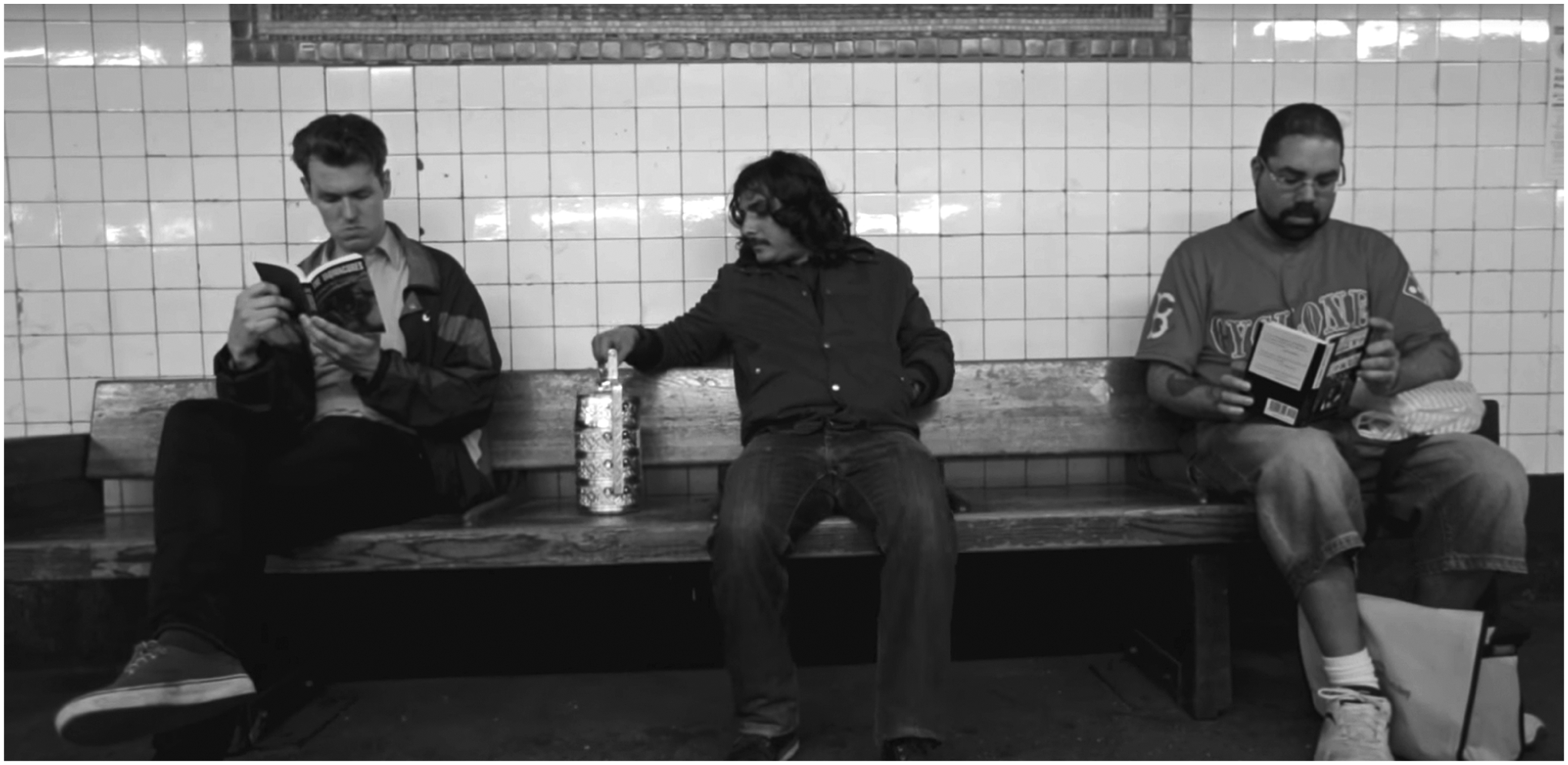
Punk rock has a rich tradition of protesting the powers that be. Muslims (and Brown-bodied non-Muslims) draw on this tradition as they create racial identities as “Brown kids” and rally against ethnic-religious oppression. Yet Brown youth have to be strategic about how they protest anti-Muslim racism; they don’t really want to end up on a terror watch. That would mean restrictions on their travel and possible federal monitoring of their social media and phone calls. Artists argue that irrefutable proof that a person is linked to terrorism is not required; the feds need to only raise a “reasonable suspicion” of being involved in or knowing about terrorist activity. Given how vulnerable Muslims are to racial profiling and surveillance, The Kominas punctuate their song, “If You See Something, Say Something,” with the plea: “Don’t Make Any Accidents! You Need More Evidence!”
The Kominas in the video for “If You See Something, Say Something” (2016).
Screenshot via YouTube channel Kominas Kominas
Through music, art, and podcasts, these punks urge us to fight the Right’s perversion of American democracy and freedom.
Anti-Muslim racism shapes who and what sort of behavior is deemed suspicious or threatening, which is why some Muslim artists try to make their audiences laugh as they call out and condemn the Right’s war on Islam. Riz Ahmed (also known as Riz MC), a hip-hop artist and actor (his latest big gig was Rogue One: A Star Wars Story, and he made a splash in the Lin Manuel-Miranda backed video for “The Hamilton Mix-Tape” song, “Immigrants: We Get the Job Done”), is famous for his bold anti-racist music in both young South Asian diaspora activism and punk communities. He was featured in the documentary, Taqwacore: the Birth of Punk Islam (2009), when he played a basement show with The Kominas. One of Ahmed’s first hits “Post 9–11 Blues,” an ironically peppy 2006 tune that exposes the reductive, dehumanizing features of anti-Muslim racism. He raps: “Darkie ones are terrorists. How simple can it be?” In this song, Ahmed points out that Western governments are behaving like indiscriminate killing machines. In the spirit of the nursery rhyme, “Jack and Jill sitting in a tree; K-I-S-S-I-N-G,” the chorus of “Post 9–11 blues” in part goes: “Bush and Blair in a tree; K-I-L-L-I-N-G.” In the song’s upbeat bridge, Ahmed spins a light-hearted children’s tune about heterosexual love and marriage into a bromance between George W. Bush and Tony Blair, two powerful world leaders who bonded in their shared war-mongering.
Ahmed has since joined forces with Heems, a rapper from Queens and formerly of Das Racist, to form The Swet Shop Boys. Punk in spirit, their 2016 hip-hop song, “T5” (Terminal 5), paints an explicit picture of what it’s like to be Brown amid the rise of the global Alt-Right. Within the track’s first 40 seconds, samples of roaring car engines, jets, and growling dogs provide sonic scenery alongside a shehnai, a wind instrument that loops like an irksome siren. Heems drops the first line, “Inshalla, Mashallah – Hopefully no Martial Law.” And when it turns to the chorus, Ahmed and Heems—one Hindu, one Muslim—sing together: “Oh No! We’re in trouble; TSA always wanna burst my bubble; Always get a random check when I rock the stubble.” The impression management Brown men have to participate in as they fall under fearful, White Western eyes at transportation checkpoints shines through: “Do it so proper, looking like a doctor.” But these attempts to look “proper” and pass security fail: “At the check point sayin’ my visa’s doctored.” Lyrics like these set the tone for an unsettling verse: “Terminal 5, Terminal 1, Think We’re Termites; Wanna Terminate Us.”
Still from the 10-minute film, “Allah Save the Punk” (2014).
Screenshot via YouTube channel drahmad93
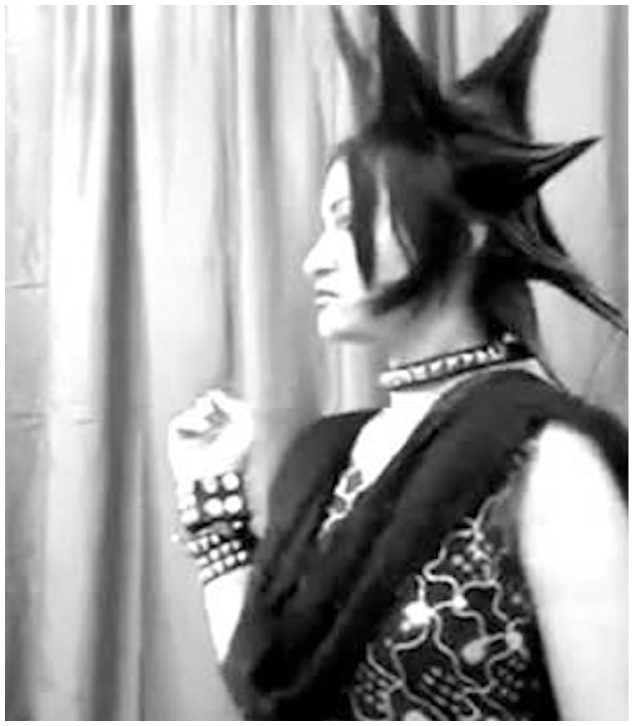
In mocking and attacking the war on Muslims and Islam, these punk artists blur the lines ordinarily drawn between music genres (like punk and hip-hop), race (like Black and Brown), and religion (Muslim, Hindu, or Sikh) to band together diverse groups against global White supremacy. But music is only one avenue to forge solidarity against rampant religious-based racial oppression. Taz Ahmed, a community organizer, writer, and punk rocker, co-hosts and co-creates #GoodMuslimBadMuslim, a current events podcast featuring two young American-Muslim women who talk about everything from sex and Ramadan to gay pride and allies with safety pins. Another podcast, ALTBrown, is run by Pady, a non-Muslim woman who identifies as Brown (and, in the past, as Taqwacore) and highlights the voices of metal musicians, comedians, dance-pop artists, vloggers, and garage punks from communities of color. Sabina England, who describes herself as a “Deaf Muslim Punk” and her artwork as “alt Desi Muslim Punk Feminist,” produces short films and photographs that challenge stereotypes of Brown women as quiet, polite, and oppressed. Films like her ten-minute short “Allah Save the Punk” feature an expressive, in-your-face, Brown woman (who communicates through sign language) challenging viewers to acknowledge that there are all kinds of Muslims in the world: feminists Muslims, queer Muslims, and punk Muslims.
As Alt-Right sentiment gains momentum, Muslim and non-Muslim Brown youth are modeling creative ways to oppose racial and religious oppression in a nation where not being Christian and not being White is especially dangerous. Through music, art, and podcasts, these punks urge us to fight the Right’s perversion of American democracy and freedom. They remind us that it’s time to get angry, get loud, get punk.