



Abstract
The author of Edible Memory on the durability of food memories and how identities and histories are revealed in the sharing of such memories.
In my efforts to understand how “heirloom” tomatoes or “antique” apples emerged—oddly permanent adjectives for very perishable foods—I began to see a phenomenon I later came to call edible memory. The stories people were telling themselves and each other about the past directly shaped their interactions with the material world, and with food and biodiversity in particular. Some stories were private, rooted in families and home gardens or urban allotments, while others became part of a more shared understanding of the past, including the pasts of particular foods.
Edible memory is a dynamic process. The meanings of foods can change dramatically with changes in technology, immigration patterns, or geopolitics, as well as shifts in tastes and habits.
Much of my research has focused on how individual and collective memories of particular fruits and vegetables shape the preservation (or loss) of edible biodiversity, and thus how remembering and forgetting have very tangible consequences for the edible biome. But edible memory goes beyond fruits and vegetables, and I think it is possible (and necessary) to employ a much more expansive notion of edible memory—recipes, processed foods, landscapes, and often very direct connections between recipes and strong emotions of joy and celebration or grief and loss.
On a radio call-in show, I spoke with a woman who had once lived in north Texas. She talked wistfully of a plum jam that her whole community used to make and how she had tried, in vain, to track down the recipe among current and former residents. She lamented that she would never taste that jam again as she explained an even more powerful reason why that particular flavor was gone forever—the plum trees that her town had relied on for this jam had all perished in a long, punishing drought. In a single story of a single food, the caller captured the deep connections between individual memory and taste with family and community memories and tastes, as well as the ways that these foods emerge from and shape particular landscapes. Her memory taps into something about the landscape and culture of a place that we could never learn simply by looking at it today.
Another caller on the same radio show took this memory even farther in the direction of recipes. Her call was less about trees and landscapes and more about the transformation of food by women in the kitchen. She prefaced her comment by saying she was surprised we hadn’t addressed LDS (Latter-day Saints) culinary traditions yet (she called fairly late in the hour), given that the radio show was based in Salt Lake City. Then she proceeded to tell us about what she sees as a fundamental LDS recipe: funeral potatoes. At a funeral she had recently attended, there were no less than fourteen basically identical potato dishes brought to feed the mourners. Providing the potatoes is just one of the ways that the women of that community step up in a time of mourning, caring for those experiencing loss with a big pan of potatoes topped with corn flakes or cloaked with a thick layer of canned, cream of mushroom soup. Clearly, the dish was a culinary component of this caller’s conception of LDS identity, and the prevalence of funeral potato recipes on the Internet confirms these connections.
There are actually around four thousand varieties of potato in the world, but recipes for funeral potatoes rarely call for a specific named variety. Many of the recipes I found simply called for bags of pre-made hash browns. In many other instances of edible memory, however, an ingredient’s particular variety is crucial. And one way such specificity can carry on is through the use of seed banks that act as cryogenic repositories of edible biodiversity connected to particular communities, regions, and nations. Seed banks of all shapes and sizes have emerged. Some focus on very local communities. Others, like the so-called Doomsday Vault in Svalbard, Norway, are aimed at collecting substantial quantities of the world’s edible cultivars.
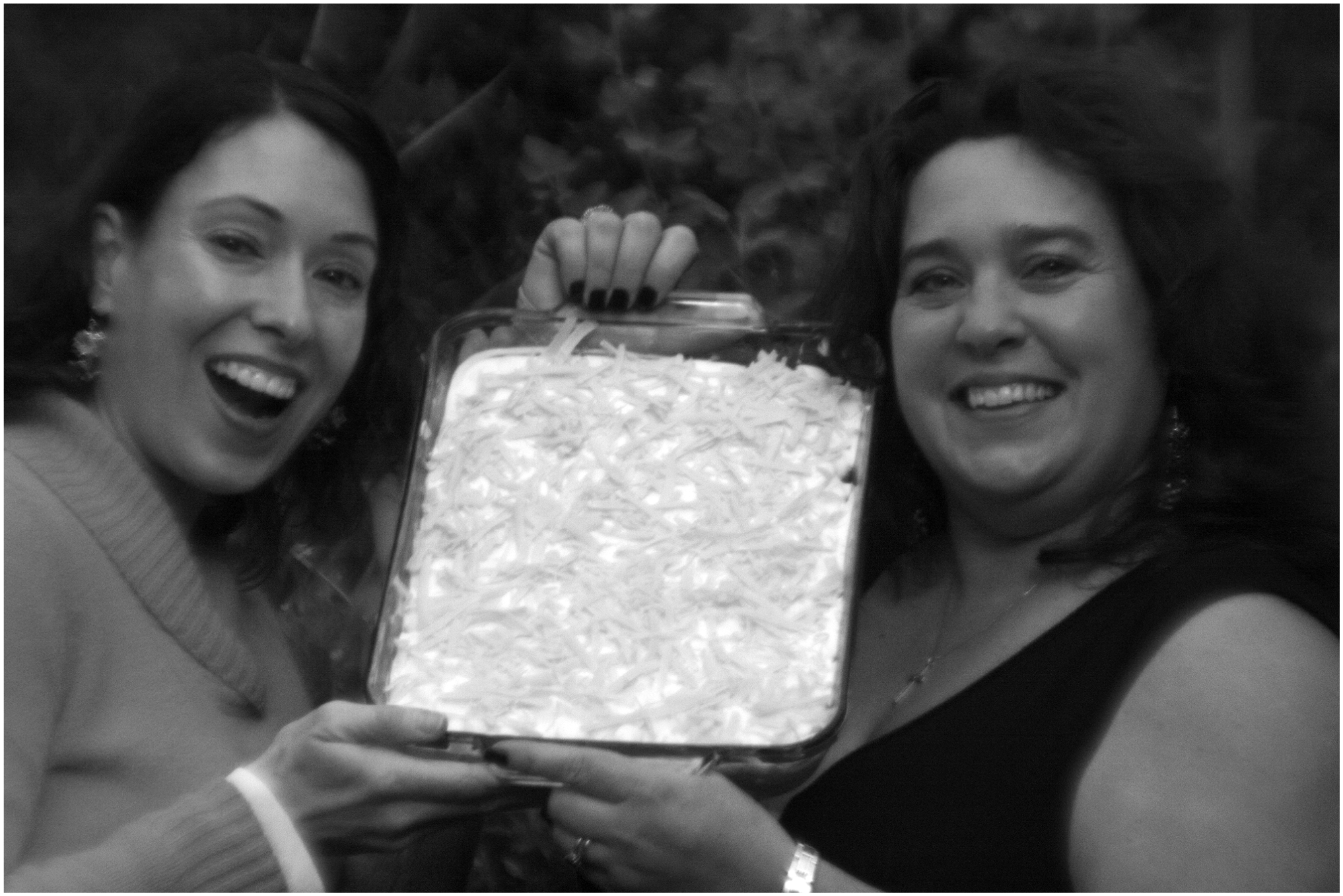
The photographer describes the proudly displayed family casserole as containing orange Jell-O with canned pineapple and mandarin oranges, mixed mayonnaise and sour cream, and shredded cheddar cheese.
Joel (tornator), Flickr CC
One important regional seed bank is run by Native Seeds/SEARCH in Tucson. The bank holds “approximately 1,900 different accessions of traditional crops utilized as food, fiber, and dye by the Apache, Chemehuevi, Cocopah, Gila River Pima, Guarijio, Havasupai, Hopi, Maricopa, Mayo, Mojave, Mountain Pima, Navajo, Paiute, Puebloan, Tarahumara, Tohono O’odham, Yaqui, and other cultures.” Stunningly, more than half of these crop varieties are corn, bean, and squash—the vital “three sisters” of North America. Native Seeds/SEARCH also collects stories alongside the seeds. Stories include where the seeds come from, who once cultivated them, and techniques for successful propagation, cultivation, and preservation of the crops. Many of these “Seed Diaries” are available on the organization’s website, preserved for posterity. Some of these seeds represent four thousand years of cultivation—key pockets of individual and community memory—but were at risk of being erased over the course of the last two centuries. Today they are more widely known and available through the work of this organization in collecting seeds, knowledge, and memory.
Clearly, edible memory is a dynamic process. The meanings of foods can change dramatically with changes in technology, immigration patterns, or geopolitics, as well as shifts in tastes and habits. The dandelion is one edible plant that has experienced (and continues to experience) a rollercoaster of changes in fortune. On the one hand, dandelion greens are showing up as a high-priced delicacy in a growing number of high-end restaurants; on the other, they fall victim to copious amounts of glyphosate as homeowners seek to erase the cheerful yellow blooms from their lawns and gardens. Dandelion consumption has often been associated with relatively recent Mediterranean immigrants, although I have also found dandelions on the menus of mid-century French restaurants. For some people, dandelions are the taste of childhood or home, for others they are a newly acquired appetite, and for many they are simply one of many tenacious enemies in the garden.
Edible memory can be amplified in times of great distress and displacement, and the edible memories of refugees are rightfully the object of study for a growing number of ethnographers. Elizabeth Cullen Dunn, for example, describes a stark contrast in the food culture of a camp of Georgian refugees. In a 2014 piece for the Slavic Review she writes: “As the first winter of displacement wore on, I was surprised by the contrast between macaroni and another form of food that was soon circulating widely: homegrown, home-canned fruits and vegetables. When I entered a cottage to talk with an IDP [Internally Displaced Persons] family, I was often offered home-jarred honey, fruit preserves, or compote, often with an explanation that these sweet treats were from the host’s village of origin and a description of the beautiful gardens or orchards they came from. When I asked how they had come out of South Ossetia—surely nobody fled with cases of jam or honey—my host’s voice would often drop to a whisper. While sometimes they were jars of food that had been given to relatives before the war and returned after the crisis, on other occasions IDPs had illegally crossed the border into South Ossetia to poke through the cellars of their ruined homes, hoping to find jars of food that had escaped destruction.”
The longing for the taste of the fruit of one’s own orchard can be so strong (a strength that those of us who never fled our homes cannot understand) as to provoke an illegal border crossing and the danger of searching through a ruined house. In Dunn’s example, the caloric requirements of residents were certainly being satisfied in the refugee camp—there was no shortage of calorie-rich macaroni—but these unfamiliar noodles left many camp residents hungry for meaning and memory.
Closer to home, artichokes and homegrown apples are among my own strongest edible memories, but so is a boxed spice cake I used to make with my great-great-aunt in the foothills of Northern California. It was such an extreme dish of convenience that the pan and the frosting even came in the box. We also cherished our ancestral Jell-o recipe, oddly known as “Seafoam Salad.” Our version contained green Jell-o (purportedly lime flavored), pineapple chunks, cottage cheese, mayonnaise, and horseradish. Some recipes of the same name go down a different path, with the inclusion of whipped topping and maraschino cherries or with cream cheese as a stand-in for the mayonnaise and horseradish. It probably goes without saying that the apples and artichokes play a much bigger role in my family’s cooking today than the somewhat regrettable Jell-o, but its memory endures.
When I speak about edible memory to groups of gardeners or academics (sometimes even academic gardeners) or when I do call-in radio shows, so many people offer examples of edible memory that fit this more expansive understanding of the term. Foods anchor us to particular times, places, and people with the visceral experience of smell and taste. In the global context, edible memory can be very joyful or wistful, nostalgic or urgent. Memories of food are part of how people understand, experience, and assert their place in the world, and, for sociologists or family historians or community food agents, they can be powerful sources of information about past ways of living, constitutive of individual and collective memories and experiences, of pleasure and struggle alike. Today’s meals, too, are tomorrow’s memories—edible memory is constantly shifting and changing as we move forward into the future, in the kitchen and at the table.