



Abstract
Peggy Orenstein’s book, Girls & Sex, is reviewed, with attention to its framing of sexualization of girls and women and approaches to unraveling American “rape culture.”
Girls and Sex: Navigating the Complicated New Landscape Peggy Orenstein HarperCollins, 2016 320 pages
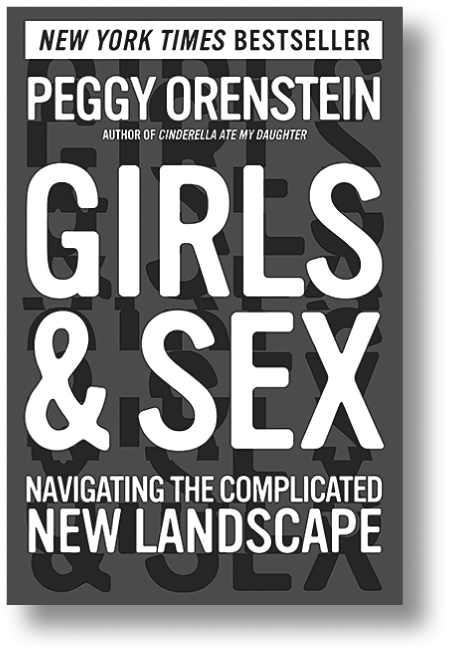
Having covered the crisis of girls’ plummeting self-esteem (in Schoolgirls) and the princess marketing juggernaut (in Cinderella Ate My Daughter), Peggy Orenstein again explores the induction of girls into hyper-femininity. This time, she focuses on older adolescents and young adults. In the best passages, readers listen in as Orenstein questions experts, talks with girls, and debates herself. She acknowledges ambivalence and absurdity, including the ways current representations of women, girls, and sexuality in popular culture make her want to “apologize to Tipper Gore for the way my friends and I mocked her in the ’90s” (p. 2). Orenstein also works hard to de-mystify and de-sensationalize phenomena related to the sexual objectification of girls that some observers consider urban legends and others consider the end of civilization as we know it. She does it all in a voice that is simultaneously breezy, reasonable, and adamant in defense of girls’ and women’s power and pleasure.
Some girls’ sexuality is a frequent flashpoint for moral panic, social control, and media circus. Orenstein tracks the recent history, horror stories, and parental and political panic over hook-ups, sexting, and “omnipresent porn” (p. 1). She supplements her own good sense with references to current social and behavioral science research, and the strategy mostly works. Orenstein is clearly aware of the race and class inflections of selective social concern about girls’ sexuality, fertility, and vulnerability to coercion and abuse. However, she justifies her convenience sample of some seventy (mostly white, middle-class) girls who are either in college or are college-bound by noting that she “specifically wanted to talk to those who felt they had all options open to them, the ones [sic] who had most benefited from women’s economic and political progress” (p. 4). College-bound daughters are often the objects of very specific social and parental anxieties about their purity, fertility, and (hetero)sexuality. Orenstein is a reliable guide to the contents of that particular echo chamber. She is less equipped to report on young women of color, transgender and gender-non-conforming girls, and youth from less affluent origins. The young women on such less-privileged trajectories receive significantly lower support for their safety, reproductive health, and pleasure, instead becoming targets for surveillance, condemnation, distain, and abuse (see R. Danielle Egan’s Becoming Sexual). Orenstein’s book is poorer for their absence.
The subtitle of this book, “Navigating the complicated new landscape,” is a smart choice. The image of navigation helps the author pre-empt critiques about how focusing on sexualization erases girls’ agency; nobody expects a sexual object to object, let alone act as a sexual subject, as Orenstein encourages girls and young women to do. Further, “navigation” sounds like something intelligent people—girls, but also the caring mothers to whom this book is pitched—can actively learn and do. And with “landscape,” Orenstein proposes a useful theory of culture as powerfully shaping girls’ experiences and sexual politics. Landscapes are taken for granted as inevitably shaping our views, travels, and destinations. But landscapes are also navigable and potentially changeable, especially when “landscaping” is more than merely ornamental. Navigating the landscape, then, is a compelling way to frame the cultural frenzy over some girls’ bodies, vulnerabilities, and sexual subjectivities—and the ways girls and their allies might confront and challenge frenzy and its instigators.
Agency and culture, while abstract, matter a lot in the debates over the lives and sexualities of girls. In large part, this is because of the sometimes implicit, sometimes explicit connections among agency, culture, and gender in debates over the sexualization of girls in general and “rape culture” and campus sexual assault in particular. There are at least three important points for readers to consider while listening along with Orenstein to the young women and the experts she interviews.
First is the tricky issue of culture as the cause of violence against women and the sexualization of girls. Nothing in Orenstein’s “navigating the landscape” metaphor helps her or readers counter decades of politicians’ and pundits’ selectively invoking “culture” to identify the most likely perpetrators (read: Black and immigrant men) and victims (read: white girls and women) of sexual and gender violence. This omission is the macro-sociological side of the micro-sociological problems with Orenstein’s convenience sample. Readers are left to wish that she had created a topographical map of the landscape by including more about race and class. Even without including more diverse stories, Orenstein could have strengthened the book by explicitly addressing how these select girls, their parents, and media contribute to contemporary constructions of whiteness, femininity, aspirations for upward mobility, and anxieties about downward mobility.
Then there are the ways that Orenstein tends to reduce culture to mere media hype. Orenstein recognizes the significance of media in highly contested analyses of the meaning and power of pornography, sexualization, and representations of gender, inequality, and violence. She also successfully deflates the most overblown myths animating traditional and new social media. However, Orenstein seldom gets beyond culture as media. The larger problem is the culture of impunity that institutionalizes men’s peer support for sexism and violence against women. The institutional cultures of security, litigation, and administration of gender and sexual conformity that reproduce sexual harassment and rape are beyond Orenstein’s scope (interested readers should see Jennifer Doyle’s powerful Campus Sex, Campus Security).
Third, there are the failures of imagination represented by two aspects of Orenstein’s model of culture. One is what Mimi Schippers, in Beyond Monogamy, calls mononormativity—that is, institutionally privileging the sexually exclusive couple in ways that perpetuate slut-shaming and women’s responsibility for both doing emotion work and shoring up men’s heteromasculinity. Mononormativity undermines Orenstein’s efforts to encourage creative conversations with girls and her plea for girls to talk back to rape culture. The other weakness of Orenstein’s model of culture is its focus on communication-based models of sexual ethics and violence prevention. The notion that all we have to do to usher in a sexual utopia is reinforce “healthy relationship skills” and commit to affirmative consent is consistent with a gender-blind public health approach to preventing sexual harassment and coercion. And, yes, encouraging youth to consider talking about consent as foreplay is vastly better than nothing. Moreover, Orenstein is right that “consent is sexy” is a compelling slogan for shimmying between the rock of slut-shaming and the hard place of date rape. But treating rape as miscommunication does nothing to challenge sexist constructions of desire, consent, and refusal. An even more progressive analysis of rape culture would thoroughly excavate the gender, race, and class politics of who demands, who listens, and who acquiesces.
Orenstein is at her best when, in the last chapter of Girls & Sex, she makes a strong case for parents, feminists, and anyone who cares about girls (and boys) to fight hard for comprehensive sex education. “Comprehensive” means sex education that is not only scientifically accurate and straightforward about “risk reduction” (promoting safer sex practices and “commonsense precaution” to prevent violence) but also includes “decision making, assertiveness skills, sexual consent, personal responsibility, gender roles, and the diversity of sexual orientation and gender identity,” and—here’s the kicker—“sexual activity as a source of pleasure for teenagers” (p. 206). Even if there is not much “new,” here, Orenstein is correct to map this as a treacherous landscape of contradictions and backlash against feminism. It is especially difficult to disrupt the cultural “rape script” that casts men as naturally fearsome subjects of sex and violence and women as naturally fearful and inevitably vulnerable. Orenstein appreciates the irony of a context that makes scientific accuracy, “healthy relationships,” and rule-oriented communication ethics seem both wildly utopian and absurdly tame. For all her self-debate, Orenstein is not actually going very far out on a limb. There is ample evidence in support of specifically feminist approaches to sex education, self-defense, media literacy for youth and parents, and primary prevention of both victimization and perpetration (see, for compelling review and critical appreciation, Michael Messner, Max Greenberg, and Tal Peretz’s Some Men). Now is certainly an opportune moment to incorporate that evidence and transformative commitment into the overwhelmingly gender-blind programs to promote safer, consensual sex and reduce campus sexual assault by changing peer cultures. I hope Orenstein’s book helps build the constituency to demand and enact such changes.
In the book’s best passages, readers listen in as Orenstein questions experts, talks with girls, and debates herself. She does it all in a voice that is breezy, reasonable, and adamant in defense of girls’ and women’s power and pleasure.
Orenstein’s foray into the territory of the sexualization of girls was clearly disconcerting, inspiring, and mind-expanding in equal shares, and her message is likely to be both reassuring and eye-opening for many readers. What matters in the current vexed political context is that she makes her path through this complicated new landscape with both head and heart in the right place.