Abstract
Class mobility and racial fluidity: New research from the journals.
Darker Skin, Harsher Sentence
The “dream” that men be judged on the content of their character, not the color of their skin, remains unfulfilled.
John Flannery, Flickr CC

A wealth of sociological research documents how Blacks are disadvantaged by the criminal justice system, from higher likelihood of being stopped by police to much higher rates of incarceration. In a recent American Journal of Sociology article, Ryan King and Brian Johnson extend that knowledge by investigating whether and how skin tone and “Afrocentric” phenotypical characteristics affect sentencing outcomes.
The authors gained access to a unique data source of booking photos linked to sentencing records for over 800 Black and White male felony defendants in Minnesota’s Twin Cities. The men were charged with a range of violent, drug, and property crimes. In their effort to go beyond color and skin tone to understand racism, the researchers coded the photos for skin tone as well as “Afrocentric” features (including a broad nose, wide lips, and coarse hair) and overall “Afro-” vs. “Eurocentric” features, all on a seven-point scale. Type of sentence (imprisonment; a stayed sentence only be served if the defendant violates the terms of his probation; or no prison sentence) and sentence length serve as the study’s “outcome variables,” and the authors’ final analysis included control variables such as the offender’s criminal history, crime type, and county.
The authors found that although skin tone and facial features do not affect the length of prison sentences, they do affect whether an offender receives a prison sentence. This is a critical contribution, because prior research on skin tone and sentencing has only looked at incarcerated prisoners without comparing them to defendants who avoided imprisonment. Additionally, they note that White men with darker skin and more Afrocentric features were apparently penalized for resembling Black men and were more likely than other White men to receive a prison sentence. Taken together, the authors believe the particularly harsh treatment of the most dark-skinned, African-looking men may actually drive the deep Black-White disparity in incarceration.
University of Phoenix vs. University of Unicorns
The number of for-profit higher education institutions increased by 300% between 2000 and 2010, but there’s little data about how their graduates fare in the labor market. Complicating the question, for-profit institutions cater to those pursuing “sub-baccalaureate” degrees, such as an associate’s degree or technical credentials. Thus, in the Sociology of Education, Nicole Deterding and David Pedulla examine whether it is the type of degree or the institution from which it was earned that matters most to employers.
Deterding and Pedulla fielded an audit study in Boston, New York City, and Los Angeles, testing how employers treat job candidates with different degree types. The resumes submitted for open clerical and administrative positions differed based on fictitious applicants having a high school diploma or an associate’s degree from one of three institution types: a local non-profit community college, a local for-profit institution, or a fictitious institution.
At the lower end of the labor market, holding an associate’s degree only offered a slight benefit over a high school diploma. More significantly, employers apparently did not differentiate from which institution the associate’s degree was issued. In fact, the fake school’s associate’s degree had a higher rate of callback than the for-profit school’s degree. These results run counter to both human capital and signaling theories, suggesting that hiring managers do not use the perceived quality of an educational institution in their decisions.
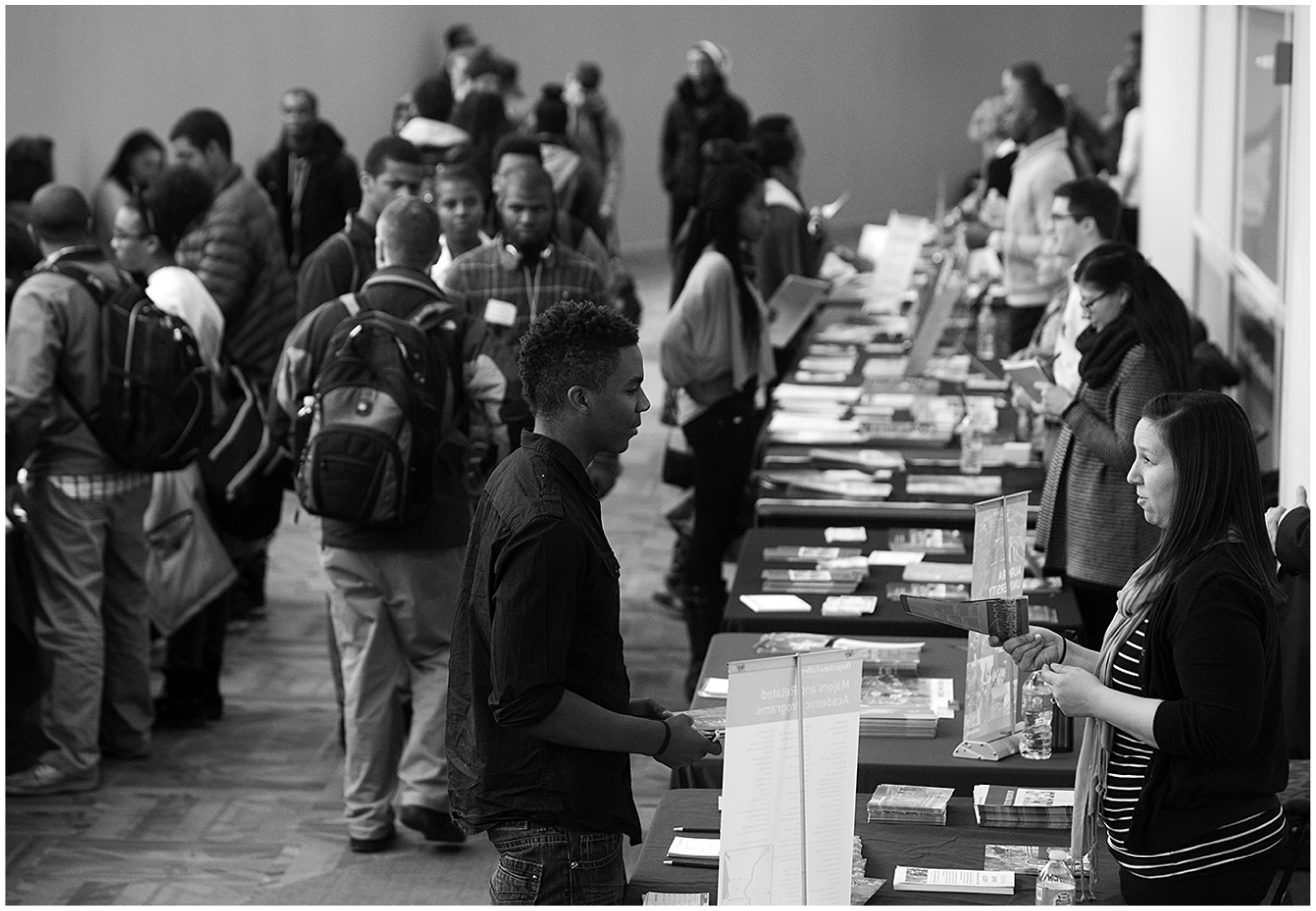
Prospective students consider their options at a college fair.
College of DuPage Newsroom, Flickr CC
Black Names aren’t that Simple
In correspondence audit studies, nearly identical applications or resumes, altered only in the name used, are submitted to the same listing. Researchers use distinctively racialized names to communicate information about the applicant, and differences in callback rates are taken as evidence of discrimination. Such studies, however, have produced inconsistent estimates of racial discrimination in employment.
In a recent article published on SocArXiv, Michael Gaddis argues that this variability is largely the result of a lack of scientific rigor in how researchers select “Black” names. Gaddis used New York state birth records from 1994-2012, which contain information about individuals’ names, race, and mother’s education, to identify racialized names across the class spectrum. He then surveyed a large number of people to determine whether individuals could correctly perceive the race of names as they align with population-level naming practices and use in past correspondence studies. Finally, Gaddis used these results to evaluate whether individual racial perceptions of names explain variations in previous studies’ estimates of discrimination.
Gaddis’s results suggest that names given by highly educated Black parents are less likely to be perceived as “Black” than names given by less educated Black parents—that is, the “race” discrimination was actually affected by class differences in naming conventions. Kugelmass’s study, noted in this section (“screening therapy clients by race and class”), went beyond names to manipulate race using voice actors. A large body of social science evidence, however, has incorrectly operated under the assumption that all Black names are alike.
Institutionalizing Prison Reentry
About 640,000 incarcerated people are released back into communities each year, and between 1995 and 2010 there was a 240% increase in the number of non-profit organizations providing prison re-entry services. The study of prison re-entry often focuses on how prisons prepare people for life “on the outside” or on the specific elements that influence the likelihood of recidivism. Jonathan Mijs, in a recent Sociological Forum article, studies this institutionalizing of the reentry process and how non-profits function as a link between the penal and welfare state.
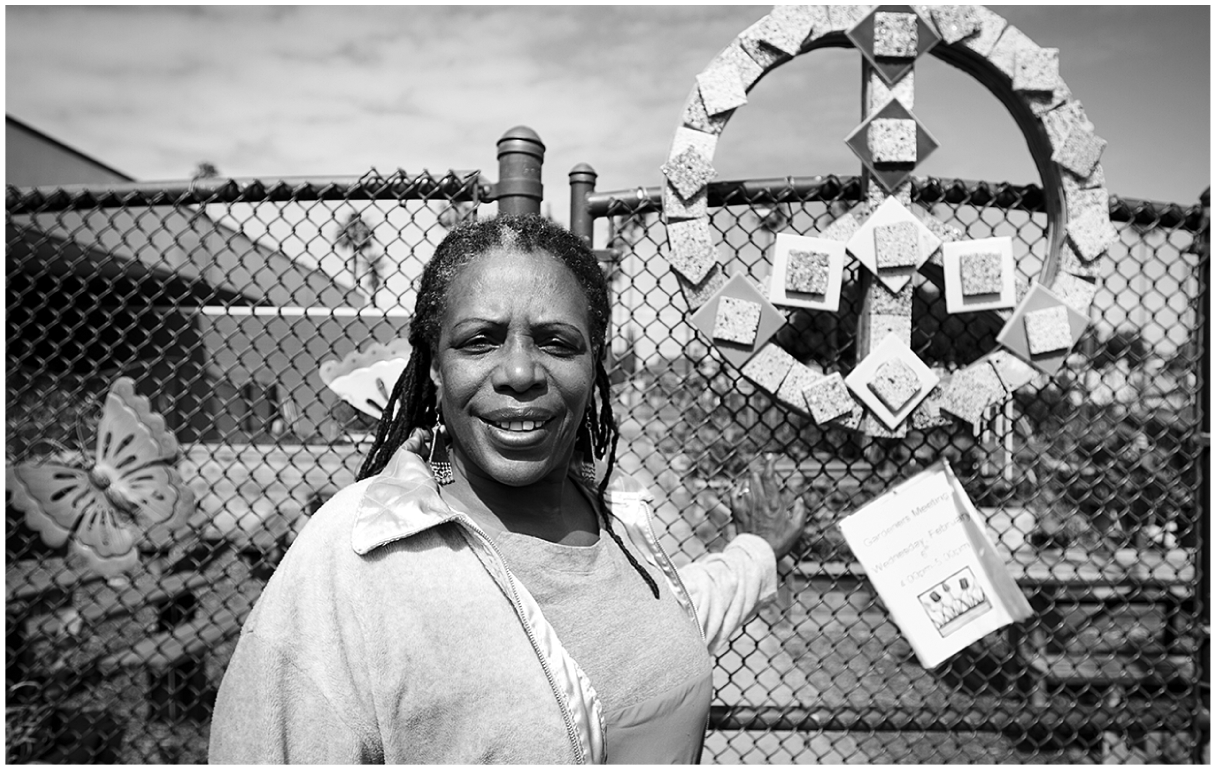
Activist Mercedes Brown outside All of Us or None, a California non-profit that helps the formerly incarcerated with arrest expungement and job placement, among other needs.
Charlie Kaijo, Flickr CC
Mijs conducted ethnographic fieldwork at “Safe,” a non-profit that serves about 1,500 formerly incarcerated people in a northeastern U.S. city each year. Safe emphasizes the importance of clients making positive decisions (finding a job, obtaining housing) and avoiding negative people (some family members, former drug buddies) and places (their old neighborhood and streets), and clients are constantly asked to choose between binary categories of “good choices” and “bad choices.” They are also encouraged to avoid “outside” people and places—as in using a common lounge space open 12 hours a day—and can become isolated and dependent on the organization. The staff recognizes structural forces that influence incarceration, such as trauma, addiction, and poverty, but emphasize clients’ personal agency in building their futures. Mijs calls this an expectation of a “structural past and an agentic future,” and notes that the neoliberal narrative of personal responsibility also shifts accountability for clients’ failure and success away from the organization on whose services they depend.
Mijs suggests that organizations would do well to focus on delivering immediate tools rather than an organizational community, and to assist clients in reconnecting with family members and friends in order to build social networks for success.
Children of Immigrants, Changing Races
The box you choose may change over time.
Quinn Dombrowski, Flickr CC
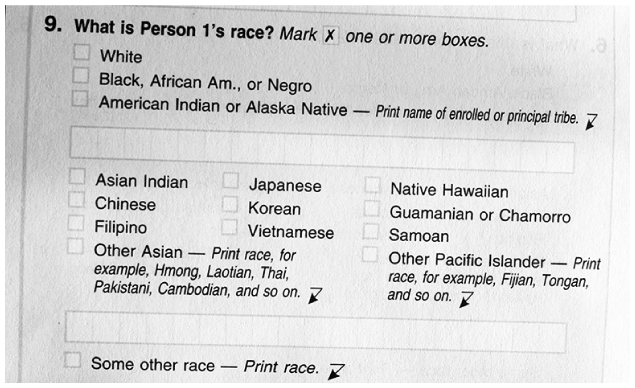
Racial self-identification is surprisingly fluid. Some people, particularly those with mixed ancestries or multiracial identities, change their racial categories over time. Immigrants and the children of immigrants are a particularly interesting subgroup because of how they integrate and view themselves within their new country’s racial hierarchy. In their recent Sociology of Race and Ethnicity article, Thomas Mowen and Richard Stansfield study the prevalence of such changes in racial self-identification and the mechanisms that may contribute to these changes.
They find that the children of immigrants in the U.S. may change how they self-identify partly because of peer influences in the transition into adulthood and partly because of stress about social and academic performance. They use longitudinal data taken between 1991 and 2003 in San Diego and Miami to measure young people’s educational performance and social, cultural, and psychological adaptation. In the sample, 42% changed racial identification as young adults, mostly moving between “other,” “multiracial,” and “Hispanic.”
Children of immigrants with more positive feelings of self-worth and self-esteem and those with more cohesive families were more likely to change their racial self-identification, while depression and socioeconomic status appeared to have no effect. The authors conclude that changing racial identity might be related to immigrants’ kids’ need to maintain a socially positive identity.
Class Mobility goes Way Back
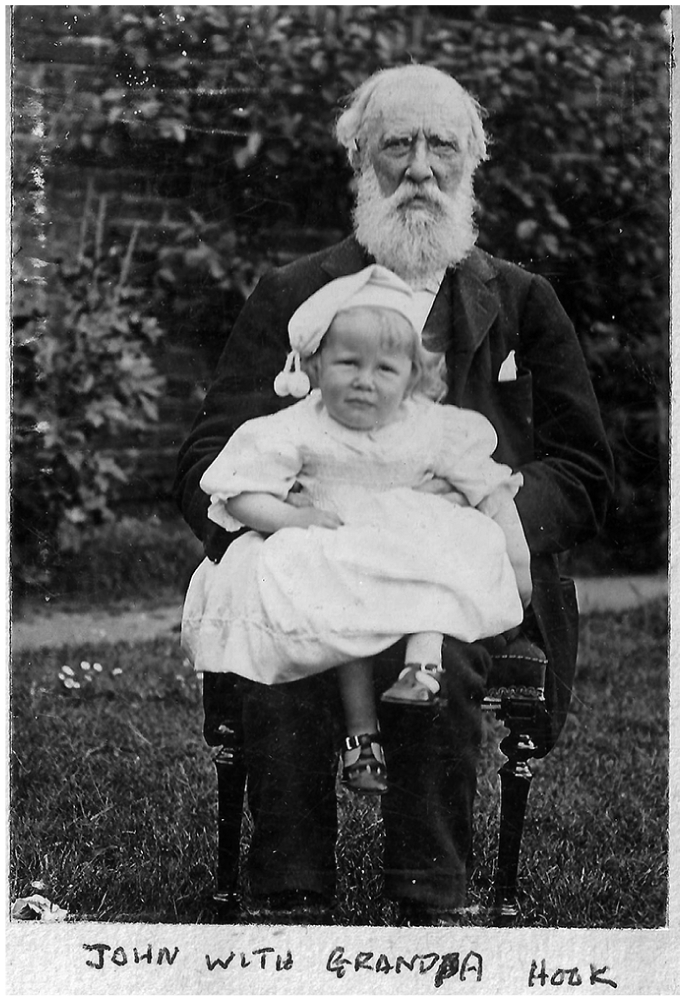
A late 19th century grandfather could confer status even at a distance.
Public domain
The American Dream has taken a hit as historically high inequality threaten the long-held idea that the U.S. is a meritocracy. Sociologists have long known that social mobility is more limited than popular narratives suggest, and that the best predictor of a person’s social class is their parents’ social class. More recently, researchers have even wondered whether the social or occupational class of grandparents could be useful in predicting social class. They have been hindered by inadequate historical data, rapidly changing economies, and the much shorter life spans of earlier generations.
A paper by Antonie Knigge, recently published in Demography, looked to data from the Netherlands to remedy these problems. Knigge used a database of Dutch marriage certificates dated between 1812 and 1922. Even after fathers and uncles were taken into account, the status of grandfathers’ and great-grandfathers’ influenced the status attainment of later generations of men. (Because status attainment worked so differently for women in this period, only men were studied.) His paper suggests that grandfathers influenced their grandson’s status through multiple pathways. If a grandfather was local enough to his grandchild to lend material assistance or directly assist in the development of human and social capital, that seemed to help. But even less hands-on grandfather’s conferred durable resources (heritable wealth, like land and money) and institutionalized advantage (social connections and status, as well as informal reputation mechanisms) that translated to class mobility among their grandsons.
Screening Therapy Clients by Race and Class
Black people, regardless of their insurance status, have more difficulty accessing health care than White people, and people with lower incomes receive less care than those with higher incomes. To further evaluate these care differences in access to mental health care, Heather Kugelmass undertook an audit study, now published in the Journal of Health and Social Behavior.
Using voice actors to portray middle-class White clients, middle-class Black clients, working-class White clients, and working-class Black clients, Kugelmass’s research team called 360 mental health care providers in New York City to leave messages requesting new patient appointments. The messages described the same symptoms and insurance, and they all requested weekday evening appointments. The recordings varied in name, vocabulary, and dialect, to portray both race and class (separate survey respondents who heard the recordings independently validated these portrayals by identifying the race and class of the speakers).
Callbacks were classified by whether the provider offered an appointment and whether the appointment offered was during the preferred time. Middle-class White callers received an appointment 28% of the time, compared with 17% of middle-class Black callers. Callers portraying working-class patients received appointment offers just 8% of the time, regardless of race. These differences were nearly mirrored in the breakdown of patients offered appointments at their preferred time, though women were offered their preferred time more often than men. Overall, a working-class Black man received just one evening appointment offer in 80 calls, while a middle-class White woman with the same insurance received 16.
Matthias Mueller, Flickr CC

One implication of these results is that those least likely to have paid sick time or flexible schedules—working-class patients—were least likely to be offered an appointment after work hours. Class biases among providers add to the care barrier for already underserved populations.
Not Making Mom Proud
Uh-oh. Did you take our advice last issue and call your mom? Hopefully she didn’t tell you she was really hoping to hear from one of your siblings.
In “My Pride and Joy? Predicting Favoritism and Disfavoritism in Mother-Adult Child Relations,” J. Jill Suitor and colleagues used a mixed-methods approach to investigate what makes mothers choose favorites. Using data from the Within-Family Difference Study on which child a mother selected as the one that made her most proud, Suitor and colleagues found that mothers’ preferential pride is complex. Aside from high educational attainment, a child meeting normative adult measures for success (like getting married or having a job) had an effect, while a mother’s perception that she and her child shared the same values was the strongest predictor of favoritism.
Qualitative data from this study might explain these ties. When asked how she selected the child who made her most disappointed, mothers often discussed normative adult measures for success through the lens of their own values. One mother said she was most disappointed in her most successful child— because she felt that he could have achieved even more. Another said that she was most disappointed in her child with the most career ambition, because she wished he would curb his desire in favor of stability. With regard to daughters, mothers often expressed disappointment if they disapproved of daughters’ spouses, even though marriage is culturally considered an adult success. The attainment of adult milestones was just not enough to make mom proud.
It’s not always so easy to tell which kid’s the favorite.
Joe Hall, Flickr CC
For Couple Stability, Context is Key
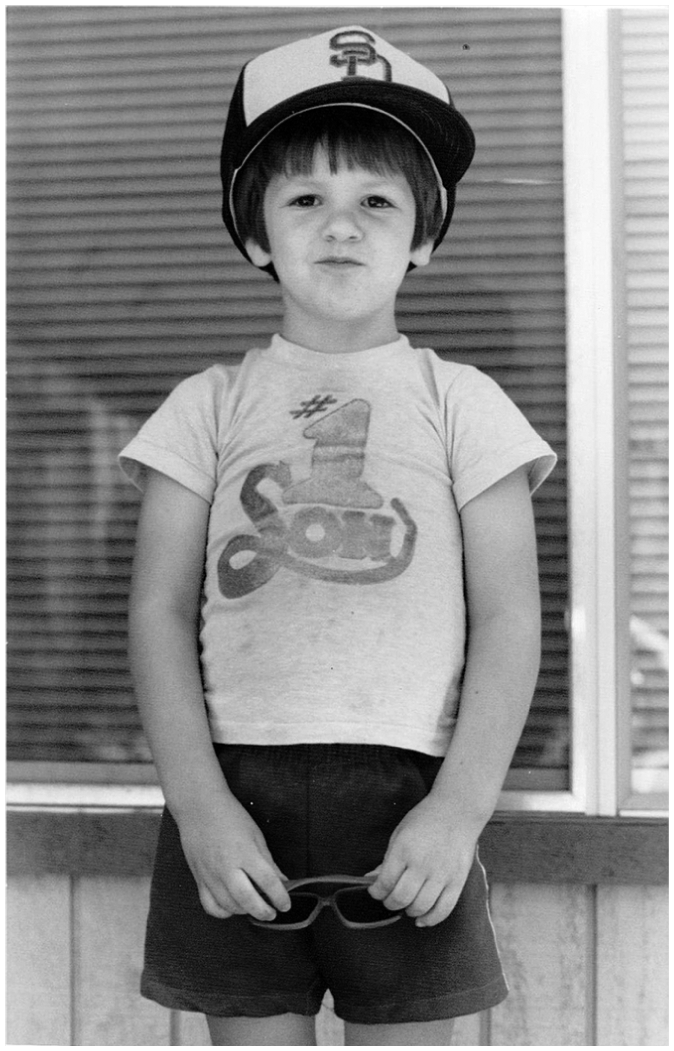
Cohabitation has been a mainstay for all kinds of couples for years, and recently improved survey instruments can help sociologists better understand how cohabitation works and whether any unique challenges confront same-sex cohabitators. Older surveys weren’t designed to capture information about living together, and the piecemeal, state-by-state nature of same-sex marriage rights made it difficult to assume what two people of the same sex living together might mean. Now, in Demography, Wendy Manning and her coauthors are able to use the Survey of Income and Program Participation to examine relationship stability in three groups: married different-sex couples, cohabiting different-sex couples, and cohabiting same-sex couples.
Research shows stability is relative.
Charles Haynes, Flickr CC
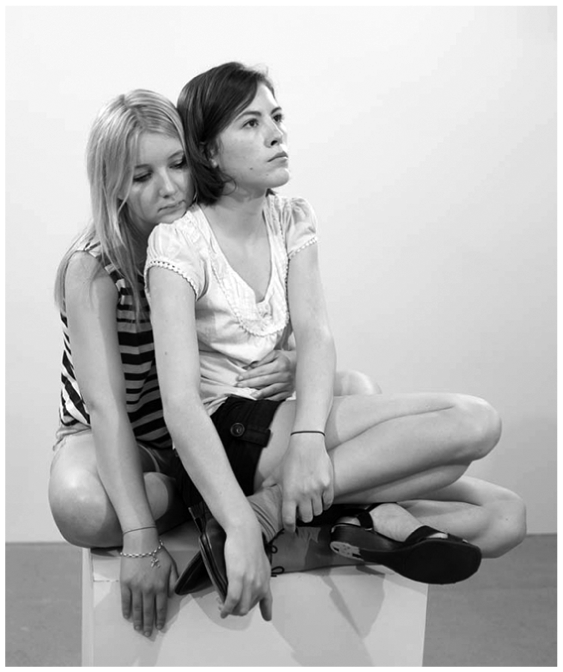
They expected to find differences in relationship stability between cohabiting same-sex couples and cohabiting different-sex couples. They hypothesized that the additional social pressures on and lack of normative models for same-sex couples would lead to more frequent breakups. Or, maybe the statistically higher financial resources that some same-sex couples have would help, leading to lower stress, fewer breakups, and greater relationship stability.
In the data, however, the researchers found no real difference between cohabiting couples: whether same-sex or different-sex, cohabitating couples had similar levels of relationship stability. Although cohabitation across all couple types is generally less stable than marriage, Manning and her coauthors did find one effect that appears to point to local social context in an interesting way: in states where same-sex marriage was constitutionally banned (before 2015), cohabitation was less stable for all gender groupings than in states without a ban. One possible implication is that same-sex marriage bans may serve as proxies for other attitudes about family formation that vary across regions.
In some ways this research may be already outdated; as laws governing family formation change, so too will family formation practices. But this study reminds us of the long and sometimes surprising reach of social policy.
The Complex Path to Secular Identity
U.S. women are more likely than men to be religious, in terms of beliefs, practice, and affiliation. In Social Forces, however, Joseph Baker and Andrew Whitehead show that gender doesn’t stand alone. A more intersectional approach demonstrates that gender, political views, and education work together to shape religiosity versus secularity.
The common association of religious beliefs with conservative ideologies is one explanation for political differences in identification with religion, particularly in the cases of reproductive rights and sexual identity. In addition, higher levels of education are associated with secularity, potentially because of conflicts between the teachings of religious texts and the contents of college textbooks. Here, the authors look to survey data to explain how these social statuses work together.
Using the General Social Survey, Pew Religious Landscape Survey, and National Election Survey, the authors measure secularity along two lines: non-attendance at religious services and no religious affiliation. Measuring secularity, the authors found positive interactions between gender and education as well as gender and political liberalism, meaning that the effect of both liberalism and education on secularity was stronger for women. There were gender differences, however, in the way that education and politics intersected: extremely liberal men and women with advanced degrees were equally likely to identify as secular, while extremely liberal men with less than a high school education were twice as likely to identify as secular as similarly educated women.
Baker and Whitehead conclude that the factors that shape secularity operate together, as our gender, political ideologies, and educational attainment overlap in complex ways. The impact of any one of these dimensions without consideration of the others neglects the social context in which beliefs and practices are formed.
Constructing a labyrinth in Grace Cathedral, California.
Christian Bradford, Flickr CC