



Abstract
Sport sociologist Ben Carrington talks with the “edge of sports” reporter about nearly a decade of changing coverage.
Keywords
Back in 2008, you wrote a piece for Contexts called “Calling Sports Sociology Off the Bench.” In it, you said there was a frustration that “a variety of people in the field and I share that the work needs to be more relevant, more accessible, more public,” and you kind of urged sports sociologists to get out of the “academic ghetto.” You quoted Pierre Bourdieu, who said that the sociology of sport is disdained by sociologists and despised by sports people. But what was your motivation for writing that piece?
It’s crazy how much has changed in the last 8 years. I feel like I am not only talking about a different decade, but a different era. So let’s take it back to 2008 for a second. At the time I was writing a lot about the intersection of sports and politics, about the ways in which athletes who tried to speak out were muffled by the athletic industrial complex, and the ways in which sport is this remarkable lens for having comprehensive discussions about race, gender, sexuality, class, nationalism, war—basically any political issue. My frustration was at how lonely I felt in doing this work. There was a very small online culture of people doing this kind of writing, and the place where I found people who were actually interested in the work I was doing was in people at universities who were invested in sports sociology, and so I was speaking at a lot of campuses. I’d written a couple of books at that point and I met all of these terrific professors and researchers and adjuncts who were doing this really interesting work, but my frustration was pretty vast and multilayered.
Sometimes I was frustrated because their research about race, gender, sexuality, and sports was written in a kind of dense academic language that would be incomprehensible to people who hadn’t been through the academy. Sometimes I was frustrated with it because they sort of accepted that no one would be interested in what they had to say, as a kind of de facto, self-fulfilling prophecy. They would say things like, “Have you ever seen Sports Center? Of course nobody cares about this. People just care about highlights.” And I would beseech them, “No, there actually is an underserved audience out there of people who are interested in these bigger discussions.” And, you know, sometimes I’d be frustrated because I’d be speaking to someone who’d be going to a school that would be at the heart of discussions about the NCAA and profiteering and exploitation and their work directly speaks to what’s happening in the heart of their campus. And yet there is no effort to make that work matter. Not even so much as a cold call to the campus radio station saying, “Hey, maybe I could be a guest and speak about what’s happening.” And so it was with all that in mind that I wrote this piece, and it feels odd talking about it. It feels like, you know, like I’m speaking about something far, further back than just 8 years ago. Because the climate has I think changed so decisively since then on so many fronts.
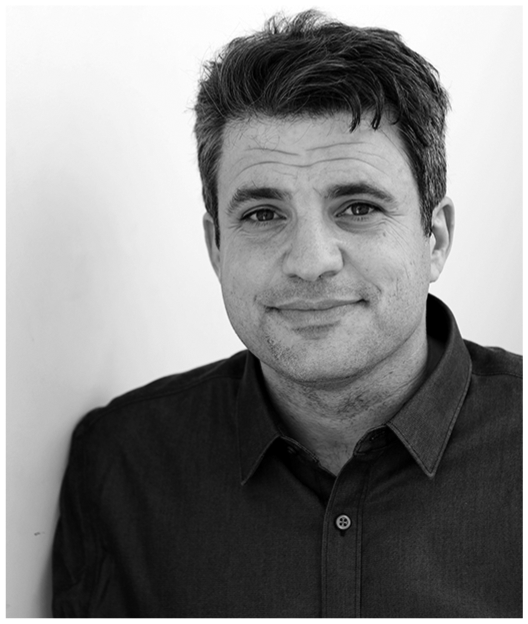
Dave Zirin
Courtesy Dave Zirin
The other part of your analysis was a critique of sports writing, and you used a quote, “This may not be the golden age of sports writing, but it is a golden age for sports writers.” You identified in that piece some of the changes which actually have really become pronounced over the past 8 years, where individuals like Bill Simmons and spaces like Deadspin and ViceSports have created a broader platform for critically engaged forms of sports writing.
Yeah, right now I think you can say that it’s never been a better time to be a sports writer and it’s never been a worse time to be a sports writer, and you can say both of those with utter sincerity and have it be true. But to speak very directly to the article, in 2008, one of the things I was saying was that this space would have to be created by sports sociologists and by people who had dreams of writing sports media. Like they would have to go to their own blogs, they would have to write their own articles, they would have to write their own op-eds. They would have to basically use the untapped terrain of the Internet to create their own space.
It was pretty obvious to me at the time that there was an underserved audience: There were people who wanted more than highlights, there were people who wanted to have a critical engagement with sports, who wanted to separate what they loved about sports from what they hated about sports so they wouldn’t have to feel guilty for liking sports. It can be something like film or dance, a cultural commodity that you can critically engage with and see both its beauty and its destructive side.
I think Grantland was definitely a product of that, and I think this new ESPN site The Undefeated was a product of that. I mean, they have an article up as we’re talking right now about why did Lebron James stop speaking about Tamir Rice. Why did he start and then stop? I mean, that’s a hell of a thing for ESPN to do an article about. “Why isn’t this athlete speaking more about a child who was gunned down by police in his hometown?” And that’s on the freakin’ home page of ESPN.com. That’s them recognizing that it’s a different sports world out there.
There are other sites like Vocativ doing really interesting work, and there’s 30 for 30, a documentary series that’s tried to take on a more political lens through sports. I think a lot of the sports writing that you’ve seen over the last couple of years at ESPNW has tried to be a reflection of what sports sociologists have been doing around gender and sexuality for years. And you even see studies by sports sociologists reflected on these websites, which you weren’t seeing in 2008.
I want to be really, really clear about something. Like hyper-clear. I am not in any way arguing that I wrote this thing in 2008 and these media barons read it and said, “Ahh, here’s an opportunity!” as if I was writing down the recipe for a better mousetrap or something I am not trying to make that argument at all. Much more salient is that this audience out there was underserved and because we do live in a market society, it was going to get served somehow, that’s one thing. And the second thing is that there were things that had yet to occur in 2008 that have just exploded in the last 8 years. Like in 2008 the idea of marriage equality, if you had said that, that was something that Republicans used to win elections. The phrase Black Lives Matter would not have meant anything to anyone. The phrase Slutwalk would not have meant anything to anyone. It is just a very different landscape right now.
Sports, I would argue, is very much reflecting that landscape, but has also played a role in shaping that landscape. I think that has created a very different kind of power dynamic in sports media. I am getting this quote wrong a little bit, but the quote to me that is so emblematic of how things have changed in the last 8 years was an article that Howard Bryant did about NBA players and Black Lives Matter about a year and a half ago. This is what he effectively said: ”If a young Black kid had been gunned down by police and Michael Jordan had said something, it would have shocked us. Now, if a young Black kid is gunned down by police and Lebron James says nothing, that’s what shocks us.” Twitter and other forms of social media have made less mysterious what athletes actually think about things, because athletes—I don’t want to shock anybody—but a lot of pro athletes aren’t great with impulse control! If something happens, they’re commenting on it, and so that creates more space for other folks to comment on it as well.
Sport is this remarkable lens for having comprehensive discussions about race, gender, sexuality, class, nationalism, war—basically any political issue.
This time period, 2008 to 2016, obviously that coincides with Barack Obama, his win in 2008, through two presidential terms—that’s the broader context. If you go to the Undefeated right now, it has a quote from Maya Angelou, “You may encounter many defeats, but you must not be defeated.” And its tag line is “Not Conventional, Never Boring: The Undefeated is the premiere platform for exploring the intersections of race, sports, and culture. We enlighten and entertain with innovative storytelling, original reporting and provocative commentary.”
They left out “and underwritten by our business relationships with the National Football League and the NCAA.”
In 2008, we were bemoaning that the mediascape appeared to be not offering platforms for critically engaging with race, sports, politics, and sexuality. Sports sociologists were still “on the bench,” as you put it. And now we leap forward to 2016, and Maya Angelou is being coopted and commodified to produce this kind of critically informed sports commentary, which we all want and many of us have been arguing for. It’s been done in part in the service of capital. So how do we begin to make sure that the interventions that many of us would want to see into the sports world aren’t so conditioned and coopted that they actually end up reproducing some of the very problematic forms of power and inequality that we are trying to work against?
It’s always a very double-edged sword, because, on the one hand, you read something like you just did and you think about the ways in which The Undefeated is underwritten by relationships with these hyper-exploitative products like the NFL and the NCAA and you wonder, given ESPN’s history of shutting down people like Bill Simmons, just how independent The Undefeated is actually going to be. What will happen when they want to write a story that’s hyper-critical of these broadcast partners, of ESPN? These are very legitimate questions worth asking.
So that’s your landscape, but at the same time what if there’s a kid out there who learns about Maya Angelou for the first time because of The Undefeated or learns about W.E.B. DuBois or starts looking critically at police brutality? The Undefeated will have a reach that’s far greater than even the most proactive sports sociologists or left-wing sports writer, and so I think that there has to be a critical engagement, not just with them, but with all of these corporatized sports writing products trying to tap into the rebellion while commodifying it at the same time.
I mean, I think these are always political judgment calls. There is not a matrix that decides it. I also think that we have to use our brains. There’s a huge difference between Nike using the Beatles “Revolution” song or having an ad of John McEnroe and underneath, “Rebel With a Cause” while he’s wearing Nike shoes walking down the street. There’s a huge difference between that and the article on The Undefeated that takes the use of Native American mascots to task in a way that’s very helpful. Or another example, The Player’s Tribune a media platform created by Derek Jeter (hilarious because Derek Jeter was the least quotable athlete for 20 years). Much of what’s put out on The Player’s Tribune is an exercise in brand management, and you have to recognize that for what it is. Like, reading about NFL Draftee Carson Wentz and his own first-person ode to how tough he is and his own manliness is a complete waste of time. It’s diarrhea on a plate. But when that platform is also used by Deondre Levy of the Detroit Lions to do this remarkable essay about the importance of standing up to rape and rape culture and the importance of teaching young men consent, or when the U.S. Women’s Soccer team uses The Player’s Tribune to speak about why they deserve equal pay, this is very powerful and it’s terrific. We need to have our own highly developed sense of being able to separate what’s good from what’s bad, what’s helpful from what’s not helpful, what’s useful from what’s not useful—just like when you watch sports.
That’s another role that academics—people who engage sports from a lot of different disciplines, so I’ll just say “sports academics,”—that’s another really important role for the sports academic, is helping us separate what is just brand management. What is people trying just to adopt the sheen of rebellion without putting themselves out there, without having to risk anything? All of that stuff is co-optable, but when you talk about it on a global scale and ask questions like “How the hell can Nike speak about racial justice when it actively oppresses Brown people in Southeast Asia and it pulls out of the worker’s consortium. How do they do it? How do they sleep at night?” It’s a pretty worthwhile question.
Hopefully if sociologists can engage with sports as both a subject and an object, we can push back.
My fear is that Phil Knight sleeps pretty well at night, he doesn’t toss and turn.
That’s the Simpsons’ line, “How do you sleep at night?” And the guy says, “On a pile of money with many beautiful ladies.”
That maybe can provide a segue into the work of Mike Marqusee, who passed away in 2015. You did a really lovely touching piece in The Nation entitled, “On the Death of the Irreplaceable Mike Marqusee,” and you say in there, “I divide my life not before and after I had kids or before and after I moved out of my mom’s house in New York City, but before and after I read Redemption Song: Muhammad Ali and the Spirit of the Sixties in 1998.” You go on to say that Redemption Song “revealed to me that sportswriting could be something different and even something dangerous.” Could you just speak briefly to why Marqusee’s work is so important and why sociologists should read it?
People should read Mike if they want to understand the difference between what a rebellion in sports looks like if it’s commodified and what it looks like when it’s actually about real rebellion. And what makes real rebellion—because that can sound like phrase-mongering, as if you and I are the keepers of that secret—it’s really not complicated. It’s an act that actually threatens power. And Mike’s writing, whether he was writing about the hidden legacy of Muhammad Ali or the ways in which nationalism can distort sports, those are not discussions that people necessarily want to have. Or his discussions about Israel and Palestine. Mike, like myself, was born and raised Jewish. These are discussions we have the ability to have that our Arab sisters and brothers cannot have, so there is a greater responsibility on us to raise this issue. When NBC introduces Benjamin Netanyahou as a “leader of the Jews,” if you are Jewish, you better fuckin’ say something! I just want to say it can seem like a very abstract kind of discussion—commodified rebellion versus real rebellion, The Undefeated brought to you by ESPN versus people who actually are undefeated. And you read Mike Marqusee, you get the sense of how to have a divining rod or Rosetta Stone to be able to understand the difference between the fake and the real. It’s not so much that Mike has some grand theory, but how he approaches these different historical actors as well as sports in the present day. He’s so missed in that regard. As this rebellion becomes more and more commodified, the need to have sports academics, sports writers, sports commentators call B.S. is never more important.
It’s really interesting to me that “sports sociologist” has become this kind of descriptor or category for talking about critical work within sports, although, within mainstream sociology, there is very little work done on sports in the major sociology departments. So the work that gets called “sociology of sport” is actually done within kinesiology and physical education studies, and, in fact, over the past 50 years, only 24 articles on sport have been published in the major sociology journals. That’s only about two sports-related articles per decade in each journal, and none of them has ever had a special issue devoted to sports. The critical work that does take place is actually done by people outside of sociology departments, with a few exceptions (I would be one). It seems like sport is still very marginalized within the mainstream of the discipline.
Correct me if I’m wrong, but I think there’s a whole sports sociology department at Ohio State. I thought they brought it out from under the shadow at Ohio State—or at least they were talking about doing it. I’ve only been once, but my experience at NASSS was terrific, I enjoyed that so much. There are obviously people doing the work.
There’s a subdiscipline, a sociology of sport. And that’s the North American Society for the Sociology of Sport (NASSS) and there’s an annual conference. And if you go there, I did some number crunching, and 70% of the people who publish in the main sociology of sport journals do not work in departments of sociology.
That really doesn’t surprise me. This is where, Ben, you would know much better than me, but I think it does suffer for the fact that, at different schools it’s under different departments—it’s always bizarre to me. I’m working with this physical trainer right now and he read one of my books at the University of Maryland not because of any real interest in any of the issues we’re talking about. He read it because he had to take a sport sociology class as part of his degree in physical therapy. So, who are we talking to on campus?
I’m struck by the extent to which there are academics who have managed to navigate the border, to make a difference: Jules Boykoff and his work on the Olympics, Katrina Karkazis and Bruce Kidd who have done some really good work on hyperandrogenism and sex testing in athletics. Mary Jo Kane’s work on feminism and the sports media, the impact she’s had.
Ben, you should include this in the piece: I think the work that you’ve done at the Leviathan that is the University of Texas is really important and that’s part of this argument. It’s one thing if you’re at a Division III school trying to teach this and it’s like, you do the best you can. But if you’re at a school that’s at the fulcrum of these discussions, you really do have a responsibility to try to get your research and your ideas as part of the debate. And I think you’ve done a very admirable part of that at what is, in a lot of respects, Ground Zero of all of the discussions about the injustices of college sports. And what you’ve done to coincide with the annual music and media festival South by Southwest, I’m hoping that that becomes even bigger and that there’s a call out to everybody who does sports sociology to see that as a point of attraction, as a place for people who are more activist-minded to come. I’m hoping part of this article can be an open call for people to make their way to Austin. If nothing else, you’ll feed them well!
If you were calling sport sociologists to get off the bench, to get off their asses, to engage more 8 years ago, what’s the clarion call now? Which direction should we face? What is the Dave Popovich Zirin strategy moving forward?
The first thing is “Don’t listen to me.” One of the pluses of having so many good people out there speaking about these issues is that there are a lot of very good folks to get advice from. I think the most important thing is that this discussion has expanded dramatically because of movements in the streets, more outspoken athletes, social media, and the new generation of sports thinkers who are doing this work. I would say, though, that what we need is to have a kind of collective Bullshit detector between the people trying to commodify this kind of work and people who are actually interested in furthering social justice not just outside of sport but inside the sports world as well.
I don’t say this with any hyperbole, I think you really do carry the mantle of Mike Marqusee forward. Whether it’s in The Nation or The Guardian or on MSNBC, you were on Fox once, or your own work through Edge of Sports.
Fox seems to have decided to go really hard in a right-wing direction, like super hard. Like, “We want to be the people who tell Black athletes to shut the fuck up, we want to be the people who think that this transgender bathroom thing or women crying rape on campus, that that’s all bullshit.” So they are trying to appeal to a political audience just the way that the ESPN Undefeated is trying to appeal to a political audience. They are competing for market share. My biggest hope is that we can enjoy sports for what it is. The thing that scares me about Fox is what you’re already seeing it do is things like politicize science, so if we’re trying to have a serious discussion about the brain and football, it should be, “What does the data say?” Instead, the discussion is going to be “Oh, these ’tards, they’re trying to wussify America!” People have to realize that’s like Pandora opening the box, it’s going to release a lot of ugliness, not just things that we need.
Hopefully if sociologists can engage with sports as both a subject and an object, we can push back. Thank you for your time, Dave.