Abstract
Making change, blurring boundaries, and rethinking the life course.
Women: Agents of Change
Women have made a lot of progress toward gender parity in professional and managerial jobs, though gender inequality in upper management and government remains high. Currently, there are only 20 women (4%) who hold CEO positions at S&P 500 companies. In the U.S. House of Representatives, women hold just 19% of seats. And even when women do rise to the top, many still question whether they help other women up the ladder. That is, women in power may be more “cogs in the machine” than “agents of change.”
We know that occupational gender segregation—that is, the concentration of men and women in different jobs—contributes to the gender wage gap. In their Gender and Society article, Kevin Stainback, Sibyl Kleiner, and Sheryl Skaggs analyze individual Fortune 1000 workplaces to see whether they have women at the top—on boards of directors, in corporate executive positions, and in workplace-level managerial positions. Then they ask whether having women at the top reduces the companies’ gender segregation.
Sung-Joo Kim, Chair of MCM Holdings.
Richter Frank-Jurgen, Flickr CC

The results show that a greater proportion of women in managerial jobs, on corporate boards, and in executive positions is associated with lower levels of gender segregation in the workplaces they lead. Women in leadership positions apparently act as change agents, bringing benefits to women at all levels of the organizational hierarchy.
An Economic Gap Slowly Closing
Our neighborhoods affect our health, education, employment opportunities, and access to resources. Blacks and Hispanics disproportionately live in neighborhoods with fewer resources and less opportunity than Whites do, but Glenn Firebaugh and Chad R. Farrell’s work in Demography shows that this disadvantage declined between 1980 and 2010.
Smaller neighborhood economic disparities: a good thing.
Carlos Martinez, Flickr CC

Considering both poverty rates and average incomes, Firebaugh and Farrell examined Census data for all metropolitan areas in the U.S. In 1980, Whites were much more likely to live in neighborhoods with higher incomes and lower poverty than average, while both Blacks and Hispanics were likeliest to live in neighborhoods with both below average annual incomes and above average poverty. By 2010, the gaps had narrowed on both sides of the average: Whites lived in neighborhoods with lower incomes and higher poverty than in 1980, while both Blacks and Hispanics lived in neighborhoods with higher incomes and lower poverty.
The research points to three separate declines that have contributed to the overall reduction in inequality: racial residential segregation (how racially divided neighborhoods are), neighborhood income segregation (differences in average income between communities), and racial income inequality (lower average incomes for Blacks and Hispanics people than Whites). At the neighborhood level, segregation remains strongly associated with inequality. The good news is that declining economic disparities at the neighborhood-level represent a positive sign for communities where people live, work, and play.
Did Baby Boomers Opt Out or Lean In?
Baby Boomer women, by and large, did not opt out of paid work to raise children.
City of Boston Archives 0245002-1974-12-22-013
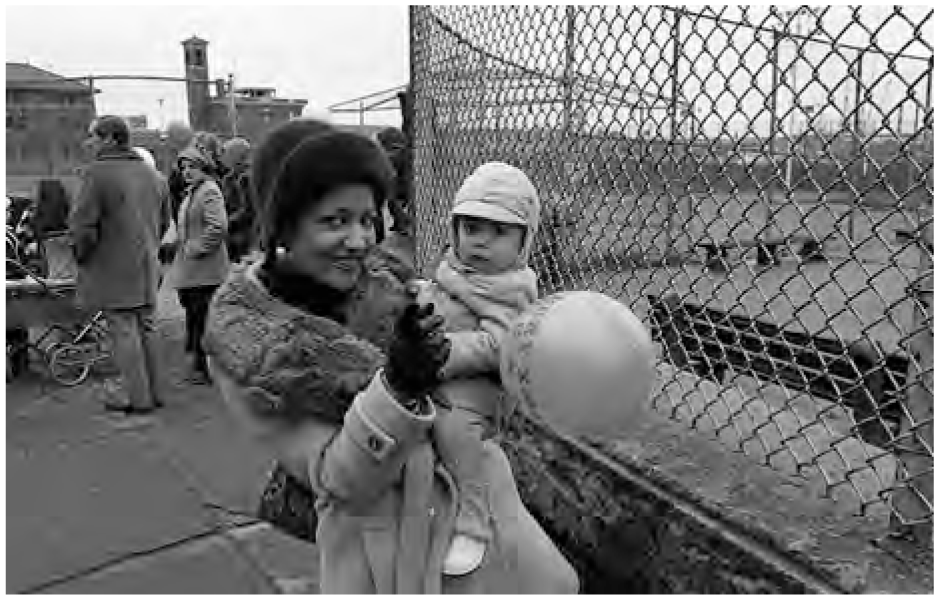
Women in the labor force face challenges juggling work and family, which may mean temporarily putting careers on hold to marry and have children. In his new Demography article “Opting Out and Leaning In,” Javier Garcia-Manglano investigates the paths U.S. Baby Boom women followed into and out of jobs and careers.
Using national data from more than 5,000 surveys of women born between 1944 and 1954, Garcia-Manglano found that women’s workforce trajectories can be classified into four groups: women who stayed steadily employed in middle age; women who worked most in young adulthood then decreased working time as they aged; women who gradually increased work time as they aged; and women who opted out of the labor force entirely. He identified specific factors affecting women’s career timing and duration, including spousal support or workplace discrimination. Declining health also contributed to women decreasing work time or stopping working altogether, while the need for income was a major factor keeping women in the job market.
Despite challenges to women’s labor force participation, Garcia-Manglano found that 40% of his sample (the largest single group he identified) stayed steadily employed through middle age. This means that, among Boomers, a great number were not forced to opt out of working due to family or health constraints. His findings also point to policy and culture changes that could support women’s employment throughout the life course. Yet another road paved by the Baby Boomer women who sought employment and wage equality and opened opportunities for future generations of women.
Young, Relentless Feminism
Feminism around the world looks different as a wave of emerging movements run by youth activists is gaining ground. Anna-Britt Coe reports in her article, “‘I Am Not Just a Feminist Eight Hours a Day’: Youth Gender Justice Activism in Ecuador and Peru,” that young activists have set an agenda to end gender inequality that they see as distinct from their predecessors—and they enact it using different strategies.
Using data from 21 interviews with men and women who identified as youth gender activists, Coe parsed out how these young feminists are different from the generation that initially mobilized them. Instead of focusing on institutional shifts, young activists have set their sights on day-to-day interactions in which sexism still runs rampant. They prioritize bringing their feminist views into their daily lives and using grassroots efforts to educate those around them, rather than gunning for legislative change.
Abortion demonstrates the differences between what Coe calls “professionalized adult feminism” and youth activism. A professionalized adult feminist might try to legalize abortion in Peru and Ecuador. That’s an uphill battle. Youth activists, however, try to work around the system through powerful tools like a hotline that provides medically accurate information about how to obtain a safe (if still illegal) abortion. They also take every opportunity to educate the people around them in both formal and informal environments.
Youth activists emphasize that their feminism has no limits. It is intrinsically linked to the entirety of their lives. Equipped with enthusiasm, passion, and dedication to equality at home and in intimate relationships, they are, like their forebears, a force to be reckoned with.
Full-time feminism sees young women taking action.
Steve Rainwater, Flickr CC

Boomeranging Home Benefits Families
Millenials—what’s wrong with them? Headlines lament all sorts of behavior, not the least of which is the Millennials’ tendency to move home again. The press has variously latched onto a perceived lack of ambition and a sense of entitlement to explain the “boomerang” life course: Why live on a low salary when you can go home and benefit from the largesse of your wealthier parents?
More structurally-minded analysts look to the weak American economy for answers about why more Millennials returned to the nest than did Generation Xers. Scott South and Lei Lei use longitudinal data from the Panel Study of Income Dynamics to examine the residential status of young people born between 1987 and 1993, trying to figure out what drove them to move out initially and what brought them back.
The first finding in their research, published in Social Forces, is that we must throw out simple economic indicators like high school graduation status, income, and welfare receipt as predictors of who moves out. Other factors are predictive, instead: women move out earlier than men, and the children of mothers with more education move out sooner than those whose mothers have less schooling. Kids who are closer to their mothers are more likely to take their time, while those who feel more responsible for the daily activities of the household and those who have been physically victimized outside the home are likely to move out earlier.
A 2016 sitcom plays on fears about adult kids moving “home.”

The most interesting patterns emerge among those moving back home. College and romantic partnerships keeps young adults away, while they return to their parents more often when one parent is ill, their family of birth is intact, or another adult sibling already lives at home. Young adults are much more likely to move back home if they have recently been sexually victimized.
Along with the lockstep idea of steps toward adulthood, we often assume economics drives decisions about taking a step forward or back. This research shows, instead, that young Americans returning to the parental home may be, instead, becoming more active long-term participants in family processes.
Honest Arts
Can arts events remain true to their principles even as they grow beyond the intimate communities that founded them? In Sociological Quarterly, Katherine Chen looks at Burning Man, the annual, weeklong arts celebration in the desert. The community of Burners grew from 20 to over 60,000 between 1968 and 2014, and Chen wanted to know how organizations like this maintain an authentic voice and style of engagement when membership grows.
Previous research suggest that as small groups grow larger, bureaucratization eventually takes over and the group loses its original principles, such as full representation of its members. Chen argues that groups can actually maintain their character if they decentralize agency, use storytelling and discussion to give context to the group’s norms and values, and make labor a community act.
Participatory organization helps maintain group values through rapid growth.
Mark Finnern, Flickr CC

Chen conducted extensive qualitative work including interviews, observations, and follow-up visits. She found that members of Burning Man had techniques that would allow them to negotiate the challenges their growth brought without losing their values and identity. They did this through their participatory “do-ocracy.” For instance, in addition to general guidelines for how to volunteer or participate in Burning Man, members used storytelling about past triumphs and conflicts to inform new members about how the organization works. One of these functions including making labor a shared activity that allowed each person to work in area that showcased their skill set. As a result, they avoided alienating members and gave each person’s role meaning. These results suggest that participatory practices can go a long way in maintaining group values during rapid growth.
Parental Parties
Good news for social change: Most children don’t mindlessly follow the political views of their parents. Past research conceptualized children as blank slates who routinely inherited their parents’ political beliefs. In a recent American Sociological Review article, however, Christopher Ojeda and Peter Hatemi find otherwise.
@LiquidBonez, Flickr CC
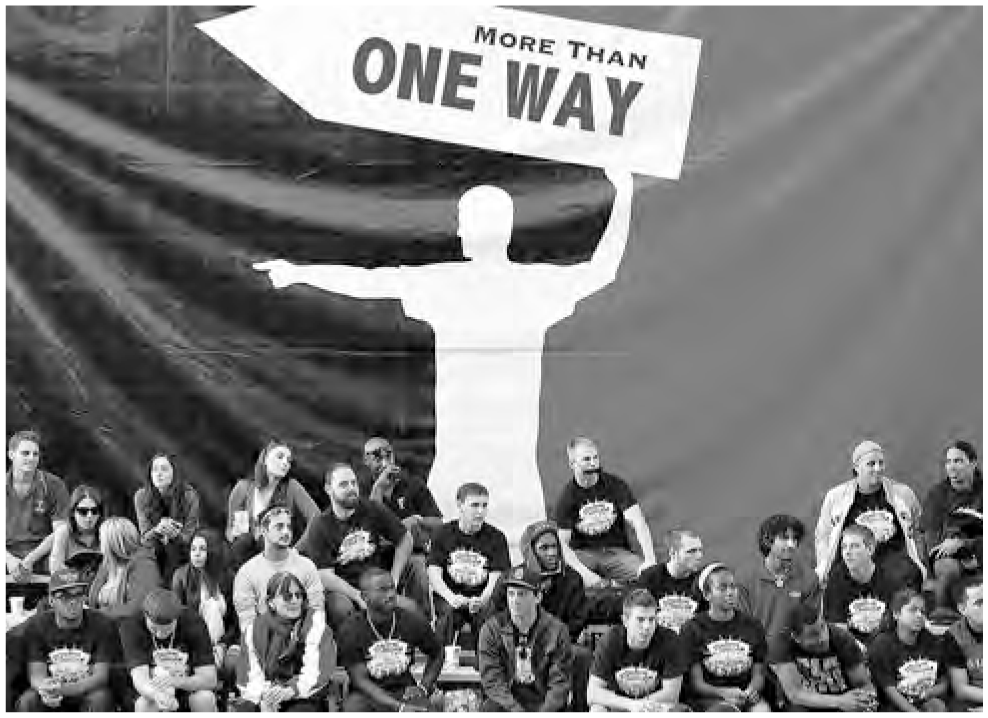
Ojeda and Hatemi suggest a two-step process of political party transmission between parents and children: children must accurately perceive their parent’s attitudes, and then decide whether to adopt or reject the political party ideology they observe. The authors propose that children are not passive learners, though—children correctly perceive and then adopt parents’ political attitudes in less than half of the parent-child relationships they studied.
The authors used two data sets, the 1988 Health and Lifestyles survey and the 2006 and 2008 waves of the National Longitudinal Study of Youth, to draw conclusions across generations. The perception of parental attitudes was the most important predictor in the transmission of political beliefs to children. Not surprisingly, children are more likely to adopt parents’ political attitudes if both parents held the same political identity, which likely leads to consistent informational cues. Children are also better able to correctly perceive parental attitudes in households that have political discussions, but this may not necessarily lead to adoption of these views.
These findings have potential implications for the transmission of other social views, such as “passing down” religiosity and other social norms. Children have self-determining agency, and parents may not hold as much responsibility for their children’s beliefs as previously thought.
Marriage Blurring Racial Boundaries
In 2012, the number of non-White births in the U.S. exceeded the number of White births for the first time, driven largely by growing numbers of Asians, Latinos, and multiracial Americans. However, the U.S.’s “melting pot” history tells us that over time, some non-White groups may “become” White, as Italian, Irish, and Jewish people have. In his new article “Expanding Boundaries of Whiteness?” Michael Miyawaki investigates marriage between Whites and multiracial people who are Black/White, Asian/White, and Native American/White to ask whether the boundaries of American Whiteness are expanding yet again.
Miyawaki uses Census data to compare the likelihood that part-White multiracials marry Whites compared to other racial groups. Multiracials are more likely to marry Whites than any other group: 54% of Black/White multiracials, 72% of American Indian/White multiracials, and 69% of Asian/White individuals are married to White people. This tendency is significantly greater for Asian/Whites and American Indian/Whites than for Black/Whites (and the relationship holds after controlling for factors such as education level and the size of a racial group in a particular state). Gender matters too: Asian/White women and Black/White men are more likely than their respective male and female counterparts to marry Whites.
Miyawaki argues that boundary shifting is taking place, particularly for Asian and American Indian multiracials in the U.S. Indeed, the high marriage rate of Black/White multiracials with Whites could be an indicator that even the boundaries between multiracial Blacks and Whites are more porous than prior research has suggested.
Multiracial families stir the melting pot.
Audrey Xavier Brulu, Flickr CC