




Abstract
M. Nakamura Lopez on the new face of Miss Japan.
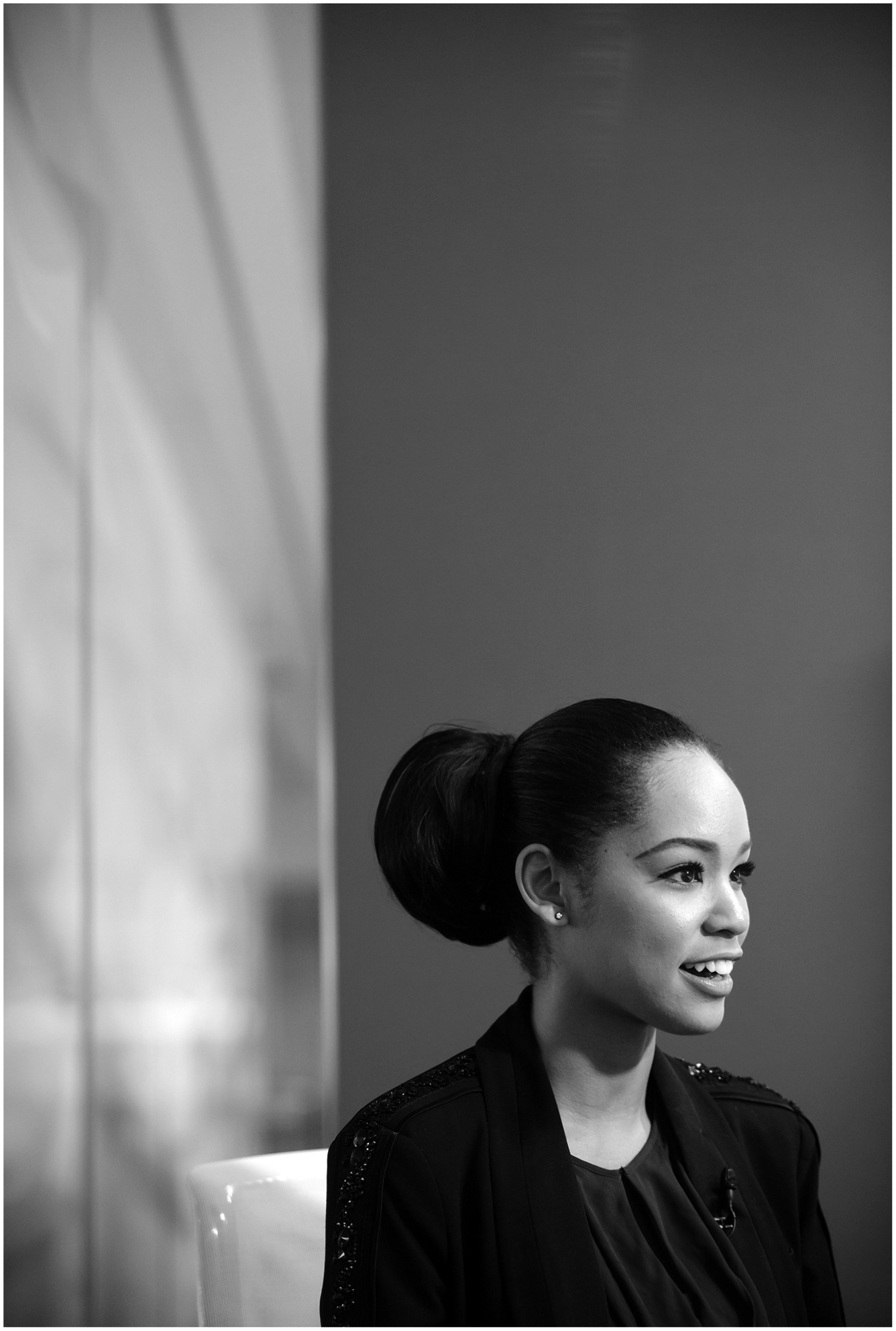
For many young women, being crowned a “beauty queen” symbolizes the realization of a childhood dream. For Ariana Miyamoto, becoming Miss Japan was not so much the climax of a childhood dream but proof that, at least for one night, she, a hafu (half Japanese, half foreign) was considered Japanese enough to represent her ethnically homogenous country.
Miyamoto was born in Japan to a Japanese mother and an African American father who was stationed at the American naval base in Nagasaki. They soon married, and Miyamoto’s mother followed her new husband to the United States. Upon becoming pregnant, her mother returned to Japan. Her parents eventually divorced. Miyamoto’s childhood years in Japan were difficult, particularly at school, where her classmates refused to hold hands with her, threw garbage at her, and even called her kuronbo (the Japanese equivalent of nigger). At thirteen, Miyamoto reconnected with her father and later moved to live with him in Arkansas and complete her final two years of high school.
Miyamoto returned to Nagasaki to work, first as a bartender and then as a model. When one of her friends, a fellow hafu, committed suicide just days after they had shared their struggles around being mixed race in Japan, Miyamoto decided to enter the Miss Japan pageant. She wanted to represent what she refers to as the “new face of Japan.” Though she won, Japanese people’s reactions to Miyamoto’s victory were not wholly accepting of this “new face of Japan,” with comments ranging from “She’s not worthy to represent Japan” to “She’s very beautiful, but she doesn’t have the face to represent Japan” and “Yamato Nadeshiko [the ideal Japanese woman] has disappeared…There’s so many beautiful Japanese women—why a hafu?”
Akio Kon/Bloomberg via Getty Images
Perhaps a hafu was chosen because Japan, although often represented as an ethnically homogenous society, is actually not so. There are many minority groups in Japan, such as the indigenous Ainu of northern Japan, who were historically marginalized and still suffer educational and economic inequalities. In fact, the Ainu were only formally recognized by the Japanese Government as indigenous to Japan in 2008, and only then under pressure from the United Nations. The Buraku people are often referred to as “Japan’s invisible race.” The Buraku were socially discriminated against because of their occupations, considered “impure” since they dealt with blood and death as butchers and tanners. Although they do not differ in their appearance from mainstream Japanese people, they have suffered and continue to face discrimination when their ancestry surfaces. In online discussion groups, human resources staff often admit their departments carry out routine investigations regarding a job applicant’s potential Buraku “taint.” Their findings weigh heavily in their hiring decisions.
In her everyday life, Ariana Miyamoto consciously chooses to identify as hafu: “In order for us mixed kids to live in Japan, [the word hafu] is indispensable, and I value it.”
With the increase of foreign migrants and international marriages, Japan is also becoming more visibly diverse. According to the Japanese Ministry of Health, Labour, and Welfare, in 1965, a total of 4,156 marriages in Japan were between Japanese and non-Japanese. By 2013, this number had increased to 21,488. Today, each year brings more than 20,000 hafus into the world, accounting for approximately 2% of Japan’s total births. Yet Japanese people continue to maintain that theirs is an ethnically homogenous nation. In one way, that’s true: in 2013, Japan’s foreign population accounted for less than 1%. However, the Japanese Census does not take race or ethnicity into consideration. As a result, a naturalized citizen or a hafu would simply be counted as “Japanese.” In other words, the Census does not allow any minority group to identify as anything more than Japanese, thus perpetuating the myth of ethnic homogeneity.
In more recent years, Japan has seen the rise of the “hafu celebrity.” Although hafus have been prominent in Japan since about the mid-1960s, they tended to de-emphasize their hafu status (particularly after World War II) and its associations with being low-class and the product of American servicemen and panpan girls (prostitutes). Now, the hafu image has changed dramatically, and hafus—especially White ones—are associated with being attractive and multilingual, assumed to hail from cosmopolitan, upper-middle class families. Further, the hafu celebrities are appreciated on Japanese television because they serve as a sort of bridge between the foreign world and Japanese society. They look “foreign” and are known by their first names, which are almost always in English (e.g., Becky, Shelly, Anthony, Joy), yet they are knowledgeable about the Japanese language, foods, mannerisms, and culture. By getting to know hafus on television, Japanese people can feel that they are part of a tolerant, globalized society without actually having to deal with cultural, racial/ethnic, or linguistic differences.
Visible diversity and celebrities have not changed the fact that hafus still face discrimination in their everyday lives, from being bullied at school to never being seen as anything more than a foreigner in the workplace. In addition, as several Japanese mothers of hafus shared during my ethnographic study, it is extremely difficult for a hafu child to function in a society where, everywhere they go, a rush of Japanese women swarm them, crying out, “They’re so cute—I want to have a hafu baby!” More restrained voyeurs might keep their distance while quietly getting their cameras or smartphones out to take snapshots of the hafu children, like they’re fascinating zoo animals.
While hafus—particularly White hafus—in everyday Japan and in the media are “othered” in this celebratory, curious way, darker-skinned hafus, whose non-Japanese parents are African, African American, Chinese, Korean, or Filipino, are too often met with racism and racist stereotypes. In sports, for instance, Japan welcomes Blackanese athletes not because Japan is open to diversity, but because the Blackanese are seen as blessed with a “naturally athletic physique,” the quintessential “super athletes.” One of the directors at the Japanese Association of Athletics Federations actually described hafu sprinter Abdul Hakim Sani Brown as having long limbs and a stable trunk, being “born to run.” Brown is one of many up and coming hafu athletes (the majority of whom have Japanese mothers and African fathers), some training for Japanese national teams, while being excluded from Japanese society.
Similarly, ethnic Korean residents of Japan (Zainichi), one of the largest and most established foreign populations, still endure the angry shouts of Japanese nationalists who fill the streets of major cities yelling out hate speech against the Korean community. Another minority group is the Nikkeijin, individuals of Japanese descent born abroad. Takayuki Tsuda, a scholar of the Brazilian Nikkeijin, found in his ethnographic studies that, in Gunma prefecture, which has the highest population of Brazilian Nikkeijin, some landlords still refuse to rent to them, stating differences in “customs” and “communication problems.” Further, even when the Brazilian Nikkeijin are allowed to rent apartments, often, local Japanese residents decide to actually move out of the apartments to avoid the foreign “Latino” neighbors. Neighborhoods with high concentrations of Brazilian Nikkeijin are ghettoized. Thus, although the Nikkeijin are considered Japanese by appearance and are expected to be familiar with and conform to Japanese cultural norms, they are labeled as culturally foreign and are not fully accepted into Japanese society. The Japanese identity is problematized: rather than being considered Japanese by ethnicity, we find the Japanese population delineated by culture: although the Brazilian Nikkeijin are ethnically Japanese, their culture marks them as foreign.
The converse is true, too: hafus in Japan often have a foreign appearance but tend to be Japanese culturally. The hafu cannot be identified as Japanese, though they fit the bill culturally.
Therefore, in order for someone to be considered Japanese, they must possess both Japanese ethnicity and cultural fluency. Anyone who cannot meet both criteria becomes “othered.” Miyamoto, who admits to bowing even when talking on the phone, insists that being born and raised in Japan and feeling most comfortable speaking Japanese, she is “Japanese through and through… 100%.” But Miyamoto also realizes that hafus, like the Zainichi and Nikkeijin, are “othered” in society. As a result, in her everyday life, Miyamoto consciously chooses to identify as hafu: “In order for us mixed kids to live in Japan, [the word hafu] is indispensable, and I value it.”
In order to be considered Japanese, one must possess both Japanese ethnicity and cultural fluency. Anyone who cannot meet both criteria becomes “othered.”
For hafus, there are other hints of progress that have cropped up in recent decades. Consider, for example, that mixed race children in Japan were once considered nothing more than “social problems,” conjuring up images of impurity and poverty, but today they are seen as attractive and cool, with many Japanese women using make-up to “look hafu” and wanting to have “hafu babies.”
As a half-Black woman, Miyamoto also challenges the notions of beauty in Japan, a land that has historically idealized white skin and White people, showing that Blackanese can be beautiful, too. While Ariana Miyamoto and other hafus in the public eye are beginning to normalize hafu identity in Japan, making such individuals less “exotic” and more ordinary, it will be a long time before this growing population is unquestionably accepted as Japanese—if they ever are. There is hope in some of the positive comments regarding about Miyamoto’s crowning as Miss Japan. One read, “We live in a global age—why is the media even bothering to focus on her hafu status?” In addition, Isetan Mitsukoshi, one of the largest department store chains in Japan, recently chose two hafus (model Saira Kunikida and rugby coach and former player Eddie Jones) to be the faces of their campaign “This is Japan.” Perhaps, as Miyamoto says, the “new face of Japan” is indeed emerging, and the stereotype of a “Japanese” face is being challenged.