




Abstract

Building Walls, Buying Guns
Debates about the nation’s estimated 11.3 million unauthorized immigrants have moved to the forefront of the public consciousness once again. Illegal immigration has dominated the 2016 presidential primary season, with Republican Donald Trump’s calls to deport all undocumented immigrants in the U.S. and building a wall along the U.S.-Mexico border. Likewise, President Obama has issued an executive order to expand deportation relief to nearly half of the total unauthorized immigrant population. Still, American arguments about immigration remain hottest at the local level.
In recent years numerous towns, cities, and counties have introduced anti-immigrant ordinances that include restricting access to public benefits, fines for employers and landlords of undocumented immigrants, and English-only declarations. In the journal Social Problems, René Flores uses a symbolic politics approach to examine the effect of proposed anti-immigrant policies on local gun sales in Pennsylvania.
Robert Couse Baker, Flickr CC

In short, Flores finds that anti-immigrant ordinances are correlated with increased gun sales at the local level. Further, a greater association between immigrants and crime in local news coverage also results in a significant increase in handgun sales—an effect that holds for a full year.
With the President having begun to issue a series of gun control restrictions, the public health community urges attention to scientific evidence that guns make everyone less safe. If Flores is right that anti-immigration policies and fear-inducing media coverage increases gun sales, it would seem that there are serious public health consequences accruing to immigrants and the native-born alike.
Smoking Drives Mortality Inequalities
People who smoke die earlier. People with less education die earlier. People with less education are more likely to smoke.
Jessica Ho and Andrew Fenelon, writing in the Journal of Health and Social Behavior, examined the role that smoking plays in educational disparities in mortality. While life expectancy climbs among college graduates, life expectancy for White men with less than a high school education is between eight and ten years lower (for women, it’s between six and ten years lower).
Access to resources and individual behavior contribute to these differences in mortality, and cigarette smoking is clearly part of the story. As social norms changed between 1970 and 2012, the difference in smoking between educational groups tripled. Ho and Fenelon found that, particularly for women, deaths from smoking-related causes shifted with more or less education. Men’s smoking patterns are relatively constant, with decreases over time in all educational strata. In 2012, about one-third of women with a high school degree or less (32.5%) were smokers, compared with 8.4% of college educated women. The drop in smoking rates among women since the 1970s has been concentrated among college grads.
Differences in smoking rates between more- and less-educated women account for between 25% and 50% of the educational difference in life expectancy for White women, and this study points to the need to better understand why smoking remains steady among those with less education.
Studious smokers aren’t necessarily the norm.
LaFleur, Flickr CC

The Cost of Color
At the risk of stating the obvious, Black people’s skin tones are brighter and darker shades of brown, not a homogenous blob of black. These skin tone differences hold historical and contemporary significance as markers of distinction tied to unequal treatment. Light-skinned Blacks have tended to gain social advantages including access to more resources and higher social prestige than dark-skinned Blacks.
Ellis Monk highlights this variation in the American Journal of Sociology. He examines the relationship between skin tone, discrimination, and health for U.S.-born Blacks. Monk finds that darker-skinned Blacks report more perceived everyday discrimination by both Whites and Blacks, but the patterns differ across racial groups. The darker a persons’ skin, the more they perceive discrimination from Whites. However, people with the lightest and darkest skin tones report more discrimination from Blacks. Those with a medium tone report less discrimination across the board.
Skin tone and discrimination are also associated with physical and mental health in Monk’s study. Lighter-skinned Blacks were less likely to have been diagnosed with hypertension, while darker skin was associated with poorer self-rated physical and mental health and higher chances of experiencing depression. Skin color discrimination by Blacks was associated with lower self-rated physical health.
Monk adds an important corrective to studies of racial health disparities by emphasizing the role of colorism inside and outside of the Black community. Race is deeper than skin color, but it is important to remember that skin tone complicates Black Americans’ experience of race.
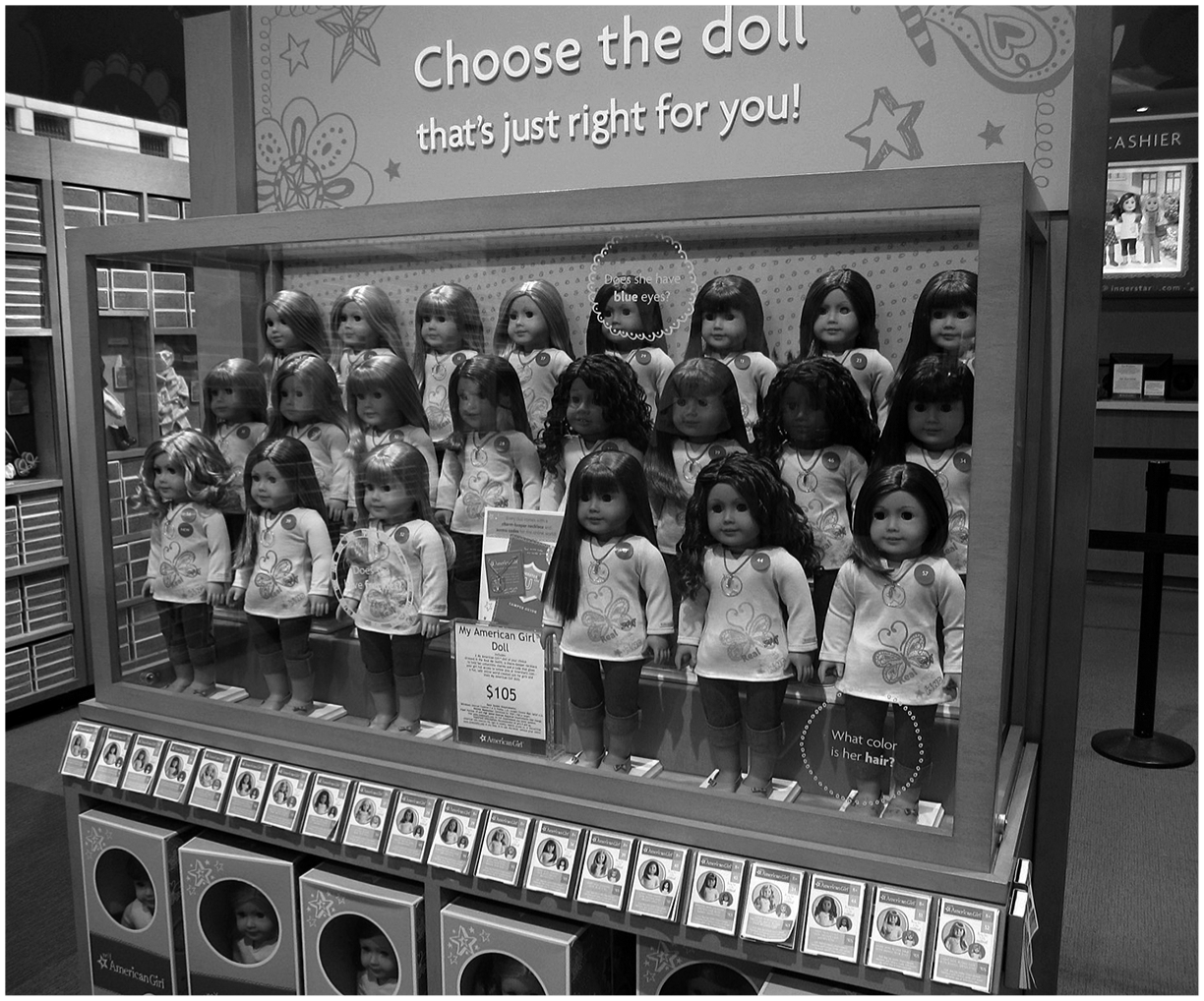
The American Girl doll company highlights its varying skin tones—but no mention of health disparities.
InSapphoWeTrust, Flickr CC
Drop-Outs vs. Hold-Outs
Although many sociologists have examined educational attainment, the meaning of measures like graduation rates and time to degree aren’t always straightforward. In particular, the failure to finish college in a timely manner doesn’t mean people have abandoned the goal. In the journal Sociology of Education, Nicole M. Deterding studied low-income, Black mothers whose degree progress was interrupted by Hurricane Katrina. Deterding investigated the women’s subjective investment in graduation, despite setbacks and even a high likelihood of never finishing.
Quitting college isn’t the same thing as not yet having finished.
brandonink2001, Flickr CC

The women in the study participated as enrollees in the Open Doors program, a Louisiana initiative that provided access to community college to low-income students. Deterding found that although 53% of her participants were not enrolled in an educational program five years after the start of the study, nearly 76% still wanted to pursue college. They cited time constraints and cost as major impediments, rather than any downward shift in aspirations. Not only did these women see college as a means to obtain a living wage, but they also saw symbolic value in obtaining a degree for giving them a sense of self as a “striver.” These findings contradict the notion that difficulties faced in the course of obtaining a degree weaken aspirations or expectations. Individuals don’t see themselves as having quit college, but as not yet having finished college.
Grownups
What does it mean to be an adult? How do you know when you’ve finally arrived?
For those graduating from high school in the mid-twentieth-century, the path seemed clear: you did what you needed to in order to find the kind of job you wanted, you worked, you found somebody to marry and a place to raise some kids. None of this may have been easy to accomplish, but the landmarks, at least, were obvious.
Fast forward. As manufacturing sagged and higher education became more obligatory, the age at first marriage and the age at first birth both rose, but those two milestones were increasingly decoupled. And so we arrive at a time when legal adulthood begins at age 18, but social adulthood seems to come closer to 30.
What we haven’t known is how people understand their own lives and their transitions into adulthood. A new paper by Scott Eliason, Jeylan Mortimer, and Mike Vuolo in Social Psychology Quarterly seeks to better understand individuals’ perceptions of having finally become grownups.
Today there’s no shortage of books meant, sarcastically or not, to help young adults feel like, well, adults.

Because so many of the landmarks on the way to adulthood vary by race and social class, and because higher education is pursued in so many different ways, the authors find that the pathway to adulthood is no longer one road, but perhaps five separate tracks, each reflecting different strategies toward and ordering of work, school, and family events.
Education and employment weren’t enough. Instead, those who pursued families earlier were more likely to feel like adults by the age of 25 or 26, while those who delayed or failed to form new families of their own by the same age were more likely to report feeling like they hadn’t quite made it. For the parents out there, you’re not alone: kids really do make you feel like a grownup.
Germany Avoids Going Gray
Germany registered a million refugees in 2015—far more than any other European country—mostly from Syria and Iraq. While the government’s openness was largely heralded as a victory for altruists and humanitarians, demographers understand the move differently: Germany needs more people.
In 1970, the average German woman had about 2 children over the course of her lifetime. Within a decade, though, that number had fallen to about 1.4 births per woman, where it has stayed for 30 years. Over time, that seemingly small drop represents the difference between a stable population and one that is slowly dwindling. Add in longer life spans and suddenly you have the seeds of a potential crisis: more aging people and fewer young people to support them.
Demographers have proposed reasons for Germany’s rapid fall in fertility: later ages at first birth, the loss of education and income attainment associated with parenting, and instability in partnerships all play their roles. A new paper in Demography by Rachel Margolis and Mikko Myrskyla focuses on the experiences of new parents to propose an additional factor: difficulties in the transition to parenthood after a first birth may drive German parents to take the possibility of a second off the table.
To test their hypothesis, the researchers used data from the German Socio-Economic Panel Study, with annual responses to the question, “Overall, how satisfied are you with your life?” This general measure seems abstract, but has the advantage of not requiring new parents to directly complain about their new baby, which many people are loathe to do. As they eagerly awaited their first child, most parents saw an increase in general life satisfaction. In the year after the child arrived, differences emerged. Those who reported large drops in life satisfaction within the first year of the child’s birth were less likely to have a second child, especially when the parents were more highly educated and older.
Germany’s low fertility rates have leaders worried.
Donnie Ray Jones, Flickr CC

The implication is that more support for parents may help increase the birth rate, perhaps by relieving some of the difficulties of that transition to parenthood. In 2007, Germany launched such initiatives. Coupled with increased immigration, Germany hopes to turn the demographic corner.
The Paper Ceiling
Women are now the majority of college graduates, have entered the workforce in droves in the last half century, and have “come a long way” toward equality. But the formidable “glass ceiling” persists in many occupational spaces (a term that has spawned off-shoots such as the “stained glass ceiling” for clergy, the “celluloid ceiling” for Hollywood execs, and so on).
A man reads about one cleric who’s shattered the “stained glass ceiling.”
Nick Page, Flickr CC

What about a “paper ceiling”? In their American Sociological Review article, Eran Shor and colleagues try to figure out why women seem to be missing from so many newspaper stories. They studied 13 daily U.S. newspapers published between 1983 and 2008, and 2,000 English-language newspapers and online news websites for the period between 2004 and 2009. Their findings suggest there really is a “paper ceiling” under which women are less likely to be mentioned—and it’s not just because they hold fewer powerful positions in society.
Overall, there is a 5-to-1 ratio of mentions of men’s names to women’s in the media studied. One finding is that, because reporters regularly rely on previous contacts and those quoted in news articles are often top leaders in business and politics, a relatively small and male group is disproportionately mentioned in the press (particularly nation-wide press). Interestingly, the gender of a publication’s editor makes little difference for gender parity in content, nor does the political leaning of the paper. However, female representation on the editorial board, among management staff, and among section editors is correlated with a more equal gender balance within articles.
Abstinence and Masculinity
For most young males, a central part of becoming a man is having sex—and a lot of it with a lot of women. But what happens to masculinity if you opt out of promiscuity?
In a recent Gender & Society article, Sarah Diefendorf explores how Evangelical men who refused premarital sex negotiated their masculine identities both before and after marriage. Diefendorf conducted participant observation, focus groups, and interviews with men in a program called The River, which supported bachelors in maintaining sexual abstinence. She focused on language surrounding the “beastly” and the “sacred”—referring to premarital sex and sex within marriage, respectively—and how each discourse related to participants’ displays of masculinity.
When they were bachelors, the men overwhelmingly categorized their sexual desires and practices as beastly—but also inevitable. Their difficulty remaining abstinent highlighted their virility while the use of a support group provided a space to endorse a hybrid masculinity that did not express virility through promiscuity.
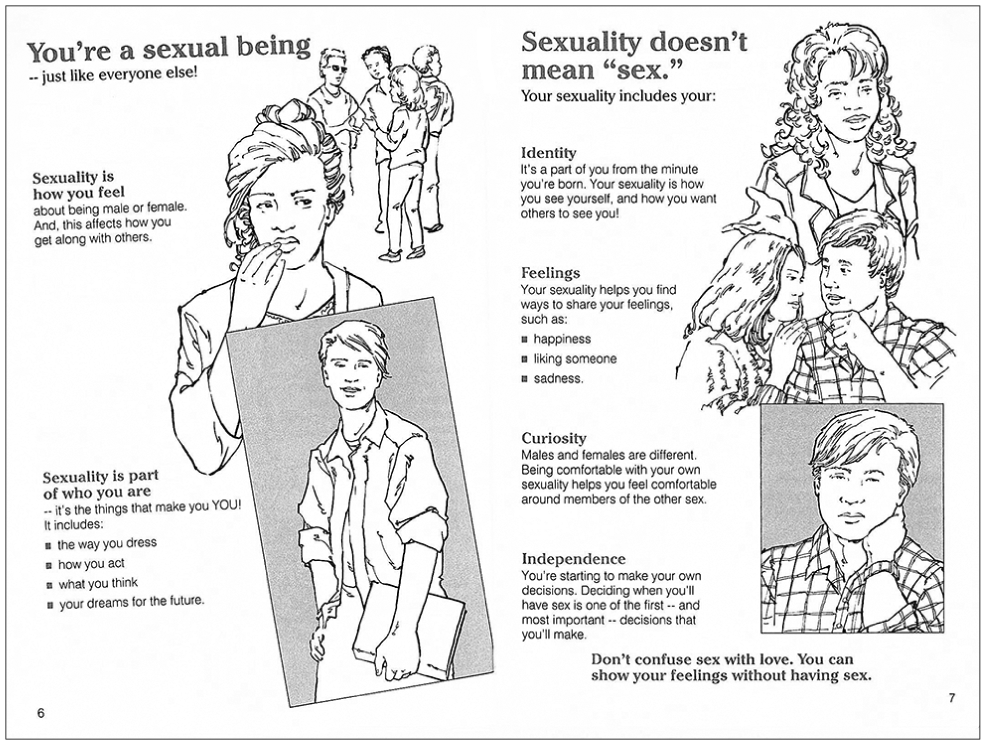
There’s a lot of advice for staying abstinent, but less to help men becoming sexually active after marriage.
@LiquidBonez, Flickr CC
Surprisingly, the participants seemed to struggle most with their masculine identities after becoming sexually active. Some married men in the sample expressed frustration with their inability to control other beastly desires or have the pleasurable, sacred sex lives they had been promised by their church. In short, sexual desire became both beastly and sacred, so the expression of masculinity through sex became more complicated. They began to use their wives’ emphasized femininity to express their masculinity in other aspects of married life, rendering sex less important to their presentations of self than when they were virgins.