



Abstract
College diversity programs are designed to improve white students’ experiences, ignoring the benefits of cross-cultural interactions for all.
One of the most enduring folktales, or what Joe Feagin calls “sincere fictions,” of attending college goes something like this: “When you get to college, you’re going to meet so many people from all over! You’re going to learn new things, see new places… It’s going to be great!” Behind such statements lies an assumption that not only will people who attend college meet socially diverse others, but also that interactions with those new people will expand their own perspectives and knowledge of the world. The belief in the power of diverse interactions is evidenced by its signature place in continuing battles around affirmative action in higher education, which are consistently supported by a group of the most selective higher education institutions.
As the racial and ethnic diversity on college campuses since the 1960s has increased, students have seen additional opportunities to interact with peers of different races and ethnicities. However, whether a majority of colleges and universities are truly “diverse” is up for debate. Many remain overwhelmingly white in student body and faculty composition. And, even if a university is diverse, that doesn’t mean that students interact across group lines. A 2012 study by Angela Bahns, Kate Pickett, and Christian Crandall found growing diversity coupled with growing student bodies at colleges and universities results in fewer personal relationships with people who are dissimilar from one’s self. Here, the larger, diverse campus affords more opportunity to select friends that are similar and allows students to possibly avoid difficult conversations regarding social issues such as inequality.
This presents a complex and difficult problem as senior administrators at colleges and universities increasingly immerse themselves in legal battles for one of the most articulated “benefits of diversity”: the opportunity to learn from diverse peers. If more diversity on campus does not translate to cross-group interactions and all their possible benefits, what does it do?
I analyzed the survey responses of 3,251 students from 28 highly selective colleges and universities from the National Longitudinal Survey of Freshmen to find out how often elite students have cross-racial interactions and what, if any, affect those interactions have on students’ perceptions of racial and ethnic minorities and racial inequality in the United States. I chose to focus on these elite schools because they play a pivotal role in creating the leaders of tomorrow (Lauren Rivera’s 2015 work documents how these students are literally piped into high-status jobs and occupations). For instance, more than half of the current U.S. House and Senate and all of the current Supreme Court justices attended a highly selective college or university. Nine of these highly selective schools produced nearly a fifth of all the CEOs leading Fortune 500 companies today.
If we focus on those students who continue to reap an overwhelming majority of the benefits of attending highly selective colleges—Whites—a disturbing pattern emerges. Complicating the longstanding study of intergroup relations, White students in my study did not demonstrate the similar relationships with or frequency of interacting with peers of different races and ethnicities during their college years found in other studies. Specifically, my longitudinal analysis found that having diverse interactions through friendships, dating, roommate arrangements, and even participating in racially diverse student organizations had less influence on their racial prejudice than it did on non-White students’ attitudes. Cross-race interactions hardly affected White students’ beliefs that individual capabilities and efforts were the root cause of racial inequality today. When cross-race interactions did influence White students’ views of race and inequality, some interactions actually increased their prejudice and individualistic views. Taking courses that would expose them to discussions of race and inequality—specifically ethnic studies courses—rarely influenced White students’ beliefs about race or inequality by the end of college at all.
Schools will go to such lengths to demonstrate the diversity of their student bodies that the University of Wisconsin–Madison photoshopped Black student Diallo Shabazz into a crowd photo on their new student brochure. Shabazz, who’d never attended a football game, sued and won.
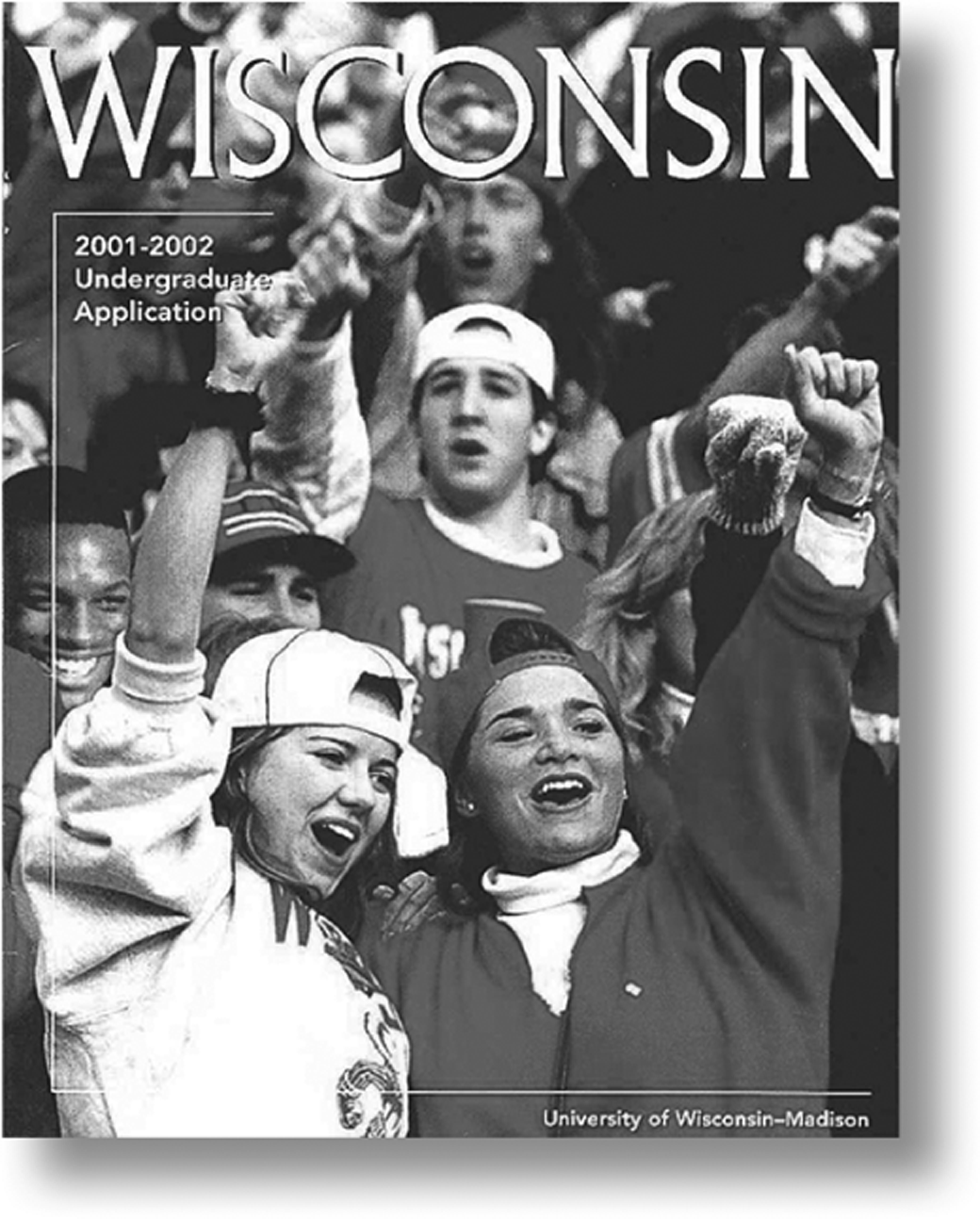
One reason for the limited influence of cross-racial interactions among White students at these highly selective colleges is that these students rarely interacted with anyone other than White peers. Whether you consider their friendship networks, their romantic relationships and roommates, and the group members in the student organizations they joined during college, nearly seven out of ten people they interacted with were White. That left little time or commitment to interacting with people of other races and ethnicities, let alone learning about race and inequality in the social world.
The folktale, then, doesn’t hold up. First, in order to meet someone different and learn new information about race and inequality from them, you actually have to interact with people outside your limited social circle. For Whites at these highly selective colleges, this rarely happens. A White graduate who works her way into a prestigious position on a federal bench or in the boardroom of a Fortune 500 company will likely carry the same beliefs about race and inequality they harbored when they began college many years before. Thus, the disproportionate White leadership that flows from these institutions can establish and follow policies that perpetuate racial inequality while the individuals assume they benefitted from an expanded worldview, having attended a diverse institution.
Second, the beating of the “benefits of diversity” drums when new affirmative action cases are filed to target college admissions policies are constrained by the focus of the case itself (race-conscious admissions policies), which limits the consideration of larger issues that exist on college campuses. That is, simply preserving the opportunity to consider race in college admissions and possibly increase racial and ethnic diversity does little to tackle the structural and cultural obstacles once students arrive on campus.
One of the more consistent series of findings from my analyses is the importance of how students perceive the campus’ racial climate and its related institutional aspects. For these students, considering how committed their colleges were to racial diversity was often more influential on their views of race and inequality when they left college than cross-race interactions during college.
As another example, simply asking students how visible they perceived one group to be compared to their own was a more stable predictor of White students’ views of race and inequality at the end of college than any measure of who they interacted with during that time. This indicates that even when you increase racial and ethnic minority student representation, you must work to implement structural and cultural changes on campus.
One possible institutional change is the modification of the curriculum to encourage engagement in discussions about race and inequality, whether in general education classes or cross-listed departmental course that educate students about field-specific content. Other campus changes include institutional support for specific student group centers and groups on campus (such as a Black Students Union or Chicano Students Association), stringent and consistent enforcement of policies for handling racial discrimination and hostile language toward groups on campus, and cluster hiring initiatives to increase faculty diversity. Without further consideration of how college campuses can influence whether and how students interact with one another, the ability to have fulfilling and positive interactions across racial and ethnic lines and learn about race and inequality will be extremely limited.
A critical lesson here is how the framing of cross-race interactions as an educational component of the “benefits of diversity” means the folktale we started privileges White students’ educational and social experiences during college. It frames racial and ethnic minority students as automatically benefiting from college simply by being there, and it assumes that these campuses are inclusive and equitable places for them. As we have seen from many of the recent incidents around the country, this is far from the case. The arguments in many affirmative action cases too often boil down to justifying why the outcomes that race-conscious policies produce (such as increasing racial and ethnic minorities on campus along with the prevalence of varying knowledge and experiences) are important for White students’ consumption and education—and that White students are the unspoken but unchallenged leaders of tomorrow.
The folktale is not just about students; it’s also about the presumed equitable and inclusive campus educators and administrators have constructed before students arrive for their college years. To borrow an important point from the #BlackLivesMatter movement: before you can say and support that “all lives matter,” you must understand, accept, and actively pursue structural and cultural changes to affirm that “Black lives matter.” This same lesson goes not just for students, but also the educators and leaders who have yet to overcome the systemic aspects of race and inequality that permeate their campuses and continue to privilege Whites. Without such in-depth considerations, we will continue to find that higher education, elite and otherwise, perpetuates racial inequality.