



Abstract
Max Holleran on the political contingency of grandiose architecture.
Before 2008, much of the European periphery experienced a construction boom made possible by easy credit. Nowhere built more than Spain. Since that time, however, the property market has exploded and left Spain’s economy in shambles. Empty homes, beach houses, and even unused airports are scattered across the landscape. The boom years of frantic construction are memorialized in more than a million excess properties (even finished homes have been bulldozed in an effort to restore value to the market). Municipal governments also eagerly took part in the building boom, using EU grants and loans to modernize infrastructure, subsidize business zones, and erect new entrainment facilities. Since 2008, many public and private building projects have stalled. Others are finished, but have shackled local governments with years of public debt.
The grandiosity of contemporary buildings looks, to many, like arrogance.
The Spanish public has come to associate construction projects with the crisis. This is true for both the bland and vacant tourist villas that cling to Spain’s abundant coastline as well as grand new public buildings that were supposed to be symbols of architectural and cultural achievement. Debt-financed airports and elegant, but disused, cultural centers built by “starchitects” are ready symbols of the country’s relapse into marginality (a condition supposedly shrugged off with the death of General Francisco Franco in 1975). The landscapes are, for citizens, symbolic of the redrawn geopolitical lines of Europe—those that split the North and the South, the countries that owe money and those that would like to collect it. No longer the markers of ascent of just seven years ago, new architecture represents political and economic folly. The grandiosity of contemporary buildings looks, to many, like arrogance.
Spain’s recent history has been marked by a pronounced change in the land, from rural to urban, and a boom in stylish new buildings designed by world famous architects. After the death of Franco, many Spaniards took pride in their newly democratic country. The economy shifted in many places from agrarian to tourism based. In the 1990s, it shifted again: from beachfront sprawl to smart new hotels. New buildings by architects like Norman Foster and Jean Nouvel conferred a sense of national pride, refreshing and exuberant after long years of economic underachievement and political instability. As one informant, a real estate developer, told me: “we went from having cities that people compared to Don Quixote to new buildings that people associated with the Jetsons… before the bubble, it was an exciting, almost giddy time for us.”
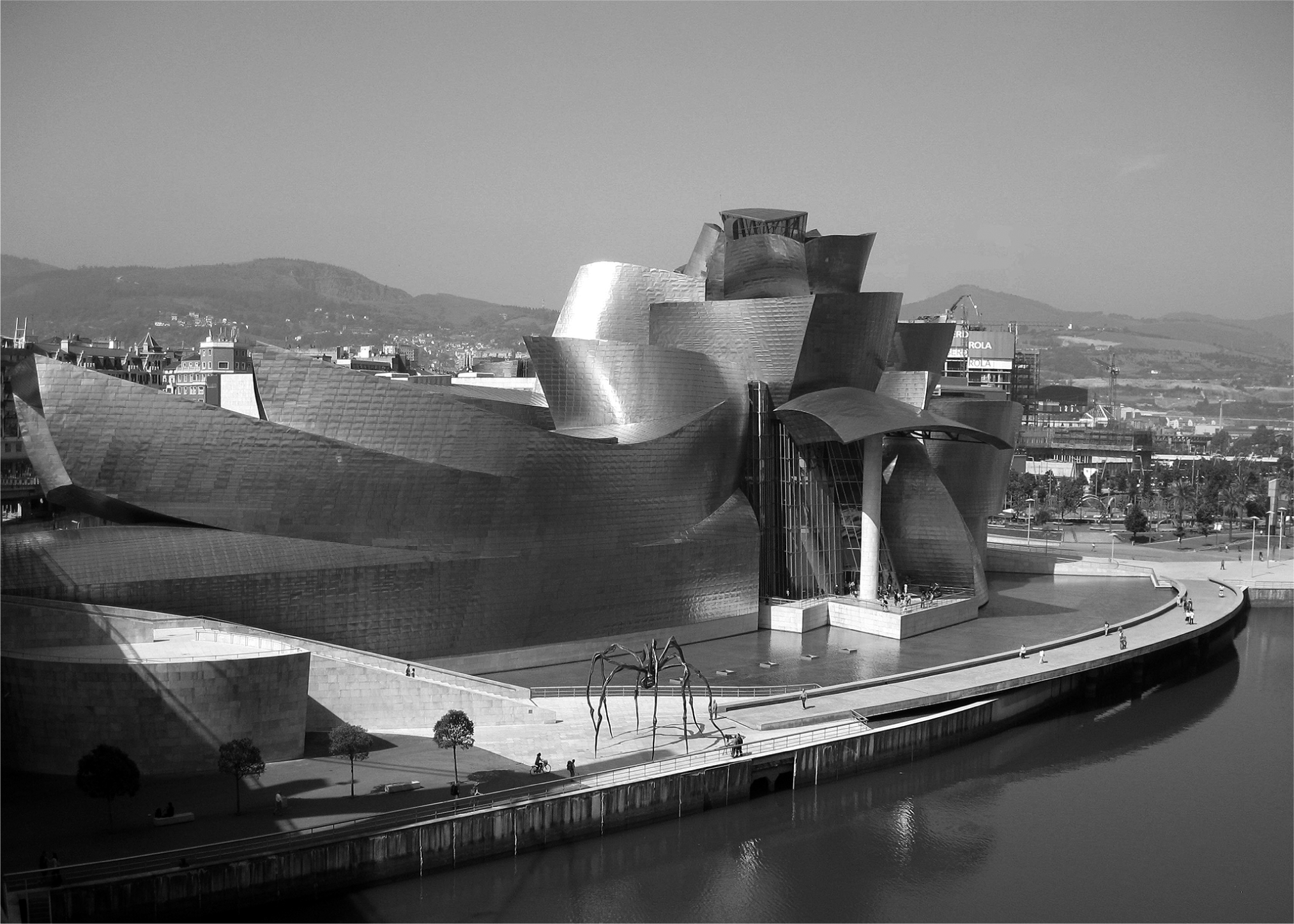
Developers and architects were eager to build even more in the 2000s. With the support of European Union development funds, many found they could transform a modest commission for a train station or a post office into a multi-million-Euro pièce de résistance that would realize their most fantastic plans. Indeed, the success of Frank Gehry’s Guggenheim Museum in the industrial city of Bilbao was so inspirational to urbanists that its ability to draw attention and tourists was known as the “Bilbao Effect.” Even more promising, there seemed to be an unending appetite for second homes on the beach and new suburban apartments in Madrid and Barcelona.
There was just one problem: the thriving culture of new architecture was premised upon an over-heated property market. When it dramatically collapsed, the housing sector nearly took down every major Spanish bank with it. Now, real estate development holds no excitement, only disdain and outrage. Spaniards are disgusted with the ongoing sovereign debt crisis, and the social meaning of their built environment has shifted as political and economic circumstances have changed. Architecture, recently celebrated, is a specter of folly.
Frank Gehry’s daring Guggenheim Museum in Bilbao, Spain.
Mark B. Schlemmer via Flickr Creative Commons
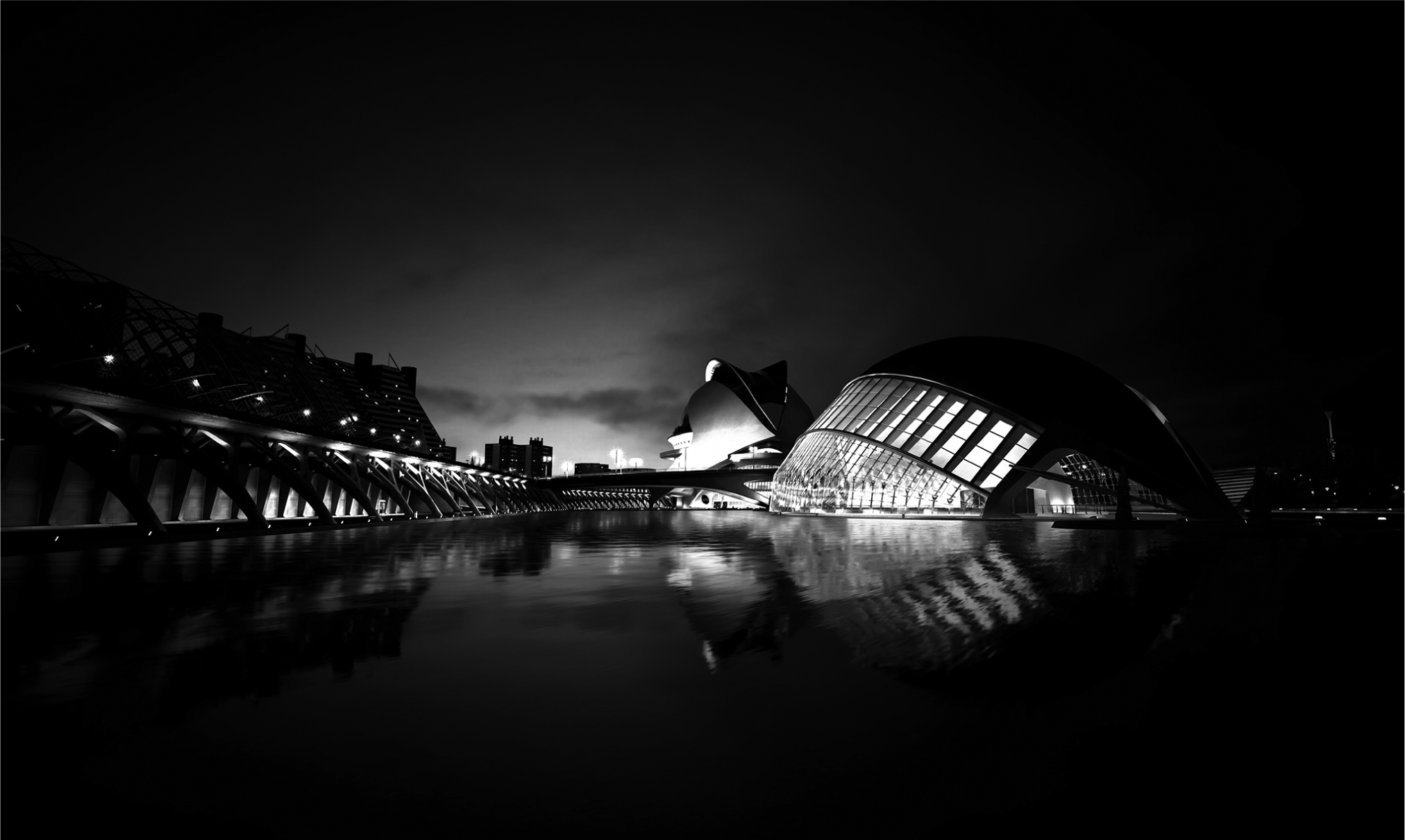
The City of Arts and Sciences in Valencia was built by the celebrated native-son of that City, Santiago Calatrava, who spent more than a billion euros of public funds to erect an opera house, science museum, and sprawling riverbed park. Calatrava, who also built the new World Trade Center PATH Station, is Spain’s most famous architect. Known for majestic public infrastructure works, his frequent budget increases during construction—sometimes doubling the projects’ budgets—have been forgiven because of his stylistic and engineering genius. But not in debt-stricken Spain. In a matter of years, the City of Arts and Sciences has gone from an acclaimed new landmark to a loathsome reminder of the country’s debt and mismanagement. The white-washed futuristic buildings in the river-park, once a symbol of civic pride, now look like an extravagance.
These shifts illustrate the political contingency of opinions about urban beauty. In Spain, the aesthetic grandeur of the project seems temporary, holding only so long before the politics of austerity realigned people’s sense of taste and propriety. Elena, a native of Valencia, described the Calatrava opera house as a “giant hungry bug ready to devour the city.” She continued: “When I see a new building now, all I think about is that it is either empty or there are not Spanish people living there. I don’t care how beautiful it is…”
The social understanding of a single building can radically change as political forces mature or disintegrate.
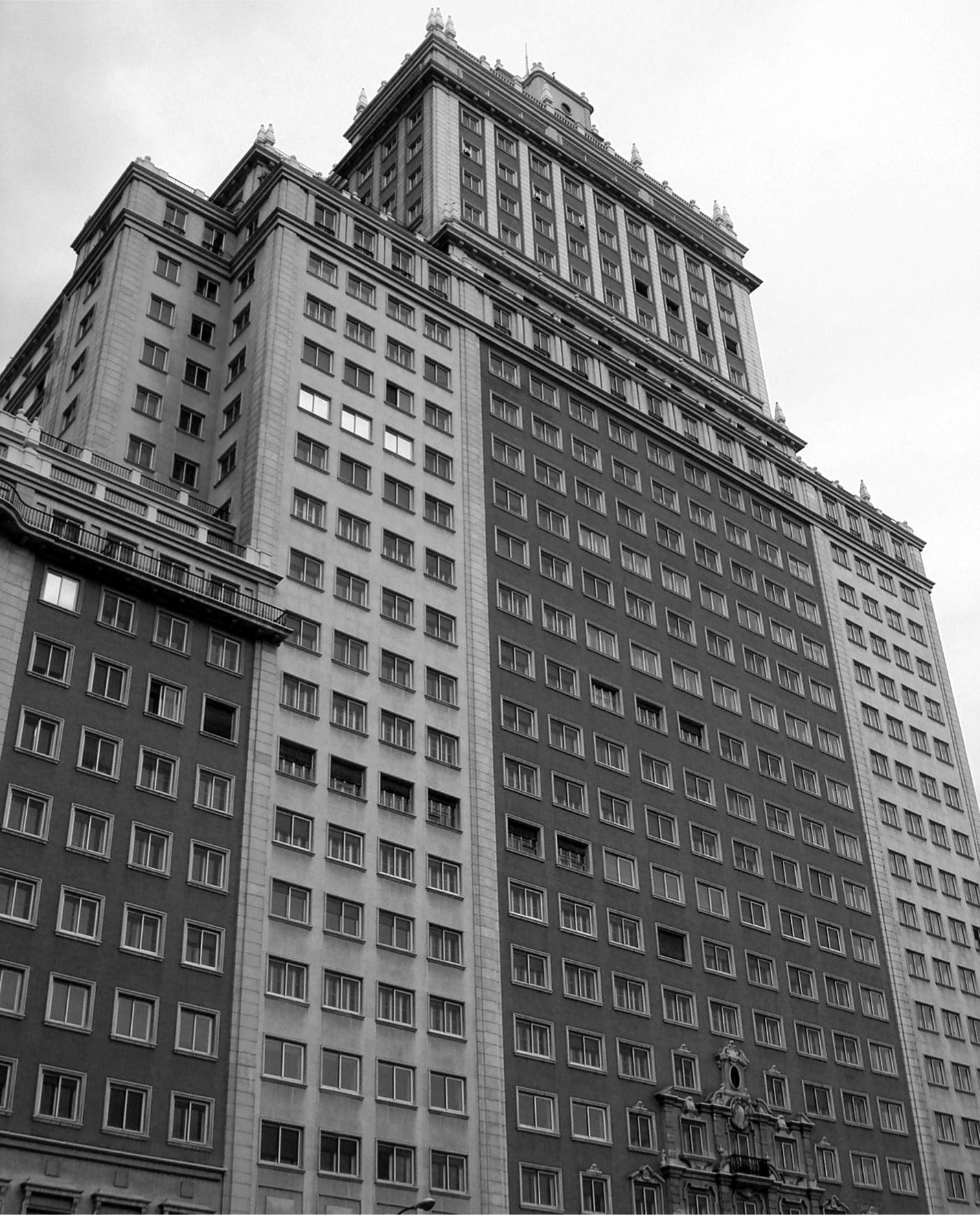
Spain has a long history of welcoming second-home owners, particularly Northern European, semi-permanent retirees. Today, these foreign enclaves have become more contentious. Debt politics are straining the nascent euro-cosmopolitanism that has joined Northern European buyers and locals. Many economically-struggling Spaniards are even more indignant that their government has offered EU residency to wealthy Russian and Chinese home-buyers, who are eager to cash-in on the crisis and gain access to unlimited European travel. Last year, Madrid’s iconic skyscraper—called the Spain Building—was bought by a Chinese billionaire. The sale symbolically informed Madrileños that the city could not even keep its totems under national ownership. As in Greece and Portugal, many Spaniards now see foreign investment not as a bellows directed at reigniting the embers of the economy, but a sign that everything—from beaches and islands to national patrimony—is for sale.
These shifts illustrate the political contingency of opinions about urban beauty.
Still, since real estate took up nearly a third of the Spanish economy before abruptly plummeting in 2008, it doesn’t take long to find ghost towns, abandoned homes, or projects that cost far more than budget-lacerated municipalities can bear to pay back. Among the population, 24% are unemployed, and nearly 50% of young people are jobless. Young men, many of whom left school to work in construction during the boom, are vexing exemplars of a new “lost generation.” They had driven German luxury cars and made a thousand euros a week building homes. Now they share their parents’ pensions. Particularly for the young, the fields of architecture and property development are associated with recklessness and corruption. Their antipathy is not just toward politicians and bankers—who let the real estate bubble grow to dangerous proportions and, some of whom, like the former National Treasurer, are under indictment for outright graft—but extends to the buildings themselves.
Jose Manuel, an unemployed former student, told me: “There are a lot of buildings that I used to like: luxurious ones that seemed to be from a different country… maybe some Arab place with oil… now I hate them. All I can think about is who got paid and how much.” He mentions the nearly-abandoned suburb of Seseña on the outskirts of Madrid, with its thousands of empty apartments. It has gained international attention: “It makes us look bad… like we don’t know what we are doing… I think it reinforces this image of the lazy southern European, the siesta and fiesta guy who just takes money, builds shit, and no one wants the product.” Jose Manuel is pessimistic about the future, and he now hopes to leave Spain for Northern Europe. “Somewhere like Germany or Denmark,” he says, adding in English: “Somewhere that has its shit together.”
The 3D IMAX Cinema in the Calatrava-conceived City of Arts and Sciences, seen at night.
David K via Flickr Creative Commons
The Edificio España, built in 1953, was once Spain’s tallest skyscraper. It was vacant for years before its 2014 sale to Chinese billionaire Wang Jianlin.
Álvaro Ibáñez via Flickr Creative Commons
Spain’s real estate troubles speak more broadly about how urban forms offer an immediate illustration of contemporary politics: Mussolini’s government buildings were grandiose; Mexico’s class-divided cities are marked by a profusion of gates and walls; and the bawdy times of Weimar Berlin were reflected in the daring style of the Bauhaus School. What’s more, the social understanding of a single building can radically change as political forces mature or disintegrate. One only has to think of formerly revered socialist buildings—which, before 1989, projected steadfastness, but now seem menacing and out-of-scale.
Usually, these moments take place not just when political leaders change, but when forms of government are overthrown. Yet, we can find more subtle readings of the built environment in places like Spain, where the economy has soured and citizens now feel marginalized, again on the “periphery” of Europe. Many remain proud of the country’s emergence as an architectural destination, but are dismayed by suburbs and homes that have been left unused, silent markers of a time that’s passed. They also worry that the sacrifices of great architecture—in the form of public debt taken on to build extravagant new bridges, stations, museums, and airports—cannot be worth the social cost ever again.