



Abstract

Limits to Same-Sex Acceptance
See-Ming Lee via Flickr Creative Commons

In President Obama’s 2015 State of the Union address, he heralded progress for same-sex couples as a “story of freedom,” pointing out that seven-in-ten Americans live today in a state where gay marriage is legal. But do legal and institutional changes match up with this greater social acceptance?
In the American Sociological Review, Long Doan, Annalise Loehr, and Lisa Miller investigated two facets of attitudes toward gays and lesbians: 1) formal rights, operationalized as support for partnership benefits (e.g., family leave and insurance benefits), and 2) informal privileges, operationalized as acceptability of the couple’s public displays of affection (e.g., kissing and holding hands in public). The authors also examined support for the couples’ right to be legally married. The researchers used an experimental vignette design to capture attitudes about three types of couples: cohabiting (unmarried) gay, lesbian, and heterosexual couples.
The researchers found that heterosexual respondents did not favor heterosexual couples when it came to formal rights, but they were less likely to approve of informal privileges (public displays of affection) for homosexual couples. This pattern applied for gay/lesbian respondents, who were also less approving of same-sex public affection than heterosexual PDA—possibly evidence of internalized stigma. Finally, the authors found that hetero- versus homosexual respondents view marriage differently: heterosexuals are more likely to view marriage as an informal privilege, homosexuals are more likely to view marriage as a formal right.
Although the U.S. has made quick and major strides when it comes to the legal rights of gays and lesbians, social acceptance is not complete. Prejudice persists in subtle, multidimensional ways.
Egalitarian Preferences, Gendered Realities
Sociologists have been studying the gender revolution’s stalled progress for the several decades. Data reveal a slowdown of women’s entry into the workforce and stagnation in the trend toward more liberal gender attitudes. So which gendered practices in key social and economic institutions might discourage women from achieving equality at work and at home: lack of parental leave, inflexible work hours, employer expectations? For researchers, the question is how do you isolate the effects of institutional policies and practices from individuals’ gendered selves and preferences?
David Pedulla and Sarah Thebaud took a stab at this causal conundrum in the American Sociological Review. They presented young, unmarried, childless adults with several hypothetical relationship forms, including an egalitarian partnership, a neotraditional (male breadwinner/female homemaker) relationship, a self-reliant model (preferring financial independence and a career over having a partner), or a reverse-traditional relationship. Using an experimental survey design, the researchers manipulated the degree of institutional constraint respondents faced in three conditions: a high-constraint condition (respondents were not given the option of being in an egalitarian relationship at all), a medium-constraint option (respondents could select that they wanted an egalitarian relationship but were not given information about workplace policies), and a low-constraint option (supportive work-family policies were mentioned).
HomeSpot HQ via Flickr Creative Commons

Overwhelmingly, men and women, regardless of education level, preferred egalitarian relationships when given the option. However, when egalitarian relationships were not an option, class and gender differences emerged. Higher educated men and women, as well as working-class men, when faced with institutional constraints, preferred a neotraditional arrangement, while working-class women preferred self-reliance. The authors’ finding is clear: workplace practices and policies are crucial for shaping ongoing gender inequality at work and at home.
Learning to Parent Transgender Children
Over the past few years, stories of transgender children celebrated by their parents have flooded the Internet. But how do these parents come to be supportive of their gender-variant kids? In a recent article in Gender and Society, Elizabeth Rahilly tries to answer that question. Her interviews reveal that instead of entering parenthood with gender-progressive ideologies, supportive parents learn to accept their child’s gender-variance after their child’s persistent urging. Together, parents and children develop methods to reaffirm the child’s gender identity and combat the gender binary.
Rahilly identifies three common techniques that indicate a shift in parents’ perspectives on how best to raise their gender-variant children. In this study, “gender variant children” refers both to children who identify as a different gender than they were assigned at birth and who more casually cross traditional gender boundaries. In responding to their gender variant children, parents first use what Rahilly calls “gender hedging,” or the creation of boundaries for their child’s gender variance. A gender hedging parent might allow their male child to wear pink socks, but not a pink sweater.
Time Evanson via Flickr Creative Commons
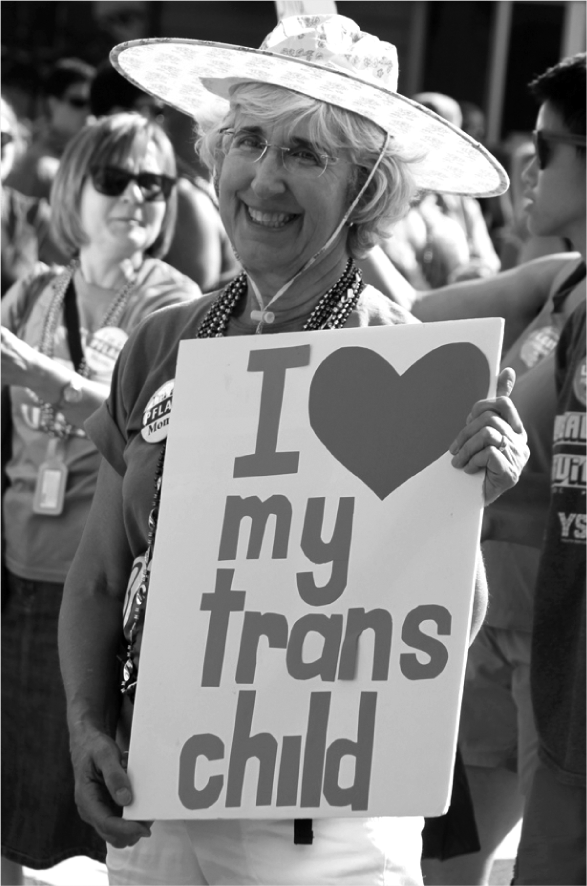
Gender hedging allows both children and parents to explore gender nonconformity and begin to question the legitimacy of the gender binary. This questioning leads parents to seek out information about gender-variant children, connecting them to online materials that accept and normalize gender variance.
Then parents participate in “gender literacy,” or active education of their children about issues of gender variance. Rahilly argues that gender literacy permits parents to actively resist the gender binary and demonstrate acceptance of their own children. Finally, parents adopt a practice of “playing along” with the gender binary according to boundaries set partially by their children. For example, a parent may not correct a stranger who mis-genders a child in a grocery store if a child requests their silence, but will address a teacher who mistreats the child.
Ultimately, Rahilly found that supportive parenting of gender-variant children is largely child-driven. Neither parents nor children are driven by ideologies that encourage gender variation, such as feminism or gender-neutral parenting. Instead, accepting parenting practices develop directly in response to the children’s interpretations of their gender and corresponding understanding of their needs.
Academic Doping?
Adolescents (or their parents) are 30% more likely to fill prescriptions for psychotropic drugs (usually stimulants for the treatment of ADHD symptoms) during the school year than over the summer, finds a recent study in the American Sociological Review by researchers Marissa King, Jennifer Jennings, and Jason Fletcher.
Their paper goes on to tell a story of inequality. Students of higher socioeconomic status were more likely than students of lower socioeconomic status to use stimulant prescriptions solely during the school year. This trend persists even when the financially-advantaged and financially-disadvantaged students see the same doctors.
What is more, the authors found that seasonal stimulant use among adolescents varies by state. States with stricter accountability and testing policies have higher rates of seasonally selective stimulant use among high socioeconomic status families.
In short, the findings demonstrate an additional way that privilege gets transferred from generation to generation: parents with higher socioeconomic status use medication during the school year, effectively ensuring an academic edge for their children.
hipsxxhearts via Flickr Creative Commons

How Students Experience Desegregation Efforts
dhendrix73 via Flickr Creative Commons

Many have decried the continued segregation of U.S. public schools along race and class lines, calling for action to integrate racially and socioeconomically homogeneous schools. A common response from policymakers has been to introduce busing programs that move racial and economic minority students out of their neighborhood schools and into schools in need of diversity. When considering the success of such initiatives, education researchers have focused on student achievement, but how students experience these efforts is also important. Because busing programs frequently require students of color to enter wealthier and Whiter neighborhood schools, sociologists wonder how the “incoming” students experience these moves.
For a study in the Sociology of Education, Simone Ispa-Landa and Jordan Conwell compared the school experiences of 38 Black students participating in Diversify, a popular busing program aimed at increasing diversity in suburban schools, as well as 16 Black students who were placed on the program’s waitlist. The Diversify students attended high-income, predominantly White, suburban schools. The students described these schools as favoring White students in the achievement hierarchy due to racialized tracking practices and teachers’ low expectations for Black students’ achievement. The Diversify students also characterized high-performing schools as “White” and low-performing schools as “Black.”
The waitlisted students, who attended low-income, predominantly non-White, urban schools, did not racialize achievement or use academic performance to characterize schools as “White” or “Black.” The authors argue that waitlist students did not learn in an environment where White students dominated the achievement hierarchy, while the Diversify students directly observed and internalized the racialized achievement hierarchies in their schools.
Like other desegregation efforts, Diversify and similar programs that move students of color into White-dominated achievement hierarchies have unintended consequences. It seems that how schools are desegregated may matter more than how many schools are desegregated.
Flash-Mob Movements
The police shooting of unarmed teenager Michael Brown resulted in protests on and beyond the streets of Ferguson, Missouri. The Twitter hashtag #BlackLivesMatter catalyzed the spread of an anti-police brutality campaign in which protesters worldwide stopped traffic, staged “die-ins,” and hosted anti-police brutality rallies.
An artist’s remix of an “Unbroken” movie poster shows how far the “Hands Up, Don’t Shoot” message from Ferguson spread.
Poster Boy via Creative Commons

Collective action research often emphasizes organization as a key feature of social movements and protests, regarding spontaneity as having very little part in successful, sustained social movements. However, through analysis of ethnographic and historical data, David Snow and Dana Moss illustrate in American Sociological Review how certain conditions that ultimately shape the course and character of protest events and movements can lead to spontaneous uprisings. The conditions they identify include a lack of a clear or pre-existing hierarchy; ambiguous precipitating events that do not fit neatly into popular narratives or explanations; behavioral and emotional priming and framing, or efforts to elicit strong feelings and active expressions of those feelings; and ecological or spatial contexts and constraints, meaning that people in close physical proximity to the events can hardly avoid becoming involved.
In contrast to movements with highly visible leadership and carefully constructed goals, tactics, and messages, rapid-response uprisings value and rely on spontaneity and impromptu contributions. Spontaneity can either trigger or sustain a protest because people rely on their own unique experiences to dictate which responses and actions may be relevant and possible. For instance, one person can begin an unplanned chant that ultimately becomes a well-known chorus in cities across the country. These findings set the groundwork for further research on spontaneity—not only as it pertains to protests and collective action, but also in everyday life.
Serenity and Job Insecurity
philhearing via Flickr Creative Commons

Social psychologists stress the importance of a sense of personal control as well as its sister traits, self-efficacy and mastery. Perceived control is the sense that the outcomes of one’s life are the result of one’s own actions (rather than chance or external forces). High levels of perceived control are linked to lower levels of psychological distress and greater resilience. Researchers wondered, though, whether perceived control might be a case of diminishing returns. Could distress win out even among these hardy masters of self-control?
In Social Psychology Quarterly, Paul Glavin and Scott Schieman investigated the relationship between levels of perceived control and psychological distress in the context of job insecurity. When a job is uncertain, they argued, social reality may conflict even with high levels of personal control. To test their idea, Glavin and Schieman used panel data collected from American and Canadian workers. The original idea held—that higher levels of perceived control led to lower psychological distress—but the relationship was curvilinear among workers who perceived a high likelihood of job loss. That is, despite their sense of control, when they felt their jobs were on the line, these workers experienced greater levels of psychological distress (on par with their peers, who had lower levels of perceived control), possibly because they felt their inability to take control of the situation most keenly.
There is no doubt that perceived control is a crucial psychosocial resource, but it appears the context and conditions of power or powerlessness in people’s lives hold real consequences for how much of this mental health benefit can be enjoyed.