



Abstract
The “velvet rope racism” of nightclubs means celebrating Black music while keeping young Black men off the guest list.

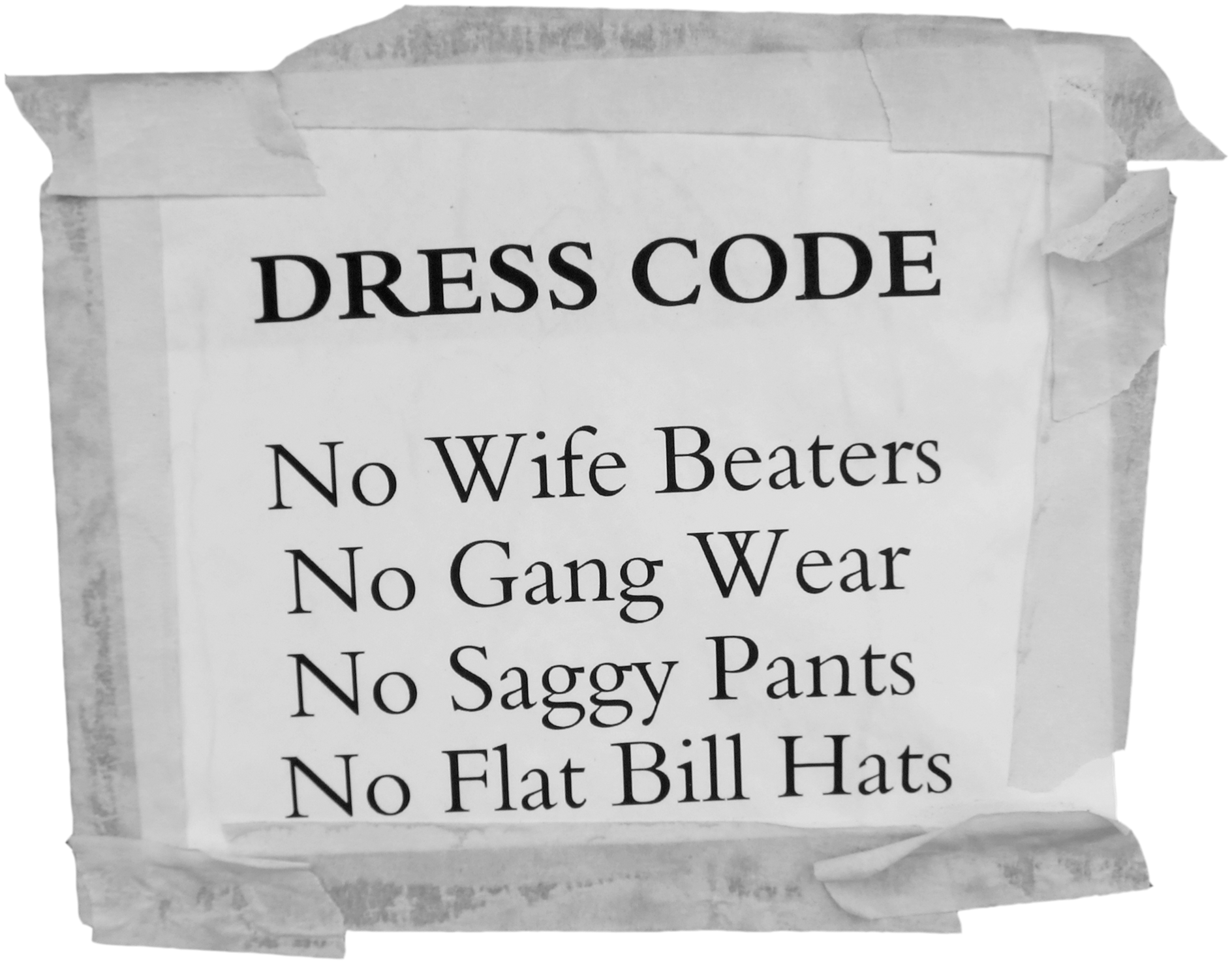
It was Friday night and Terrence, an African-American college student, was looking forward to heading out to Figaro’s—a popular nightclub in a midsize, predominantly White, college town I’ll call Northeast, Georgia. Terrence knew Figaro’s might have a dress code, so he pulled out a pair of new, relaxed-fit jeans, and a white, short sleeve, button down collared shirt, and brown loafers to complete his collegiate look. With his also carefully dressed African-American friend Calvin, Terrence arrived at Figaro’s, where the bouncer, a tall White male, took one look at them and said, “I can’t let you in with those baggy jeans. We have a dress code.” The bouncer pointed to a sign over his right shoulder: “No baggy jeans or shirts, No tank tops, No gym shoes, No necklaces, No du rags, No white t-shirts, No hats turned sideways, No Jerseys. DRESS CODE STRICTLY ENFORCED.”
“But there were two guys in front of me wearing the same kind of clothes and you let them in,” Terrence protested. Calvin, sensing his friend’s growing frustration, interrupted. “Come on man. Let’s just go. You know why those other guys got in.” Calvin left off the rest of the sentence: the other patrons were White.
Around the U.S., in privately owned but ostensibly public venues, dress codes are an informal color line.
Terrence’s rejection seems to reflect an increasingly common experience for African-American men seeking access to popular nightclubs in places like Northeast. Media reports from cities like Chicago and New Orleans suggest that dress codes are, in fact, used in racially discriminatory ways. For instance, the owners of Original Mother’s—a nightclub in Chicago’s upscale Gold Coast area—reached an agreement with six out-of-town Black college students denied access. The students, visiting from Washington University in St. Louis, alleged that Original Mother’s had used a dress code against baggy pants to racially profile them. As proof, they pointed out that they had switched pants with their White friends, who then promptly gained admittance. Same pants, different skin. Worse, at the Razzo Bar and Patio in New Orleans in 2005, Levon Jones, a student at Georgia State University, and his friend were denied admission because his friend purportedly did not meet the club’s dress code. A fight broke out between Jones and the bouncers, and Jones was killed. Around the U.S., in privately owned but ostensibly public entertainment venues, dress codes have become an informal color line.
Paul Sableman, Flickr Creative Commons
Few sociologists have explored issues explicitly related to race, class, and access in urban nightlife. Based on my participation, observation, and interviews with patrons of nightlife in Northeast, the implementation and use of dress codes against hip hop fashion are a major topic. In my work, I’ve found three distinct experiences among the African-American men of Northeast’s nightlife: first, there are men who refuse to change their style, get rejected from the nightclubs, and accuse the owners of racial discrimination. Then there are African-American men who generally sport a middle-class, college student fashion, gain access to nightclubs, and do not feel that the dress codes target African Americans. Finally, there are the young men like Terrence, who anticipate the dress codes and adopt the “proper” attire, but still get rejected from the clubs. They feel targeted. Each groups’ thoughts on dress codes illustrate how race and class are closely tied in racial discrimination and nightlife.
Dress codes provide a means by which club owners can limit patrons to a preferred clientele.
Race, Boundaries, and Bouncers
Like Figaro’s, many public entertainment facilities throughout urban America have dress code requirements. Since nightclubs are privately owned, they can legally impose dress codes as long as they can demonstrate consistency in the use and enforcement of those rules. Some high-status individuals may occasionally violate dress codes without reprimand, but, in general the dress codes provide a means by which owners can control who uses their facilities, limiting patrons to a preferred clientele.
Typically, dress codes are directed at men’s attire. There are a number of possible explanations for why women’s clothing is not the subject of dress code enforcement, but the most prevalent is that men, especially Black men, are considered a bigger threat and more prone to disorderly conduct than women. Indeed, in her study of an elite nightclub in Boston, Lauren Rivera found that bouncers used multiple cues to determine who might be trouble. The gatekeepers told Rivera they believed women were the least difficult patrons and worthy of less surveillance than men—particularly those men perceived to be potential “troublemakers” based on their attire.
Race and class clash at these clubs, many of which feature hip hop music but restrict the clothing styles associated with hip hop culture. Perhaps drawing on the iconography of rap as a subculture expressing the experiences of young, poor minority men, it’s possible that nightclub owners see the musical messages as a sort of warning. Such owners contend that dress codes are a matter of public safety, citing fights at other nightclubs or police suggestions that the rules keep order. The unspoken part is that nightlife participants who wear hip hop clothing are seen as lower class and likely to threaten the enjoyment and pleasure of other club-goers. An African-American male in fresh white sneakers or sporting a flashy gold chain—elsewhere signs of status and disposable income—becomes, irrespective of his economic class, education, or cultural sensibilities, a threat. At the very least, he looks like one to the people who make the rules.
When I spoke with a few owners and bouncers in Northeast regarding the disproportionate impact of dress codes on African Americans, they simply repeated that they were seeking to attract a certain type of clientele. It had nothing to do with race, they said. Then again, consider who was asking the questions: I am an African-American male.
One former nightclub manager, a White male, shared a different perspective, however. He said, “Yes, we had to institute dress codes, and to me the dress codes are discriminatory. But we started to have trouble with drugs and stuff. There were just too many problems going on there. That’s one of the reasons I left.” While he suggested a discriminatory tone to the dress codes, he justified their enforcement for public safety. Few managers, owners, or bouncers are likely to be so candid. Explicitly acknowledging the function of dress codes in African-American males’ nightlife could bring anything from bad publicity to legal action.
A Night Out in Northeast
As an African-American male growing up in Chicago, I had been intrigued by the hustle and bustle of city nightlife. It was when I moved to the South, near Northeast, that I had the opportunity to study it in earnest. For three years, I made weekly visits to nightclubs. I soon saw that, although official dress codes specifically targeted clothing styles and not persons, African-American men were disproportionately affected. It’s also when I started to realize that, among the young men I saw going out, there were three different responses to dress code enforcement.
As I described in the intro, some African-American men view the dress codes as racially discriminatory, while others see them as unfortunate, but not specifically related to race. Still others expressed frustration, arguing that bouncers were selectively enforcing the dress codes, even when club-goers had carefully dressed to meet the rules. These varied perspectives reveal a complicated relationship between race and social class and how each is policed in formal and informal ways.
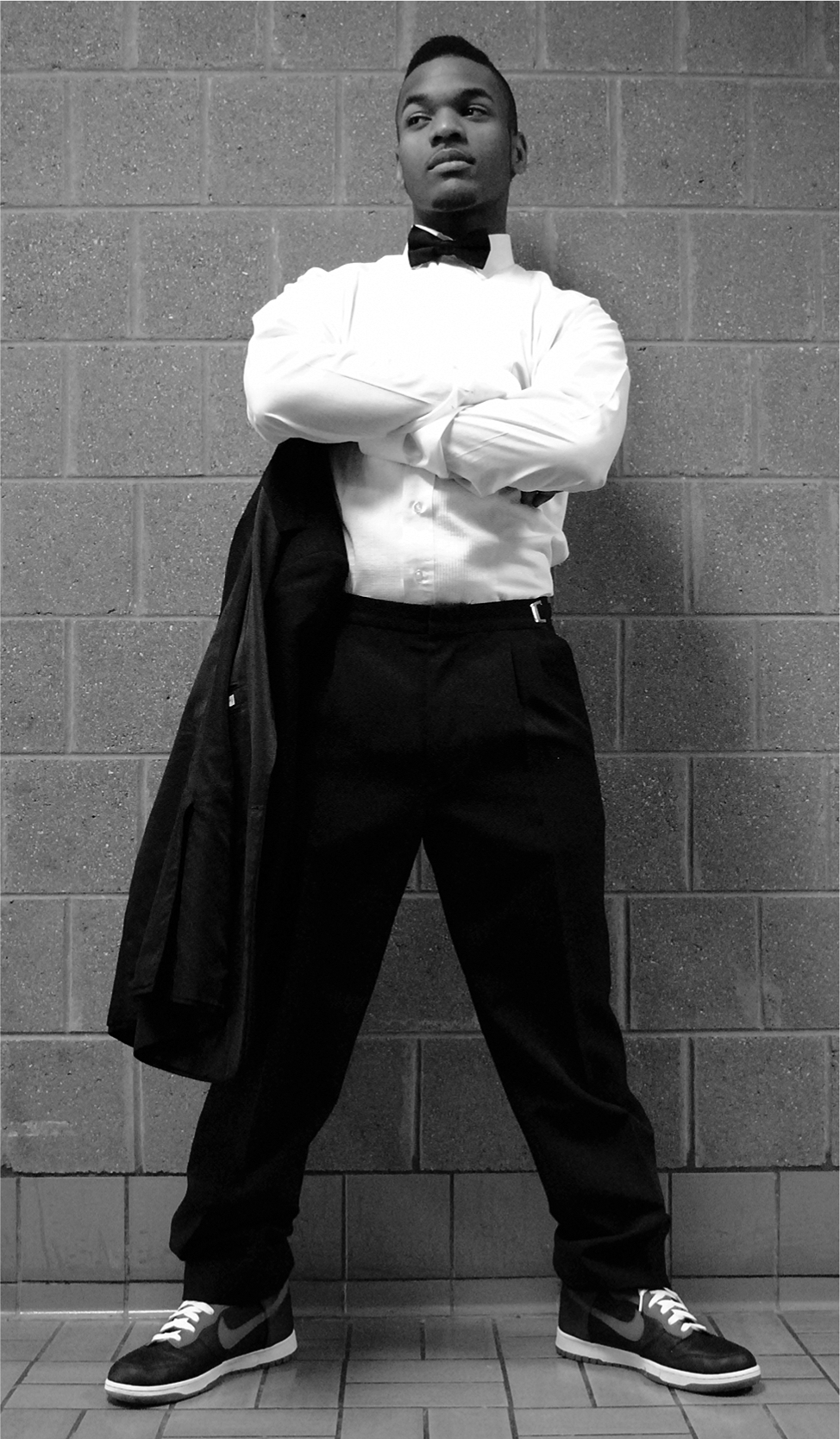
Spotless, dancer Deante Marshall’s Nike Dunks might still keep him out of the club.
Jayson Ignacio, Flickr Creative Commons
The nightlife participants who saw discrimination based their conclusion on two observations. First, they pointed out that there was nothing particularly distinctive about the quality of clothing permitted or not permitted in the nightclubs (particularly apropos given that Northeast’s nightclubs are less selective than large city nightclubs and rarely require an admissions fee). Second, they suggested that if observers were to consider the cost of clothing, they would discover that some of the African-American men’s clothing was quite expensive. Although questions of dress aesthetics and style of dress can’t be answered with price tags alone, as sociologist Pierre Bourdieu indicates, these African-American men, typically lower-class, local patrons, took the cost of clothing as a proxy for appropriate dress. Considering both observations, the men told me they could only conclude the rules weren’t about their clothes, but about them.
One former nightclub manager said, “Yes, we had to institute dress codes…to me [they] are discriminatory.”
Joe, an African American, explains the paradox of policing hip hop style in a hip hop club this way: “The dress code policy or whatever is basically, no jean shorts, no athletic wear, no jewelry, no excessive jewelry. Anything that’s like, in reference to the hip-hop culture is excluded. It’s excluded from downtown, but at the same time they wanna play all the hip hop music, you know what I’m saying? But they don’t want Black people in the club. It’s like a contradiction. They can play the music, but we can’t dress the part.”
For patrons like Joe, playing hip hop without permitting its fashion is direct resistance to African Americans’ participation in the nightlife. Such exclusionary practices resemble past eras when Whites have exploited the cultural products of Black creativity—like jazz and blues music—while excluding Blacks from full participation in enjoying those products. The White-owned nightclubs and music venues where the music was being played, in some instances by African-American performers, were as selective about admittance as Northeast’s clubs are today.
Interestingly, some White patrons are unaware of the dress codes. For instance, I asked Eric, a 22-year-old White male who frequents Northeast’s downtown clubs in polo shirts and khakis, what he thought about the dress codes: “What dress codes?” he asked. “They have dress codes for bars in downtown Northeast? I didn’t know.” Either White patrons like Eric do not wear clothing subjected to the dress codes or their clothing is not as closely scrutinized as that worn by similarly dressed African-American men.
Dress codes, race, class, fashion, and exclusion interact when African-American men step up to the bouncer.
Thus, as you might expect, the African-American men I spoke with who had gotten into the clubs had been dressed like their middle-class, White, college student counterparts. They told me they saw the dress codes as the owners’ prerogative and dressed carefully so as to get in. Derrick is typical: a regular at Northeast’s nightclubs, he also frequents all-Black nightclubs in Atlanta. While neither of the two Black-owned clubs in Northeast uses a dress code, Derrick finds Black-owned clubs in Atlanta implement dress codes and they’re enforced by Black bouncers. He commented, “The nightclubs are not racist. It’s just insurance against letting the wrong kind of people in. You know, the kind of people that start fights and stuff.” Like the nightclubs’ owners, Derrick justifies the use and implementation of dress codes as a matter of safety, not racism.
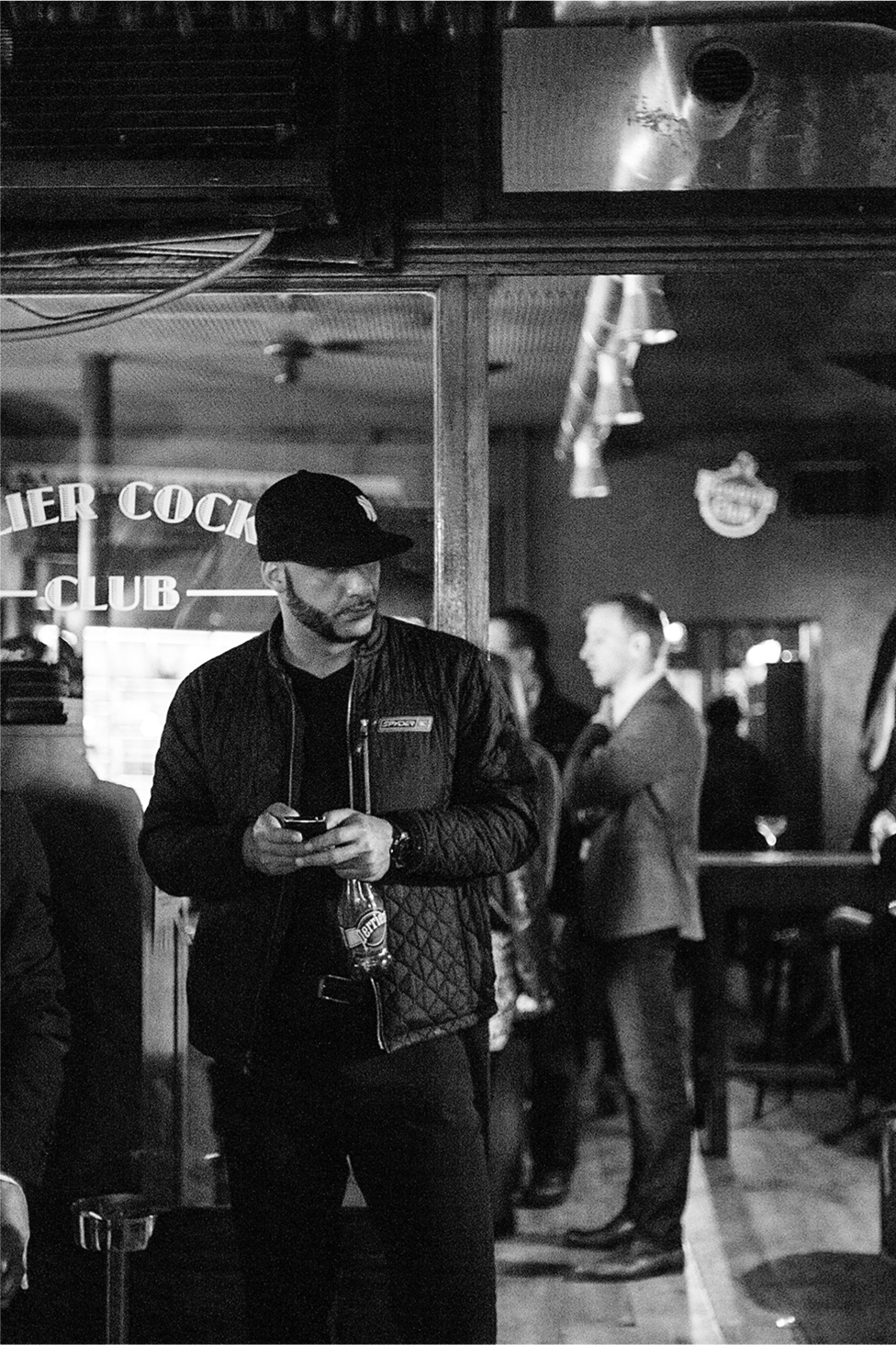
Bouncers often have carte blanche when it comes to enforcing dress codes.
Julien Bolin, Flickr Creative Commons
Terrell, another downtown Northeast regular, views the use of dress codes somewhat differently. He has been rejected from nightclubs because he enjoys wearing hip-hop style clothes. Now he adapts: “They might have come up with dress codes that target clothes worn mostly by minorities, but if you wanna get in, you gotta conform. You gotta put on your collared, buttoned-down shirts. That’s reasonable.” For Terrell, it matters little whether the nightclub owners are motivated by race, because the code isn’t unachievable. In his eyes, the dress codes are simply a condition of entry, no more inflammatory than a cover charge.
Although some African-American men gain access to the Northeast nightclubs, their experiences are complicated by the feeling that they are still not readily welcomed. Both middle- and lower-class African-American men in my study shared recollections that highlighted ways in which their behaviors, interactions, and movements on the streets and in the nightclubs were under constant surveillance. Other patrons, bouncers, and police cannot, or do not care to, readily distinguish between those African-American men who pose a threat and those who do not. For these observers, race is a proxy for threat.
Perhaps it is this overall sense of being unwelcome yet constantly watched that underlies the third group of African-American men’s views. They believe the dress codes are actually race codes. They argue that, after they have intentionally selected their clothing to fit the dress code, they are still rejected. Recall Terrence’s rejection from Figaro’s at the opening of this article. For Terrence, the most troubling aspect of his experience is that there is no satisfactory answer to his implicit question: Why am I being shut out when I am following the dress code? Ostensibly, he is being rejected for failure to meet an objective standard. Yet White patrons get in. Maybe there is a subtle difference between what Terrence is wearing and what the White males are wearing that Terrence just cannot see. Perhaps the bouncer has unfairly evaluated Terrence’s attire or simply missed the White males’ violation of the dress code. Or maybe the White males are local celebrities with elevated status and so they do not have to comply with the dress codes. Terrence is befuddled. Whatever the potential explanations, Terrence can only conclude he is a victim of racial discrimination.
The velvet ropes separating in-groups from out-groups hold different meanings for these three groups of men. Dress codes, race, class, fashion, and exclusion all interact when African-American men step up to the bouncer.
Worn Down
Local civil rights commissions typically find dress codes defensible as long as nightclub owners can demonstrate that the codes are applied consistently and are not used to single out or refuse groups based on their racial or ethnic background—a point owners can easily make by demonstrating the mere presence of a member of that group in the nightclub. But the owners’ practice of permitting a small number of African Americans or employing African-American bouncers to enforce the dress codes may simply mask the intentional use of dress codes to hinder African Americans’ participation in the nightlife.
Whether nightclub dress codes are intentionally or unintentionally used in a racially discriminatory manner is a complex issue. Based on my conversations with African-American men in Northeast, Georgia, it is clear that many carry the burden of evaluating their experiences at the nightclubs against the backdrop of negative stereotypes.
There is little explicit “proof” of racial discrimination, but the African-American men’s awareness that their attire will be thoroughly scrutinized and that they risk humiliation despite their efforts to meet the dress code make for a potentially troubling experience at the thresholds of nightclubs. Couple this possibility with African-American men’s overall feelings that they are unwelcome and it’s little wonder that many don’t even try to gain access to popular urban nightclubs. In effect, if not by design, these men are constrained by race, even when it comes to a night out with friends.