




Abstract
Sociologist Michael Bader reviews two books, Fat Chance and What’s Wrong with Fat?, that hope to reshape the debate about obesity in America.
Keywords
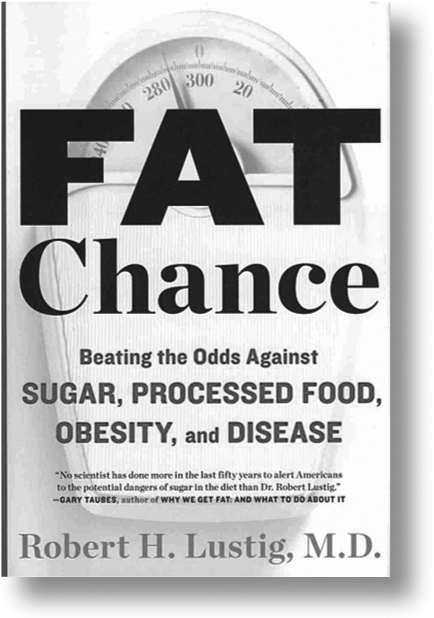
Fat Chance: Beating the Odds Against Sugar, Processed Food, Obesity, and Disease by Robert H. Lustig, M.D. Hudson Street Press, 2013 336 pages
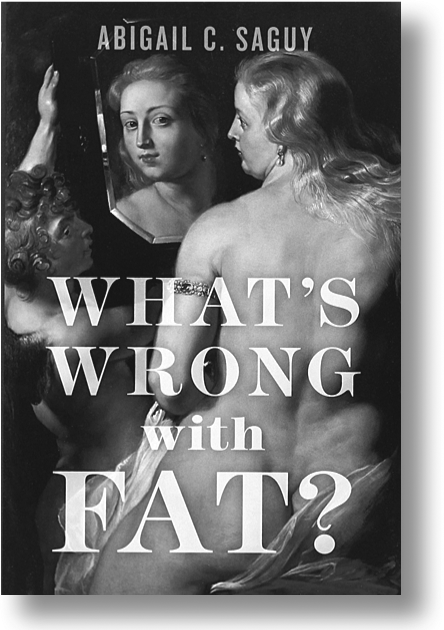
What’s Wrong With Fat? by Abigail C. Saguy Oxford University Press, 2013 272 pages
We are in the midst of a major “obesity epidemic.” In schools, city councils, state legislatures—and the White House, where first lady Michelle Obama has made reducing childhood obesity one of her major initiatives—tackling obesity is now a public health priority.
Policies and practices as diverse as school gardens, farmers’ markets, subsidies for new supermarkets, transportation redesign, new pharmaceuticals, and surgeries are addressing growing fears about the increasing body mass of the American population. Media reports devote a great deal of attention to the problem, trumpeting new “breakthroughs” under countless “battle of the bulge” headlines. However, according to the Centers for Disease Control, more than one-third of Americans remain obese.
Is obesity really unhealthy, or are we needlessly preoccupied with our growing waistlines? In very different ways, these two books explore that question.
“You don’t die of obesity,” Lustig writes, “you die of the diseases that ‘travel’ with it.” He argues that the cluster of diseases associated with obesity—called metabolic syndrome—is the real cause for alarm. Obesity is only one of the five chronic conditions generally used to diagnose metabolic syndrome (diabetes, cholesterol problems, hypertension, and cardiovascular disease are the others). By focusing on obesity alone, we target the 20 percent of the obese population that has normal metabolic profiles—and ignore the 40 percent of the population who suffer from metabolic abnormalities whose weight is at normal levels.
Lustig provides a thorough—and thoroughly accessible—explanation of how the body metabolizes different substances that can lead to metabolic syndrome. The main culprit is fructose, the stuff found in processed sugars. Fructose acts as a poison that tricks our bodies into storing fat, reduces our feelings of satiation, and triggers an addictive response so that we crave more and more of it. For many, this hormonal response leads to obesity; but, even in those for whom it does not, risks associated with metabolic syndrome can rise. If we are going to focus on a single substance in our war on weight, he argues, it should be the processed sugar in our food.
If, as Lustig tells it, sugar is the culprit, then fat is the wrongly convicted bystander. He goes to great length to describe what he sees as the flawed science behind emphasizing a low-fat diet. Wrongly blaming fat isn’t just a case of bad science: the panic over fat led food manufacturers to reduce the fat content of our food. How did they improve the taste of these low-fat foods? They added more sugar.
Lustig makes a compelling case that the body reacts differently to a calorie of fat than it does to a calorie of processed sugar. In doing so, he challenges the received wisdom that “a calorie is a calorie” and instead argues that people should pay more attention to the amount of added sugar in our foods. Naturally-occuring sugars, even fructose, aren’t problematic; both soluble and insoluble fiber blunts the body’s overwhelming response that processed sugars create. What we should be eating, according to Lustig, is “real food”—naturally-occuring fats, proteins, and produce. “Shop on the periphery of the supermarket,” where produce, meats, and dairy—“real food”—are found. He also writes that the “more [nutrition] labels you read, the more garbage you’re buying” since real food doesn’t need any labels—you won’t see a nutrition label on an apple after all. These are among his rules of healthy eating, which also include one that is hard to quarrel with: “If you go to the market hungry, all is lost.”
As compelling as Lustig’s scientific argument is, it is hard to figure out what its public health implications are. He mentions in passing that real food costs more to purchase, prepare, cook, and clean up, and that the higher costs will exacerbate health inequalities. “Real food spoils,” he writes, which is particularly problematic for low-income Americans who shop using monthly support from the Supplemental Nutrition Assistance Program, or Women, Infants, and Children benefits, or who don’t have access to reliable transportation. This real food prescription (as Michael Pollan, Mark Bittman and others have envisioned it) may be the right medicine for those who can afford it—but it is too expensive for low-income Americans.
Lustig does believe in regulatory reform; he places his hopes in the judicial system, which he argues is unencumbered by the influence of food manufacturers (who lobby the executive and legislative branches). Yet I find it perplexing, if not misguided, that he focuses so much on the federal government, and so little on the state and local governments where health-related policies have actually been enacted. While local politicians are hardly immune to political pressure (soda makers and bottlers, for example, lobbied successfully against soda taxes in New York City and Philadelphia), these jurisdictions have succeeded at passing other public health measures, such as banning sugar-sweetened beverages from schools and trans fats from restaurants.
Americans are obese, but does that make us unhealthy?
A more problematic aspect of Fat Chance is its emphasis on personal responsibility. Lustig, a pediatric endocrinologist, opens his chapters with clinical case-study vignettes—but they provide almost no context for understanding the complexity of families’ lives outside of the clinic walls. Lustig recounts the tale of eight-year-old, 110-pound “DeShawn.” DeShawn’s mom claimed to have rid the house of sugared beverages, but he continued to gain weight until he became a 255-pound eleven-year-old, and Child Protective Services was called in. “It is the thought of losing her son that forces the mother to face up to her own sugar addiction. She rids the house of sodas that populated it…” Lustig fails to discuss how inequalities of race, gender, or class—or the real cost of real food—may have influenced their lives; only the mother’s poor decisions figure into his account.
Sociologist Abigail Saguy’s What’s Wrong with Fat? offers a much-needed corrective to Lustig’s perspective, and makes an important contribution to the study of obesity and health. She turns our attention to the physicians who treat obesity and the public health researchers who study it, looks at how notions of personal responsibility frame our understandings, and how powerful actors—physicians and public health professionals—have turned obesity into a problem that requires a solution.
Saguy identifies several ways weight and obesity are debated in contemporary North America, focusing on the contest between four frames: a medical frame that emphasizes personal responsibility; a public health crisis frame that foregrounds economic consequences; the Health at Every Size movement that advocates social acceptance and personal health; and the fat rights movement that frames obesity as an equal rights issue. She argues that the greater social credibility of the first two, thanks to the professional credentials and financial resources of the medical establishment and federal government, dominates debate about the changing body size of the American population, successfully framing it as a medical and public health crisis.
The medical frame—which is illustrated by Lustig’s Fat Chance—places responsibility on individuals to change their diets and to exercise more. It devalues non-conforming bodies, and targets them for intervention, leading to discrimination against obese people and reductions in health care quality. Saguy concurs with Lustig that focusing on body type can lead physicians to overlook metabolic syndrome in those of normal weight, or misdiagnose it in the overweight.
Meanwhile, the public health crisis frame focuses on the medical consequences of obesity, and the economic ones as well, in the form of increased health care costs for all Americans. Saguy claims that framing the obesity crisis as economic blames overweight or obese people for increasing costs of goods and services, pitting individuals against society—such as when Americans’ growing body sizes are blamed for increasing airline fares.
Rather than see obesity as the problem, the two other frames focus on obesity research and health policy. The “Health at Every Size” movement is an academic movement that argues for healthy living regardless of one’s BMI. It can empower people, regardless of their body type, to improve their lives through their own behaviors—which is what it shares with the medical and public health crisis frame. Alternatively, the “fat rights” frame highlights the discrimination and stigma that corpulent people experience.
If sugar is the culprit, then fat is the wrongly convicted bystander.
The strongest part of Saguy’s book is the conclusion, which uses sociological insights to make a compelling moral case that researchers must recognize the impact of their research findings and anticipate how they may be used by the media. Those who study weight-related disease must be mindful of tendencies to use body size and shape to discriminate against people. Recalling her daughter’s question: “Am I fat?” reminds us that by constantly pushing the message that fat is bad, we may violate the prime directive of the Hippocratic Oath: “Do no harm.”
Still, I can’t shake the feeling that Saguy missed an opportunity to engage with the public health community. One major point that I took away from her book is that physicians and epidemiologists should use their expertise to frame their results without stereotyping body types. This is an important conclusion that should reach the public health community. But despite Saguy’s claim that she set out to explain “how claims about obesity-related health risks and an ‘obesity epidemic’ have been promoted and accepted as truth, despite considerable scientific uncertainty and debate,” she doesn’t accurately represent the epidemiological research and the considerable ongoing debate about obesity.
The author writes that epidemiology “specifically tends to take the individual as the unit of analysis, thus favoring a focus on individual behavior as the cause and solution for illness.” This sweeping generalization overlooks the prominent sociological turn in epidemiology in the past two decades. Prominent epidemiologists like Ana Diez Roux, Ichiro Kawachi, Sandro Galea, and Paula Braveman have all emphasized social structures as the cause and ultimate solution for contemporary health conditions. Saguy also overlooks the increasing number of sociologists studying population health who publish their research in leading public health journals like the American Journal of Public Health, the American Journal of Epidemiology, and Social Science & Medicine.
Many researchers in this area would sympathize with the idea that public health should not stigmatize bodies, especially since the burden of both obesity and metabolic syndrome fall disproportionately on people who already suffer disadvantages due to their class or racial backgrounds. They would be open to framing academic research findings more carefully. Saguy has certainly convinced me of the importance of doing so. But in overlooking a large body of epidemiological research that has actively worked to identify the social causes of poor health, her book turns a blind eye to many potential allies.
Rather than demonize epidemiological and medical research, we need to consider how social stigma might be distorting medical and population health research. As Saguy notes, NIH officials invited members of the Association for Size Diversity and Health and National Association to Advance Fat Acceptance to help inclusively word grant applications; NIH and FDA also granted seats on advisory committees to fat activists. But that sort of rare collaboration requires engagement among experts who don’t share a common frame. Casting aspersions, which Saguy quotes both medical researchers and fat activists as doing, makes this needed collaboration much harder to achieve.
Lustig and Saguy agree on at least one point: that researchers should seek to better understand how food and drink is incorporated into Americans’ everyday routines. But both authors could have focused more on how poverty shapes how different groups of Americans procure, prepare, and consume food, and how it limits the time and space they need to keep themselves fit. Regardless of one’s body size, real food is expensive and exercise is too. Even many of those with health-positive outlooks cannot access these opportunities. When we neglect this fundamental fact, we run the risk of exacerbating the inequalities among us.