Abstract
Sociologists Joy Rayanne Piontak and Michael D. Schulman explore spatial inequalities in food insecurity in the United States, specifically the problems of hunger and food access in non-metropolitan and rural localities.
Keywords
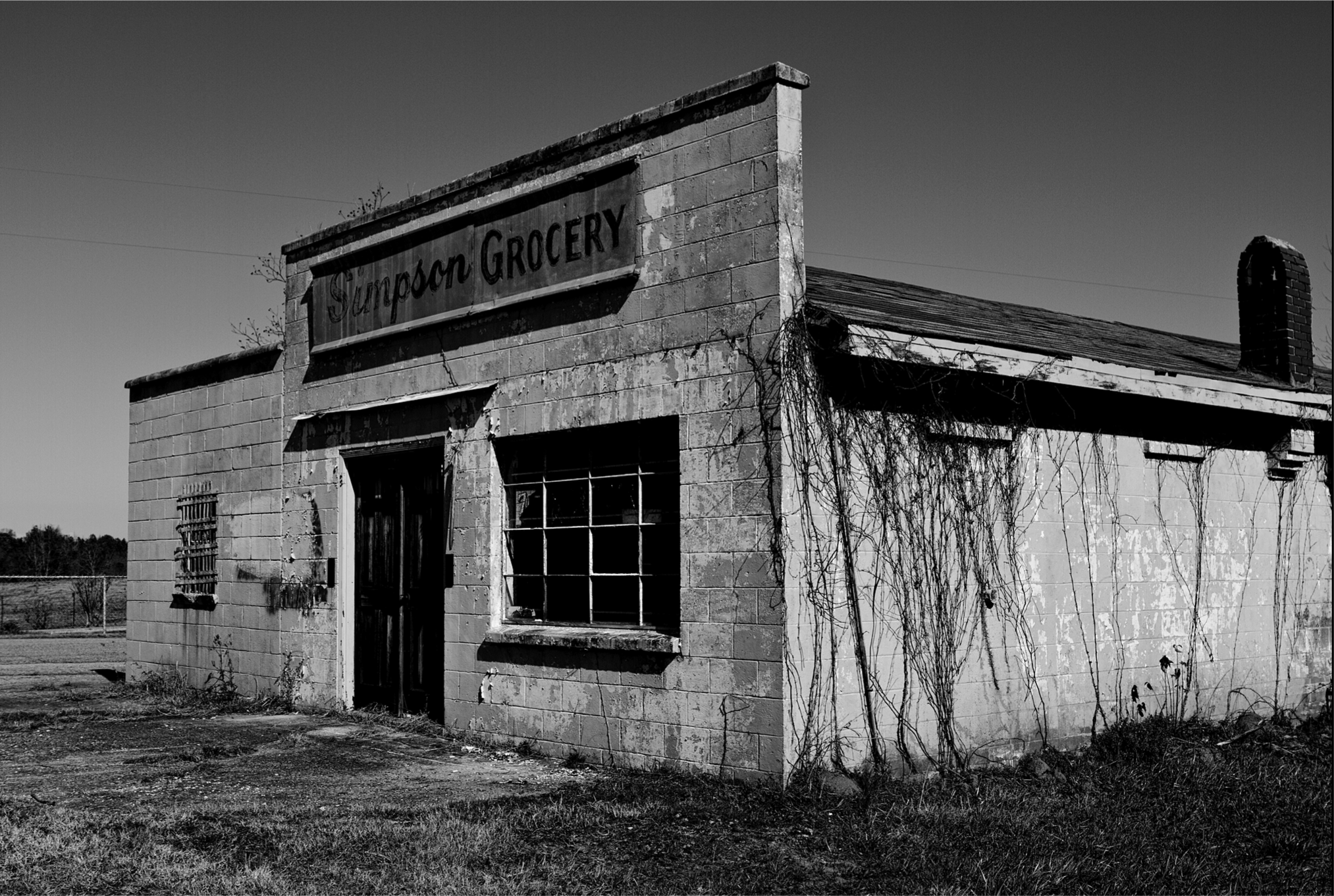
From The Dukes of Hazzard to Duck Dynasty, we have come to understand that rural locales are wholesome, honest places, full of plenty and populated by folks whose down-home common sense triumphs over city slickers. At the same time, television shows from The Naked City of the 1960s to the current Law and Order remind us that poverty and crime are looming around every dark city corner. These same understandings of urban and rural spaces parallel popular narratives regarding who has access to healthy, wholesome food and who lives in places where it is abundant. Recently, food deserts and food insecurity have received a great deal of media attention thanks in part to hunger and poverty researchers and even first lady Michelle Obama. However, the attention is focused on urban spaces; the reality of widespread poverty and hunger in rural areas has largely been left out of the conversation.
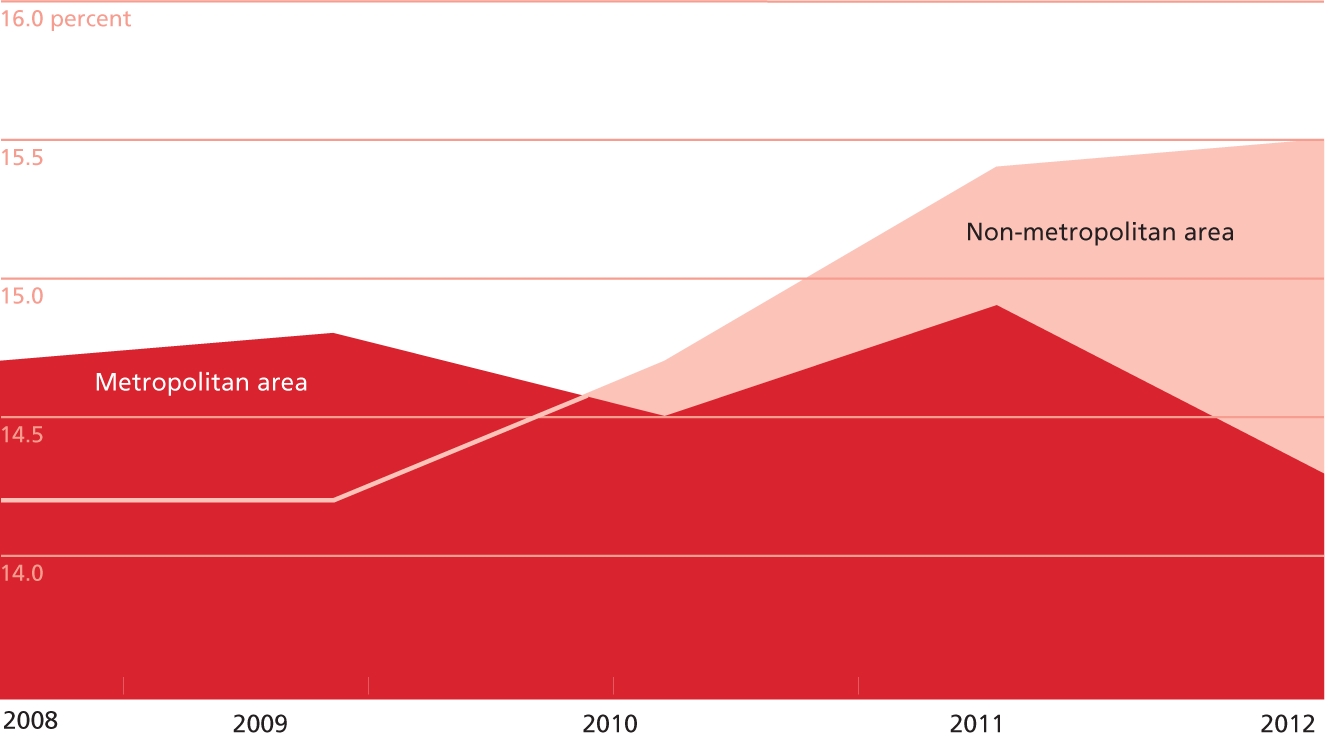
More than 14 percent (17.6 million) of households in the United States were considered food insecure by the U.S. Department of Agriculture (USDA) in 2012, meaning that they did not have the money or resources for an adequate amount of food. Intermittent and/or inadequate food supply can have lasting detrimental effects on the physical, emotional, and educational development of children. Of households with children under age 18, 20 percent were food insecure in 2012, an increase from 15.8 percent in 2007. Looking at the households themselves tells only half of the story, since rates vary across places. Rates of household food insecurity in 2012 were highest in nonmetropolitan areas, as depicted in the chart on page 76. By parsing urban areas out further we find that rates of food insecurity are highest in principal cities of metropolitan areas (16.9 percent) and nonmetropolitan/rural areas (15.5 percent), and lowest in suburban areas and commuting areas around large cities. Regionally, households in the South have the highest rates of food insecurity, and this region includes a large number of rural areas. By examining spatial patterns of food insecurity it is clear that while food is a household issue, it is shaped by larger patterns of spatial inequality in our economy.
Robert S. Donovan
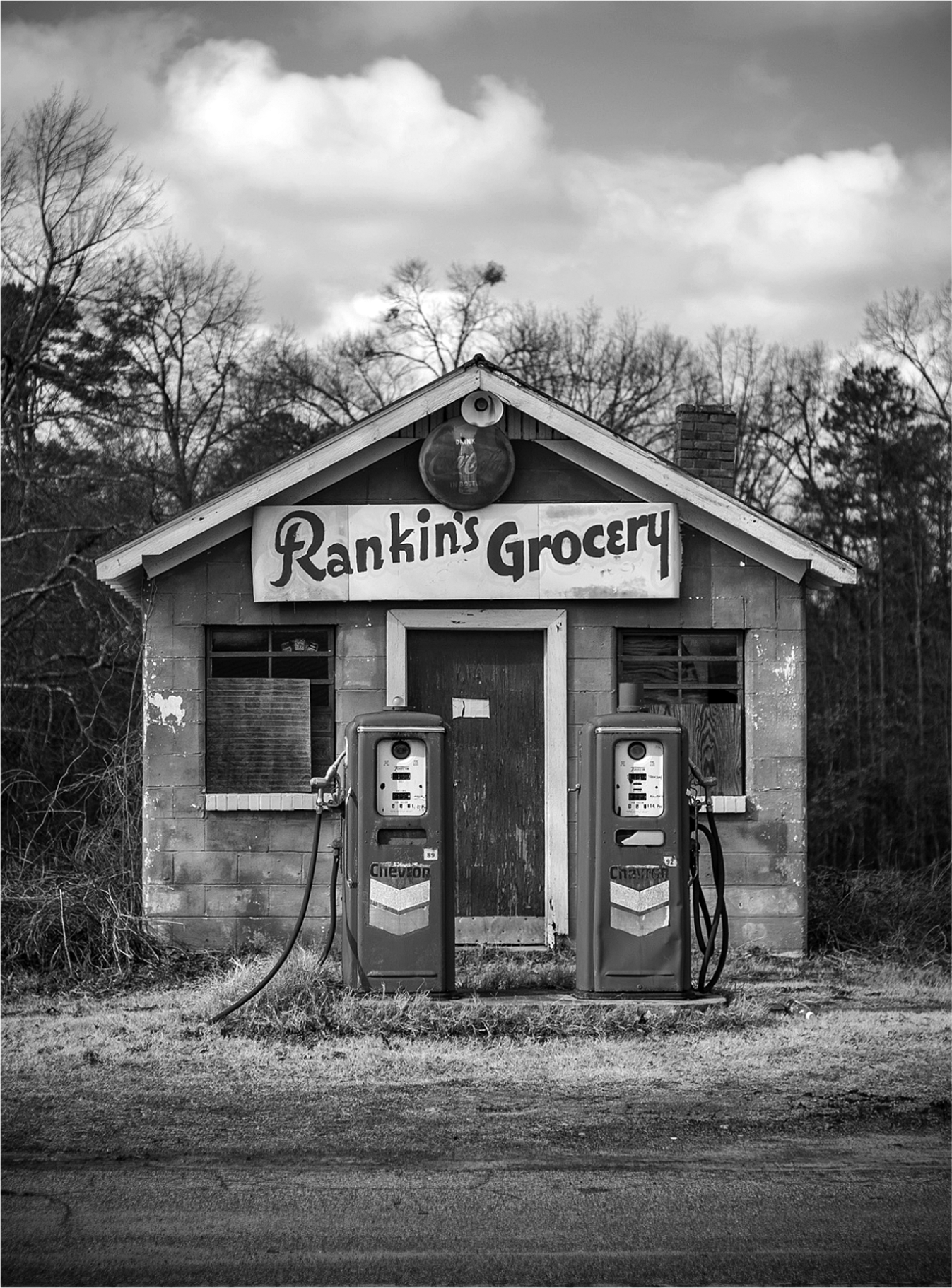
Media portrayals of poverty often feature inner cities. Television shows such as The Wire offer a bleak vision of the urban landscape, depicting the results of spatial segregation and isolation in metropolitan areas that offer little or no prospects for lawful employment. Rural spaces, while often less visible, possess the same social problems of household food insecurities as those manifest in the inner cities, but with additional constraints, such as access to markets and transportation.
Percentage of Food Insecure Households by Metropolitan Status
Source: USDA Household Food Security. Annual Reports 2008-2012
Spatial Inequalities
Food insecurity is, at its core, a problem of poverty. According to the most recent USDA report on rural America, the poverty rate in 2012 was 17.7 percent for non-metropolitan areas, compared to 14.5 percent in metropolitan regions. Rates of poverty, and deep poverty, have been rising faster in rural areas than urban areas. Of the 703 highest poverty counties in the United States in 2007-2011, 81 percent were non-metro, and were located primarily in the South and Southwest. In the rural South in particular, persistent poverty is rooted in racial dynamics that have isolated rural African-American families over time.
Food is a household issue, but it is shaped by larger patterns of spatial inequality in our economy.
Unemployment and underemployment among adults within a household is a key predictor of food insecurity in the household and is higher in non-metro counties. Rural and urban areas both suffered large increases in unemployment and underemployment from the 2008 recession; however, the recovery rate in rural areas has lagged behind with no net growth in non-metro areas from 2012 to the first part of 2013. Further, employment in rural areas is more likely to be concentrated in low-wage work, and lacks sufficient work supports such as child-care. Unemployment rates are particularly high among non-whites who make up a big part of the southern “black belt,” an area of persistent and deep rural poverty.
Rural (In)Access
In addition to the faltering economic situation in rural areas, several other features lead to food insecurity. Sociologists Troy Blanchard and Todd Matthews have written about the trend in the consolidation of large grocers, which has resulted in a decrease in the number of local stores in favor of large supermarkets. The USDA Food Environment Atlas shows that rural counties had an average 5.77 percent decrease in the number of grocery stores from 2007-11 (a map depicting this change is available on contexts.org). Large rural areas have also seen substantial decreases. The diminishing number of stores means more distance between stores in rural areas, creating “food deserts.”
Rural areas also lack the infrastructure and commodity chains characteristic of cities, meaning that resources like public transportation are not available for getting people to grocers. Particularly in the South, the rural poor are less likely to have access to a vehicle, making consistent access to an adequate amount of food even more elusive. Moreover, many small rural communities lack adequate social service supports such as food pantries and soup kitchens found in urban areas.
For academics and local food security activists, excellent data and interactive mapping resources are available on the Web through the USDA-Economic Research Service. The Food Environmental Atlas provides interactive graphical information on community access to healthy food at the county or state level. The Food Access Research Atlas provides interactive information at the census tract level on food access and supermarket availability (http://www.ers.usda.gov/data-products/food-environment-atlas/). These maps clearly depict spatial inequality in food and hunger in the United States and concentrations of poverty in rural America.
A variety of projects in urban areas, often called “farm-to-fork” or “buy-local,” aim to connect local producers with local consumers in order to increase the availability of fresh food and provide an alternative to corporate commodity chains. Usually this involves linking foods produced in rural areas to urban spaces through farmers’ markets, restaurants, community supported agriculture, and food retailers. Strong arguments can be made for the social, economic, and nutritional benefits of these programs. While many positive local food efforts, such as school or community gardens, are bringing fresh food to residents of urban areas, similar efforts are needed for communities of all sizes and shapes to ensure that all Americans are well fed. USDA data show that from 2009-13 the growth of famers’ markets in urban areas has outpaced those in rural areas. Further, a lower percentage of rural farmers’ markets report accepting SNAP benefits (Supplemental Nutrition Assistance Program, i.e., food stamps).
SNAP and EFNEP (The Expanded Food and Nutrition Education Program) need to be defended and their funding expanded rather than reduced. Income supports such as TANF (Temporary Assistance to Needy Families) are also important to combat confounding obstacles such as the lack of public transportation. Innovative community programs are particularly important for low-income urban and rural residents who lack “living wage” jobs and may live in food deserts. For example, some communities are working with corner stores to provide infrastructure (e.g., coolers) for fresh produce, and to encourage the stores to stock a variety of unprocessed fruits and vegetables. In addition efforts are needed to increase the number of food banks and food pantries in rural areas. Those that do exist in rural areas, traditionally operated by faith-based organizations and other non-profits, need to work with local stores and farmers to increase access to fresh and local food in the rural communities in which food is produced. For example, farmers could donate produce that is too big or too small for commercial sale to local food banks and pantries.
Rates of household food insecurity in 2012 were highest in nonmetropolitan areas.
In 1967, as part of the “War on Poverty,” a comprehensive report on rural poverty, “The People Left Behind,” was published. If the same report were issued today, it might be entitled, “The People Still Left Behind: Growing Our Food, But Hungry and Food Insecure.”
Sam | graywolfx47