



Abstract
Drawing examples from the North American food cart movement and restaurant scenes in gentrifying neighborhoods, sociologists Amy Hanser and Zachary Hyde explore the role of food in transforming urban spaces.
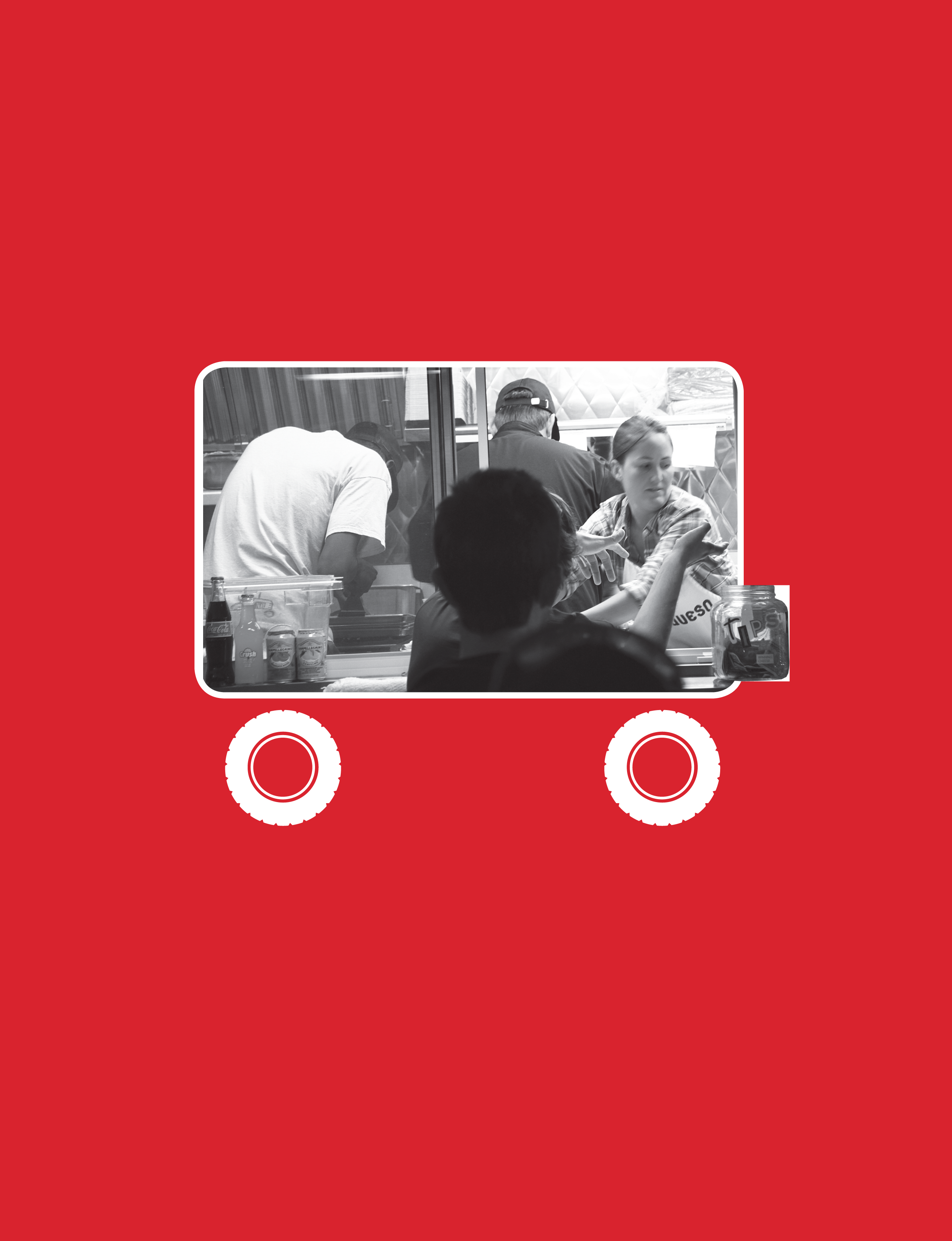
Brett Burmeister, operator of a go-to website on Portland, Oregon’s food cart scene, explained that for cities seeking to “revitalize neighborhoods” and “bring community together,” food carts are ideal. They “draw you in and keep you there,” he suggested. “Once you get your food, it’s like, ‘Well, why don’t I sit here and enjoy it?’”
Crowds gather to enjoy local food and live entertainment each Friday in Charlotte.
Photos by Kevin J. Beaty
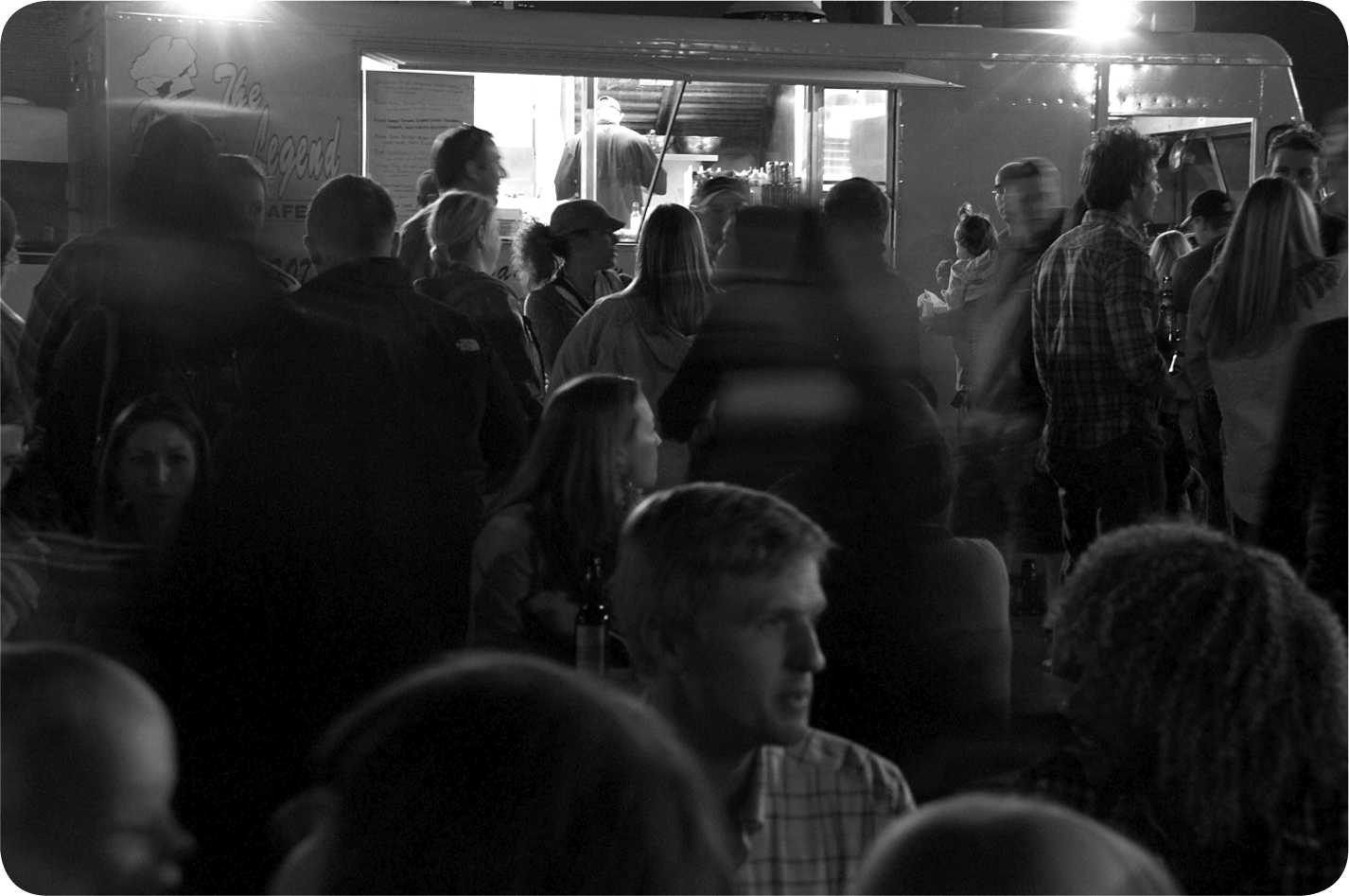
Burmeister captured the wide range of virtues that are regularly attributed to new street food scenes in many North American cities. Gourmet street food, and the food carts and trucks that serve it, have come to be linked with discussions of urban “livability” and “diversity.” In Portland, for example, experts believe that food carts contribute to neighborhood livability and vitality by enlivening dull urban spaces.
When we think about food and its ties to specific places, we often call to mind the rural landscapes of farm and pasture or the notion of “terroir”—a sense of place tied to foods. Food trends, like the emphasis on eating “local” or the “100 mile diet,” are grounded in the desire to reconnect with the actual places where food is grown. Today, such values have made their ways to cities like Portland.
While that city is widely recognized as having one of the largest and most vibrant street food scenes in North America—according to one estimate some 550 carts operate from parking lots and other sidewalk-side locations throughout the city—the “food cart” phenomenon is taking off across North America. In Canada, it includes Vancouver, Toronto, Calgary and Montreal; in the United States, it stretches from Seattle to Boston, from Austin to Philadelphia. It has spawned TV shows, guidebooks and “how to” food truck guides for budding entrepreneurs.
Street food has gained stature not only among food aficionados but also among urbanists and even city bureaucrats—that’s why cities that once banned or strictly limited the vending of street food have begun to revise urban food vending regulations in order to open city spaces to food carts and trucks. Indeed, food trucks tell us a larger story about how food cultures are shaping cities across North America, and how “good” food is increasingly seen as key to creating livable cities.
The explosion of food TV and the proliferation of celebrity chefs has popularized formerly obscure foods and cooking techniques, bringing gourmet foods to the masses. Growing support for ethical eating and alternative agriculture has spurred markets for organic and locally-grown foods as wholesome alternatives to conventionally-grown and processed food. Foodie culture has tapped into the potential to create cosmopolitan identities through engagement with the diverse array of ethnic cuisines on offer in the city. And in poorer areas of cities, food “adventurers” comb up-and-coming “exciting” neighborhoods for new eating experiences.
Food trucks tell a larger story about how food cultures are shaping cities across North America, and how “good” food is increasingly seen as key to creating livable cities.
But as “good food” has come to be seen as an essential component of “good cities,” we should consider the kinds of foods that are recognized as good, and what types of urban dwellers are most drawn to them.
Food Movements
Today, many North Americans see the food they eat in relation to ethical and aesthetic values—thanks, in part, to the impact of social movements that focus on food. Consumer safety advocates, environmentalists, and political radicals all contributed to a deep questioning of industrial and corporatized food production in the 1960s and 1970s. Warren Belasco, for example, showed how counter-cultural movements re-ordered the cultural values applied to food by elevating natural, handcrafted whole foods. Today, social justice concerns are reflected in food security and food justice movements that, at the city level, embrace everything from healthy schools lunches and community gardens to municipal food policy initiatives.
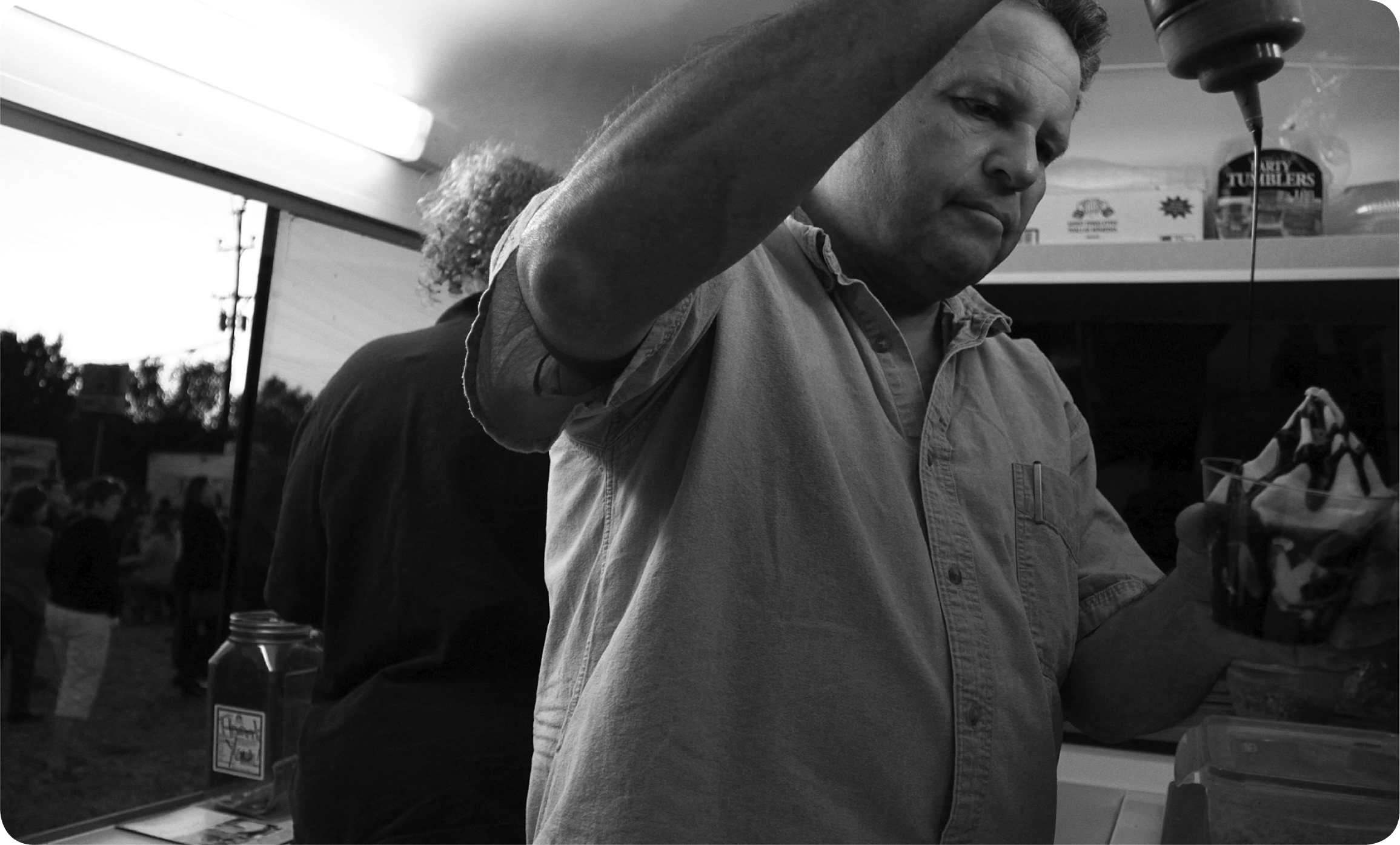
The owner of Sticks and Cones prepares a sundae for one of many customers at Food Truck Fridays.
Food has have become an important avenue through which key social values are expressed and furthered, and is associated with beauty, authenticity, cultural diversity, environmental consciousness, a connection with nature and with community, a commitment to social justice, or the honest, hard work associated with small-scale farmers and craft producers.
Since 2011, we have been studying the relationship between ideas about food and city spaces, conducting interviews in Portland and Vancouver, and talking to vendors, city officials, food critics and other stakeholders about each city’s food cart scene. We also analyzed how Vancouver restaurant reviewers understand the relationship between food and gentrification.
What we found is that food can open up some city spaces to new forms of food retailing—as with the increasingly popular food cart. In Vancouver, one social planner had this to say about the city’s food cart scene: “It’s activating the street, it’s creating pedestrian areas, it’s supporting small businesses, micro-entrepreneurs, there’s local food that can come into it…I think it’s…it’s a reinvigoration of what is ‘street.’”
In our interviews with urban planners, journalists, city officials, business association leaders and cart operators themselves, these themes cropped up again and again: Street food, they said, makes urban spaces better—like a “backyard barbecue,” according to one informant—and cities should facilitate, or at least not impede, their presence.
But such innovations also breed conflicts. Food practices and tastes mark boundaries between elite and non-elite lifestyles—sometimes very physical boundaries. Sociologist Sharon Zukin, looking at the neighborhood of Red Hook, in Brooklyn, for example, describes how food blogs drew a new, urban middle-class to working-class ethnic food carts, spawning demographic changes that accelerated gentrification in that part of the city.
Classed Tastes?
In 2010, when the city of Vancouver, Canada, announced plans to expand street food offerings beyond hot dogs, eager vendors submitted an astonishing 800 entries for 17 spaces. Excitement ran high as local media predicted a “street food renaissance” and a newspaper editorial claimed that changing food-vending regulations would add to the vibrancy of the city. “People want to see a wide range of food on our streets,” the city’s mayor said, “and they want the offerings to reflect the cuisine of our culturally diverse city.” Humble street food, it seemed, was poised to make Vancouver a better place.
Would any kind of street food “activate” the street and promote urban diversity? In Vancouver, new gourmet food carts were seen as a marked improvement on already-existing hot dog push carts, perceived to be selling unhealthy and boring fare. Most of those hot dog vendors were excluded from the city’s new street vendor organization because of the “low” quality food and lack of locally-sourced and homemade products.
In Los Angeles, high-end food trucks serve a wealthier clientele than traditional taco trucks, which have often been maligned as unclean “roach coaches.” In Portland, cheap and “generic” ethnic food carts generate little enthusiasm whereas hip or exotic carts have become so symbolic of that city’s creative energy and DIY spirit that food carts are regularly featured in Oregon Tourism Commission advertisements. The aesthetic and ethical characteristics associated with North America’s new street food scene have come to be especially valued, associating “good food” with the consumer tastes of relatively affluent urbanites seeking out “diverse” and “ethnic” culinary experiences.
In many cities, the new presence of food carts and trucks has been spurred by urban consumers who invest in “good” food—often interpreted as gourmet, local, sustainable and hand-crafted. Vancouver serves as a clear example of the ways in which the value attributed to street food concretely changed regulatory practices: The city government actively reorganized its existing street vending program to allow food carts and trucks and to identify suitable spaces from which they could operate.
Selection of carts was shaped by ideas about food. In the city’s third round of competition for licenses, a wide set of “good food” criteria, embracing everything from nutrition to local sourcing to sustainability to employing disadvantaged workers to, of course, “taste,” was incorporated into the application process, culminating in a tasting competition among 25 finalists competing for 12 street-side spots. As one successful applicant explained to me, “It was almost like a reality TV program!” As a result, “good” street food gained access to spaces on city streets and sidewalks otherwise given over to rationalized “flows” of pedestrians and vehicles.
Certain foods are associated with beauty, authenticity, cultural diversity, and environmental consciousness.
Gentrifying Neighborhoods
While coveting traditional highbrow items such as fine wines and artisan cheeses, foodies are also gravitating to low-brow foods, such as hamburgers and barbeque. This “downscaling” of gourmet foods and food practices is described in the book Foodies by sociologists Josée Johnston and Shyon Bauman. Specialized realms of food consumption, reflecting connoisseurship and elite tastes, as well as concerns about “good food” (ethical concerns about how it is produced and aesthetic concerns about how to appreciate it) are now more widely accessible. Yet patterns of inequality persist.
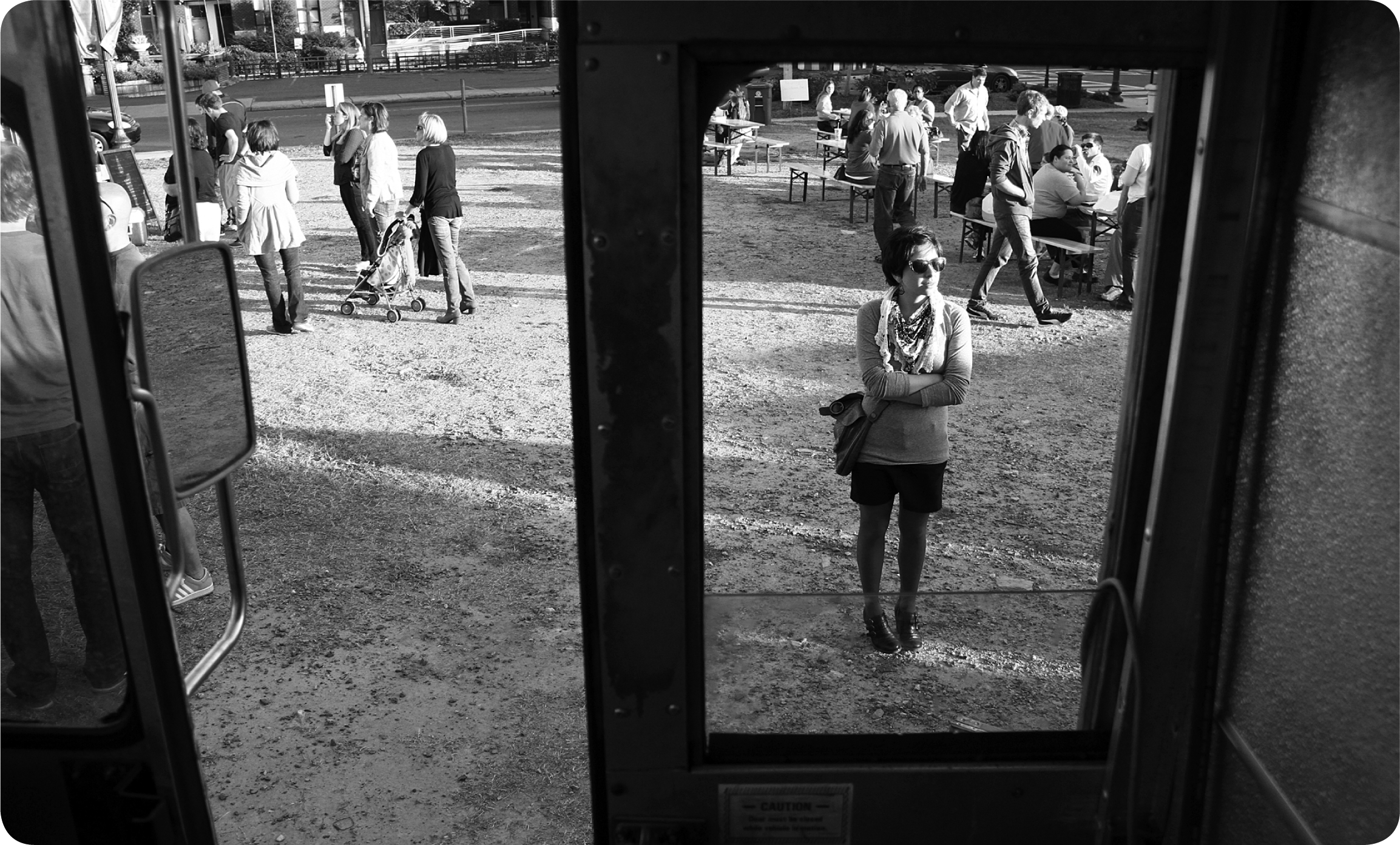
Charlotte, South Carolina is one of many cities to embrace the food truck craze, sponsoring Food Truck Fridays.
If gourmet street food is transforming urban street life in a growing number of North American cities, the appeal of “good food” is also playing a key role in the transformation of gentrifying urban neighborhoods. For example, the relatively elite practice of “food adventuring” is making marginalized urban neighborhoods exciting and attractive places to venture into, and inexpensive places for restaurant entrepreneurs to get started. As marginal, even “dangerous” parts of the city lend gourmet food an allure and authenticity it otherwise might not have, food becomes part of—and often deeply symbolic of—larger processes of gentrification.
The taste for certain types of food and adventurous dining experiences rationalizes and promotes gentrification.
Vancouver’s Downtown Eastside neighborhood, which is often described as Canada’s “poorest postal code,” is a prime example. In the lead up to the 2010 Olympic Games in the city, the Downtown Eastside garnered the attention of a new set of observers: entertainment critics and restaurant reviewers. The area, which had for decades been one for tourists to avoid, swiftly become the city’s premiere dining location. Accompanying a spate of condo development and gentrification, the Downtown Eastside became home to the likes of Chambar (often voted as the city’s top restaurant) and Bao-Bei (which played host to the finale of popular food network show “Top Chef”). These restaurants appealed to the foodie desire for less stuffy, “casual” gourmet, and in the years following the 2008 recession, the low-rent neighborhood became an attractive option for young, first-time restaurateurs. As one chef described his own restaurant start-up to local press: “We’re trying to keep the bullshit to a minimum. It’s an ambitious venture in a deliberately low-key environment: its location is at the wrong end of a seedy street.”
Here we see the no-nonsense downscaling of gourmet cuisine enhanced by urban marginality. The Downtown Eastside was associated with excitement and allure. A 2010 restaurant review in Urban Diner describes a new gourmet restaurant in ways evocative of an Indiana Jones-like foray into dangerous territory: “It was this fight or flight response mechanism which found us venturing deep into the underbelly of Gastown on a dark Friday night against all our better instincts, along a trash bin strewn, junk and junky-scattered Blood Alley and through the doors of the newly opened Judas Goat Taberna.”
Another review of a casual fine dining restaurant at the edge of the same neighborhood described “the posh dive [Boneta]” which “gave a boost to the Downtown Eastside’s slow climb out of poverty” and pierced deep into the community’s darkest underbelly, shining a harsh spotlight on all the bloodied guts and broken souls strewn across the sidewalk.”
It continued: “With deranged addicts howling outside and the odd streaker running past the window, the restaurant sometimes teetered precariously along the thin wire between social realism and sideshow spectacle.” Potential customers are rewarded with offerings such as “luscious and plump prawns potted amongst citrusy pistachio butter” or “savoy cabbage surrounding meaty pieces of warm lamb-cheek, served as a slice of terrine and finished with an earthy white truffle oil.”
Food Adventurers
The emergence of new “lifestyle” amenities in tandem with neighborhood revitalization is not new. Scholars of gentrification, such as Sharon Zukin, have noted the ways “alternative consumption practices” play a role in reorganizing city space and spurring redevelopment of less affluent neighborhoods to suit the tastes of more affluent urban consumers. The gritty setting of the restaurant becomes part of the food’s appeal for adventurous but nevertheless discerning diners.
In their study of foodies, Johnston and Baumann describe how “food adventuring”—the consumption of “ethnic,” “unfamiliar,” or “downright strange” food in exciting and new locales, often overseas—is one way for educated diners to distinguish themselves as cosmopolitan consumers. Those who fetishize urban grit and poverty need look no further than their own backyard for the next gustatory foray.
For food adventurers, low-income or gentrifying neighborhoods such as Williamsburg, Brooklyn, Parkdale, Toronto or San Francisco’s Mission District add to the appeal of restaurants, encouraging the influx of new high-end businesses. At the same time, the appeal of gourmet cuisine continues to attract up-and-coming chefs and restaurateurs to low-income neighborhoods.
In Vancouver’s Downtown Eastside gourmet cuisine has become more accessible to those seeking both casual and authentic dining experiences. At the same time, the taste for certain types of food and adventurous dining experiences rationalizes and promotes gentrification in subtle ways.
Whose Streets? Whose Food?
The relationship between food and the city is reciprocal: food can lend vitality to city streets (as in the case of food carts and sidewalks), and city streets can lend vitality to food (as in “food adventuring” in rough but gentrifying neighborhoods). Much as rural settings infuse the foods they produce with the markers of place, urban settings also shape, and are shaped by, the production and consumption of food.
But the sidewalk-activating food cart, and the revitalizing capacity of high-end restaurants in poor neighborhoods are contested innovations. In Vancouver, the influx of high-end restaurants into the city’s poorest neighborhood has produced local controversy, and ongoing protests, complete with picket signs, have erupted outside two different Downtown Eastside restaurants. “It’s a form of exclusion,” one protester told a local reporter last summer. “People can’t afford to eat here. Everything around it gets over-priced.”
Similarly, Vancouver’s food carts have also been criticized for serving overpriced food that caters to high-end tastes. In Portland, some critics of the explosion in gourmet food carts have voiced concerns that a low-barrier form of entrepreneurship is increasingly competitive and out-of-reach. As one former economic planner in Portland warned: “One of the least expensive ways of becoming an entrepreneur” is “slowly being taken away from those who cannot access the traditional work force”—new immigrants with limited English language skills.
In cities across North America, operators of small restaurants and restaurant associations have challenged those who would reintroduce street food to urban sidewalks, citing unfair competition, given the perceived often-lower overhead of maintaining a food cart or truck—a claim that is not always true.
In other words, food shapes urban spaces and also who uses them. Local, organic, hand-crafted and gourmet food tends to be associated with goodness and moral virtue, even though the taste for such foods tends to be associated with the cultural tastes and socioeconomic positions of relatively affluent urbanites. Ideas about “good food” not only influence how we think about eating, but also have concrete effects on city spaces.
Clearly, then, “good food” can make cities more livable and cosmopolitan. But as we’re enjoying these tasty new urban food scenes, we must consider whom they’re serving, and who may be excluded from the table.