charles rosenberg I have been reading a variety of books relating to politics of one sort or another. George Orwell has always been a hero—and I have gone back and read the four volumes of his Collected Essays, Journalism and Letters. I’m now at the last volume (published in 1968, but covering the postwar years 1945-1950) and I’m both inspired and intimidated by his mixture of literary skill and political and moral acuity.
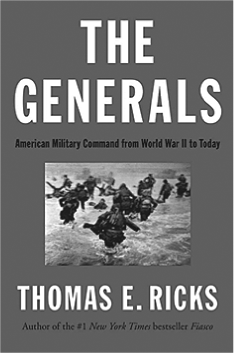
I’ve also read Thomas Ricks’s recent The Generals: American Military Command from World War II to Today, a dispiriting study in what might be called the anatomy of bureaucracy and the shaping of careers—and by implication foreign policy.
Finally, I’ve just finished Errol Morris’s Believing is Seeing: Observations on the Mystery of Photography, a fascinating venture into the epistemological status of photographic images in their historical and technical contexts.
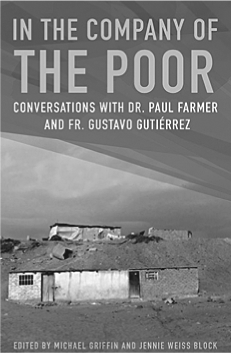
nancy scheper-hughes I’ve been reading in the field and in the air between field sites. In Timbauba, Brazil, in July, I carried with me In the Company of the Poor: Conversations with Dr. Paul Farmer and Fr. Gustavo Gutierrez in which the founding father of liberation theology and spiritual mentor to his protégé, the anthropologist and doctor to the poor, imagine a single world in which the poor have a seat at the global banquet table and a fair share in the feast.
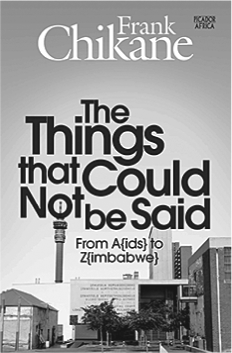
In flight from Guguletu, South Africa, to Berkeley in August, I picked up Frank Chikane’s The Things That Could Not be Said: From A (IDS) to Z (imbabwe) in which the former political aide-de-camp to former President Thabo Mbeki explains, without defending, Mbeki’s controversial positions on HIV/AIDs and his relations with President Robert Mugabe. The most chilling chapter, however, is Chikane’s retelling of his near death in 1989 when his clothes were poisoned with a toxic pesticide just as he was traveling on diplomatic missions to Namibia, where he suffered the first symptoms, and to the United States where he fell into a coma and was taken to an ICU on the brink of death. In 2007, several apartheid security officers pled guilty in exchange for suspended prison sentences. Recently, Chikane met up with one of the would-be assassins who clasped his large hand on Chikane’s delicate shoulder saying jocularly, “Man, you should be dead today with the toxic doses we applied.” With all the current grandstanding about drawing the line with chemical weapons, it’s sobering to recall that neither Britain nor the United States did anything to interrupt the apartheid state’s development of bacterial and chemical weapons by civilian scientists working in private labs on experiments with, among others, the Ebola, hemorrhagic-fever and HIV viruses, one of the sources of lingering suspicions in townships like Guguletu that the spread of HIV was part of a genocidal campaign against Black South Africans.
Then, just as our plane hit the ground in San Francisco, the news of Seamus Heaney’s death was announced. Seamus and his wife Marie loved Berkeley and were frequent visitors there. I recall one occasion when Seamus spoke of a friend who had just passed away unexpectedly. Marie broke the pained silence by saying to Seamus, “So, go upstairs now and give him a poem.” Obediently, Seamus did just that. I made a small altar honoring the pagan saint, Seamus, who nonetheless allowed a high mass to be said at his funeral. My husband and I read from our dog-eared copies of Heaney’s Field Work and North, with their double-entendres of agrarian, anthropological, and archeological diggings, their tender elegies to friends and fellow poets, and their measured ragings against the terrors and sacrificial killings of the disemboweled, excavated, gummy bodies of Danish and Irish bogpeople and on the sacrificial violence of the “Troubles” to the North, his homeland to which his own body was consigned at the end.
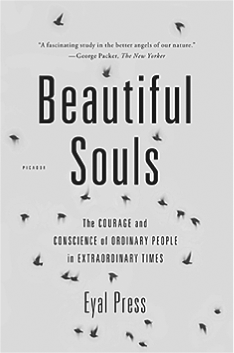
En route to Israel, I carried with me Neighbors: The Destruction of the Jewish Community in Jedwabne, Poland by Jan Gross, which I’d assigned to my students in my absence, a book that dares to address “evil” as something more than “banal” on that wintery day, January 8, 1941, in a small town in Poland, when “the devil entered history.” To ease the pain, I also assigned my students Beautiful Souls: The Courage and Conscience of Ordinary People in Extraordinary Times by Eyal Press about ordinary folks who became refuseniks at times when evil lurks in the hearts of men.
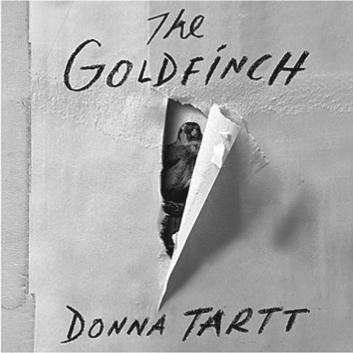
ichiro kawachi The Goldfinch by Donna Tartt is on everybody’s list right now, but I had a personal reason for wanting to read it ahead of a visit to the Netherlands. Alas, when I got to The Hague, the Fabritius painting turned out to be on temporary loan to the Frick Collection. My consolation was Simon Schama’s An Embarrassment of Riches, an interpretation of Dutch history and the Dutch national character through his careful parsing of the paintings by the seventeenth century masters; it’s an indispensable companion if a visit to the Rijksmuseum happens to be on your itinerary. I must confess to an extremely limited knowledge of Dutch literature—after Max Havelaar: Or the Coffee Auctions of the Dutch Trading Company (by Multatuli, pen name of Eduard Douwes Dekker, b. 1820), the only Dutch fiction I had read were Villa des Roses (1913) by Willem Elsschot and Herman Koch’s The Dinner (2009)—until a colleague recently put me on to Arnon Grünberg’s Tirza (2006). The second half of the novel is set in Windhoek—in the Namibian desert—and shares a surreal quality as well as a palpable sense of dislocation that reminded me of the middle section of Donna Tartt’s novel, set in the suburban tracts of Las Vegas. I wanted to know more about Windhoek, so that led me to Paul Theroux’s latest (and possibly last) journey, The Last Train to Zona Verde. One of the pleasures of Theroux is the scattered references to what he happens to be reading on his overland journeys. In Zona Verde he records a memorable conversation about Patrick White with an expat Australian elephant trainer working in a remote corner of Namibia. The Australian desert is magnificently described in Patrick White’s Voss (1957), which I read for the first time last year.
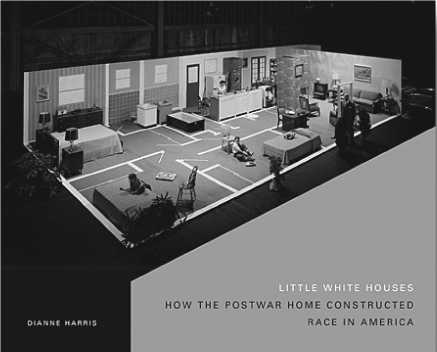
david roediger Of great importance to anyone who works in a university or studies in one is Roderick Ferguson’s striking The Reorder of Things: The University and Its Pedagogies of Minority Difference which uses the rise and fate of interdisciplinary programs that highlight difference to explore the current crisis in higher learning. The best book of the history of U.S. labor, and one of the best on masculinity, to appear in years is Matt Basso’s Meet Joe Copper: Masculinity & Race on Montana’s World War II Home Front. The work of the distinguished architectural historian Dianne Harris in her marvelous Little White Houses: How the Postwar Home Constructed Race in America threatens to revivify stalled debates over the critical study of whiteness.
The rise across disciplines of astonishingly sophisticated transnational work has been the source of much of my reading pleasure. Judy Tzu-Chun Wu’s fabulous Radicals on the Road: Internationalism, Orientalism, and Feminism during the Vietnam Era and Yuichiro Onishi’s impressive Transpacific Anitracism: Afro-Asian Solidarity in 20th-Century Black America, Japan, and Okinawa make an especially important pairing. Together they show the unexpected ways that radicalism has travelled and some of the difficulties attending the practice of internationalism. Anthropologist Gilberto Rosas offers an exciting combination of ethnography and theory in the account of literally subterranean gang life in his eloquent Barrio Libre: Criminalizing States and Delinquent Refusals of the New Frontier. The ways in which state power attempts to use migration to reinforce its authority are brilliantly explored in Vron Ware’s Military Migrants: Fighting for YOUR Country. Teeming with unexpected human stories, and showing what we can learn about subjects that might seem closed to scholarly study, Ware’s book is a vital meditation on the nation, race, and citizenship.