




Abstract
Sociologist Katie L. Acosta explores the centrality of family in lesbian, bisexual and queer Latinas’ lives and the efforts they make to integrate their families of choice and origin into one supportive kin network
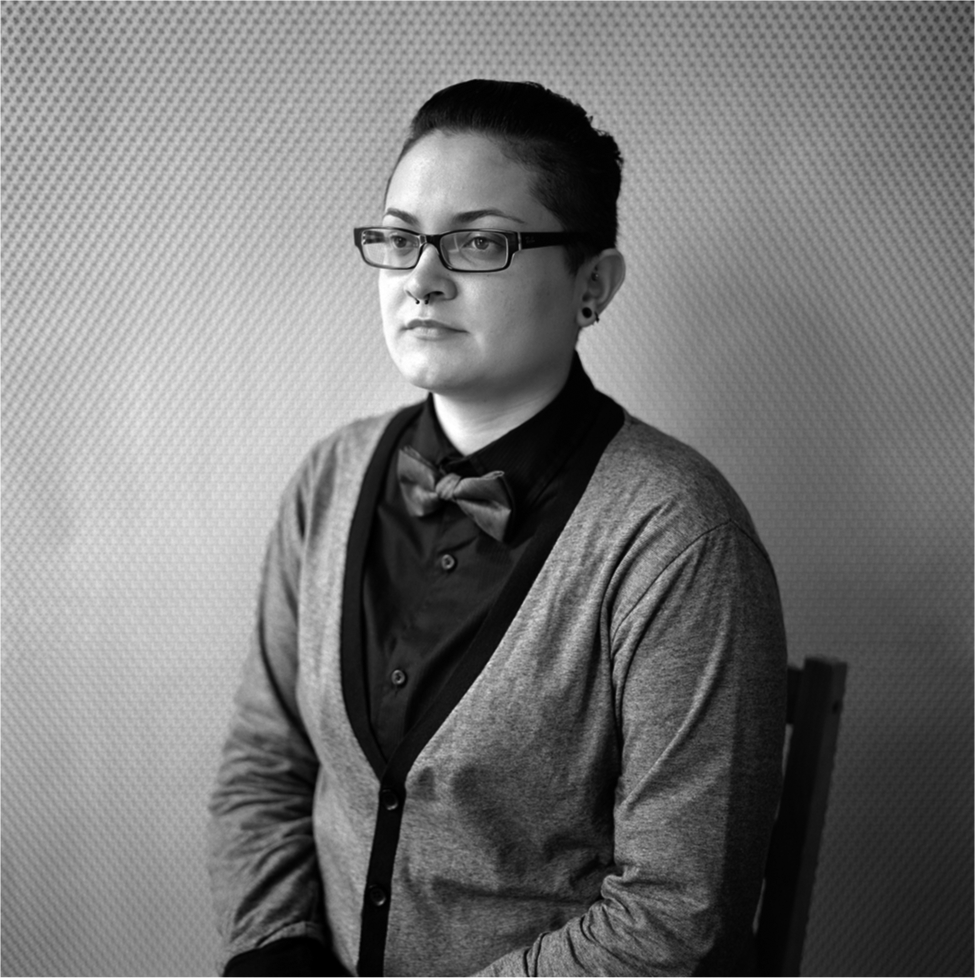
Lore
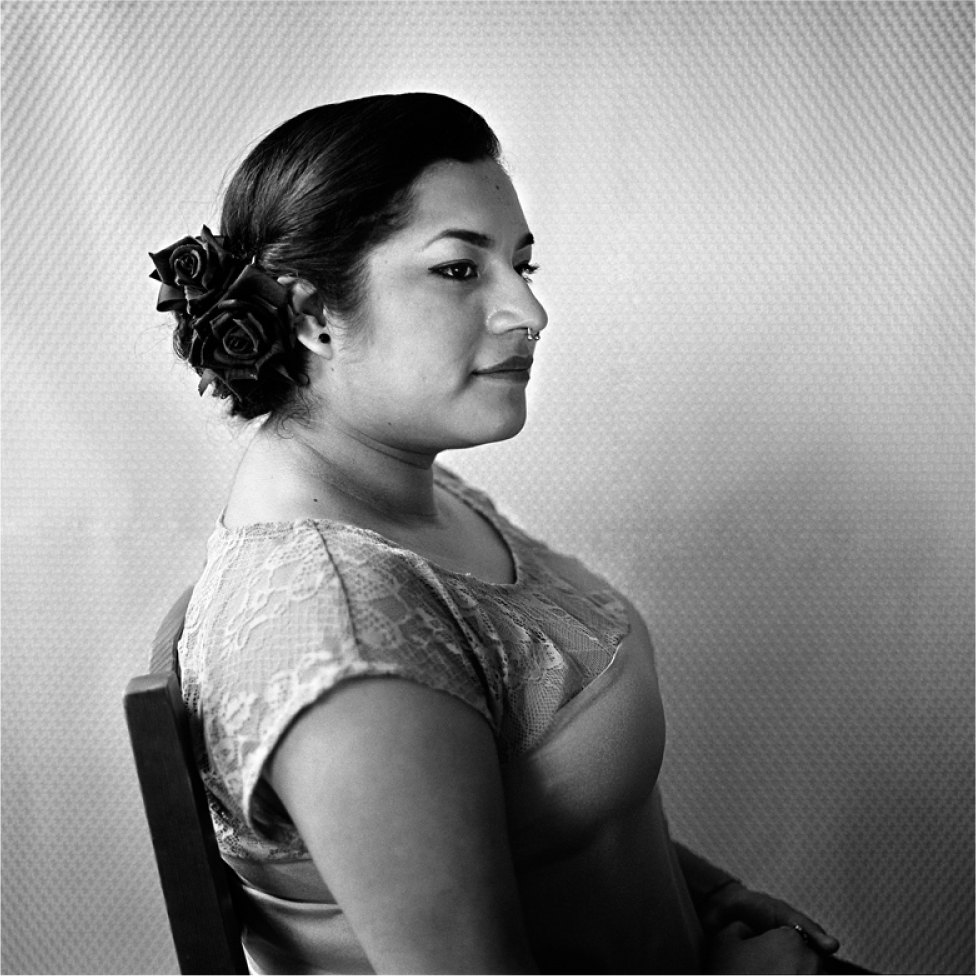
Bree
Jasmin, a 22-year-old Puerto Rican woman and recent college graduate lives with her partner Mariela in a large U.S. city with a growing Latina/o population. The couple occasionally attends church with Jasmin’s parents, Seventh Day Adventists who accept their daughter’s relationship with Mariela, despite their conservative religious values.
“They’re really good to Mariela and at Christmas my mom bought her a present. Valentine’s Day, my mom got her a present. I’m graduating soon and my mom already talked to her about what they’re going to do, and graduation plans,” Jasmin said. However, Mariela paints a slightly different picture. Jasmin’s mother, she says, is deeply conflicted about their relationship, blaming her for her daughter’s sexual nonconformity.
“Her mom started questioning me,” Mariela said. “She was like ‘you know, I love you as a person but I hate the fact that you’re with my daughter. I know this isn’t the lifestyle for my daughter. My daughter is just on the wrong side. She just needs to find God and then this will all change’… It was a very uncomfortable situation for me. I didn’t know what to reply to her mom. I was like ‘I’m sorry you feel that way.’ And that was all I said.”
This conflict reflects the tensions and contradictions that arise in the couple’s efforts to integrate their families. Jasmin plays the role of mediator, asking Mariela to be patient while trying to make her own mother feel more comfortable with their same-sex relationship. Jasmin takes on this role because among sexually nonconforming Latinas, parents’ acceptance of partners—and maintaining closeness with one’s family of origin— is critically important.
In Same Sex Intimacies: Families of Choice and other Life Experiments, Jeffrey Weeks, Brian Heaphy, and Catherine Donovan use the term “families of choice” to describe the families adult LGBTQ individuals create. In their view, when they create families, queer men and women refuse to privilege biological ties. My own work, which draws upon over 40 in-depth interviews with sexually nonconforming Latinas, suggests that these women see family as an integrated support system that draws on both biological and social ties.
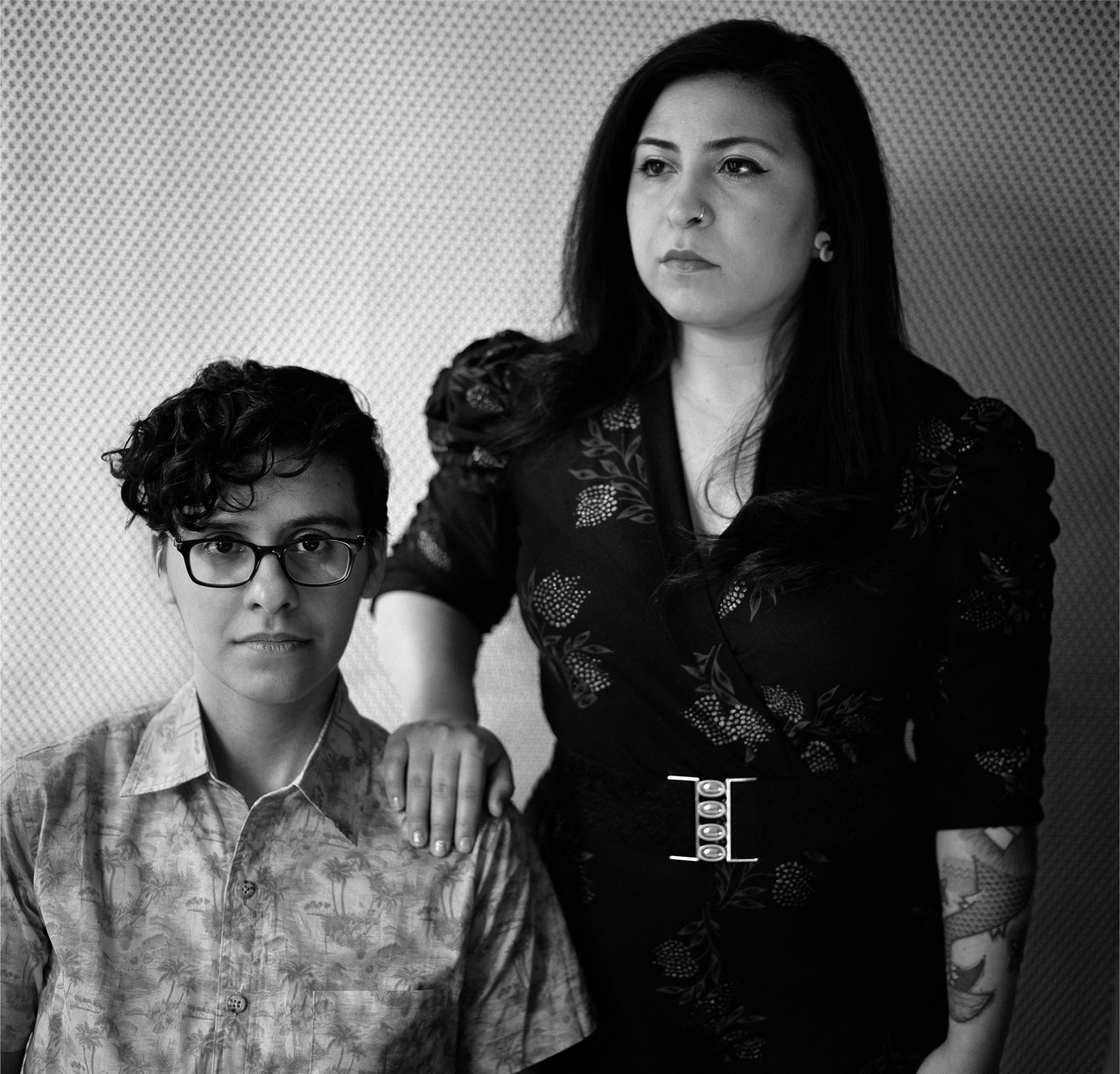
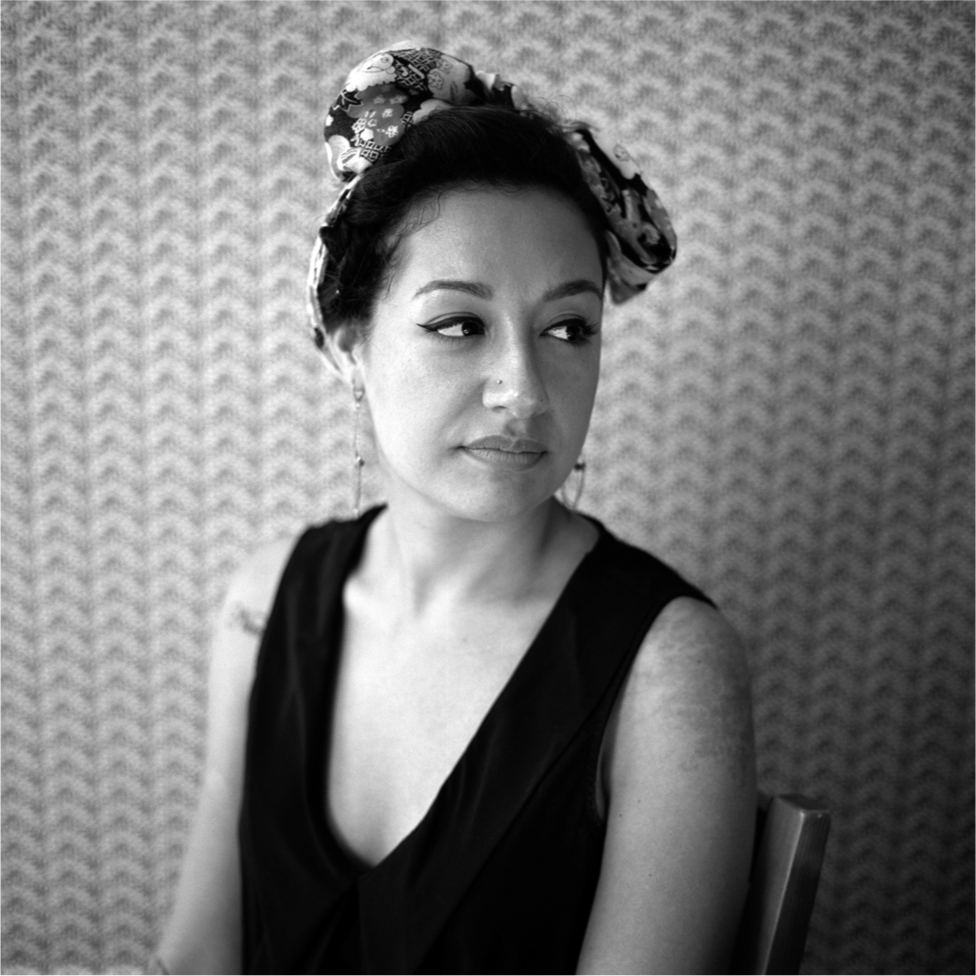
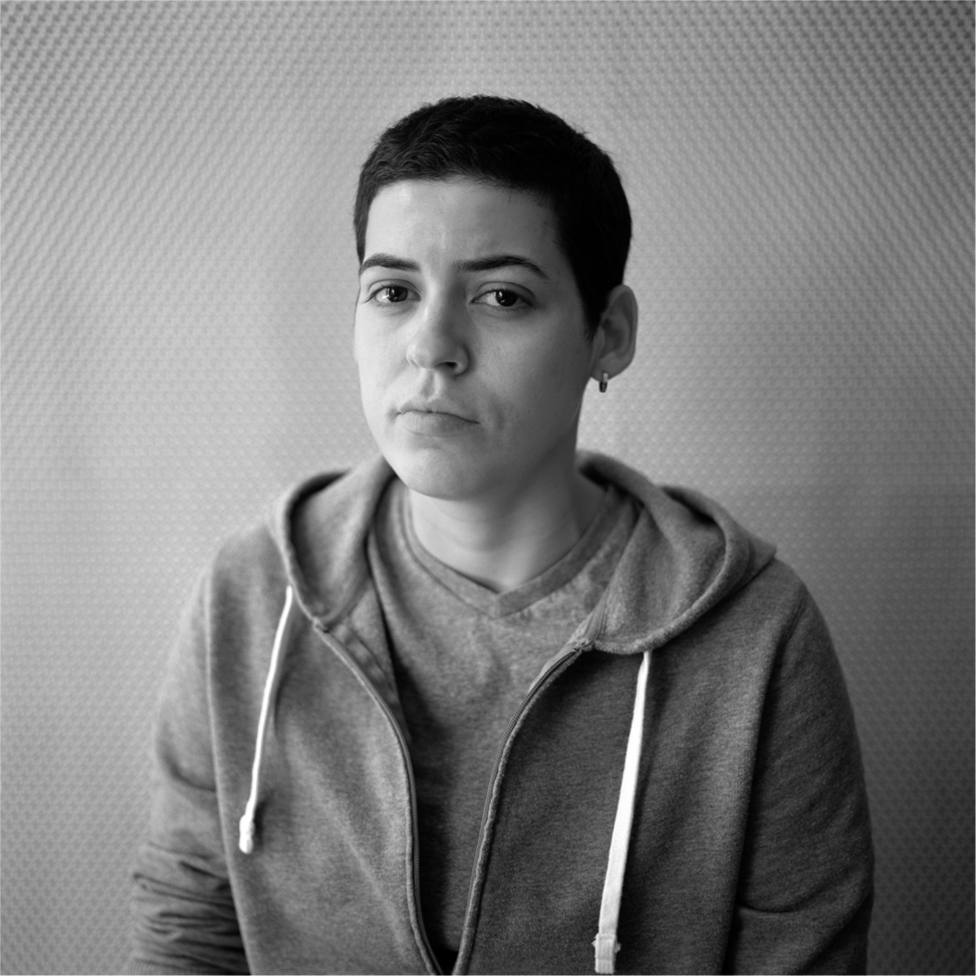
Bree and Lore, the couple pictured to the left, are among the subjects of Lupe Salinas’ exhibit, Las Otras (The Others). The exhibit explores the intersection of queer and Latin@ identities, through photographs and personal statements made by each individual. The quotes accompanying the images are excerpts from these personal statements.
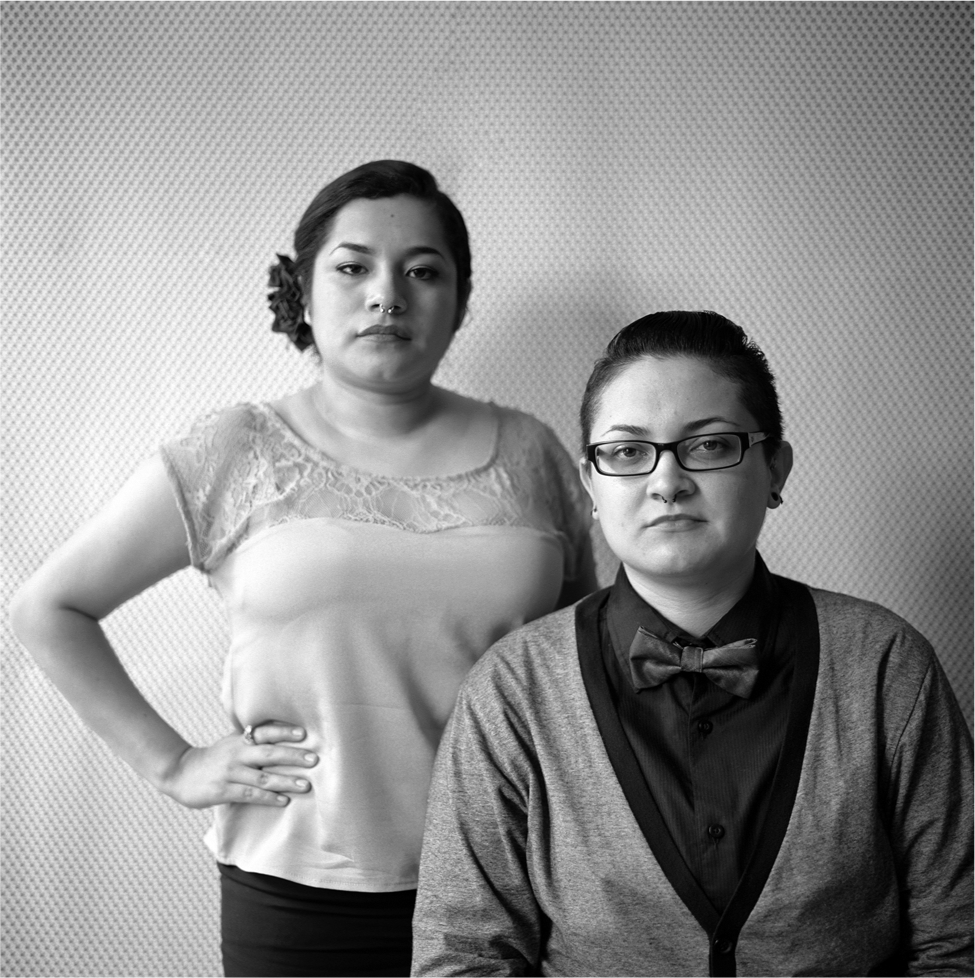
Sexually nonconforming Latinas go to extraordinary lengths to integrate their parents, siblings, partners, friends, children and community members into one kin network. Like Jasmin and Mariela, they believe it is more important to negotiate acceptance from their parents and cultivate a social support system that is vibrant and harmonious than to distance themselves from unsupportive families of origin.
The stories of Jasmin and Mariela and other couples, illuminate the centrality of family for these Latinas and the conflicts they face in integrating their support networks. Sexually nonconforming Latinas embrace multiple marginalized identities, and seek to integrate these different identity networks. Regardless of whether their parents accept them, they work to integrate and expand their familial networks, mediating among these different networks in order to enhance the visibility of their same-sex relationships.
“It is a constant struggle with my mother. We work together at a beauty parlor she passed on to me…Every once in a while she…says I chose my partner over her” - Arsenia

Tacit Subjects, Integrated Families
Much of the day-to-day work involved in doing family and negotiating acceptance remains unspoken. Even if they have never formally disclosed their sexualities to their parents, sexually nonconforming Latinas find ways to include their partners in family events as amigas or friends—thereby enabling their partners to form their own relationships with their families of origin.
In Tacit Subjects: Belonging and Same-Sex Desire Among Dominican Immigrant Men, scholar Carlos Decena notes that homosexuality is one of many “tacit subjects”—matters of common knowledge which are not openly discussed. Some of the Latinas I interviewed allowed their relationships with other women to remain tacit within their families of origin. However, despite the silence, these women, like Jasmin and Mariela, strive to preserve a support system which includes their partners, friends and parents.
Even if they have never formally disclosed their sexualities to their parents, sexually nonconforming Latinas find ways to include their partners in family events as amigas or friends.
When I first met Minerva she was grieving the loss of two very important people in her life—both her mother and her partner Daniela died in close succession of one another. Minerva and Daniela had been in a committed relationship for over 15 years before Daniela’s untimely death. The two purchased a home together and had several nieces and nephews. Daniela always accompanied Minerva on visits to her mother’s house and with Minerva’s siblings, the two enjoyed holidays and a variety of special occasions together. Minerva describes Daniela and her mother as having a very special bond filled with love and mutual respect.
“I am a fiery-queer-Boriqua… This identity is like a skin—an inseparable complicated structure, made up of several integral layers” - Paola
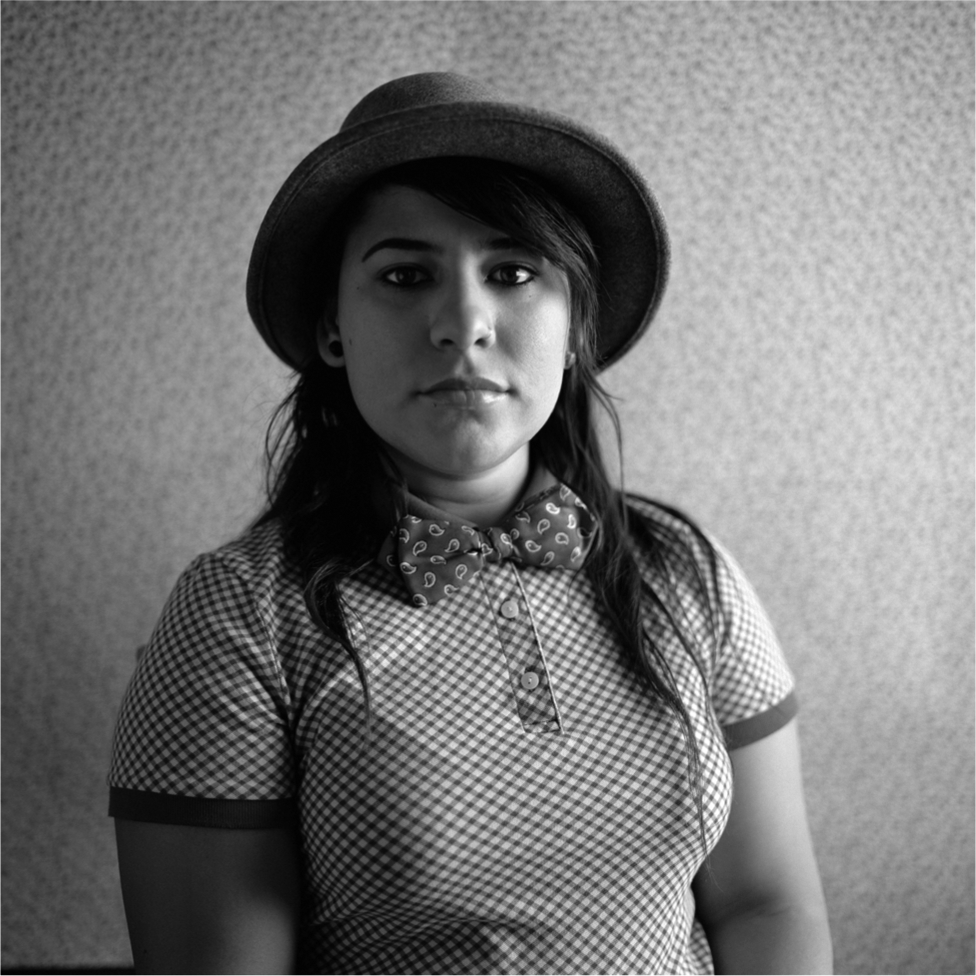
For more than 15 years, there was never any formal acknowledgement that these women were more than friends. And, yet, despite her mother’s lack of verbal validation of her lesbianism, Minerva felt self-affirmed in the caring relationship they all shared.
Minerva, like many other women I interviewed, was raised to see her family of origin as a stabilizing force. She was taught to rely upon her parents and siblings for advice, support and community. As she describes, “The message was you’re part of this family, you’re here to be devoted to your family and that’s it, you know. Do well in school and be devoted to your family…” Minerva carries these values with her into adulthood, and even after coming to a lesbian existence in college, she chooses to allow this topic to remain tacit so as not to disrupt her stabilizing unit.
She never verbally asks her parents or siblings to support her same-sex relationship, nor has she ever felt this is necessary. Daniela was Minerva’s “amiga.” In the role of a friend, Daniela enjoyed a strong relationship with Minerva’s family of origin. While Minerva’s family understood that the same-sex relationship existed, they chose not to discuss the romantic aspect of the relationship. However, some sexually nonconforming Latinas who maintain tacit relationships find subtle ways to gain greater visibility for their partnerships.
“Being a queer-Latina couple has meant learning to navigate the space between the traditional and the radical and finding that those two things are not always mutually exclusive.” - Ivette & Crystal
Speaking without Words
Manuela, a 27-year-old Guatemalan woman, lives with her partner Rosali in a city in the northeastern United States. Manuela’s parents live in Guatemala. Like Minerva, Manuela integrated Rosali into her family of origin as a friend. While her relationship with Rosali has remained a tacit subject, Manuela believes her parents understand that the two women are lovers.
When I asked Manuela to explain how this tacit subject arises in the context of her family of origin, she recounted the time she took Rosali to meet her aunt and uncle, who live in another city. “My aunt kept telling me, ‘Oh you should move to Chicago. You should move to Chicago,’” she recalled. “Finally, I said, ‘No. I don’t want to move to Chicago. Besides, what about Rosali?’ She [Manuela’s aunt] thought about it and she was quiet and didn’t say anything for a while. And then, when they met her they were very nice to her… at least they made the effort.”
When Manuela and Rosali visited her aunt and uncle, they gave them one bed to sleep in. “That was big,” Manuela said, interpreting it as a sign that they understand and that they are making an effort to be accepting. Even though there is no explicit validation, Manuela believes this gesture affirms their relationship.
Regardless of their family’s level of acceptance of their sexual nonconformity, the Latinas I interviewed learned to negotiate visibility and invisibility within their families of origin. If they knew their mothers struggled with their daughters’ sexuality, they used gender-neutral language when referring to their partners so as not to draw attention to the perceived transgression.
“Of course homosexuality in the Latin@ community is taboo…To my Abuelita my partners are still ‘amig@s’” - Stephanie
Alexis is a college student who is in her first relationship with another woman, Sara. Since coming out as bisexual, Alexis’s relationship with her mother has deteriorated, and yet Alexis struggles to preserve this connection: “We were very, very close—not as mother and daughter—but as friends. She is the only person that I feel has my best interest. Ever since I came out to her, I haven’t been able to talk to her because she’s like ‘I need to go, or I don’t want to talk about this.’”
Alexis stopped using gender pronouns when talking about her same-sex relationships. “I talk about ‘this person said this to me (esta persona me dijo esto).’ I no longer say, ‘he told me this.’” Her mother, she said, “has a hunch that I’m dating someone and I’ve let her ask questions that might lead to her solidifying her suspicions, but for the most part, we haven’t addressed it at all. And when we get close to it, I’m like, ‘mom I’d appreciate it if you’d give me advice as if it was a person.’”
Alexis wants her mother to continue to play the role of confidant and friend even though she disapproves of her bisexuality. They straddle lines of visibility and invisibility. Alexis talks to her mother about her relationship issues but deflects from focusing on the gender of her partner, fluctuating in and out of visibility in order to defuse any tensions that might emerge.
Going Public
In her book Invisible Families: Gay Identities, Relationships, and Motherhood among Black Women, Mignon Moore finds that families of origin are more concerned about the public aspects of their kin’s sexual nonconformity than they are about their same-sex intimacies. Similarly, the Latinas I interviewed experienced the most tension with their families of origin when trying to achieve public visibility for their relationships.
“Once [my mom] told me, ‘When are you going to settle down with the right lady? When am I going to have grandchildren from you?!’ I would tell her, ‘One thing at a time, mom!’”- Sugi

Luisa is a 30-year-old bisexual woman of Ecuadorian descent. She and her partner Courtney are busy planning their wedding; they are also planning to have a baby. But they have experienced disapproval and a lack of support from Luisa’s devout Catholic parents, which has been devastating for them.
“It was horrible,” said Luisa, referring to visiting her parents. “Whenever we’d go [Courtney would] spend the four hour drive back crying the whole way. She felt like here are these people who don’t like her just because of who she is. They weren’t getting to know her. They treated her like an outsider. She could tell that more than anything else my mom was disgusted by us. And that’s really different than having a moral opposition.”
Over time, Luisa’s parents grew more tolerant. However, the couple’s wedding plans reignited Luisa’s parents’ reservations about publicly displaying their relationship. Luisa explains, “I started to tell people in my family [about the engagement] and what I found out is that even the people who were pretending to be polite, when they realized I wasn’t kidding, that I was engaged… very quickly this elation turned from that to, oh my God, these people who are my blood relatives, who would otherwise lie in the street for me, not only will they not come, I’m not welcome in their house, she’s not welcome in their house. They’re not going to tell their kids because they think this is immoral and unnatural.”
Her father told Luisa she was “breaking his heart” and that “this was the worst thing that I could possibly do.” Her mom said “my brother isn’t coming. He’s too young. Who wants to have a party that nobody is going to go to and the people who are going to come are grossed out by being there? Who wants to have that party?”
“I am a woman who loves women, a part of a culture that teaches us to do the opposite” - Carla
Disheartened, Luisa pushed her wedding date back several years. By delaying their wedding, she gains time to play the role of mediator. She troubleshoots her parents’ discomfort, resists their claims that her relationship is unnatural, and guides them towards growing acceptance. This delay also gives Courtney more time to overcome the hurt she feels from the rejection from Luisa’s family and gives Luisa’s family of origin more time to get to know Courtney as a person.
More than anything, Luisa wants to marry her partner and expand their family. However, despite all of the hurt and rejection they have endured, Luisa feels these momentous events are incomplete without the support of her parents and extended family of origin. Since parental support is so important to her, Luisa continues to search for ways to integrate her family of origin with the one she is building with her partner.
Maintaining Family Ties
While some of the couples I interviewed have been able to take advantage of the right to legally marry, for many of them, the decision to marry isn’t just about gaining access to legal protection, as dominant discourse would suggest. They are just as concerned with gaining familial recognition. Marriage, for those who desire it, is not just about legal rights: it is also about visibility in their families.
For Luisa, who is in a financially stable relationship and holds a professional job, the benefit of being able to marry is about bringing her origin family to a heightened level of acceptance and understanding of the commitment she shares with Courtney. For them and for others in this study, the acceptance of families of origin, and the visibility that comes with this acceptance is of utmost importance.
What this suggests, then, is that lesbian, bisexual and queer Latinas enjoy varying degrees of acceptance and visibility from their families of origin. They work to achieve integration of their families at times by maintaining tacit relationships and other times by making their relationships public.
Regardless of the level of acceptance and support they receive, these women mediate between their families of origin and their intimate relationships. In attempting to incorporate their partners into their families of origin, they move in and out of visibility. While integrating their family units can put grave strains on their same-sex partnerships, they refuse to consider minimizing their connection with their families of origin. Instead, they do whatever possible to avoid distancing themselves from any of the members of their support network.
In addition to being racial or ethnic minorities, these women are immigrants, or the daughters of immigrants. Some are undocumented, and struggle for financial independence. By looking at this population we gain new insight into how diverse sexually nonconforming women create family: they build integrated familial support networks which require compromise, sacrifice and hard work.