



Abstract
Media coverage reflects the conflicted status of drugs in a culture that both valorizes and demonizes their use. Sociologist Rebecca Tiger compares New York Times' coverage of Whitney Houston’s death and cyclist Lance Armstrong’s “performance enhancing drugs” scandal. Her analysis reveals the particular roles that race and gender play in how elite media and their readers negotiate and construct the morality tale of drug use.
In the past year and a half, two much-admired celebrities’ drug use became the focus of media attention. Whitney Houston’s death in February of last year prompted a spate of New York Times articles celebrating her musical talents and castigating her as an “addict” whose drug use damaged her “plush, vibrant and often spectacular” voice. Readers who commented in letters and online helped construct that dominant narrative—addiction as descent to rock bottom—lamenting the loss of a gifted singer who had squandered her talents by drug use. In this seamless morality tale, the star was eclipsed by the addict.
Lance Armstrong’s repeated drug use, on the other hand, provoked very different coverage. As the Armstrong story unfolded—and continues to unfold—the Times and its readers, in opinion pages, and columns by prominent Times writers, struggled over the meaning of his habitual use of erythropoietin (EPO) and other “performance enhancers.” In this case, they’ve been slow to create a morality tale for Armstrong’s repeated use of drugs banned by the cycling authorities—even after Armstrong publicly admitted to some of the U.S. Anti-Doping Agency’s accusations.
Though both celebrities acknowledged using drugs, news accounts portrayed Houston and Armstrong in vastly different ways.
©2012 Who/Time Inc.
©2013 Emmis Publishing, L.P.
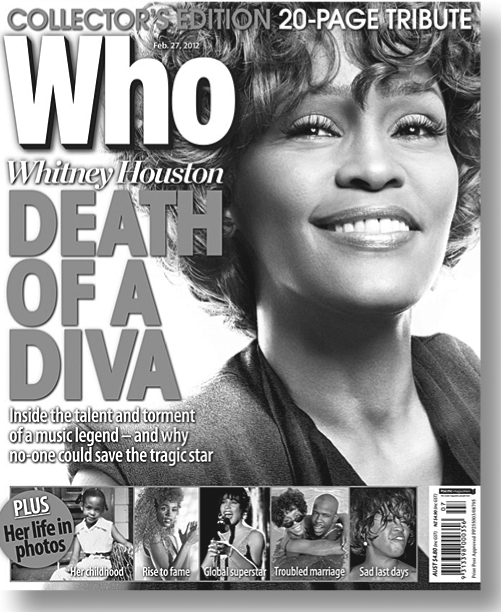
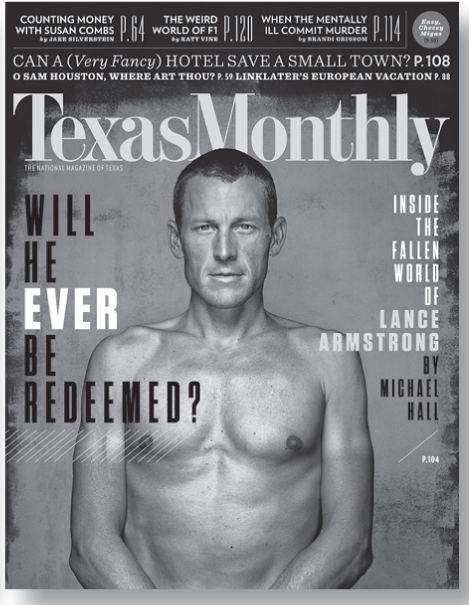
Why has Armstrong’s repeated use of banned substances received such ongoing and nuanced treatment while Houston’s drug use was quickly dismissed through the familiar trope of addiction? The difference lies in the symbolic importance we assign to different drugs and to drug users of different races and genders. The two stories reflect long-standing cultural distinctions between “good” and “bad” drug users, distinctions that are codified in public policy. Houston’s narrative conforms to the historic frame of the degraded, irredeemably deviant addict, who is often pictured as black and female. Armstrong, a white man, did a bad “thing,’’ but because he is considered to be a hard worker who uses drugs to be more productive, he escaped stigmatizing labels. Armstrong is allowed multiple identities—cancer survivor, humanitarian, gifted cyclist—while Houston’s identity as an addict eclipses her other accomplishments.
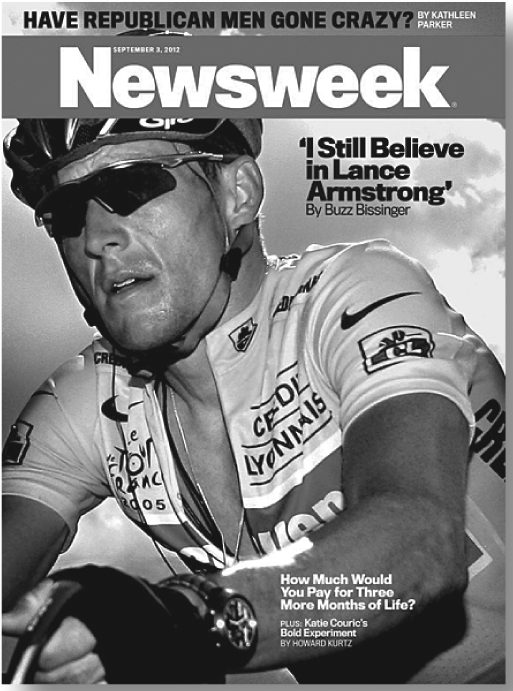
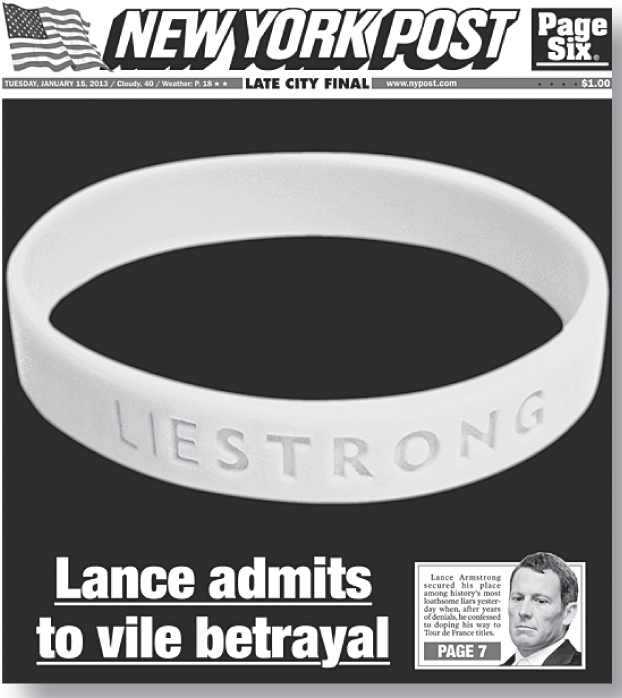
Accounts of Armstrong’s fall from grace offered greater complexity, portraying him as a person rather than a user.
©2011 Rodale, Inc
©2012 Daily News
©2012 Newsweek/Daily Beast Company, LLC
©2013 NYP Holdings, Inc
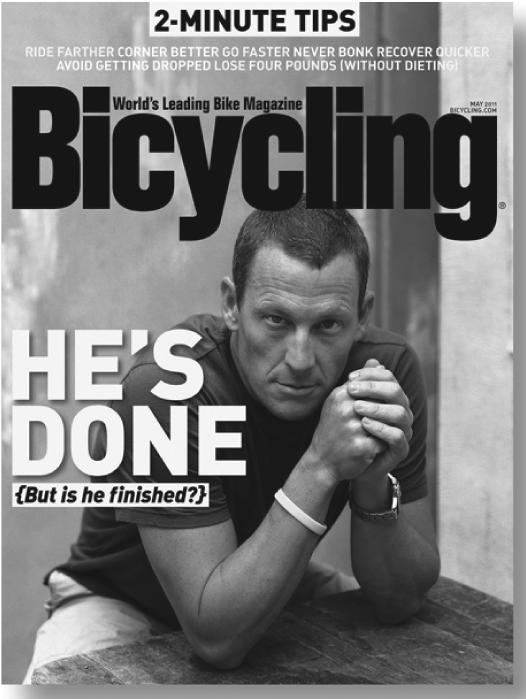
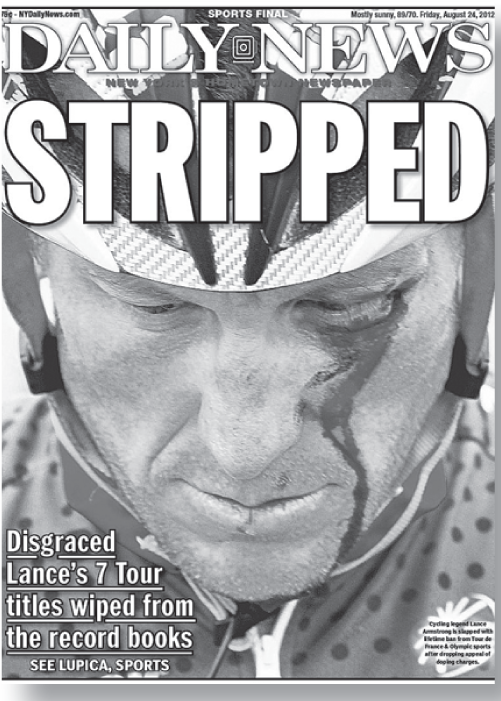
The “Real” Houston
While these two cases might seem incomparable, they reveal how centrally media portrayals of drug use and abuse are framed by race and gender. Take, for example, Jon Caramanica’s article, “A Voice of Triumph, the Queen of Pain,” immediately following Houston’s death. Caramanica calls Houston “pure musical royalty,” but argues that “maybe, beneath the old sheen [of stardom], she was always so messy,” suggesting that the “early vivacity” that made her a star wasn’t the “real” her. Her “troubled later life” was the “throne” she was meant to occupy. He refers to Houston as an addict and her death as a “cautionary tale,” but never explains the moral we should take from it—he doesn’t have to.
Armstrong is allowed multiple identities—cancer survivor, humanitarian, gifted cyclist—but Houston is just an addict.
As I argue in my book Judging Addicts, society’s construction of addiction as a medico-moral disorder—sickness and badness—is so widespread that it can be deployed and understood with little explanation. Most of the 487 Times readers who responded to Houston’s obituary reflected this view, referring to her death as a “tragedy,” “an example of what drugs can do,” and a warning never to be “shackled with addiction.” One reader’s call to avoid “over-dramatization” before “knowing the cause of her death” was ignored by hundreds of others eager to accept the “lesson” of “the ravages of drugs and alcohol” the newspaper encouraged. By casting Houston as, above all else, an addict and suggesting that this was her “real” self, the Times and its readership ignored the possibility that Houston may also have used drugs to enhance her acclaimed performances.
The Times’ coverage of Houston’s death quickly took on the distinct overtones of race that characterize most discussions of drugs in the U.S. Columnist Frank Bruni begins his article “Drinking and Drugging” with Houston’s now-infamous quote, from a 2002 interview with Diane Sawyer, “Crack is wack.” Bruni, like others, assumes that Houston disparaged crack to show that she didn’t need “cheap [drugs]… with album sales like hers, you didn’t have to suck on a pipe.” But by immediately raising the specter of an African American woman using crack cocaine, Bruni cements the connection between blackness and this much-demonized drug. As Harry Levine and Craig Reinarman argue in Crack in America, that connection—the result of the media’s framing of crack as a “ghetto” drug, and powder cocaine users as white and wealthy—has contributed to harsher drug laws for crack, and racial inequity in policing and incarceration.
Indulgences
And yet Bruni’s references to crack are a gratuitous introduction to another topic of doubtful relevance to Houston’s story: alcohol abuse. Bruni speculates that the “unconfirmed inventory of pills in her hotel suite” did not “represent the extent of her indulgences,” and that “by many accounts Houston also drank. More than a little.” He argues that alcohol is as dangerous as all the other drugs he assumes Houston used, and that the United States needs to restrict its availability, marketing, and production, and tax it more heavily. He assures his readers that he’s not arguing for prohibition, nor is he “about to abandon my white Burgundy or gin martinis.” But he thinks we need “public discussion” about other people’s drinking; his speculation that Houston drank herself to death is the catalyst for this conversation. Even as Bruni admits that “what killed Houston [was] still to be determined,” he is ready to urge that we “not be too quick to edit drinking out” of her tale. In fact, the coroner’s toxicology report did not include alcohol; Houston drowned to death, and traces of marijuana, cocaine, and prescription medicine were found in her body. There was never a correction that incorporated this new information. Moralizing is permitted—even when the facts run counter to the lesson we’re supposed to learn.
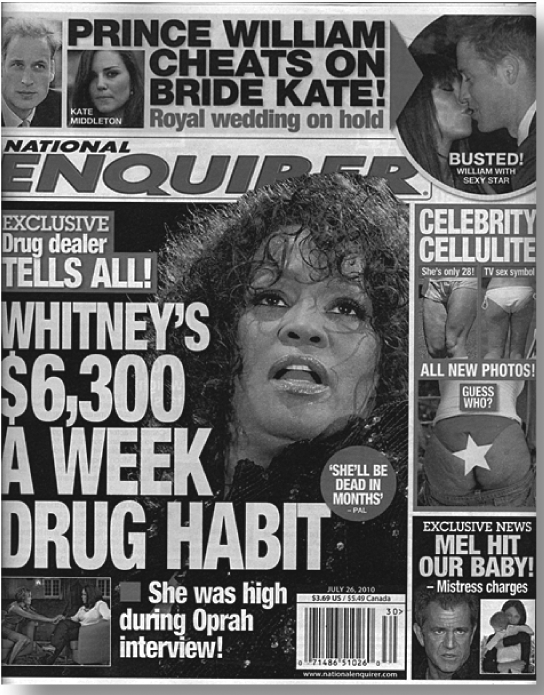
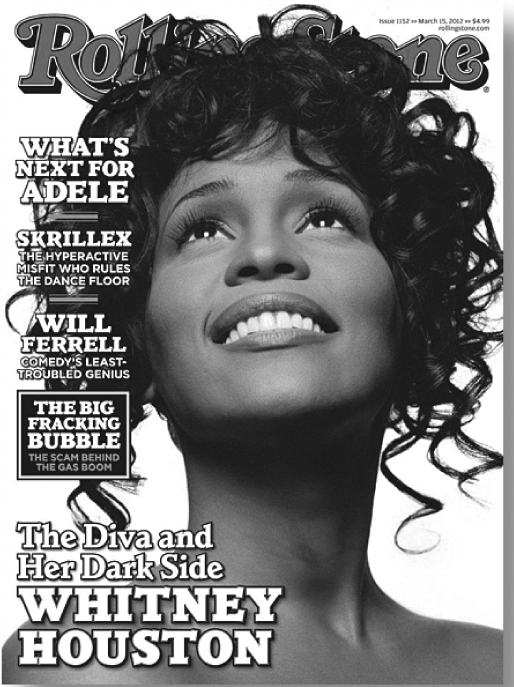
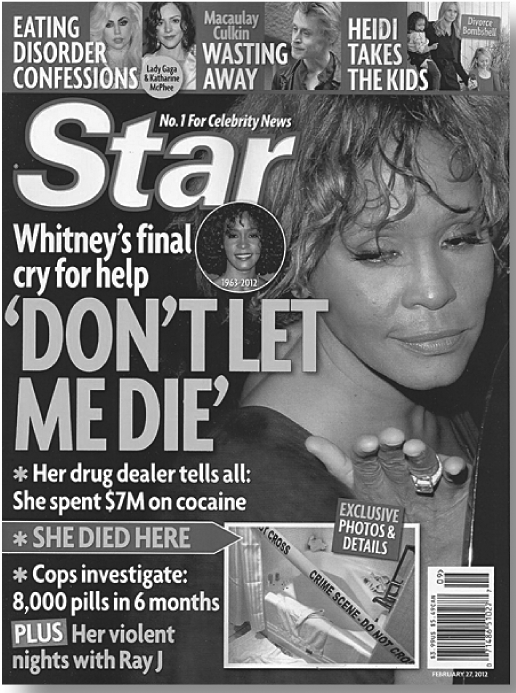
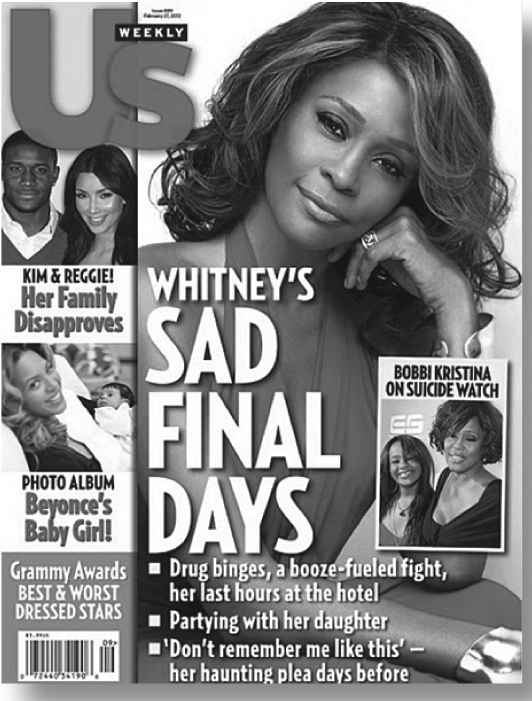
Houston was frequently positioned as a hopelessly addicted black woman.
©2010 American Media Inc.
©2012 Rolling Stone/Wenner Media
©2012 American Media Inc.
©2013 Us Weekly/Wenner Media
Mining Houston’s death further, the Times devoted one of its “Motherlode: Adventures in Parenting” columns to drug-using mothers. In “Whitney Houston, My Mother and Addiction,” Paige Bradley Frost admits “we don’t yet know the exact cause of [Houston’s] death,” but hopes that her death will awaken us to the “realities of drug and alcohol abuse… Mothers are not immune” to alcoholism, she says, in a culture that perpetuates the dangerous view that “drinking and motherhood are an acceptable mix.” Again, Houston’s death should serve a particular purpose: “Will Ms. Houston’s death lead even one woman to look honestly at her drinking or drug use and ask for help?” asks Frost. “I hope so.” Although “alcohol may not have killed Whitney Houston,” Frost admits, “alcoholism and drug addiction are deadly diseases with the power to destroy relationships, families and lives.” Eighty-six readers responded to her story, many thanking the writer for this “poignant,” “amazing, powerful, courageous,” and “beautiful, beautiful” post.
Some readers argued over the nature of addiction, asking: is it a disease or the result of bad choices? Yet most agreed that Houston was an addict, and drug users can’t be good mothers. The one reader who suggested that “it would be more respectful to wait until the cause of death is determined before launching a personal cause from the pad of a public tragedy,” was quickly admonished by others, one of whom saw “compassion and hope” in Frost’s using Houston’s death, combined with the story of her own mother’s alcoholism, to lay bare the perils of addicted mothers. Frost and her readers claimed that she was shedding light on a hidden issue. Yet negative portrayals of African American mothers who use drugs, particularly in the media’s coverage of the “crack-baby epidemic,’’ are all too familiar. Two weeks after her death, the nation’s leading newspaper set Houston’s morality tale solidly within this frame, despite the fact that there was little evidence of what prompted her death.
“We are all Culpable”
On October 22, 2012, Lance Armstrong was stripped of his seven Tour De France titles. The International Cycling Union decided not to appeal the U.S. Anti-Doping Agency’s findings (based on over 1,000 pages of evidence, including testimony from teammates) that over many years, Armstrong used and required his teammates to use EPO, testosterone, human growth hormone, and other forms of blood doping. The 972 reader comments posted to the Times in the two days after the Tour’s actions are remarkable for their diversity of opinion. A number of readers excoriated Armstrong for lying, but many also blamed a “sick” society where “cheating and greed are rewarded.” Armstrong’s staunch defenders called the investigation a “misguided witch hunt” and cited a lack of toxicological evidence. Others argued that since every other racer was doping, it was a “level playing field,” making Armstrong the legitimate winner.
Many saw Armstrong as a hero, a cancer survivor and a humanitarian. They didn’t want his doping scandal to undo all he did “to make the world a better place.”
A debate emerged about what to call EPO and other so-called performance enhancers. When a few commentators referred to them as drugs, others disagreed, one explaining: “blood doping and EPO… are not ‘drugs’” because they are “not detectable by post-event testing,” a defining feature of “drugs” for several readers. Others, calling EPO a supplement or medicine, were quick to argue that athletes should be permitted to, as one put it, “maximize their performance and natural talents through performance-enhancing supplements.”
Beyond Lance and Whitney
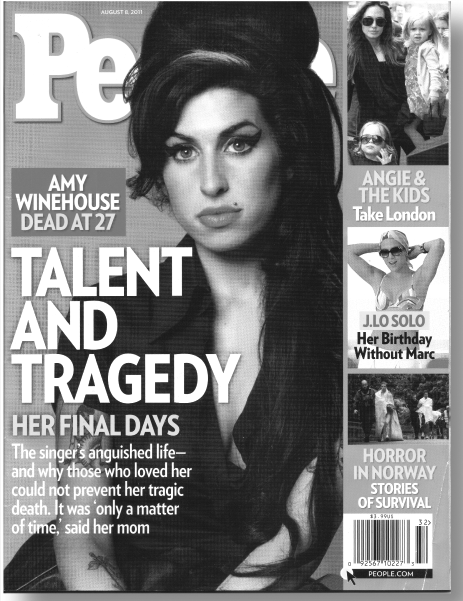
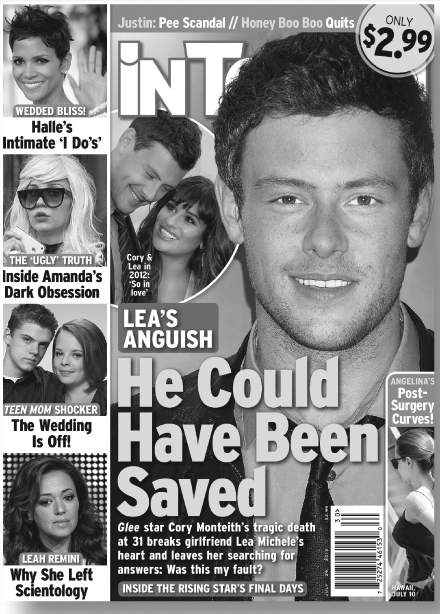
Coverage of celebrities’ drug use varies, and often reflects inequalities within American society.
©2011 Time Inc.
©2013 Bauer Publishing Group
©2013 Time Inc.
©2007 Time Inc.
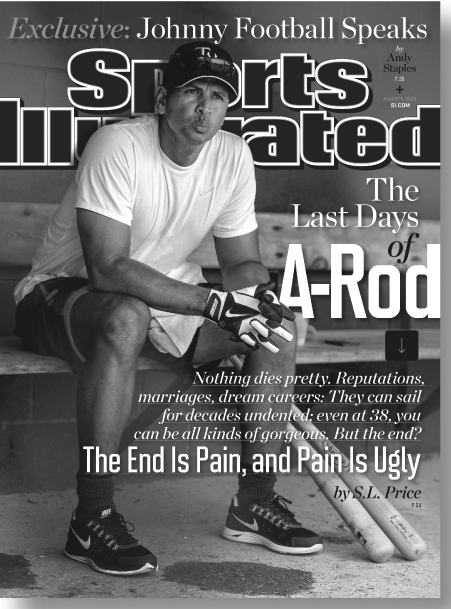
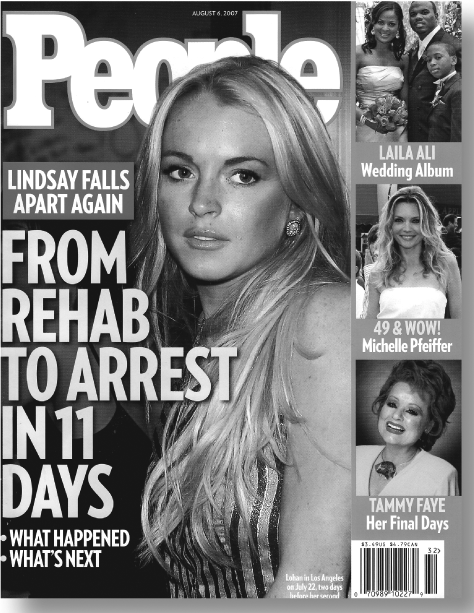
As historian Caroline Acker shows in her book, Creating the American Junkie, the distinction between “medicine” and “drugs” relies heavily on the race of the user: White people take medicine and are managed by doctors, while people of color take “street” drugs and are criminalized. Though the coroner in Houston’s case found traces of several legal pharmaceuticals (commonly called “medicine”) in her body, that didn’t change the fact that she had been labeled a drug-user whose actions carried the taint of immorality.
While these two cases might seem incomparable, they reveal how centrally media portrayals of drug use and abuse are framed by race and gender.
In a Times op-ed pegged to the Armstrong case, “A Drug to Quicken the Blood,” Kathleen Sharp, author of Blood Medicine, defines EPO as an “anemia drug” genetically engineered from a “naturally occurring hormone that stimulates the production of red blood cells.” Explaining its appeal, she asks, “What red-blooded American doesn’t crave more energy?” Of course, EPO has that in common with cocaine; both give users more energy and make them feel good. But op-ed writers and readers downplayed the parallel because they associate EPO with hard work and cocaine with indulgence. Sharp went on to divert blame from the EPO user by criticizing pharmaceutical companies that make EPO, doctors, and society at large—as well as demanding patients. She concludes that, while “it’s too bad about Lance Armstrong… we are all culpable in this blood-doping scandal.”
The media continued to frame Armstrong’s actions as the consequence of pushing winning at all cost, with some readers seeing valor in the way Armstrong met that challenge and dismissing the degree to which his substance use contributed to his cycling victories. As one person explained, echoing similar sentiments, Armstrong’s body is “in such [good] shape it’s unbelievable… That did not come from blood packing…it came from getting on his bike and riding… How many of you couch potato critics have ever ridden a bike that far, once?” In other words, Armstrong’s doping had simply helped him attain the kind of fit body achieved by behaviors—such as hard work and exercise—regularly lauded in the Times’ ”Fitness & Nutrition” section.
This framing of drug effects adds to the distinctions that were drawn between Houston’s and Armstrong’s history of substance use. If people misuse medicine, they are often cast as victims of the medical establishment, not to blame for drug use. But no one suggested that Whitney Houston was “just like us,” in Sharp’s terms, or that using drugs helped Houston cope in a profession—not unlike sports—where audiences demand perfection and unfailing energy is necessary to perform. Instead, Houston’s drug use is cast as an individual failing, an indulgence, a reflection of her “real” identity. She is an addict, a victim of her own pathological impulses. In contrast, Armstrong was seen by many as a hero.
International Icon
The idea that Armstrong should be admired, not condemned, was widespread among readers. The “Lance Armstrong phenomenon” as one reader explained, “inspired me to exercise… something to keep in mind with the health and obesity difficulties this country is facing.” Even if he doped, he provided an unparalleled example of “fitness and health” that motivated many Times readers. Armstrong’s history of testicular cancer gave him even more credibility. He was a guy “who looked cancer in the eye and did not blink,” wrote one reader. He “inspired whole nations to persevere to overcome one of the deadliest obstacles known to mankind.” And “by giving hope to a lot of people, [he was] heroic.” While some labeled Armstrong a cheater, many others saw him as a hero, a cancer survivor, and a humanitarian. They did not see how the doping scandal could undo all he did “to make the world a better place.”
It was precisely Armstrong’s reputation as a humanitarian that led the paper to devote an “Ethicist” column to “The Lance Armstrong Conundrum.” Columnist Chuck Klosterman dismissed the “debatable” ethics of using performance-enhancing drugs in favor of the question: “How to weigh the many bad things Armstrong did against the very good charity he created?” While Klosterman assumes that Armstrong “did bad things,” he refuses to give him a label that might permanently taint his identity. He concludes: “there is no right or wrong way to feel about Armstrong” and that we must look at “the totality of his career.”
By contrast, the Times never mentioned Whitney Houston’s humanitarianism, that she supported a range of charities including the American Foundation for AIDS Research, the Children’s Defense Fund, and the United Negro College Fund. They ran a morality tale that pathologized her as an addict and offered little room for complexity. Nor was her story complex enough to warrant expert analysis.
But the Times’ treatment of Armstrong included a “Room For Debate” column where “knowledgeable outsiders,” with expertise in sociology, public policy, corporate branding, and leadership and organizational psychology were brought in to help answer the question: “Does a Fallen Leader Crush His Cause?” We learn that “a brand is a promise,” “brands are about creating trust,” and that “leaders [are] extremely complicated human beings.” Armstrong is called a brand, a leader, a philanthropist, and an icon. Although the article warns us to “be vigilant about would-be icons” and identifies the scandal as a “mentoring moment” to teach youth “what it means to be a strong leader,” Armstrong becomes the basis for broader discussions that go far beyond the meaning of his drug use into a jargon-laden conversation among experts about heroes and leadership.
Three months after Lance Armstrong was stripped of his Tour de France titles, columnist Gail Collins queried her readers: “Right now, you’re probably asking yourself: ‘What can the Lance Armstrong scandal teach us as a nation?’” But even with the benefit of hindsight, Collins finds no serious or concluding “point” to deliver. Armstrong “isn’t particularly lovable,” she remarks. Yes, the Postal Service wasted $40 million in taxpayer money sponsoring Armstrong’s Tour De France team. But, she ends flippantly, “We’ll look for another moral. Maybe something about [Armstrong’s ex-girlfriend] Sheryl Crow.” She has no interest in the scandal as morality tale. Armstrong’s privileged status means that his years as a regular drug user is eclipsed in favor of his identities as sports icon and humanitarian, however tarnished.
In his famous essay “White,” film scholar Richard Dyer argues that “White people… are difficult if not impossible to analyze qua white. The subject seems to fall apart in your hands as soon as you begin.” The “panic” over drug use by elite white men has yet to be set into an easily deployed frame. In drug panics, mainly white elites speaking through mainstream media distinguish themselves from those whom the rules are meant to govern. This dominant social group highly values what it sees as the end result of Armstrong’s doping—triumph in grueling races and demonstrable physical prowess. His privileged status shields him from easy moralizing, and his transgressions, if they can even be called that, are subsumed by ongoing debates about their meaning.
The impression that Armstrong’s and Houston’s cases aren’t parallel speaks to the power of the media to reinforce double standards. He was productive; she indulged. He ”doped”; she was an addict. His role as a father was rarely questioned; she was quickly castigated as a bad mother. He enhanced his performance; she squandered her talent. Their stories reflect the enduring cultural distinctions we collectively draw between good and bad drugs and good and bad users—distinctions that, after a century of U.S. drug policy, are unlikely to change anytime soon.