Abstract
Hannah Scott’s family legacy is its tobacco farm. In this communal work, they find history and hope for a future. She captures their work in a loving photo essay.
“I don’t know why we do it. It’s something that we’ve always done and it’s one of those things that when you’ve done something for so long, it’s hard not to do it anymore.” These were my dad’s words when I asked him why our family raises burley tobacco, a crop that has become precarious. The industry has undergone major changes in the last decade to accommodate direct contracting between growers and companies, the consolidation of many companies into a few large corporations, and a decline in U.S. tobacco consumption. Many farmers have stopped growing tobacco. I have always wondered why my family still raises it (beyond the work itself, and the hoped-for financial rewards). Was it a matter of pride, habit, tradition?
I’ve explored this question while chronicling an entire burley tobacco crop year—from seed to market—on my family’s farm. My older brother Erik and I are fourth-generation tobacco farmers. We learned the craft from our parents, Fred and Frankie, and from our grandparents. Like them, we know tobacco farming as a way of life, and we see it as a dying art that is largely unknown and misunderstood. My photographs document the practical production activities comprising each phase of the crop year, as well as the family interactions in and out of the tobacco patch. While my photographs are meant to showcase the complexity of tobacco for an audience unfamiliar with the crop, they have also invited my family to pause and reflect on our motivations in undertaking this demanding way of life.
My photographs and captions—from interviews or written reflections—highlight the anxieties, triumphs, and togetherness that accompany raising tobacco. Likewise, the images shed light on the cultural and emotional meaning of both the physical and social aspects of tobacco farming. This is a crop that deeply shapes the lives of those who grow it. As my mom wrote, “The vast majority of people have negative attitudes and connotations toward tobacco—even other farm people. But, we defend it, and I think the tobacco community does too and that’s based completely on tradition. It was important to the economy of the past. For us, continuing to raise the crop is about stubbornness and keeping it alive.”
Just as working in tobacco is a communal endeavor, I decided at the outset that this project would be a communal effort. I interviewed my immediate family as well as many extended family members, friends, and neighbors who help us in tobacco. My parents and brother helped identify the photographic subjects they considered important to our operation and determine which aspects of tobacco to feature more prominently than others. They also shaped the tone and content of my final multi-media piece. They became an integral part of my documentary process—evaluating my photographs, sometimes taking their own photographs, and often writing reflections on our experiences. Like tobacco itself, this became “our project.” Along the way, this work has given my family a deeper understanding of one another, and the complex and profound ways tobacco shapes our lives and identities.
This project is a collaboration with my mother Frankie, my father Fred, and my brother Erik.
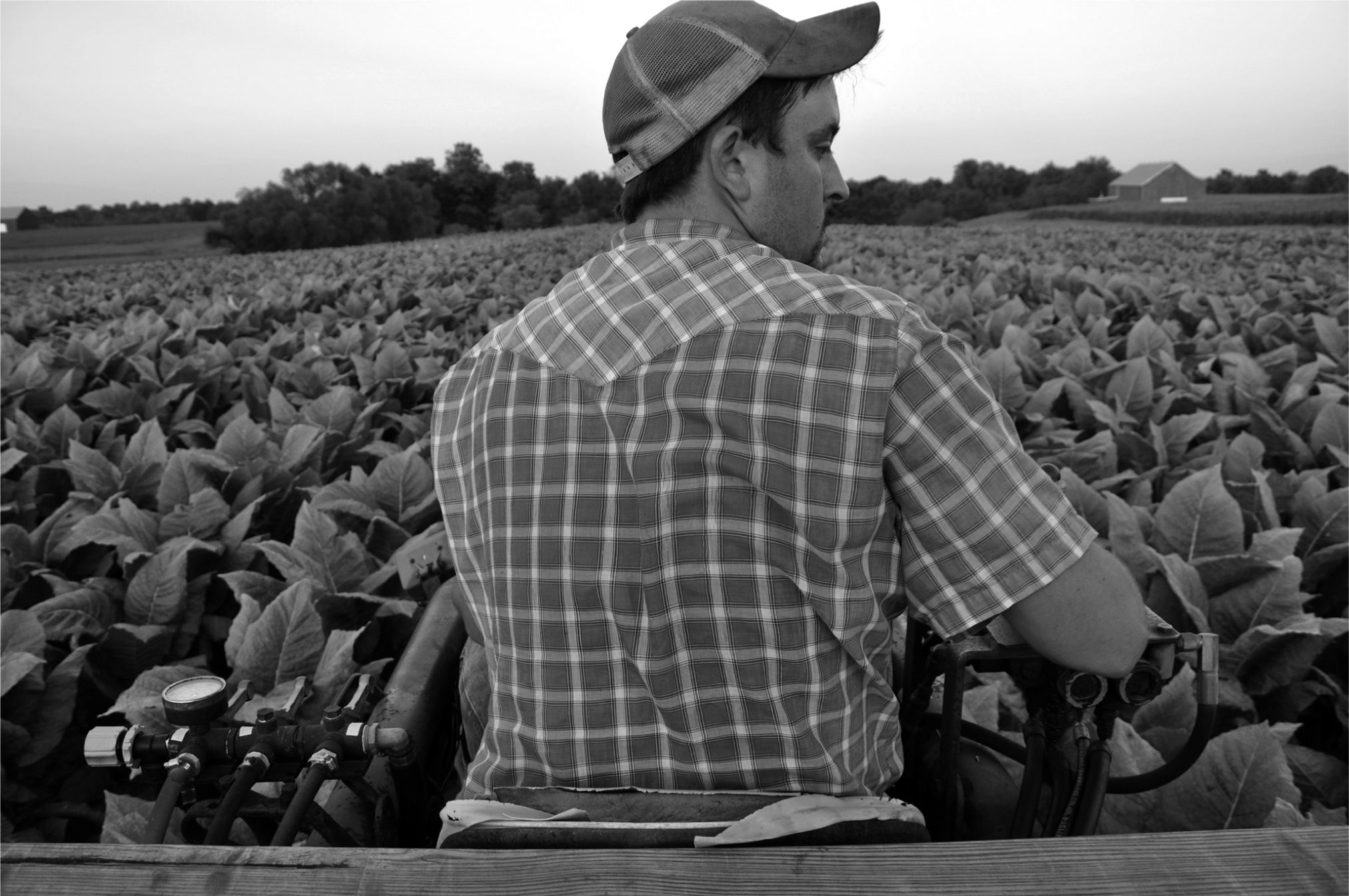
Erik sprays tobacco on an August evening.
My family lived and paid for a farm raising tobacco. I don’t know why we still do it. I still say it’s out of habit. – Fred
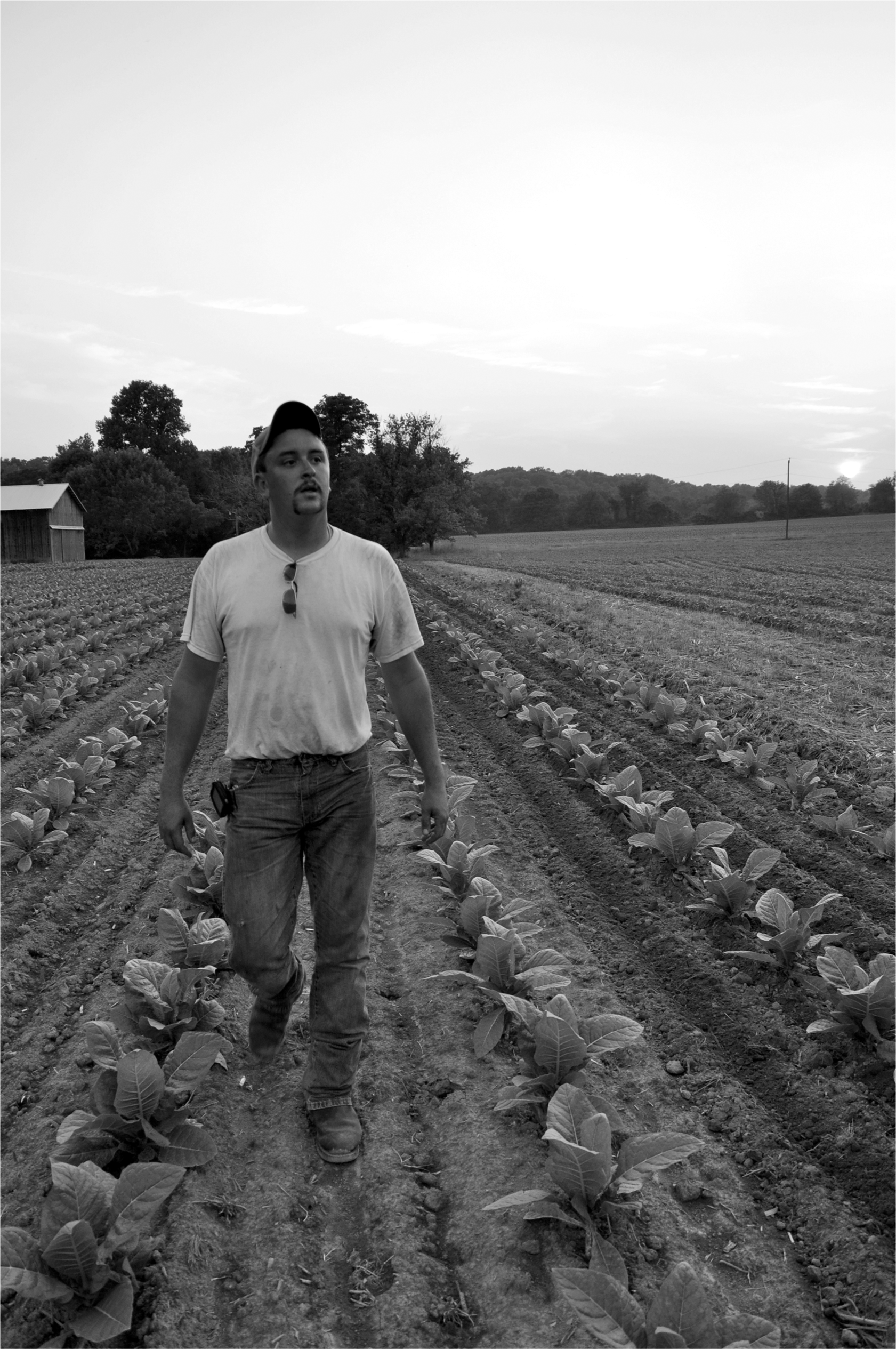
Erik walks through the field about ten days after we’ve set the tobacco in June.
Being in my position at this time of year is very unsettling. A year’s paycheck depends on other people and the weather. But, it is the choice I made; the problem is that there is no way to know when to get out of the way until it is too late. Most people breathe easy and sleep better after topping, I don’t breathe easy until the check comes in the mail. When the weather changes this time of year I get a tight feeling in my chest and I get tunnel vision. – Erik
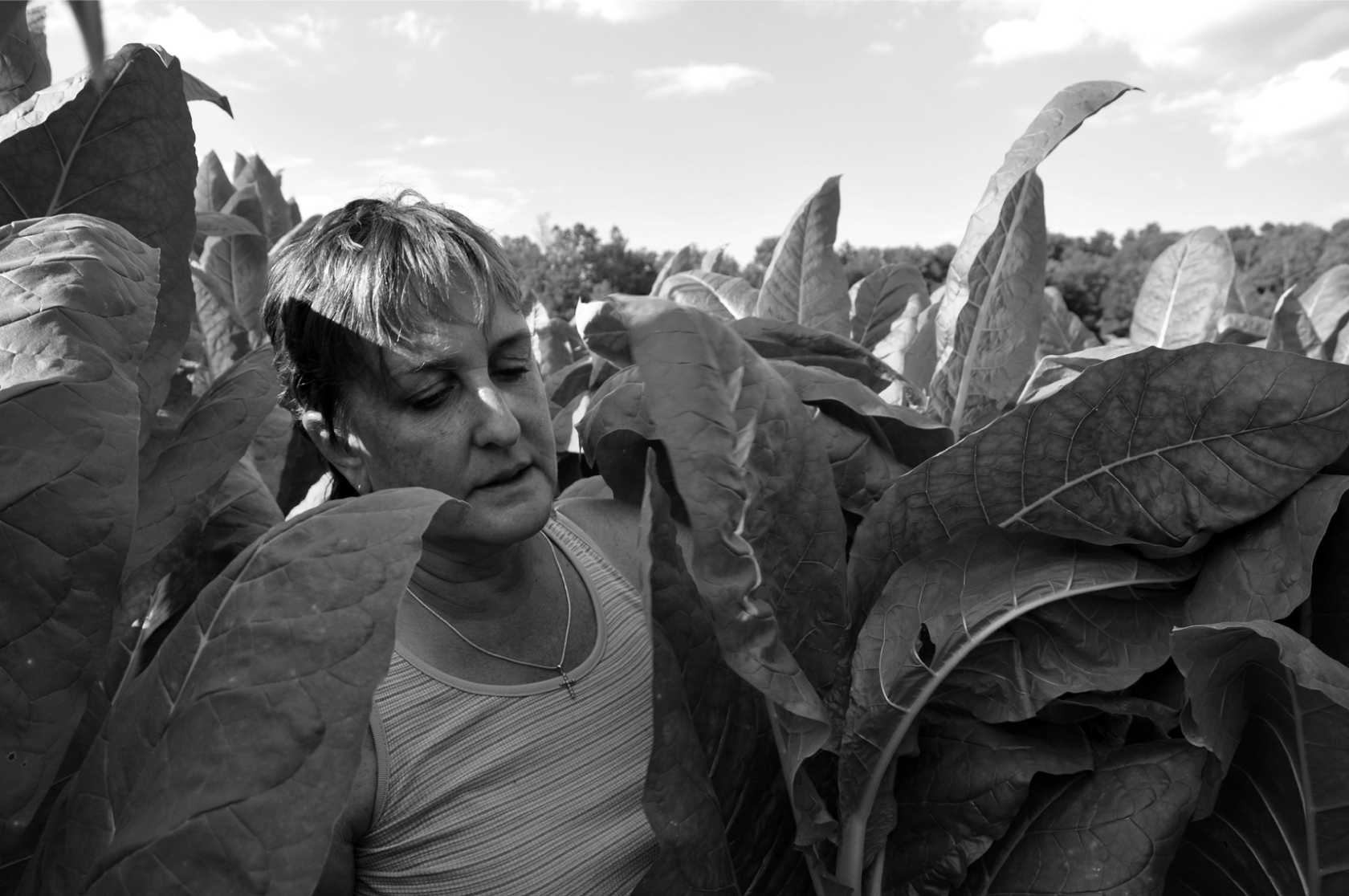
Frankie tops tobacco on an August afternoon.
We are cutting and housing tobacco much, much later than usual this year. There are lots of reasons. Some within our control, some not within our control. The part I would like to change is the boys and Hannah worrying and second-guessing their own and each other’s decision making. I would rather do anything than watch them worry, not sleep and eat well, and get aggravated with each other. The tobacco looks good. It is what it is, no one is physically hurt. We are blessed and we should be thankful. – Frankie
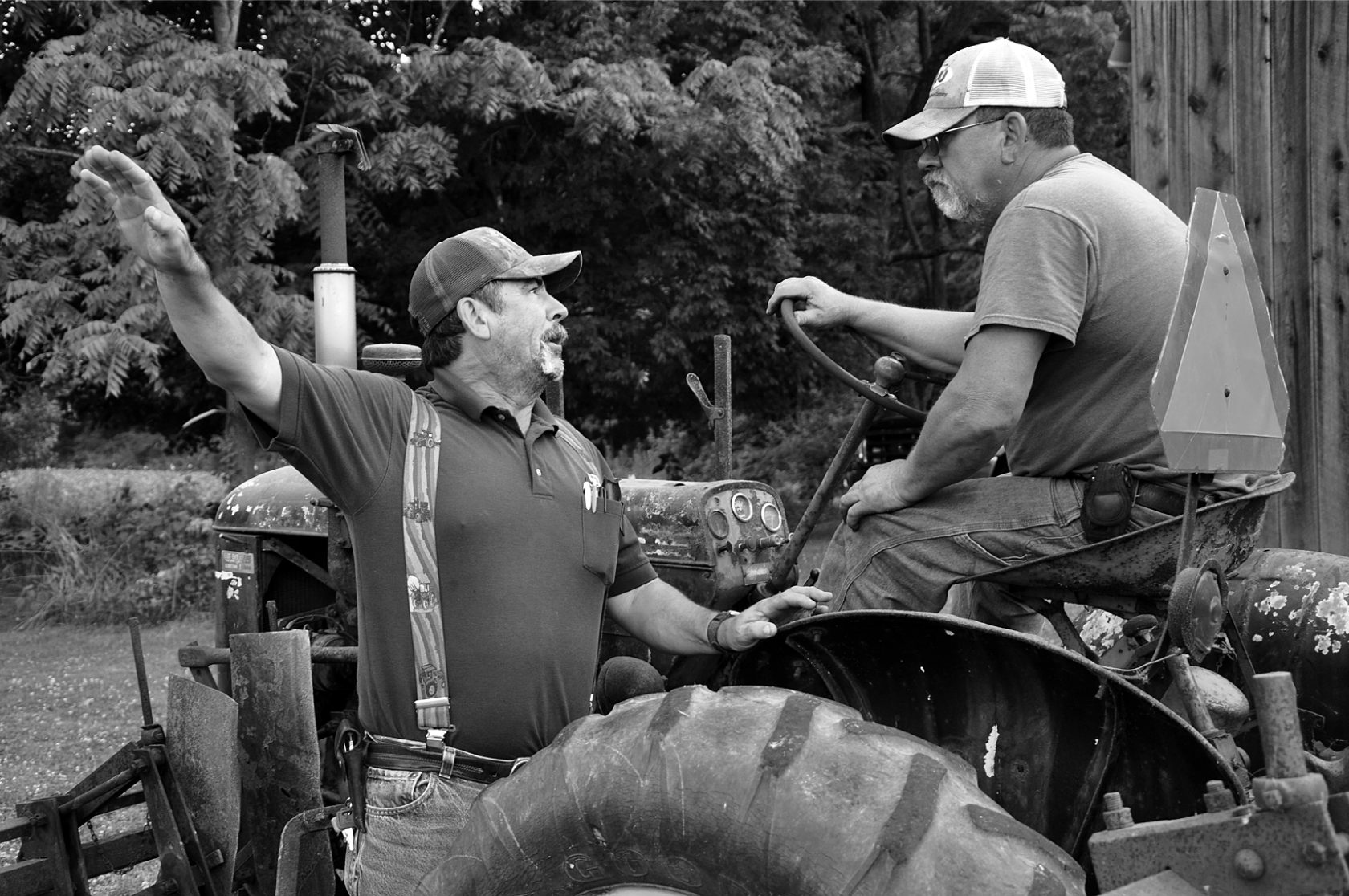
Fred talks with his brother, Wes, before they cultivate tobacco in early June.
When I was about 12 years old I was cutting tobacco. The plants were very big, and hard to cut and spear. I hit myself on the ankle with my knife. It hurt, but I thought it was okay until my foot started getting wet in my shoe. My ankle was cut very deep, and bleeding pretty bad. I remember my dad being upset because I did that. I’m sure he was concerned. He put kerosene on it and washed it out. I could hardly walk for two days. I still have the scar. – Fred
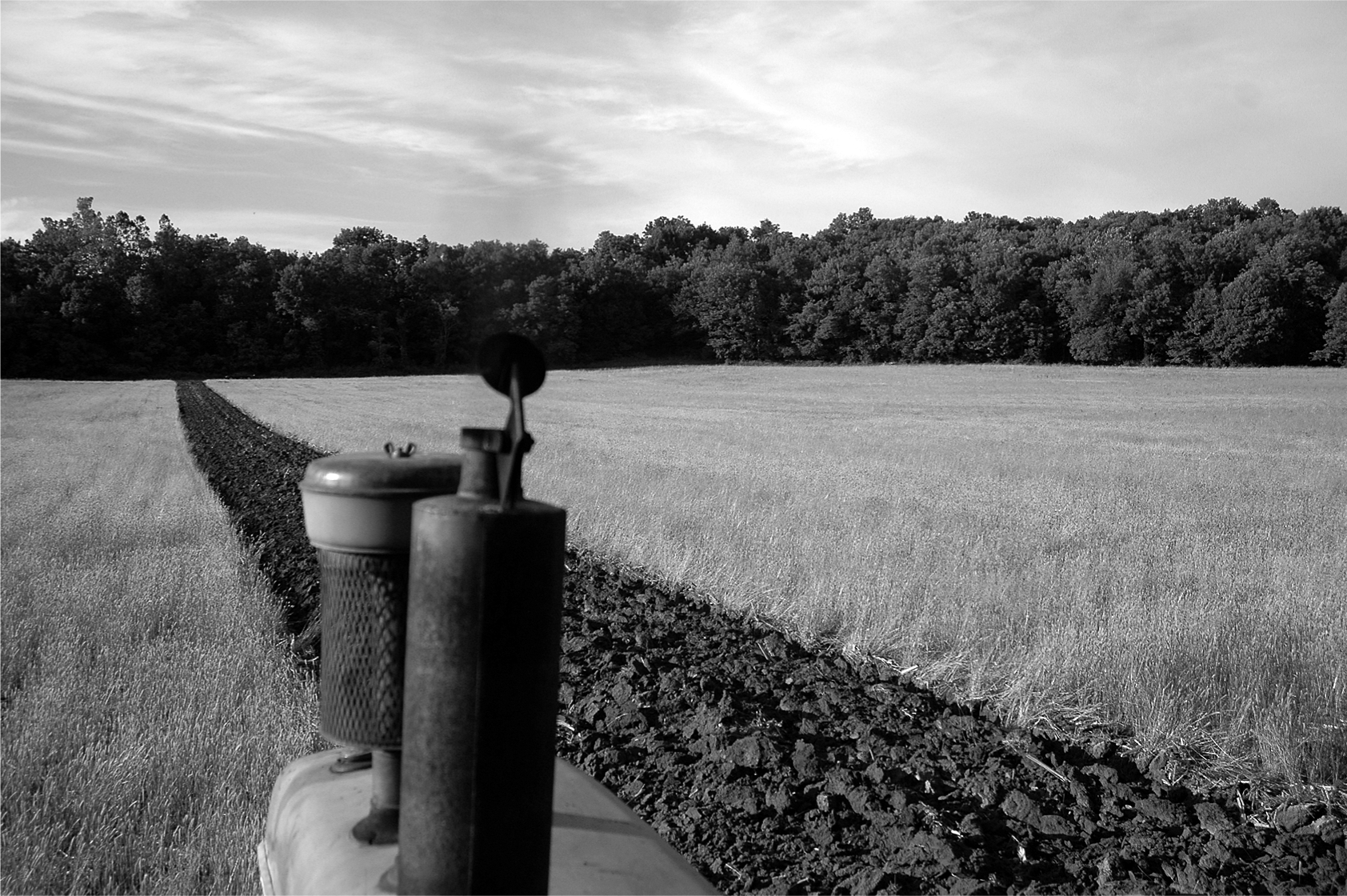
The tobacco patch being plowed in May.
Teasing, telling jokes or stories, and playing silly games make for a good escape from the monotony of setting tobacco. Our personal favorite game—“Would you rather?” My little cousin always asks the best questions, like—“Would you rather drive a clown car for the rest of your life or have my face tattooed on your bicep?” – Hannah
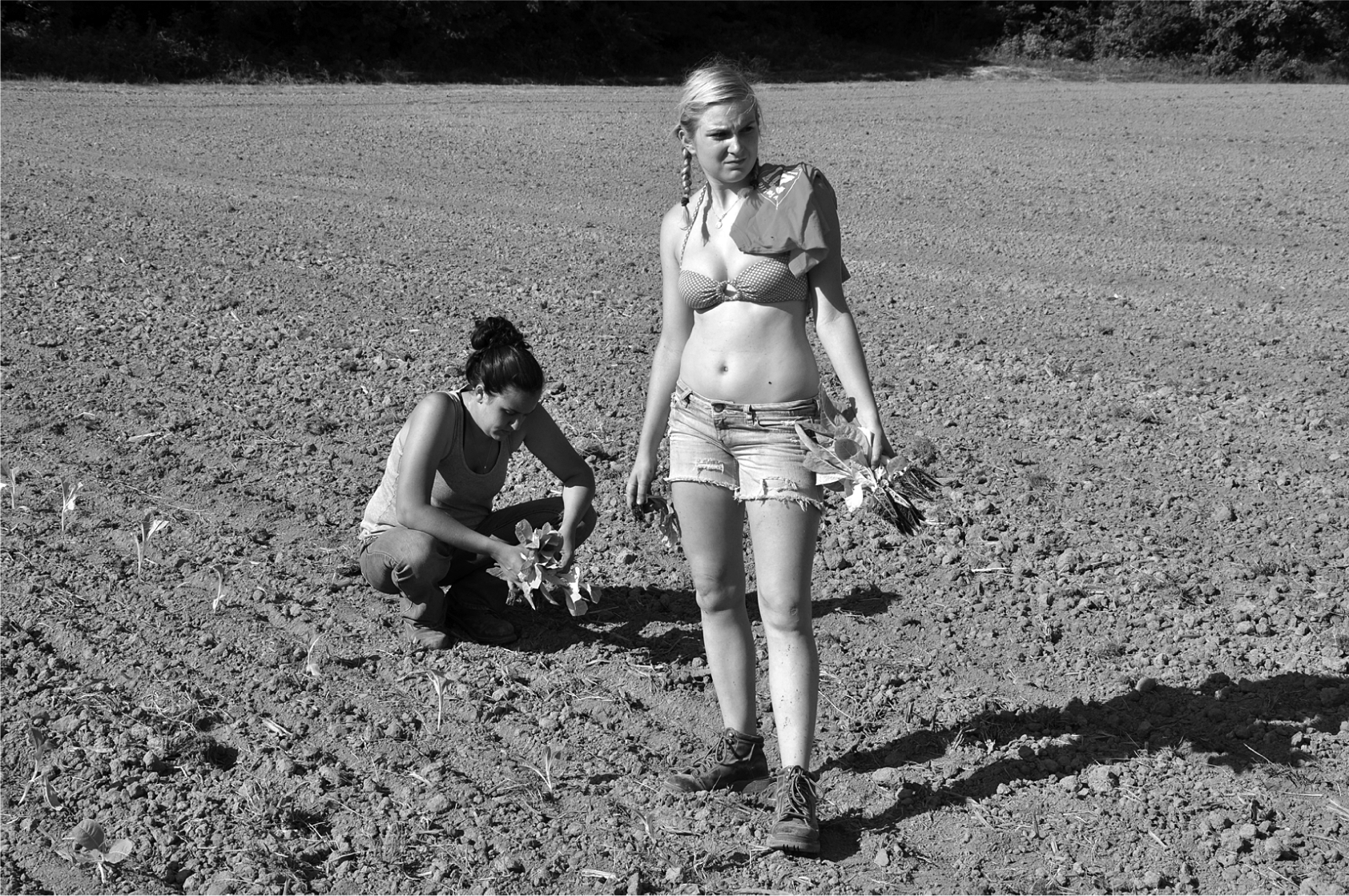
In early June, Hannah and her friend, Kristine, wait while Fred and Erik fix the setter.
Setting this year, I remember thinking I just wanted to get away from you, Hannah. If I could’ve killed you with looks, you would have been dead. And I know you were mad. – Erik
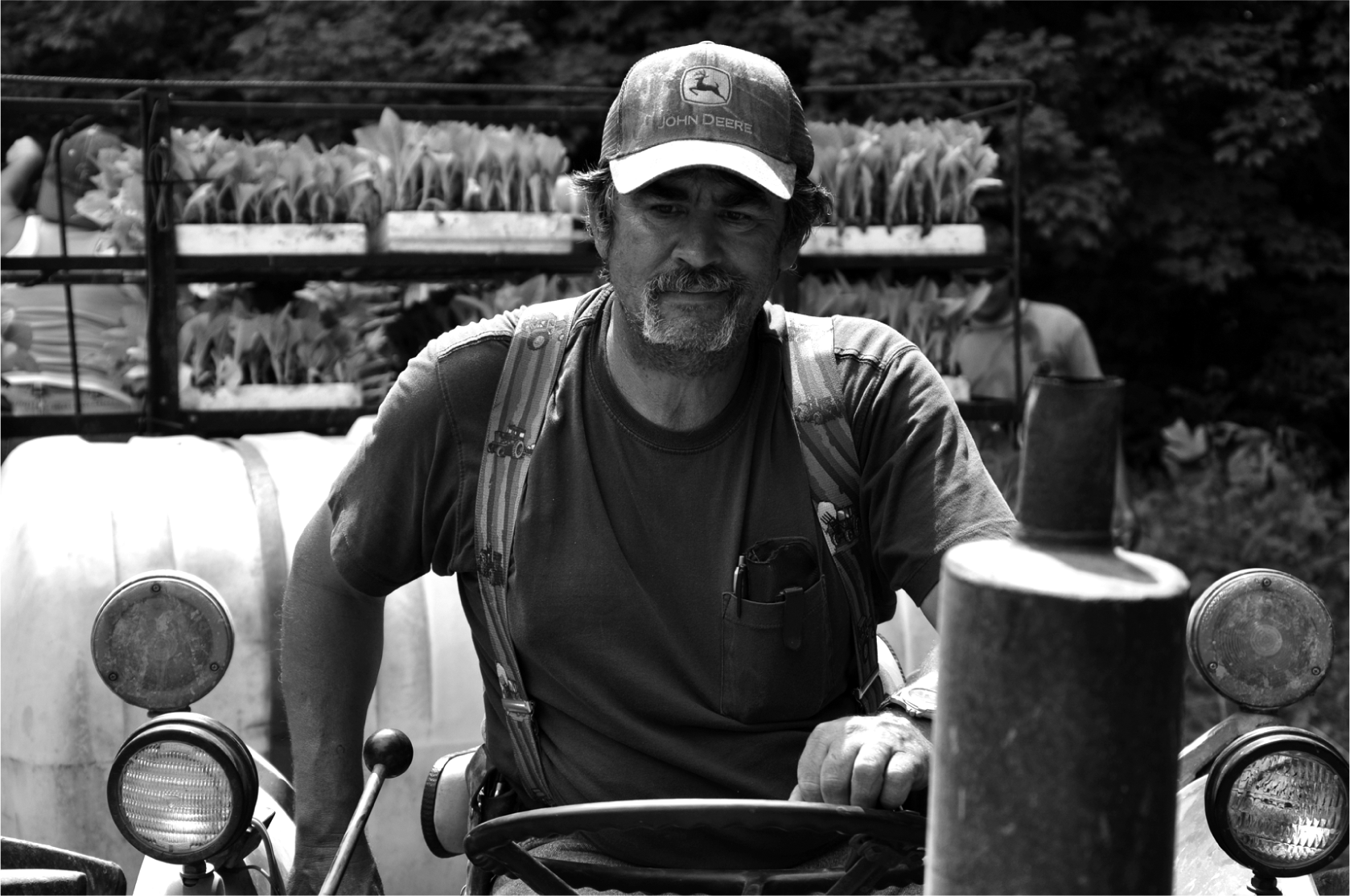
Fred drives the tractor and tobacco setter on a June afternoon.
This is truly a family crop. For years and generations, over and over with the same work, hard and hot, rushing and waiting, arguing and laughing—over and over, together. Tobacco is how I got to know your dad’s family. In the summertime when I was in college, I worked on the farm. Your pap would come get me early in the morning and plant me on the setter. I worked with him and your uncles. – Frankie
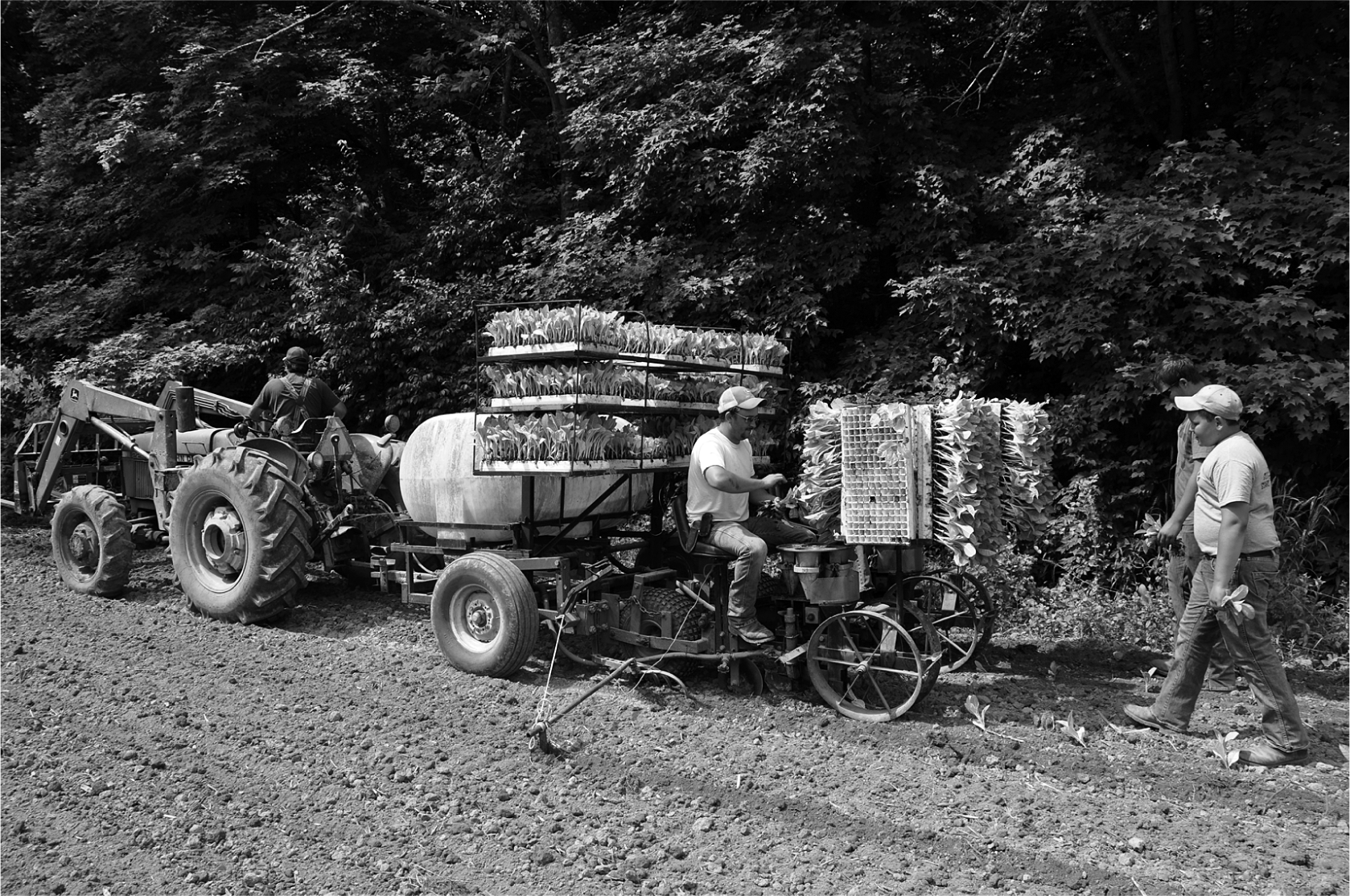
In early June, Fred, Frankie, Erik, Landen, and Layne set tobacco.
I think my favorite part of tobacco is setting. We’re all together. We all work together regardless of how old we are—everybody has a job. We’re not as worried. We’re happy about getting to start again. – Frankie
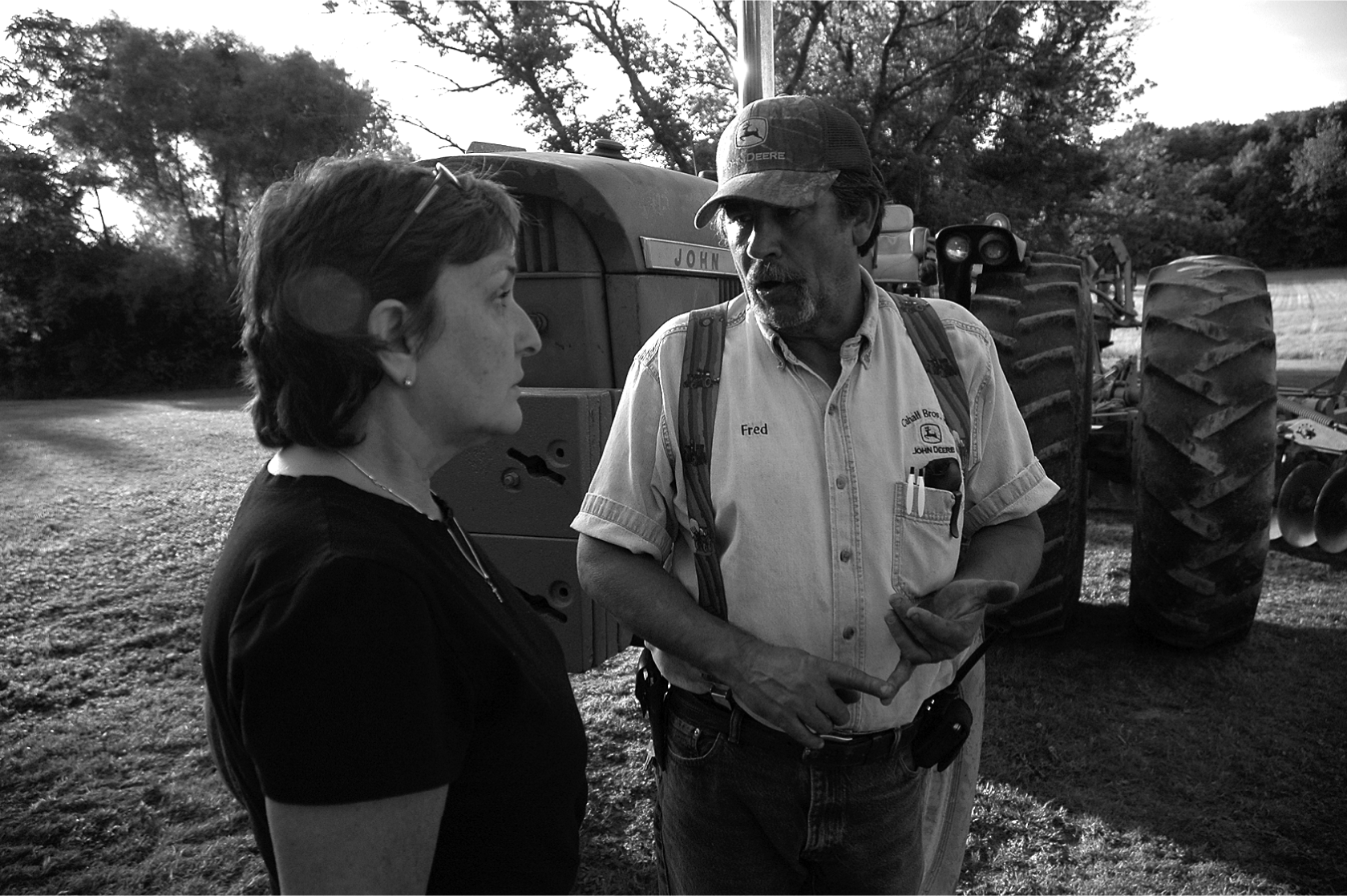
Fred and Frankie discuss the weather and crew before setting begins in late May.
My brother looked up as he walked next to me in a newly set twelve-acre patch of tobacco yesterday and said, “Did we make a mistake? Did we get into something we can’t get out of?” Honestly, I couldn’t answer him. The answer could be yes or no, it just depends. – Hannah
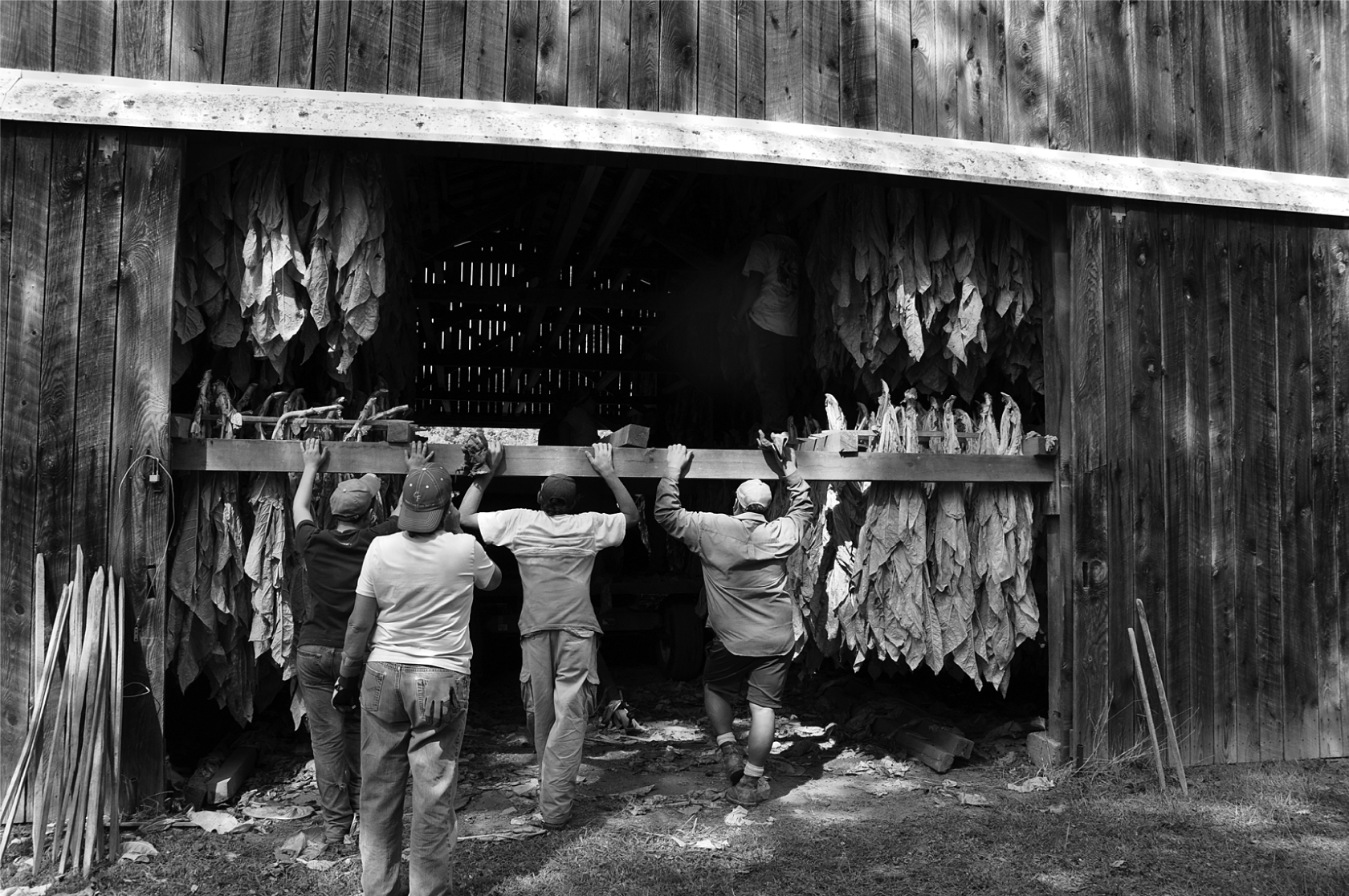
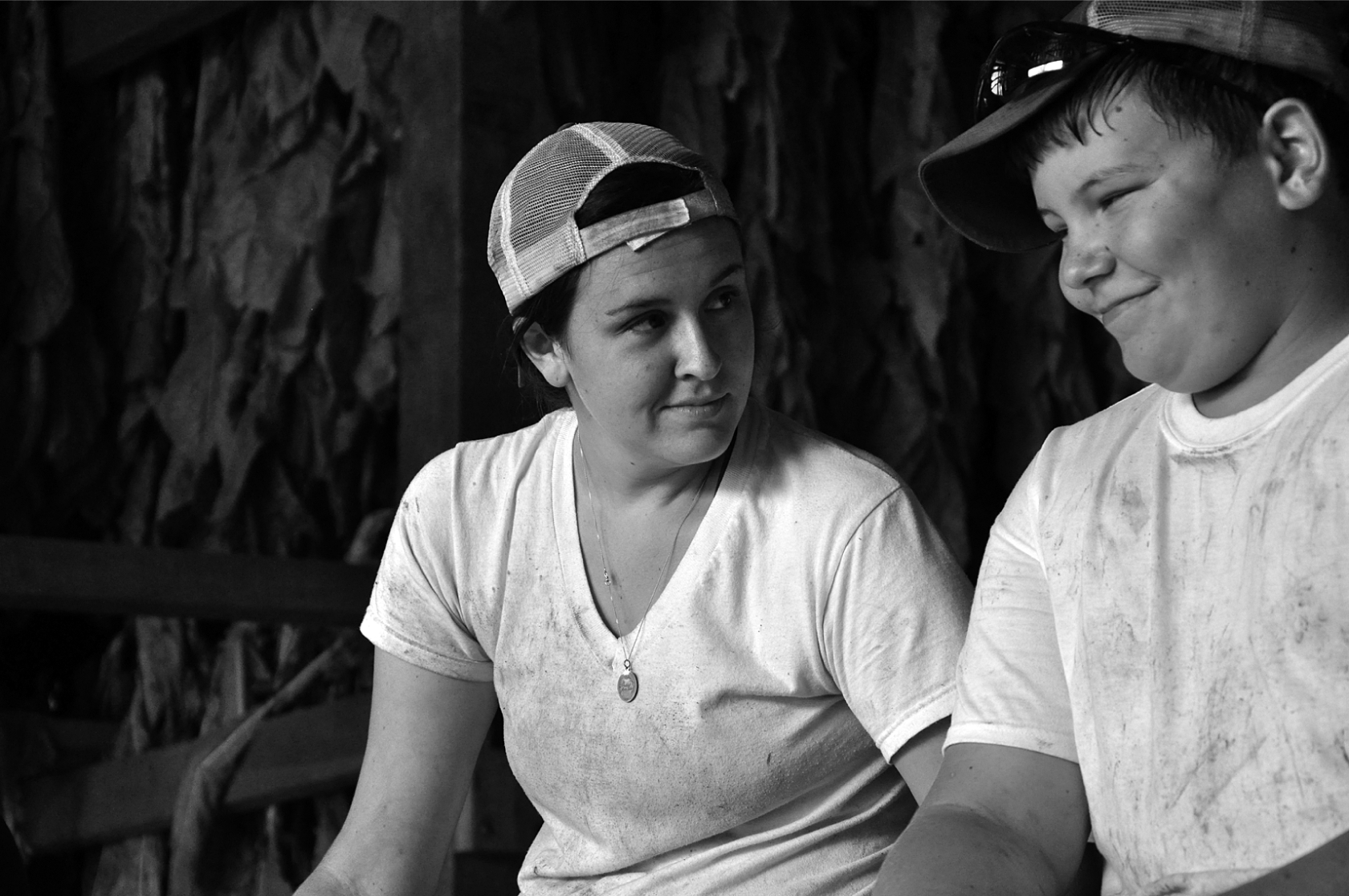
On a September afternoon, Hannah and Landen take a break from housing tobacco.
This day was just like the ones I remember from every year prior to this. The barn is full of the noises of moving tobacco and people working hard and constant chatter. The crew on the wagon talks amongst themselves or yells up to the hangers in the rails or vice versa. And the conversations somehow always turn out to be hilarious. – Hannah
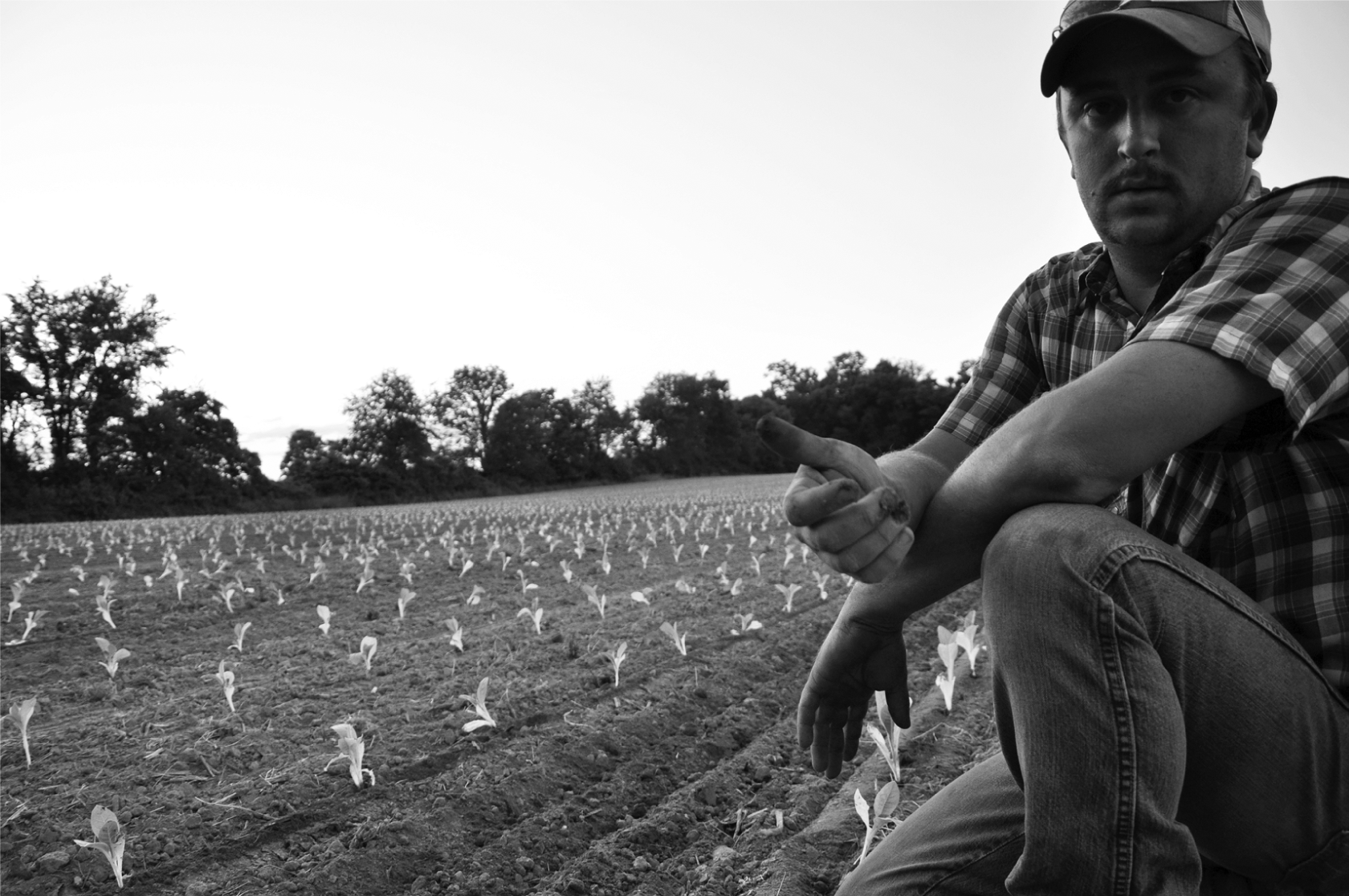
Erik checks the roots of a newly set plant in early June.
Erik was about 6 ½ months old. My mom wasn’t feeling well. There was no one to watch Erik and not enough help. I took blankets and toys and packed bottles and diapers. When I got to the patch, everyone was there waiting, Pap and Fred didn’t do well waiting, especially in tobacco. Erik didn’t like lying on the blanket; He fussed and cried. Finally, I gave up and put him in my lap. He played in the dirt from the plants and watched his dad. He didn’t make a sound the whole time—I knew then I was raising a boy just like his dad and pap. – Frankie
In September, Logan, Frankie, and the rest of the crew house tobacco.
For my family and me tobacco is more of a way of life than an occupation. A family in the tobacco patch is going to have to lean on each other’s strengths and know their weaknesses, which causes stress in unbelievable amounts and leads to arguing. At the end of the day, the work still has to get done. It is not for everyone but with great risk and hard work you may be rewarded. – Erik