



Abstract
Increasingly violent media shows no signs of driving away audiences. Cynthia Chris explores the possibility of redemptive arcs as ripped-from-the-headlines stories play out on TV, but with happy endings, and, in the end, she still reaches for the remote.
In February 2013, an online petition asking NBC to withdraw or recast an episode of Law & Order: Special Victims Unit (SVU) garnered thousands of electronic signatures. The episode, “Monster’s Legacy,” was slated to guest-star former boxer Mike Tyson and scheduled to air on the eve of One Billion Rising, a global event tied to Valentine’s Day and designed to raise awareness of sexual violence. NBC responded as though it had simply stumbled into bad timing, rescheduling the episode and capitalizing on the protest by advertising “Monster’s Legacy” as “The controversial episode you must see.”
But the complaints went beyond the episode’s timing. Marcie Kaveney, a rape crisis counselor, launched a Change.org petition when she learned that Tyson would appear. She says SVU is a show that is seen by survivors as “their show because it is their stories.” Most of these stories involve sexual assault, incest, or the sexual abuse of children. Interviewed on CBC Radio’s show Q, Kaveney said that survivors find “comfort and solace” in SVU, since it assures them that someone will “stand up for them and see justice for them.” In this light, casting Tyson seemed unconscionably callous to many viewers, given that in 1992, when Tyson was already a deposed heavyweight champion, he was convicted of rape. He served half of a six-year sentence.
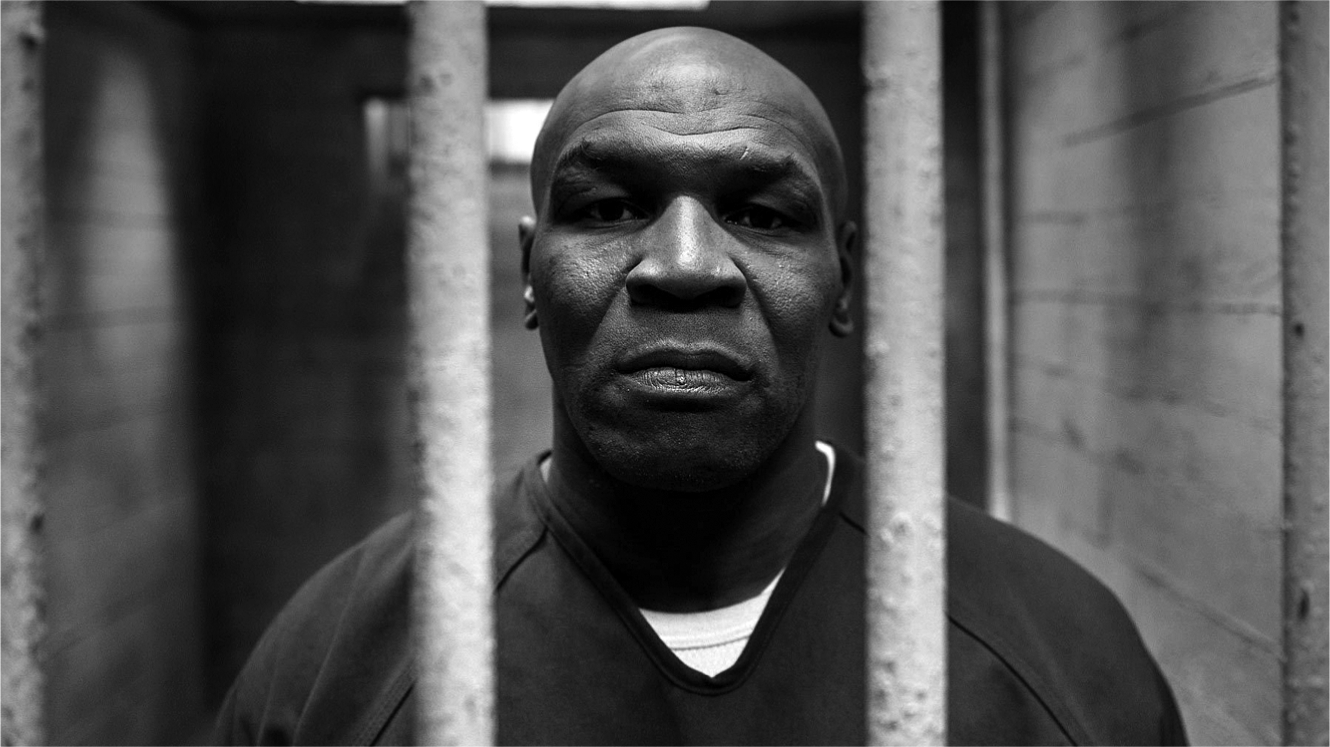
On the show, Tyson played Reggie Rhodes, a character sentenced to death for murder. In the plot, prosecutors represented the victim as a random victim, but, as Detective Olivia Benson (played by Mariska Hargitay) uncovers, he was once the leader of a childhood gang rape of Rhodes. Haunted by shame, Rhodes had never revealed his past as a victim of several predatory men, until Detective Benson was able to bring it out, leading to Rhodes’s exoneration and the imprisonment of another of his childhood abusers (played here by a cast-against-type Ed Asner).
The kind of fandom Marcie Kaveney describes, where victims watch to see other victims vindicated, suggests a twist on Seymour Feshbach’s “catharsis theory.” In his 1971 article on “Television and Aggression,” Feshbach observed decreased aggression among boys watching violent TV, suggesting that the media could provide a safe outlet for dangerous urges. Focusing on the victim rather than potential perpetrators of violence, Kaveney’s comments suggest a scenario in which disturbing content can be redemptive when it provides an alternative ending. Heroic rescue, punishment for the perpetrator, healing for the survivor—any of these more “happy endings” may have eluded real-life survivors but give them some solace now.
Imitating Art?
The petition and the dedicated viewership it revealed reminds us that media consumers relate to the texts that they encounter in all kinds of ways. Pure imitation is perhaps the least of these responses, and there is a range of opinions about how much media influences its consumers.
The public’s reaction to Tyson’s role on Law & Order SVU reminds us that we interact with media in complex ways.
©2013 NBC Universal, Inc.
Among critical media studies scholars, there is near-consensus that proof of the old theories of “hypodermic” or “magic bullet” media effect is rare. Audiences, these scholars believe, are active and discerning, basing their choices and actions on multiple factors; the media plays an auxiliary role that is difficult to pin down. In landmark studies such as 1955’s Personal Influence, “Encoding and Decoding” by Stuart Hall, Janice Radway’s Reading the Romance, Henry Jenkins’s Textual Poachers and Nationwide Television Studies, Ellen Seiter’s The Internet Playground, and Mary Gray’s Out in the Country, media sociologists and audience researchers have discovered an array of surprising uses of popular culture. Virtually none involve “direct” effects. This is to say, critical media studies assert that a violent movie will not, on its own, make you violent. (From this perspective, it should follow that no cathartic television episode can heal all wounds.)
Disturbing content might be redemptive if it provides an alternative ending.
Psychologists studying media violence have come to some different conclusions. Many of their studies have suggested that exposure to violent media increases aggression on at least a short-term basis, reaffirming Albert Bandura’s findings in the famous “Bobo doll” experiments at Stanford in the early 1960s. In the psychology literature, a clear picture of long-term effects still remains elusive. Neither Leonard Eron and Rowell Huesmann’s longitudinal studies, which began in the 1960s, nor subsequent work in the same vein, have unpacked the degree to which media influences behavior, or individuals prone to aggression self-select violent media.
And when it comes to mainstream interpretations of, say, heavy metal music or first-person shooter videogames, the story is that these media are causal factors in real-world violence. In 1990, the parents of two young Nevada men sued members of the band Judas Priest, claiming that subliminal messages in their songs had driven their sons to suicide. While the case was dismissed, media producers have since been regularly taken to court or excoriated by the press when crimes or accidents “copycatted” from their entertainment have taken place. (Yes, we are talking about one form of media taking another to task.) For example, too much may have been made of the fact that the shooters in the Columbine High School massacre, which killed 13 in 1999, were fans of the games Wolfenstein 3D and Doom and loved the movie Natural Born Killers. Natural Born Killers made over $50 million at the box office, and thousands of people play the same video games without taking the action outside their living rooms.
Interest in the effects of media violence on heavy consumers, especially children, abounds. On February 18, 2013, the Christian Science Monitor reported on a study from the journal Pediatrics, which, instead of assessing aggression following exposure to violent media, monitored apparent increases in empathy after exposure to media showing cooperation. The next day, the New York Times covered University of Illinois professor Carol L. Tilley’s examination of the interviews that had informed the influential 1954 takedown of comic books, Seduction of the Innocent by Frederic Wertham. Tilley found that Seduction’s author had manipulated data to serve his anti-comic agenda, blaming the medium for turning juveniles into delinquents and encouraging homosexuality. (Batman and Robin in tights? Kids might get ideas!) The same week these stories appeared and more than two months after Adam Lanza killed 8 adults (including himself and his mother) and 20 schoolchildren in Connecticut, CBS This Morning and PBS Newshour were apparently having déjà vu, reporting breathlessly about Lanza’s obsession with Call of Duty and other violent video games.
To be fair, the man who took the lives of 77 and wounded over 300 in a violent 2011 spree in Norway, openly claims to have “trained” by playing Modern Warfare 2 and World of Warcraft (the same game famously played by outspoken marriage equality proponent and professional football player Chris Kluwe). The point is, we really don’t know why so many are drawn to these entertainments, nor to what effect. We don’t even have a firm grasp on the scope and received meanings of violence contained within popular entertainment products. Film critics scurried to parse distinctions between realistic and cartoonish scenes of mayhem in Django Unchained, many rendering it as both an educational look at the brutality of slavery and a cathartic revenge fantasy. Others (myself included) found it a nauseating, narcissistic bore (see the related essay elsewhere in this issue). But has it led anyone to exact horse-backed, pistol-packing vengeance? All we can agree on is that Django raked in over $150 million at the box office and was rewarded with five Oscar nominations. The rest is an open debate fueled more by passion than science.
Critical media studies assert that a violent movie will not, on its own, make you violent.
What the Watchdogs Watch
Serious conversation about the material effects of America’s gun-loving culture has long been shunted from politics. For example, since 1995 Congress, pressured by the National Rifle Association, had prevented the Centers for Disease Control and Prevention from funding research on gun violence as a public health issue. In January 2013, President Barack Obama embraced increased gun control efforts and rescinded the ban with an executive order “directing the Centers for Disease Control to research the causes and prevention of gun violence.” Better late than never, thought many. A gruesome string of mass shootings had left 6 dead and 13 wounded in Tucson, Arizona; 12 dead and 58 injured in Aurora, Colorado; and the Sandy Hook murders. Tragically, these were just the most spectacular of the over 30,000 gun-related deaths in the United States in 2012.
If research on gun violence withered during the federal funding moratorium, rigorous studies on the relationships among media and other kinds of violence have been even less supported, and their industries are just as vocal about keeping scrutiny off their products. For instance, videogame industry representatives have talked a good game about keeping sexual violence out of their releases, while criticism has still dogged the eroticized violence and implied threats of sexual assault in Hitman, Tomb Raider, and Grand Theft Auto. At the same time, consumers like Marcie Kaveney have proclaimed they’d stop watching SVU—or the whole of NBC—because of its offensive episode, but audiences were down for all programming the night “Monster’s Legacy” aired. Even powerhouses like Modern Family and American Idol (neither a hotbed of non-verbal violence) went unwatched, too. Maybe everyone was catching up on Downton Abbey, preparing tax returns, or finally slogging through Fifty Shades of Grey?
In another, more important question, for survivors who were fans of SVU, at least until this “slap in the face” (Kaveney’s characterization of the casting stunt), isn’t it retraumatizing to watch scenarios similar to their own victimization, again and again? Wouldn’t they have spurned SVU long before this episode? For my own part, I had long included the Law & Order franchise in my TV diet, until a harrowing 2008 episode in which Hargitay-as-Benson, undercover in a women’s prison, was cornered by a gun-wielding male guard. No amount of stolid narrative closure—one pleasure of SVU has always been that bad guys get caught—could temper the graphic fear contained in those scenes, and I never went back. I wouldn’t call the effect precisely hypodermic, but there was something sticky and toxic at work in the show, and I could not overlook it ever again.
So what makes one person’s nightmare trigger another person’s electronic therapy session and a third person’s harmless entertainment? Are some provoked to aggression by exposure to violent media? Are individuals prone to violence for other reasons drawn to—and perhaps even provided a harmless outlet in—violent media? Are the rest of us unscathed, or even benefitted in surprising ways? We have little to go on but gut feelings, and for now, mine is telling me to reach for the remote control.