



Abstract
Cities launch major campaigns to convince the International Olympic Committee to grace them with a staging of the Summer or Winter Games, and they spare no expense in readying their cities for the events. But will the promise of tourist riches and urban improvements pan out once the Olympic torch passes to the next host city?
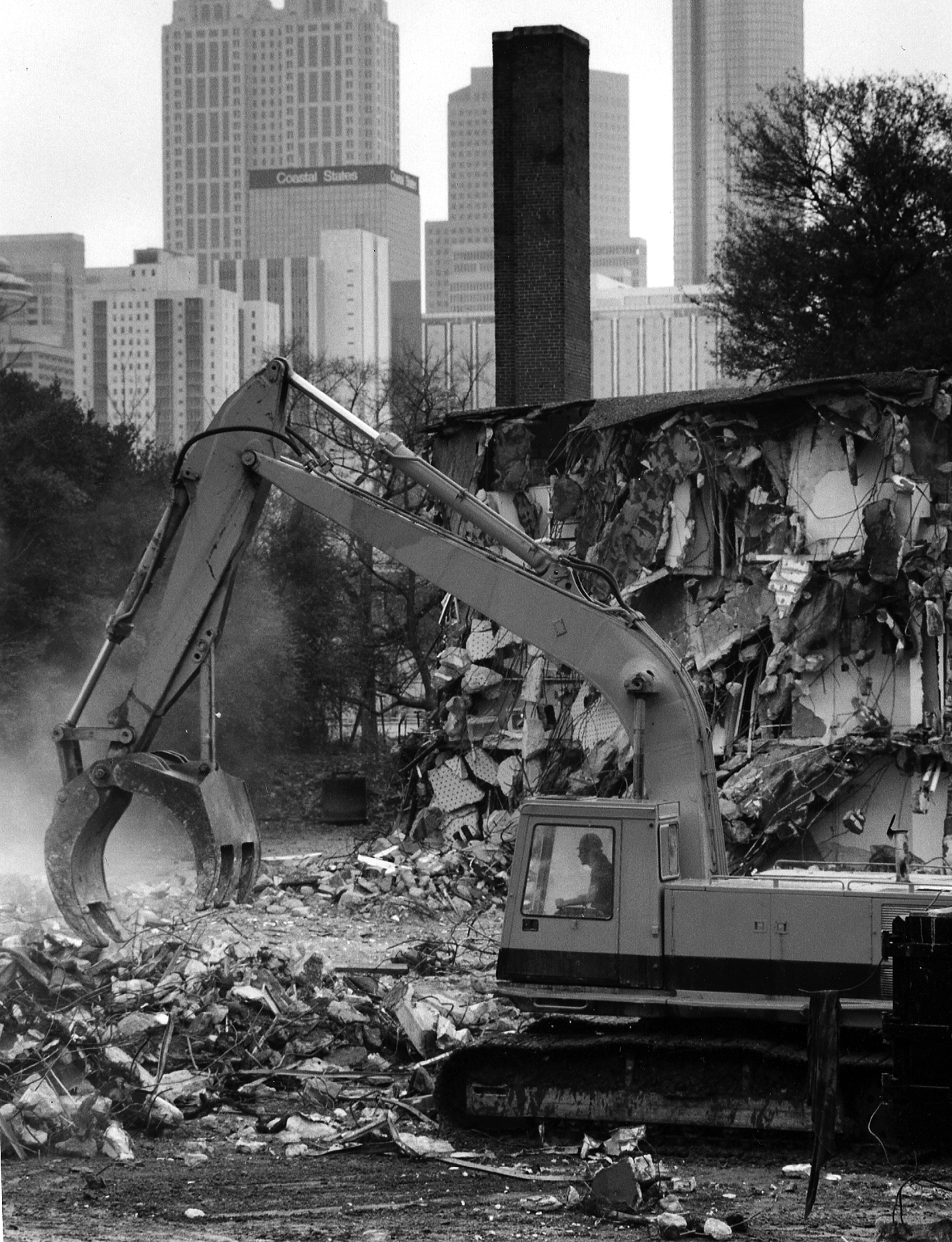
While Summerhill residents try to make the best of the Olympics, residents of Techwood homes were evicted to make way for the Olympic Athletes village.
Associated Press/Rich Addicks
When Atlanta was selected to host the 1996 summer games, local officials promised new money and visibility would follow. It did—but only for a lucky few.
Today, Centennial Olympic Park is one of the few remaining structures from the 1996 Atlanta games.
sporadic
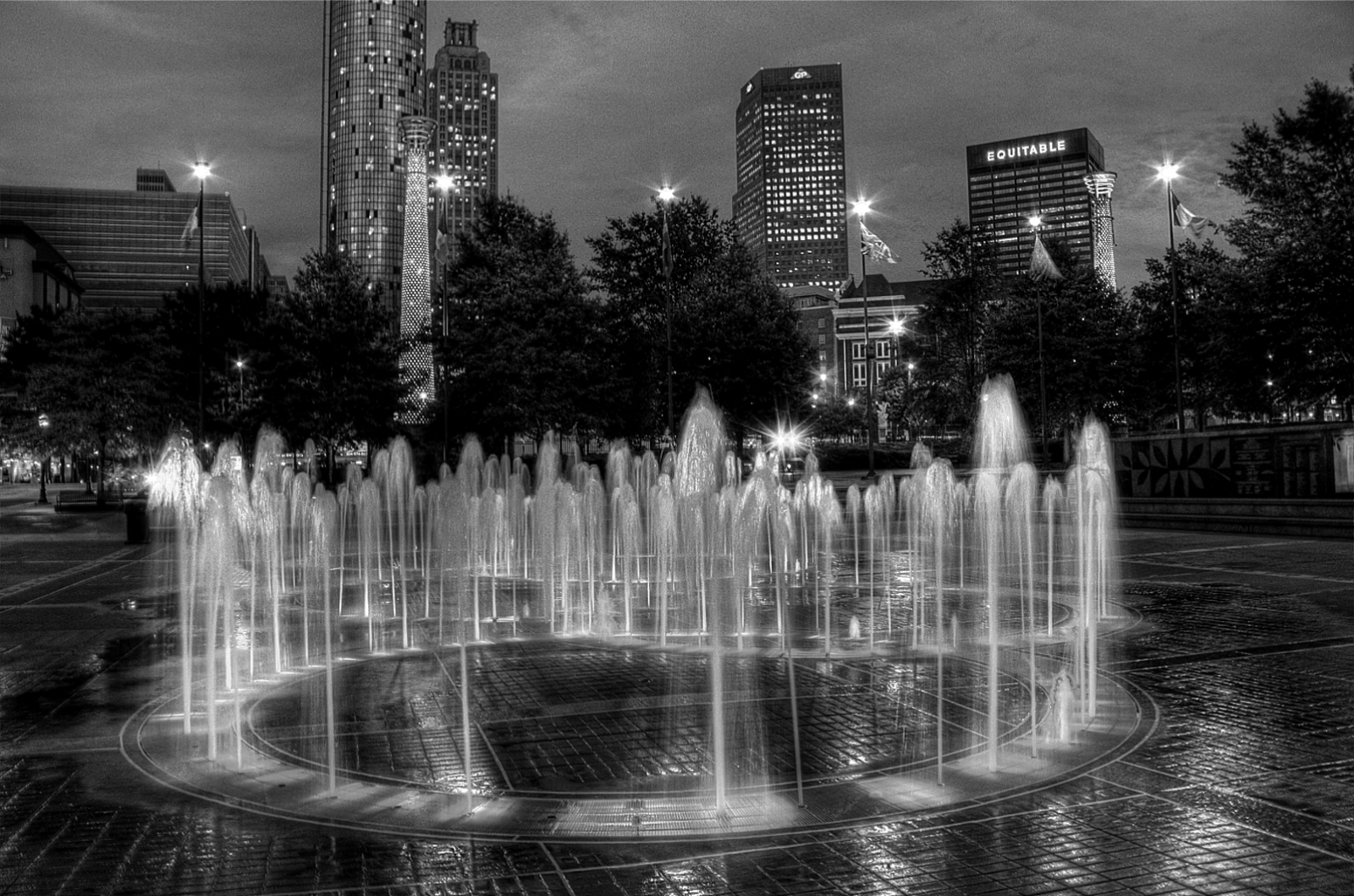
The Olympic rings tower above Atlanta’s Capital Avenue, the downtown skyline draped behind them like a gateway to the city. The five iconic interlaced rings, visually synonymous with the Olympic Games, represent the “union of the five continents and the meeting of athletes from throughout the world,” according to the Olympic Charter. Nearby, there are other artifacts of the 1996 Olympics.
Just blocks away, low-income, African American neighborhoods have been ravaged by disinvestment, abandonment, and desolation. One of these is Summerhill, located next to Turner Field (formerly the Olympic Stadium). Summerhill has long been a casualty of the city’s urban renewal and development initiatives. Once a community with over 16,000 residents, its population shrunk to 2,500 by the middle of the 1990s, thanks to the construction of the Atlanta-Fulton County Stadium in the 1960s, the I-75/85 downtown corridor in the ‘80s, and the Olympic Stadium in the ‘90s. All three displaced many residents.
There’s also the country’s oldest housing project, Techwood and Clark Howell Homes, which once stood in what is now Centennial Olympic Park. Before the Games, it had been a point of contention for decades, symbolizing inner-city pathologies: extreme poverty, drugs, and violent crime. Some of the city’s most prominent corporations, including Coca-Cola, had lobbied for the projects’ demolition and, when Atlanta won the Olympic bid, they got their wish: 894 low-income houses were destroyed.
Today, one of the few remaining images of the Olympics—a mural of a woman running with an Olympic torch—graces an abandoned building in Mechanicsville, another of Atlanta’s oldest neighborhoods. Places like Mechanicsville, bordering the once-bustling Olympic center, experienced the greatest degree of displacement when the Games came to town. Stadium construction resulted in the decimation or abandonment of blocks of churches, apartment buildings, and commercial properties, according to a study by University of Utah political scientist Matthew J. Burbank and his colleagues.
Especially for first-time hosts, the Olympics represents a kind of larger-than-life, sports-themed coming out party. In the mid-90s, Atlantans believed the Games would mark their city’s entrance onto the global stage. “The goal of Olympism,” according to the Olympic Charter, is to “place sport at the service of the harmonious development of humankind” and promote “a peaceful society concerned with the preservation of human dignity.” City leaders promised there would be enormous benefits to the community as it played host to international athletes and spectators.
Some of the city’s most prominent corporations, including Coca-Cola, had lobbied for the demolition of the housing project. Once Atlanta won the Olympic bid, they got their wish.
But local officials also used the Games to implement an agenda that ultimately changed the city’s political structure and increased inequality. In addition to displacing many residents, officials attempted to “clean up” Atlanta, issuing thousands of citations to homeless people. Developers turned to cheap, non-unionized, and sometimes illegal labor to build many of the sites needed to support such a massive enterprise.
Host cities around the world go to great lengths to prepare before the Olympics show them on the world stage, but the very things leaders in these cities want—international attention and restructuring to attract investment—lead them to disregard the needs of their most marginalized citizens. Blending capitalism and politics, mega-events like the Olympics promise an influx of capital and opportunities to advance pro-growth political agendas. And they do provide business and political elites in host cities and countries with an international stage and the possibility to consolidate power and effect quick change. But in the process, these spectacles and the infrastructure they require reinforce and exacerbate urban inequalities.
From MLK to Ayn Rand
Over twenty years ago, the Atlanta Olympic Committee (AOC) began its bid to bring the Olympics to Atlanta. By hosting the Olympics, the AOC and its supporters believed Atlanta could reinvent itself as an international city of global investment and job creation. Like many city groups bidding to become hosts, they saw the Games as a vehicle for placing the growing city on the global map and as an opportunity to initiate urban growth and renewal projects.
In their application to the International Olympic Committee (the IOC), the AOC invoked the civil rights movement, describing Atlanta as the “birth place of the modern human rights movement.” Appealing to the Olympic organization’s humanist-influenced principles and the city’s largely African American community members, the application worked to carefully identify Atlanta with the spirit of human rights, anticipating that rewards would be “fairly and equitably apportioned among all of the citizens of our community.” Deploying the human rights theme was successful: Atlanta, capital of the “New South,” was selected as the host city for the 1996 Games.
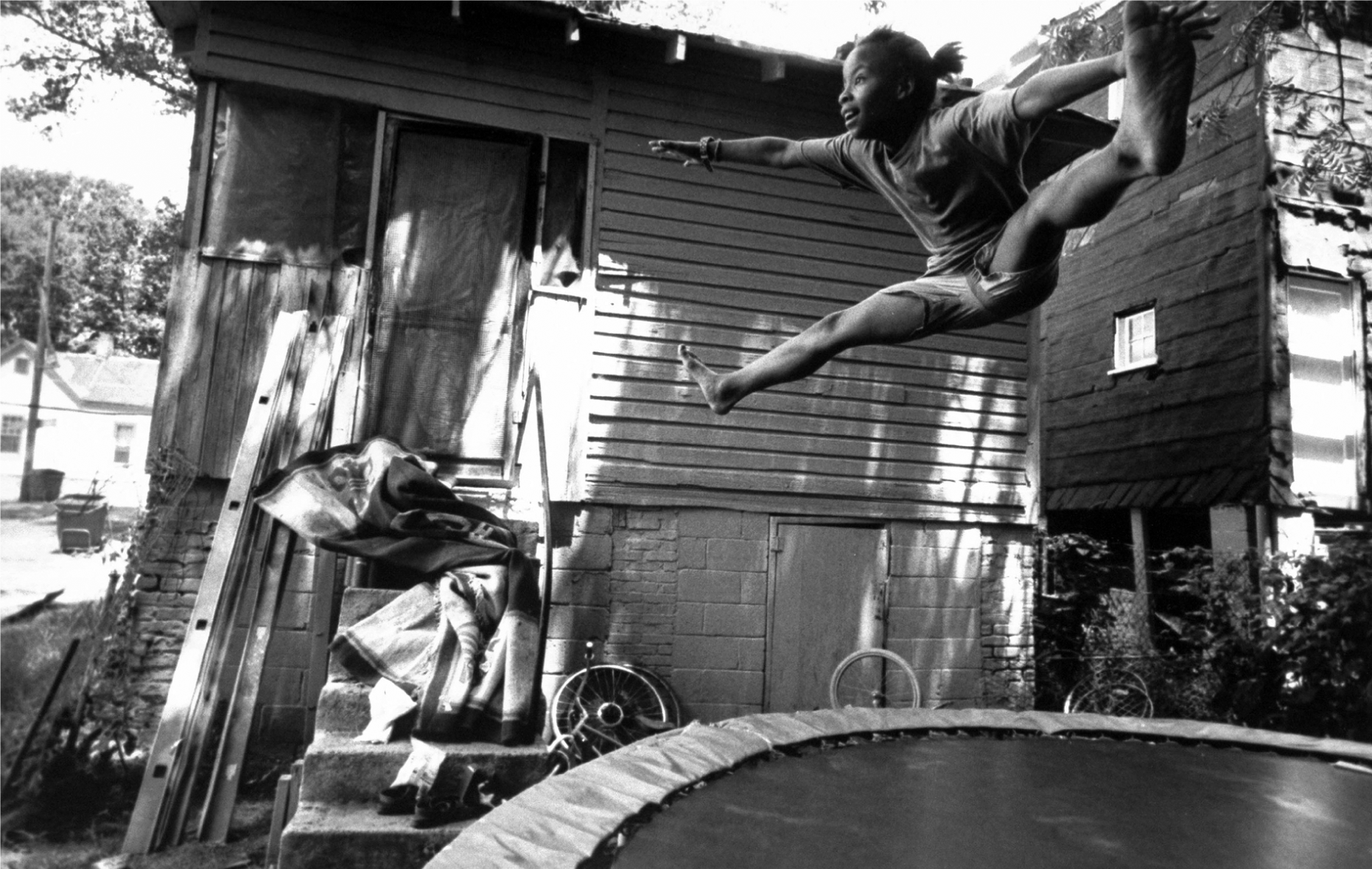
A young girl practices gymnastics in the shadow of the Atlanta Olympics.
Lynn Johnson
After securing the Games, AOC became the ACOG—Atlanta Centennial Olympic Games—and began its preparatory plans. Almost overnight, the organization abandoned its human rights rhetoric, revealing that it never intended to produce an Olympics that would be “fairly and equitably apportioned” in relation to the surrounding community. Instead, its goal was to produce a corporate-sponsored games funded primarily by the private sector. Privatization trumped local leaders’ efforts to use the games to address social inequality.
Increasingly insular, ACOG engaged like-minded local officials to help grease the wheels inside the state capitol and in city hall. Andrew Young, the former Atlanta Mayor turned United Nations Ambassador, was ACOG’s primary political ally, and he opposed then Mayor Jackson’s plans to use the Games to lift up inner-city and Olympic Ring neighborhoods. Under Young’s guidance, ACOG refused to fund public projects designed to improve conditions for local residents, despite reaping tremendous economic and political benefits from them.
Now motivated by attracting businesses and a new class of people to the central city (all the better to show off to the world), urban restructuring projects focused only on developing the infrastructure of business districts in and around proposed Olympic sites. When the Atlanta Housing Authority razed over 1,000 public housing units located near prominent downtown institutions like Coca-Cola’s headquarters and the Georgia Institute of Technology, thousands of low-income, African-Americans, often elderly or women with children, were evicted.
Host cities around the world go to great lengths to prepare for the Olympic world stage, but the very things they want most lead them to disregard the needs of their most marginalized citizens.
In an ironic twist, Young, a former civil rights activist and friend of the late Dr. Martin Luther King Jr., saw the Summer Games as “not a welfare program,” but “a business venture.” After appropriating and commodifying the human rights struggles that inspired the civil rights movement, ACOG did little to transform Atlanta into a modern “human rights capital”—quite the opposite, in fact. And it was not alone.
Displacing Locals
The United Nations mandates that all people have a right to adequate housing. This includes freedom from forced eviction, arbitrary destruction, and the demolition of one’s home. Yet the Center on Housing Rights and Evictions (COHRE), an international housing rights organization, has reported that over the past 20 years, Olympic construction has displaced over two million people, disproportionately the homeless, women, and racial and ethnic minorities.
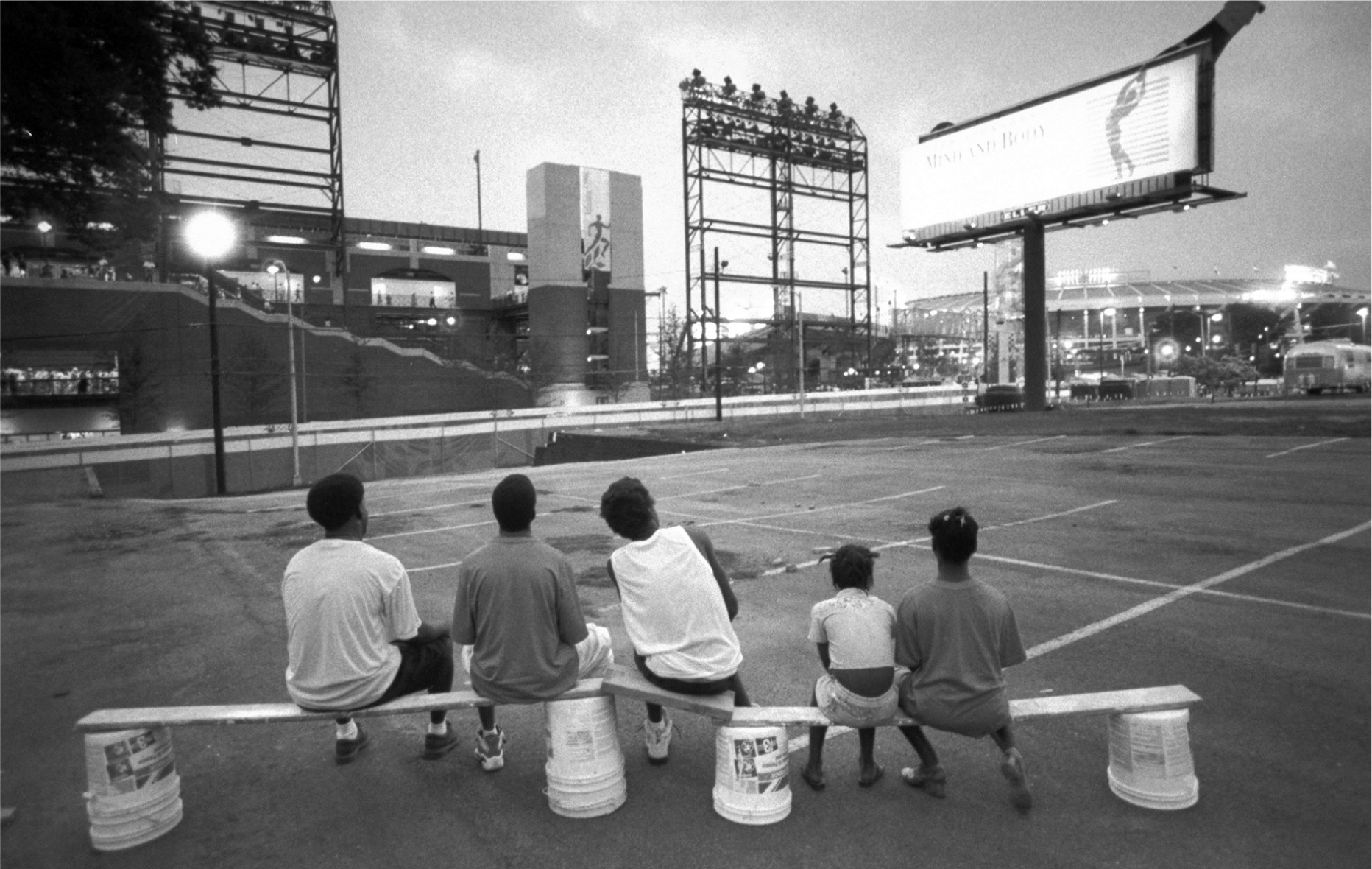
The residents of Summerhill, an impoverished community just south of the Atlanta Olympic stadiums, settle in to watch the games from afar.
Lynn Johnson
Olympic Ghosts
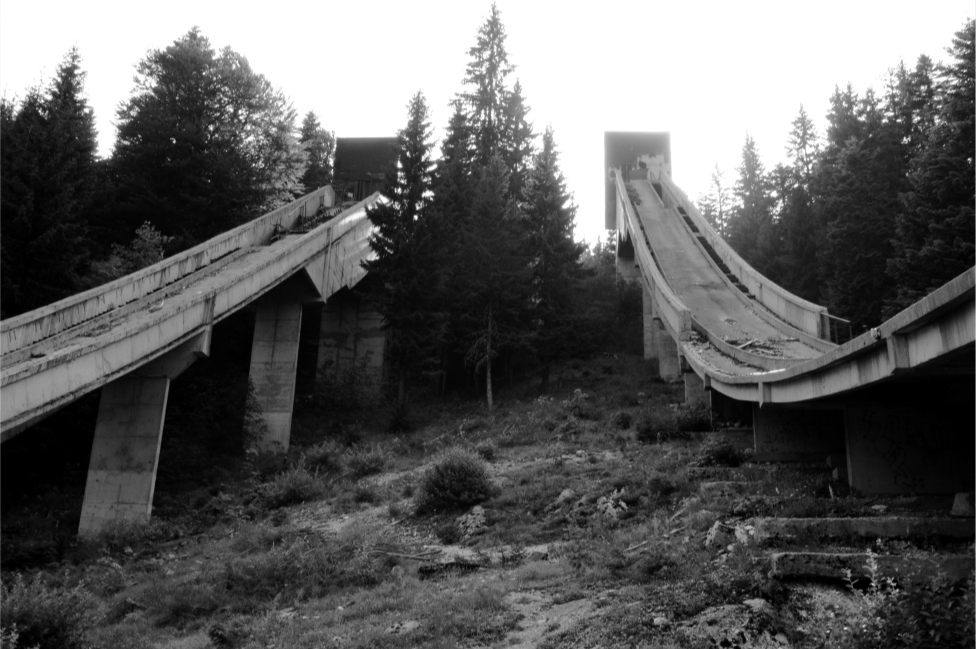
The skeletal remains of the ski jumps from the 1984 Sarajevo games, in the former Yugoslavia
Karen Barlow
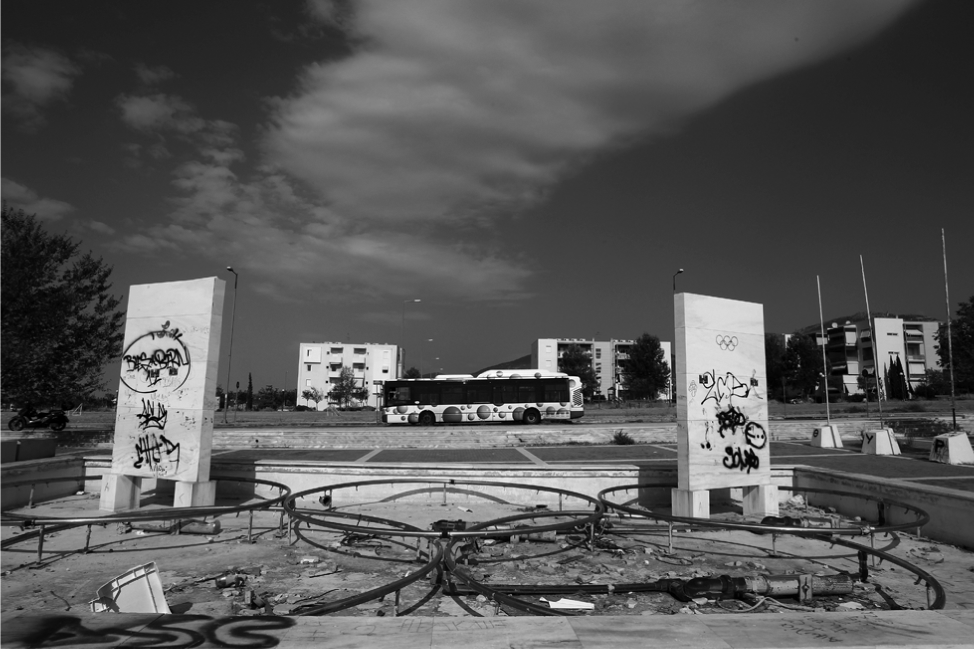
The 2004 Olympic Village fountain covered with graffiti and trash, Athens, Greece.
Thanassis Stavrakis/AP/Corbis
According to COHRE, officials in Seoul forcibly evicted 725,000 people from their homes in preparation for the 1988 Games and Beijing displaced about 1.25 million for Olympic preparations in 2008. Even in host cities where there were no forced evictions, such as Barcelona in 1992, skyrocketing rental costs displaced disadvantaged residents when neighborhoods nearly priced-out existing residents. A London newspaper reported that migrant workers lived in cramped, squalid trailers while laboring to prepare the city for the Olympic Games in 2012 and were forced to sign a gag order preventing them from publicizing their plight.
Displacement means more than the spatial relocation of communities: it means the loss of a collective sense of place, and the destruction of a culture.
While the International Olympic Committee has generally been silent on issues of social inequality, in 1999 it moved to adopt a plan for sustainable development. Inspired by U.N. Agenda 21—a strategy to promote sustainable development unveiled at the first Earth Summit in Rio de Janeiro over 20 years ago—the IOC now expressly sought to “improve human habitats and settlements.” It failed to directly address the preservation of human dignity in its host communities.
The Olympic Movement, as this effort was known, reviewed the games’ environmental impact on different cities from 1998 through 2008. The official report is laudatory, touting the proliferation of “green” initiatives. A review of the 2008 Beijing Games, for example, affirms the city’s adoption of recycling services, its construction of “green belts,” and its promotion of green consumerism. There is no mention of the one million people forcibly removed from their homes. They are awfully unlikely to be indulging in green lifestyles, jogging along the belt on their way to Starbucks for a latte. China’s human rights violations are also glaringly absent from the report.
The Olympic Charter, which codifies the Olympic Movement’s fundamental principles, states that the Olympic Movement must serve the people through sport, and that any failure to do so constitutes a failure to enact IOC goals. The Olympic Movement seeks to improve human habitats and settlements. But by not targeting the poorest members of the community, it fails to address human rights abuses and socioeconomic problems in host cities.
The U.N. and other international human rights organizations suggested that the IOC implement comprehensive housing reform in host cities, targeting marginalized communities. While such efforts are gaining some traction, there have been accounts of human rights violations during the most recent Games in London. In 2011, Human Rights Watch documented forced evictions, labor abuses, and censorship in the next city to host the Winter Olympics (Sochi, Russia), and eyes are currently fixed on Rio De Janeiro, slated to host the 2016 Summer Games.
Rio and Beyond
The favelas—shanty towns—around Rio De Janeiro, Brazil are rich in indigenous and Afro-Brazilian culture. They’re also home to some of the nation’s most marginalized citizens. Some of these towns have been granted UNESCO World Heritage status, but many are scheduled for demolition in preparation for the 2016 Games. Local officials claim the favela housing is dangerous and uninhabitable, and that it should be demolished.
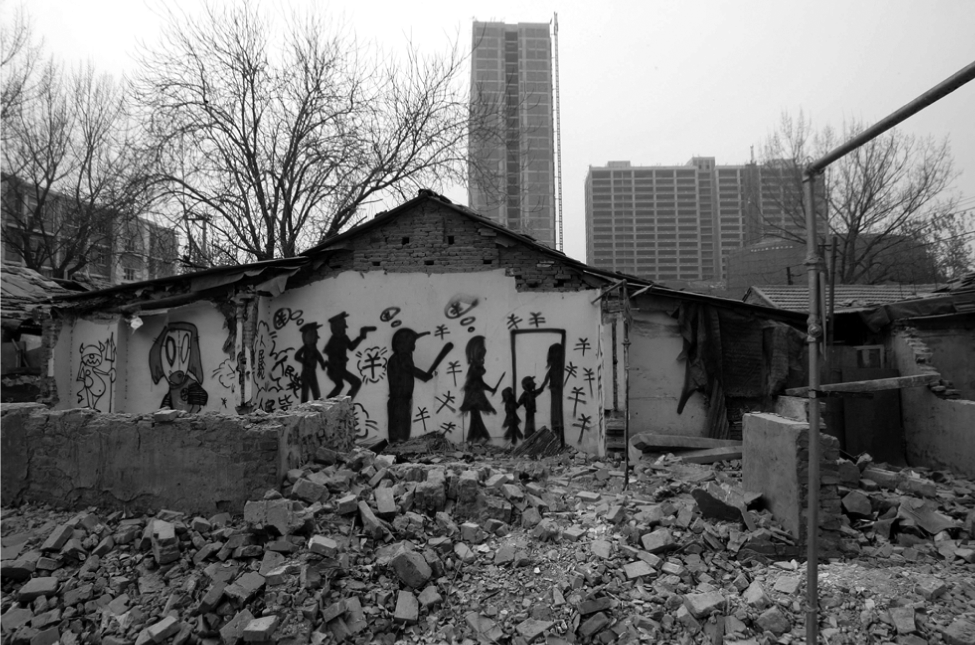
A home demolished to make room for the 2008 Beijing Olympics, China. The graffiti depicts two policemen escorting a family out of their home.
Associated Press/Elizabeth Dalziel
Indigenous squatters protest eviction on the future site of the 2016 Rio de Janeiro Games, Brazil.
Associated Press/Felipe Dana
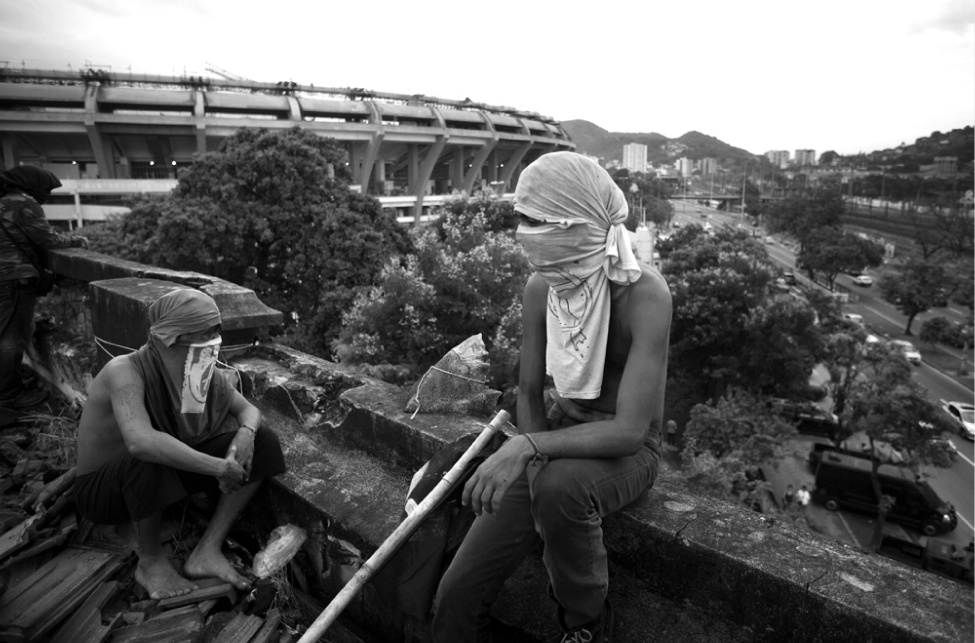
To these officials, the favelas are eyesores, obstacles to profitable development and progress. But to the residents of Vila Autodromo and other favelas slated for removal, these are neighborhoods, often built by residents themselves, that symbolize independence and self-sufficiency.
Displacement means more than the spatial relocation of communities: it means the loss of a collective sense of place and the destruction of a culture. Columbia University research psychiatrist Mindy Fullilove refers to these intangible elements of a community as “collective assets” which comprise a kind of social capital accumulated over time. Research consistently demonstrates how important such social ties are for resource-poor communities, particularly for families with children and the elderly. Once displaced, the elderly, some of whom have lived their entire lives in one community, report feeling isolated. Destroying these communities means destroying informal social safety nets. For those who have built homes with their own hands, attachment to place tends to be particularly strong. Unrecognized and excluded from officials’ calculations, the loss of these collective assets means diminished social networks and resources. They figure hardly at all in the official cost/benefit analyses conducted by government elites and eager host city aspirants.
The Olympic Charter seeks to place “sport at the service of humanity,” celebrating sport while bringing together citizens of the world. But if the 1996 Summer Olympic Games in Atlanta is any indication, Olympism is in crisis. Officials there used the Olympic spirit to hide their own political agendas, which championed pro-growth urban policies at the expense of marginalized communities. In other host communities around the world, a neoliberal compact between government officials and the IOC has led to increased social inequality. If social justice groups challenged the Committee to live up to its ideals, some suggest, the Olympics could become a force for progressive change. The IOC could truly celebrate the world by prioritizing people over profit.