




Abstract
Scholar Michele Tracy Berger examines the transformational role of women’s studies in higher education during the last 40 years. Women’s studies with its commitment to interdisciplinarity, and emphasis on scholarship, teaching and activism provides an important model for the academy.
Keywords
How has 40 years of women’s studies challenged and changed higher learning? Characterized by its social justice orientation, and pedagogical commitments, women’s studies emerged as a radical inquiry into how disciplinary knowledge misrepresented, distorted and ignored women’s experiences. Women’s studies programs have pushed the academy to operate in a more inclusive and democratic fashion and have encouraged educators to call attention to the false divides between scholarship, teaching and activism.
Practitioners of women’s studies have also worked as allies in supporting the growth of student services on college campuses and universities including centers of diversity and multicultural affiairs, LGBTQ offices, and women’s centers, with significant positive impact on the overall quality of contemporary student life.
And as an interdisciplinary project, women’s studies has also had to master the art of navigating around and through rigid academic institutional structures that have sometimes been hostile to new modes of inquiry.
Institutionalizing a Movement
Four decades ago it wasn’t clear if or how women’s studies would find a foothold in the world of academe. Discipline-trained scholars advocated a new intellectual approach that increasingly looked outside their area of specialization, requiring both scholarly and teaching dexterity and willingness to learn from and in the margins. The social unrest of the late 1960s and 1970s spilled over into college campuses and universities bringing new types of students (most notably women and people of color) and interests into the classroom. Students wanted to know about subjects such as representations of women in literature, women as political actors, and how women’s bodies were represented in media; subjects that had been historically absent from the traditional college curriculum and that were considered impolite, taboo, or at the margins of mainstream disciplines. With feminism and social justice activism as catalysts in this early phase, women’s studies actively contested the invisibility and inequality affecting women in society and academe.
From its activist beginnings, women’s studies has grown to a respectable field of academic study. It’s no longer “renegade knowledge” or some type of academic interloper. This respectability has also led to increasing program institutionalization. Since the millennium, women’s studies has become one of the fastest growing college majors in the United States, and has a thriving global reach. Women’s studies departments, programs and curricula can be found at over 650 institutions under several different monikers including Women’s and Gender Studies, Women’s, Gender and Sexuality Studies, Feminist Studies, or Gender Studies. Increasingly units describe themselves as “Women’s and Gender Studies.” This naming reflects the historical roots of initial inquiry into “women” as a category of analysis, but also acknowledges recent theoretical moves that grapple with the complexity of gender as embedded and formed by a range of social locations (racial and ethnic identity, social class, citizenship, age, and ability).
A Discipline Under Siege
Although women’s studies, through its teaching, scholarship and feminist activism, has had a far-reaching impact on the modern academy, there is lingering skepticism about its value, and its contribution to a liberal arts education. Since its inception, women’s studies has faced challenges about its legitimacy as a field of study and its ability to produce graduates who will secure employment though demonstrable skills. “What can you do with an interest in women’s studies?” is a frequent question raised by students, parents, the general public, and even some educators. While this is not a new phenomenon, economic downturns, as well as changes in legal and political environments, present ongoing challenges to women’s studies faculty and students alike.
Moreover, political and social attacks on feminism and women’s studies in higher education are cyclical and often reflect broader attacks on women’s growing political power. The last five years have seen increased conservative attacks on women’s studies programs, especially at public universities. Women’s studies faculty, students and alums have often treated these attacks as opportunities to educate the public to the central role that women’s studies plays in higher education.
For instance, last year’s series of misogynist and sexist comments by public officials and invasive proposed state policies affecting women’s reproductive rights, questions of “Where is feminism?” and “Who needs feminism?” created a new moment for the women’s studies community to reconnect to grassroots feminist activists and play a key role in shaping a national dialogue about gender and power.
Interdisciplinarity and Educating for Social Change
Although the pioneers in women’s studies were trained in a discipline, increasingly, women’s studies educators have been trained in some formal way at either the undergraduate or graduate level in women’s studies. If we were to create a fictional composite of a typical women’s studies educator, we would include two characteristics: interdisciplinary training and a commitment to one’s own and her or his students’ activism inside and outside the formal classroom. Our fictional women’s studies educator brings a multidimensional view to her or his work that integrates and values scholarship, teaching and praxis. Our educator views students as partners in the process of gaining knowledge. This educator would design classes to support an active learning style using a collaborative model. In addition to publishing their work in peer-reviewed journals scholarship may be produced in online journals, blogs, letters, op-eds, policy reports, peer-reviewed publications, performances, community action projects, grant applications, consulting, lectures, conference presentations, curriculum transformation projects, field-defining statements, social media, and alliance work. In these ways, our hypothetical women’s studies scholar engages with wider feminist publics.
Working Women Organization Pakistan, 1990

A commitment to interdisciplinarity continues to be a strong marker of women’s studies scholarship. Interdisciplinarity has been a founding goal with the early recognition that no one interpretative framework, methodology or theory in any particular discipline could adequately explain and remedy the question of women and gender. As scholar Diane Lichtenstein notes in Rethinking Women’s and Gender Studies, many early advocates of women’s studies saw themselves as doing “transgressive work.” This work included “calling into question the arbitrary mapping of knowledge of disciplines…in order to devise a new vocabulary as well as new approaches to pedagogy, methodology, epistemology, and institutional structures.”
Women’s studies programs have pushed the academy to operate in a more inclusive and democratic fashion.
Women’s studies has long understood the false divides among the traditional categories of scholarship, teaching, and service. It is founded on the idea that praxis (integration of learning with social justice) and commitment to one’s scholarly work can co-exist. Emphasis on teaching and pedagogy play a key role women’s studies and it reminds the academy that these aspects are reciprocal and generative. Women’s studies educators use feminist analytical tools to reveal and call attention to how disciplines shape power, both symbolically and structurally. Women’s studies commitment to interdisciplinarity has pushed higher education to rethink foundational assumptions about how knowledge is organized and how scholarly work is evaluated.
Center for Women’s Global Leadership, 1994

Transforming Students, The Academy and The World
Another important legacy of women’s studies is the pedagogical emphasis on social engagement. This approach has created a new type of college student—one who is civically engaged, globally competent, self-reflective, interdisciplinarily dexterous and believes that he or she can change the world, and often does.
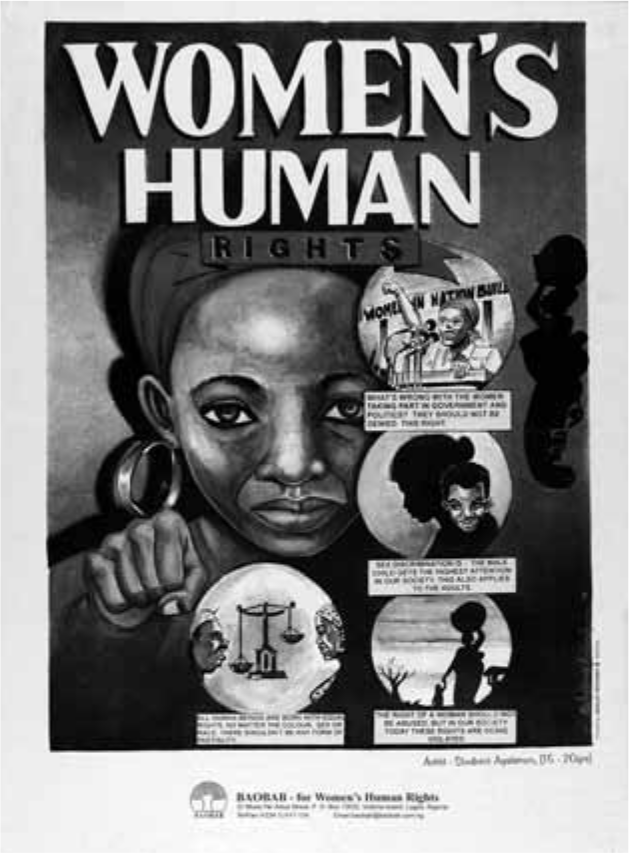
BAOBAB for Women’s Human Rights, 1999
In a 2010 study conducted with my colleague Cheryl Radeloff, we found that over 70 percent of women’s and gender studies students in a survey of over 900 graduates were active in various organizations during their undergraduate career. This high rate of participation suggests that there is an incredible drive for many students in this particular field to connect the theory they learn in women’s and gender studies classes to their private lives and their work in the world. Graduates carry the transformative legacy of women’s and gender studies scholarship into the broader world, where their training, insights and skills reshape relationships, families, organizations and communities.
Although women’s studies, through its teaching, scholarship and feminist activism, has had a far-reaching impact on the modern academy, there is lingering skepticism about its value, and its contribution to a liberal arts education.
Our findings mirror those of other recent studies that suggest that students who have minored or majored in women’s studies: value the idea of “connected learning” (employing a combination of analytical and self-reflexive approaches), gain a sense of empowerment in their everyday lives; develop deep critical thinking skills; understand gender as a social construction; and are articulate about the interconnected nature of oppression. They also view their women’s studies training as distinctive and different than their experience in other types of classes.
Working Women Organization Pakistan, 2001

A two-year Teagle Foundation funded project administered by the National Women’s Studies Association conducted research to take a snapshot of data about women’s studies pedagogies in the undergraduate classroom. They grouped twelve characteristics of civic engagement in the women’s studies classroom into three areas: “activist scholarship,” “modes of inquiry,” and “engaged pedagogies.” The resulting white paper concluded that women’s studies continues to be an untapped resource for higher education on civic engagement due to women’s studies’s curricular innovation and ability to provide students the theoretical and applied training to engage with multiple communities outside of the classroom.
Civil Resource Development and Documentation Centre (CIRDDOC) Nigeria, 1998

Women’s studies students are uniquely self-reflective and invested in their communities and making a positive impact in the world. Instead of a traditional “fix the world” approach to civic engagement, women’s studies asks students to think about their own motivation to “do good” and to understand the historical and cultural specifics of the project they are undertaking, whether that takes the form of working with a South African NGO on domestic workers’ rights, or staffing a rape crisis center hotline. This approach also asks students to critically explore the values and diverse meanings of “the community” or “the good citizen.” A women’s studies approach to civic engagement requires that students interrogate the historical and social underpinnings that create the initial need for their service, as well as reflect on their own assumptions about “helping others.” Thus, women’s studies provide students ways to wrestle with the tensions of theory and practice in civic engagement contexts.
World March of Women, 2000

The Future of Women’s Studies
The academic community would lose much if women’s studies were dismantled, or absorbed back into the disciplines. It is true that many disciplines have taken up questions about women and gender. However, the power of an interdisciplinary analysis comes from a bi-directional engagement inside and outside of the disciplines. Moreover, not all scholars doing work on women and gender in traditional disciplines bring feminist analysis, methodologies or epistemologies explicitly into their work.
All students stand to lose significantly if women’s studies disappears, especially women students. Women make up the majority of students in women’s studies classes, though increasingly more male students are not only enrolled in classes, but become majors. Young college women find that women’s studies prepares them as leaders and provides them with skills for navigating the hidden bias and sexism they face both in their personal and in their professional lives. Women’s studies classes offer opportunities to study issues of power and gender dynamics through a woman-centered learning environment that empowers them to be full and active participants in their learning experience.
Through scholarship, teaching and activism, women’s studies continues to make it known that power, difference, and hierarchy are essential aspects to understanding both local and transnational contexts. Women’s studies as an academic field links to and is a part of on-the-ground movements for feminist and gender equality. These local and global movements provide a context for continued work and social change. The scholarship and ideas developed and taught in women’s studies classrooms inform feminist movement(s) and other social movements, and women’s studies students often participate in feminist actions. This on-the-ground engagement feeds back to questions that scholars pursue.
The benefits of thriving women’s studies programs in higher education include cultivating students who are ready for deep civic engagement, and a vibrant community of scholars that contribute cutting edge knowledge to the most pressing societal problems. A lesson for the academy is that interdisciplinary programs like women’s studies demonstrate that a holistic model does not sacrifice excellence in traditionally valued areas of research and publication.
