Abstract
Photographer Emmanuel Maillard and sociologist Maryann Bylander document the lives of Cambodian migrants in Thailand. Through photographs taken at border crossings, work sites, and living spaces, they highlight the ambivalence many migrants express about their experiences abroad.
The line that separates Cambodia and Thailand, some 800 kilometers long, is more than a national boundary. For the growing numbers of rural Cambodians who cross this line in search of a better life, it signifies opportunity, security, modernity, mobility, promise and status.
Approximately 250,000 Cambodians live and work in Thailand, a number that has increased significantly over the past decade. Most migrate from marginalized rural areas—places where the recent growth of the Cambodian economy has not trickled down to substantively improve the livelihoods of rural and remote populations. Migrants leave for reasons of poverty, joblessness, environmental distress, a desire for mobility, or simply for lack of better options. In many communities, young people come of age with eyes turned towards Thailand, and they encounter strong social pressures to work abroad.
We wanted to understand and portray these ambivalences, showing a realistic and nuanced portrait of migration as it is lived every day.
We are a sociologist who studies the migration patterns between Cambodia and Thailand, and a photographer who has spent four years living in Cambodia. We began this photo project to shed light on the experiences of Cambodians living in Thailand. Migrants are often portrayed as either “heroes of development,” or “vulnerable, exploited workers,” images which obscure an ambivalent reality. As one young Cambodian migrant put it, going to Thailand is “half easy, half difficult; half exciting, half terrible.”
Our work highlights the contradictory views most Cambodian migrants hold about their experiences abroad. They describe migration as “a last resort,” but also “a lucky opportunity”; the “best way to wealth,” but also “the only thing we can do”; a “way to support the family,” but also a “way to be on my own”; an “alternative to boredom,” but also “the chance to live an exciting life”; “the way we become beautiful,” but also a “dangerous risk”; “a demeaning experience,” but also “an easy life.”
We wanted to understand and portray these ambivalences, showing a realistic and nuanced portrait of migration as it is lived every day. To do so we spent time in communities in Thailand where Cambodian men and women form the backbone of the Thai economy as low-skill construction, fishing, agriculture, and service laborers, and we met with Cambodian migrants, Thai employers, and local authorities.
The following images speak to the ambivalence of migrants’ daily life: half joyful and half trying, half empowered and half marginalized, half improved and half wanting.
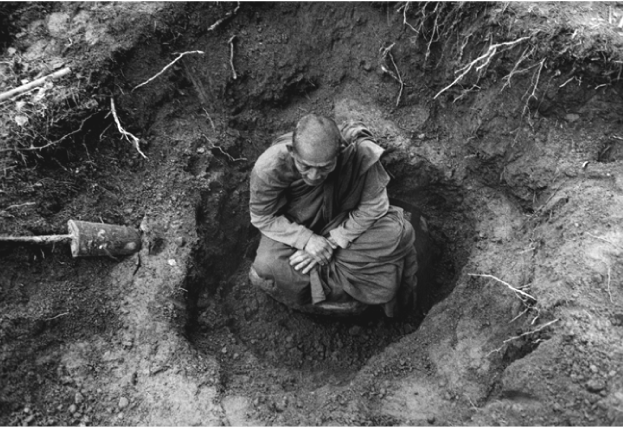
Available online at contexts.org: A separate essay about border crossing looks at Cambodians who left their country decades earlier to flee the Khmer Rouge. In “Digging for Mutual Cooperation” Kody Steffy presents a portrait of elderly Buddhist monk Bak Him, a resettled refugee living in rural Maine. Steffy’s photographs of Bak Him’s arduous labor highlight the refugee community’s ongoing struggle for understanding and integration.
Kody Steffy/Courtesy of the Salt Institute for Documentary Studies
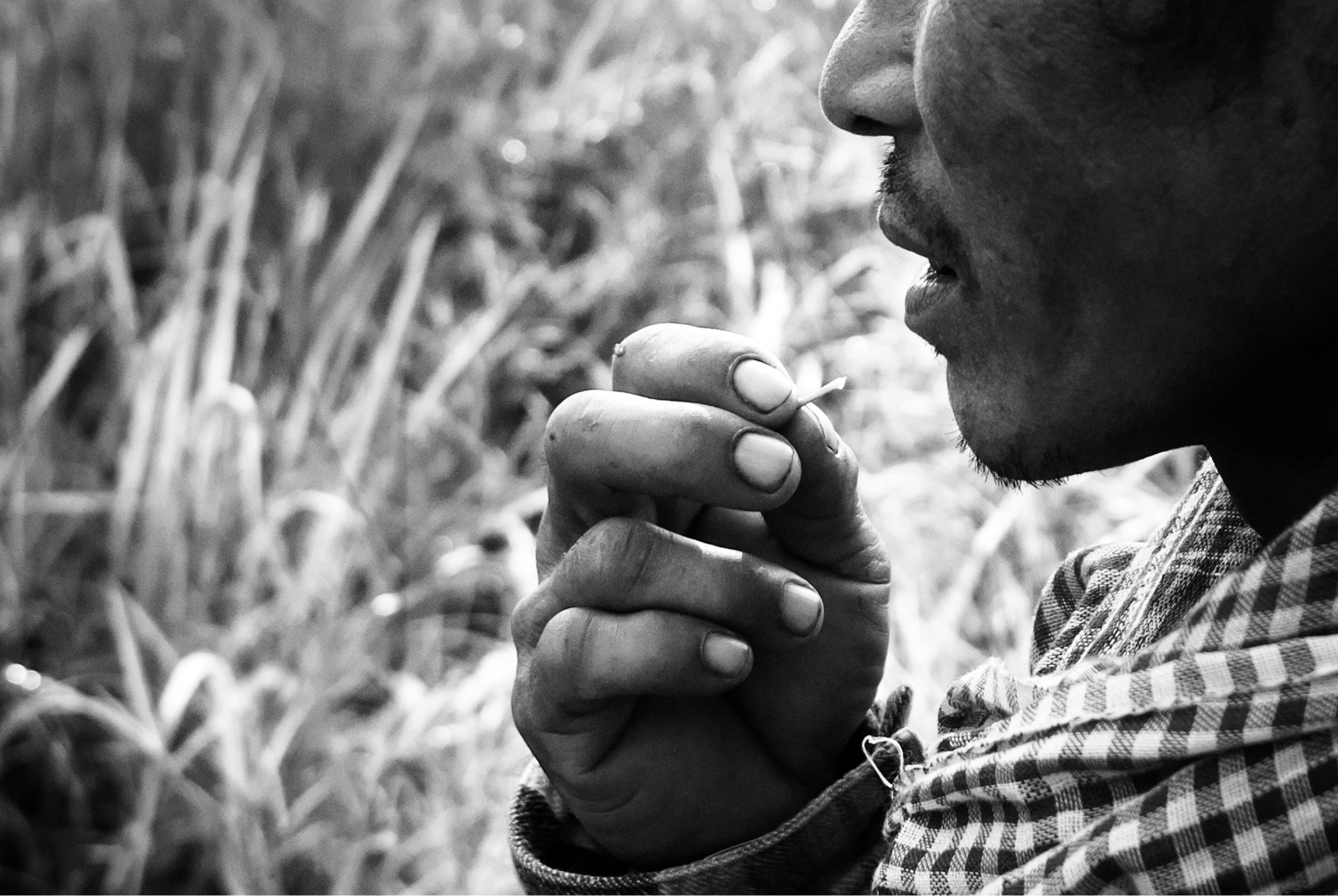
A man waits for negotiations to finish at an informal border crossing. Although many undocumented migrants are led across the border by meekjal (middlemen) who charge fees of up to $100, those who have contacts inside Thailand and know the routes can cross without documents, and with relative ease. At this crossing, individuals pay the equivalent of 75 cents for the right to use a small path to the border that was constructed by families in the area. While these crossings occur regularly, and often in broad daylight, they still provoke anxiety and fear; deportation is common among undocumented migrants. Thailand forcibly returned more than 100,000 undocumented Cambodians in 2011 alone.
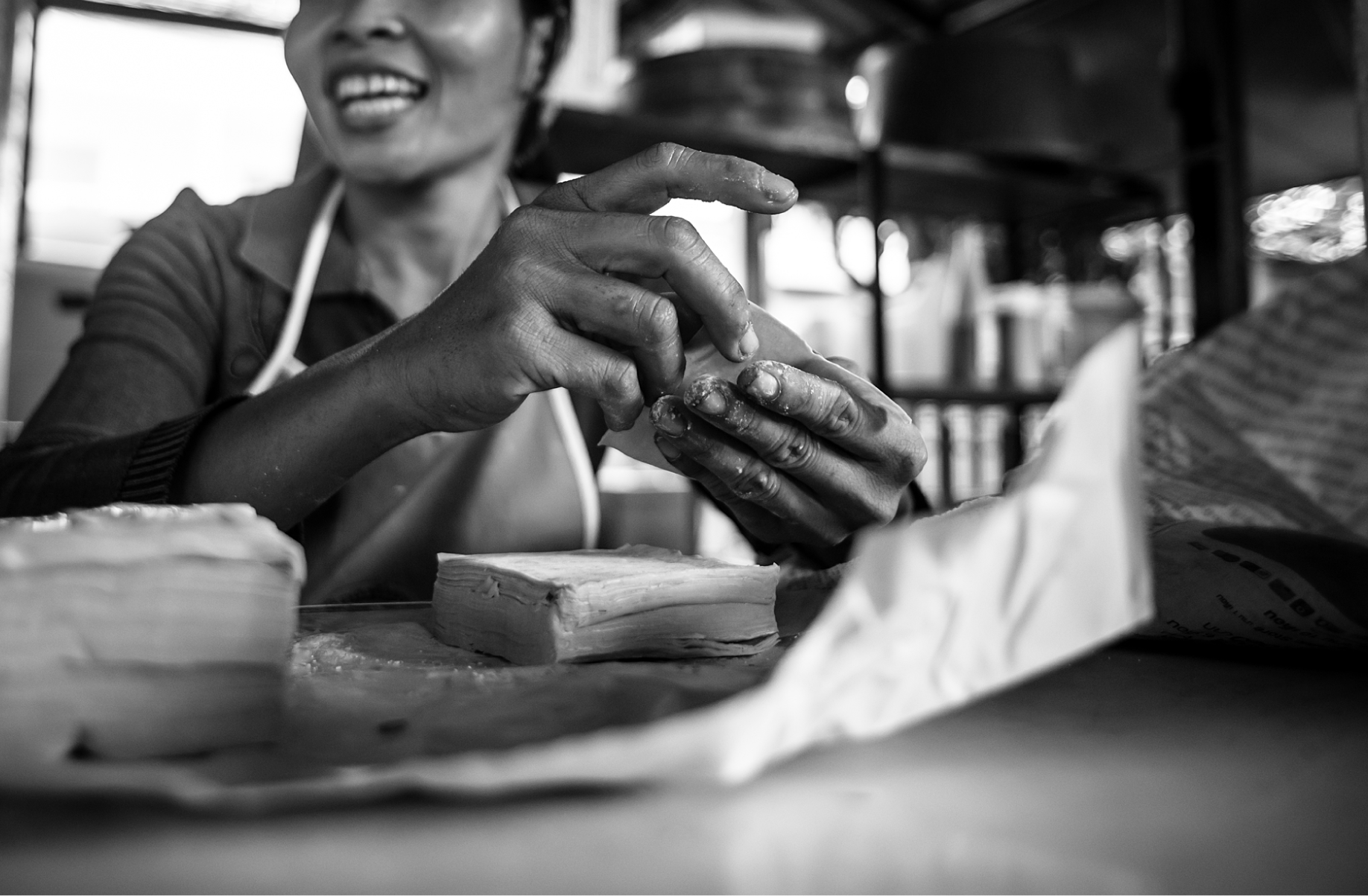
A woman from Takeo province makes wontons at a restaurant in Pattaya. She and her husband recently migrated together to pay for school fees for their teenage children back in Cambodia. They found their jobs through networks of current and returned migrants from their village. Networks are the primary ways migrants find work in Thailand.
Cambodians work predominately in the lowest skill, lowest wage occupations in Thailand. These include working on fishing boats, in fisheries and factories, on construction sites, at pineapple, cassava and potato plantations, in restaurants, and as domestic workers.
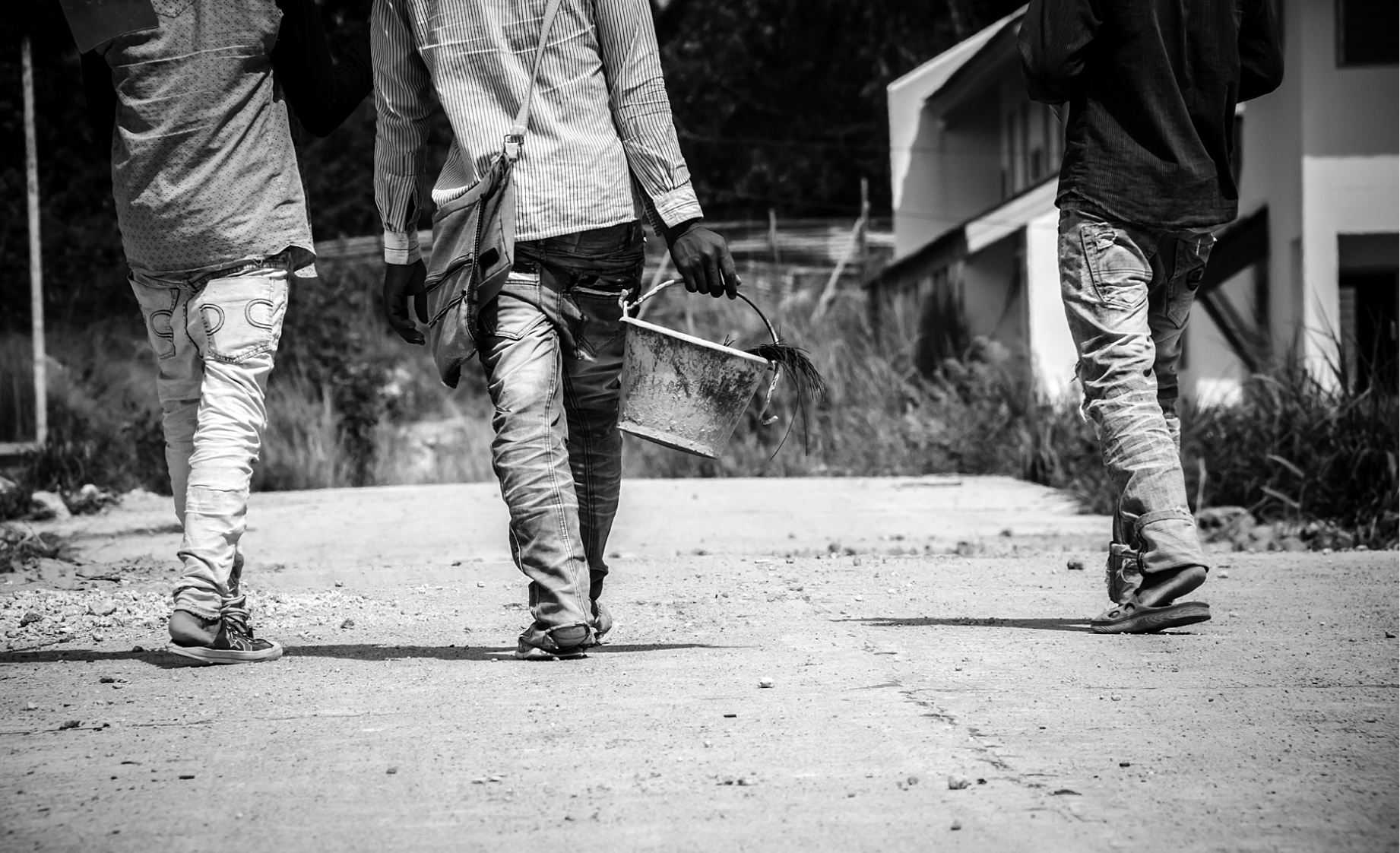
Many migrants work on construction projects. For unskilled manual labor, men are paid between six and seven dollars per day, with skilled tasks paying slightly higher wages. Women typically receive less—an average of four to five dollars per day. Thai managers justify these gender differences on the basis of productivity and the difficulty of tasks assigned.
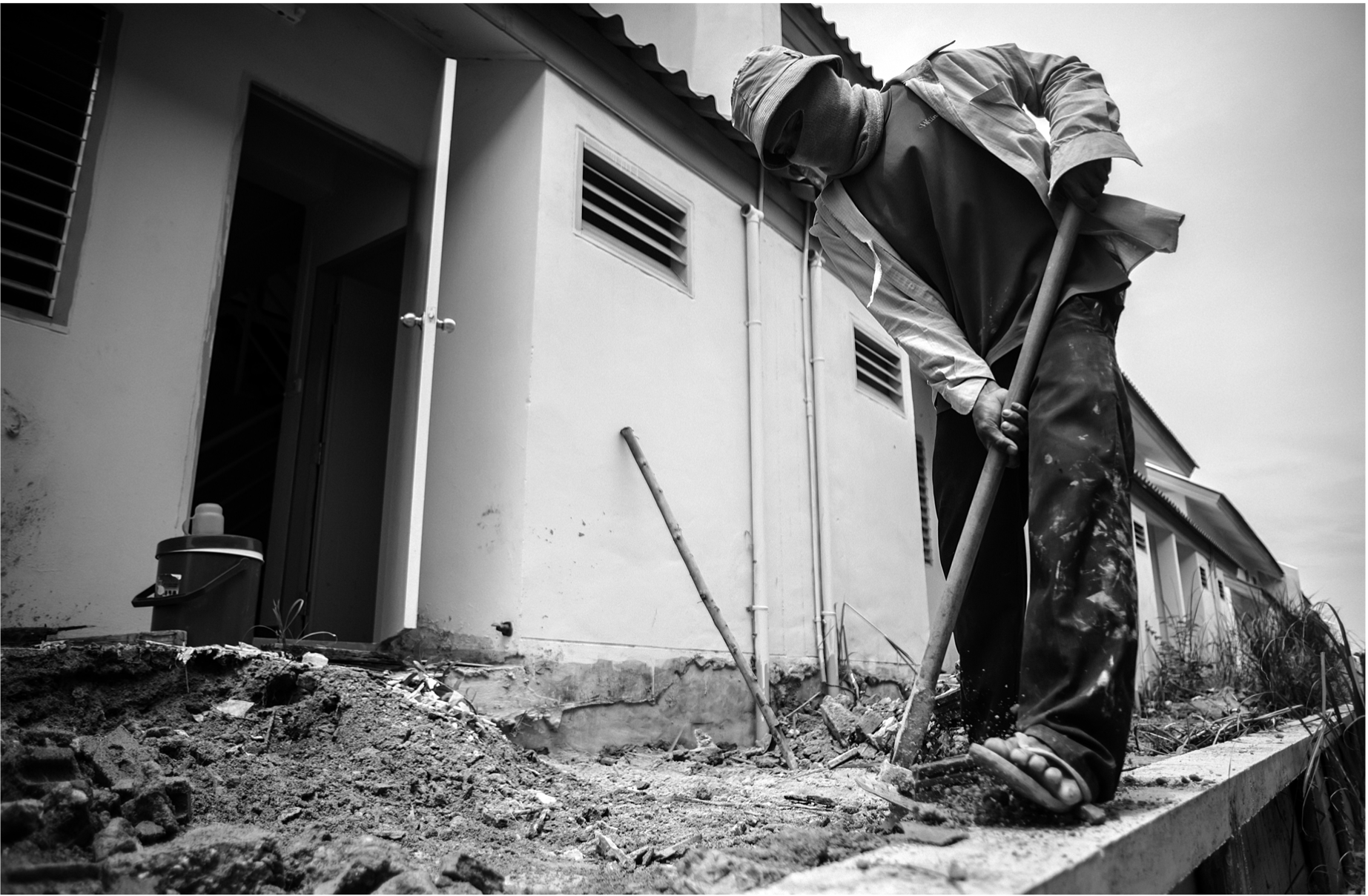
The most precarious and dangerous jobs for Cambodians in Thailand are on fishing boats. The boats at this port go into the Gulf of Thailand for two to three weeks at a time, returning for short breaks. Larger boats are at sea for months at a time or longer. Many of the worst cases of labor trafficking and abuse occur in the fishing sector, among sea workers who cannot escape abusive situations.
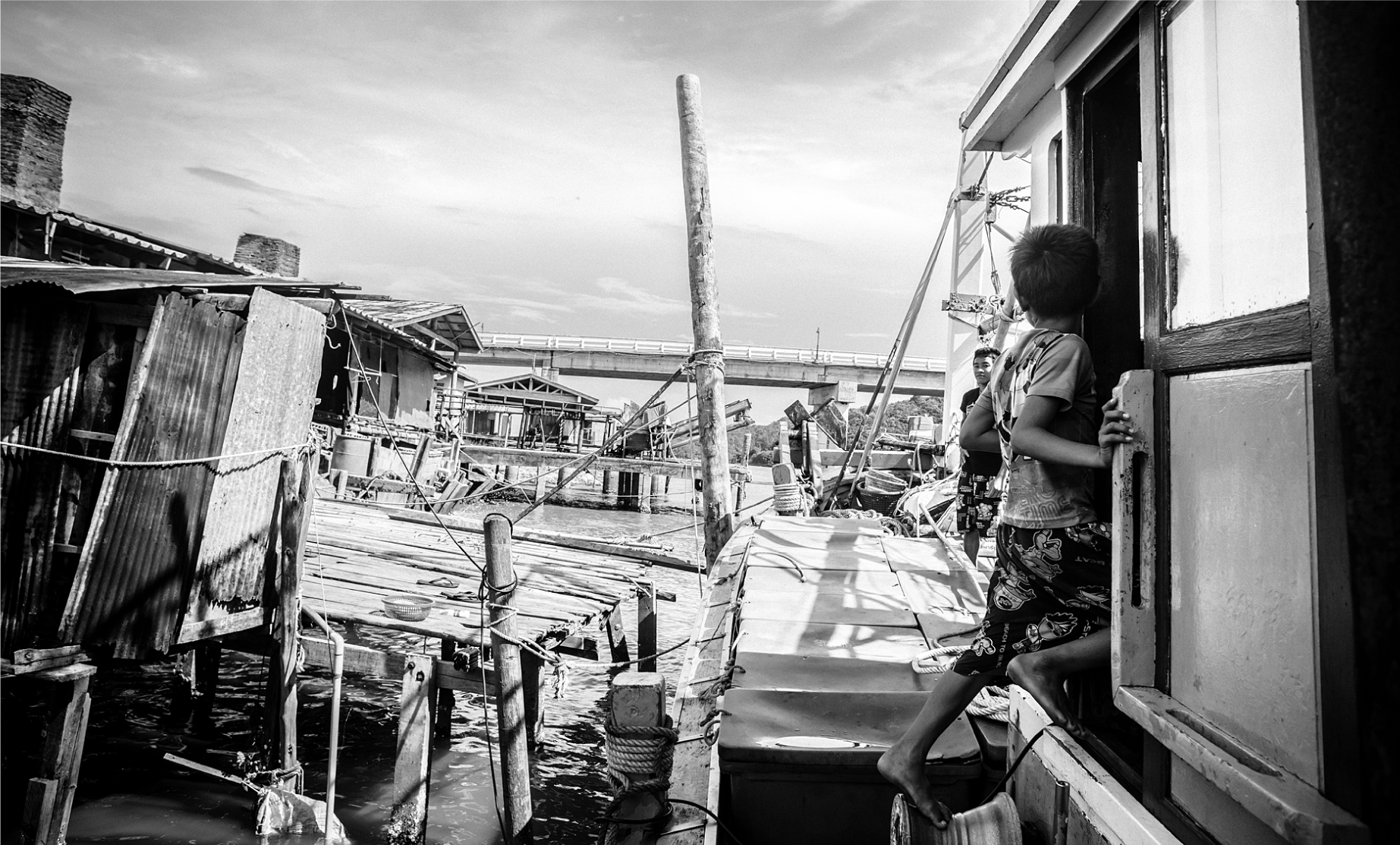
Two young constructions workers pause to read the love letter one recently received from her sweetheart back in Cambodia. Migrant workers complain about being separated from family and loved ones.
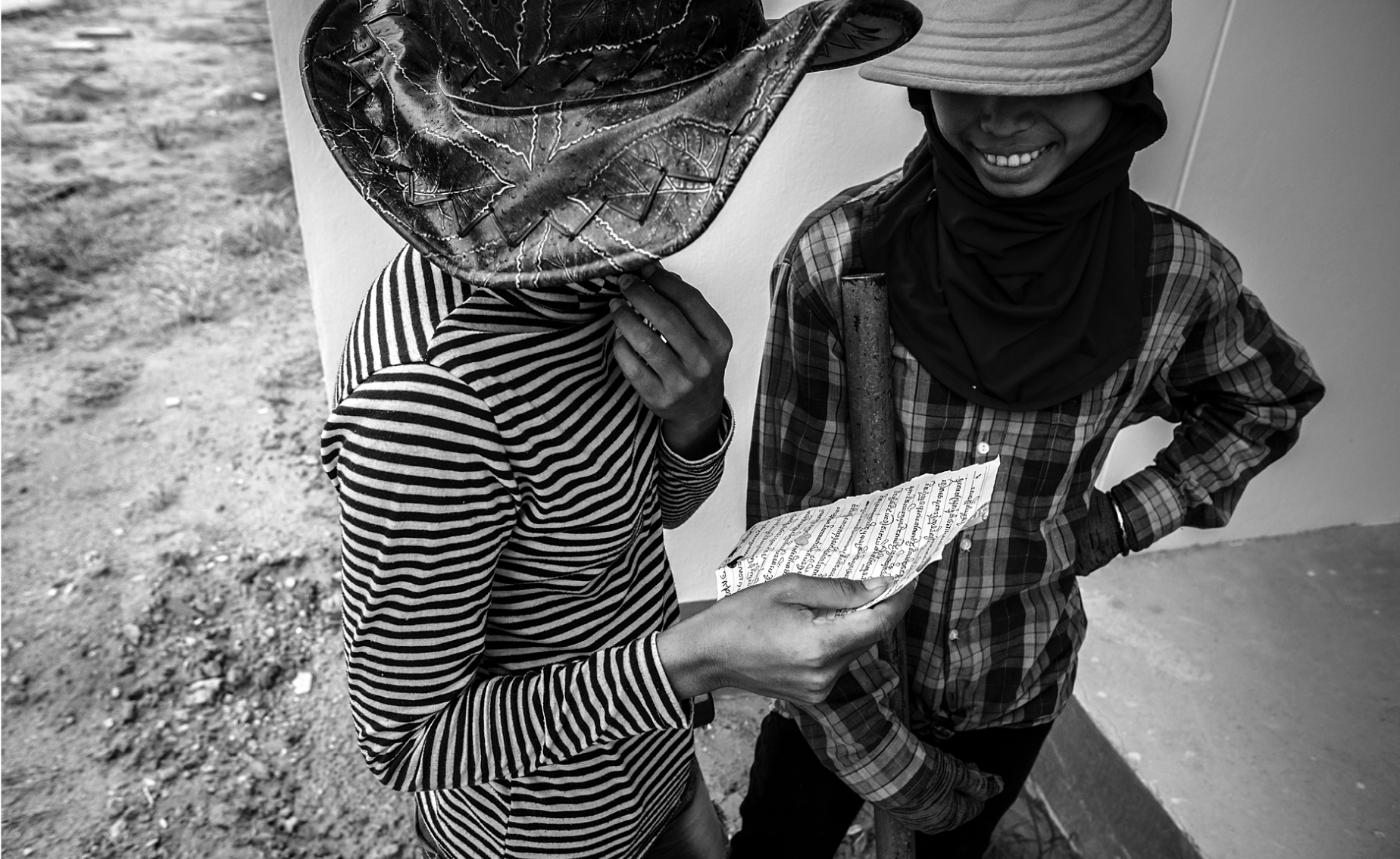
With wage labor, migrants are able to purchase nicer clothing, televisions, high-end cell phones, refrigerators, and other consumer goods. Many also remit money back to family members for the renovation or construction of housing, to repay debts, or to support basic household needs. The potential for increased consumption appeals especially to young people, who associate increased consumption with status, and idealized expressions of masculinity or femininity.
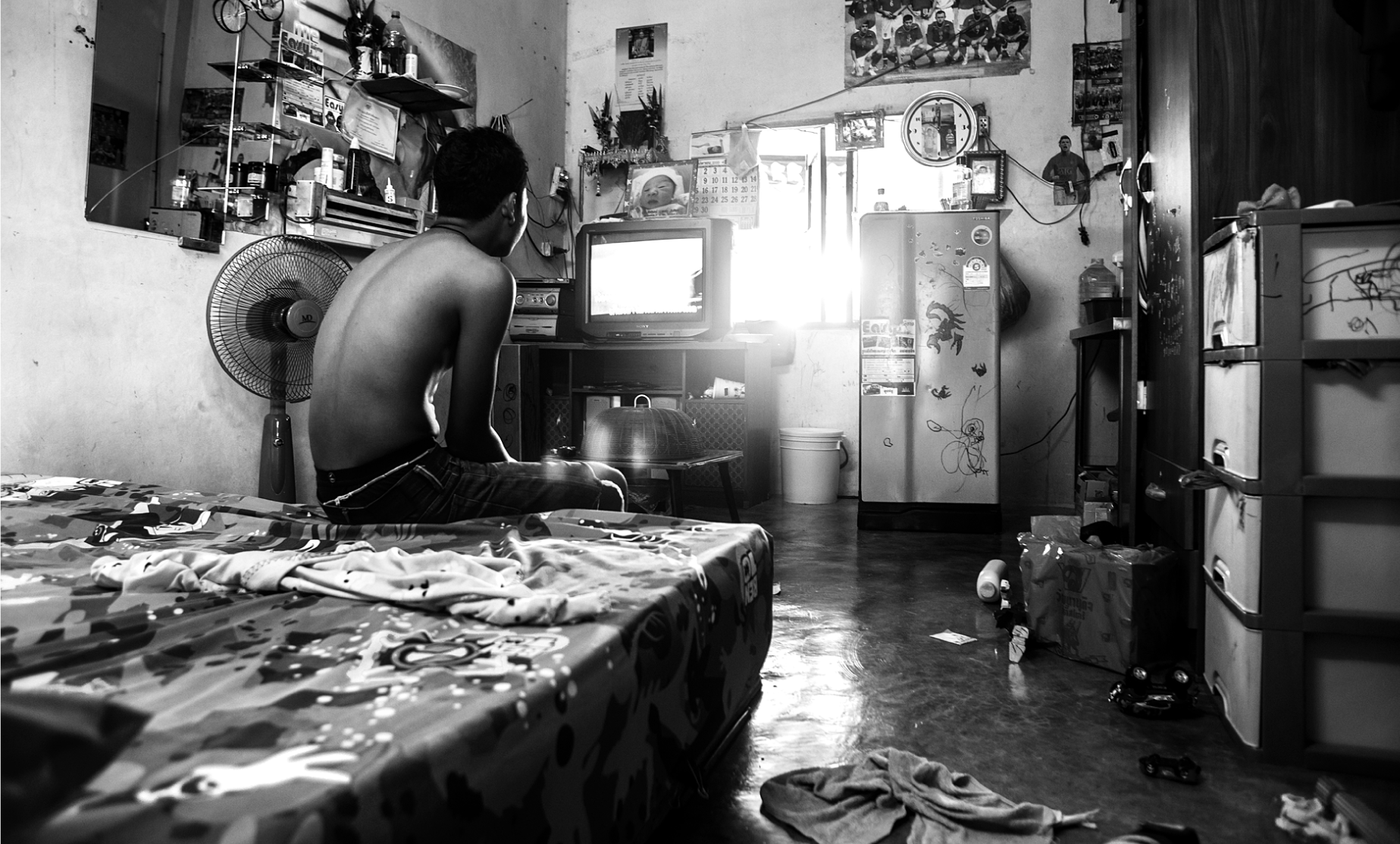
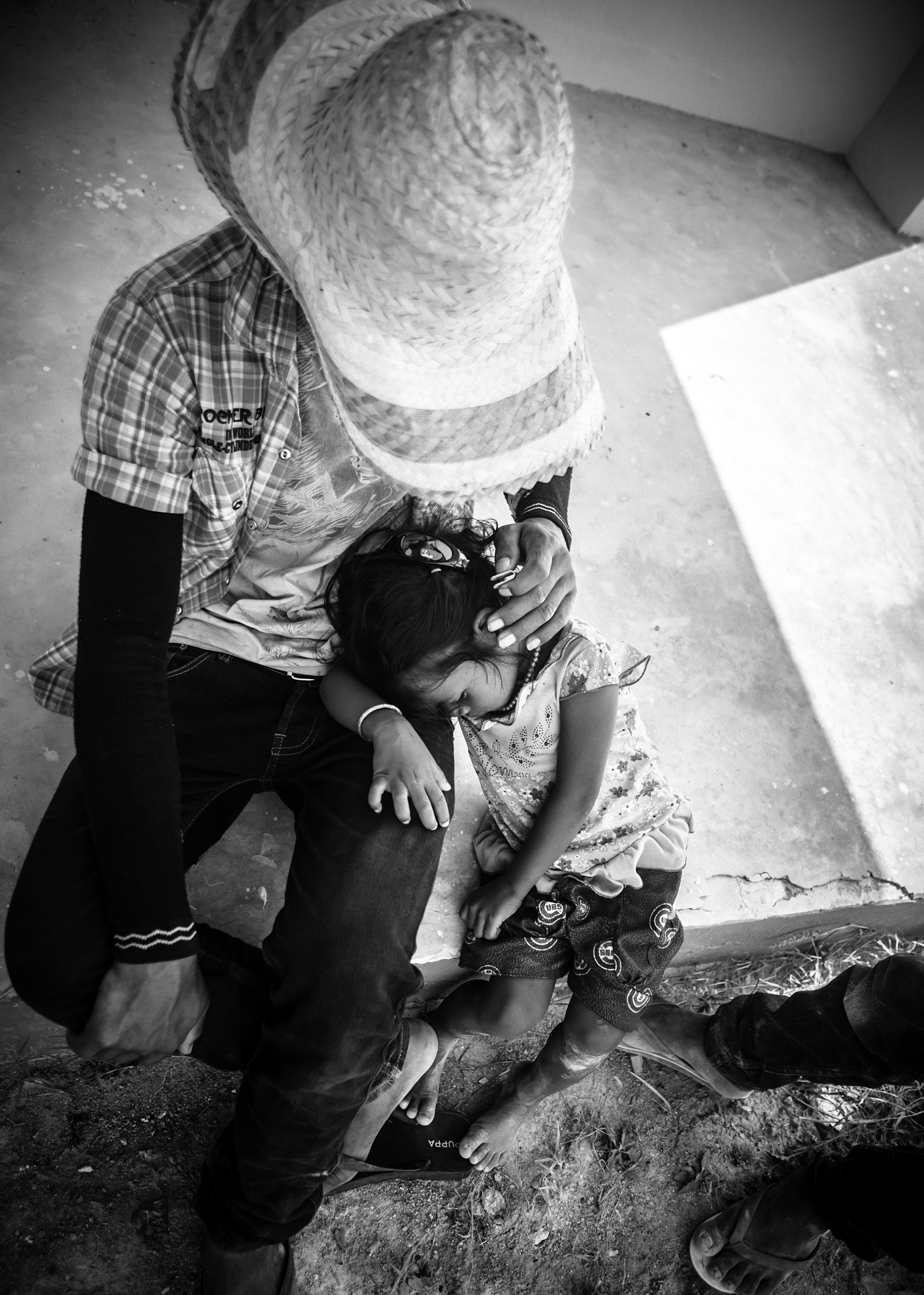
Though it is often assumed that migrants either do not have children, or leave them behind in Cambodia, children are often present at migrant work and living sites. If their parents are registered, children may attend Thai schools for free. Children whose parents are unregistered often spend days informally helping at work sites.
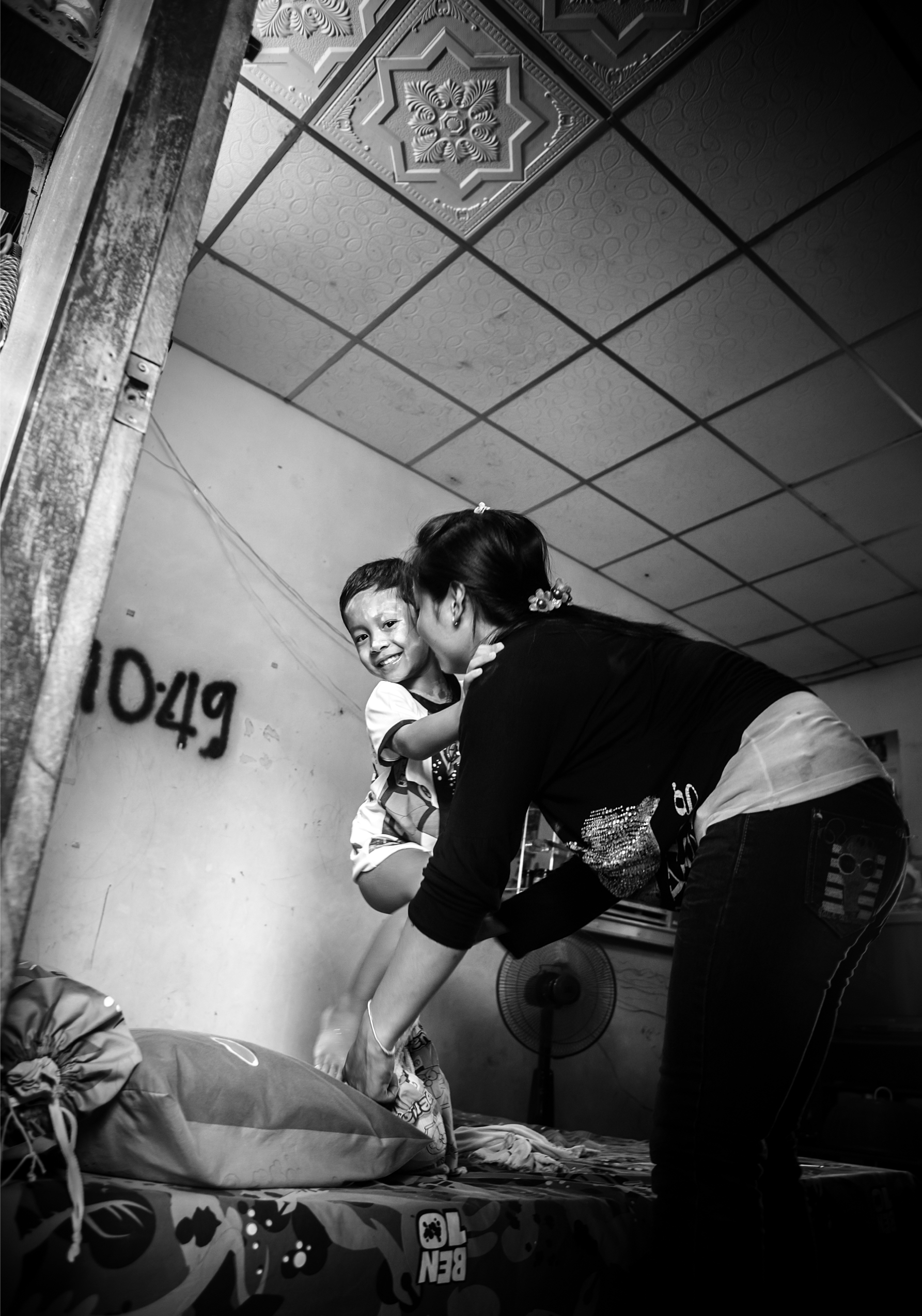
The words “go home” are written in dirt on the windows at a construction site. Nearly all Cambodians in Thailand say they’d prefer to stay in Cambodia if there were adequate jobs in their home communities.

On their day off, young women who work at a fish processing plant use lotions and skin peels to whiten their skin. Paleness or whiteness is associated with beauty in much of Southeast Asia. Young women in Cambodian communities with strong migrant networks often hear about how easy it is to become beautiful in Thailand, where women have the ability to work in the shade, and the money to purchase these kinds of beauty products.
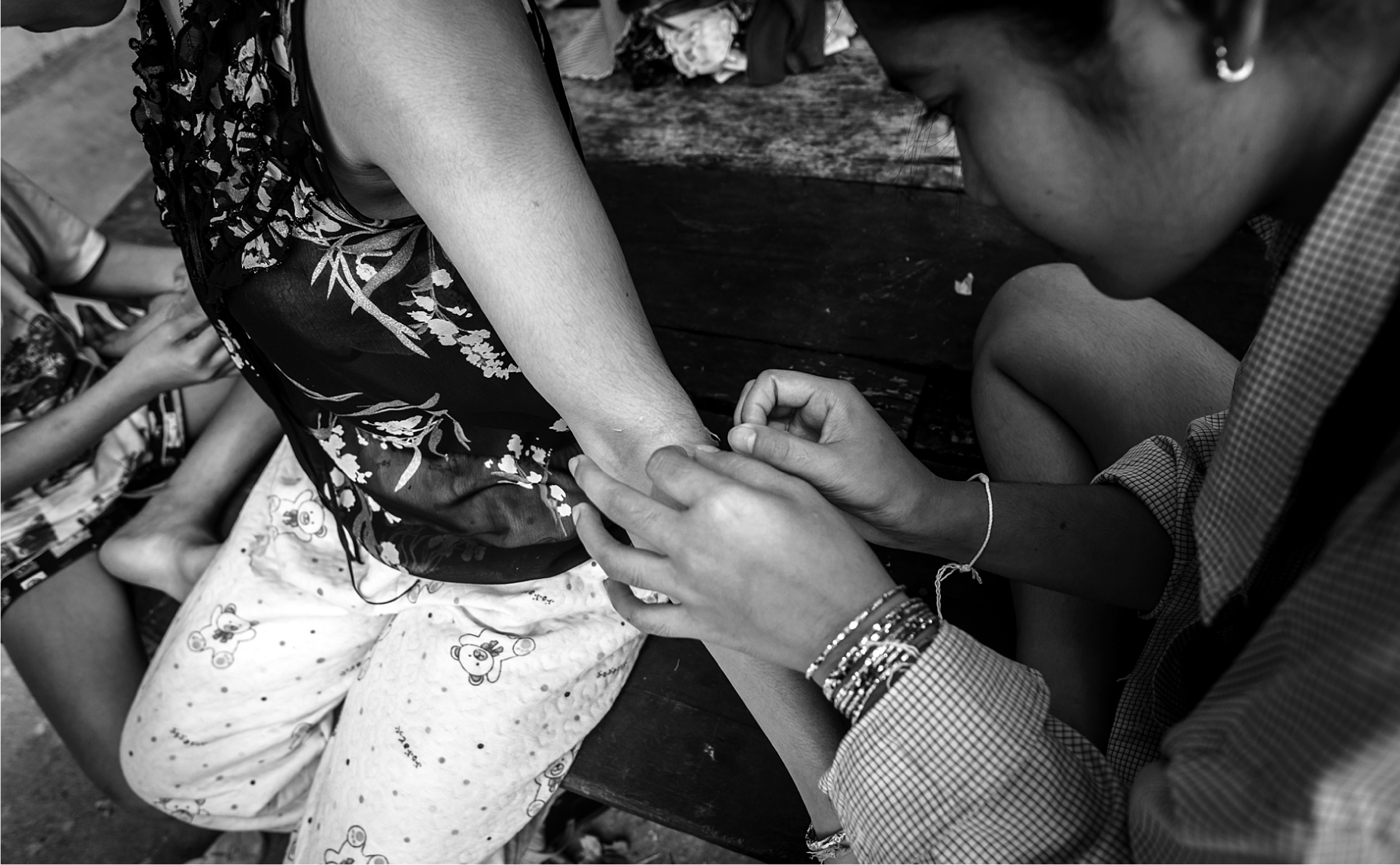
Migrant parents often point out the strain associated with managing childcare while abroad. Many migrants, particularly those with healthy parents or siblings at home, entrust their children to the care of extended family members in Cambodia. Others bring their young children across the border. Though neither is described as ideal, families have diverse and complex strategies to care for children.