Abstract
Public mourning is not a spontaneous expression of grief but a symbolic and political practice. Sociologist Bin Xu examines a new trend in recent decades, the “democratization of public mourning,” that celebrates our symbolic equality and individuality instead of affirming status hierarchies.
Fans across the globe mourned the loss of Steve Jobs, creating memorials like this one in Shibuya, Tokyo.
Roberto Maxwell
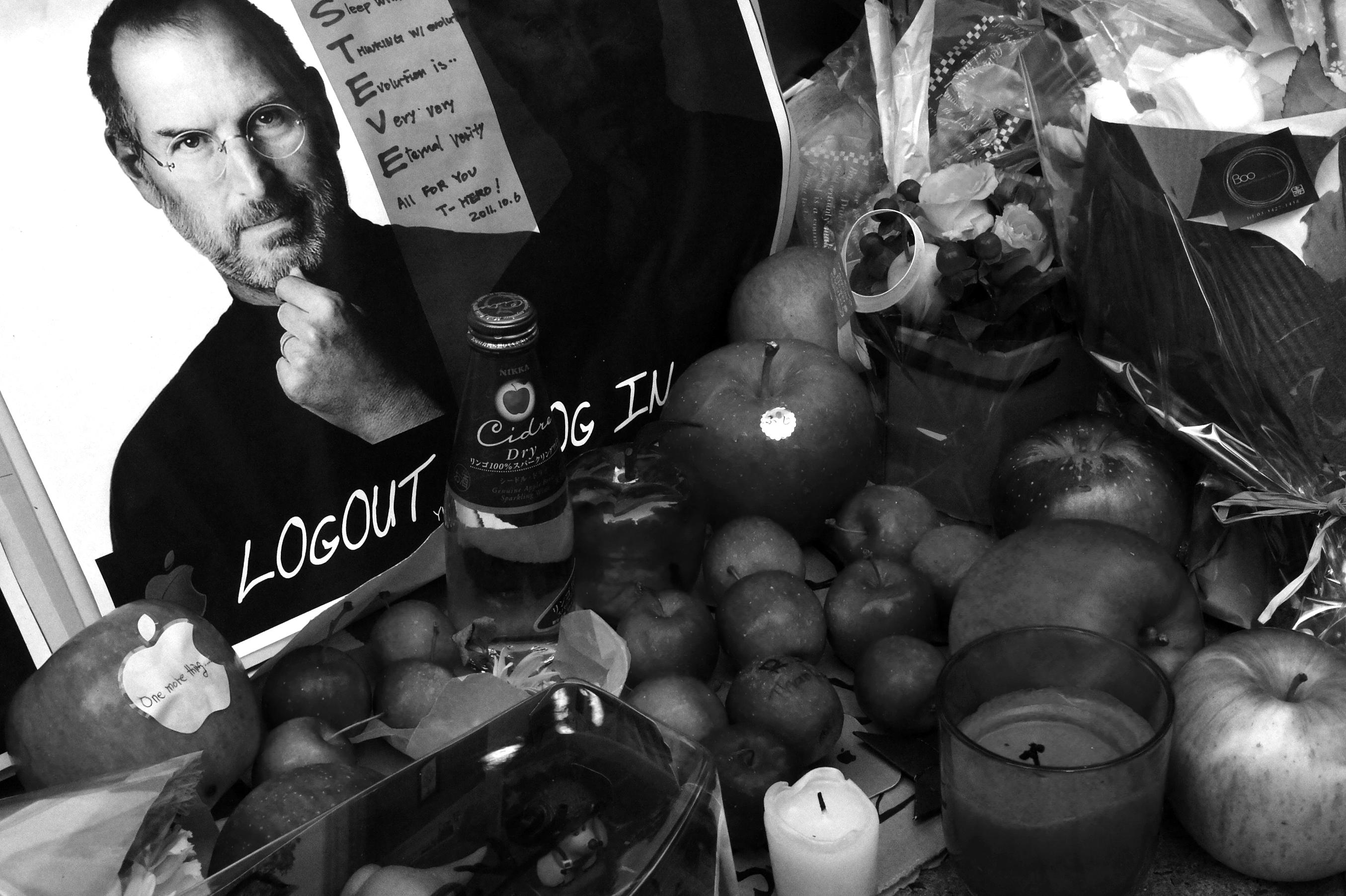
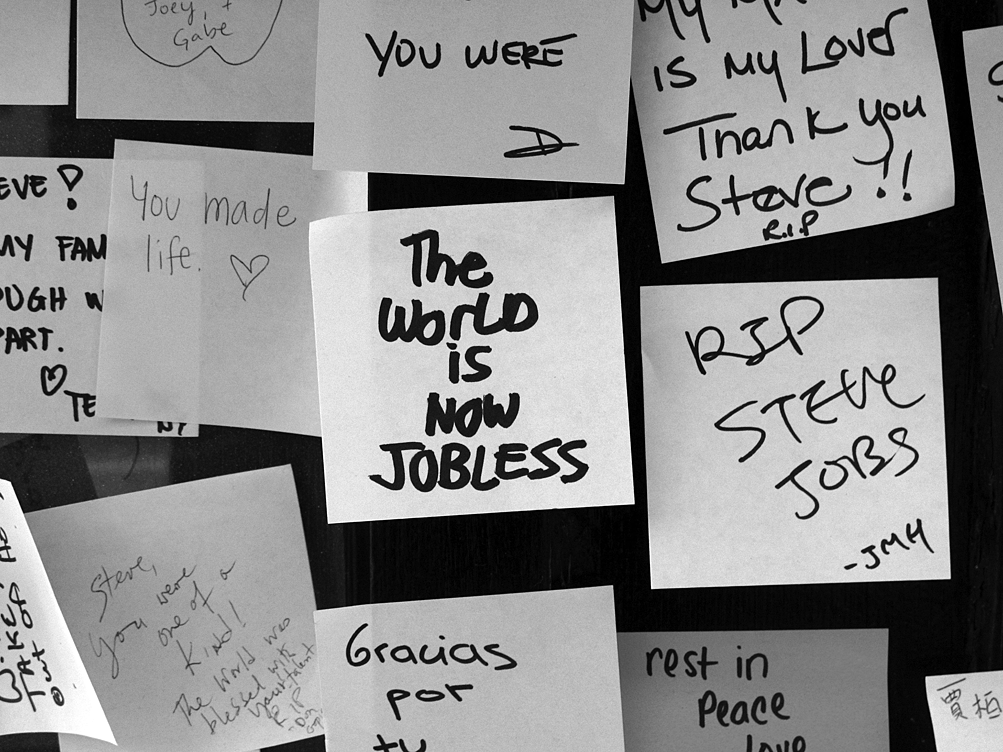
When Apple CEO Steve Jobs died in October 2011, Apple users around the world turned Apple stores into shrines, laying flowers, his portrait, and even in one case (at a Miami Apple store) a half-eaten apple, to express their sorrow. Several days later, I asked my students why they thought so many people mourned Jobs’s death. A few suggested that Jobs gave us “cool” and “user-friendly stuff.” He changed our lifestyle. He was a “self-made” and “creative” guy—and even a “genius.” He is everyone’s dream of what they hope to achieve.
One of my students, however, raised her hand to challenge that view. “Jobs never invented anything,” she said. “He stole other people’s ideas.” She went on: “Apple products are cool, but they’re made in those sweatshops where workers frequently commit suicide.” The products are user-friendly but environment-unfriendly, and Jobs was an ill-tempered and manipulative man, she said.
“Yeah, I know, but who cares?” said a Jobs admirer. Few students mourned Jobs because of his moral traits. Though they were aware of his character defects, they spoke about how he changed our lives. He turned our dull-looking computers into hip commodities, our MP3 players into fashion statements, and our cell phones into portable fun machines. In other words, they mourned Jobs to thank him for making us more connected, cooler, and hipper.
The outpouring of feelings for Jobs exemplifies a relatively recent trend: the democratization of public mourning. In any community, the loss of one or more members cuts a deep wound in the collectivity’s body. Survivors need healing rituals to express their sorrow, reaffirm the community’s importance, and strengthen its social ties. But public mourning has shifted from a privilege reserved for leaders and dignitaries, to one that increasingly honors celebrities, public figures of all kinds, and even ordinary individuals.
The outpouring of feelings for Steve Jobs even ordinary individuals. exemplifies a relatively recent trend: the democratization of public mourning.
Contrast the case of Steve Jobs with that of North Korean leader Kim Jong Il, who died several months after Jobs, who received a state funeral. During the mourning period, the country literally halted operations as people’s attentions were fixed on the dead leader. North Koreans sobbed uncontrollably, punched their chests, and lay prostrate on the ground. During the ten-day mourning period, Koreans expressed sorrow about the loss of the “Dearest Leader.” The country’s ruling elite used the mourning to affirm their support for Kim Jong Il’s 27-year-old son Kim Jong Un, who would succeed him. Mourning rituals were designed to symbolically perpetuate the family’s political dynasty and moral order based on Juche ideology, a North Korean variant of communism.
Modern states such as North Korea typically hold large-scale mourning rites for rulers, leaders, and dignitaries who embody officially defined central values and affirm the moral order. They tend to describe the deaths of political leaders as “irreversible losses.” Identifying themselves as the representative of the nation, they sponsor and organize rituals to allow people to express sorrow about their loss, to demonstrate the existing regime’s stability, and to reassure the public that there will be an effective transition of leadership, reconfirming the public’s loyalty. They organize settings, procedures, and group assemblies to produce certain emotional states, mobilizing citizens to participate. The mourning is typically for one person—not just any person, but the one who was once in power. Through these rituals, modern states turn mortal bodies into immortal symbols, carefully designing and managing large crowds to generate emotional effects that are expected to reinforce the intended official meanings.
If the public display of mourning for Jobs and Kim were very different, it is because the worlds Jobs and Kim left behind were very different. In mourning Jobs, individuals dramatized and celebrated their sense of selfhood—the “I,” embodied by the iPod, iPad, iMac, and iPhone. In mourning Kim, they affirmed the official moral order of a society that is highly organized and collectivist.
Emotional States
At the funeral for Kim Jong Il, Western media outlets noted the extreme emotional displays, describing them as too “hysterical” to be “genuine.” They surmised that the country’s isolation from the outside world had culminated in seemingly excessive displays of mournfulness. But highly emotional mourning displays are not uncommon at such occasions. As sociologist Emile Durkheim himself showed in The Elementary Forms of Religious Life, Australian aborigines beat their chests and even wounded themselves in displays of collective effervescence during mourning.
Sociologist Barry Schwartz, analyzing Abraham Lincoln’s funeral processions, noted that some participants wailed heavily, and even fainted of exhaustion, at the funeral of a president whom they had never seen and did not even vote for. “When Lincoln awoke on the last day of his life,” writes Schwartz, “almost everyone could find something about him to dislike.” His funeral procession from Washington, D.C. to Springfield, Illinois, however, lifted the controversial president to the status of national saint. The funeral drama, Schwartz suggests, was more about Lincoln the symbol than the man. As the Civil War was ending, the state needed a new hero, a George Washington symbol, to reconfirm moral unity and the sacredness of America. Lincoln, the symbol, provided such an opportunity. As state mourning often does, it affirmed the officially defined core values and unity of the society.
Associated Press/KRT via APTN
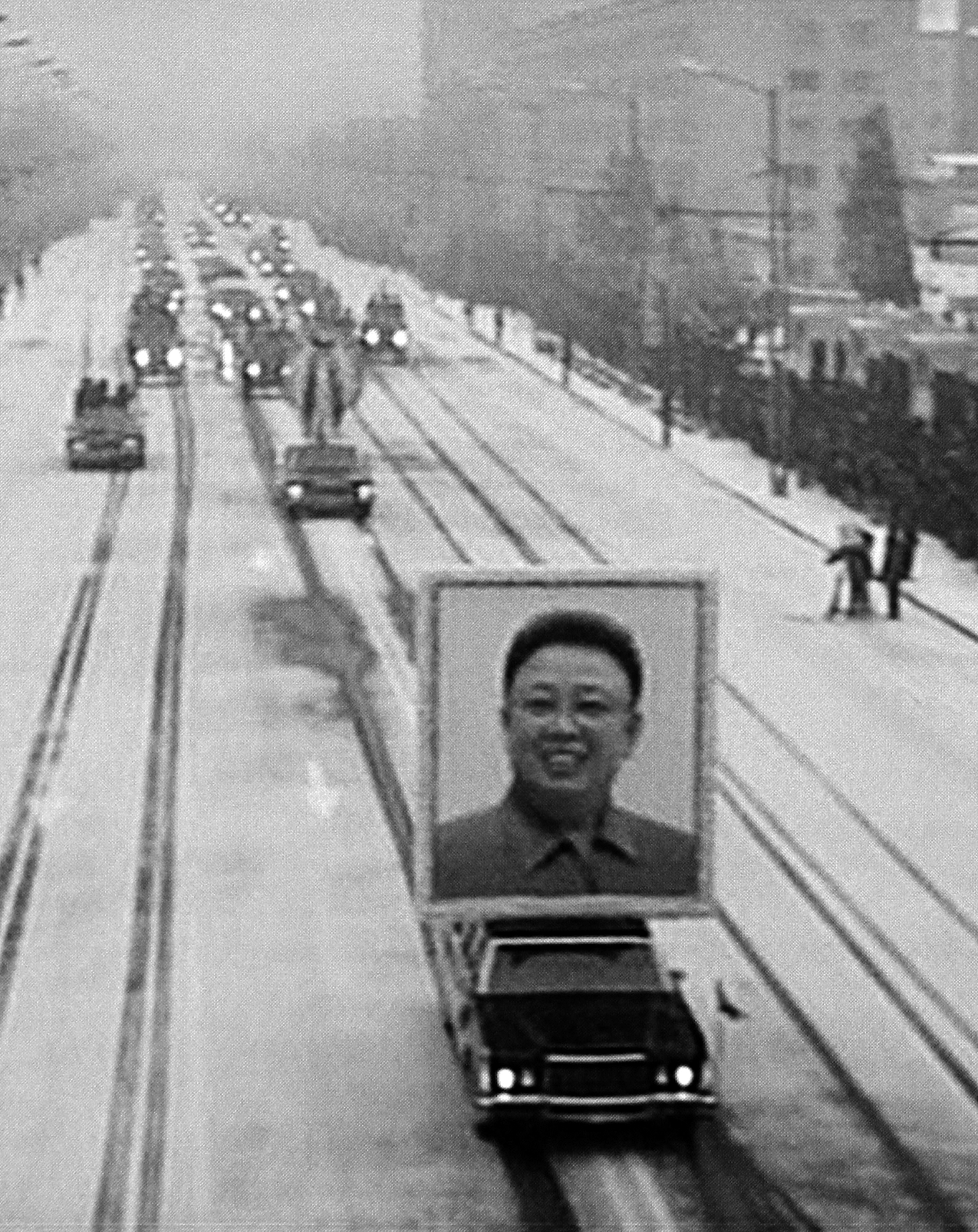
The funeral procession for Kim Jong Il in Pyongyang, North Korea in December 2011.
Associated Press/Kyodo News
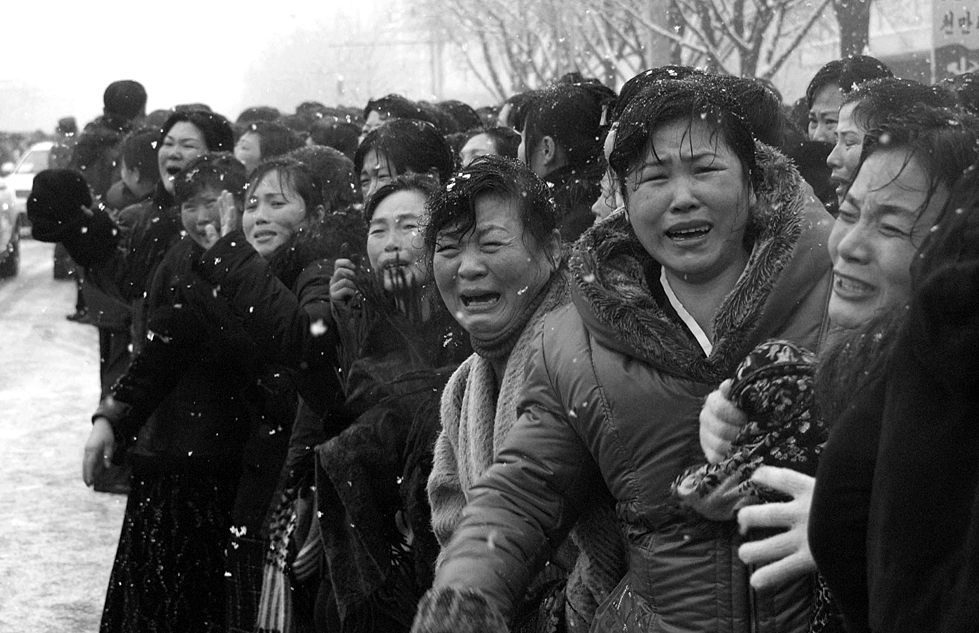
Similarly, when Koreans mourned Kim, they reinforced a sense of themselves as a whole. By mourning a head of state, they mourned the collective. This collectivity was reflected in the ways public mourning for Kim was arranged: the leader’s lying in symbolized the body as the sacred object. The state also organized observations of silence, mourning meetings throughout the country, huge crowds in central squares in every city, mandated gatherings in work units and schools, and long funeral processions.
When Koreans mourned Kim Jong Il, they reinforced a sense of themselves as a whole.
This mourning followed a highly formulated pattern of socialist leaders’ funerals, which began with Lenin’s funeral in 1924 and continued with Stalin’s in 1953 (which was held in almost all socialist countries), Mao’s in 1976, and Kim Il Sung’s— Kim Jong Il’s father—in 1994. The scale of participation was typically massive. For example, in Leningrad about 750,000 participated in Lenin’s mourning, and crowds mobilized in all major cities and towns in the Soviet Union to mark the day. Lincoln’s funeral process was no less extravagant. The funeral train retraced most of the route Lincoln took to assume the presidency, making stops along the way, connecting people in various places to the symbol of the state. There were huge crowds wherever the coffin passed; people traveled from 20 miles away to see it; in Chicago, no less than 80 percent of residents participated in or watched the procession.
Noting the scale and intensity of emotions North Koreans expressed at Kim’s death, many Western spectators concluded that these seemingly excessive expressions of grief were inconceivable. Given North Korea’s repressive regime, they must have been “faked,” some suggested. In contrast, many saw the outpouring of mourning for Jobs as “genuine” and “spontaneous.” But such distinctions are false; we all tend to display emotions that are appropriate for the context.
Public mourning is rarely if ever a spontaneous expression of grief or a natural outpouring of sorrow. It is a symbolic and political practice. Durkheim, writing in 1912, differentiated between grief and mourning. Grief refers to how a person feels, while mourning refers to how a person displays those feelings.
While sociologists focus on the observable behavior of mourning rather than on internal feelings, in popular parlance the two terms are often used interchangeably. Turning private grief into public expression, these symbolic practices are shaped by large political forces and broad social changes.
From Heroes to Victims
Around World War I, a cult of fallen soldiers emerged, replacing previous attention on the loss of generals. The construction of tombs for unknown soldiers, and the establishment of various memorial days for fallen soldiers, emphasized the camaraderie that exists among soldiers of equal status, rather than celebrating their military ranks and achievements. After World War II, mourning expanded further, including civilian victims of war, and related victims of atrocities. But it would take the 1960s and 1970s, what sociologist Barry Schwartz terms the “post-heroic era,” characterized by egalitarianism and wide recognition of values of individuals’ lives and dignity, to usher in the democratization of mourning, which focuses on non-state actors.
Social movements such as those against the anti-Vietnam War, and for black civil rights, and feminism, came to dramatize and value the lives of ordinary people. Patriotism was set aside and civil society affirmed. This democratization has accelerated in recent years, as we have come to mourn victims of disasters, accidents, and terrorist attacks.
Today, in the wake of high-profile disasters and emergencies, there are frequently large-scale mourning rites sanctioned by the state but mainly organized and attended by ordinary citizens. These are organized to pay last respects to anonymous victims—who are not widely considered “heroic.” For example, the 2008 Sichuan earthquake in China, which killed about 86,000 people, marked the first large-scale public mourning for disaster victims in Chinese history. Previous mourning and state funerals were all for leaders, heroes, and soldiers; mourning the earthquake’s victims was made possible by an increasingly vocal civil society, which demanded that the Chinese state show its respect for the large number of ordinary victims. The state, which was concerned with upholding its image during the year of the Beijing Olympics, sanctioned this mourning.
On May 19, a week after the earthquake, many Chinese citizens gathered together to observe three minutes of silence in central squares in cities across the country. In Chengdu, a metropolis close to the epicenter, about 10,000 people gathered in Tianfu Square. Before the silence, people laid flowers and wreaths, and a small floral hill quickly formed. At the time of the silence, the air raid siren wailed, and many people began sobbing. Strangers held hands and raised them above their heads, crying for those whom they had never met. The crying soon transformed into rhythmic chants of “Go! China! Go Sichuan!” accompanied by arm waving. Some people began to sing the Chinese national anthem and the song “Solidarity is Power!” Tears turned to cheers, sorrow to solidarity.
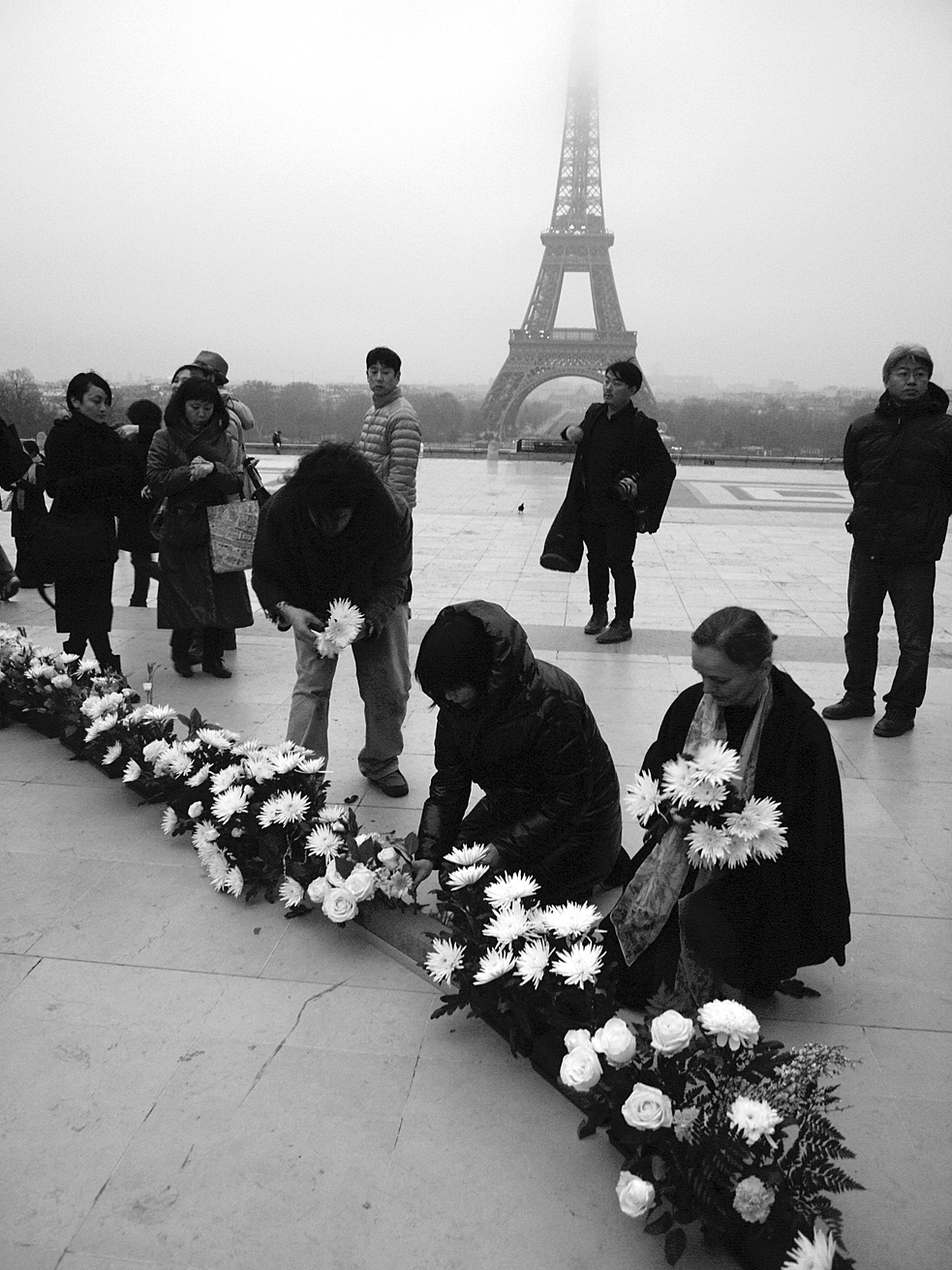
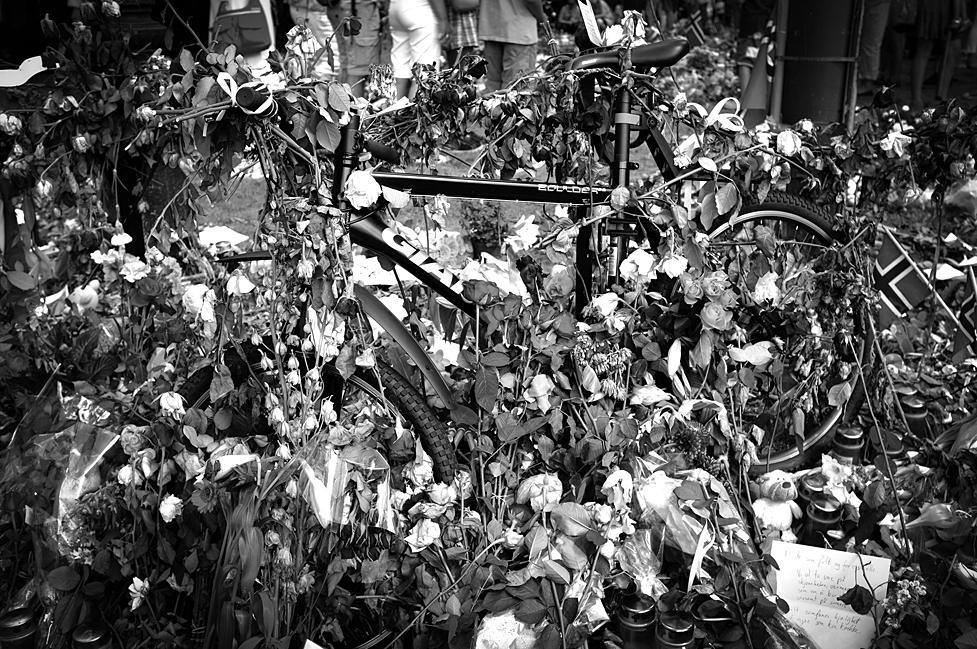
The Sichuan earthquake mourning was proposed, initiated, and organized by the public sphere and civil associations, and it was endorsed by the state. Mourners occupied center stage, refusing to play supporting roles in an anonymous crowd in the background. Other recent examples also illustrate this trend. Flowers were laid outside Oslo Cathedral to pay tribute to the victims of the bombing and shooting in Norway in July 2011; “Internet memorials” were set up for Japanese victims of the triple disasters in 2011 (an earthquake, a tsunami, and a nuclear meltdown) by people living thousands of miles away who did not even speak Japanese.
Unlike war victims, disaster victims are mourned not because of their ideologically defined roles but because of their ordinariness. If one person’s loss is the whole community’s loss, as Durkheim argued, then the community has an obligation to mourn everybody, not just leaders or dignitaries. If the community’s sacredness rests on the victims’ ordinariness, the ordinariness of those who are mourned, confirms the sacredness of the community.
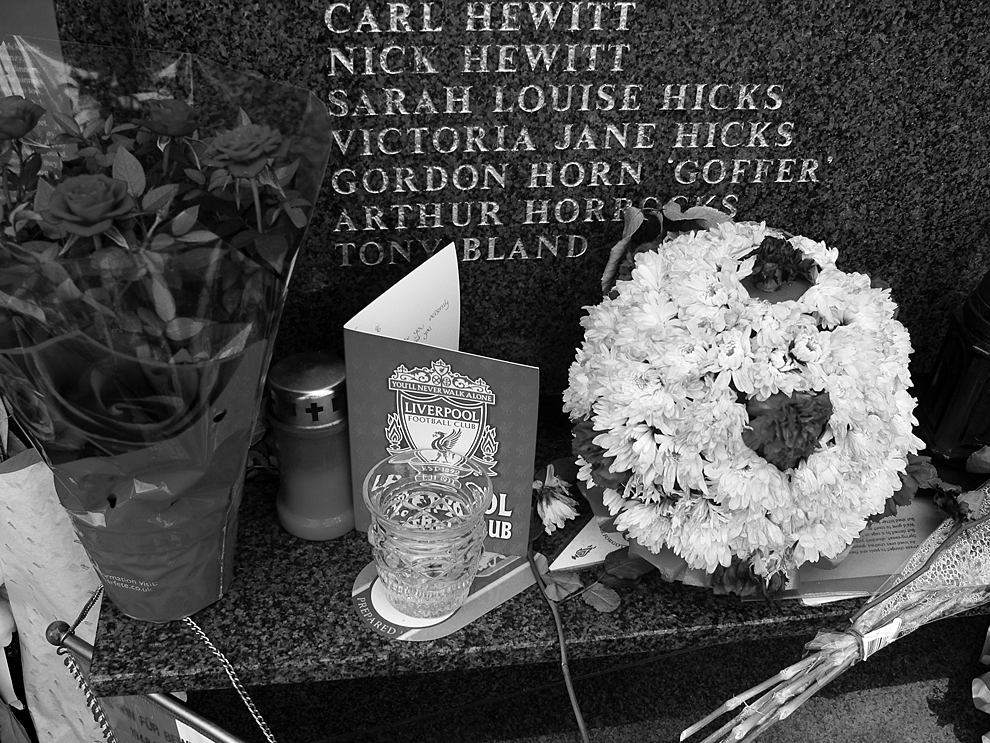
In April 1989, a football match between Liverpool and Nottingham Forest in England led to a deadly incident in which 96 Liverpool fans were crushed to death against a security fence in the overcrowded and ill-managed Hillsborough stadium. Immediately after the tragedy, numerous Liverpool fans and visitors queued in silence and laid flowers in Anfield, the club’s home stadium, turning it into a floral shrine for the victims. Solidarity prevailed: Liverpool’s opponents observed silence before every match; fans sang “You Will Never Walk Alone.” It was one of the biggest disasters but also one of the most touching moments in the history of sports. The rituals were initiated by Liverpool fans and the club, and later endorsed by city officials, who decided to hold a seven-day mourning period. Dignitaries such as Prime Minister Margaret Thatcher and other government officials paid their respects.
Today, we believe that everyone, not just leaders or important political figures, has the right to be mourned publicly. Instead of affirming status hierarchies, public mourning is more likely to celebrate our symbolic equality and individuality. In China, it has led to demands for an authoritarian state to lower the flag and bow to its citizens, observing three minutes of silence for victims of disasters. In other contexts, such as the United States and Europe, celebrities and cultural innovators like Steve Jobs are increasingly replacing leaders and heroes as a focus of public mourning.
Today, we believe that everyone, not just leaders or important political figures, has the right to be mourned publicly.
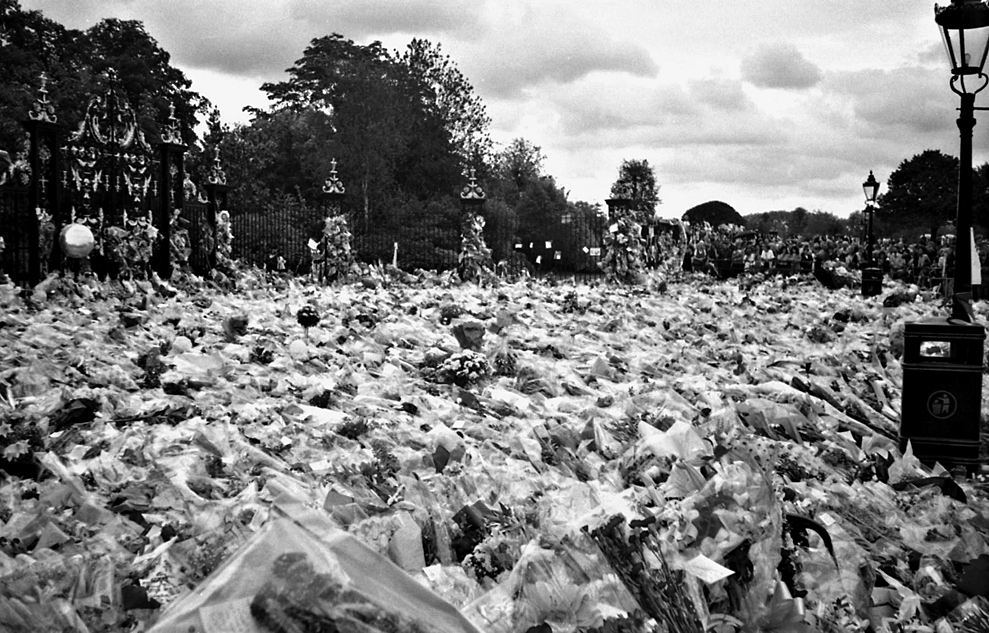
But even when we mourn elites, we are more likely to emphasize their ordinariness. In 1997, Britain’s Princess Diana was memorialized in a ritual distinguished from a traditional royal funeral. She was commemorated as the “people’s princess,” a warmhearted Cinderella. Mourning rituals offered British citizens and others the opportunity to express their own opinions about politics, gender, sex, and even ethnicity. Mourners piled flowers outside Kensington Palace and wrote heartfelt messages on condolence books. By paying their respects for Diana, they were redefining the meaning of public mourning, using the occasion to tell stories about themselves.
Commemorating Tragedies
Parisians observe a moment of silence for victims of the tsunami Remembering Princess Diana, Buckingham Palace, August 1997. and earthquake that stuck Japan in March 2011.
Don Pham Doan
Remembering Princess Diana, Buckingham Palace, August 1997.
Maxwell Hunter
The twentieth anniversary of the deaths of 96 soccer fans in Memorializing victims of the massacre in Oslo and Utoya, Hillsborough, England, in April 1989. Norway, July 2011.
Ben Sutherland/Flickr
Memorializing victims of the massacre in Oslo and Utoya, Norway, July 2011.
Jo Christian Oterhals
Fans left Post-it® Notes at an impromptu memorial for Steve Jobs at an Apple store on Prince Street in lower Manhattan.
Helen Chang