



Abstract
Patricia Hill Collins, a feminist public intellectual, discusses the importance of speaking across multiple audiences.
Speak the truth to the people
Talk sense to the people
Free them with reason
Free them with honesty
Free the people with Love and Courage and Care for their-Being
Mari Evans, from I Am a Black Woman (1970)
Mari Evans’ poem invokes the social and political upheaval of the Civil Rights and Black Power movements in this country. Like others of her generation, Evans rejected the separation between scholarship and activism, school and society, thinking and doing. She wrote poems, plays, children’s books, and a musical adaptation of Zora Neale Hurston’s Their Eyes Were Watching God. Along with other artists, intellectuals, and activists at the time, she engaged in multiple forms of intellectual activism.

I wonder how effectively today’s scholars and public intellectuals speak the truth about contemporary social issues. New technologies have opened up formerly unimaginable ways for us to talk to one another. We are swimming in information, but how much of that information moves us closer to the truths that will sustain us? Individuals can now see themselves on YouTube and post their ideas on blogs with blinding speed. Yet for all this talk and noise, what are we saying that is of value? Where are the conversations that will spur contemporary intellectual activism? Breathing life into ideas requires working across differences and building communities in which dialogue is possible.
Today, in our increasingly corporate colleges and universities and monopolistic mainstream media, we confront a contradictory politics of inclusion and exclusion. Some of those from formerly excluded groups now occupy positions of power and authority inside the social institutions that once excluded them. Many of these insiders engage in intellectual work. At the same time, as the lyrics of global hip-hop remind us, far too many people remain excluded.
As an American citizen, an African American woman from a working-class background, and an academic who has experienced considerable upward social mobility, I am both an insider and an outsider. Throughout my professional career, I have struggled to gain clarity about how ever-shifting patterns of belonging and exclusion have shaped the contours of my intellectual activism.
Negotiating the contemporary politics of knowledge production as an “outsider within” raises some fundamental dilemmas. In a misguided effort to protect standards, many of my academic colleagues at different colleges and universities derogate any work that is “popular” as less rigorous or scholarly. They see such “political” work as nonacademic. Such norms suppress the kind of engaged scholarship that interests me and that is fundamental for intellectual activism. But because ideas and politics are everywhere, the potential for intellectual activism is also everywhere.
Illustrations by Corey Fields
Speaking Truth to Power
There are two primary strategies of intellectual activism. One tries to speak the truth to power. This form of truth telling uses the power of ideas to confront existing power relations. On a metaphorical level, speaking the truth to power invokes images of changing the very foundations of social hierarchy where the less powerful take on the ideas and practices of the powerful, often armed solely with their ideas. One can imagine this process through the David and Goliath story of the weak standing up to the strong, armed only with a slingshot (as relying solely on the power of one’s ideas seems to be). A Google search of the phrase “speak the truth to power” uncovers numerous hits seemingly focused on confronting those who wield power within existing social institutions.
My lengthy educational training was designed to equip me to wield the language of power to serve the interests of the gatekeepers who granted me legitimacy. My teachers did not consider that I might choose to use those same weapons to challenge much of what I learned, at least not as deeply as I have actually done. While we may think of our educations as our individual intellectual property, we quickly find out that powerful groups expect us to place our fancy degrees in service to conservative political agendas. Power routinely claims that it has a monopoly on the truth. Yet my education revealed multiple truths, most of which were co-opted and repackaged to suit the vested interests of the more powerful. The richness of alternative points of view remained ignored, neglected, ridiculed, and/or Persecuted out of existence.
Much of my academic writing strives to speak the truth to power, namely, to develop alternative analyses of social injustices that scholarly audiences will find credible. Much of my career as a sociologist has been spent speaking the truth to power about race, class, gender, and sexuality, yet race has been central. I have focused on anti-racist discourse and practice that might catalyze people to think about their worlds differently and, as a result, act differently within them. My work constitutes theoretical interventions in what counts as truth about race and racism.
Because ideas and politics are everywhere, the potential for intellectual activism is also everywhere.
This is a difficult time to talk overtly about race; many American citizens believe that we are living in a post-racial world. The election of Barack Obama has simultaneously highlighted the visibility of race and the difficulties of talking about it. In this context, terms like “family,” “community,” “post-racial society,” and “color blindness” are invoked by thinkers on both the left and the right sides of the political spectrum, with racial subtexts carried within what appears to be a newfound unity across the historically divisive categories of race and gender. I think that if we can change our thinking about race, we can do so about gender, class, sexuality, religion, and citizenship too.
Speaking the truth to power in ways that undermine and challenge that power is often best done as an insider. Some changes are best initiated from within the belly of the beast. Standing outside, throwing stones at the beast, and calling it names won’t change much, except perhaps, to make the beast more dangerous because now it no longer believes that its underlings love it. Challenging power structures from the inside, and working cracks in the system, requires learning to speak multiple languages of power convincingly.

Speaking Truth to the People
A second strategy of intellectual activism aims to speak the truth directly to the people. In contrast to directing energy to those in power, a focus that inadvertently bolsters the belief that elites are the only social actors who count, those who speak the truth to the people talk directly to the masses. The distinction here is critical. It’s the difference between producing a memo that documents the many cases of a boss’s bad behavior and beseeches him or her to change his or her ways and having a meeting with the staff to strategize ways that they, individually and collectively, might deal with the boss and the lines of authority that put them in the situation to begin with. The former strategy speaks the truth to power—the latter strategy speaks the truth to the people.
Mari Evans’ poem exemplifies this second form of truth telling. Evans demands much from intellectual activists by arguing that ordinary, everyday people need truthful ideas that will assist them in their everyday lives. Such truth-telling requires talking, reason, honesty, love, courage, and care. For academics whose horizons have been narrowed to preparing for the next reappointment, promotion, and tenure committee meeting, or their lecture for the huge introductory sociology class that meets at 9:00 a.m. three days a week like clockwork, this conception of truth-telling constitutes a luxury that may be reserved for only the most privileged faculty members. Who has time to talk with every student, reason with the students, give them an honest assessment of the required textbook, love them in ways that empower and not demean, show the courage to try something radically different, and express a level of basic care?
Intellectual activists who devote their attention to the public can pay a high price. In the United States, scholars and activists who place their education in service to their local publics are routinely passed over for cushy jobs, fat salaries, and the chance to appear on National Public Radio. In some areas of the globe, speaking the truth to the people lands you not on cable television but under house arrest, in jail, or killed. Contemporary American intellectuals must remember that, when it comes to our ability to claim the power of ideas, we are the fortunate ones. For our parents, friends, relatives, and neighbors who lack literacy, work long hours, and/or consume seemingly endless doses of so-called reality television, the excitement of hearing new ideas that challenge social inequalities can be a rarity.
I am an intellectual whose scholarly work aspires to speak the truth to power. Yet a sizable portion of my intellectual work has also aimed to speak the truth to the people. Both forms of truth telling are intertwined throughout my intellectual career, with my books, journal articles, and essays arrayed along a continuum with speaking the truth to power and speaking the truth to the people on either end. Engaging these two forms of truth telling within a singular work is challenging.
Speaking in Multiple Registers
My book, Black Feminist Thought: Knowledge, Consciousness and the Politics of Empowerment is written in multiple registers, for scholarly audiences as well as non-academic African American women. I faced a difficult challenge in crafting this book. How could I write a book about African American women’s intellectual production that would be accepted by scholarly audiences that had long excluded and derogated this group? How might I write a book that spoke directly to African American women that they would find truthful, yet avoid the risk of being dismissed by scholarly audiences (who controlled publishing resources)? I had to find ways to examine the everyday creativity and resistance of African American women within the constraints of an academic discourse that would not be seen by scholars as being too popular or political. I also had to consider how my arguments would be recognizable to and useful for African American women. And I had to sharpen my skills of translation.

Because the material at that time was so new and I was an unknown scholar, I knew that my publisher would recruit scholarly reviewers to give my manuscript a thorough assessment. Yet to shield my book from the power relations that made African American women objects of scholarly knowledge, I also developed ways of including African American women as reviewers of my material.
I invited a few African American women undergraduates from my University of Cincinnati Africana Studies courses to serve as readers for chapters of my manuscript. They were bright, energetic, primarily workingclass students whose childhoods in the Cincinnati metropolitan area had provided them broad, heterogeneous networks of African American friends, neighbors, and relatives. I was not interested in my students’ ability to correct my English or inform me of how my book might benefit from additional citations from the top scholarly journals. Instead, I asked them to tell me what thoughts and emotions the ideas in my book raised for them. Did the ideas in Black Feminist Thought ring true for them? Could they think of examples from their own experiences that illustrated and/or contradicted the book’s main ideas? As I wrote and revised my manuscript, I tried to incorporate both forms of truth-telling into this one volume.
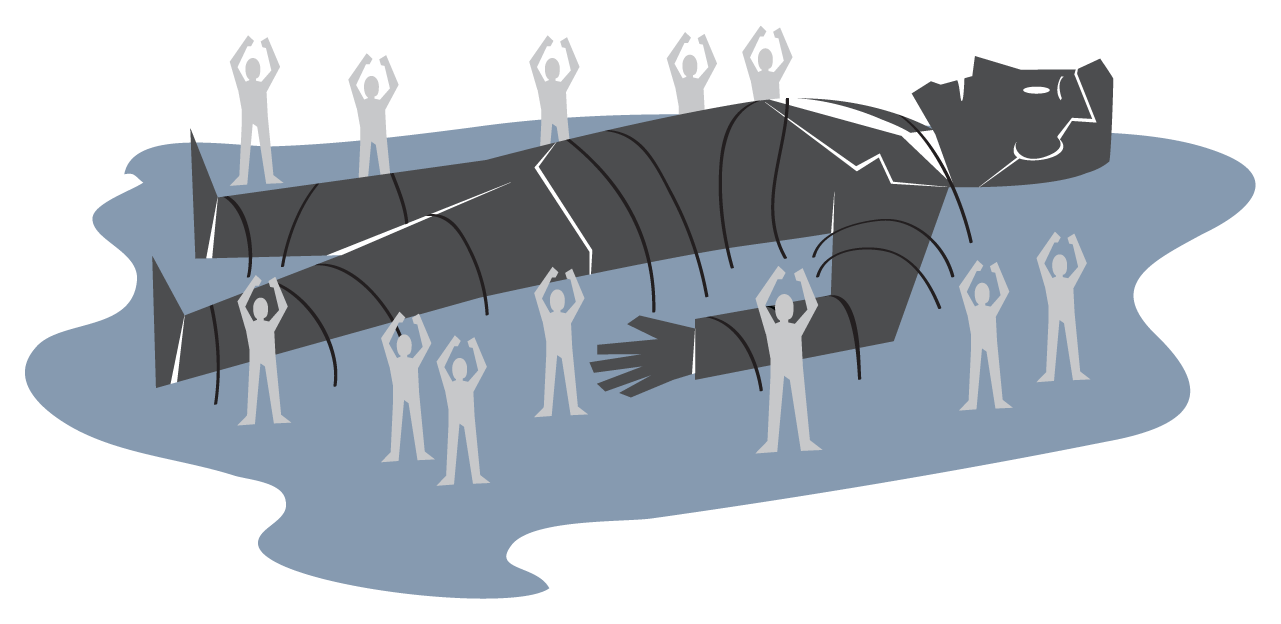
In heterogeneous democratic societies, finding ways to share important ideas with diverse groups of people is important.
Black Feminist Thought became an award-winning book. A fundamental reason for its success has been its ability to engage in dual forms of truth telling. The format of the book enables undergraduate and entering graduate students to access the challenging concepts that they need to speak the truth to power in the academy. To assist them in translating social theory, I chose to use theoretical language in volume, and included a glossary of terms that would encourage my readers to tackle difficult ideas. Graduate students and scholars can access more theoretical arguments about how oppressed groups can produce oppositional knowledge that assists in their survival. The book also serves as a point of entry for readers who are interested in intersectional scholarship on race, class, gender, and sexuality.
Over the years, I have come to appreciate how people apply the general arguments raised by the experiences of African American women to their own situations. Black Feminist Thought provides its readers with a shared space that validates what each one brings to the table, yet enables them to gain access to the knowledge of the other. It shows that, via processes of translation, it is possible to bring these two seemingly antithetical traditions of truth-telling closer together.
The recent rediscovery of public sociology in the United States has provided institutional support, or at least a vocabulary, for talking about issues of intellectual activism. In the current climate of academic sociology, this idea of public sociology has been elevated to a level of increased visibility that has given it some legitimacy. Public sociology speaks to the desire that many sociologists have to talk with and educate the public.
In heterogeneous democratic societies, finding ways to share important ideas with diverse groups of people is important. I have tried to make the main ideas of my intellectual work accessible to broad, nontechnical audiences both inside and outside of academia, combining academic rigor with accessibility. I believe that our analyses of important social issues are strengthened when we engage in dialogues, and speak with people and not at them.
Those of us who participate in intellectual activism must do a better job of engaging the public. How different our ideas about families, schooling, immigration, and government would be if we presented them not simply at academic conferences but also at neighborhood public libraries, to groups of college students, returning students, at parent education classes—and even to our own families.