




Abstract
In past generations, college was thought to be a site for higher learning in America. Yet April Yee’s ethnographic research finds that few undergraduates are enrolling for the pursuit of knowledge anymore; instead, students are going to college simply because they believe they must have a degree to have a future in our society.
“I have always thought you go to high school and then you go to college. I never really thought about it. I just know that everyone else was going to college, and I had to do it too.” Luisa, a Latina, first-generation, political science major, explained her motivations for attending college. “I feel like everyone else is—like on TV. When you graduate from high school, you move out of your house and you do this four-year thing and start your own life.”
Alex, a white, first-generation undergraduate business major said, “I gotta be honest, like, everything I have ever seen, I didn’t think there was any other option.” Another student, Asia, a black business major, explained, “I have always planned on going to college. I was never like, ooh, should I go, or should I not go? It was just how it was going to be, it wasn’t something to think about.“
For much of the twentieth century, going to college was one of many possible paths to adulthood in the United States. After graduating from high school, some young people enrolled in higher education, while others worked in a skilled trade, or in manufacturing, clerical, or service industries. With different options to choose from, most students who enrolled in college actively wanted to further their education, pursue higher levels of learning, and advance intellectually.
Today, more students are going to college than ever before. National surveys show that nearly all high school students now expect to eventually attend college and believe it will be beneficial to their future. For this generation of young people, attending college is a default option rather than a conscious choice motivated by intellectual interests. College is one of few viable paths that seem to lead to a secure future.
How do students account for their choices to attend college? What are the consequences of going to college when you aren’t really sure you want to be there? How well does the “college for all” idea serve us as a society? To explore these and other questions, I spent the past year studying 34 first-year students at a large, urban, public university. The students were male and female, from diverse racial and ethnic backgrounds, and evenly split between those who were the first in their families to attend college and those whose parents had bachelor’s degrees and higher.
What I found is that students are going to college today because they feel they have to—not because they want to. This basic fact shapes interactions in the classroom, influences national undergraduate learning outcomes and graduation rates, and even challenges our widely held beliefs about equality and opportunity. Paradoxically, the growth in college enrollments, once heralded as an indicator of greater equality, may actually be leading to a narrowing of opportunities.
“I Had to Go to College”
When asked about their reasons for attending college, students say that they “had to go” to college—it was the “logical” and “natural” thing to do. Some had considered other paths to college, including going abroad for a gap year, serving in the Peace Corps, working for a few years, or enrolling in community college and then transferring to a four-year college. Only three students—males who were the first in their families to attend college—seriously thought about not going to college at all and briefly considered enlisting in the military. The vast majority of students, including those who thought of doing other things first, always planned to go to college. They embrace what sociologist James Rosenbaum has termed the “college for all” philosophy: the notion that everyone, regardless of interest or ability, can and should go to college.
Ysenia, a Latina first-generation college attendee and music major, explained that she didn’t really feel she had a choice. “I think you need to go, it’s just like high school and elementary school and middle school. I don’t know why, but I have that idea in my head.” The “college for all” ideology was particularly pervasive in affluent schools and communities. Chelsea, a white, first-generation art history major, who grew up in a wealthy suburban neighborhood, explained that she went to a public high school where “99% of the graduating class goes off to college,” so “it would have been weird [not to go].” The question she faced was not “Are you going?” but “Where are you going to college?”
Students are going to college today because they feel they have to—not because they want to. This shapes interactions in the classroom, influences learning outcomes, and challenges widely held beliefs about opportunity.
Still, the question of why college is such an obvious choice remains. After all, many high school students do not continue their education. Yet the students I interviewed did not think that they could get a job without a college degree. As Nathan, a black communications major, explained, “It was kind of common sense. I just know you can’t come out of high school with no experience and go straight into the workforce. That’s obvious. That’s basic stuff you learn when you’re five. Gotta go to college to get a job!” Christine, a white, undeclared major, simply said, “I just want to continue schooling because right now I feel like if I did not continue school, I wouldn’t get a job.”
College guide books suggest anyone can excel at college—by following a few easy steps.
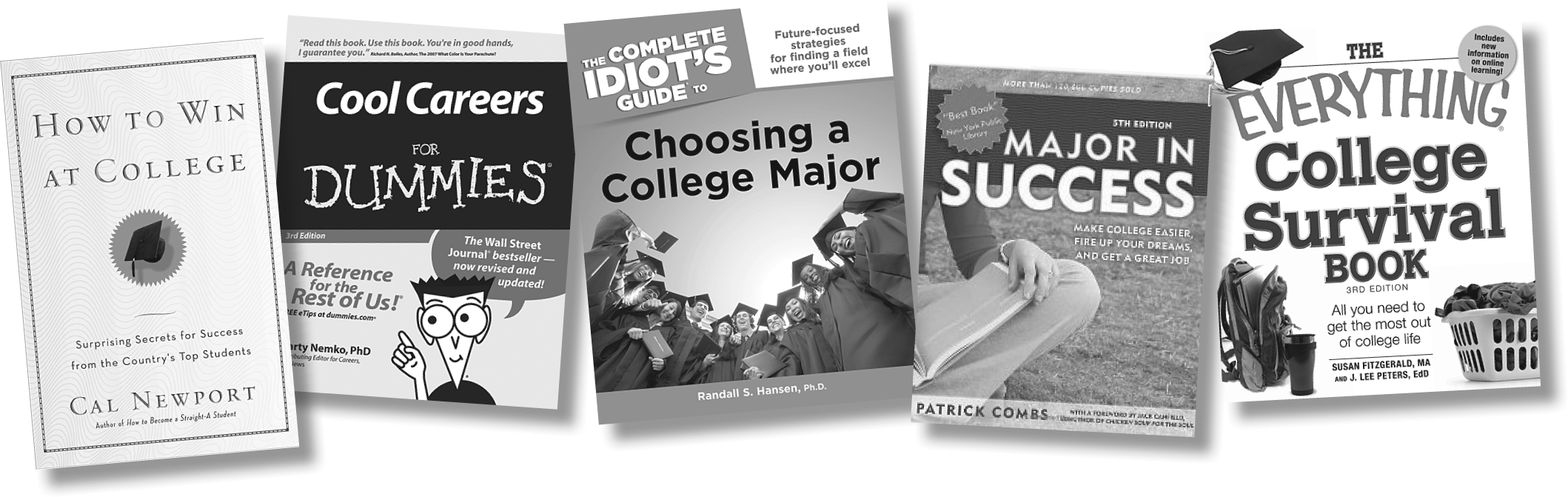
Some believed that college would not just help them get any job—it would allow them to get a “good” job, which they defined as one that they would enjoy, that would not entail hard (or menial) labor, and that would pay well. As Adelphi, a black engineering major, explained, “To be successful in this world nowadays you have to have a college education…. If you don’t have a competitive resume it’s not like you’ll get a good job.“ David, a white communications major, explained that college would allow him to have a “career” rather than a “job.” “I feel like you need a degree to really do anything. I don’t really want to be a laborer or a mechanic or something like that.” Future earnings and employment opportunities were the most critical motivators for enrolling, he and others told me. “I want a good career when I get out of college.”
Because students believed a college degree is a prerequisite for a secure, middle-class lifestyle, many simply tried to pass their courses, with minimal effort. As a result, classrooms often became frustrating places.
The Credential Society
Sociologist Ann Mullen (whose latest research is featured in this issue of Contexts) has argued that undergraduates from working-class backgrounds are more vocationally oriented, while those from middle and upper-middle-class backgrounds are more academically oriented. In contrast, I found that students from all class backgrounds were very concerned about their future job prospects, and they expected that a degree would lead to work that they would enjoy and pays well.
Students believed that a college degree is especially important in a difficult job market. At the same time, some pointed to what they saw as degree inflation. Alex, a white, first-generation, business major, bluntly stated, “I mean, with everything that’s going on, a college degree is almost like a high school diploma.“ Natasha, a black/Latina, first-generation, communications major agreed: “If you have a high school diploma, that means nothing to people, so all the great careers, you have to have a college diploma.”
They’re living proof of what sociologist Randall Collins predicted in his classic book, Credential Society: that over time, increasingly higher credentials would be required to acquire the same social status. Thirty years after Collins made that prediction, a college degree has replaced a high school diploma as the ticket for entry into the middle-class job market. Aaron, a white history major, summed this up: “It’s impossible to get a job without going to college. It feels like college is more of a requirement in society now.”
Family expectations also played an important role in compelling students to enroll. Those whose parents had college degrees were expected to follow in their parents’ footsteps. Charlie, a white student who had not yet declared a major, explained, “Both my parents graduated from college, so it’s kind of like, ever since I was a little kid there was nothing else to do BUT go to college. There was never really a choice. You are going to college, and this is how it’s going to be.”
For students whose parents did not attend college, the pressure was also great, but for different reasons: their parents wanted a better life for them. “My parents want me to go to college, I don’t really have a choice,” said Dominique, a black psychology major. “They said it’s better for me in the future. That’s what they always tell me, it’s better for my future, the long run. They always say they don’t want me to have to work as hard as they have to.” Lisa, an Asian biology major, shared a similar sentiment: “I am going to college because my parents really, really want me to and they told me before that if I don’t go to college, I will probably end up working hard like them.”
“I know it’s good to work hard, but they work to the point where they don’t get much out of it. They are just tired in the end. They don’t want me to be like that, and I don’t want to be like that. They want me to live a good life and not have to struggle to make money.”
The College Experience
A few students said they wanted a college “experience,” which they described as an opportunity for personal development. They relished the chance to be on their own, away from their parents, and in the city. Others looked forward to the social aspects of college: making new friends, going to parties, and cheering on the school’s athletic teams.
As the year progressed and the students continued to share their experiences with me, I saw firsthand just how much going out, drinking, and hooking up dominated their lives—lending support to the research of sociologists Elizabeth Armstrong and Laura Hamilton (see this issue of Contexts). However, they saw these social aspects as fun benefits of being in college, rather than primary reasons for attending.
Others said they were going to college to figure out who they were and what they wanted to do with their lives. David, a white communications major, explained, “I don’t really know what I want to do yet. I am interested in a lot of things, and I guess that in college I have four years to kind of figure out what exactly I want to do.”
Fewer students—only 5 of the 34 I interviewed—talked about the importance of developing intellectually. Liz, a white music major, was the only student who said that learning was her primary motivation for enrolling. She was aware of being unusual: “It’s weird because a lot of my friends talk about how they want to go [to college] to make more money, but I just like learning stuff. I found a passion for music in high school and I wanted to learn more about it, and I didn’t want to go right into trying to find work.… I like to learn, as weird as that sounds.”
Tina, an Asian business major, who was the first in her family to attend college, said that she had “always liked school and been a ‘school person.’” Donny, a white, first-generation attendee, who was undeclared, said, “I mean I have always liked school to an extent, so I like learning things. I figured if I didn’t even use my degree I would still like learning stuff.” However, these students were in the minority and, in Liz’s words, “weird.”
Going Through the Motions
Because students believed a college degree is a prerequisite for a secure, middle-class lifestyle, many simply tried to pass their courses, with minimal effort, so that they could earn their degrees. Because of this, classrooms often became frustrating places for both students and faculty. Faculty members, having devoted their careers to the pursuit of knowledge, were baffled by and at times dismissive of students who did not share their passion for learning. Students, in turn, felt their professors did not understand the realities of their lives and sensed that they were being looked down upon.
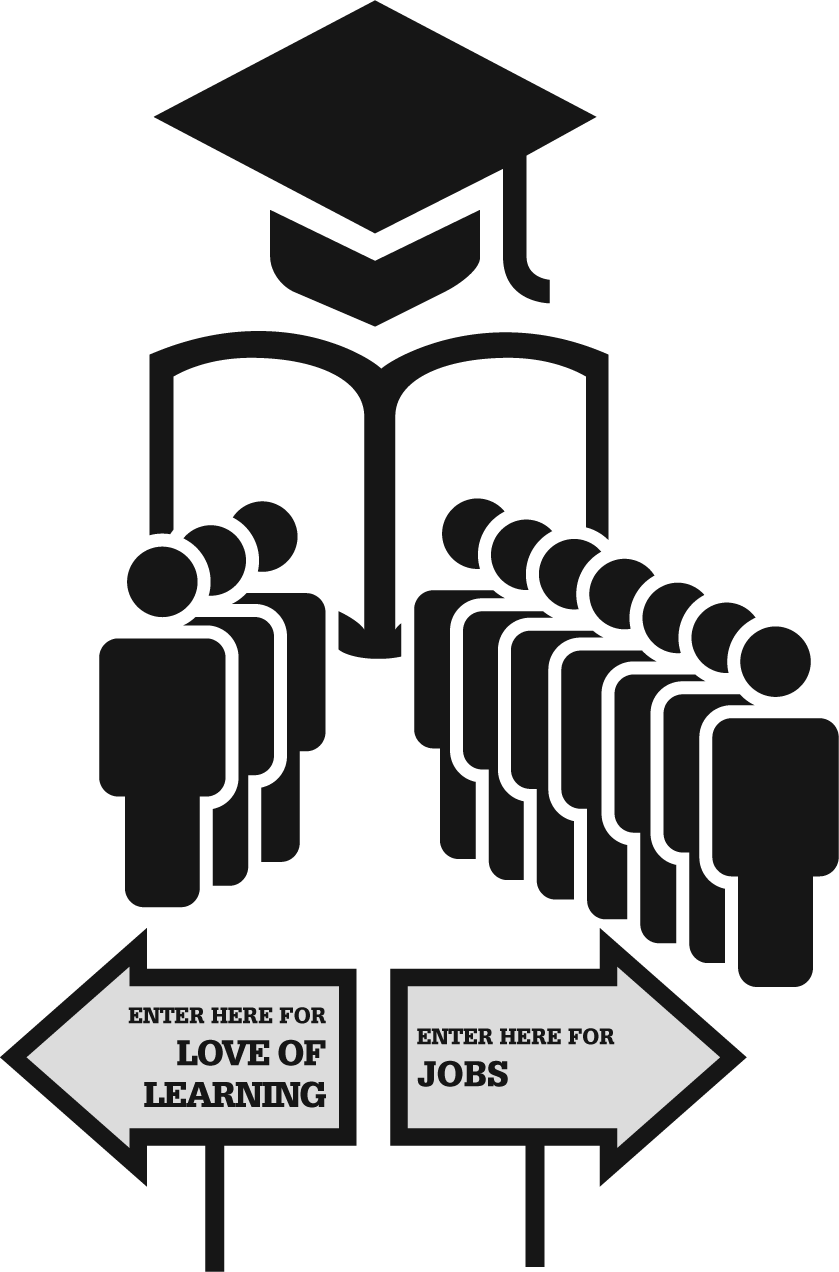
Many students came to see college as an extension of their high school education—as something they needed to get through to receive a credential—not as an intellectually rich experience. Their view of college as compulsory led to minimal participation in classroom discussions, infrequent interaction with faculty, and a classroom dynamic that seemed burdened with obligation.
A college degree has replaced a high school diploma as the ticket for entry into the middle-class job market.
Students’ utilitarian motives for college and perfunctory approach to coursework impacted their learning. They reported that they did not learn very much in their classes, and they felt that course material was not relevant to their current or future lives—supporting the findings of sociologists Richard Arum and Josipa Roksa in Academically Adrift. If students do not feel they are benefiting from their educational experiences, and do not possess strong, internal desires to attend college in the first place, then it is not hard to imagine that they would eventually decide to leave college altogether.
The fact that the current generation of young adults sees few, if any, pathways for economic security beyond college suggests, too, that prospects for opportunity have shifted significantly in this country. In the past, a responsible, hard-working individual could get by without a degree. That is less true today. Other than college and the military, there are few clear paths to adulthood.
If we, as a society, are going to endorse college as the primary path to adulthood, then we need policies that match this ideology. If students (at least at non-elite) institutions are enrolling en masse because they see a degree as a prerequisite for a stable life, then faculty and campus administrators must respond to this reality and adapt to students’ motivations and needs. Faculty must try to make course material more relevant to students’ lives, and campus administrators must help prepare students for the professional world through career advising and job placement.
Current education policy regards higher education as an optional, individual act of human capital investment. High schools do not academically prepare all students for college, and federal and state governments do not provide adequate financial aid to make it truly affordable to all. If we are going to tell young people that college is the goal, then we need to insure that it is academically and financially possible for them to achieve that goal.
At the same time, we should ask whether the “college for all” ideology is actually useful or appropriate. While increasing access for those who sincerely want to attend college is critical and laudable, universal mass enrollment may have unintended costs. Students may take on unnecessary debt for minimal learning, faculty course loads may be stretched, and time and resources may be wasted. Enrolling in college, when college seems like the only option, is not much of an opportunity at all.