Abstract
Violent death is so commonplace in Philadelphia that it infuses the visual culture of the city with haunting imagery. Sociologist James Dickinson shows how memorial portraits, roadside shrines, sidewalk plaques, murals, billboards, and graffiti variously recall, memorialize, criticize, or comment on the epidemic of lethal violence in the City of Brotherly Love.
Keywords
These days, the City of Brotherly Love is anything but that. Residents are caught up in an epidemic of gun (and other) violence that consistently dispatches several hundred victims to the morgue each year. Newspaper headlines routinely report the carnage: “Separate shootings leave four dead in the city,” “Shootings kill seven, hurt 12 over weekend,” “32 people shot in three days of violence.” While homicide rates have declined across the country, even in New York and Los Angeles, Philadelphia remains one of the most violent large cities in the United States, with homicides rarely falling below 300 a year.
Urban violence in Philadelphia disproportionately involves young minority males, who are both victims and offenders, as they are elsewhere. It is fueled by lax gun laws, easy access to illegal weapons, and a code of the street that sees violence (or its threat) as a means of gaining respect. In 2011, young black men between the ages of 17 and 29, 4 percent of the city’s population, accounted for almost half of the city’s 318 homicide victims. Firearms cause the majority of criminal deaths each year, and lead to many non-fatal injuries. Deaths from other hazards, such as house fires, drag racing, and hit-and-run car and bicycle accidents, although less frequent, add to the toll.
So commonplace is this violence that it continually infuses the visual culture of the city with haunting imagery. As individuals, groups and organizations increasingly use streets, sidewalks and other public spaces to recall, memorialize, criticize or comment on lethal violence, they create a visual landscape full of memorial portraits, murals, roadside shrines, sidewalk plaques, billboards, and graffiti. Some of these images on the streetscape grieve, mourn, or recall those who have died. Others seek to warn, inform, or educate about violence. Many are unsanctioned, while others enjoy official sponsorship or support. Collectively, they transform the city into a spectacle of competing iconographies of violence.
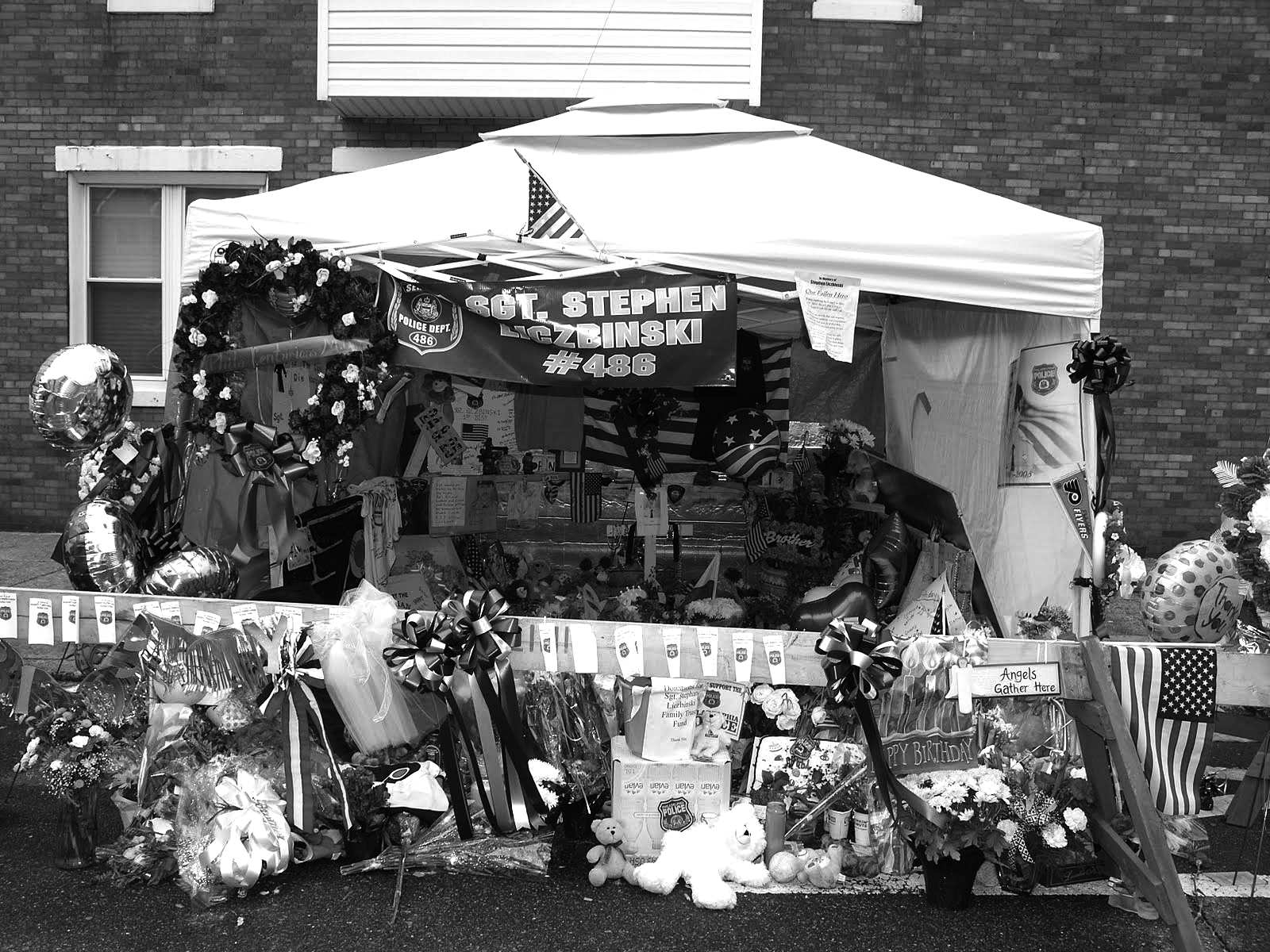
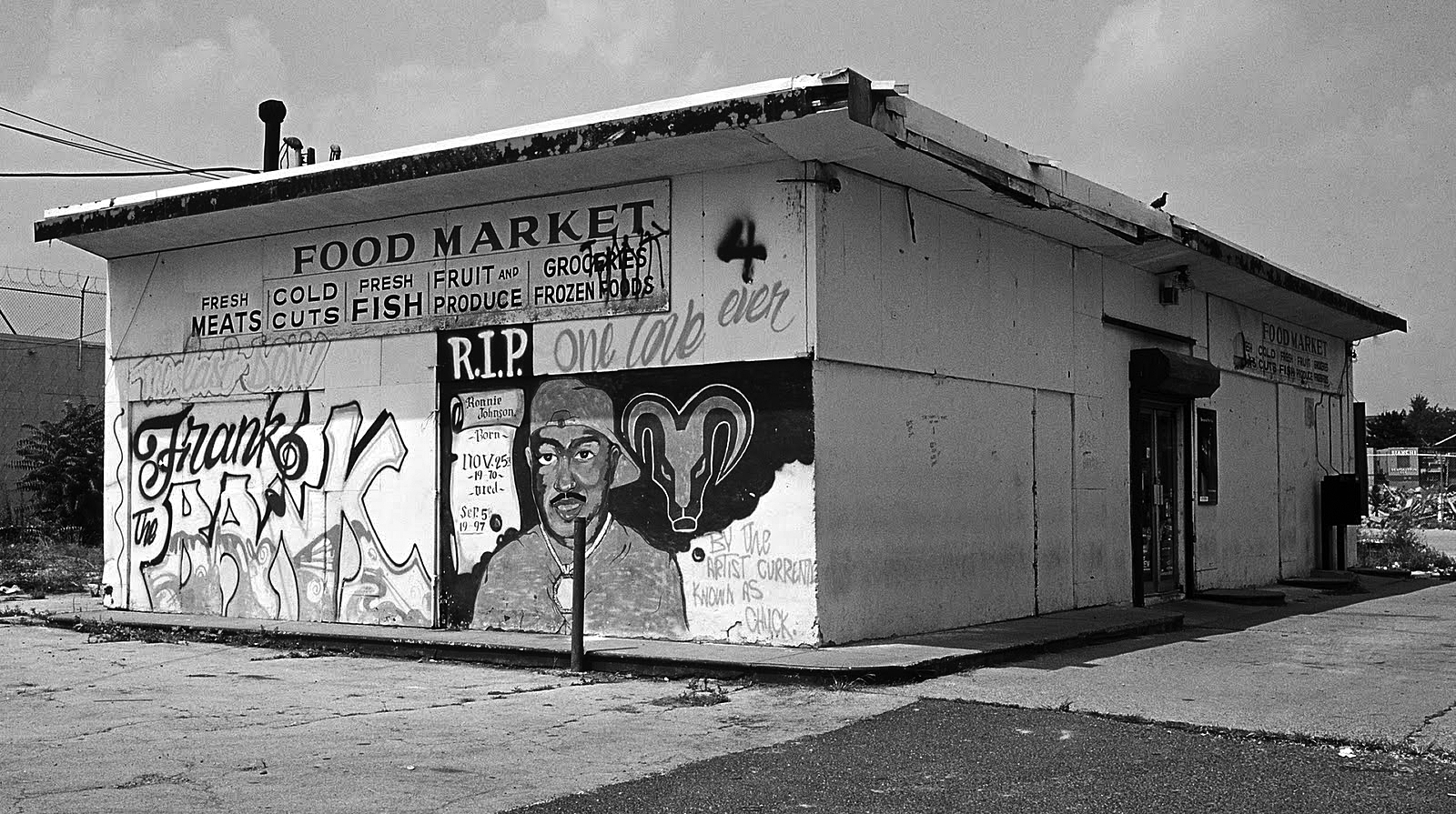
Memorials are common. Vying for attention on walls in poorer districts are portraits that evoke the brief lives and often violent deaths of young neighborhood residents. Among the most striking of these are the “R.I.P.” murals that recall, and even glorify, gang membership and violence. Roadside memorials, which spring up anywhere violence occurs, are another familiar sight. Flowers, balloons, toys, candles, flags and handwritten notes accumulate on sidewalks, lampposts or curbs. The memorials are particularly elaborate if the victim is a child, or an innocent bystander, and they are truly spectacular if they mark the death of police or law enforcement officials. Sometimes, roadside shrines persist, tended by family and friends, or are replaced by something more durable, such as a name etched in wet cement, or a weatherproof portrait of the victim attached to a lamppost.
Official commemorations are also seen on the streets. The city’s Mural Arts Program paints memorial portraits of police officers killed in the line of duty on municipal buildings. Numerous sidewalk plaques now mark where police officers and firemen have fallen. The “Hero Cops Memorial Plaque Program” memorializes Philadelphia police officers killed in the line of duty—239 since 1900, according to one estimate.
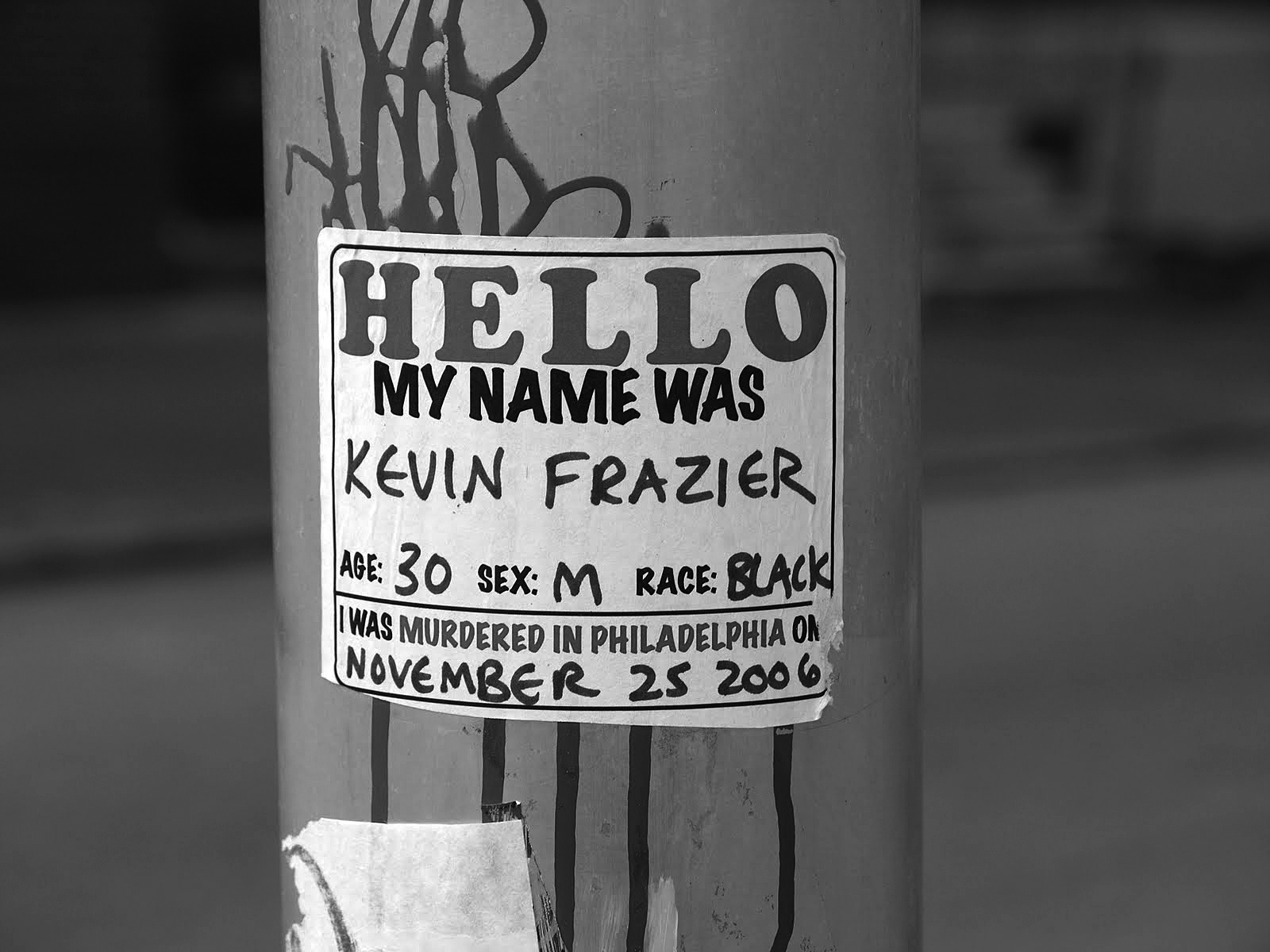
Not all additions to the streetscape are memorials. Government agencies, as well as community organizations, mount graphic anti-violence, anti-crime and gun control campaigns on commercial billboards. New digital billboards that line the city’s highways intersperse giant “wanted for murder” announcements that draw the attention of commuters. Graffiti also contributes to the visual look of the streetscape, and stencils and stickers offer ironic and nuanced commentaries on urban violence. Commercial stickers advertising “Dead By 23 Records” and the mixtape “Killadelphia, Pistolvania” exploit Philadelphia’s reputation for violence. “Snitches Get Stitches” stickers unapologetically warn against cooperation with the police. Other graffiti artists hope to raise awareness by publicly posting names of homicide victims in upscale areas, where homicides are rare.
Since violence in Philadelphia is unlikely to decline anytime soon, the streetscape will surely continue to evolve in the way it records, represents, and reports on the scourge of violent death in the City of Brotherly Love.
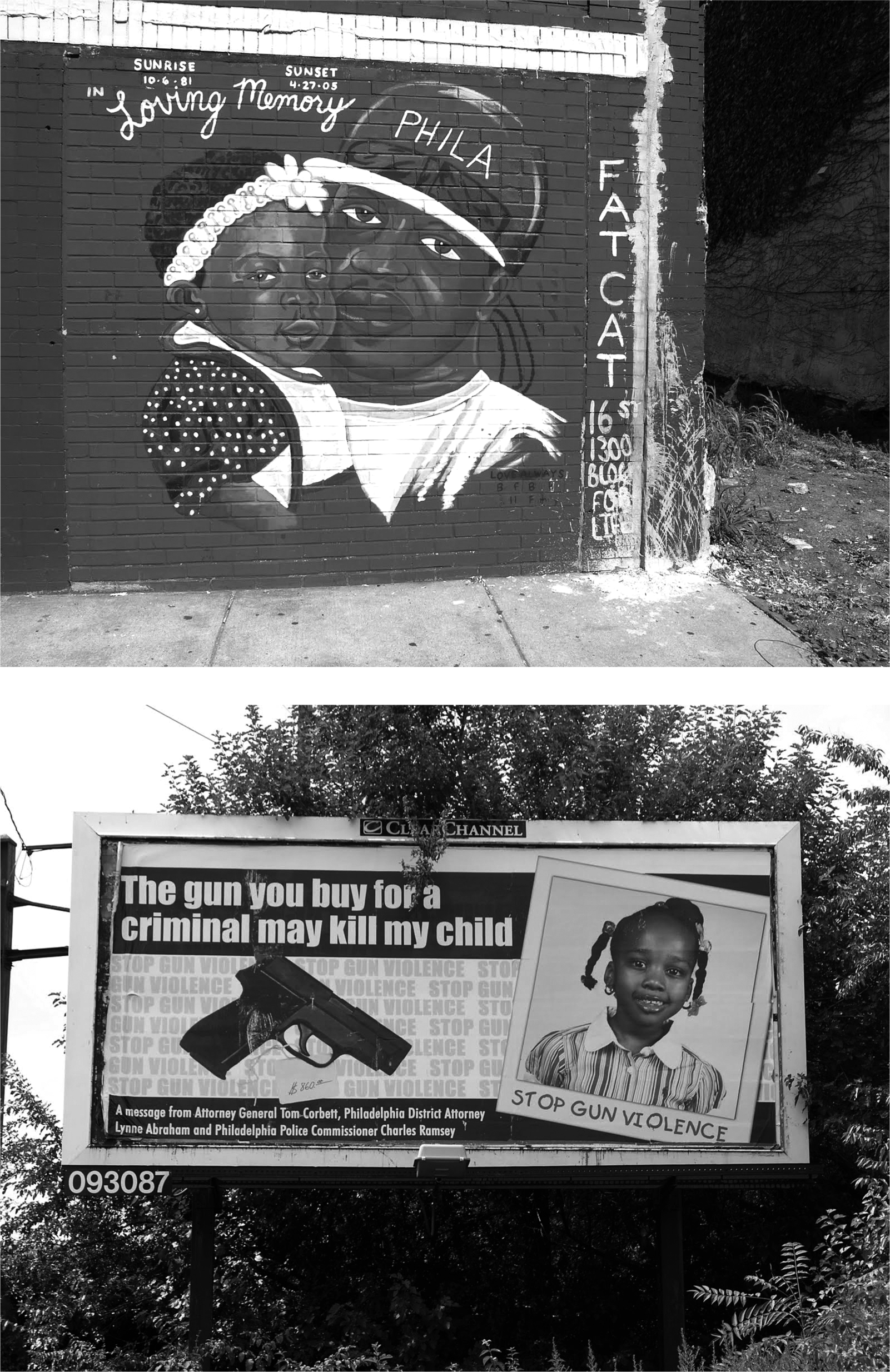
“Fat Cat,” South 16th Street. Unlike graffiti memorials, which often celebrate gang membership and conspicuous consumption, this portrait emphasizes the deceased’s role as a loving father and, by extension, the value of family relations and commitments in a tough urban world.
“Stop Gun Violence,” Grays Ferry Avenue. Sponsored by Philadelphia’s police department and the offices of the city and state attorney, this billboard warns of the potentially devastating consequences of straw gun purchases.
“R.I.P Ronnie,” North Philadelphia. Sometimes storeowners give permission for graffiti memorials to be painted on their walls, hoping their presence will deter other forms of graffiti. This store has since been demolished.
“Hello My Name Was…,” Center City. A striking graffiti series used the familiar personal identification tag to present information about homicide victims. Posted on newspaper boxes and lampposts in an upscale part of town, they personalized otherwise anonymous victims of violence. The stickers did not last long—many were defaced or scraped away, while others faded from exposure to the elements or were covered up by later generations of graffiti.
“The Sabina Rose Gardens,” 4th Street and Girard Avenue. The murder of this young and popular woman shocked residents of the rapidly gentrifying Northern Liberties neighborhood. Sabina’s neighbors responded by converting an empty lot into a community memorial garden.
“The Wall,” Hunting Park Avenue near 19th Street. On this impressive mural created by local residents, a hand-painted list records all 406 homicide victims in Philadelphia in 2006. By drawing on the “naming of the dead,” the wall powerfully suggests casualties associated with criminal violence now approach that of organized warfare.
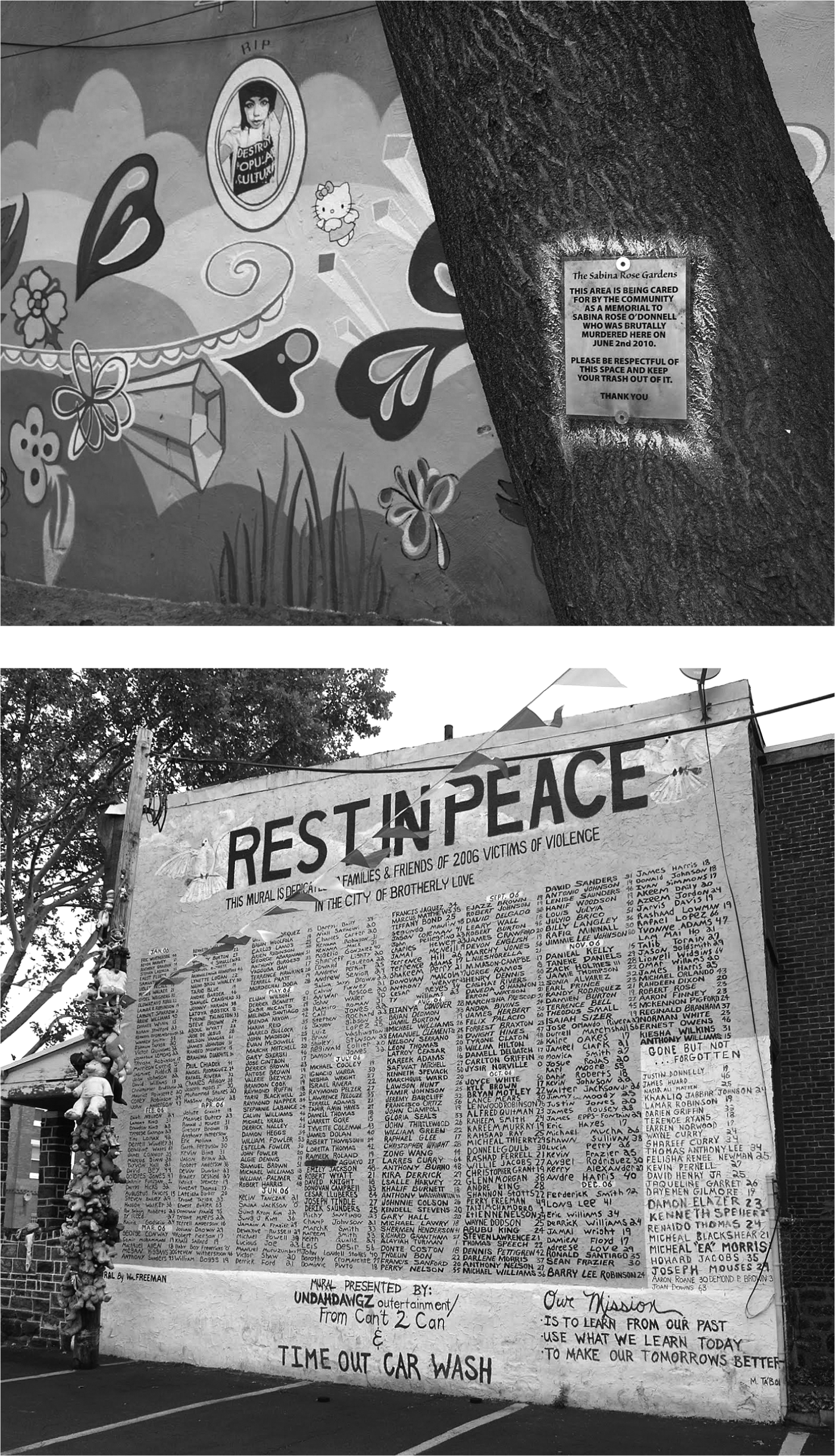
“The Wall,” Hunting Park Avenue near 19th Street. On this impressive mural created by local residents, a hand-painted list records all 406 homicide victims in Philadelphia in 2006. By drawing on the “naming of the dead,” the wall powerfully suggests casualties associated with criminal violence now approach that of organized warfare.
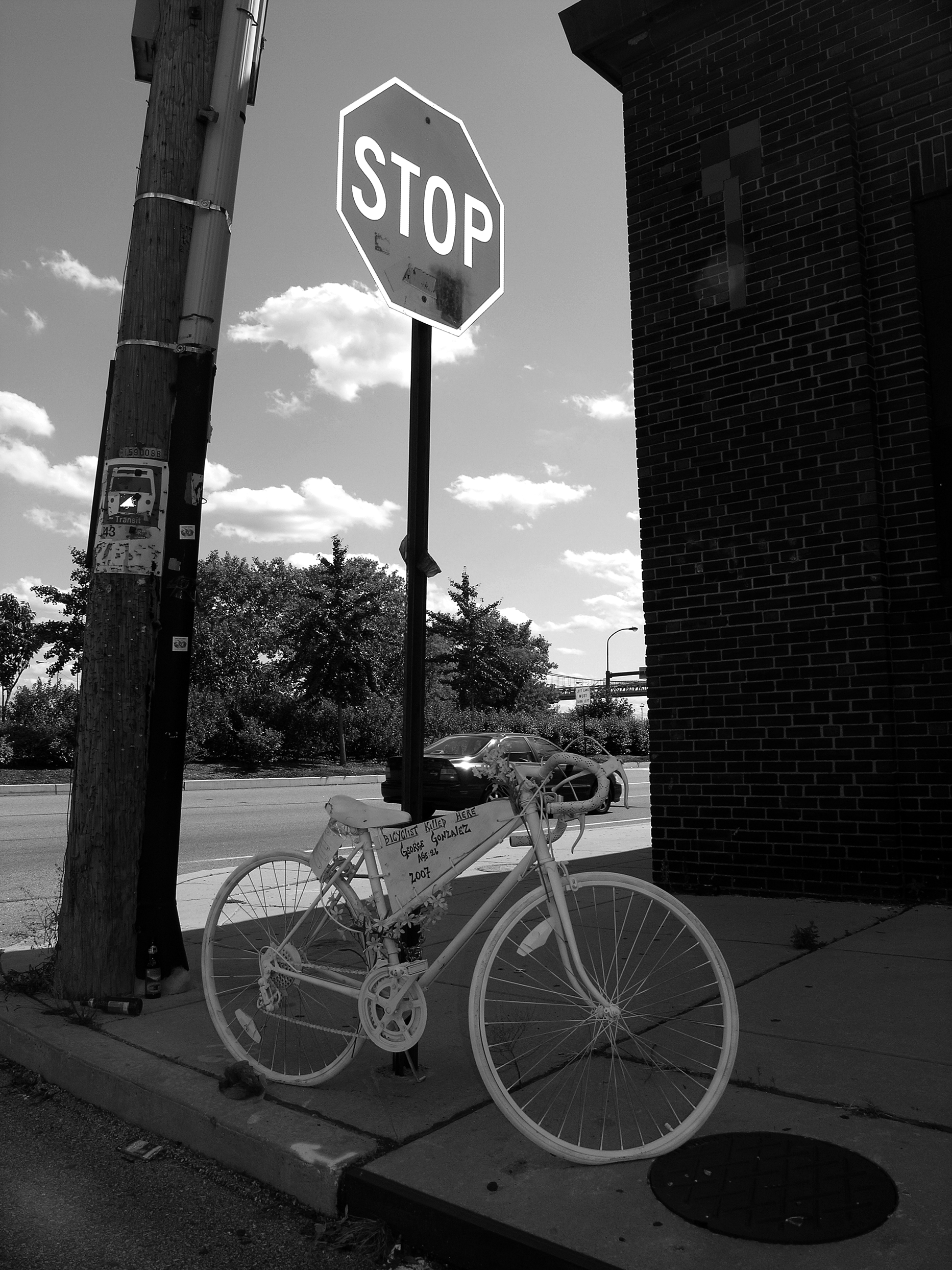
“Ghost Bike,” Delaware Avenue. Ghost bikes are distinctive, non-functioning white-painted bicycles set up by cycling groups as somber shrines for bicyclists killed on the street. Placed near crash or accident site they are reminders of the tragedy that took place there, as well as political statements in support of cyclists’ right to safe streets.
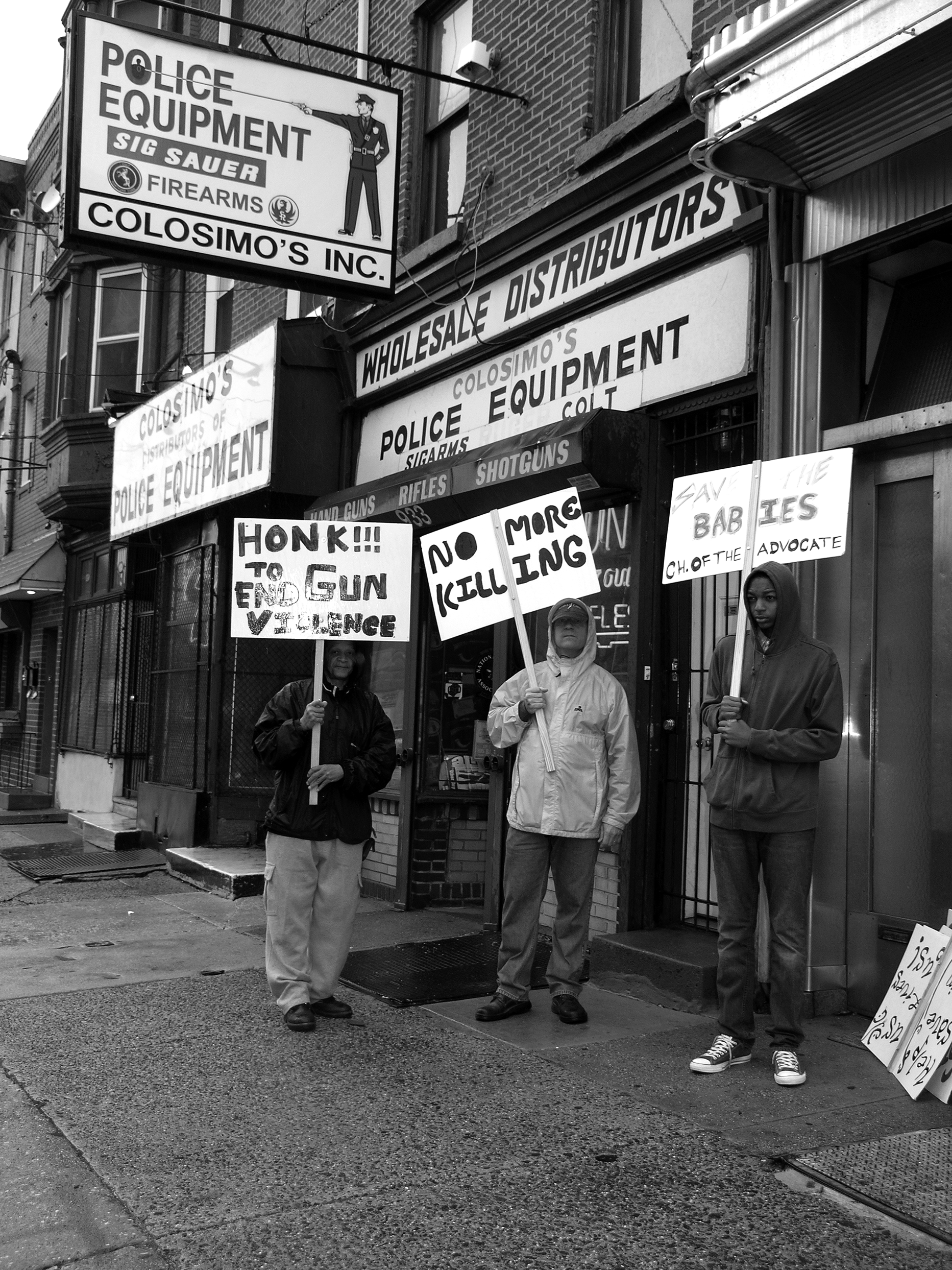
“Colosimo’s Inc.,” Spring Garden and 9th Streets. Notorious among gun shops in Philadelphia for facilitating the spread of illegal weapons in the city, Colosimo’s was deemed the fifth-worst gun dealer in America by the Brady Center to Prevent Gun Violence. A 2004 Bureau of Alcohol, Tobacco and Firearms report showed that many guns recovered at crime scenes in Philadelphia were originally purchased at Colosimo’s, and often shortly before being recovered by police. Regularly picketed by anti-violence groups, federal agents finally closed the store in 2009.
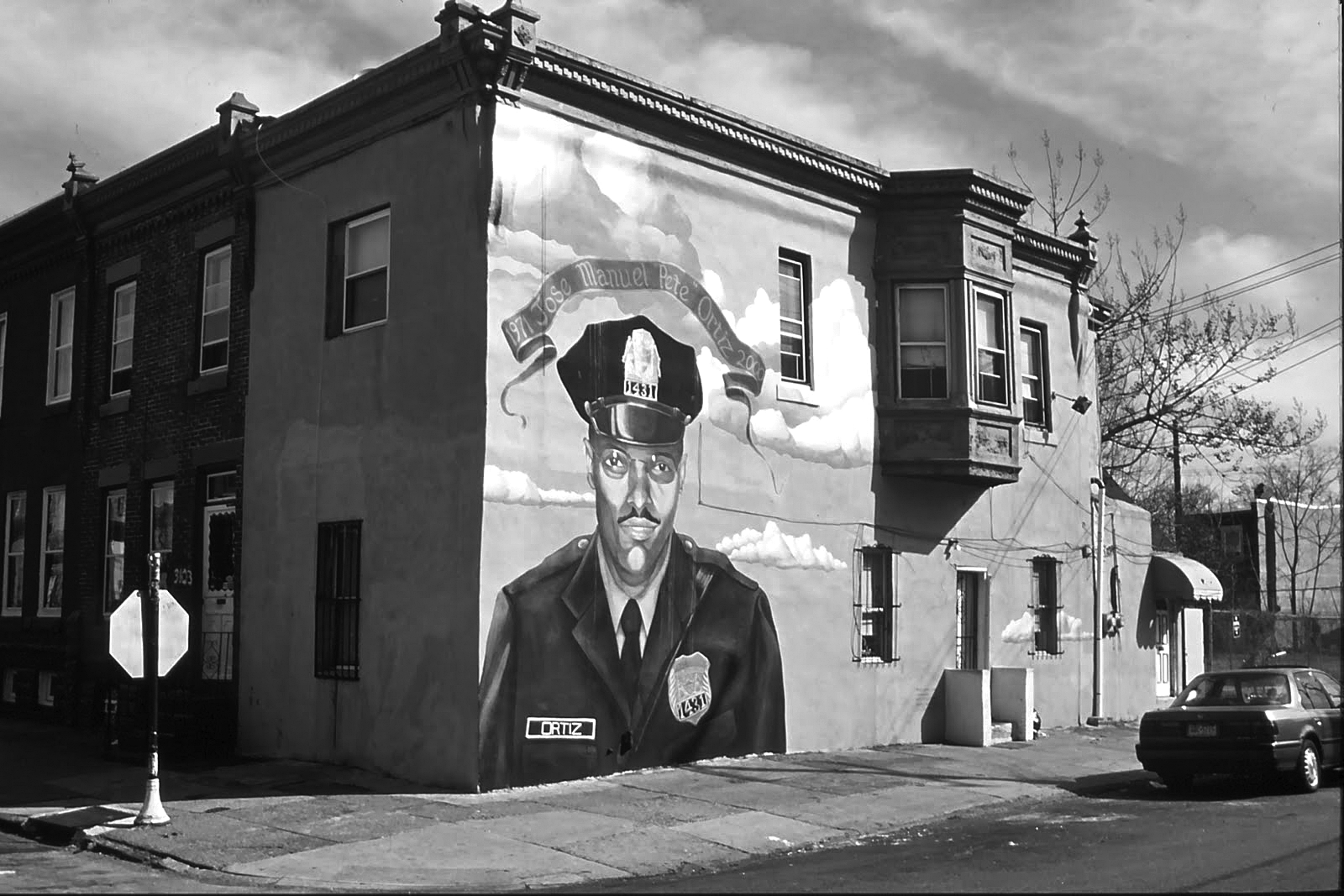
“Memorial to Officer Jose Ortiz,” Clearfield and Darien Streets. The death of Officer Ortiz was first recognized with a small informal mural painted on the side of an abandoned house. Although the memorial was revered by police and anti-violence activists, the owner of the house reappeared and removed it. The city’s Mural Arts Program then created this replacement portrait on a nearby house, thus initiating MAP’s greater responsiveness to issues of violence, poverty and homelessness in its program of community murals.
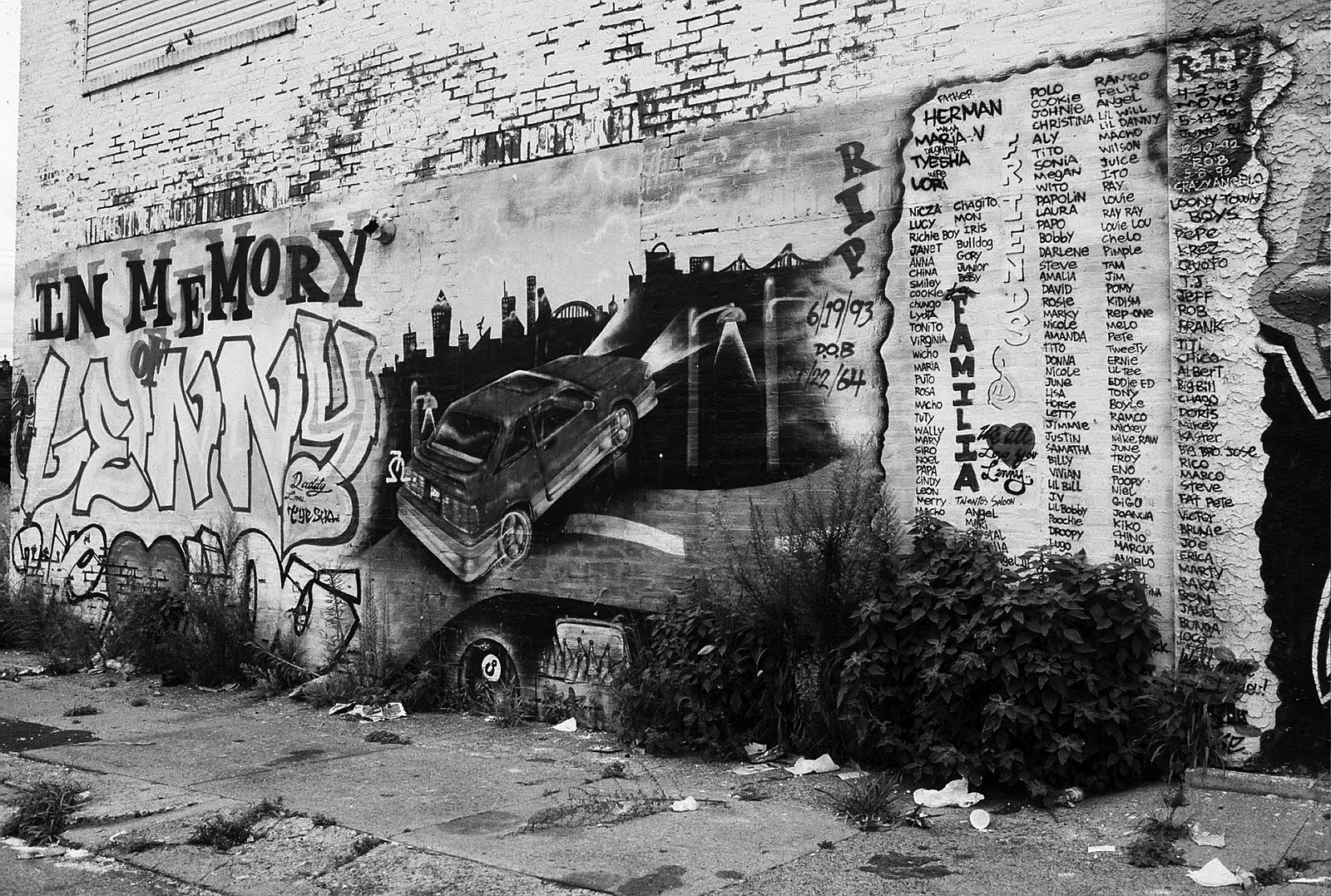
“Lenny,” North 3rd Street. In some Philadelphia neighborhoods, memorial walls are a common sight, evoking the brief lives of young neighborhood residents lost in the course of inter-gang rivalries, jealousies, or drug deals gone wrong. Typically a portrait of the deceased is shown decked out in, or surrounded by, objects important to them—low rider automobiles, gold chains and other symbols of conspicuous mainstream consumption. Often these informal memorials include a roll call of fellow gang members or a list of neighborhood associates and friends.
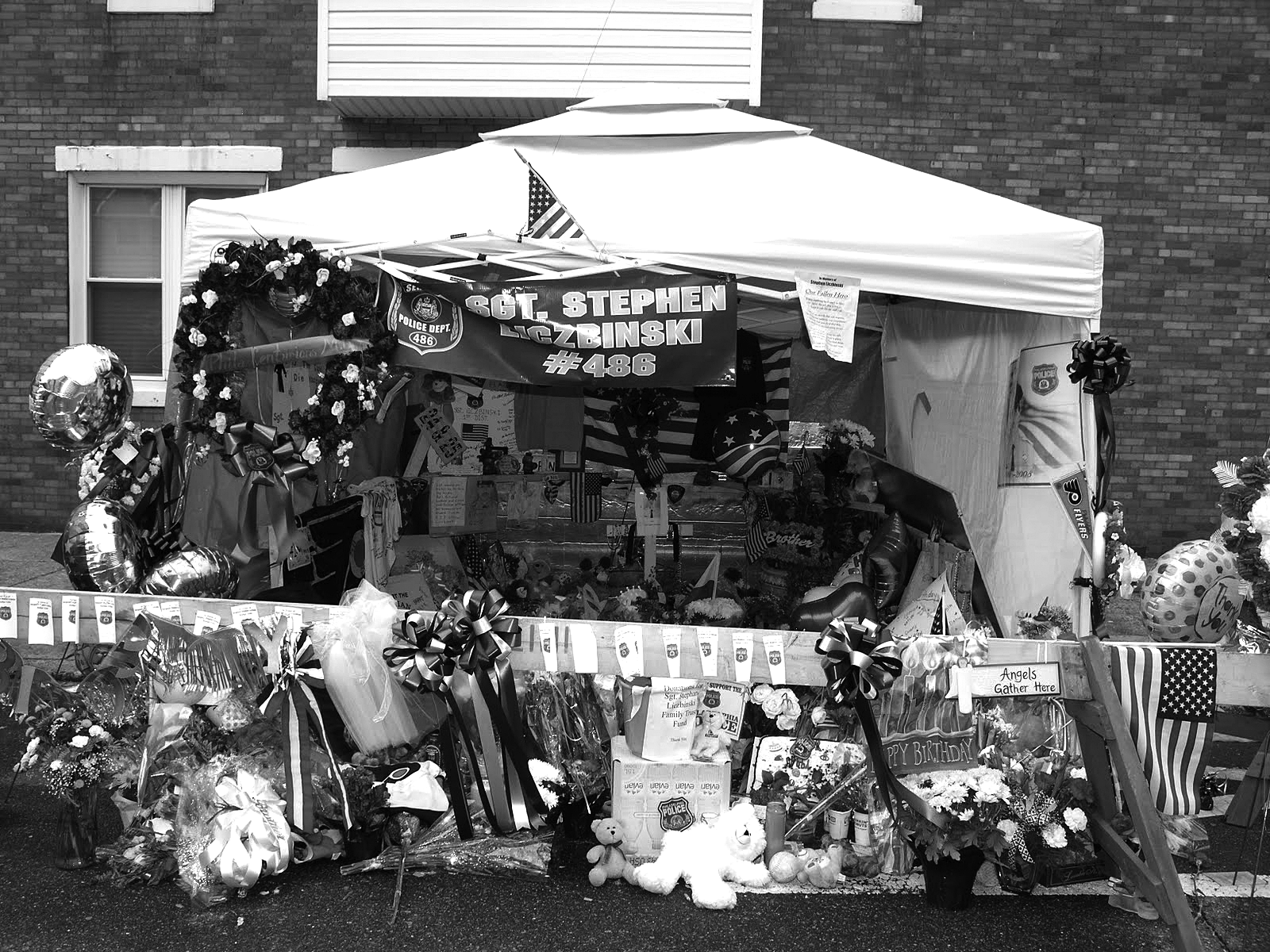
“Officer Down,” East Schiller and Almond Streets. With a spike in the number of police officers killed in the line of duty in Philadelphia (eight over the past three years), roadside memorials to fallen officers have taken on special significance. Here a large tent forms a room-sized shrine where an immense array of commemorative artifacts builds up around a photograph of the officer. Mobile TV reporting units, as well as onlookers from near and afar, add spectacle and drama to what may otherwise be a quiet residential street or innocuous commercial intersection.
“Veronica Rios,” South Fifth and Pierce Streets. Sometimes a temporary roadside shrine is replaced with a more permanent memorial such as this one in South Philadelphia where a weatherproof portrait of a young woman, victim of a drive-by shooting years ago, gazes down from a utility pole.
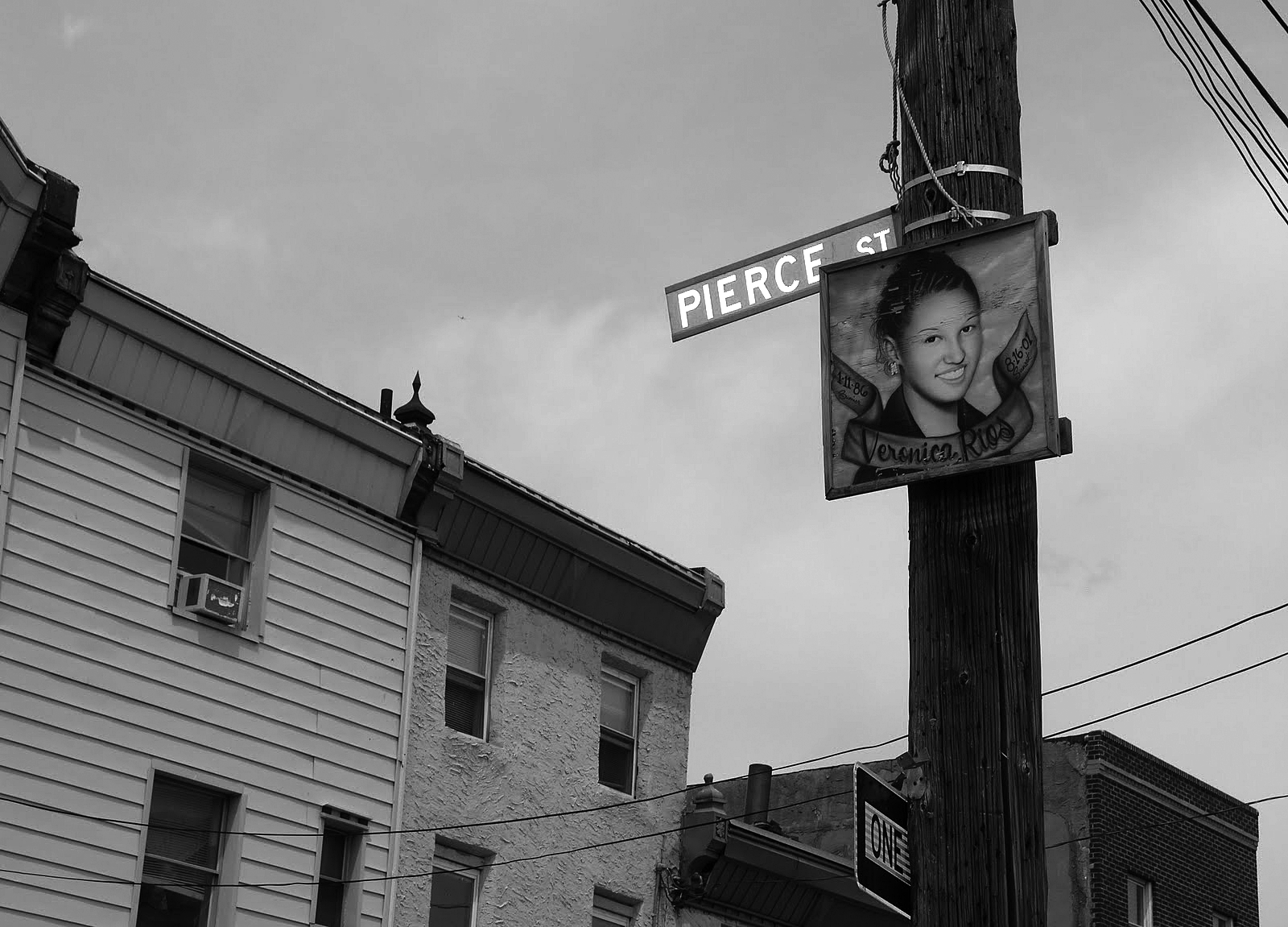
“Veronica Rios,” South Fifth and Pierce Streets. Sometimes a temporary roadside shrine is replaced with a more permanent memorial such as this one in South Philadelphia where a weatherproof portrait of a young woman, victim of a drive-by shooting years ago, gazes down from a utility pole.