



Abstract
In recent years, policy efforts to alleviate poverty have focused on marriage and relationship education. Orit Avishai’s, Melanie Heath’s,and Jennifer Randles’s research finds that efforts to address poverty via relationship skills training are misguided because this approach does not address the structural causes of poverty.
Keywords
Mikalea, a 27-year-old white woman, and David, 28, an African American man, had been together five years, and were raising a daughter from Mikalea’s previous marriage. They were expecting a son when they enrolled in a federally-funded relationship skills class for lowincome couples in California. began patiently tending to three speckled eggs in April 2011. Given that red-tailed hawks are a common American species, the event marriage. They were living paycheck-to-paycheck, trying to finish college, and constantly fighting about money, especially since David had become unemployed and Mikalea discovered she was pregnant.
Though the baby was unexpected, they were both excited about it. They both felt their relationship was emotionally and financially tenuous but were determined to make it work.
The relationship skills classes didn’t change their views of marriage, which they believed was at least 10 years off—a milestone they anticipated after their economic situation improved, and the tension in their relationship was reduced. Yet the classes taught them to empathize with one another and communicate better, and helped them understand that much of what they fought about was common to couples trying to raise a family under similar socioeconomic circumstances. Mikalea enjoyed the classes so much and found them so helpful that she planned to become an instructor herself. Reflecting on what she most appreciated about them, she said: “It shows people they’re not on their own.”
While Mikalea and David were learning how to be a better couple in California, in Oklahoma, Kathy, a 35-year-old African American mother of three, attended a relationship skills workshop as part of her training to receive Temporary Assistance to Needy Families (TANF)—welfare benefits. A high-school dropout, she had worked at dozens of low-end jobs and possessed few skills to obtain a job that would allow her to make ends meet. Still, she was happy to be single; in her experience, a man can get in the way of moving forward because, she says, “most men are just dogs!” While at first she was wary of the workshop, and thought the class was just about marriage, she was pleasantly surprised to learn that the skills could be used to build better relationships with “your kids or your grandparents or anybody.”
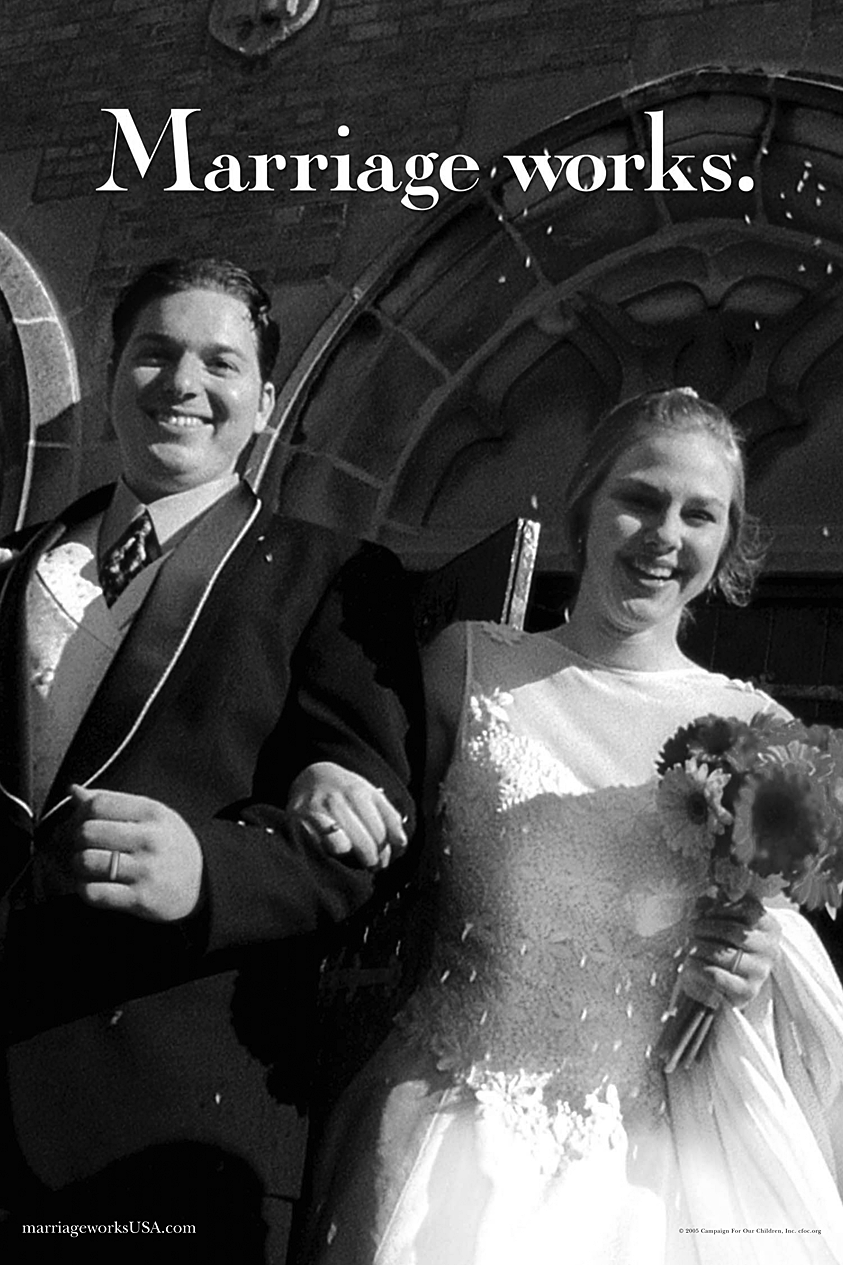
The classes Mikalea, David, and Kathy attended were part of a nationwide, government-funded marriage promotion and education program, an anti-poverty policy that emerged in the 1990s. Based on the philosophy that single parenthood is a cause of poverty, its proponents argue that strengthening marriage, along with work requirements, reduces poverty. These policies are a product of the 1996 welfare reform bill—the Personal Responsibility and Work Opportunity Reconciliation Act—which promoted job preparation, work, and marriage as a way of ending dependence on government benefits.
Federal marriage promotion programs gained prominence as social policy under the George W. Bush Administration. The federal Healthy Marriage Initiative (HMI) created a patchwork of funding that added up to about $200 million, and the 2005 welfare legislation included $500 million earmarked for marriage programs over five years. In 2011, Congress approved $75 million of President Obama’s proposed Fatherhood, Marriage, and Family Innovation Fund. Some states have also used portions of their TANF grants for marriage promotion activities.
But marriage promotion policy is controversial. Advocates argue that marriage is a social good that leads to lower poverty rates for married adults and their children, and superior social, economic, academic, and health outcomes for children who grow up with their biological, married parents—compared with the children of unwed or divorced couples. Skeptics contend that marriage promotion obscures the structural causes of poverty—lack of education and stable, decent-paying jobs—and diverts funds from programs that directly benefit poor families, such as cash assistance or work supports.
Mikalea and David were targeted by marriage promotion policies because they are a “fragile family,” defined as a low-income, unmarried couple with one or more children. As such, they face a greater risk of family instability and economic insecurity than couples who have children after marriage. While fragile families, as well as single women like Kathy who rely on welfare, are the primary constituents of marriage education programs, existing research offers little support for the claim that such programs can effectively address poverty.
Marriage promotion is controversial. Advocates argue it leads to lower poverty rates. Skeptics contend that it obscures the structural causes of poverty.
Nine years ago, sociologist Andrew Cherlin, writing in these pages, predicted as much, arguing that marriage education is driven by ideology rather than by social science. The recent recommitment of funds at the state and federal levels means that marriage and relationship education has become entrenched public policy.
But what does marriage education actually mean for people like Mikalea, David, and Kathy?
Relationship Science
Marriage education is founded on the belief that relationship success is rooted in individual skills and couple dynamics, and that couples can learn specific skills to help them stay together. These ideas are informed by a burgeoning science of relationships in psychology, sociology, and communication studies.
©iStockphoto/DNY59

As evidence mounted in the field of relationship science in the 1990s that marriage failure or success hinges on predictable patterns of interpersonal interactions, relationship experts began to translate this knowledge into teachable skills. Some skills, such as not rolling one’s eyes during an argument, are relatively easy to learn; others, such as achieving what relationship guru John Gottman calls the 5 to 1 ratio between positive and negative behaviors during arguments, are more difficult to master.
In Oklahoma City, Angel and Emily, who have been married seven years and have a toddler, arrived at a class sponsored by the state’s marriage initiative. For two consecutive Saturdays, they and another couple learned rules for handling conflict and communication techniques. They watched videos of couples fighting over issues like whether to add laundry detergent before or after the dirty clothes, and they practiced communication skills to resolve such disputes.
Exercises such as these are based on a deceptively simple premise: that having a healthy marriage is something one can learn; and that people who receive the information, practice the skills, and develop the attributes known to be linked to healthy marriages will be able to achieve marital bliss, regardless of social and economic constraints. That is, relationship education is based on the logic that it is not what a couple fights about that matters, but rather how they fight.
Theresa and Sandy who led the workshop in Oklahoma City offered examples of problems with communication, such as when men want to fix things and women just want to be heard. Sandy told us that when she lost a spreadsheet on her computer at work, her husband advised her to get a better computer. This wasn’t what she wanted to hear; she just wanted sympathy. Emily, a lawyer, could relate. She disclosed how she would call Angel from work to complain about a client, and he would not offer very useful advice. She wanted him to listen to her frustrations rather than offer solutions—a typical relationship dynamic that many relationship classes address by teaching participants active listening techniques.
Low-income parents like Mikalea, David, and Kathy were taught the same types of communication and problem solving skills as Angel and Emily. Yet, their economic and social circumstances couldn’t be more different. Angel and Emily are white, middle class, college-educated, and had their child after they married—all factors associated with marital success—while Mikalea and David, an interracial “fragile” family, and Kathy, an African American single parent, have experienced persistent economic and family instability over their lifetimes.
While marriage education can help some couples enjoy better marriages, there is little evidence that promoting better marriages can alleviate poverty. Our research points to two key reasons why marriage education is failing as welfare policy: it does not address the structural and economic foundations of poverty, and does not always serve low-income individuals, who are less likely to marry.
Courtesy of Campaign for Our Children
Money Management for the Poor
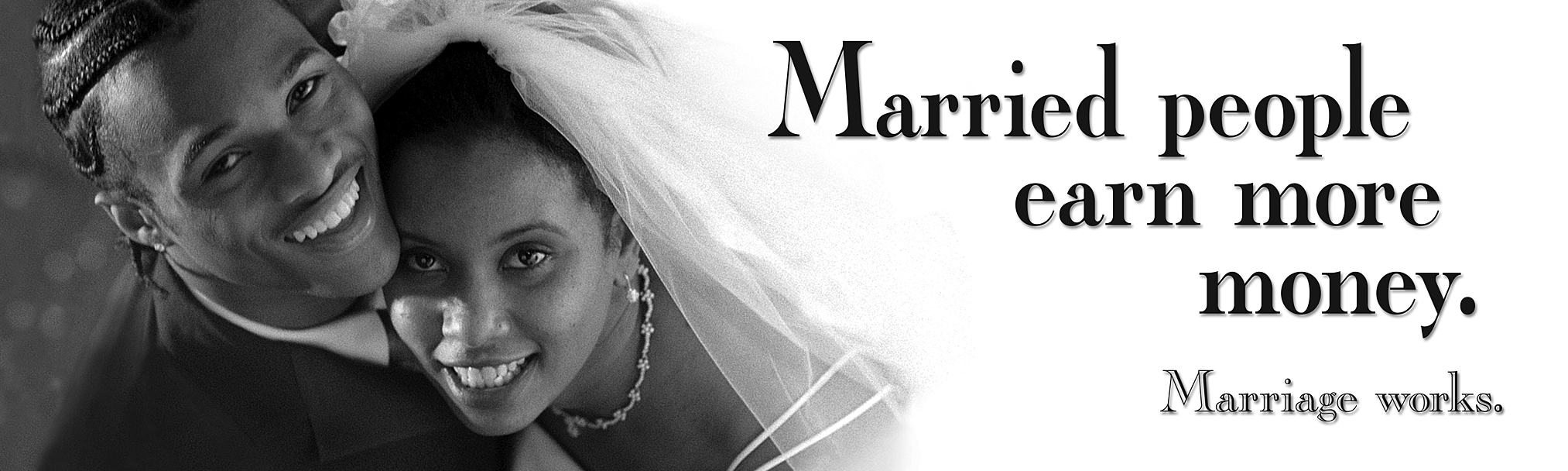
Since getting people like Mikalea and David in the door of marriage education classes is not an easy task, a significant portion of the program’s money is used to encourage participation. Low-income couples receive free childcare, a $10 per class transportation stipend, and catered hot meals. They also receive a $100 “graduation stipend” after attending 14 hours of classes. Though this worked out to less than four dollars per hour per person, the money was significant for Mikalea and David, and for other participants who are unemployed and in debt. Programs that target low-income couples report that they spend around $500 per couple in direct costs.
Advocates of marriage education argue that it is money well spent; marriage education is less expensive than the social costs of family dissolution. Yet there is little evidence that such programs alleviate poverty. In fact, studies of marriage education efficacy have never attempted to evaluate the causal relationship between marriage education and poverty rates, focusing instead on evaluating communication and couple satisfaction—ignoring the structural and economic foundations of poverty, and the demographics of marriage and divorce.
Courtesy of Campaign for Our Children
The program Mikalea and David participated in, which we call “Thriving Families,” focused on the teaching of two main types of skills: communication and money management. The communication skills units taught them how to become active and empathic communicators and conflict resolvers. The financial skills unit focused on how couples could manage their money more effectively by budgeting, cutting expenses, and aligning their spending habits with their values.
This mismatch between the philosophy of marriage education as an anti-poverty measure and the lived experience of poverty was reflected in interviews with Thriving Families couples. Participants said while they appreciated the information they received, the financial tips were minimally helpful because they had little money to manage.
As Josh, an 18-year-old white participant said, the information about “money would have been much more helpful if we had any.” The problem for Josh and his fiancée, Sarah, 17-years-old and white—a view echoed by many Thriving Families couples—was that the little money they had could only be stretched so far. Josh’s frustration points to a significant flaw in the logic of using skills-based approaches to address poverty: it presumes that unmarried parents’ economic challenges are largely behavioral, and ignores the socio-structural underpinnings of those challenges.
Recent research from the Pew Foundation, an independent research institute, has recently shown that educated, middle-class women and men like Emily and Angel are more likely to get and stay (happily) married than poor and low-income Americans like Mikaela and David. The most important predictors of marriage and divorce are not whether an individual has mastered good communication skills, but whether he or she has a stable job and a college degree.
In other words, conflicts over who does the laundry are very different from conflicts over how to stretch a welfare check. Yet such distinctions do not often figure into marriage education—at least not in the version conceived by the Bush Administration.
Middle-Class Problems
In April 2004, thirty couples attended the Sweethearts Weekend in Oklahoma to learn how to strengthen their marriages. The couples were relatively privileged: they had their own transportation, childcare, and the time to attend the free workshop.
Larry and Nancy, the facilitators, used the PREP (Prevention and Relationship Enhancement Program) curriculum, one of the most popular and profitable programs, developed in the 1980s by Denver University psychologists. The curriculum is peppered with examples of couples negotiating middle-class concerns. Larry tells them, “if you have kids, you’ve always got sports going on,” and describes the conflicts he and his wife had over who would chauffeur the kids to their games.
Audience members shared their experiences of the ways these commitments place stress on middle-class families. Working class and poor families’ stressors, which are largely rooted in economic instability, were never mentioned. (In 2006, the creators of PREP designed a new version of the curriculum, intended to better address the needs of low-income couples).
The financial tips couples received were minimally helpful because they had little money to manage.
In Florida, Sam and Janet, a middle class African American couple who led a weekend relationship retreat for distressed couples, demonstrated to the class a communication skill. “The daily temperature reading,” a tool developed by psychologist Virginia Satir, encourages couples to touch base daily by going through a structured monologue during which spouses take turns sharing appreciations, wishes, hopes, and dreams, new information, puzzles, complaints, and requests for change. The listener is not allowed to interrupt while the other is speaking. Janet’s complaint to her husband was about his habit of cleaning out her car—a late model SUV—every time he borrowed it. When his turn came, Sam said that he only borrows the car when he goes golfing with his buddies, and the mess embarrasses him.
As these examples suggest, marriage education fails to achieve its intended goals because it largely draws and caters to middle-class audiences. By focusing on disputes over laundry and eye-rolling, it fails to address the challenges facing disadvantaged couples, and the toll financial strain takes on their daily lives. Many programs funded through the 2005 welfare legislation have not followed the original intention to serve needy populations. Our analysis of federal grantees suggests that the majority of funded programs fail to target low-income and poor couples. Many programs use their grants to fund a range of activities, including heavily subsidized or free workshops, or couples retreats in luxurious locations, which often include catered meals and free tours.
©iStockphoto/MGJdeWit

In emphasizing the goal of strengthening marriage, such programs tend to serve relatively privileged couples like Angel and Emily, redistributing welfare money away from those who need it most.
A Better Strategy
Though it may be well-intentioned, marriage promotion and education programs do not alleviate poverty. Rather than targeting poor Americans, most programs serve the “general public.” But even when they target the poor, by focusing on skills, such programs ignore the roots of the problem. Social and economic advantages matter more for marriage success than knowing how to de-escalate a heated argument.
Social and economic advantages matter more than knowing how to de-escalate heated arguments.
Nevertheless, the low-income couples and individuals we interviewed found relationship skills classes helpful. Even though they rarely influenced their views about marriage, they had a positive impact on participants’ relationships, they believed.
Attending the classes taught David and Mikalea to solve problems cooperatively, they said. Others spoke of learning skills that would help them to better communicate with significant people in their lives. Kathy, the single African American mother of three, said the skills “can help you with a lot of things. Not just with relationships with your partner, your friend, your teacher, but with the outside world—period.”
Even as they emphasized personal solutions, the classes offered participants a structural context for interpreting their seemingly personal problems. They helped David, in his words, “understand that we’re not the only ones going through these problems…almost everyone in the class had the exact same problems, especially with money.” They helped parents understand that many struggles were not the products of personal shortcomings, but were often the direct result of trying to keep a family together while in poverty.
As sociologists Paula England and Kathy Edin have argued, low-income couples face many economic and social barriers to creating and maintaining stable marriages. Challenges with co-parenting, higher emotional standards for marriage, and low relationship quality, combined with struggles over employment, low earnings, and the stress of economic deprivation, impede marriage and marital instability among low-income couples. But relationship classes alone are insufficient interventions. The Obama administration has recognized that family and economic stability are linked; recent grants emphasize healthy relationships rather than marriage, and they view relationship skills in relation to a broader range of services, including employment assistance. This indicates a new, more positive direction in marriage promotion policy.
Scholars and policymakers across the political spectrum tend to agree that anti-poverty policy should support family-formation goals, and encourage parents to create secure families for children. Relationship skills education can support this goal by recognizing the connection between family and economic security. This is especially important for low-income parents under financial stress who have limited access to counseling services. Time will tell if the policy direction taken by the Obama administration is a step in this direction.