



Abstract
The case of David Wojnarowicz’s video installation, A Fire in My Belly, shows how controversies in the art world can lead to surprising outcomes. From attention generation to the promotion of democratic discourse, controversy is not necessarily a wholly negative experience.
Keywords
Controversies in the art world, though they may seem threatening, can sometimes lead to surprising outcomes. Consider the case of David Wojnarowicz’s video installation, A Fire in My Belly, which was pulled from an exhibit at the National Portrait Gallery in December 2010.
It was part of a larger exhibit called “Hide/Seek: Difference and Desire in American Portraiture,” on images of gay and lesbian sexuality in American art. William Donohue of the Catholic League and Republican Representative John Boehner—who was about to become Speaker of the House—had objected to a short segment depicting ants crawling on a crucifix, arguing that the image constituted a clear attack on religion and should not be exhibited at taxpayer expense. The video was removed the following day.
Donohue and Boehner were not the only ones to raise objections to the exhibit. Earlier, the curators Jonathan Katz and David C. Ward had shortened the video, deleting the soundtrack and substituting audio from a 1989 ACT-UP demonstration. The original 13-minute video (available on YouTube) features scenes of urban street life in Mexico from a trip the artist made in the mid-1980s. Wojnarowicz later made at least one shorter version, collaborating with the artist Diamanda Galás to produce a soundtrack that combines low guttural sounds with chants and shouted verses from the Book of Leviticus. Some objected to the curators’ changes, fearing that they were contrary to the artist’s intentions. (Wojnarowicz died in 1992 of AIDS-related complications.) Nonetheless, the Wojnarowicz estate, whose holdings included both the original A Fire in My Belly and the ACT-UP audio, granted the curators permission to edit the video.
David Wojnarowicz Untitled (eye w/ ants) from the Ant series 1988-89 gelatin silver print 17 x 18-1/2 inches edition of 5
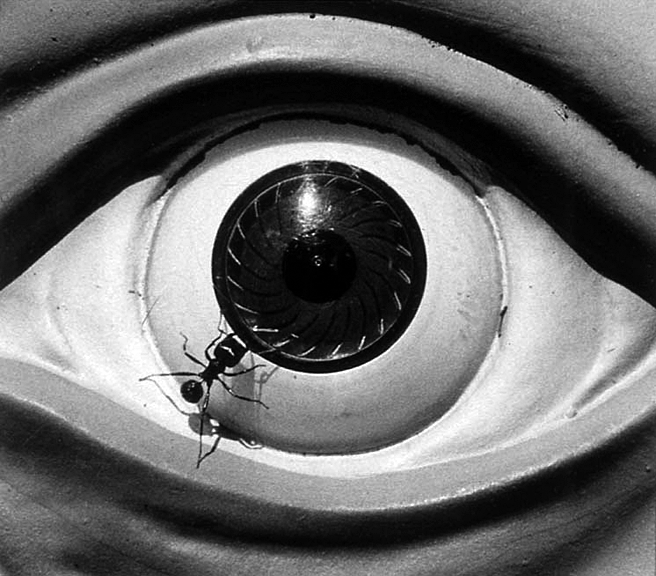
Conservatives saw the very existence of the art as an attack on Christianity. Liberals, in contrast, feared censorship of the work and the arts in general. And defenders of Wojnarowicz saw the curators’ decision to alter the work as an attack on the artist, and a silencing of his voice. Controversies such as these generate conflict, to be sure, but they can also serve important social functions.
Controversy generates attention for the arts. After the Wojnarowicz fuss, attendance rates at the exhibit soared—reportedly by as much as 75 percent over the previous year. The video in question also received over 140,000 hits on YouTube and very likely increased the market value of the artist’s works—much as earlier controversies surrounding Robert Mapplethorpe’s photographs did.
Controversy enables publics to wrestle over social boundaries. Clearly, public attitudes about sexuality, gender, and religion are shifting; arts controversies contribute to those shifts. A Fire in My Belly, for example, pushes us to think about gay art and challenges our assumptions about whether religious imagery should be considered sacred.
Controversy also permits art to challenge broader audiences. Sociologist Steven Dubin, analyzing arts controversies in the late 1980s, refers to difficult works of art as “arresting images.” When a difficult work of art is exhibited alongside other works of art in large museum spaces, the work can lose its edge. Throngs of viewers pass by for a few minutes at a time, move on to other work, head for a snack in the café, and stop by the gift shop on their way out. But when a controversy unfolds, the work gains more bite. It elicits debate on the airwaves, across the Internet, and at the water cooler. A Fire in My Belly generated heated discussion of an 11-second scene depicting ants crawling on a crucifix: was it a jab at religion or a powerful depiction of nature reclaiming basic human symbols? Was Wojnarowicz be expressing his own sense of the sacred? The meaning of the work is, of course, elusive.
Controversy about the arts can generate powerful emotions and social solidarity. In 1989, when the National Endowment for the Arts faced similar controversies in relation to works by Andres Serrano, Mapplethorpe, and others, many small arts agencies from across the nation traveled to Washington to defend the Federal agency. A major advocacy network for the art world, the Center for Arts and Culture, part of the alliance Americans for the Arts, resulted. While individual works of art rarely spawn major organizations, arts controversies have the potential to serve the same social functions Emile Durkheim attributed to crime—they respond to violations of the social order and restore order.
Controversies, finally, promote democratic discourse. Sociologist Nina Eliasoph suggests that debate is a key element of democracy, for even when it slips into uncivil territory, important ideas are being questioned. Controversies in the art world encourage us to think deeply about the arts, but also about the ideological content of the arts—along with sexuality, religion, health, law, and other aspects of contemporary American life.
Are there limits to the value of arts controversies? Certainly. In recent decades, they’ve led agencies and foundations to change their funding rules. The National Endowment for the Arts, for example, no longer gives direct grants to individual artists, and it has cut support for feminist, queer, and other forms of socially challenging art.
While controversy in the art world has its merits, when it leads to outright destruction, those merits are questionable. For example, on Palm Sunday in 2011, a print of Andres Serrano’s “Piss Christ” was destroyed by evangelical Catholics who broke into a small museum in Avignon, where the work was on temporary display. They broke the plexiglass cover with a hammer and drove a screwdriver through the photograph as they protested the mix of sacred and profane elements in the work, which featured an image of a crucifix submerged in a vial of urine and blood.
Those angry activists destroyed only one of ten prints of “Piss Christ”—and the other prints live on. But many artworks are unique. Controversies promote communication, not just between artists and audiences, but across societies. But when controversy turns to destruction, communication turns to silence.