



Abstract
Girls and women have more opportunities since Title IX, but the playing field is still far from level. Cheryl Cooky and Nicole M. Lavoi explore how major inequities remain, especially in terms of media attention, distribution of institutional resources and opportunities to coach and lead in the world of sport.
Keywords
Title IX of the Educational Amendments to the Constitution states that “No person in the United States shall, on the basis of sex, be excluded from participation in, be denied the benefits of, or be subjected to discrimination under any educational program or activity receiving federal assistance.” In the nearly 40 years since it passed, this provision has played an important role, both directly and indirectly, in girls and women’s sport participation in the United States.
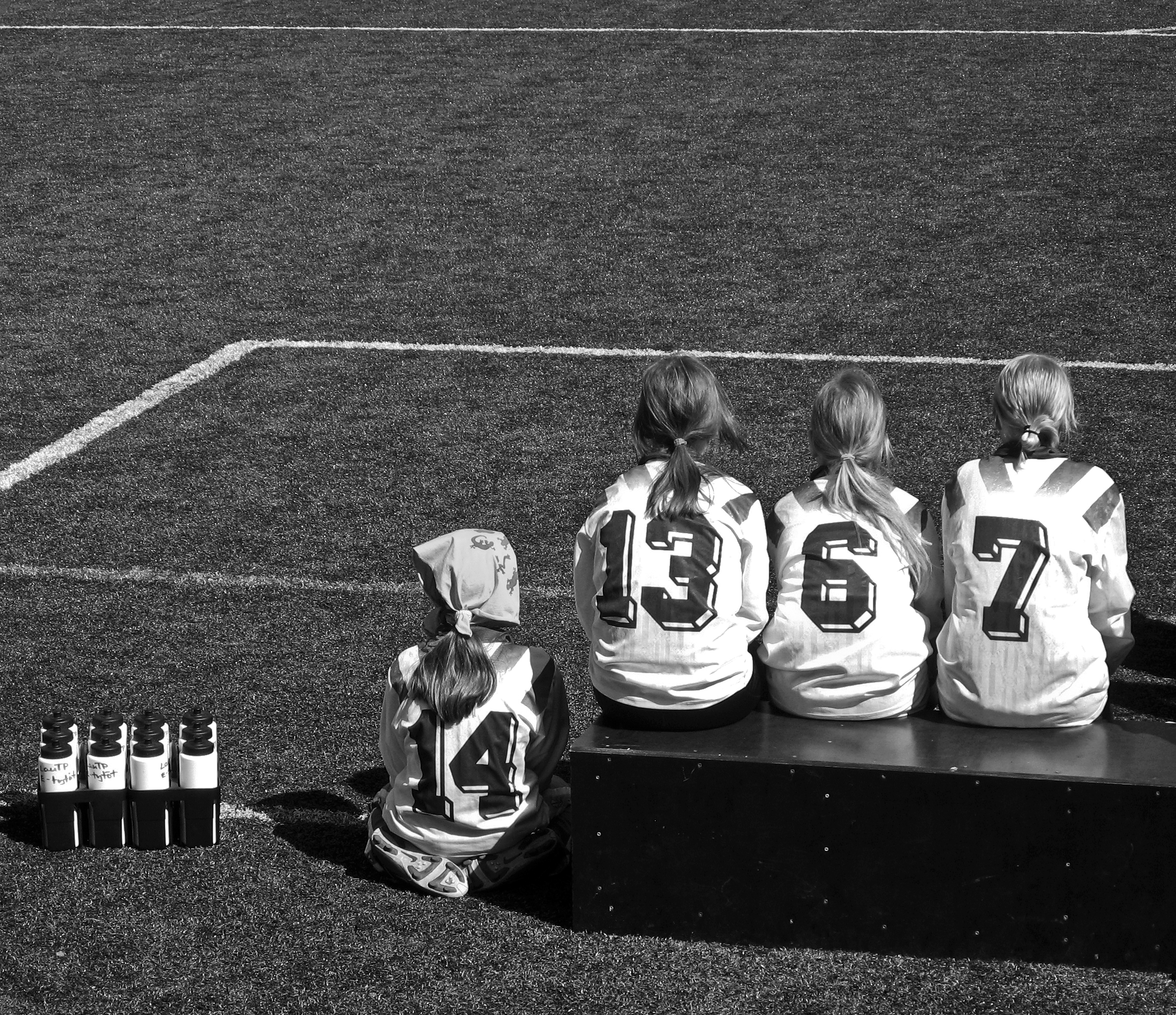
Title IX has dramatically increased the number of sport opportunities for girls and women in educational institutions. According to data collected by the National Federation of State High School Associations, in 1971 (just prior to the passage of Title IX), 294,105 girls participated in high school sports. By 2009-2010, that number had grown to 3,172,637. R. Vivian Acosta and Linda Jean Carpenter, authors of an ongoing, longitudinal study, found that female participation at the collegiate level has increased six-fold, from 30,000 in 1977 to more than 180,000 in 2010. In short, girls and women comprise nearly 40 percent of all interscholastic and intercollegiate sport participants. we examine some of the sociological research that documents and helps account for these shortcomings. This work speaks to the multifaceted nature of an institution as large as sport, the persistence of sexism and male dominance, and the challenges entailed in making social change.
Progress is also evidenced in other sporting realms not directly impacted by the Title IX mandate. Today, women are participating at the professional level in sports that seemed beyond reach 40 years ago—including professional football (the Independent Women’s Football League). The growing popularity of the Women’s National Basketball Association (WNBA) and the Women’s Professional Soccer (WPS) league is an important phenomenon in itself. Indeed, the visibility and excellence of female athletes and women’s sport have helped create a broader cultural context in which female athleticism has become “normalized,” and in many cases, celebrated. Sport and female athleticism have become inextricably linked to the empowerment of girls and women—as in the “Girl Power” movement in the 1990s, which led to the proliferation of representations of strong, athletic women in popular culture.
Yet, despite this progress, we are far from a world of gender equality in American sport. Compared to their male counterparts, major inequities and shortcomings remain for female athletes—especially in terms of media attention and opportunities to coach and lead in the world of sport. In this article, we examine some of the sociological research that documents and helps account for these shortcomings. This work speaks to the multifaceted nature of an institution as large as sport, the persistence of sexism and male dominance, and the challenges entailed in making social change.
Media
Fans of women’s sports today find more social media sites with a primary focus on female athletes; they might, for example, look to WomenTalkSports.com, an online blog network. More media outlets broadcast women’s sport and in higher broadcast quality than in the past. Research has shown that the production values (such as the number of camera angles, use of slow motion replays, graphics, and quality of commentators) have also improved dramatically over the past 20 years. Still, there is a lack of coverage of women’s sport in the mainstream media.
Although televised broadcast coverage of female sport participation has improved in both quality and quantity, these gains have not translated into increased coverage in newspapers, magazines, or televised news and highlight shows. For example, in 2003 ESPN began broadcasting the entire women’s NCAA basketball tournament on its sister station, ESPN2. However, in a longitudinal study released in 2010 by the University of Southern California’s Center for Feminist Research, sociologists Michael Messner and Cheryl Cooky found that ESPN—the dominant sports network in the United States—dedicated 100 segments and over 3 hours on the men’s tournament, and only 11 segments and 6½ minutes on the women’s; most of the women’s tournament coverage was relegated to a small, scrolling ticker at the bottom of the screen. Messner and Cooky also found that televised news media coverage of women’s sport was at its lowest level in 20 years—it accounted for less than two percent of televised news coverage in 2009.
Perhaps even more problematic is that when female athletes do receive mainstream media attention, it is typically in sexualized ways that trivialize their athleticism. For example, one of the more disturbing trends that we have observed is the growing number of female athletes featured in “lad mags” like FHM, Maxim, and Playboy. Audiences are more likely to see a female athlete in her swimsuit lounging on the beach than in her uniform on the field. Since the early 2000s, Sports Illustrated has featured female athletes in the annual “Swimsuit Issue”—its best-selling issue every year. The issue has boasted top female athletes such as Serena Williams, Maria Sharapova, Danica Patrick, and Amanda Beard (and far more often than they’ve appeared in any other issue of Sports Illustrated). Racecar driver Patrick and Olympic swimmer Beard have also been in FHM, posing in ways that resemble soft-core pornography. And this past summer, the German U-20 women’s soccer team showed up in the German edition of Playboy, just days before the 2011 Women’s World Cup, to help “promote the sport.” As sociologist Mary Jo Kane recently argued in a column for The Nation, such images “sell sex” but do little to legitimize and promote female athleticism. Stereotypical representations of this sort would not be so troubling if media images of female athletic competence were commonplace.
Major inequities remain for female athletes— especially in terms of media attention, distribution of institutional resources, and opportunities to coach and lead in the world of sport.
There are certainly far more female athletes, professional leagues, and female athlete superstars today than there were 20 or 30 years ago. So, why does the media continue to silence, ignore, trivialize, and hyper-sexualize female athletes? Scholars argue that the ways in which male and female athletes are represented in the media maintain existing gendered hierarchies, uphold sport as a male preserve, and reaffirm the masculine norms and values that are dominant in the wider society. The ways female athletes shape their own images and representations are also part of the package, along with the choices of media producers, journalists, and audiences to produce and consume these images. All of these choices, of course, are made within a broader context—where ways of seeing privilege men and masculine ideals.

Some argue that in order to combat the trivialized and hyper-sexualized images of female athletes, we need more women in positions of power within media organizations who could challenge embedded sexism and masculine ideals. Yet women are consistently underrepresented in such positions of power in mainstream media organizations—and beyond.
Taking Charge—or Not
Many of those who fought for Title IX assumed that a rise in female sports participation would automatically translate to increased leadership opportunities for women in sport. This expectation has not been borne out. Despite the fact that female athletic participation is at a historic high at all levels of sport, women are a scarce minority in positions of power within sports organizations. For example, Acosta and Carpenter have shown that the percentage of women in coaching and administrative positions in women’s sport has actually declined, from over 90 percent to roughly 40 percent, since Title IX passed—and this percentage is lower than at any time in history except in 2006. In fact, in the most visible and arguably most important positions in sport—head coaches, athletic administrators, and sports editors—women remain so marginalized they’re essentially statistical tokens—that is, they represent less than 15 percent of the workforce population.
A by-the-numbers analysis paints a bleak picture. In February, 2011 the Chronicle of Higher Education reported that only five of the 120 athletic directors in women’s Division I-A—the biggest and most prominent collegiate programs—are women. Only 19 percent of collegiate athletic directors across all divisional levels are female. These stats actually represent a sharp decline from the early 1970s, when over 90 percent of those who oversaw female athletics programs were women. And at the Associated Press, for instance, 94 percent of sports editors are men.
Although there is no national data on women in high school or youth sport leadership, Nicole LaVoi and Cindra Kamphoff, researchers affiliated with the Tucker Center at the University of Minnesota, suggest the trends at those levels are similar. An analysis of one state-level youth soccer association showed that women seldom occupy positions as head coach (15.1 percent) or assistant coach (18.9 percent). As in other sports, women are clustered in the less prestigious and less visible position of team manager, coach for younger age groups or coach at the lower competitive levels.
What factors explain why women are so poorly represented in positions of sport leadership? Scholars have uncovered many complex barriers that come into play. In order to gain credibility, female coaches and administrators often have to perform at higher levels than their male colleagues. They may feel pressure to conform to organizational norms in order to succeed, rather than challenge them. Women are also at increased risk for gender discrimination due to sexual harassment, wage inequities, and limited opportunities for promotion.
In one recent study, Messner interviewed women who were involved in an American Youth Soccer Organization (AYSO) league. He found that many women experienced informal negative interactions, including overt sexism and challenges to their authority by male coaches, parents, and the “old-boys network” at work in their league. These experiences, taken together, created a “glass ceiling” that influenced many women to “opt out” of coaching youth sport.
Similar dynamics also occur in other sport organizations as women “choose” to opt out of careers as head coach, athletic director, or sports editor, in part because of the informal interactions in these male-dominated and male-identified contexts. Women may also opt out of demanding, high profile, time consuming, and stressful positions, and instead choose to remain in supporting roles (such as assistant coaches, associate and assistant athletic directors, and assistant sports editors) in which work-life balance and quality of life is more possible to achieve.
At the higher, more competitive levels of sport, homophobia and heterosexism also impact female participation and career trajectories. Some lesbians remain closeted due to perceived threats to their job security and advancement, recruitment issues, and fear of discrimination and backlash. Heterosexual athletes and coaches—who must constantly “prove” their sexual identity, deal with persistent negative sterotypes, or defend their sport participation choices—are also affected. Despite increasing tolerance for gays and lesbians in mainstream society, research (and accounts such as coach and star athlete Pat Griffin’s ground-breaking Strong Women, Deep Closets) suggest that the fears of female athletes, coaches, and administrators are not unfounded.
When a female athlete receives mainstream media attention, audiences are more likely to see her in her swimsuit lounging on the beach than in her uniform on the field.
Surprisingly, men’s professional sport—historically one of the most homophobic contexts—may be inching toward progress on this front. During the 2011 NBA playoffs, a public service announcement featuring NBA stars Grant Hill and Jared Dudley challenged NBA players (and, presumably, fans) to resist anti-gay name-calling. Athletes in other men’s professional sports have also advocated for the rights of gay, lesbian, bisexual, and transgender individuals. Leading up to the 2011 Stanley Cup playoffs, National Hockey League player Sean Avery publicly endorsed gay marriage, and straight athlete Hudson Taylor formed a non-profit organization called “Athlete Ally” to take “proactive steps to end homophobia and transphobia in sports.”
Taking Stock, Looking Forward
As athletes, girls and women have gained entry into the institution of sport. Still, sexism, masculine ideals, and homophobia continue to be reproduced within sport contexts at all competitive levels. In other words, the movement for gender equality in American sport is partial, the revolution incomplete.

There are well-documented health, social, and psychological benefits for girls and women who participate in sport. Sport is, to be sure, also one of the most important American social institutions. Women’s equal participation in sport can help change outdated stereotypes about women’s capabilities and capacities. This isn’t just good for girls and women: it’s good for everyone.
Let there be no doubt: the institutional, societal, and cultural barriers standing in the way may be large and complicated, but gender equality in sport does have broad-based support in the United States. Indeed, a recent New York Times article concluded that most Americans approve of efforts to address gender equality, such as Title IX. Unfortunately, social change is slow and often difficult, and it requires multifaceted approaches. Legislative changes alone cannot address the sexism and homophobia that often undergird gender-based forms of inequality in institutional contexts.
The under-representation of women in positions of power is, of course, not unique to sport. And progress in social institutions is often re-articulated or re-appropriated in ways that defuse its progressive or liberatory potential. Though female athletes receive more broadcast media coverage than they did in the past (for example, when ESPN broadcasts the entire NCAA women’s basketball tournament), news coverage, advertising, and popular cultural representations still highlight female athletes’ heterosexuality and femininity over their athletic accomplishments, thus trivializing their sport experience.
So while we are optimistic about the future of girls and women’s sport, we are uncertain about what the future holds. The current generation of girls and boys, who are coming of age in a world in which females are participating in sport at all competitive levels, will be the coaches, administrators, media producers, and sport journalists of tomorrow. Advocacy and educational programs are supporting gender equity among the “post-Title IX” generation; for example, the Fair Shot Project at Columbia College, Chicago is training high school girls in investigative journalism, Title IX, and gender and race in media analysis with the goal of educating and empowering girls to create positive social change in sport. Another promising program is Pat Griffin’s Changing the Game: The GLSEN Project, which uses education and advocacy to address lesbian, gay, bisexual, and transgender issues in K-12 physical education programs. And the newly-formed Alliance for Women Coaches advocates for equal opportunities for all women in athletics, and provides ongoing support to women in the coaching profession. Programs such as these offer the potential for new generations to fully achieve gender equality in sport.