



Abstract
Rumors are shaped and spread within communities, affected by who we find credible and what we find plausible. This article explores the power and value of shared knowledge.
Keywords

We live in a fishbowl of facts; a world of promiscuous claims. Which ones to believe? Whom to trust? How do we build upon our social relations to discern hazy truth? With the information bazaar on cable television and the bizarre information on websites, our access to truth claims about the world has increased exponentially. Everything is not possible in reality, but we often find someone who is ready to try to persuade us. There is a buzzing and booming confusion throughout our lives: at home, in school, and at work. In all of life’s domains we assess information claims by judging the content and the communicator. That we often fail to conduct due diligence doesn’t deny our responsibility, it only emphasizes our limitations.
Rumors are a powerful and revealing illustration of these points. Uncertain knowledge—that is, rumor—is so common that to navigate our world we must learn when to transform suspicion to surety. We do this by evaluating what we are told in terms of whether it makes sense in light of what we believe and through the evaluation of those who attempt to persuade us. As the most social of all forms of knowledge, the evaluation of rumor depends on plausibility and credibility, socially produced and evaluated. Rumor has a role within a community of unsure knowledge seekers, grappling with an ambiguous world.
Revered former Chairman of the Federal Reserve Alan Greenspan coined the term “irrational exhuberance.”
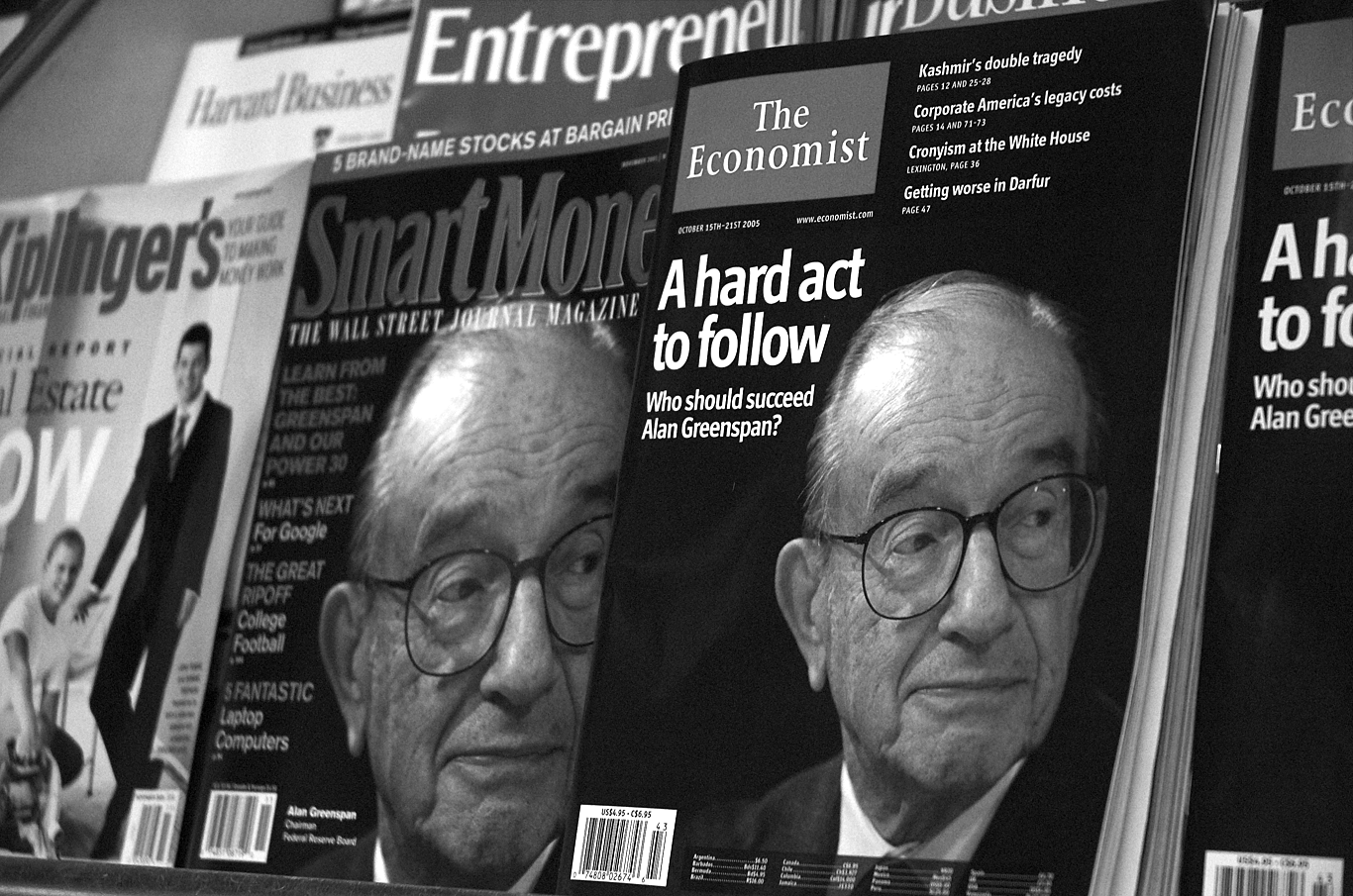
Scholars share the goal of discerning truth; the search for certainty is the scholar’s mission and passion. Yet, in focusing on truth, truth’s boundary may be ignored. Just as facts have provenance, so does error. Not knowing, being wrong, and forgetting don’t just happen. Rather, uncertainty and mistakes are motivated and structured. They often result from institutions that mislead us, organizations that hide what we wish to know, and facts hinted at but not confirmed. Mistrust provides space for rumor to grow, and rumors, guesses, and unawareness must be examined with as much care as verity. A branch of the sociology of knowledge, the field of unknowledge is known as agnotology.
Often we are unable to evaluate the information with which we are supplied, so we rely upon our social capital. In other words, we depend on the judgments of those who belong to our networks; beliefs are filtered through social relations. This is true whenever we must decide, but nowhere is the social evaluation of information more clearly seen than in the case of rumors, claims lacking reliable sponsors.
Rumors can touch any domain, trenchant or trivial, but rumors that address salient fears—economic uncertainty and global threat—demand our attention. These involve existential threats, beliefs about dangers that challenge the core features of our lifeworlds. Rumor recognizes cultural critic Ulrich Beck’s argument that we live in a “risk society,” an essential feature of modernity.
Beliefs that reveal a possible future shape our life chances. Maybe we should hoard gold, purchase a spiffy manse, or speculate on Internet stocks. Or we could install a security system, buy a gun, or move to the suburbs. We might wonder, nervously, whether hardworking immigrants are doing dirty work that few Americans desire, or if all immigrants bring is crime and disease. Even more rumors are at the ready to help us decide who is responsible for our country’s financial troubles: unscrupulous capitalists or grifters who work the system.
Rumors are not only texts, but performances for audiences to access collective judgment that is crucial for evaluation. Perhaps this is not the wisdom of crowds, but it is the acumen of groups. We judge plausibility by the responses of friends and acquaintances, filtering our own belief through trust in their local knowledge. We activate social networks and participate in collective sense-making.
What is rumor? Often in public discourse rumor refers to something wrong or misleading. In common usage it has a pejorative quality, as when we suggest that a claim is “just” a rumor. The term is often synonymous with lie or hoax. However, scholars use the concept differently. Rumor is neither inherently true nor false. Rather, as a distinctive category of information, it refers to sources that lack direct access to secure and definite knowledge. Its sponsor is not in a position to ascertain its accuracy. In the words of Chandra Mukerji, a sociologist who studies science and culture, some people, by virtue of their social or institutional positions, have the “authority to know.” Lacking these experts, rumors are tentative or unverified claims. The uncertain basis of rumor is its characteristic feature, and thus the demand to gain collective confirmation for its accuracy. Rumors (and their sibling, contemporary legends) are folk hypotheses that explain shared concerns and manage common threats.
Consider an example from the trading floor, a common font of rumor. In 2007, a false report that Iran had fired a missile at a United States naval vessel encouraged stock traders to purchase oil futures to capitalize on oil shortages that would inevitably occur when the Straits of Hormuz became a war zone. Traders couldn’t evaluate the rumor, but given the troubles in the Middle East, it seemed plausible enough. They conferred on the floor, and since no one could refute it, the “tip” spread. Oil prices spiked $5 a barrel in one day.
Though this particular rumor was eventually found to be false, others are based in fact. For instance, in one study, 43 percent of merger rumors published in the “Heard on the Street” column in The Wall Street Journal turned out to be accurate. And that’s the thing: if rumors were always wrong, they would cause little trouble; the problem is that we cannot tell. In such a situation we must decide whether our contact has sources who might know for certain. Rumors require some trust.
Heated Beliefs and Expanding Bubbles
Rumors are always with us, but at moments of uncertainty in which perceptions of threat demand swift action, they have greater influence. As economists George Akerlof and Robert Shiller emphasize in Animal Spirits, their discussion of the psychology of capitalism, people are not rational information processors. We operate through emotional heuristics that include confidence, beliefs about corruption, and persuasive stories. Beliefs about community channel our actions.
Nowhere is this better seen than in the case of bubbles, when communities coalesce to embrace a belief that demand for a commodity will rise with rapidly escalating prices. Bubbles involve high-volume trade in assets or products with prices higher than their intrinsic value, and they reveal how the social psychology of belief shapes our lifeworld, both when they expand and as they pop. Needless to say, bubbles only become recognized after the fact. Something creates that inflated value: rumor is often the answer. At first everyone agrees that the inflated value seems obvious and then it becomes implausible. Bubbles cannot survive without rumors, but likewise, the bursting of those same bubbles also depends on rumor as well. As a result, rumor may be euphoric or depressive.

Both Church’s Chicken and Corona beer have been the target of unsubstantiated rumors that, nonetheless, tainted public opinion for some time.

Shared beliefs, an impatient profit motive, and the possibility of loss cascade into ecstasy or panic, each depending on the evaluation of one’s community. These critical moments are characterized by a torrential demand for information, whether or not one’s sources are more knowledgeable. Studies of intense panics all reveal this pattern, whether we examine the 1929 stock market crash or the Great Fear of roving brigands in the French countryside in 1789. The Dutch Tulip Mania of 1637, the English South Seas Bubble of 1720, and the more recent Tech Bubble and Housing Bubble have all been characterized by an insistent demand to participate followed by a poorly-timed desire to escape. These reflect what former Chairman of the Federal Reserve Alan Greenspan labeled irrational exuberance. Greenspan admonished investors to cool the heated beliefs that encouraged action. If only, he thought, we could slow down and search for more information, we might avoid being misled—even though in the short term we might lose by hesitating. The Dutch burgher who waited a few weeks to purchase tulip bulbs in February 1637 would have avoided the crash. Had he only known! But it’s this temporal pressure that increases the embrace of rumor. Whether one’s expectations are sunny or bleak, in these moments action demands incomplete information from a network that has not yet been fully activated.
The downfall of investment firm Bear Stearns is a good example: an economic turning point that resulted from the spread of rumors in the absence of secure knowledge and the specter of colossal loss. In March 2008, CEO Alan Schwartz asserted, with a dollop of self-interest, “Bear Stearns has been subject to a significant amount of rumor and innuendo over the past week. Rumors intensified and given the nervousness in the market a lot of people it seemed wanted to act to protect themselves from the possibility of rumors being true and didn’t want to wait to see the facts.” Schwartz was surely accurate in suggesting that the information that spread was not based on official company reports. Examining the company’s holdings in mortgage-backed securities, traders became concerned about the value of their investment portfolios. Rumors intensified. Given the anxiety in the market, traders, a tight-knit group, coalesced around the idea that Bear Stearns was in trouble. Perhaps it would have failed anyhow, but the traders’ panic pushed the firm over the edge. Whether the counter-claims of Bear Stearns constituted the facts that the public didn’t wish to wait for is a matter of opinion. Still, time pressure created the conditions in which immediate action was seen as essential.
Whatever the actual financial condition of Bear Stearns was, rumors spread while the Federal Reserve deliberated how to aid the company. Before decisions could be made, though, investors had sold their shares and lenders denied further credit. The company’s share price collapsed from $170/share to a $2 buyout offer from J.P. Morgan Chase (the eventual offer was $10/share).
Bear Stearns was upended by a communal belief that the trading firm was doomed. It revealed what the great sociologist Robert Merton spoke of as a self-fulfilling prophecy. The network united around a belief, and at that point there was nothing that the executives could do to dispel it. They were no longer seen as trustworthy agents. Perhaps Bear Stearns waited too long to confront the concerns or perhaps the outcome was inevitable, given the early warning signs. As in prediction markets (elections, sports events, or film awards), the combined judgments of investors often prove wise. If individuals cannot be certain of truth, the aggregation of opinions is a credible gauge.
Combined judgments often prove wise: if individuals can’t be certain of truth, the aggregation of opinions is a credible gauge.
Plausibility and Credibility
Rumors tame large trends, creating stories about individual actions and group decisions that allow people to address wider forces. As sociologist Tamotsu Shibutani pointed out in his analysis of rumors after disasters, we share stories with friends and neighbors in a collective effort to organize and control our environments. Shibutani termed this improvised news. The collective sense-making of rumor, embedded in a network of social relations, helps explain how we create stability. As Fine and Bill Ellis pointed out in The Global Grapevine, this was dramatically illustrated after the attacks on 9/11 as panicked Americans searched for clues about subsequent attacks, like supposed acts of terrorist violence planned against shopping centers on Halloween 2001, the unrealized “Mall-O-Ween.”
On the floor of the Chicago Mercantile Exchange, an economic rumor can wreak havoc, creating and destroying fortunes in just minutes.
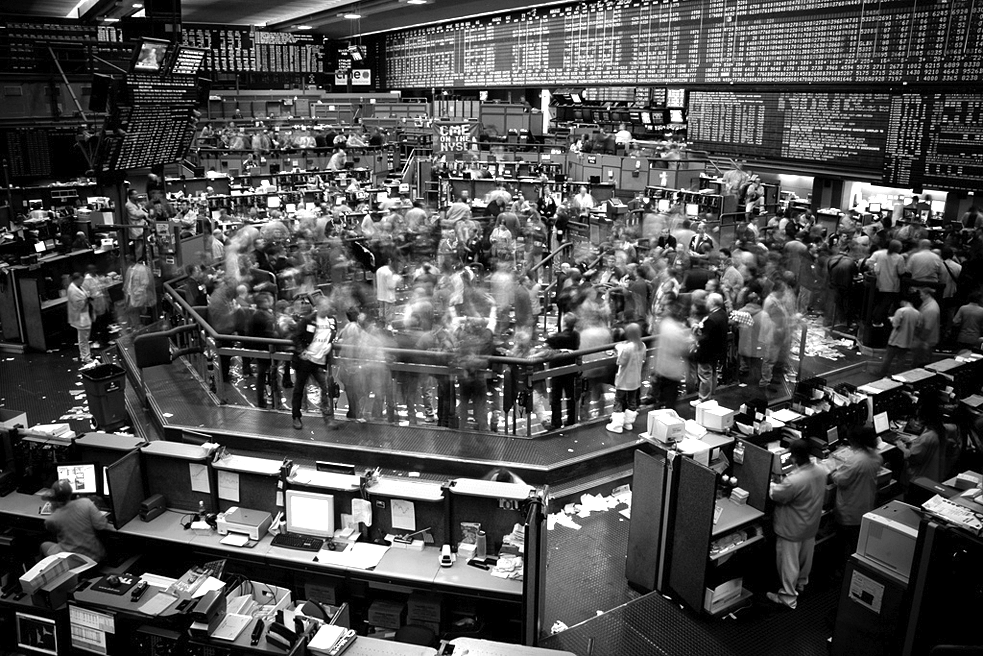
How do individuals know what to believe? People use social psychology to give untethered information a provenance, basing their trust on those who vouched for it. Then they match this information with knowledge they have previously accepted, testing whether the claims are plausible and whether they have found the communicator trustworthy in the past. In other words, the two core concepts for evaluating rumor are belief and trust; both depend on verification through local relations. This process by which we judge constitutes the politics of plausibility and the politics of credibility.
As we are embedded in social space, our networks have a clustered or cliquish pattern. Those we know are likely to know each other. Following the anthropologist Mary Douglas, we can say that a network is a grid of groups. Close-knit communities that connect with a small number of ties exemplify this social lattice as dense networks. Since network structure affects the degree to which a community’s beliefs are open to influence or reinforcement, dense, isolated clusters resist outside influence and are prone to “echo chamber” effects. That is, rumors recirculate and are heard repeatedly, reinforcing belief, particularly when judging something outside our personal knowledge. For a time in the Central Valley of California it was widely believed that Vietnamese immigrants stole pets and ate them. The repetition of this belief about those viewed as outsiders was spread by those within tight networks, building on assumptions that dog meat is popular in Southeast Asia. Plausibility and credibility worked together to create a durable rumor.
Rumors Cold and Hot
Rumors operate by appealing to two primary domains of human sense-making: thoughts and emotions, both shaped within communities. Some rumors act primarily by adding knowledge—these appeal to “cool” thoughts. Others act primarily by expressing sentiments—these appeal to “warmer” emotions and motivations.
A fundamental truism of rumor research is that people desire the security of prediction and control. Psychologists Gordon Allport and Leo Postman called this an “effort after knowledge.” While some rumors may uncover the past, these rumors, calling for a response, claim to foresee the future. Such rumors are like news in their effects. We lay bets on how our situation is likely to develop.
Our desire for prediction leads to a search for secreted information, uncovering unannounced plans. Knowledge normally unavailable is particularly valuable, as its hidden quality seems to provide an edge. Claims from acquaintances believed to be in the know have great weight, avoiding startling shocks. To be the first to know of the collapse of Bear Stearns, the first shot of war, or a massive police raid has great value for one’s material interests and reputation.
Emotions and Conspiracy
Just as rumors inform action, they also express emotion. Expressive rumors generate coping in that they help persons interpret their environment. Nowhere is this seen more clearly than in those conspiracy rumors that explain social dislocations and of wedge-driving rumors that target global foes or racial out-groups.
Rumor scholars have long been fascinated by conspiracies. Conspiracy rumors build upon profound disengagement from institutions, painting a world of bad guys. According to the French folklorist Véronique Campion-Vincent, beliefs in conspiracies have expanded in recent decades, especially as they address social elites. The evidence presented to uncover the conspiracy may not be definitive, but hints suggest that clues are present to be revealed to the wise. Conspiracy rumors find fertile ground among a distrustful population.
Rumors that depict conspiracies suggest that much of what we know is an illusion, constructed by hidden puppet masters. The conspiratorial view—what critics such as Richard Hofstadter term the “paranoid style”—builds on the claim that surface explanations hide the true sources of power. As such, the belief in conspiracies fits a belief that “reality” is actually constructed by those with power.
While classic conspiracy rumors target the political, an increasing number now point to corporate control: the malignant rich within our borders or abroad. Corporations such as Procter and Gamble and Coors are alleged to be owned or controlled by evil organizations, perhaps the Church of Satan or the American Nazi Party. Other rumors involve cabals of foreigners and foreign corporations, such as the claims that Al Qaeda controls Snapple, Citibank, or even General Electric. Still other rumors are linked to globalization threats. The decades-old tales about Japanese ownership of American firms and newly-minted anxiety about rising Chinese economic dominance reflect nativist concern over what will happen if “outsiders” use the levers of economic power for political control. These rumors flourish by speaking to the uncertainty in the lives of our friends and neighbors.
Rumors have also long targeted foreign products. Stories about deadly spiders nestled in bunches of Honduran bananas spring to mind. In versions from the 1960s, a shopper examining a sweater, blanket, clothes hamper, or winter coat felt a bite and soon died. A close inspection revealed a snake, scorpion, or spider. The product, according to the rumor, had been imported from a foreign country, at first industrializing nations such as Thailand or Taiwan, but now the nations that currently produce clothing and household products. One possible underlying, unstated, and unrecognized assumption was that any American who purchased these competing products was foolish, even unpatriotic. The viper was a metaphor for the economic sting from abroad.
Censure can also become personalized. The case of Corona beer is a cautionary tale. Corona became popular in the 1980s. Called the “Yuppie Cocktail,” it was noted for its bright yellow color and its voluminous foam. But the foam, a rumor claimed, resulted from Mexican brewery workers urinating into the vat. While the story made little sense, it was symbolically powerful as a marker of rising protectionist sentiment.
A final set of emotionally-potent rumors derives from and creates in-group loyalty through scapegoating. In a nation as racially roiled as ours, we should not be surprised to find rumors that allege racial malice from businesses that supply consumer goods. While white citizens are often viscerally afraid of violent black gangs (as fears of “wilding,” or violent public rampage, attest), many blacks perceive the cruel attentions of American corporations. Such claims may be desperately paranoid, but it isn’t necessarily crazy for those with a history of oppression to conclude that plans for genocide might be funneled through corporations that provide food, drink, and apparel in African American communities.
The power of these claims depends on what symbolic interactionist David Maines describes as racialized pools of knowledge. Maines recognizes that black and white Americans not only hear different things, but that because of a distinct context of experience, they believe different things. Who is credible and what is plausible differ. Whites are unlikely to learn of information that is widely shared in the black community as few information conduits extend outside of communities of color. Typically blacks are more aware of white knowledge, often spread through an omnipresent mass media.
In rumors of bias, the image of the Ku Klux Klan looms large. Again and again rumors suggest that the Klan directs large corporations. For instance, it was alleged that Church’s Fried Chicken was operated by the Klan, that they opened franchises in minority areas, and that they doctored fried chicken to sterilize black men. The claim was fanciful, but it recognizes that business ownership is often obscure as are corporate marketing decisions and the ingredients of one’s favorite products. Such rumors draw on a lengthy history of malice from white institutions, providing plausibility, backed by agreement within the community that such dangers are possible. Companies including Troop Clothes, Brooklyn Bottling Co., Liz Claiborne, and Snapple have faced similar charges. In each case, the belief depends on a network of believers whose acceptance of the rumor reduces uncertainty and provokes a common response.
Taming Social Facts
To recap, rumor is knowledge filtered through social process. A rumor depends upon the belief that a claim is plausible and upon trust that those who communicate are credible. These determinations are shaped by the local network within which one is situated, and this is where the sociology of community shapes the psychology of belief. Plausibility is not only personal, but is tied to our common experiences; credibility is not only cognitive, but depends on our social capital. Both depend upon the communities in which we participate. They reflect a shared commitment to sense-making. By relying on others with similar perspectives, we reduce uncertainty.
Within any crucial social domain, rumors are rife. As we search for meaning and cope with threat we must rely upon unsecured information. Facts matter, but they are never orphans. They need to be sponsored and guided, and so they change the world. Often, uncertain information, even wrong information, serves as powerfully as if it was valid. As the early 20th century sociologist W.I. Thomas insisted about a definition of the situation, if we believe a claim to be true, we act upon it, and it becomes true in its consequences. Some rumors are simply too good to be false.