



Abstract
Humorist Dylan Brody weaves together personal, social, and political commentary in his writing and performances. Here he discusses television and political humor, the state of heroes today, and the transformative nature of storytelling.
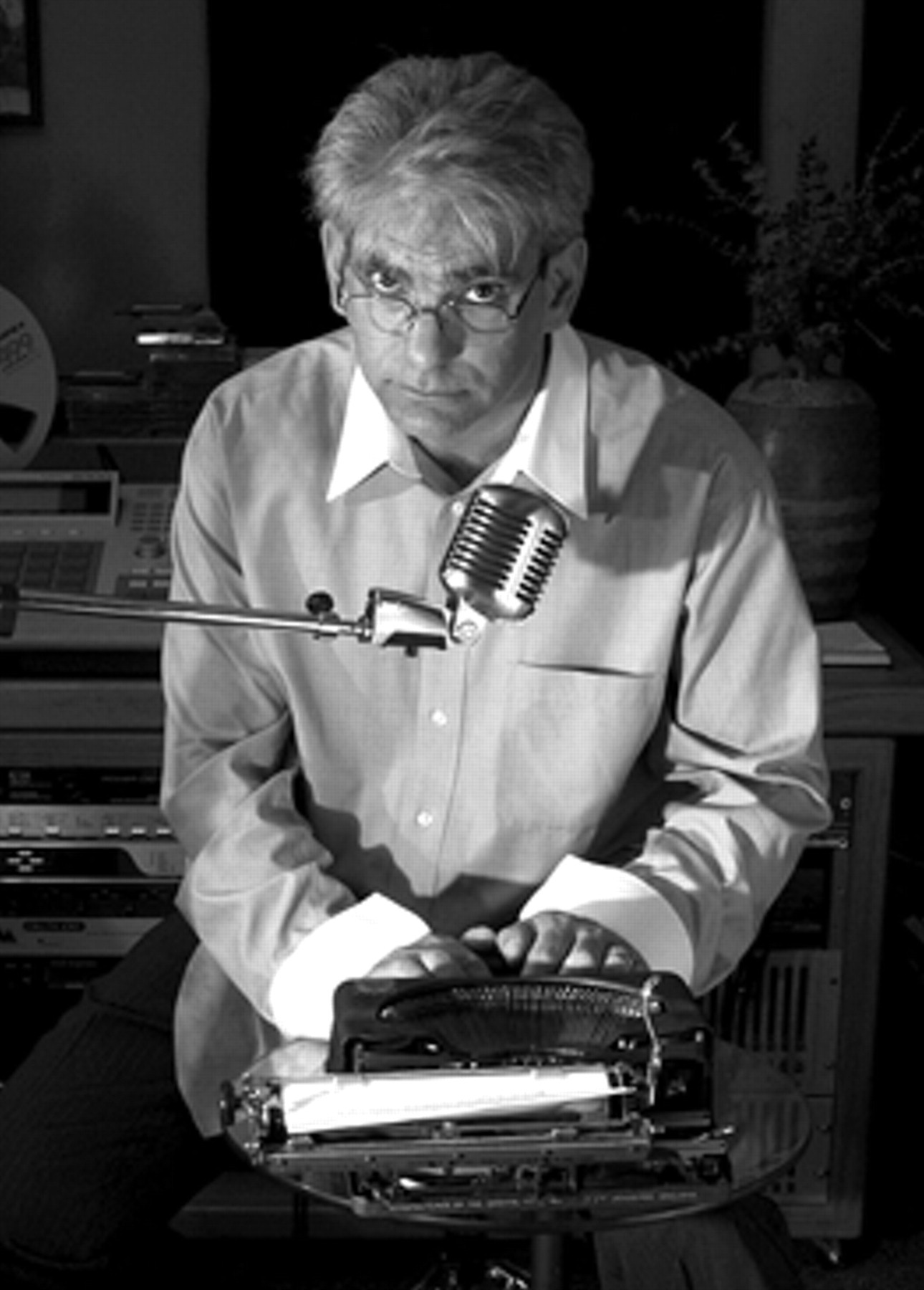
Contexts approached award-winning playwright, novelist, and humorist Dylan Brody—who’s been called a “sociologist on the stage”—to talk about the transformative power of story-telling. Brody discussed the effects of television on political humor, the sad state of heroes, and how he incorporates his political knowledge and ideals into personal stories that capture the imagination.
It is my theory that the purpose of capitalism is to make a nation wealthy enough so that it can ease itself toward socialism.
These are kids who grew up under Reagan. So all of the peace movement and the idea of non-violent civil disobedience was sort of steeped out of the culture, and they’d been fed this myth that the ‘60s were a bunch of drug-addled love-mongers and that they’d been proven wrong, because Carter was vilified. However the hell that logic worked. So, all they could come up with was in a movie, they could figure out who the hero was because he was on the screen the most. Through the ‘80s and much of the ‘90s, that was the only distinguishing characteristic; the hero behaved just as badly as the villains. The hero was established by who had the biggest gun and who got in the final kill.
I found that really troubling, because, for most of history, stories were told to teach us how to be heroes. The whole purpose of story-telling was to improve. Even if you get to works of scripture—the Bible, the Qur’an, the Torah—it’s all story-telling toward “How do we behave better as people?”
And, as the entertainment industry takes over the world of art, we lose the responsibility for what’s being said. When comedy became part of the entertainment industry and stopped being a forward-thinking, cutting-edge, envelope-pushing art form, it lost what had drawn me to it to begin with. Now story-telling, because the form is unexpected, can come in under the radar by putting together my personal experiences in such a way that it draws people into images and language and rhythm and empathy, I’m able to layer in a certain amount of social commentary and political commentary and informative and instructive ideas about how to behave as a hero, how to behave as a human. That, I think, is worthwhile. God, I hope it’s worthwhile, and, also, you know, funny.
It is my theory that the purpose of capitalism is to make a nation wealthy enough so that it can ease itself toward socialism. That, in a truly utopian society, the basic needs of humanity are met, and then the people are free to explore their own greatest potential. When capitalism becomes the end rather than the means, you lose the goal of a utopian society, and you wind up in a race that leads the culture as a whole into a spiral toward the bottom. Wow, that sounded like I actually know things, didn’t it?
Ultimately, the experience of the human being is the same for all of us. We’re all struggling to be better and feeling inadequate and wishing we could do more for those who are in need and wishing we were in a better position ourselves—all of these things are the basic experience of humanity in the world. They’re also the things that make up the cultural experience and the societal norms. So, frequently, by focusing on my own truth, I come to the larger societal norm. There’s a piece on my second CD, True Enough, called “Democracy 101,” that’s all about the nature of the democracy that we live in, which is not entirely democratic, but pretends to be (to keep everyone feeling fully involved and engaged). And I talk about that through an experience of a grade-school election.
Because story-telling is unexpected, I’m able to layer in social and political commentary about how to behave as a hero, how to behave as a human.
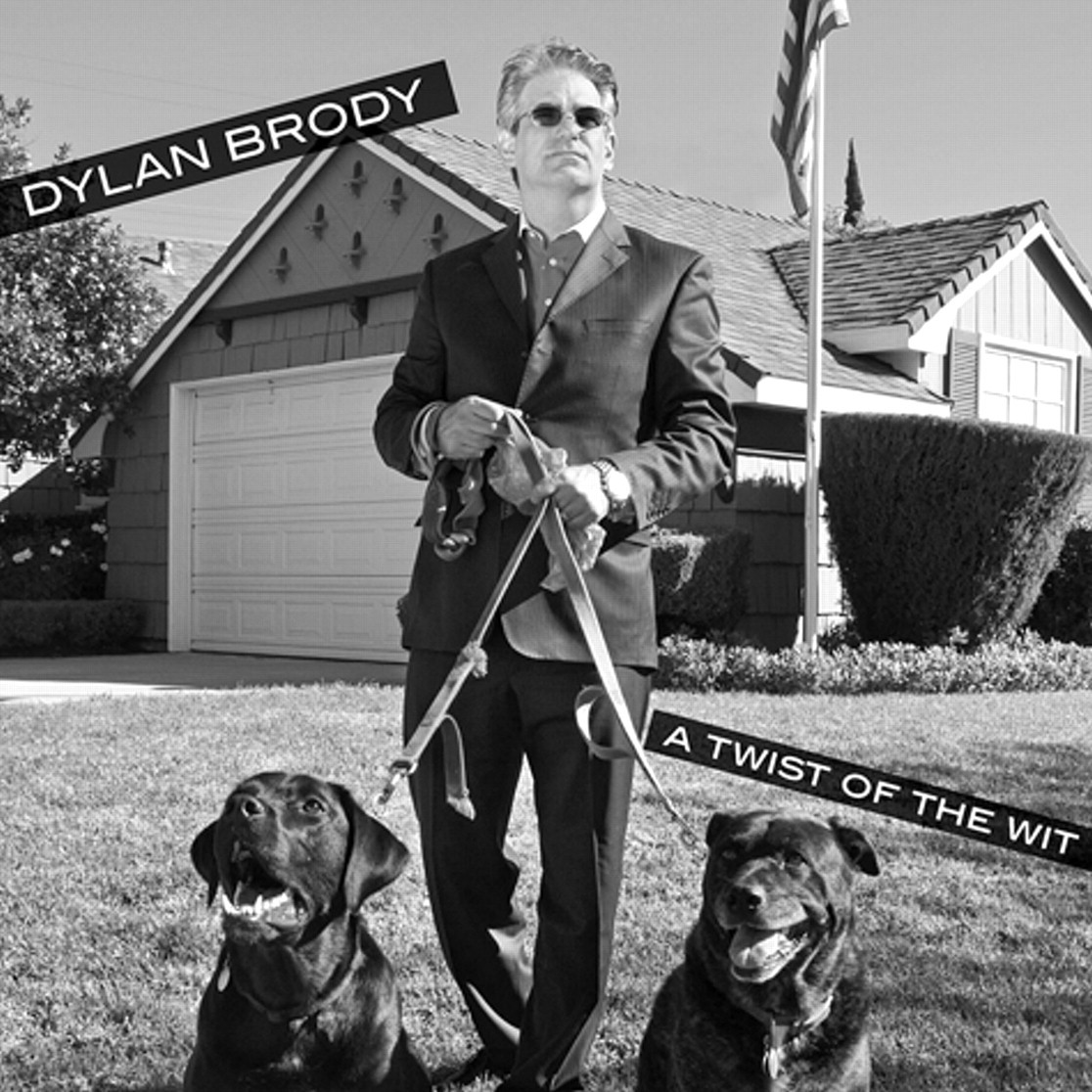
Dylan Brody’s latest CD from Stand Up! Records
But that wasn’t the truth. The fact was, I wanted to share with Room Four because there was a girl with one arm in Room Four who I had a crush on, but had never had the courage to talk to. But I had had the idea for the tax, it was my plan, so we were going to do what I wanted. And so, Room Four came over, and we all had an ice cream. Ultimately, the point of this story is that the candidates are selected, they’re not elected, and that even a properly elected leader, when his own personal perversities and agenda are challenged, will resort to fascism.
It all comes through in this story, but it’s about kids collecting two cents a day and voting in class and it’s the story that everybody remembers, and you don’t realize, until it’s pointed out, that, “Oh, this really is how it works. It really is a mentalist’s trick. We put the four aces in front of you and let you choose which suit you’re gonna have run you.”
You can’t control what people hear. It is my hope that some of my ideas get through even to people who disagree with me.
You can’t control—there’s no controlling what people hear. It is my hope that, with my stories, I’m layering stuff in deeply enough that some of my ideas get through even to people who disagree with me. Part of what I do is set up parallels and then allow the connections to be made by the listener. It is my hope that, by doing it that way, people come to the same conclusions that I hope they’ll reach.
When a person says, on stage, “Supermarkets are bizarre,” there’s a layer of resistance. The audience thinks, “No they’re not, I’m at a supermarket every week.” And then the comic comes up with an example of how supermarkets are bizarre… and as soon as you get laughs with it, the audience agrees and never sees a supermarket the same way. Now, when they walk into a supermarket, it’s no longer that moment that they’re used to having, it’s “Oh wow, yeah, I don’t know these people, but we’re all making these intimate choices around each other,” and there’s this slight change in the way they feel about it.
David Brenner did a joke, when I was a child I saw him do it on TV, about how he was sitting on a newspaper in a subway, and someone came up to him and said, “Are you reading that?” And he said, “Yes,” and stood up and turned the page and sat back down. Since that moment, any time I see someone sitting on a newspaper, that joke just flashes across my head for a second. It changes the way I perceive that moment.
Jokes have that power. It’s why racist jokes and anti-Semitic jokes are so powerful and so dangerous, because, by drawing on stereotype that is not true, it allows people to make a connection and laugh at a joke that then reinforces the stereotype and causes them to continue to believe it and see the groups of which they are not a part—or even the groups of which they are a part—in the same light in which they have been shown before. It’s why I object to anyone who says, on stage, “And I can say this because I am…,” as in “I’m black, so I can say this,“ or “I can say this because I’m a Jew.” No, no, it becomes more your responsibility to write the more difficult joke that dispels the myth…
This is the nature of humor… So The Daily Show really can change the way people look at a political idea, really can change the way people think about what the government does…the way in which we take things from the media—it changes the way people think about all of that all the time, and therefore is genuinely popular. In terms of my work, I just want people to look at me and clap.
I do a one-person show called “More Arts, Less Martial,” that is a concentration of all my martial arts related stories. It takes people with me, from having been a bullied, non-athletic kid, to being a tae kwon do master. At the end, I bring the entire audience with me on a guided meditation. I have the entire room sit in silence and listen to their breath as they hear my voice. To go from being a comic who needs a laugh every 15 seconds, to someone who can stand in the front of the room and have complete silence hang there? For me, it’s a huge point of satisfaction and personal growth and it feels good. The audience, at the end of the evening, inevitably has this feeling of accomplishment, because they’ve gone from a place where they’re expecting someone to entertain them tacitly to having been given the power to sit in their own space and feel their own strength as a room full of people. So whether they go home knowing that something has changed or not, I know that something has changed.
If I can change entire rooms full of people a tiny bit, then overall, I’m doing what I can to push the world toward a more peaceful, more confident, more giving, more loving place. That can’t be bad. Dylan Brody’s latest CD, A Twist of the Wit, is available from Amazon.com, and you can read more about him at DylanBrody.com and StandUpRecords.com.
Listen to the full conversation between Brody and Contexts’ web editor Jon Smajda at contexts.org/dylanbrody.