



Abstract
The future of higher education is up for grabs. Diane Pike finds, in two recent books, a call to action for social scientists and academics in the liberal arts.
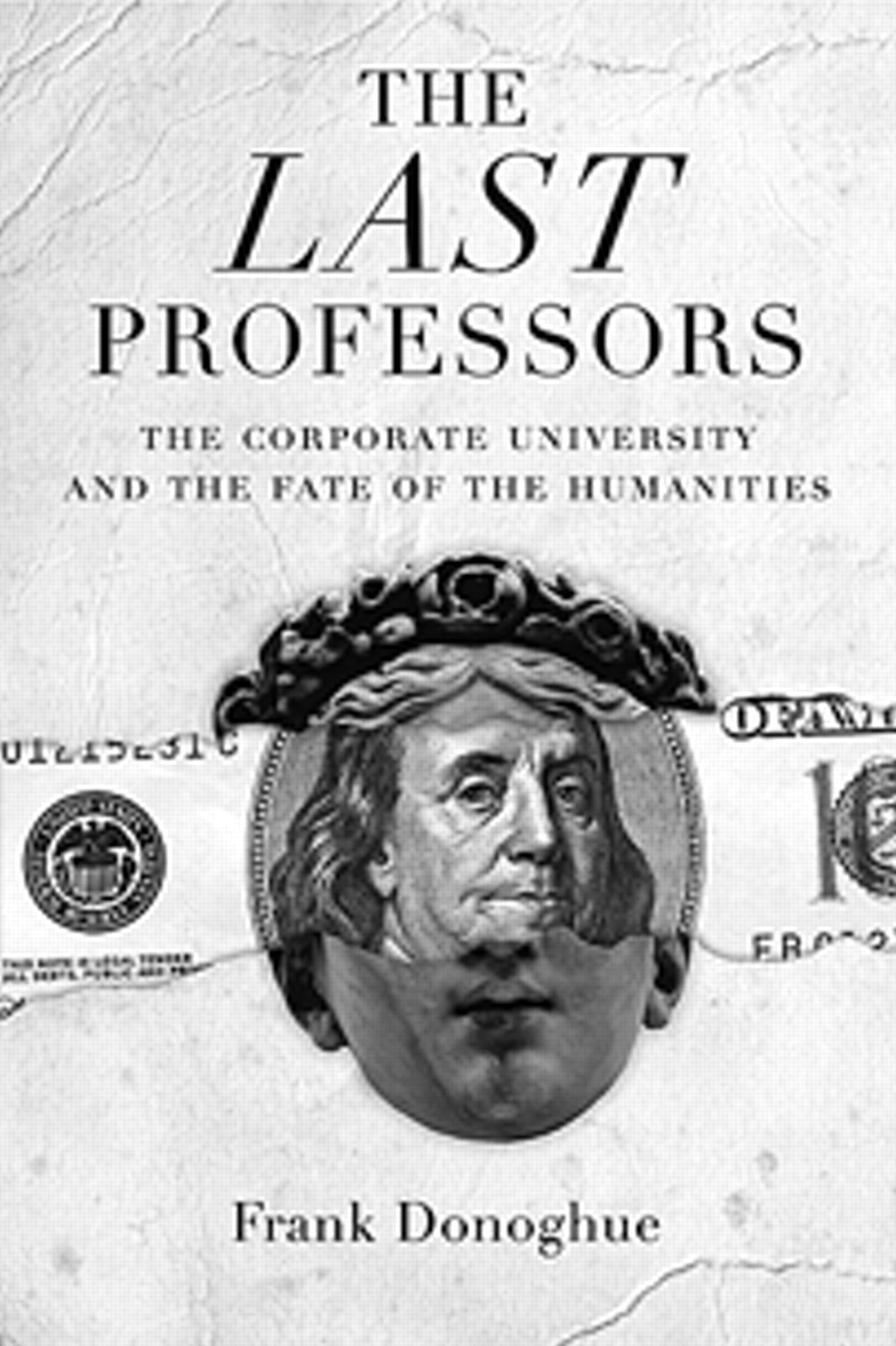
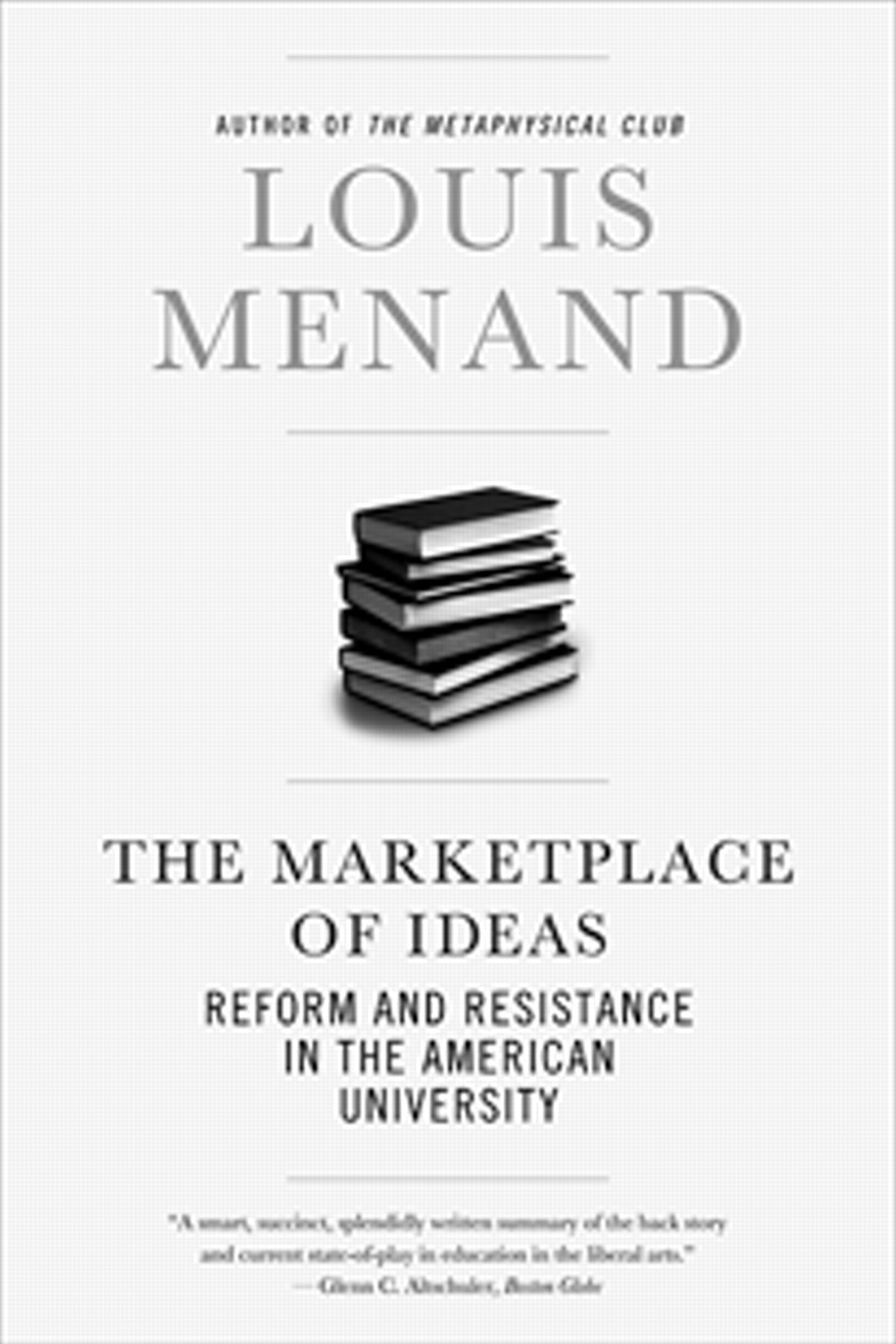
Think “Chicken Little meets C. Wright Mills” and you have a sense of the way you might feel after reading literature scholar Frank Donoghue’s The Last Professors and Pulitzer Prize winner Louis Menand’s The Marketplace of Ideas. The complex tale of how higher education in the United States has ended up where it is today doesn’t have a happy ending. As a result of dramatic shifts in the past hundred years, there are significant public issues and private troubles to address. For those who hold anything close to a traditional view of what a liberal education offers to individuals and to society, the present, not to mention the future, isn’t pretty.
Both books offer credible analyses of the 20th century’s evolution of higher education, which responded to external forces of economy, demography, and wars, and to internal drives for institutional change. Across loosely coupled chapters, each author draws from research in many fields. And the works of sociologists like Mills and Thorstein Veblen figure prominently alongside a body of knowledge from the sociology of institutions and professionalization. Donoghue and Menand, both trained in literature, recognize that they need structural analysis at the sociological level to make sense of what has happened to the academic world.
In The Marketplace of Ideas, Menand’s chapters range from assessing why general education is so problematic (he claims that faculty want to control but not teach it) to a scathing critique of the production of Ph.D.s in English departments (it takes too long to complete the degree and programs knowingly admit too many students for whom there’ll be no jobs). Next, he tackles the attention given to interdisciplinarity, which he believes only reinforces disciplines without figuring out how to make liberal arts disciplines relevant. And in the final chapter, Menand analyzes why professors all end up alike: we clone our disciplines, rather than reproduce them, by limiting opportunities for introducing variation. Menand leaves us with the charge that liberal education, and thereby the professoriate itself, must more effectively serve the needs of the public while we also resist the world’s demand that its self image be reproduced. We must challenge the public we serve.
Taking a different tack, Donoghue begins The Last Professors with a history of attacks on the humanities. Starting in the early 1900s with the likes of Andrew Carnegie, self-made businessmen, politicians, and writers such as Sinclair Lewis displayed an unbridled anti-intellectualism and promoted the practical arts over the protectionist elitism of universities. That attack continues today, with the former president of the Internet-based University of Phoenix proclaiming (with pride?), “Our students don’t want an education. They want what an education can give them… better jobs, moving up in their careers.” Donoghue goes on to discuss other problems. He describes a broken model of humanities research in which the quest for prestige drives production. He offers an appraisal of how we cling to a “mirage of tenure” when the reality is that much of the labor of education is done by non-tenured faculty. And he notes that, thanks to the rise of for-profit colleges and the shift of students from majors in the liberal arts to majors in professional studies, particularly business, humanities majors are disappearing before our very eyes. The end of the world as we know it is imminent.
Donoghue ends with an intriguing argument about prestige envy among universities searching for a brand; if we’re not careful, we’ll be stuck with the competing messages of “college as job training and college as prestige marker.” Donoghue believes public universities (the state flagships) are particularly critical to the future of the humanities, but if those institutions cannot figure out how to get beyond what he calls “mission multiplication” and overcome the management logic that “places business values on the academic workplace,” the liberal arts will become the hallmark of elites and humanities professors will “risk extinction.” It may even be too late, Donoghue writes: “the professors of the humanities have already lost the power to rescue themselves.” He offers only the slimmest hope and interestingly, it is a sociological solution. Invoking Mills, Donoghue claims that to be ready for the future, professors must “become not only sociologists but also institutional historians of their own profession.” In short, humanities professors need to learn how their organizations work so that they can better influence how their future unfolds.
Despite the generally fine thinking in both books as to why the sky is falling in the liberal arts and the humanities, the absence of any sort of satisfying “so now what?” consideration is perplexing and discouraging. (Stanley Fish and I are apparently in agreement on this point; see his November 8, 2010 New York Times column, “The Woe-Is-Us Books.”) Why don’t thinkers who have done this much heavy lifting have anything to offer about how to deal with the current situation?
The lack of a well-articulated case for the liberal arts is perhaps as disturbing a reflection of the liberal arts’ weakening position as any of their other problems. Neither Menand’s even-handed tone and tight, clever writing (it is easy to see why he won a Pulitzer) nor Donoghue’s Eeyore-like conclusions (one critic declares The Last Professors not a diagnosis but an autopsy!) satisfactorily addresses how understanding this situation can move us to do something about the problem. Even the problem itself can be difficult to track since arguments tend to shift among units of analysis, sometimes discussing liberal arts, sometimes humanities, and sometimes English; sometimes the problem is research, other times teaching. Moreover, neither Menand nor Donoghue is clear about the future of the sciences as part of the liberal arts.
Offering organizational solutions to the troubles isn’t the same thing as making the moral case for liberal arts. (In his essay, Fish notes that some of the specific organizational solutions offered by other authors in this genre include more money, mandatory retirement, and getting rid of departments.) The fact is we need both organizational remedies and a cogent rationale for liberal arts. Perhaps one thought-experiment might contribute to helping future authors of the next raft of books on higher education make a case for securing or reinventing the liberal arts in general and the humanities in particular.
Alan Weisman’s bestselling book, The World Without Us, researches experts’ best guesses as to what would happen if humans suddenly—snap!—disappeared. How long would it take for the New York subway to flood without any human intervention? (Three days.) How long would it take for your house to decay, for nature to take over nuclear power plants, cities, and other infrastructures? The intended effect of this chilling portrait of the world without humans is to make us pause and consider what we’ve materially created as a species. By imagining the disappearance of our built environment, perhaps we can envision a different approach to the challenges of our future.
So, let’s try this: if the humanities shrink and become the property of elite institutions and elite students, what will the world look like? No English majors, no theater, no arts. No more philosophers to generate the ideas used in all those business ethics courses. The picture might be even bleaker if we imagine the world without liberal arts. This surely would be a lesser world. Although it is false consciousness to see “the practical as the enemy of the true,” as Menand smartly puts it, being employed and being educated is not the same thing. Whether referring to the liberal arts, the humanities, or even just English as the canary in the coal mine, deep consideration of the absence of what the liberal arts provide could show many of us what we must do beyond shrugging and being grateful for having had a traditional academic career before it was too late. Perhaps the results from such a thought experiment would be compelling enough to help us explain clearly, as the American Association of Colleges and Universities is attempting to do in its LEAP (Liberal Education and America’s Promise) Program, why the world needs the true. Making sense of our complex and changing world requires the broad knowledge provided by a liberal education.
If the humanities shrink and become the property of elite institutions and elite students, what will the world look like?
We should look seriously at the landscape of the liberal arts painted by these two books. Each offers a narrative that we can appreciate for identifying the triumphs and challenges successfully and unsuccessfully encountered over the last hundred years. But when Chicken Little is asked by Henny-Penny, “How do you know the sky is falling?” he replies, “Because it hit me on the head.” Neither Chicken Little nor any of his fellow fowl question the evidence or stop to think of a solution (here is where the liberal arts working together with the sciences might be valuable). They all end up lured into the fox’s den and are eaten. What hit Chicken Little on the head was an acorn, not the sky. Of course, whether or not Menand and Donoghue are right about the sky falling today doesn’t mean their theories about how we got into our present situation are wrong. But theories are put forth for a reason. If faculty and citizens are to exert some agency within the structures that have been created, we need to do more than just run around spreading the alarm.