Abstract
Based on ethnographic work, Greg Scott documents the institution of marriage amidst the difficulties of homelessness and drug addiction.
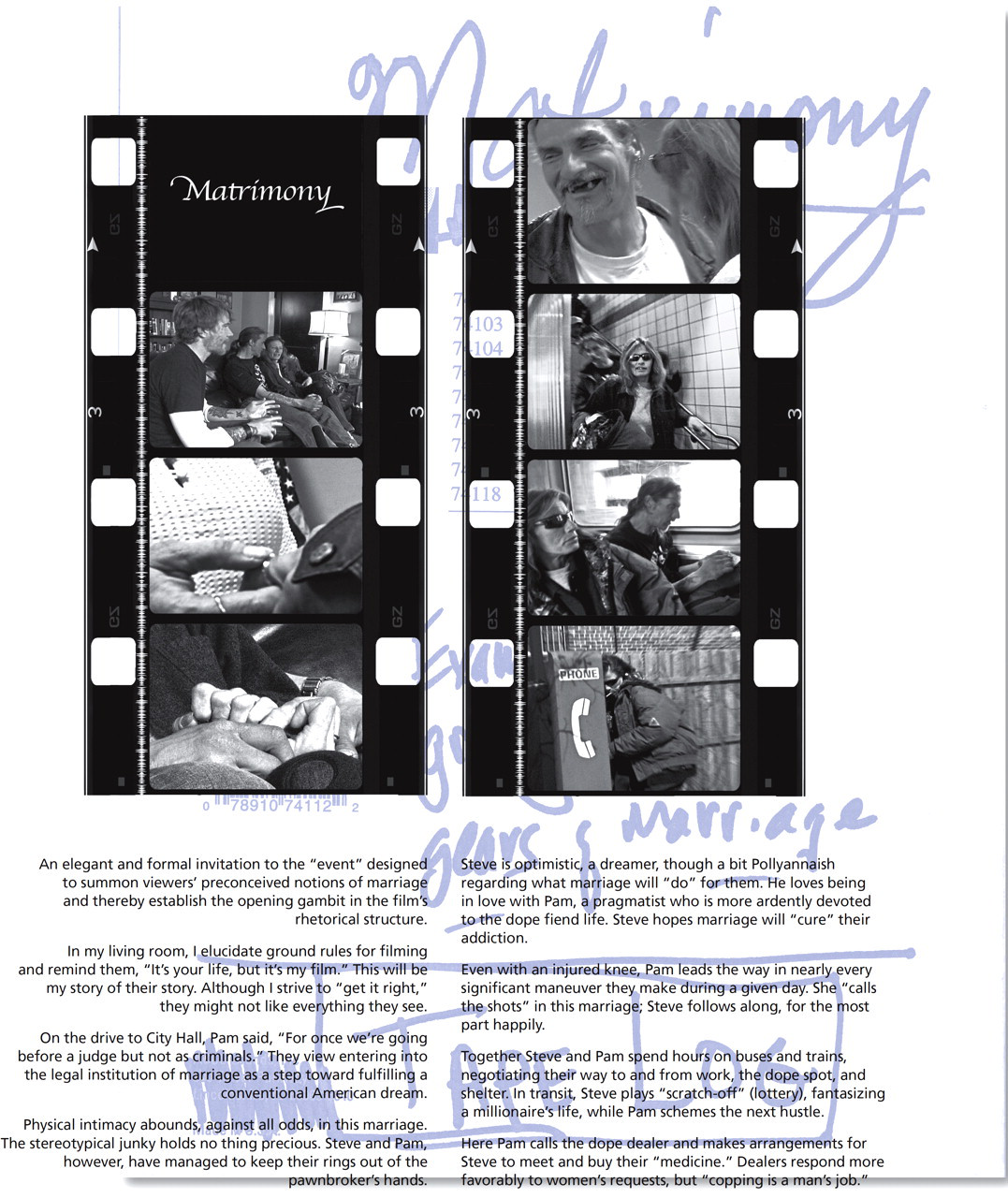
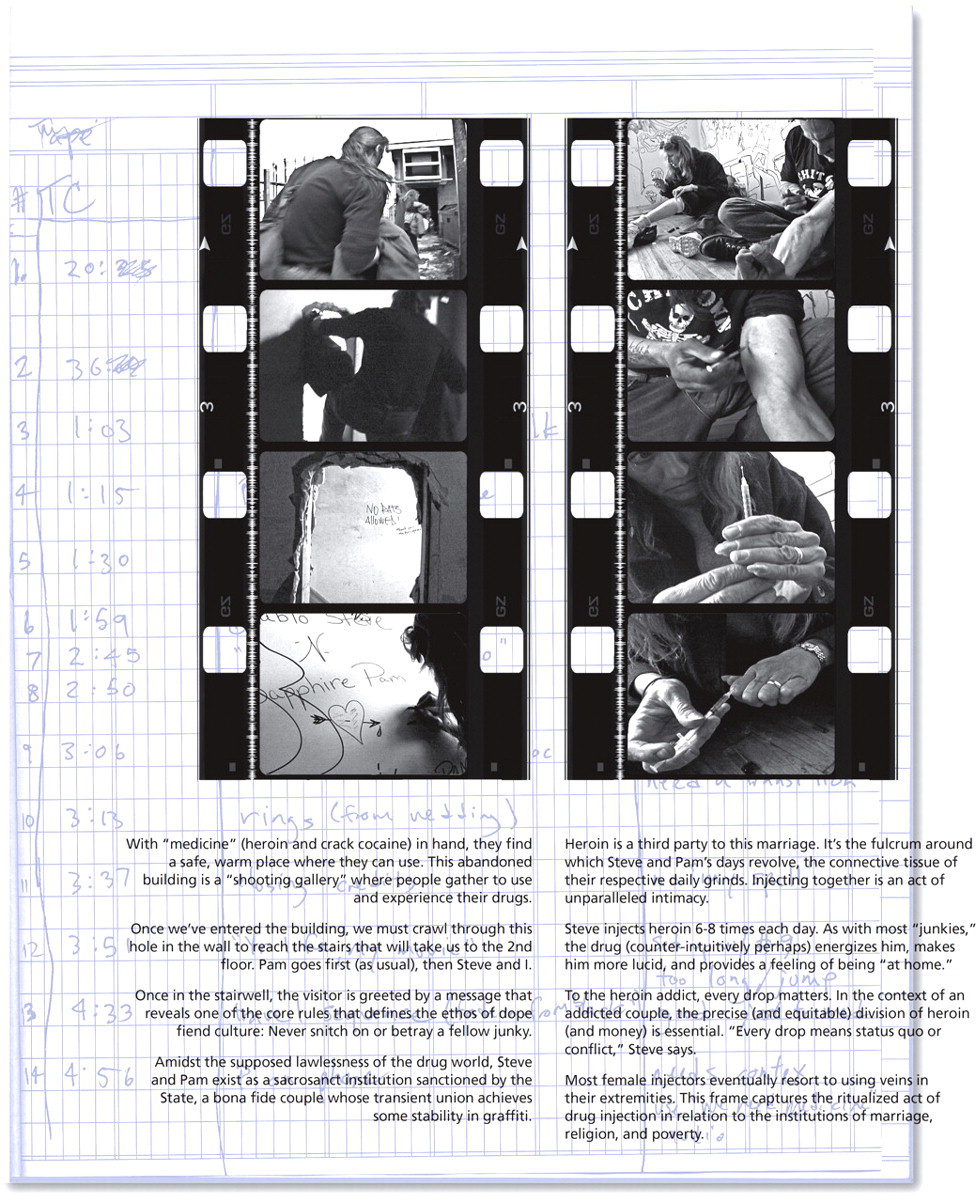
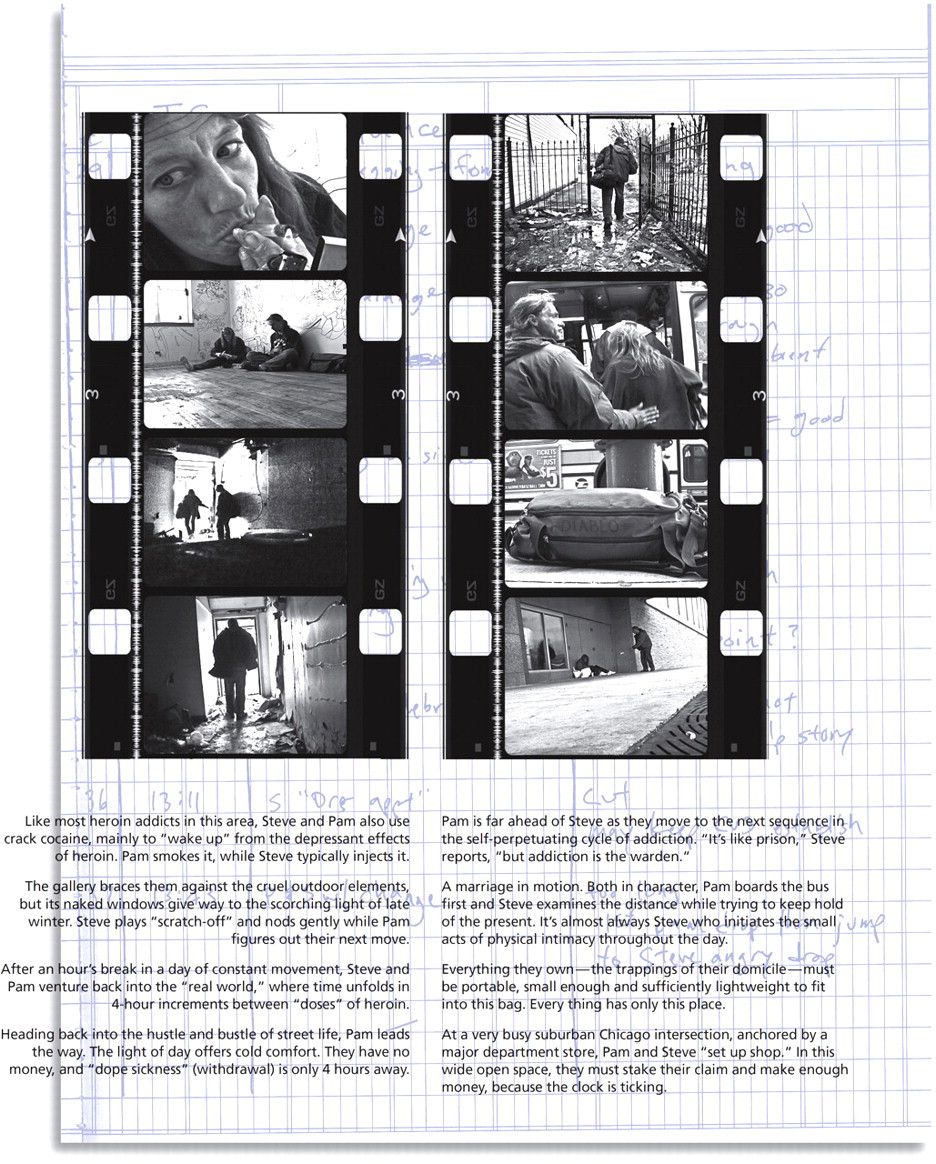
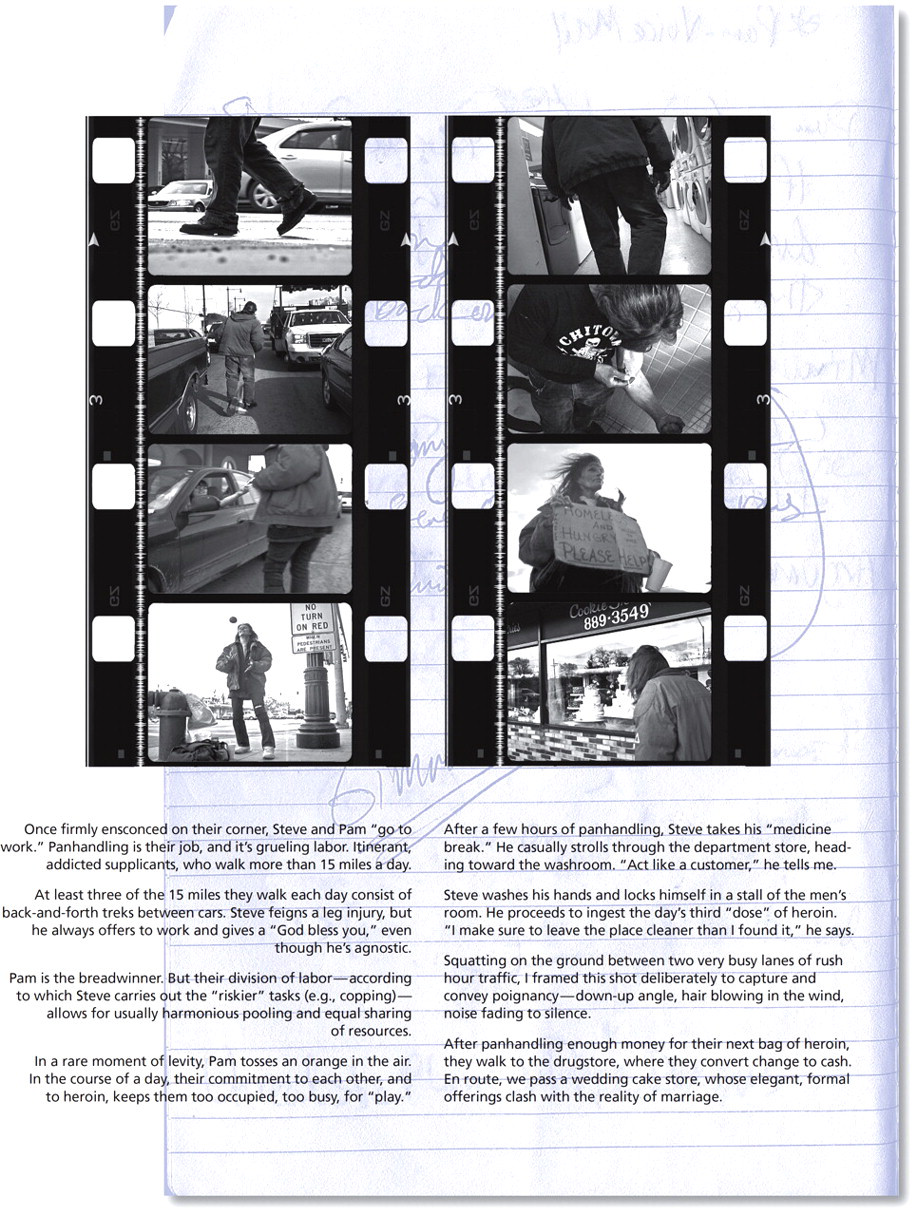
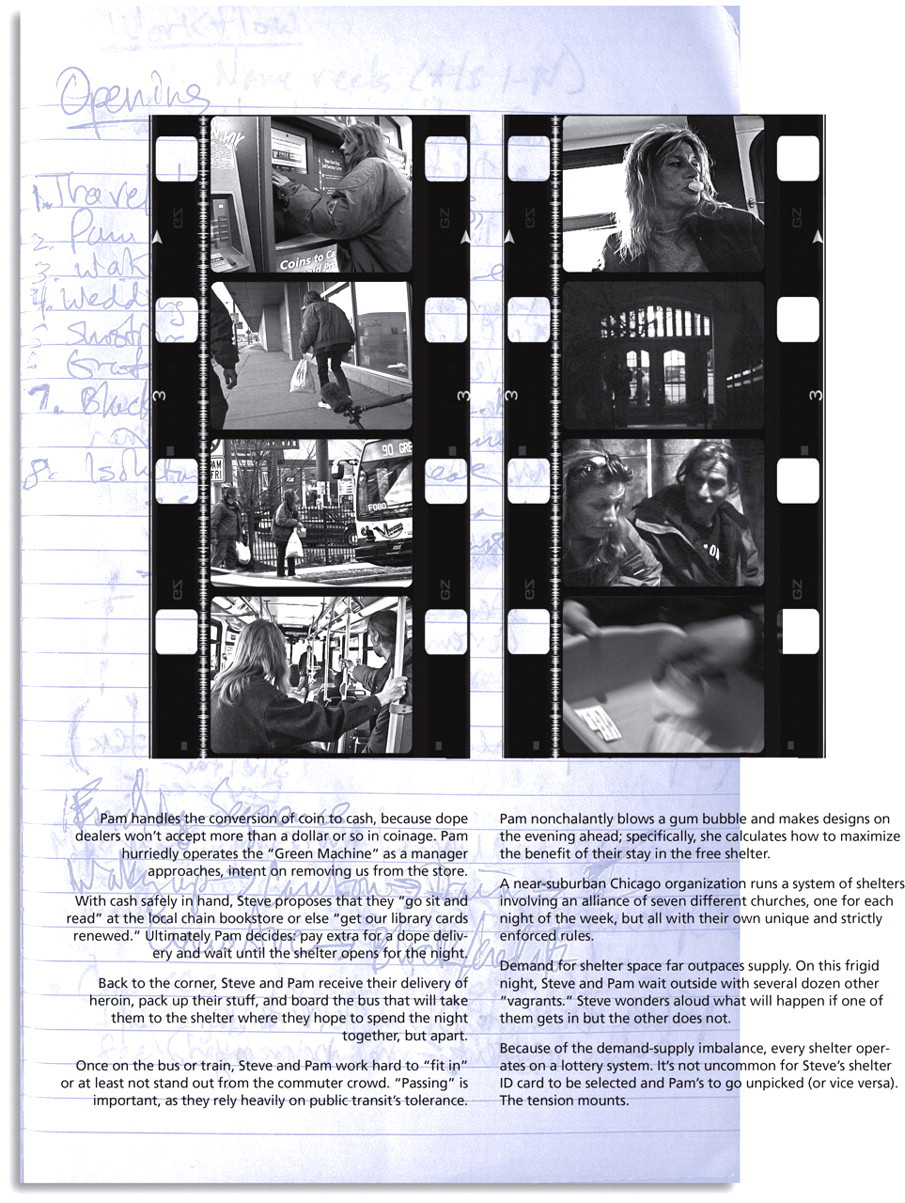
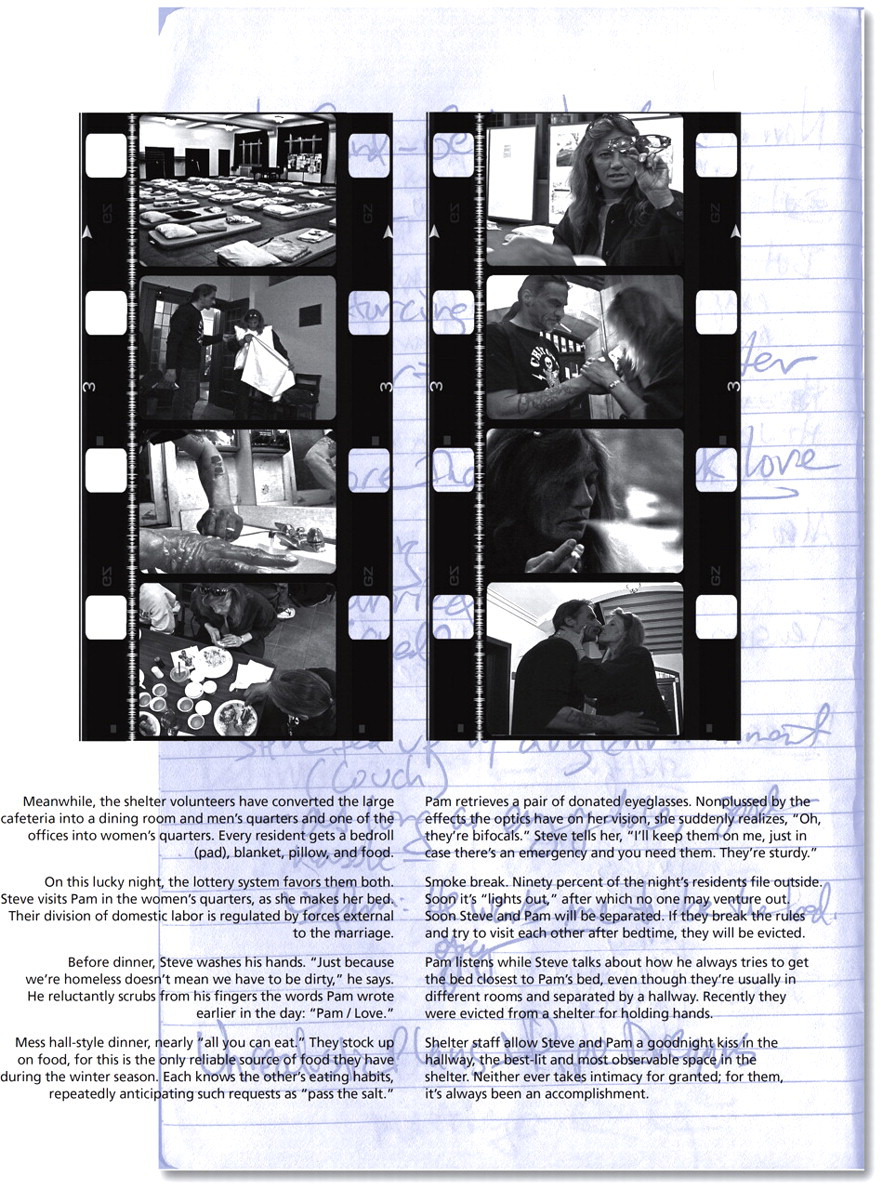
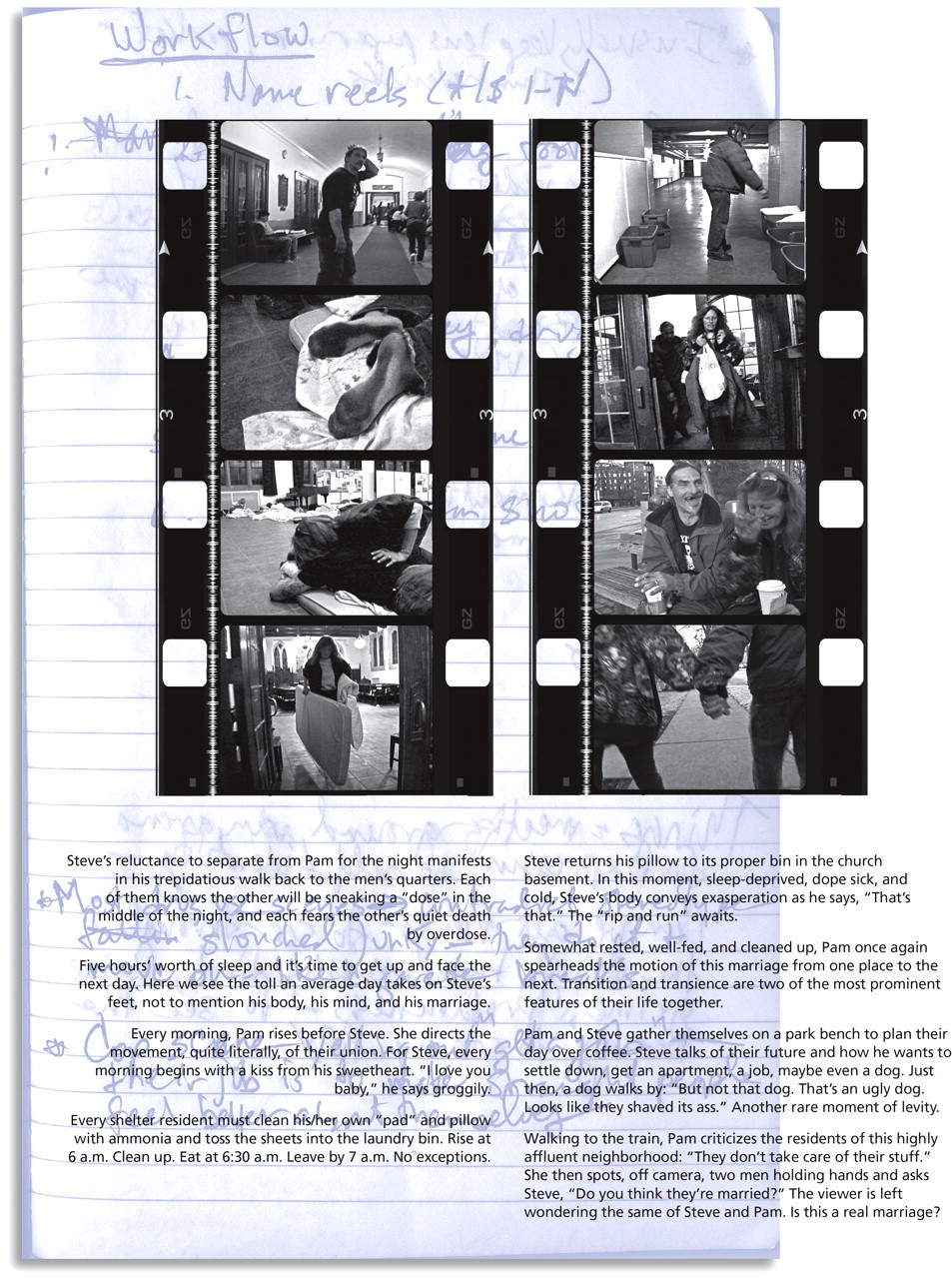
The documentary film from which these images come, “Matrimony,” melds ethnography with the art and craft of digital cinema to explore and chronicle the daily making of a marriage. In this case, the union happens to involve an often-homeless, heroin-addicted couple I've known for 10 years. “Pony Tail” Steve and “Sapphire” Pam comprise one of the core dyads of a long-standing, West-side Chicago community in a shanty village known locally as “The Brickyard.” This shadow community is made up of heroin and crack addicts, alcoholics, prostitutes, thieves, exiled gang members, and freight train “hobos”—but also a dizzying array of white, upper middle class men and women seeking intoxicative reprieve and refuge from their shame.
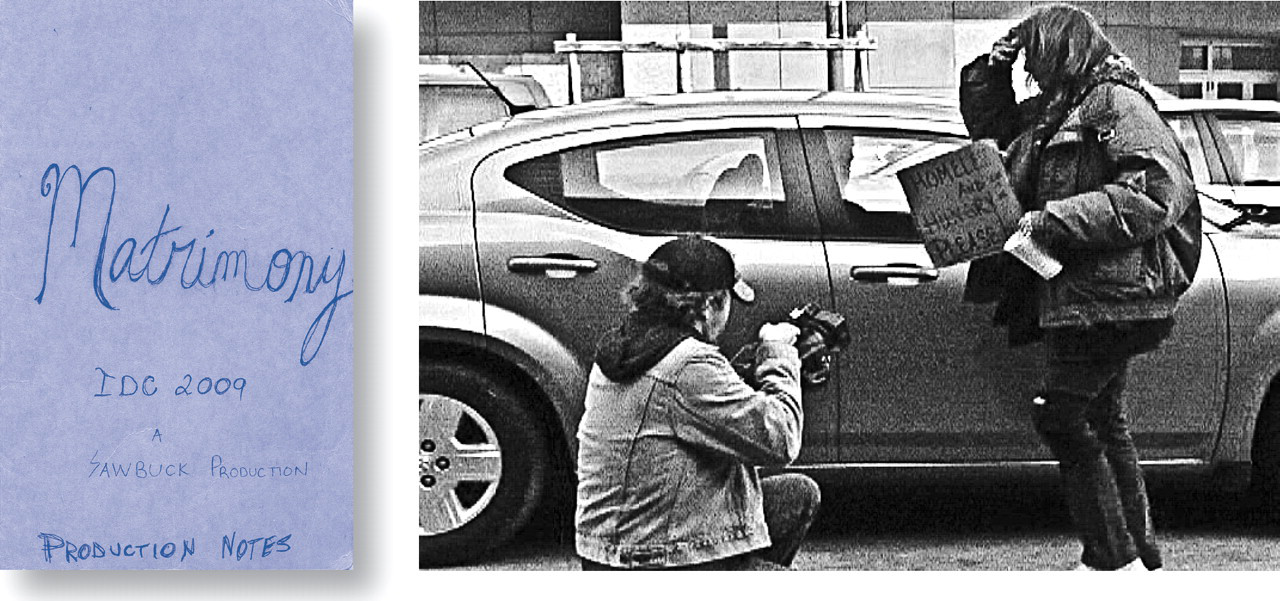
As an ethnographer committed to long-term fieldwork in The Brickyard, I entered Steve's life in 2001. This was well before he and Pam became a couple, seven years before I witnessed their marriage at City Hall. Over the years, they've welcomed me into their various Brickyard “homes,” and they've stayed with me in my home. I once rescued Steve from a heroin overdose. He saved me from taking “carnal” sociology too far.
In the spring of 2009, I decided to make their marriage the subject of my next ethnographilm (my term for a documentary film in which the rhetorical structure emerges from systematically collected ethnographic audiovisual data). As a work of artistic social science,” Matrimony” grew out of the question I was so often asked when I talked about Pam and Steve: “Is this a real marriage?” Early on, I took umbrage at people's insistence on distinguishing the sacred unions of so-called normal people from the profane romantic liaisons of “junkies.” But then I realized that even I harbored skepticism about marriage between homeless heroin addicts. So it was that my own deep-seated prejudice prompted me to go out into the field and make this film.
Ultimately, however, this film isn't about the marriage of Pam and Steve; it's not even about marriage between homeless heroin addicts. Rather, it's an ethnographic account of marriage in contemporary America. The particularities of the protagonists' situations allow the viewer to examine more generic marital relations without all the distracting “noise”—they can consider marriage without its conventional trappings, including the thicket of legitimating institutional affiliations supporting “acceptable” unions. In other words, the atypicality of Pam and Steve's marriage is exactly what makes it an ideal subject of study, an examination of what sociologist Georg Simmel called the “superordinate” quality of the dyad-turned-marriage.
I observed as Steve and Pam contended with repeated challenges to their marriage. Their responses helped distinguish marriage, as a social form, from other types of coupling. For example, clinical addiction all but precludes an addict from contributing to concerns beyond his or her individual well-being, but marriage depends on creating and nurturing supra-individual structures. So a marriage of addicts casts “what it takes” to make a marriage work into bold relief. Second, conventional marriages enjoy synergistic relations with other normative institutions. In “Matrimony,” we see how two people enact the superordinate quality of their state-sanctioned (if not state-or community-supported) relationship—in marriage, even Pam and Steve are more than just “a couple.” Continually deprived of the taken-for-granted appurtenances of married life (such as the luxury of sleeping in the same bed at night and the simple assumption that one's spouse will be alive in the morning), these two nevertheless create an undeniable marriage.
By their first anniversary, Pam and Steve (just like their mainstream counterparts) realize that marriage is no more or less than what you make of it. It is this “making of legitimacy” that these film stills are intended to capture.
To watch “Matrimony,” please visit http://condor.depaul.edu/ethnodoc/matrimony/.