



Abstract
Sleep on this: sleep is a highly social endeavor, posing a puzzle and a prism through which to view life in the wired era.
We all sleep. But what does it have to do with society? Sleep seems like the most private and personal of things—a weird and wonderful place of “marvels and monsters” (recalling Goya), where we are not quite ourselves. So, for those of us interested in the things we do together, what is there to say about sleep? At best, from a social point of view, sleep would appear to be a sanctuary from the demands of social life, and at worst a downright anti-social act or even a waste of time that consumes a full third of our lives. But herein are points of entry.
At a very basic level, sleep is functional for society, a vital release from the grind of social life and an essential means of preparation for valued social roles. Recent sociological research amply demonstrates that sleep is not merely personal or private. The mysteries of sleep, though, cannot be fully unravelled in the modern sleep laboratory, despite its elaborate array of tools and technologies to monitor, manage, or even mend our “broken” sleep.
How we sleep, when we sleep, where we sleep, with whom with sleep, and the meanings we accord our sleep are all social, cultural, and historical matters that demand (and repay) our attention. Sleep is fast becoming a matter of public attention and concern, both a problem of and a prism onto life and living in the 24/7, wired-awake era.
Sleep, in other words, is both an important problem in its own right and a window onto the social world. It constitutes a prime example of how we might profitably link the private realm of “personal troubles” to broader public issues of “social structure,” particularly at a time when the notion of a “well-slept” society appears to be an increasingly distant dream.
Organizing Rest
Sleep, like hunger and thirst, exerts a powerful call on a daily (or nightly) basis. It is a potent reminder that we all have bodies with needs, and sooner or later we must relinquish our involvements in the waking world and succumb to the will of our drowsy and subsequently dormant bodies. (Insomnia in this respect provides an interesting counterpoint: a sign or symptom of an overactive mind or incessant consciousness, in which the body fails to shut down when we wish or want it to. Even insomniacs, however, need to sleep, fitfully or otherwise.)
It is by virtue of this inescapable bodily need that all societies must organize the sleep of their members in some way or other. Important and necessary as sleep may be, no society can afford for all its members to sleep at once. Some citizens, recalling Shakespeare's memorable phrase, “must watch whilst others sleep.” As sociologist Barry Schwartz argued long ago, sleep may be regarded not only as a socially sanctioned role but also as a socially scheduled one.
Like other social roles, sleep is often accompanied by a more or less elaborate series of transition routines or rituals to facilitate passage both into and out of the sleep role. On turning in for the night, for example, I lock up, wind down, go up stairs, brush my teeth, put my pajamas on, get into bed, read for a while, then turn the lights out and hit the sack. Similarly, on waking, I stretch a bit, go to the bathroom, shower, shave, brush my teeth again, comb my hair, get into my day clothes, have some breakfast, and read the paper (if I'm lucky). Presto! I'm ready again to face the workaday world.
Beyond one's own routine, there is a social series of rights and responsibilities on the part of both the sleeper and the waking world. These include respect for the sleeper (and their claim to freedom from undue noise or disturbance) and a host of other conventions regarding when, where, how, and with whom one can sleep. The conditions under which we sleep are, in fact, culturally and historically variable. This is particularly the case, as sleep researchers Lodewijk Brunt and Brigitte Steger have argued, when it comes to tolerance for public and private sleep or napping. Sleeping at an interview or lecture, for example, might not go down too well, in the Western world at least, while sleeping in the privacy and comfort of your home, at an appropriate time, is not only wholly acceptable, but normatively expected.
In an odd twist of medicalization, the makers of Tylenol PM give insomnia advice in a bus stop ad.

Citizens have sleep responsibilities as well, as illustrated by the societal dangers posed by individuals who do not get enough sleep. We are increasingly held accountable for our sleep these days—or at a minimum, for making sure we are not excessively drowsy given the deficits in performance and safety risks soporific states may engender. While doing without sleep is still all too frequently worn as a badge of honor or pride (“pulling an all-nighter” is seen as a sign of self-discipline, self-mastery, or self-sacrifice in favor of other, supposedly higher, goals and greater values), this clearly can be taken too far. Drowsiness, as sociologists Steve Kroll-Smith and Valerie Gunter note, is increasingly regarded as the new drunkenness: a culpable state, since, for instance, we are every bit as dangerous behind the wheel when we are drowsy as when we are drunk. In states like New Jersey, knowingly driving whilst drowsy constitutes recklessness under a vehicular homicide charge. Public awareness campaigns such as Drowsy Driving Prevention Week, created by the National Sleep Foundation (that other NSF), add social urgency to our need for rest.
Inequities among Sleepers
Sleep—and the rights and responsibilities of sleeping—is unevenly distributed and closely bound up with power relations and social inequalities in the modern world. That is, we all have varying degrees of autonomy or discretion over when and where we sleep. Consider, by way of contrast to the normal round of everyday/night life roles and routines, the institutionalized sleeping patterns and practices evident in prisons, military barracks, boarding schools, and nursing homes, or, at the other end of the spectrum, the sporadic if not nomadic lives of those who “sleep rough” on city streets or in the slums and shanty towns of places such as Johannesburg and Mumbai. In a more extreme example, sleep rights may be deliberately withheld or denied in the name of torture or interrogation. Think of euphemistically-termed “sleep restriction techniques” practiced on detainees at Abu Ghraib and Guantanamo Bay, or, closer to home, imposed as one form of domestic abuse.
The matters of power, status, and control associated with sleep come further into focus through a life course perspective. Sleep, as we know, consumes a large proportion of children's time, particularly in the early years of life. Children who do not obtain sufficient night-time sleep are now constructed as at risk of social, health, or educational “problems.” But the gradual “socialization” of children's sleeping patterns into the rhythms of family life provides a good indicator of the “socio-cultural pliability” or plasticity of sleep, albeit within certain neuro/chrono-biological parameters or limits.
Drowsiness is increasingly regarded as the new drunkenness.
And that babies and small children may, instead, wreak havoc with parents' sleep is merely one instance of the far broader sociological point; namely, that the so-called “golden age” of sleep in childhood is often marked by anxiety and conflict for parents and children alike. Romanticized images of children's bedtime conjure notions of bonding moments, but bedtime may actually become a source of struggle as kids grow older.
Bedrooms, sociologists Sue Venn and Sara Arber note, have become busy sites or bustling zones of increasing “networked” activity, housing televisions, computer games, mobile phones, and other forms of communication. Each of these poses risks of night-time sleep disruption which often remains missed or hidden from either parents' or teachers' view. Think also of the adolescent phase of “yawning youth” when sleep patterns shift to owl-like hours. These problems are compounded due to school start times. (The Minnesota experiments in the 1990s with later U.S. school start times may be a pointer for the future, if good school attendance and fewer sleepy pupils in the classroom are anything to go by.)
Parents' sleep, too, is linked with the sleep of children and young people living within the family home, reminding us of the relational nature and dynamics of sleeping throughout much of the life course, as child, parent, or partner. Parents, as recent sociological research shows, are often surprised by the way in which their older, seemingly more autonomous or independent children continue not simply to wake them up, but in some cases disturb their sleep even more than when they were younger. Venn and Arber reveal that worries about children's whereabouts and safety are frequently expressed sources of parental concern and sleep disturbance. Late night noise, door slamming as teenagers come home, and the occasional late night call for help are also commonly reported sources of parental sleep disturbance in recent sociological research.
After the child-bearing years, sleep continues to be marked by changes, transitions, and negotiations. These include what Arber and fellow sociologist Jenny Hislop have usefully identified as biological or physiological changes associated with aging; institutional changes in roles and statuses; relational changes associated with partners, children, parents, friends; and biographical transitions associated with life events and other transitions like marriage, parenthood, retirement, divorce, and widowhood— all of which impact sleep.
Work and Sleep
Work is another aspect of social life with complex relations to sleep. The obvious case is shift work (particularly rotating shifts or night shifts), and much of the research on sleep and work to date has concentrated on it. Sociological research is now beginning to explore the intersections among gender, paid employment, and rest. A 2009 analysis of the U.K. Time Use Survey by Arber and researcher Stella Chatzitheochari, for example, found an inverse relationship between length of working hours and short sleep duration (less than 6.5 hours) which was stronger for men than women. Arber and colleagues, however, have also shown, in other qualitative research, how women's sleep is typically disadvantaged due to family-care responsibilities.
Work and family responsibilities impinge not simply on sleep quantity but on sleep quality. In a study of retail food workers in the U.S., sociologist David Maume and colleagues found that women experience more sleep disruptions than men, and that more than half this gap was accounted for by “gendered reactions to work-family situations.”
Metronaps' napping pods on display.

Other recent research highlights how employment significantly impacts the very meanings we attribute to sleep, including what medical anthropologist Douglas Henry and colleagues refer to as the “powerful internalizing role of labor” in experiences of sleep. Again, gender proves significant. Whilst men, as sociologist Rob Meadows and his coauthors find, are inclined to link sleep “need” with ability to “function” (especially in paid labor), they are also inclined to identify paid work as one of the prime causes of “poor” sleep, both in terms of work constraints and work stressors.
And then there is the issue of workplace napping. Who hasn't snatched the odd forty-winks on a lunch break, at a desk, or behind the office filing cabinets in a furtive act of desperation or defiance? In recent years, the idea of the office nap has undergone a transformation of its own, with napping literally being “put to work” with other (corporate) aims in mind (as the notion of “power napping” suggests). No longer simply the practice of Mediterranean siesta cultures or napping cultures such as Japan, China, or India, a midday rest is increasingly touted as an acceptable if not valued practice, particularly within certain sectors of the late capitalist economy. Sociologists Vern Baxter and Steve Kroll-Smith identify cognitive and information-rich sectors of the economy where mental rather than manual labor prevails and napping becomes a form of cognitive enhancement or performance upgrade. A cat or power nap gives these workers a creative boost or edge.
Workplace napping is not simply a case of the official sanctioning and spatial organization of sleep friendly policies. Independent companies now specialize in “alertness management” and the art of napping both on and off the job. One corporation, Metronaps, bills itself on its website as a “…leading provider of fatigue management solutions to public and private sector organisations.” They count, among their diverse clients, PriceWaterhouseCooper, Procter and Gamble, Google, W Hotels, and the British Lawn Tennis Association, and their products range from the latest noise cancelling headphones to the Zero chair (“based on NASA technology”) and a gadget called the Pzizz, which not only “looks and feels amazing,” but “allows you to nap any time, any place.” This hand held miracle is, naturally, “recommended for frequent travellers, commercial drivers, mobile workforces, and in combination with purchases of the Zero chair.”
Whether these moves are welcomed or instead regarded as the latest expression of the corporate management of our lives are still open questions. Nevertheless, these developments do signal, as Baxter and Kroll-Smith comment, the way in which sleep is neither a private matter nor an unproductive act. Sleep, as these researchers observe, has become a regulated, time-space behavior, both inside and outside the workplace.
Sleep Sick Society?
Mention has already been made of the “problem” of sleep and sleep problems in contemporary society. There is still a vital piece of the story missing here: sleep science and sleep medicine. Experts play a big role in the framing of sleep as a “matter of concern” or “problem in the making.” Developments in sleep science and sleep medicine in recent decades, coupled with the on-going efforts of organizations such as the National Sleep Foundation (established in 1990 with the motto “Alerting the public, health care providers and policymakers to the life-and-death importance of adequate sleep”), now serve to recast and reconfigure the ways we think about and manage our sleep problems.
Sleep “problems,” of course, come in many forms, shapes, and sizes, some more serious than others, from bona fide sleep disorders to sleep disturbance, disruption, or deprivation in the absence of any underlying or identifiable disorder. Estimates of who's affected vary from study to study and country to country, depending on what precisely we're looking for. Overall, as science writer Paul Martin summarizes, it's probably safe to say that at least one in ten adults suffers from moderate or severe daytime sleepiness.
Some leading experts, like American sleep expert William Dement, claim these problems have reached epidemic proportions. As many as 70 million Americans, the U.S. National Commission on Sleep Disorders Research estimates, suffer from sleep problems of one kind or another. The annual cost of these problems adds about $16 billion to the national health bill. Dement concludes that we are a “sleep sick society,” with many people suffering needlessly from undiagnosed and untreated sleep disorders, and most of us trading on dangerous levels of sleep debt. This has serious implications for public health and safety.
Sleep is unevenly distributed and closely bound up with power relations and social inequities in the modern world.
Whether or not we are all suffering from chronic sleep problems is a moot point. Consider A. Roger Ekirch's historical research on sleep in pre-industrial times. Compared to the pre-industrial past, when sleep was a more public and precarious if not perilous affair, our sleep quality may well indeed have improved, even if our sleep patterns have changed and our sleep quantity has declined.
Sleep in a bottle?
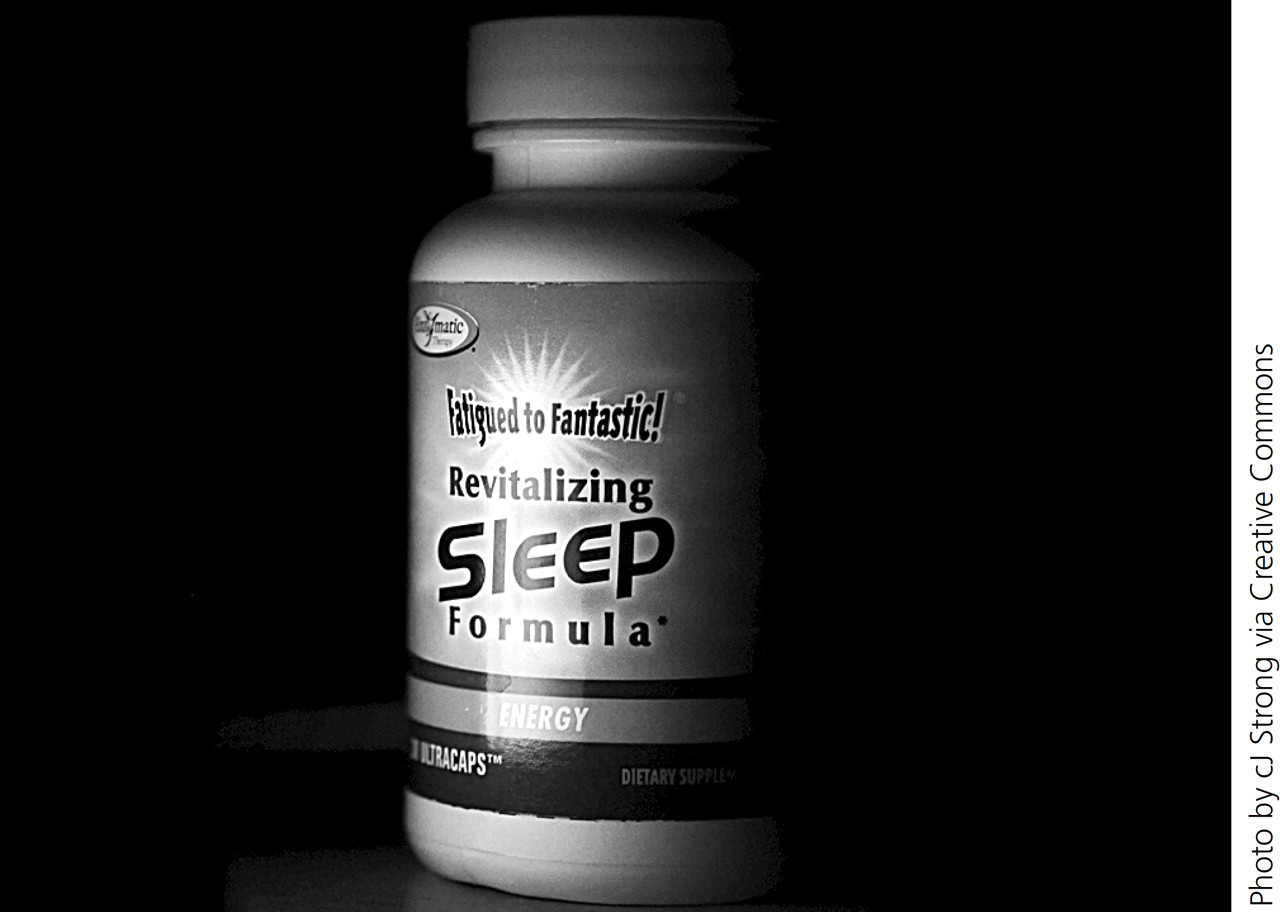
Either way, sleep medicine is certainly big business. Over 1,000 officially accredited sleep clinics exist in North America. Sleep expert Jessica Alexander estimates that the “sleep aids” market in the U.S., which includes everything from sleep clinics, sleep medications, and sleep devices like mattresses and pillows, was worth $23.7 billion in 2007, and will hit a staggering $32.1 billion by 2012. Even as an infant industry, sleep is another prime example of what sociologists call the medicalization of society.
Sleep's (Political) Future
If the industrialization of light in the nineteenth century resulted in what historical scholar and researcher Wolfgang Shivelbusch memorably called the “disenchanted night,” and if our modern day sleep patterns have irrevocably changed courtesy of these developments, then what does the future of sleep hold? Will the mysteries of sleep for example be increasingly unravelled or unbundled in order to render it ever more optional or obsolete, like the banishing of darkness in our light-polluted skies?
The future of sleep looks pretty much assured, even if its quantity or quality continues to change. Who, after all, doesn't like a good sleep when they can get one—it's a sort of pleasure we surely wouldn't trade easily or lightly. On the other hand, our sleep time (if not our sleep rights) appears increasingly under threat in this restless, ravenous age.
And while we've always had the humble shot of caffeine to keep us going, developments in neuroscience and biomedicine hold out the prospect of not only breaking open the mysteries and mechanisms of sleep, but of opening up new options regarding both how well and how much we sleep.
Take, for example, Modafinil (brand name Provigil), a wakefulness promoting drug officially licensed for the medical treatment of sleep disorders involving excessive daytime sleepiness such as narcolepsy, obstructive sleep apnea, and the intriguingly named “shift work sleep disorder.” This is a medication with considerable appeal beyond the clinic—a “smart drug” with the potential to extend our days or prolong our nights for all manner of lifestyle or social purposes. The military is already well ahead of the game here, having long since used drugs (Modafinil included) and devices to help combat fatigue and turn sleep into a commodity of war, much like bombs and bullets. (Imagine for a moment the huge tactical advantage that troops wired awake would confer over their sleep-deprived enemies.)
In a Modafinil world, respect for peoples' sleep rights might also have to contend with respect for peoples' rights
My final example reiterates the point that sleep is not simply a matter of growing concern or even a novel sociological lens on contemporary society and social change. Sleep is, once again, both a problem and a prism regarding life and living in the 24/7 era. It is for these reasons that I am beginning to think and work on the growing politicization of sleep today. It's what I would call the “politics of sleep.”
So the next time you fall prey to the call of Morpheus, ponder briefly (lest it disturb your slumber) the circumstances under which you sleep. Remember, if you will, that the very places, spaces, schedules, and temporalities of sleep are themselves deeply social, cultural, historical, and political matters— and, potentially, subject to contestation and change. It's certainly something to sleep on.