



Abstract
Micro-Chem Plus (MCP) detergent disinfectant cleaner is a common chemical disinfectant currently used at most biosafety level 4 laboratories to ensure proper disinfection and decontamination of waste contaminated with risk group 4 agents. However, similar to a number of disinfectants, MCP contains surfactants known as nonylphenol ethoxylates that are considered highly toxic to the aquatic environment. An alternate disinfectant, Earth Sense (ES) neutral disinfection detergent, was identified as one that lacks nonylphenol ethoxylates. This study compares the virucidal efficacy profiles of both MCP and ES using Vesicular Stomatitis Virus (VSV) as a surrogate for risk group 4 agents. Results indicate that a 5% solution of ES with a contact time of 5 minutes was comparable to 5% MCP solution and reduced VSV titer by at least 6 log10. In addition, both 5% solutions of ES and MCP disinfectants were stable for at least 5 months and were able to inactivate 6 log10 of VSV. These results demonstrate that ES detergent may be a potential option to replace MCP as a suitable disinfectant against risk group 4 agents due to its comparable virucidal efficacy as well as its greener environmental profile.
Keywords
Biosafety level 4 (BSL-4) laboratories are used to study some of the most dangerous pathogens in the world. These pathogens are categorized as risk group 4 (RG4) agents that may cause life-threatening or fatal diseases in humans for which no treatments or cures exist to date. 1 As RG4 agents pose significant high risks to individuals and communities, it is critical that an appropriate disinfectant be used to ensure proper decontamination of environmental surfaces and personal protective equipment as well as treatment of liquid waste prior to sterilization. Micro-Chem Plus (MCP; National Chemical Laboratories, Inc., Philadelphia, Pennsylvania) is a broad-spectrum detergent disinfectant commonly used at BSL-4 facilities in the United States for work involving RG4 agents (personal communication). It contains nonionic and cationic detergents as well as dual quaternary ammonium compounds that contribute to its effective virucidal activities against specified enveloped viruses. 2 Although MCP is nontoxic to humans, the presence of nonionic surfactants such as nonylphenol ethoxylates (NPEs) and its biodegradation product, nonylphenol (NP), make it highly toxic to the aquatic environment. 3 High quantities of NPE and NP have been detected near the sewage and wastewater treatment plants, which contribute to the persistence of NPE and NP in the environment. 4 In addition, data suggest that NP can mimic estrogen and may be an endocrine disruptor, as NP has been detected in human breast milk, umbilical cord blood, and urine.3,5 –7 Therefore, it is important to identify an alternative disinfectant that is without negative impact on the environment but still displays similar disinfectant efficacy to MCP.
Earth Sense (ES; National Chemical Laboratories, Inc.) neutral disinfectant detergent is also based on dual quaternary ammonium compounds but lacks NPEs. The manufacturer has used Association of Official Analytical Chemists and Environmental Protection Agency (EPA) test standards to demonstrate that ES has bactericidal, virucidal, and fungicidal activities in the presence of 5% organic load with a 10-minute contact time. 8
Previous unpublished data have shown that disk carriers inoculated with Ebola virus and treated with 5% MCP for a 10-minute contact time resulted in a 7 log10 reduction in virus titer (Dr. Heinz Feldmann, Public Health Agency of Canada, unpublished data). Both Vesicular Stomatitis Virus (VSV) and Ebola virus belong to the family Rhabdoviridae and Filoviridae, respectively, within the order Mononegavirales and share similar characteristics including a lipid envelope that surrounds the viral nucleocapsid core containing the negative, single-stranded RNA genome. As a result, VSV may be used as a valid surrogate for enveloped RG4 agents, such as Ebola and Marburg viruses to study disinfectant efficacy. 9 Klaponski et al used VSV as a surrogate for RG4 agents to demonstrate that a 5% MCP solution in chemical showers resulted in 6 log10 reduction in VSV after a 5-minute exposure time. 10 Therefore, the purpose of this study is to compare the virucidal efficacy of ES neutral disinfectant detergent with MCP and to identify the optimum concentration and minimum contact time at which ES detergent can effectively inactivate VSV, a RG2 agent, used here as a surrogate for RG4 agents. The ASTM E2197-11 standard for quantitative disk carrier test method 11 was used to evaluate the virucidal efficacy of both disinfectants with an acceptance criterion set at a virus titer reduction ≥6 log10.
Materials and Methods
Cells and Viruses
An African green monkey kidney (Vero 76) cell line was purchased from American Type Culture Collection (CRL-1587, lot 58078685, passage 30; ATCC, Manassas, Virginia). The cells were maintained in minimum essential media (MEM; Life Technologies, Waltham, Massachusetts) supplemented with 5% fetal bovine serum (FBS; Life Technologies, Carlsbad, California), 1% L-glutamine (Life Technologies), and 1% penicillin-streptomycin (Life Technologies). Cells were grown at 37ºC with 5% CO2 in a humidified atmosphere. VSV, Indiana strain (VR-158, lot 7672891; ATCC) stocks were generated by inoculating Vero 76 cells at a multiplicity of infection of 0.01 for 24 hours. The media containing the virus was centrifuged at 4000 × g for 10 minutes at 4ºC to remove cell debris. The supernatant was collected, aliquoted, and stored at –80ºC.
Disinfectants and Neutralizer
All dilutions of MCP and ES neutral disinfectant detergent were prepared fresh in 400-ppm hard water (0.1M calcium carbonate; Fisher Scientific, Hampton, New Hampshire). To test how long MCP and ES could retain their disinfectant efficacy, 5% solutions were prepared 20 weeks prior to the disinfection assay, stored at room temperature, and protected away from light. Use of hard water provided a more stringent challenge condition for the efficacy study. A 1 × Dey-Engley (D/E) neutralization solution (Difco) was prepared from sterile 2 × D/E:2 × MEM (Life Technologies) solutions to neutralize MCP and ES disinfectants.
Disinfection Assay
ASTM E2197-11 standard quantitative disk carrier test method 11 was used to determine virucidal activity of ES disinfectant against VSV on nonporous environmental surfaces (Figure 1, Table 1). A 10-µL inoculum of VSV containing 1 × 10⁸ plaque-forming units (pfu) of virus already mixed with 5% FBS (organic load) was dried onto autoclaved brushed stainless-steel disk carriers (Muzeen & Blythe, Ltd., Winnipeg, Canada) inside a Class II biological safety cabinet for 30 to 45 minutes. Dried carriers were then treated with 50 µL of either MCP or ES solution at varying concentrations (0%, 0.1%, 1.6%, 5%, 10%) for 1, 5, or 10 minutes. The disinfectant solutions were then neutralized with 950 µL of 1 × D/E neutralization solution. To determine how long the disinfectants could retain their efficacy against VSV, carriers containing the dried virus inoculum were treated with 5% solution of either freshly prepared or 20-week-old MCP or ES solution for 5 minutes and then treated with the neutralization solution. Any remaining infectious virus on the carriers was recovered by gently pipetting up and down each disinfectant-treated VSV samples, which were further diluted in Earle’s Balanced Salt Solution (EBSS; Life Technologies) supplemented with 1% PenStrep to determine the log10 reduction of VSV by plaque assay. Disk carriers coated with dried virus inoculum only were used as positive controls to determine the starting virus titer, while disinfectant-treated carriers lacking the virus were used as negative controls. The disinfection assay was performed at least 3 times.
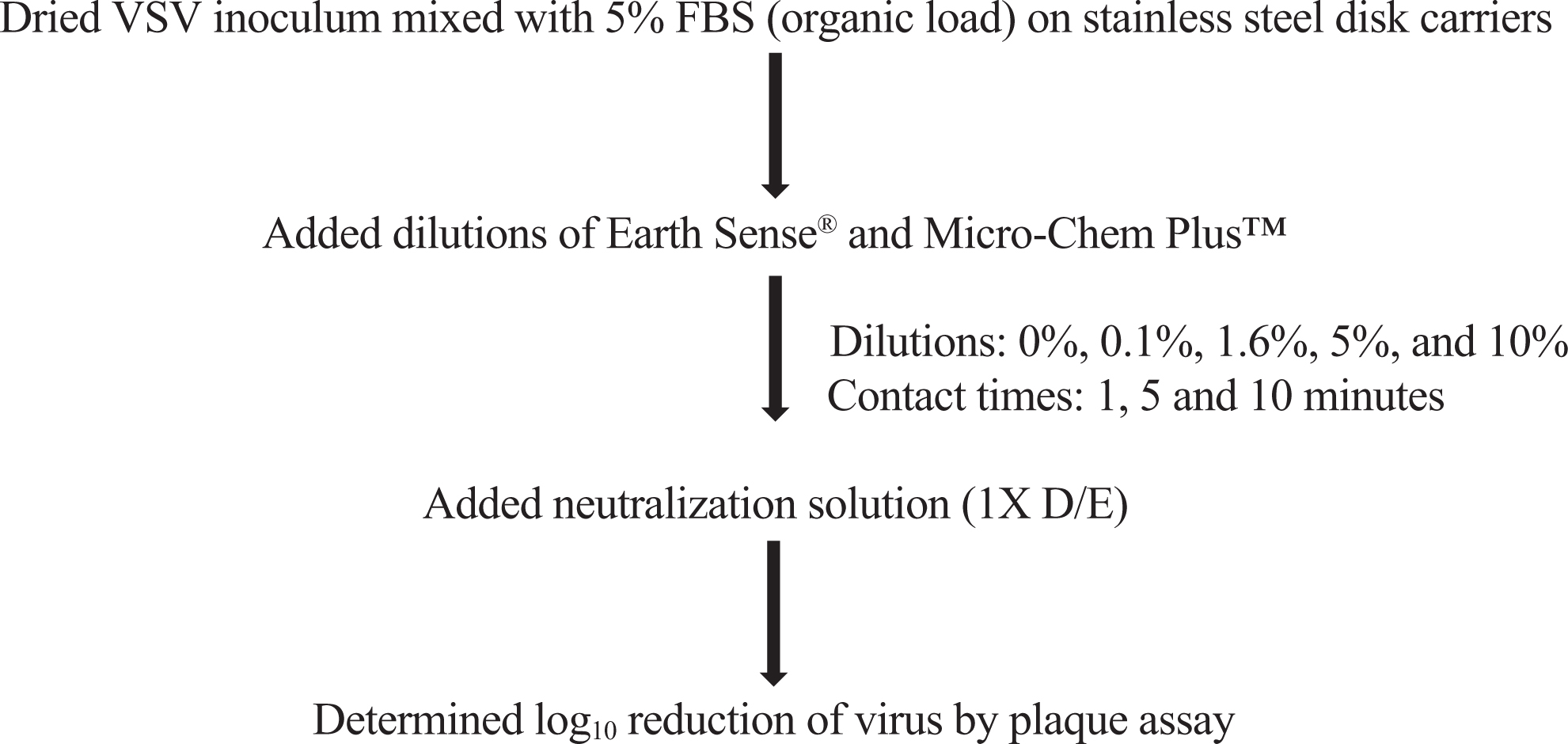
Schematic of ASTM quantitative disc carrier method to evaluate virucidal activity of Earth Sense neutral disinfectant detergent against Vesicular Stomatitis Virus. D/E, Dey-Engley; FBS, fetal bovine serum.
Disinfection Conditions Tested Against Vesicular Stomatitis Virus Using Stainless-Steel Disk Carriers.
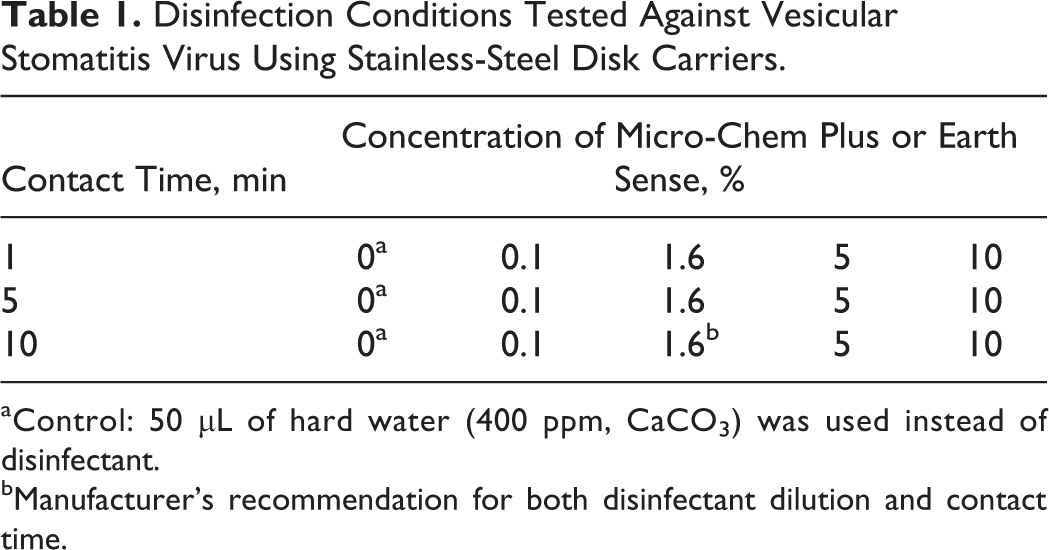
Control: 50 μL of hard water (400 ppm, CaCO3) was used instead of disinfectant.
Manufacturer’s recommendation for both disinfectant dilution and contact time.
Assay Controls
A drying control was used to determine any possible loss of infectious virus due to the drying procedure. Briefly, a 10-µL inoculum of VSV containing 1 × 10⁸ pfu of virus already mixed with 5% FBS was dried onto autoclaved brushed stainless-steel disk carriers for 30 to 45 minutes. Fresh pipette tips containing 50 µL of EBSS supplemented with 1% PenStrep and 950 µL of 1 × D/E neutralization buffer were used to recover virus from each carrier. Virus was eluted by gently pipetting up and down each sample, which was then used to perform a plaque assay to determine virus titer. A cytotoxicity assay control was used to determine if mixtures of MCP or ES + 1 × D/E neutralization solution would cause cytotoxicity of the Vero 76 cells. Cells (800 000 cells per well) were incubated with 50 µL of 1:20 dilution of either 5% or 10% MCP or ES solution mixed with 1 × D/E neutralization solution in wells of a 24 well microtiter plate for 60 minutes at 37ºC, 5% CO2. A 1:20 dilution of 5% or 10% disinfectant solution was used for all control assays since it is the concentration of the disinfectant in the neutralization mixture following treatment of the virus by the disinfectant. After incubation, cells were examined microscopically for cytotoxicity as well as overlaid with 1% agarose for plaque assays. A neutralization assay control was used to confirm the successful neutralization of MCP and ES disinfectants and to determine if the 1 × D/E neutralization solution alone caused any cytotoxicity in the cell line. In this experiment, a 1:1 ratio of 1:20 dilution of a 10% or 20% MCP or ES solution was mixed with 2 × D/E neutralization solution (final concentration is 1:20 dilution of 5% or 10% MCP or ES solution and 1 × D/E neutralization solution) and used as a diluent to dilute 1 × 10⁸ pfu of VSV. The virus + disinfectant + neutralization solution was incubated for 10 minutes at room temperature in the biosafety cabinet, and 10-fold dilutions were prepared and used to perform the plaque assay. Lastly, an interference control was used to determine if MCP and ES could affect viral infectivity in the absence of obvious cytotoxicity to host cells. Vero 76 cells were treated with 50 µL of equal volumes of 1:20 dilution of a 10% or 20% MCP or ES solution and 2 × D/E neutralization solution for 30 minutes at 37ºC, 5% CO2. After the incubation, cells were checked microscopically for cytotoxicity and washed once with EBSS. 1 × 10⁸ pfu of VSV was then diluted 10-fold and 50 µL of diluted virus added to the wells for plaque assay.
Virus Plaque Assay
Seventy-two hours prior to virus plaque assay, Vero 76 cells (200 000 cells per well) were plated in 24-well plates for 90% to 95% confluency. Disinfectant-treated VSV samples in neutralization buffer were diluted 10-fold in EBSS supplemented with 1% PenStrep, and 50 µL of treated samples was transferred into each well. The plates were then incubated for 60 minutes at 37ºC, 5% CO2 with gentle rotation every 15 minutes. After an hour of virus adsorption, an overlay solution containing 1 mL of equal volume of 2% sterile agarose solution and 2 × MEM (supplemented with 5% FBS, 2% L-glutamine, 2% PenStrep, and 4% sodium bicarbonate) was added to each well and incubated for 24 hours at 37ºC, 5% CO2. The following day, an additional 1 mL of secondary overlay solution supplemented with 2% Neutral Red (Sigma) was added to each well and incubated for another 24 hours at 37ºC, 5% CO2. The next day, these plates were inverted, and a light box was used to count plaques in wells containing 5 to 50 plaques to determine virus titer.
Data Analysis
The performance criterion to evaluate the disinfectant efficacy was set at 6 log10 reduction in virus titer. The effective decontamination with ES disinfectant was considered to be acceptable at a concentration and contact time at which there was at least a viral reduction ≥6 log10.
Results
Control Assays
Figure 2 shows that treatment with a mixture of 1:20 10% ES in 1 × D/E neutralization solution did not result in any cytotoxicity of Vero 76 cells by either microscope examination or plaque assay. Also, cytotoxicity was not detected in cells treated with 1 × D/E neutralization solution only. In addition, when plaque assays were performed with 1:1 ratio of 1:20 dilution of 20% ES mixed with 2 × D/E solution as a diluent, a concentration >107 pfu/mL of VSV was recovered, suggesting that 1 × D/E neutralization solution was able to neutralize the disinfectant effectively. Similarly, when cells were treated with equal volumes of 1:20 20% ES and 2 × D/E neutralization solution for 30 minutes and then the mixture was removed, the plaque assay was able to recover >107 pfu/mL of VSV, suggesting that suboptimal levels of disinfectant in the presence of neutralization solution did not affect the virus infectivity of Vero 76 cells. Furthermore, cytotoxicity was not detected when cells were treated with 5% ES + 1 × D/E solution, and >107 pfu/mL of VSV was also recovered when 5% ES + 1 × D/E solution was used in neutralization and interference assays (data not shown).
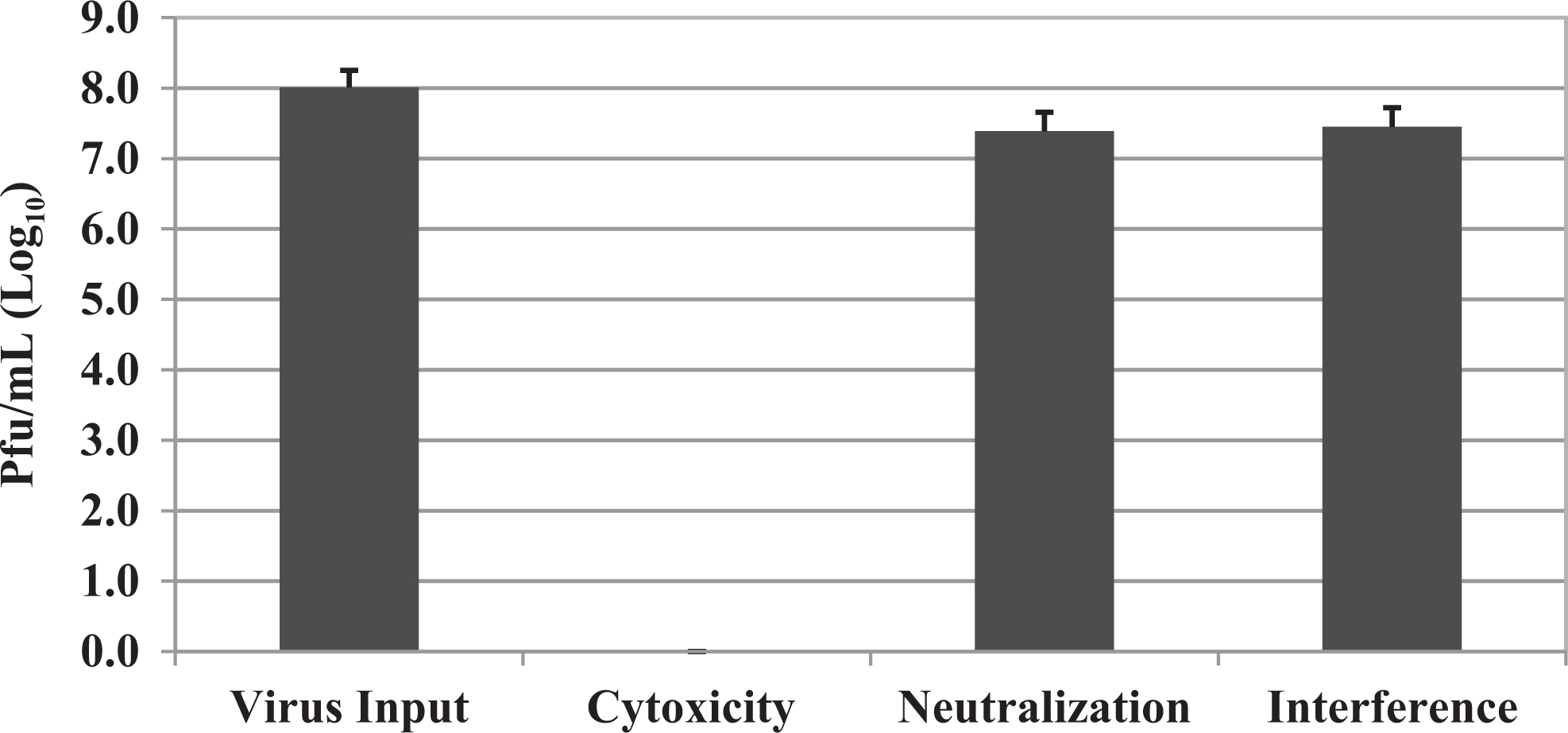
Assay controls with Earth Sense (ES) disinfectant on Vero 76 cells. In the cytotoxicity assay, Vero 76 cells were treated with 50 µL of 10% ES + 1 × Dey-Engley (D/E) neutralization solution for 60 minutes at 37°C, 5% CO2, and checked under microscope and plaque assay for any cell damage. For the neutralization assay, a 10% ES + 1 × D/E neutralization solution was used as a diluent to perform Vesicular Stomatitis Virus plaque assay. For the interference assay, cells were treated with 10% ES + 1 × D/E neutralization solution for 30 minutes at 37°C, 5% CO2, and then removed. Cells were washed once, and 10-fold dilutions of Vesicular Stomatitis Virus were added to the 24-well plates for plaque assay. Control assays were performed at least 2 independent times. pfu, plaque-forming units.
In control assays using MCP, Vero 76 cell cytotoxicity in the presence of either 1:20 5% or 10% MCP in 1 × D/E neutralization solution was not observed (Figure 3, data not shown). Also, 1 × D/E neutralization solution neutralized 1:20 10% MCP disinfectant effectively; 107 pfu/mL of the virus was recovered by plaque assay. However, a minute level of 10% MCP may have interfered with VSV infectivity, but interference was not detected when a 1:20 5% MCP was used in the 1 × neutralization solution (Figure 3, data not shown).
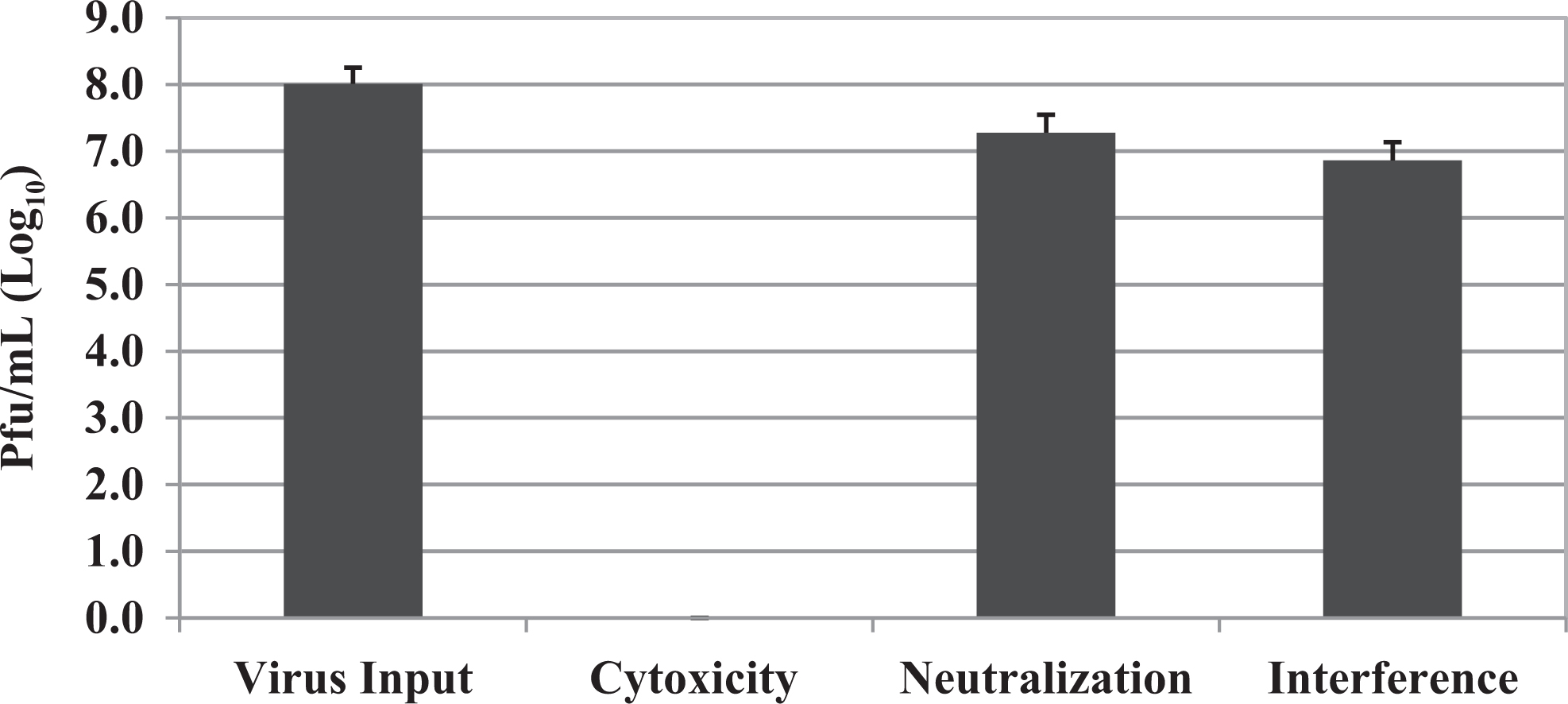
Assay controls with Micro-Chem Plus (MCP) disinfectant on Vero 76 cells. In the cytotoxicity assay, Vero 76 cells were treated with 50 µL of 10% Micro-Chem Plus + 1 × Dey-Engley (D/E) neutralization solution for 60 minutes at 37°C, 5% CO2, and checked under microscope and plaque assay for any cell damage. For the neutralization assay, a 10% MCP + 1 × D/E neutralization solution was used as a diluent to perform Vesicular Stomatitis Virus plaque assay. For the interference assay, cells were treated with 10% MCP + 1 × D/E neutralization solution for 30 minutes at 37°C, 5% CO2, and then removed. Cells were washed once, and 10-fold dilutions of Vesicular Stomatitis Virus were added to the 24-well plates for plaque assay. Control assays were performed at least 2 independent times. pfu, plaque-forming units.
Drying Assay
Since the performance criterion to evaluate the efficacy of ES detergent was set at 6 log10 reduction in virus titer, the drying assay was used to determine if a minimum concentration of 1 × 10⁶ pfu of VSV could be recovered following drying on stainless-steel disk carriers. A known concentration of 1 × 10⁸ pfu of VSV in 10 µL was dried on carriers for 30 to 45 minutes inside a Class II biological safety cabinet and eluted with EBSS and 1 × D/E neutralization buffer. Figure 4 shows that an average of 1 × 10⁷ pfu/carrier of VSV was recovered from plaque assay, demonstrating that adequate concentration of virus could be recovered to evaluate the efficacy of the disinfectant.
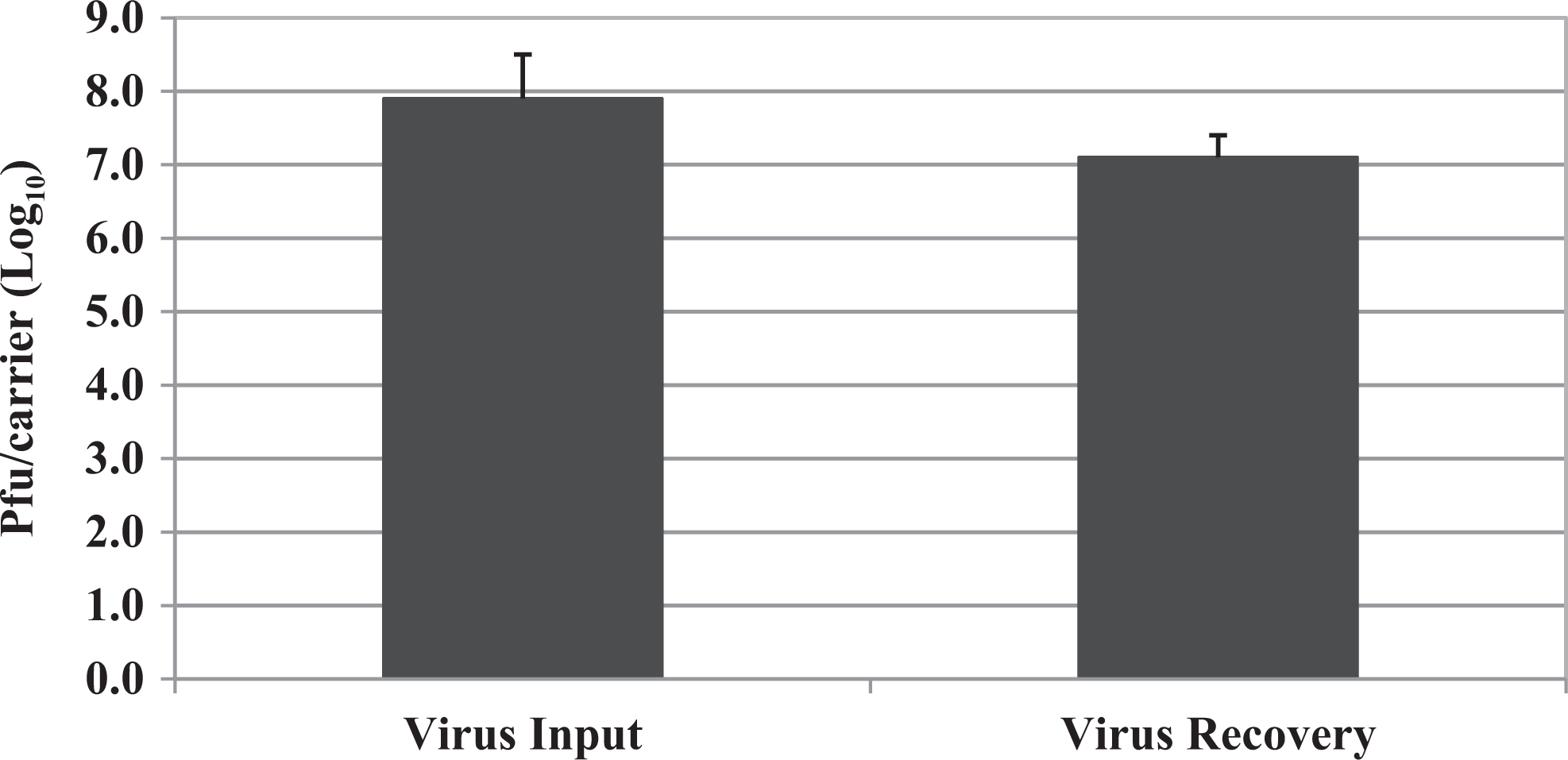
Vesicular Stomatitis Virus recovery from stainless-steel disk carriers following drying. Autoclaved stainless steel were inoculated with 1 × 10⁸ Vesicular Stomatitis Virus and dried for 30 to 45 minutes. The dried inoculum was then resuspended and used for plaque assay to determine virus titer. pfu, plaque-forming units.
Disinfection Assay
To determine the efficacy of ES disinfectant on nonporous environmental surfaces, sterile stainless-steel metal disk carriers were inoculated with 10 µL containing 1 × 10⁸ pfu of VSV and dried for 30 to 45 minutes. Carriers were then treated with different concentrations of ES or MCP for a 1-, 5-, or 10-minute contact time. The treated virus samples were then neutralized with 950 µL of 1 × D/E solution, and plaque assays were performed to determine the log10 reduction of VSV titer. Figure 5 and Table 2 show that there was no difference in efficacy between ES and MCP against VSV when different concentrations of disinfectants were used for a 1-minute contact time. Also, a 1-minute contact time with a 10% solution of either ES or MCP reduced VSV titer by only 2 log10 pfu/carrier. In contrast, a 5% solution of either ES or MCP showed a 7 log10 reduction in VSV titer when the carriers were treated with either disinfectant for a 5- or 10-minute contact time (Figures 6 and 7, Table 2). In addition, only ES disinfectant used at the manufacturer’s suggested dilution (1.6%) for a 10-minute contact time achieved a 7 log10 reduction in virus titer. However, VSV recovery following 1.6% MCP exposure for 10 minutes was variable, and viral recovery may have contributed to cross-contamination among samples (log10 viral recovery from 5 experiments: 0, 6.1, 0, 5.6, and 0). Nevertheless, these results suggest that efficacy of 5% ES disinfectant is comparable to 5% MCP against VSV for a contact time of at least 5 minutes.
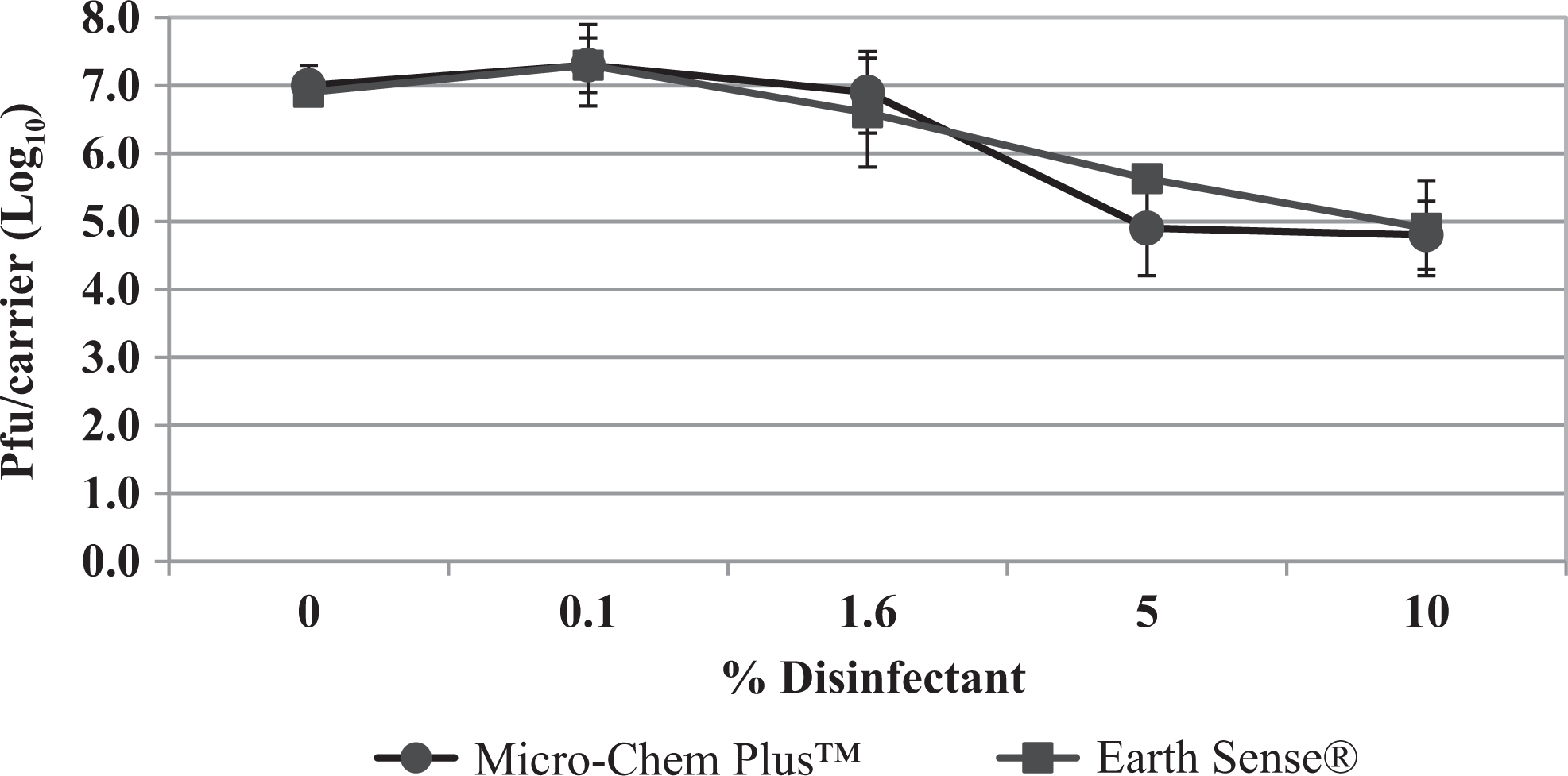
Disinfectant efficacy against Vesicular Stomatitis Virus at 1-minute contact time. Autoclaved stainless-steel disk carriers were inoculated with Vesicular Stomatitis Virus and dried for 30 to 45 minutes. The dried carriers were exposed to different concentrations of Earth Sense and Micro-Chem Plus (0%, 0.1%, 1.6%, 5%, and 10%) for 1 minute, followed by addition of 1 × Dey-Engley neutralization solution. Any remaining virus on the carriers was recovered by performing plaque assay. pfu, plaque-forming units.
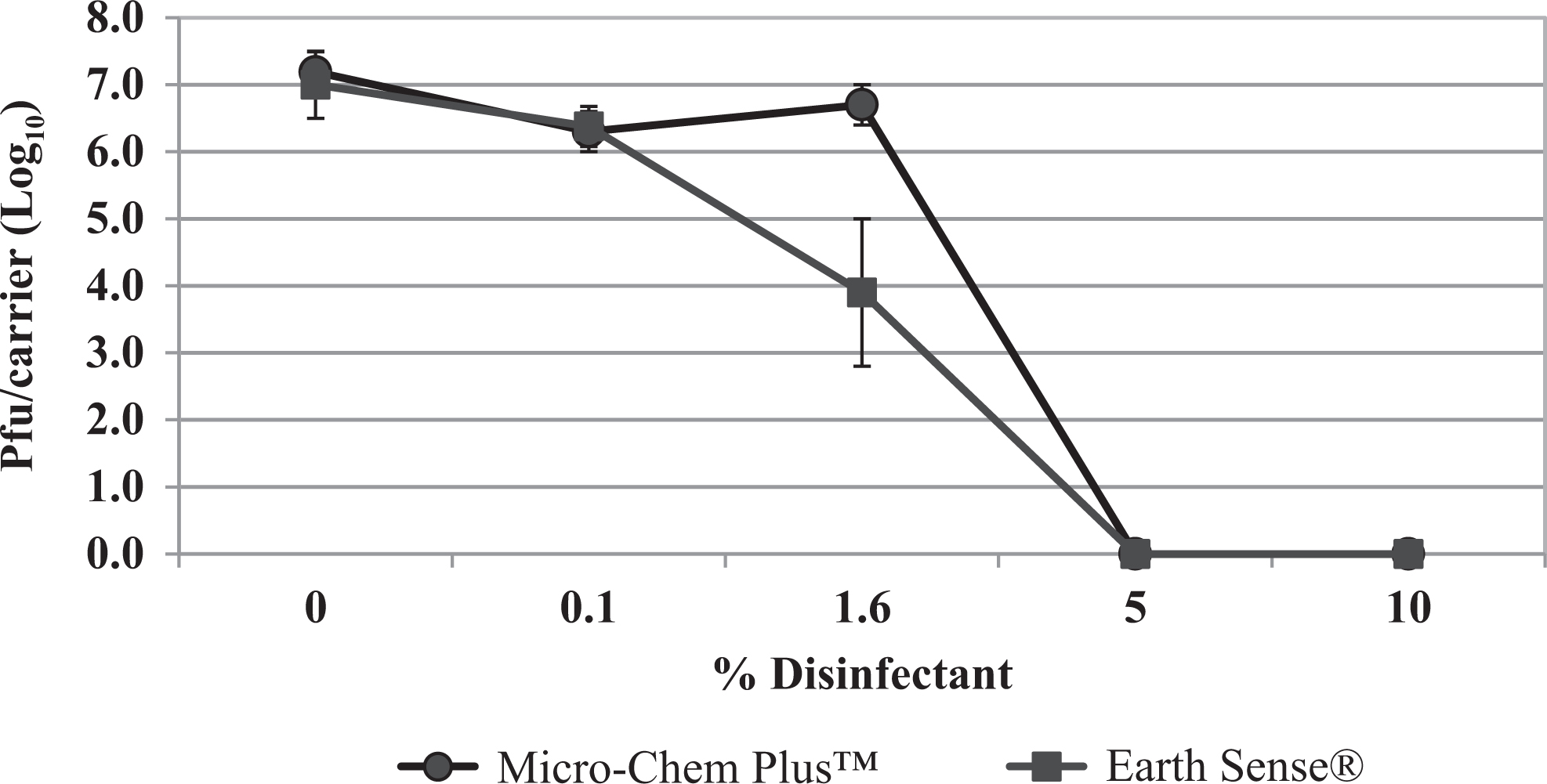
Disinfectant efficacy against Vesicular Stomatitis Virus at 5-minute contact time. Autoclaved stainless-steel disk carriers were inoculated with Vesicular Stomatitis Virus and dried for 30-45 minutes. The dried carriers were exposed to different concentrations of Earth Sense and Micro-Chem Plus (0%, 0.1%, 1.6%, 5%, and 10%) for 5 minutes, followed by addition of 1 × Dey-Engley neutralization solution. Any remaining virus on the carriers was recovered by performing plaque assay. pfu, plaque-forming units.
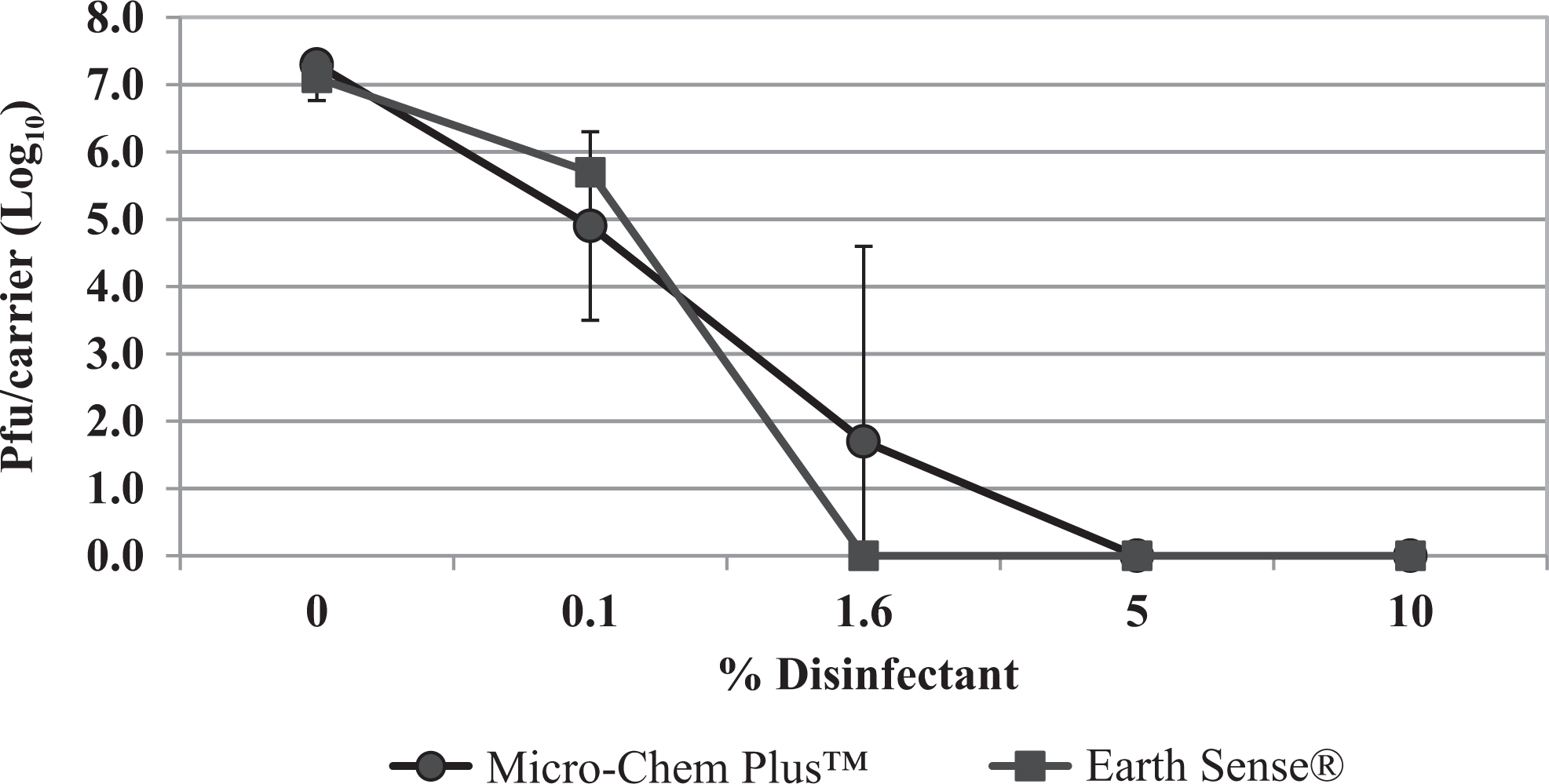
Disinfectant efficacy against Vesicular Stomatitis Virus at 10-minute contact time. Autoclaved stainless-steel disk carriers were inoculated with Vesicular Stomatitis Virus and dried for 30 to 45 minutes. The dried carriers were exposed to different concentrations of Earth Sense and Micro-Chem Plus (0%, 0.1%, 1.6%, 5%, and 10%) for 10 minutes, followed by addition of 1 × Dey-Engley neutralization solution. Any remaining virus on the carriers was recovered by performing plaque assay. pfu, plaque-forming units.
Efficacy of Micro-Chem Plus and Earth Sense Disinfectants Against Vesicular Stomatitis Virus.a
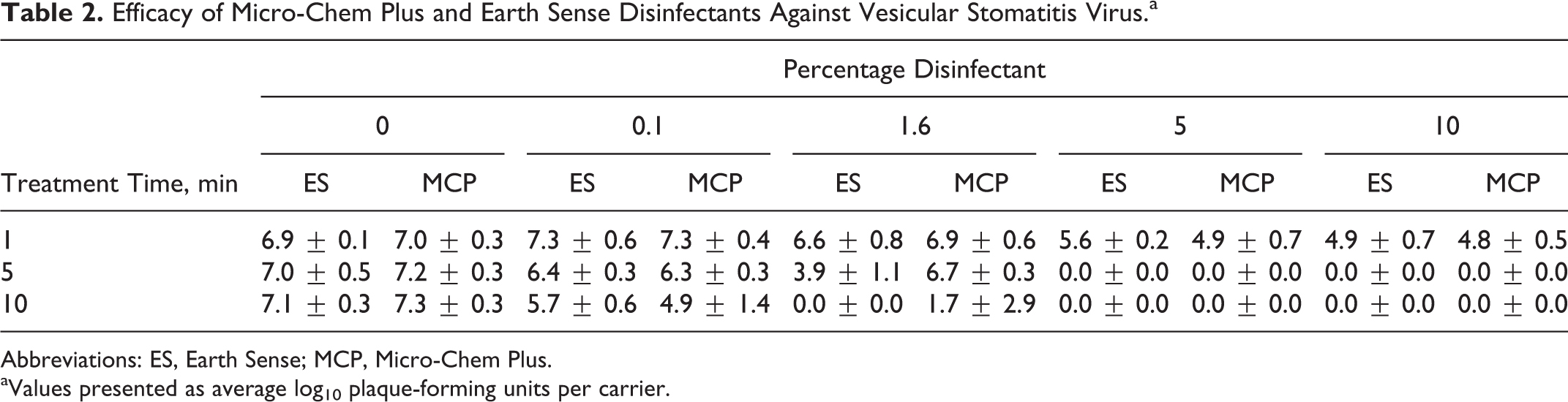
Abbreviations: ES, Earth Sense; MCP, Micro-Chem Plus.
Values presented as average log10 plaque-forming units per carrier.
Effect of Time on Disinfectant Efficacy
For most laboratory use, 5% or 10% MCP disinfectant solution may be prepared daily, weekly, or monthly. To determine how long MCP and ES disinfectants may retain their efficacy, a 5% solution of each disinfectant was prepared 20 weeks prior to carrying out the assay. An end point of 20 weeks was chosen due to the duration of the study. As summarized in Table 3, in the absence of either disinfectant, VSV was recovered at an average of 7.7 log10 pfu/carrier. In contrast, carriers inoculated with the virus and treated with a 5% solution of either disinfectant for a 5-minute contact time did not yield any viral plaques. In addition, there was no observed difference in VSV recovery between disinfectants prepared fresh daily and 20-week old solutions, suggesting that both disinfectants may be used up to 20 weeks to inactivate more than 1 × 10⁶ pfu of VSV.
Effect of Time on 5% Disinfectant Efficacy Against Vesicular Stomatitis Virus at 5-Minute Contact Time.a
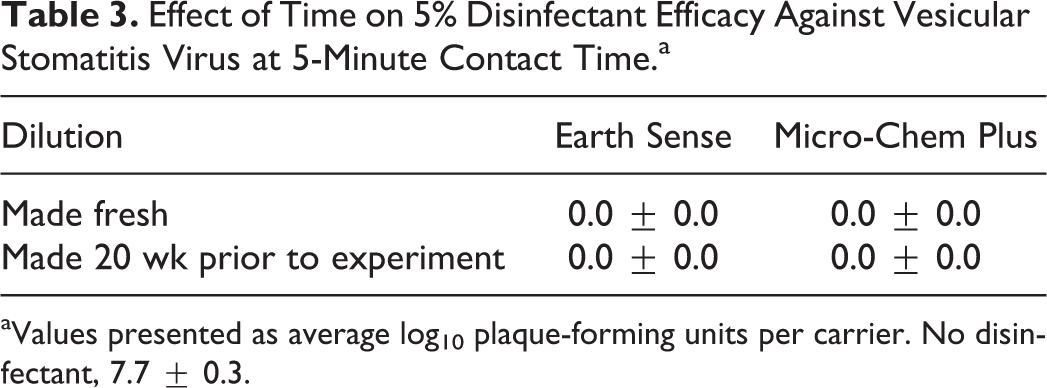
Values presented as average log10 plaque-forming units per carrier. No disinfectant, 7.7 ± 0.3.
Discussion
NPE is widely used in industrial, commercial, and household applications, including detergents, emulsifiers, cleaners, adhesives, cosmetics, paints, wetting and dispersal agents, and degreasers. 3 The most common route of NPE entry into the environment is through wastewater, where it degrades into a more harmful compound, NP. 4 Both NP and NPE are bioaccumulative and have been detected in surface water, ground water, soil, and sediment. There is also significant evidence that NP is an endocrine disrupter and acts as an estrogen mimic. NP induces proliferation of human breast cancer cells and interferes with the reproductive system and with survival of many aquatic organisms.4,12 As a result of its aquatic toxicity profile, the European Union passed directive 2003/53/EC in July 2003, which restricts the marketing and use of products containing formulation >0.1% NPE. 13 Similarly, the EPA has implemented a voluntary phaseout of NPE in industrial laundry detergents to prevent its release into the water system, under its Safer Detergent Stewardship Initiative. 14 In addition, the EPA “Design for Environment Alternatives Assessment for Nonylphenol Ethoxylates” was placed into effect in May 2012 to help implement the NP/NPE action plan of 2010 to find suitable and safer alternatives to NPE.
Proper and adequate disinfection and sterilization of RG4 agents in BSL-4 laboratories are critical at minimizing the risk of contamination, exposure to these agents, or release into the environment. MCP, a detergent disinfectant that contains NPE, is commonly used for chemical treatment of all liquid waste at BSL-4 laboratories before the treated liquid waste is collected by the effluent decontamination system. In addition, the chemical shower cycle that decontaminates the BSL-4 positive pressure suits uses a high volume of diluted MCP, which is also collected as effluent by the effluent decontamination system. Once the effluent decontamination system tank is at full capacity, high volumes of liquid waste mixed with diluted MCP containing NPE are steam sterilized, cooled, and discharged into the municipal sanitary sewer system. This sterilized liquid containing NPE from MCP is routed to the sewage and wastewater treatment plant where anaerobic conditions lead to biodegradation of NPE into its final end product, NP, and contribute to the environmental persistence of NP. Therefore, it is important for BSL-4 laboratories to be good stewards of the environment and to use disinfectants that do not have a negative impact by releasing toxic compounds into the aquatic environment.
The purpose of this study was to determine the optimum concentration and minimum contact time at which the ES disinfectant could inactivate VSV, which was used as a surrogate for RG4 agents. Although the EPA requires a 3 to 4 log10 reduction in virus titer for a disinfectant to be able to claim to be a virucidal disinfectant, 15 the acceptance criterion for ES disinfectant was chosen to be >6 log10 pfu reduction in VSV titer. This criterion was selected because it was shown that MCP reduced Ebola virus titer by 7 log10 pfu while VSV titer was decreased by 6 log10 pfu (Feldman, personal communication). 10 Therefore, any disinfectant that has the potential to replace MCP should have a virucidal efficacy profile similar to MCP.
Multiple disinfectant efficacy studies have been conducted with the quantitative carrier test (QCT) method described in the ASTM E2197-11.16 –18 The use of QCT provides more stringent conditions for disinfectant efficacy testing and simulates field conditions as compared with other methods.18,19 First, the dried inoculum onto a carrier requires that the disinfectant must penetrate it to inactivate the test organism. Second, the carriers used in QCT represent uneven surfaces instead of smooth surfaces, which provides a higher challenge to the test disinfectant. Third, the dried inocula on carriers simulate field conditions, as organisms are mostly adsorbed to surfaces or embedded in organic materials in the field rather than suspended in the air. Finally, the QCT method is a closed system that prevents any loss of test organisms during a challenge. The use of a small volume allows the test organisms to be completely immersed in the disinfectant and to help with recovery of these organisms.
The data in this study demonstrate that a 5% ES neutral disinfectant detergent can reduce VSV titer up to 7 log10 pfu and is comparable to a 5% MCP treatment over a 5-minute contact time. Although a 1.6% ES solution with a contact time of 10 minutes was also able to reduce VSV recovery up to 7 log10 pfu, the data were variable with a 1.6% MCP solution for the same contact time. As a result, a 5% ES solution is a better choice, since it has efficacy against VSV similar to that of MCP over a 5-minute contact time. In addition, 5-month-old (20-week-old) solutions of both 5% ES and MCP inactivated at least 1 × 10⁶ pfu/carrier of VSV when VSV-inoculated carriers were exposed to the aged disinfectants for 5-minute contact times. These data suggest that both disinfectants may retain their efficacy for up to 5 months and may be used over a prolonged period in laboratory settings, leading to less frequent disposal into the environment. In conclusion, the ES disinfectant may be a potential alternative to MCP for future use in BSL-4 laboratories following completion of efficacy testing with individual RG4 agents. In addition, the current ASTM standard quantitative disk carrier test method can be used effectively to evaluate the virucidal efficacy of ES disinfectant against RG4 agents such as Ebola virus as a step toward substituting MCP with a more environmentally friendly disinfectant.
Footnotes
Declaration of Conflicting Interests
The author(s) declared no potential conflicts of interest with respect to the research, authorship, and/or publication of this article.
Funding
The author(s) disclosed receipt of the following financial support for the research, authorship, and/or publication of this article: Funding for this work was supported by Division of Occupational Health and Safety at the National Institutes of Health.