




Abstract
This systematic review synthesizes the existing literature on the impact of artificial intelligence (AI) and automation on Human Resource Development (HRD) practices and outcomes. The study explores how AI and automation affect HRD, highlighting specific HRD processes affected and their influence on outcomes. A comprehensive search was conducted across academic databases, HRD journals, and conference proceedings, resulting in a selection of relevant studies. The findings were analyzed through a narrative synthesis, with subgroup analyses based on specific HRD processes. The review provides insights into AI and automation implications for HRD researchers and practitioners. It also identifies research gaps and future directions.
Keywords
Introduction
The emergence of artificial intelligence (AI) and automation has ushered in a new era of challenges and opportunities which are reshaping a multitude of industries, including the field of Human Resource Development (HRD) (Bennett, 2022; Wilson & Daugherty, 2018). The advent of AI and automation systems has initiated a paradigm shift in HRD, prompting a re-evaluation of established practices and methodologies. The integration of these advanced technologies in HRD is often lauded for their transformative potential (Bhatt & Muduli, 2022; Stone et al., 2015). However, a closer examination of the scholarly discourse reveals a complex picture which often oscillates between an overemphasis on the potential benefits and a cautious approach towards the unforeseen consequences of AI and automation adoption. Some scholars (e.g., Ardichvili, 2022; Arora & Suri, 2020; Bennett, 2022), for instance, adopts a more cautious perspective, noting the nascent stage of systematic exploration in this realm, and the need for a more nuanced understanding and empirical research focusing on specific HRD outcomes. This disparity in viewpoints not only reflects the complexity inherent in the integration of AI and automation in HRD but also highlights the need for a balanced discourse that acknowledges both the opportunities and challenges posed by technological advancements.
Against this backdrop, it becomes crucial to critically analyze and understand the multifaceted implications of AI and automation integration in HRD. This type of exploration should not be limited to the functional applications of AI and automation in HRD, but also extends to its strategic implications. Indeed, as organizations increasingly rely on technology for operational efficiency, understanding the broader impact of these technologies on HRD outcomes becomes imperative. This is especially so, given that HRD professionals are tasked with balancing technological efficiency with ethical considerations and human factors, and an evidential basis is imperative for informed decision-making. The debate over the role of AI and automation in HRD, thus, is not merely about its operational efficiency but also about its potential consequential implications for social and human development, including issues of equity, job security, and skills development (Agarwal et al., 2023).
This article seeks to contribute to this ongoing discourse by offering a systematic review of current literature, analyzing the role of AI and automation in HRD from multiple perspectives. By examining various theoretical and empirical studies, it aims to provide a balanced overview of the current state of these technologies in HRD and its potential implications for future research and practice. In doing so, the study will answer the following research questions: 1. How are AI and automation applied in contemporary key HRD functions? 2. How do contextual factors influence the effectiveness of AI and automation applications and interventions in HRD? 3. What are the key mechanisms through which AI and automation impact HRD processes and outcomes? 4. What are some of the main outcomes of the adoption of AI and automation in HRD, and what implication do they have for HRD theory and practice?
To provide a more nuanced understanding of these questions, the review explores the specific HRD practices that are significantly affected by AI and automation. It sheds light on how these technologies shape contemporary HRD practices, focusing on key issues around applications, context, as well as identifying some of the outcomes associated with the advance of AI and automation.
The urgency for a study of this nature stems from the rapidly evolving AI landscape and the concomitant changes it enforces on human resource practices. Indeed, as AI and automation increasingly influence the world of work, understanding their role and impact on HRD is critical for organizations, policymakers, and researchers, as they strive to adapt and thrive in the era of digital transformation. By adopting a systematic review approach, this study offers a rigorous, structured, and transparent approach to reviewing the literature. This ensures that the synthesis of the available evidence is both accurate and reliable (Popay et al., 2017). The insights gained from this review will not only help HRD practitioners, policymakers, and researchers make informed decisions regarding the implementation of AI and automation technologies in HRD but also identify areas where further research is needed to address the knowledge gaps and challenges that persist in this rapidly evolving domain.
The rest of this article is structured as follows: The subsequent section contextualizes AI and automation in HRD historically, laying the foundation for this paper’s central arguments. The Methods section details the systematic review’s protocol, including eligibility criteria, information sources, search strategy, study selection, data extraction, quality assessment, and synthesis and analysis approaches. Findings are presented in the Results section, emphasizing themes central to the study. The Discussion section critically examines these findings, their implications for HRD theory and practice, and the review’s strengths and limitations. The Conclusion summarizes key insights and proposes directions for future research in AI and automation within HRD.
Positioning Artificial Intelligence and Automation in Human Resource Development
The incorporation of AI and automation into HRD is an evolving area that has roots extending back to earlier technological evolutions in the field. The use of computer-based training systems in the 1960s and 1970s marked the initial replacement of traditional, instructor-led teaching methods (Noe, 2010). The emergence of the internet in the 1990s gave rise to e-learning, thereby providing a more flexible and convenient medium for employees to engage in learning and development (Ruiz et al., 2006).
The advancement of Web 2.0 technologies in the early 2000s catalyzed another transformation, paving the way for social learning platforms, collaborative learning environments, and online communities of practice (Salas et al., 2012). This democratization of learning expanded the horizons of HRD, enabling richer, more interactive experiences (Marler & Fisher, 2013). Recent innovations have encompassed mobile learning and immersive technologies like virtual and augmented reality, which contribute to a highly personalized and engaging learning environment (Wilson & Daugherty, 2018).
The seamless integration of AI and automation into HRD opens a new chapter in the field’s evolution. These technologies find applications across various HRD functions like learning and development, talent development and management, and workforce planning (Agarwal et al., 2023). In learning and development for instance, AI and automation with their capabilities for data analysis and pattern recognition, is revolutionizing the way learning needs are identified and addressed. AI algorithms also analyze employee feedback using natural language processing and machine learning, thereby unveiling actionable insights related to employee skill gaps and learning needs (Agarwal et al., 2023). The adoption of AI in HRD, therefore, facilitates highly personalized learning experiences and informs the identification of skill gaps through analytics, ensuring that each employee receives training that is most relevant and effective for them (Brynjolfsson & Mitchell, 2017; Kabudi et al., 2021).
This personalization not only enhances learner engagement but also optimizes learning outcomes, offers new approaches to measuring learning effectiveness and provides predictive analytics for talent development. AI’s role in talent development and management is twofold: it not only gathers and analyzes performance metrics but also anticipates trends, enabling proactive interventions (Davenport & Kirby, 2016; Davenport et al., 2020). AI-based predictive analytics also aid in workforce planning, assisting HRD professionals in talent management and development strategies (Agarwal, 2022).
Similarly, automation is transforming the operational aspects of HRD, fostering a continuous improvement culture and streamlining HRD processes across the organisation (Agarwal et al., 2023). This streamlining frees up valuable time for HRD professionals, allowing them to focus more on strategic aspects of training and development rather than on administrative duties. The integration of AI and automation in HRD is not without its challenges. Issues such as data privacy, the ethical use of AI, and the potential for job displacement require careful consideration. Panda et al. (2023) extend this discourse by cautioning against the uncritical adoption of these technologies without considering their broader implications on workforce dynamics and organizational culture.
Overall, these technologies have reshaped HRD processes, making them more effective and impactful with the potential to further transform the field in profound ways (Davenport et al., 2020). As HRD continues to evolve, the incorporation of AI and automation technologies is not only reshaping specific practice areas but also reshaping the strategic landscape of HRD. However, their adoption must be balanced with a thoughtful consideration of the ethical, practical, and cultural aspects to fully harness their potential in a responsible and effective manner. It is important, therefore, to understand the dynamics of these transformations and how it could potentially shape HRD practices in the future, especially within the context of the evolving digital economy discourse.
Methods
This systematic review adhered to the Preferred Reporting Items for Systematic Reviews and Meta-Analyses (PRISMA) guidelines (Liberati et al., 2009; Moher et al., 2010) and the Context, Intervention, Mechanism, Outcome (CIMO) framework (Denyer et al., 2008) to explore the literature on AI and automation in HRD. The PRISMA framework offers a structured approach for conducting systematic reviews, ensuring comprehensive coverage and methodological rigour. The use of the PRISMA framework guides the systematic collection, analysis, and synthesis of the literature, providing a transparent and replicable method for reviewing existing research (Moher et al., 2010). This framework is particularly valuable in collating and evaluating studies that address the multifaceted aspects of technology in HRD. The CIMO logic on the hand, is highly suitable for management and organizational studies, especially research of this nature, as it provides a structured way to dissect the interplay between technology (intervention) and HRD outcomes within various organizational contexts. This approach also helps in identifying the mechanisms through which technology impacts HRD practices and outcomes. It also helps to uncover the potential obstacles and enablers in various organizational environments (Denyer et al., 2008).
The review process comprised the following steps: establishing eligibility criteria, identifying information sources, developing a search strategy, selecting eligible studies, extracting data, assessing study quality, synthesizing data, and analyzing and interpreting the findings. This process is illustrated in Figure 1. Outline of the review process. Source: Author.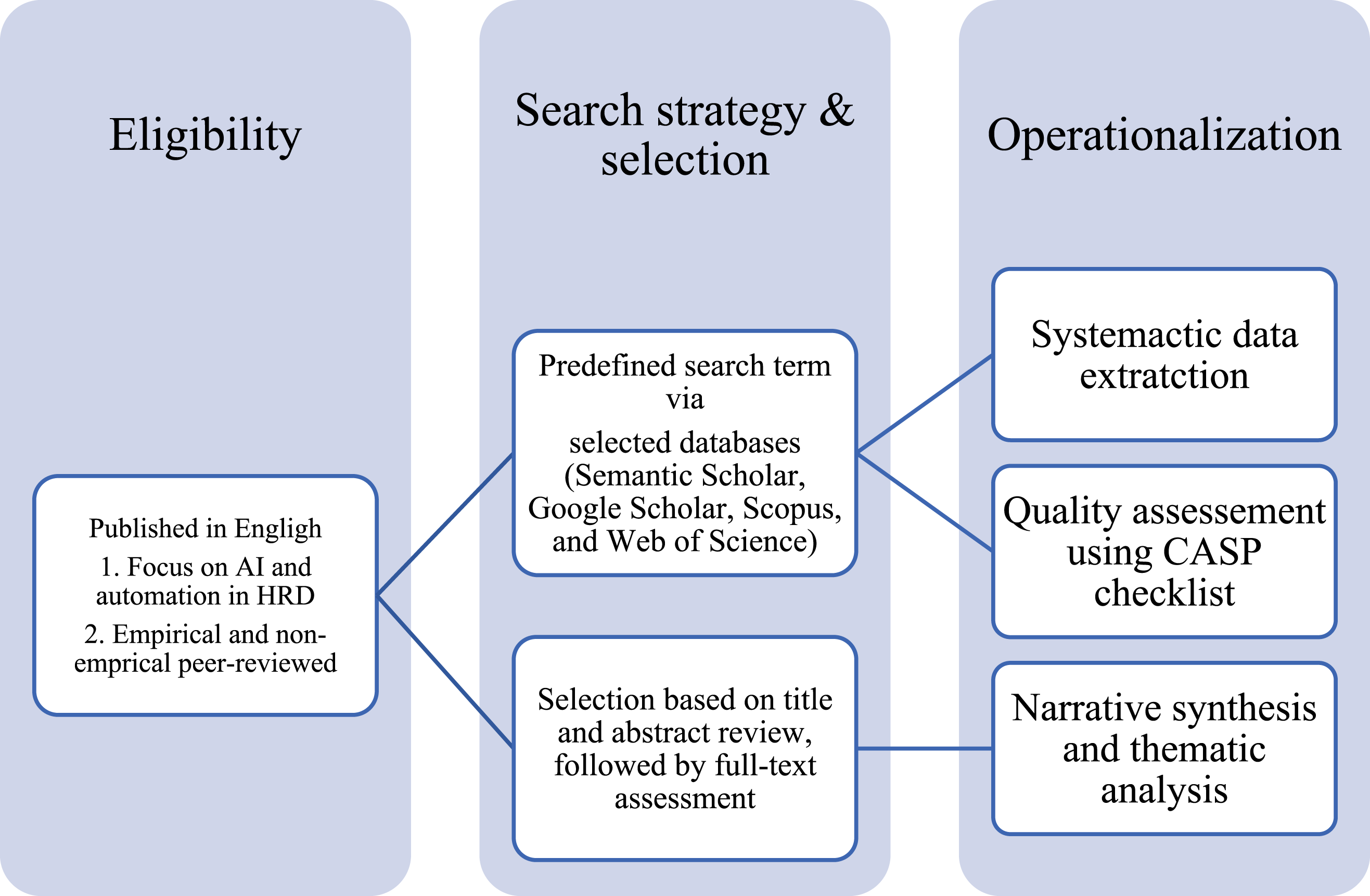
Eligibility Criteria
The studies included in this review were those that specifically examined the influence of AI and automation on strategic HRD functions. They also explored the challenges and opportunities that arise from the use of AI and automation in transforming HRD practices. These studies shed light on how the role of HRD professionals is evolving in today’s context. The included studies comprised both qualitative and quantitative empirical research, as well as non-empirical studies such as reviews and book chapters. These studies specifically examined the impact of AI and automation on HRD, including its effects on HRD processes and outcomes such as organizational performance, employee satisfaction, and skill development. Studies that did not address these topics or that are not published in English were excluded. The review also excluded non-academic sources such as opinion pieces and blogs.
Search Strategy
A comprehensive search strategy was developed to identify relevant studies on AI and automation in HRD. Databases such as Semantic Scholar, Google Scholar, Scopus, and Web of Science were searched using key terms related to AI, automation, and HRD combined with Boolean operators “AND” and “OR”. The search terms included: (“artificial intelligence” OR AI OR “machine learning” OR automation) AND (HRD OR “human resource development” OR “talent management” OR “workforce upskilling” OR “employee development” OR “workforce development” OR “knowledge management” OR “workforce planning” OR “learning and development”). The search focused on the titles, abstracts, and keywords of articles and other academic sources published between 1997 to the first quarter of 2023. The reference lists of relevant articles were also reviewed to identify additional studies that met the inclusion criteria. This iterative search strategy helped to maximize the review’s comprehensiveness and ensured that as many relevant studies as possible were considered.
Study Selection, Data Extraction and Quality Assessment
Studies were selected through a screening process that involved title and abstract review, followed by careful full-text assessment based on predefined eligibility criteria. The data extracted from the studies was obtained through a meticulously designed data extraction form. This form encompassed various aspects of the studies, such as the authors, publication year, study design, and the key themes addressed. The data extraction process was performed manually but systematically, ensuring consistency and accuracy in the extracted information. This allowed for a detailed analysis of how AI and automation are used in HRD, including the factors that influence their adoption, the mechanisms that drive the process, and the outcomes they bring.
The quality of the included studies was assessed using The Critical Appraisal Skills Programme (CASP) checklists for qualitative and quantitative studies (Long et al., 2020). The CASP, which is an established quality assessment tool was adopted because it is appropriate for the study design and helped to evaluate the methodological rigor and trustworthiness of the included studies (Long et al., 2020). It also helped to identify potential bias sources. This critical assessment allowed for a more informed interpretation of the findings. It also facilitated the identification of areas where further research may be needed to strengthen the evidence base.
Overview of the Included Studies
The initial search yielded 74,800 articles, which then reduced to 17,100 when the search terms were refined. This was further whittled down to 2,430, of which 2218 were excluded after screening titles and abstracts. The remaining 212 articles were assessed for eligibility through full-text review, and 124 articles met the inclusion criteria with 88 articles excluded. The quality of the included articles was assessed using the CASP checklist, resulting in a final sample of 93 articles for the review.
The included works contain both theoretical and empirical studies and encompass a diverse range of research designs and were conducted in a variety of organizational settings, such as large multinational corporations, small and medium-sized enterprises (SMEs), and public sector organizations. The studies also covered different geographical spread as well as a range of industries, including manufacturing, finance, healthcare, and education. The diverse range of contexts facilitated a deeper comprehension of how AI and automation impact HRD in various organizational environments. This enabled a better understanding of the key contextual factors that influence AI and automation in HRD across different geographic locations. Please see asterisked works in the reference list for included studies.
Data Synthesis and Analysis
This study employs a narrative synthesis approach (Popay et al., 2017), to synthesize the findings from the included studies. The choice of a narrative synthesis approach was driven by its ability to coherently integrate diverse methodological insights, offering a holistic view of the complex phenomena under study. This approach allows for the consolidation of findings from a range of studies, encompassing both quantitative and qualitative research, and facilitates the identification of patterns, themes, and gaps in the existing body of literature (Lisy & Porritt, 2016; Popay et al., 2017). The synthesis is structured around four overarching themes – applications, context, mechanisms, and outcomes – serving as the bedrock for a critical analysis. Figure 2 summarizes these themes, highlighting their main analytical focus. Key themes and analytical focus. Source: Author.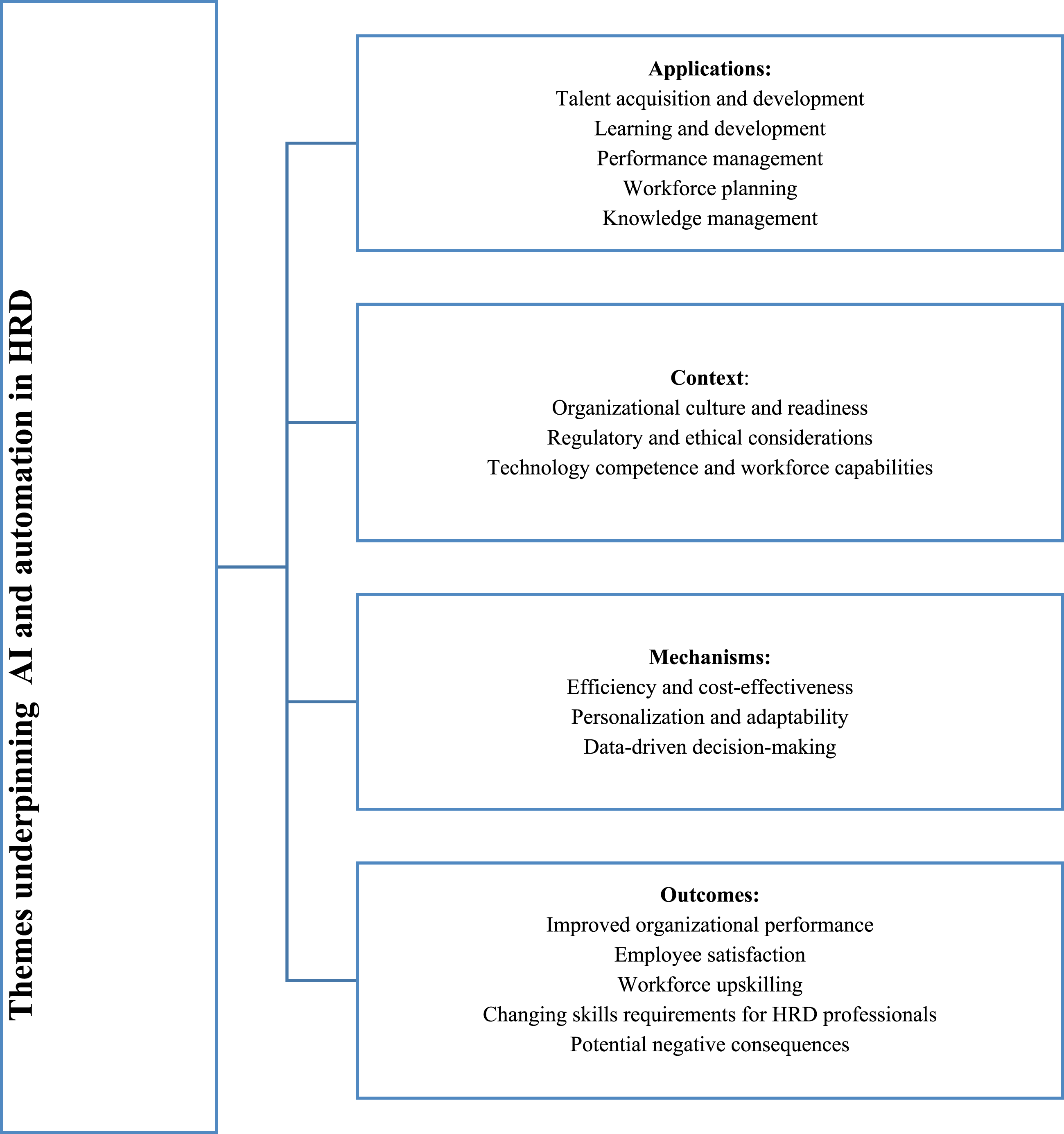
In the analysis and interpretation phase, these themes were scrutinized within the broader academic discourse on AI, automation, and HRD. This dual-step analytical methodology serves a twofold purpose. First, it identifies areas of convergence and divergence, providing a nuanced perspective on the prevailing literature. Second, it points out gaps in current research and suggests areas for future inquiry, thereby contributing to a more profound understanding of AI and automation’s role in HRD (Popay et al., 2017).
Results
The synthesis of findings provides several key insights into the role of AI and automation in HRD. The results suggest that AI and automation can lead to significant improvements in HRD processes and outcomes. This has the potential to transform the way organizations manage their human resources. However, the findings also highlight the importance of considering the contextual factors that may influence the effectiveness of AI and automation applications. In addition, they highlight the potential negative consequences that may arise from their implementation.
The following sections offer a comprehensive analysis of the patterns revealed in the literature review. These sections delve into four crucial themes: applications, context, mechanisms, and outcomes of AI and automation in HRD. This critical analysis seeks to address the four (4) research questions underpinning this study. By doing this, the aim is to enrich our comprehension of the intricate connections among AI, automation, and HRD. It also aims to uncover any existing shortcomings in the current literature and pinpoint areas where future research can make significant and valuable advancements.
Applications of Artificial Intelligence and Automation in Human Resource Development
This section explores how AI and automation have been integrated into areas such as talent development, workforce planning, learning, performance management and knowledge management. By exploring the applications of AI and automation in these key HRD functions, it is possible to identify patterns, trends, and best practices that inform the ongoing development and implementation of AI and automation in HRD.
Talent Development
The papers addressing this theme suggest that AI and automation are transforming talent development, and organizations need to adapt to the changing digital landscape to remain competitive on the long run. The application of AI and automation in talent development were found to help streamline processes, reduce biases, and enable more efficient decision-making (Jose, 2019).
AI-driven tools like personalized learning systems and predictive analytics offer more insightful data and help identify the most talented talent (Karaboğa, 2023). Hemalatha et al. (2021) note that AI capabilities such as natural language processing, machine vision, automation, and augmentation have a significant impact on talent management processes, leading to positive outcomes such as time and cost savings, and increased efficiency. AI and automation can also help automate tasks such as training and assessment (Albert, 2019; Jose, 2019).
According to Chitrao et al. (2022), the use of AI in talent development and management is on the rise, as it has shown remarkable potential in enhancing both the employee experience and retention rates. Karaboğa (2023) also argues that Industry 4.0, driven by digital technologies, is changing the skills required for the workforce, and companies need to rethink their talent strategies and invest more in talent development and re-skilling programs to keep up with these changes.
In addition, AI-powered platforms enable HRD professionals to identify top talent by analyzing vast amounts of data, including skills, experience, and cultural fit (Brynjolfsson et al., 2021). For example, machine learning algorithms can analyze large volumes of data to identify patterns and predict employee success, leading to more efficient and accurate development and management decisions (Brynjolfsson & Mitchell, 2017; Rudra Kumar & Gunjan, 2022; Tian, 2020). AI-driven tools can also assist in internal talent development by identifying employees with high potential and suggesting personalized development plans (Saling & Do, 2020). In summary, AI and automation play a crucial role in talent acquisition and development, revolutionizing the recruitment process and enhancing targeted talent development.
Learning and Development
The papers that explore this theme suggest that AI and automation have significant implications for learning and development (L&D). Bhatt and Muduli (2022) for example, found that AI innovations such as natural language processing, artificial neural networks, and robots can improve L&D process efficiency, evaluate learning aptitude, and track learning progress. Huang et al. (2021) also highlight the positive impact of AI on training and learning, including adaptive learning and virtual classrooms. Roschelle et al. (2020) emphasize that AI can be used as a toolkit to enable us to imagine, study, and discuss futures for learning that do not exist today, thereby shaping the future of work.
The papers collectively reveal that AI and automation are revolutionizing learning and development by providing tailored, data-driven learning experiences. These technologies leverage on intelligent tutoring systems and adaptive learning platforms to facilitate personalized and enriching experiences for employees (Huang et al., 2021). Integrating AI and automation has the potential to significantly enhance the learning experience by pinpointing unique learning styles and preferences, closely monitoring progress, and providing tailored content and recommendations. This not only leads to improved learning outcomes but also boosts employee engagement and enhances knowledge retention (Sivathanu & Pillai, 2020). The implementation of AI-driven analytics enables organizations to efficiently recognize areas of deficiency in skills and proactively anticipate future training requirements. This empowers companies to make more astute investments in learning and development programs, ultimately fostering strategic growth and progress (Saling & Do, 2020).
Performance Management
Research papers on performance management show that AI and automation have profound effects on this area. These technological advancements offer benefits like personalized feedback and growth opportunities, but they also underline the importance of considering the potential negative impact on employee well-being. Buck and Morrow (2018) for instance, argues that AI can enable continuous touchpoints and real-time feedback, improving the effectiveness of performance management. In their work, Hunt (2011) emphasizes the transition from traditional paper-and-pencil methods or stagnant in-house enterprise technology platforms to dynamic online systems. These new systems not only enhance performance management but also make it more efficient, flexible, and user-friendly. Den Hartog et al. (2004) present a model for performance management that incorporates multi-level elements and employee perceptions. Grover et al. (2022) explore the feasibility of AI utilization within an organization on six factors such as job-fit, complexity, long-term consequences, affect towards use, social factors, and facilitating conditions for distinct elements of operations management.
Overall, the studies suggest that AI and automation are transforming performance management by enabling continuous, data-driven feedback and evaluation (Meister & Willyerd, 2021). AI and automation AI-driven tools can analyze employee performance data, identifying areas of strength and improvement and providing personalized recommendations for development (Huang & Rust, 2021). However, these technologies also raise concerns about increased stress and potential invasions of privacy due to continuous monitoring and evaluation (Huang & Rust, 2021).
Workforce Planning
As with the impacts on recruitment and talent development, it was clear from the review that implementing AI and automation in workforce planning has fostered more informed decision-making and improved resource allocation (Wiblen & Marler, 2021). In their discussions on this topic, scholars (e.g., Rischmeyer, 2021; Wiblen & Marler, 2021) argue that technology-driven workforce planning tools helps improve the ability to make strategic decisions, which will result in more effective management of talents and greater success for organizations. Rodríguez-Moreno et al. (2007) for instance, describes how AI planning techniques can improve workflow management systems and automate the definition of business processes. Colombo et al. (2019) utilised machine learning techniques to web vacancies on the Italian labour market and shows that soft and digital skills are related to the probability of automation of a given occupation.
The papers collectively suggest that AI and automation can improve workforce planning and productivity. Using AI-powered tools and predictive analytics, HRD professionals can anticipate future workforce needs, skill gaps, and labour market trends in advance, which allows organizations to adapt their talent acquisition and development strategies accordingly (Colombo et al., 2019; Rischmeyer, 2021).
Knowledge Management
The studies reviewed that explore this subject suggest that AI and automation impact on knowledge management (KM) is complex. Ardichvili (2022) argues that AI implementation can lead to the loss of expertise because of reduced opportunities for learning from deliberate practice and experienced colleagues. Al-Mansoori et al. (2020) highlight the potential benefits of AI and information technology in improving KM practices, but also notes the challenges and limitations of these technologies. In their recent study, Alqahtani et al. (2022) examine the impact of AI and information technology on advancing KM within business organizations. They emphasize the necessity of harnessing a range of AI techniques to establish guidelines and develop a comprehensive strategy to facilitate efficient KM practices. Manesh et al. (2021) and Coombs et al. (2020) both explore the impact of AI on knowledge work and suggest that it presents new strategic opportunities for organizations. Bencsik (2021) makes a similar point and proposes a framework for using AI to predict future innovation success in knowledge management.
Overall, studies exploring the issue KM in the AI and automation era, suggest that these technologies are transforming knowledge management processes and creating new opportunities for organizations to leverage knowledge for competitive advantage. While automation can have both positive and negative impacts on knowledge management, it is of utmost importance for HRD professionals and their organizations to establish alternative avenues for individual growth and foster organizational cultures that facilitate the development of expertise in human-machine interaction modes.
Contextual Factors Influencing Artificial Intelligence and Automation in Human Resource Development
There was an explicit recognition among several authors that contextual factors play a crucial role in determining the success of AI and automation applications and interventions in HRD. These studies suggest that contextual factors influencing AI and automation in HRD include organizational ergonomics (culture and readiness), regulatory and ethical considerations, and workforce capabilities, as well as trust in robots and AI, which depends on individual differences and technological competence (Bendak et al., 2020).
Organizational Culture and Readiness
The review highlights that organizational culture and readiness are key factors in determining the success or failure of implementing AI and automation in HRD (Brynjolfsson et al., 2021). Organizations that prioritize innovation, agility, and continuous learning are more inclined to adopt AI-driven tools and processes. This is supported by research conducted by Brynjolfsson et al. (2021) and Liu et al. (2021). It is also the case that organizations that have reached a higher level of digital maturity are better equipped to embrace AI technologies. This is because they have already established the required infrastructure and have a workforce with the necessary capabilities (Man, 2020). Organizations with a higher level of digital maturity and experience with technology adoption may be better positioned to capitalize on the benefits of AI and automation in HRD (Stone et al., 2015).
Another key argument from the articles reviewed is that it has become urgent for organizations to invest in appropriate technology infrastructure, integrate new systems with existing processes, and provide training for HRD professionals and employees to adapt to the changing digital landscape (Manyika et al., 2017). This may include investing in cloud-based platforms, enhancing cybersecurity measures, and fostering a culture of digital literacy and innovation (Man, 2020). The review reveals that organizations that strategically prioritize these issues exhibit greater levels of AI readiness and seamless integration of technology in HRD processes (Ekaningrum et al., 2023).
Regulatory and Ethical Considerations
The analysis uncovered the growing importance of regulatory and ethical considerations in AI adoption for HRD (Chamorro-Premuzic et al., 2019). Implementing AI and automation in HRD can raise various regulatory and ethical concerns, such as data privacy, algorithmic bias, and transparency (Rodgers et al., 2023). For instance, the utilization of extensive employee data by AI-powered systems might encroach upon employee privacy and significantly amplify the threat of data breaches (Rotatori et al., 2021). The use of AI and automation in HRD practices can unwittingly uphold biases and discrimination, especially when the algorithms are trained using historical data that already contains such biases (Broady et al., 2023). The use of AI and automation in HRD decisions may raise concerns related to transparency and accountability (Broady et al., 2023).
It is imperative for organizations to navigate these issues diligently and guarantee compliance with pertinent laws and regulations. They should adhere to ethical guidelines and adopt best practices in AI and automation (Kim, 2022). To achieve this, it is crucial to implement and strictly follow strong data protection measures that comply with the appropriate data privacy regulations, including the General Data Protection Regulation (GDPR) (Panda et al., 2023; Rodgers et al., 2023). Organizations should also regularly audit their AI-driven tools to identify and mitigate potential biases and guarantee fair treatment of all employees (Rodgers et al., 2023).
To foster trust and gain acceptance from employees, it is crucial to provide clear and justifiable explanations for AI-driven decisions, thus promoting transparency and fairness (Thite, 2022). Organizations should establish clear communication channels to inform employees about the use of AI and automation in HRD processes and their potential implications, ensuring transparency and fostering a sense of fairness (Saxena & Kumar, 2020). HRD professionals must also remain updated on the evolving regulatory landscape and ethical debates surrounding AI usage (Rodgers et al., 2023).
Technology Competence and Workforce Capabilities
The central argument emphasized in this context is that a skilled workforce is essential for leveraging AI and automation effectively in HRD. The successful adoption of AI and automation in HRD depends on the availability of skilled personnel who can manage, develop, and maintain these technologies (Brynjolfsson et al., 2021; Torraco & Lundgren, 2020).
Researchers emphasize the vital importance for organizations to identify the skills gap, create customized learning programs, and foster a culture of perpetual learning. This is essential to enable employees to excel in an ever-evolving environment. Organizations must invest in upskilling and reskilling their employees and HRD professionals to develop competencies surrounding AI usage (Bennett & McWhorter, 2022). HRD professionals play a crucial role in facilitating workforce upskilling by leveraging AI-driven learning platforms, fostering collaboration, and supporting employee development (Clark, 2020).
There is compelling evidence from the review that organizations that place a high value on cultivating digital competencies, problem-solving abilities, and adaptability in their employees are more likely to achieve success in their automation endeavors. These skills are becoming increasingly vital in the era of AI and automation, making them an essential focus for companies aiming to thrive in this changing landscape (Venkataramani & Kothandaraman, 2020). These issues suggest a rethinking of traditional L&D approaches, adopting innovative learning methodologies, and engaging with external partners to provide relevant training and development opportunities (Clark, 2020; Jaiswal et al., 2022).
Mechanisms Driving Artificial Intelligence and Automation Impact on Human Resource Development
The review highlights the underlying mechanisms that drive AI and automation impact on HRD processes and outcomes. Factors such as efficiency and cost-effectiveness, personalization and adaptability, and data-driven decision-making contribute to the transformative potential of these technologies. Understanding these mechanisms can provide valuable insights into how AI and automation can be leveraged to enhance HRD processes and support organizational objectives.
Efficiency and Cost-Effectiveness
The review reveal that AI-driven tools significantly enhance HRD efficiency and cost-effectiveness (Meister & Willyerd, 2021). AI and automation enable organizations to automate repetitive tasks, reduce human error, streamline HRD processes and increase overall productivity (Bennett, 2022). These improvements can lead to significant cost savings and free up resources for more strategic HRD initiatives (Harrison et al., 2020). Adopting AI and automation in HRD can lead to significant advantages in terms of efficiency and cost reduction, which makes these technologies highly appealing.
Personalization and Adaptability
AI-driven tools offer personalization and adaptability, allowing HRD professionals to tailor solutions to individual employee needs (Huang & Rust, 2021). This has been evident in learning and development, where adaptive learning technologies provide personalized learning experiences, helping employees reach their full potential (Brynjolfsson et al., 2021). The key argument highlighted here is that personalization and adaptability are critical mechanisms through which AI and automation can drive positive outcomes in HRD. Personalization can lead to more engaging and effective learning experiences, resulting in better skill development and increased employee satisfaction (Kim, 2022).
Data-Driven Decision-Making
AI and automation in HRD processes facilitate data-based decision-making, allowing organizations to make informed, evidence-based decisions (Meister & Willyerd, 2021). The utilization of AI-driven analytics and predictive modelling empowers HRD professionals to gain profound insights on employee performance, engagement, skill advancement, and workforce tendencies. By leveraging real-time data, this invaluable information enables them to make strategic decisions with confidence and efficacy (Mamela et al., 2020). Leveraging data-driven insights is crucial for organizations to enhance their decision-making regarding HRD initiatives and investments. By doing so, organizations can significantly enhance their overall performance and achieve better outcomes (Mamela et al., 2020; Rožman et al., 2023).
Outcomes of Artificial Intelligence and Automation in Human Resource Development
Some studies reviewed examine AI and automation outcomes in HRD, highlighting both positive and negative consequences. The potential benefits of these technologies, such as improved organizational performance, increased employee satisfaction, and enhanced skill development, are discussed. Issues such as potential drawbacks, such as job displacement, increased stress, and ethical concerns related to privacy and fairness are also highlighted. By considering these issues, we can develop a balanced perspective on the impact of AI and automation in HRD. This will inform the development of sustainable HRD policies and practices.
Improved Organizational Performance
The review identified a positive correlation between AI adoption in HRD and improved organizational performance (Brynjolfsson et al., 2021). AI-driven HRD practices can help organizations optimize various HRD functions, leading to increased productivity and enhanced talent acquisition and development (Bhattacharya, 2021). AI tools have the power to streamline mundane and time-consuming tasks, liberating employees to dedicate their time and energy to more imaginative and strategic endeavors (Coombs et al., 2020). AI can help organizations make better decisions by providing insights based on data analysis and predictive analytics. In talent acquisition and development, for example, AI-driven tools can help identify the best candidates for the job by analyzing large amounts of data, including resumes, job descriptions, and social media profiles (Albert, 2019).
The benefits of AI-driven HRD practices are not limited to productivity, decision-making, and talent acquisition and development. Adopting AI tools can also lead to improved employee engagement and retention by providing personalized learning and development opportunities (Alqahtani et al., 2022). AI can help organizations promote diversity, equity, and inclusion by eliminating bias in recruitment and performance management processes (Coombs et al., 2020). In all, the evidence suggests that AI-driven HRD practices can lead to improved organizational performance and competitiveness.
Employee Satisfaction
The review reveal that AI-powered tools can enhance employee satisfaction in various ways. These tools offer personalized learning experiences, provide objective and transparent performance feedback, and enable fairer decision-making processes. This study by Huang and Rust (2021) highlights the promising potential of AI-driven solutions. These improvements can enhance employee motivation, commitment, and overall job satisfaction (Shao & Shi, 2020). It is important to consider the potential drawbacks of AI-driven performance management, including the potential for heightened stress levels and concerns about privacy (Chamorro-Premuzic et al., 2019). The critical discussion here revolves around the potential for AI-powered HRD tools to enhance employee satisfaction while acknowledging the potential risks associated with these technologies.
Workforce Upskilling
As AI and automation reshape the workplace, upskilling the workforce becomes a critical concern (Lang, 2023). Implementing these technologies has sparked a surge in workforce upskilling. Organizations are now prioritizing training programs to equip their employees with advanced skills that can keep up with the ever-evolving work environment (Brynjolfsson et al., 2021). As AI and automation technologies take on an increasing number of routine tasks, employees need to develop new skills and competencies to work alongside these technologies effectively.
The review highlights how AI and automation are actively promoting the enhancement of workforce skills. They accomplish this by identifying any areas where skills are lacking, tailoring learning experiences to individual needs, and empowering organizations to make well-informed investments in the development of their employees. These upskilling initiatives comprise specialized training programs and ongoing learning opportunities that aim to enhance advanced technical skills, problem-solving capabilities, and promote the growth of soft skills like effective communication, leadership, and emotional intelligence. This improved skill development can lead to better career progression and increased employability for employees in a rapidly changing labour market (Rotatori et al.,2021).
Alongside wider workforce enhancement, AI and automation are also reshaping the skillset necessary for HRD professionals. Recent research suggests that with the integration of these technologies, HRD professionals must now acquire profound knowledge in data analysis, comprehend the applications of artificial intelligence, and cultivate exceptional change management skills. These capabilities are essential for effectively steering digital transformation in organizations (Kim, 2022).
Changing Skills Requirements for Human Resource Development Professionals
The emergence of AI and automation technologies has precipitated a paradigmatic shift in the skills requirements for HRD professionals. This transformation necessitates a broader skill set encompassing expertise in data analytics, technology management, and digital literacy (Meister & Willyerd, 2021). Ethical decision-making skills are now paramount given the intricate challenges associated with privacy, fairness, and biases in AI-driven processes (Lilly et al., 2022). To this end, HRD professionals are expected to proactively evaluate the implications of these technologies on the workforce and construct informed strategies for effective change management (Ardichvili, 2022). There is also a need for a comprehensive approach to learning and knowledge management, embracing both human and machine learning to sustain the profession’s relevance (Harrison et al., 2020).
Moreover, HRD professionals must also reframe their roles in light of these evolving demands. They are now at the forefront of fostering interdisciplinary partnerships and educating organizational stakeholders on the complex nature and far-reaching impacts of AI on learning and human development (Gold et al., 2022). The task of nurturing a culture that values innovation, adaptability, and continuous learning has become central to their responsibilities (Brynjolfsson & Mitchell, 2017; Meister & Willyerd, 2021). To adequately reflect these multifaceted roles and responsibilities, it is posited that HRD professionals could be re-designated as Human and Digital Officers or Directors of Human and Digital Development, signifying not just their adaptability but their leadership role in orchestrating the skill evolution and digital transformation in HRD.
Potential Negative Consequences of Artificial Intelligence and Automation in Human Resource Development
While AI and automation hold significant promise for enhancing Human Resource Development (HRD), they also present critical challenges that warrant attention. These range from job displacement and increased stress levels to ethical concerns such as privacy and fairness (Arslan et al., 2021; Tambe et al., 2019; Vrontis et al., 2021). For instance, roles involving repetitive tasks are particularly susceptible to automation, highlighting the urgent need for organizations to invest in workforce upskilling and reskilling initiatives (Ardichvili, 2022; Arora & Suri, 2020; Brynjolfsson et al., 2021).
Moreover, AI-driven performance management tools have been linked to heightened employee stress due to continuous monitoring (Rožman et al., 2022 Rožman et al., 2023; Saxena & Kumar, 2020). Additionally, ethical concerns about data privacy and fairness have been raised, as AI algorithms can inadvertently reinforce biases (Brynjolfsson et al., 2021; Rodgers et al., 2023). Therefore, organizations must implement robust mechanisms to mitigate these negative impacts, including ensuring transparency and accountability in AI-driven HRD tools (Chamorro-Premuzic et al., 2019; Huang & Rust, 2021). By proactively addressing these challenges, organizations can harness the benefits of AI and automation in HRD while minimizing potential harm, thus fostering a more equitable and inclusive work environment.
Discussion and Implications for Human Resource Development
As AI and automation continue to reshape HRD practices, it is essential to consider the future implications of these technologies. It is also essential to consider HRD professionals’ changing role in this context. This discussion provides valuable insights on these issues, emphasizing the significant implications of the review findings for HRD theory, practice, policy, as well as future research directions in this field.
Implications for Human Resource Development Research
This review significantly enriches the theoretical underpinnings of HRD by offering a nuanced exploration into the roles of AI and automation. The study identifies five key mechanisms that are integral to the advancement and integration of these technological innovations within the HRD domain. These mechanisms – efficiency, cost-effectiveness, personalization, adaptability, and data-driven decision-making – serve dual roles. Firstly, they provide a conceptual scaffold for current research, laying the groundwork for more comprehensive theories that can guide future empirical investigations. Secondly, they offer HRD practitioners a coherent framework to implement AI and automation in a manner that is both effective and ethically sound, thereby advancing the overall quality of HRD interventions (Brynjolfsson & Mitchell, 2017; Harrison et al., 2020).
Yet, this review goes beyond merely cataloguing these mechanisms; it emphasizes the salient importance of understanding the contextual backdrop in which these technologies operate. Several contextual factors – such as organizational culture, technological readiness, regulatory landscape, and ethical considerations – emerge as pivotal influences that can profoundly shape the effectiveness and ultimate outcomes of AI and automation initiatives within HRD. The integration of these contextual elements into established and emergent HRD theories provides an opportunity for a more holistic, systems-level comprehension. This enriched understanding delves into the multifaceted interactions among AI, human labour, and the broader socio-economic environment, thereby facilitating richer, more actionable insights for both academics and practitioners. The review concludes that an interdisciplinary approach, which integrates technological insights with human and organizational complexities, will likely offer the most promising avenue for meaningful advances in the field (Ardichvili, 2022; Meister & Willyerd, 2021).
Implications for Human Resource Development Practice
This systematic review has several practical implications for HRD practitioners and policymakers seeking to leverage AI and automation technologies in improving HRD processes. It offers reasonable insights into the adoption and impact of AI and automation within the HRD landscape. Specifically, the review underscores the necessity for organizations to perform meticulous assessments of their readiness to adopt AI and automation. Such evaluations must scrutinize an array of factors including existing technological infrastructures, workforce competencies, and organizational culture. Creating an environment conducive to AI and automation is not a mere technical upgrade but a holistic organizational change, thus requiring a multifaceted strategy to mitigate potential barriers and optimize positive outcomes (Harrison et al., 2020; Meister & Willyerd, 2021).
The review also posits that confronting the ethical, legal, and social challenges posed by AI and automation is imperative. Organizations should take the lead in formulating robust guidelines and best practices for the responsible utilization of these technologies. This endeavor would entail proactive stakeholder engagement to promote transparency, fairness, and ethical accountability in HRD processes (Ardichvili, 2022).
The review offers actionable insights for HRD policymakers to draft strategies and regulations that are both forward-thinking and deeply grounded in ethical considerations. Policymakers are advised to weigh the multifaceted implications of AI and automation, promoting responsible innovation through research and development support, and facilitating workforce development through targeted educational and training programs (Brynjolfsson & Mitchell, 2017).
Finally, the review emphasizes the dynamism of AI and automation technologies, thus accentuating the ongoing need for upskilling and reskilling within organizations. As the technological era continually evolves, so too must the skill set of the workforce. Organizations and policymakers alike should prioritize lifelong learning as a strategic asset, ensuring workforce adaptability and resilience in an increasingly automated world (Gold et al., 2022).
Limitations and Recommendations for Future Research
The study illuminated several gaps in AI and automation in HRD which have not been sufficiently explored in this review or in existing literature and require further investigation. For example, there is currently a significant lack of longitudinal studies in the existing literature that investigate the lasting impact of AI and automation on HRD processes and outcomes. Although existing research offers some understanding of how these technologies impact HRD in the short term, there is an urgent necessity for more comprehensive and time-based analysis to fully comprehend how AI and automation will influence HRD practices and the overall labour market in the long run. This would allow for a more comprehensive understanding of AI-driven HRD interventions’ sustainability and evolution.
Another under-explored area is the comparative effectiveness of different AI and automation technologies across various HRD functions and contexts. With the rapid evolution of AI and automation, it is of utmost importance to thoroughly explore the various technologies and approaches that are most effective within diverse organizational settings, especially for tackling a wide range of HRD tasks. Through comparative studies, researchers can offer valuable guidance to organizations in choosing and implementing the optimal AI and automation solutions to meet their unique HRD requirements.
The ethical, legal, and social implications of AI and automation in HRD also warrant further exploration. While the review has touched upon ethical concerns related to privacy and fairness, a more systematic examination of the broader ethical landscape is needed. This includes investigating the potential consequences of biased algorithms, unintended discrimination, and surveillance in AI-driven HRD processes. Research in this area can inform the development of guidelines and best practices for responsible and ethical AI and automation implementation in HRD.
The role of leadership and organizational culture in facilitating the successful adoption and integration of AI and automation in HRD is another under-explored aspect. Research exploring the impact of leadership styles, decision-making processes, and organizational values on the effective utilization of AI and automation can offer valuable insights into the human and organizational elements that shape the triumph of AI-driven HRD initiatives.
The potential obstacles to the adoption of AI and automation in HRD have not been critically explored yet. These barriers include resistance to change, skill gaps, and limited resources. Identifying and understanding these barriers can help organizations develop targeted strategies to overcome challenges and maximize AI and automation benefits in their HRD practices. Future research can make valuable contributions by filling these gaps in the literature, which will yield a deeper and more comprehensive understanding of the intricate relationship between AI, automation, and HRD.
Conclusion
This review critically assesses the literature on AI and automation in HRD, identifying key findings, trends, and existing knowledge gaps. It highlights the role of AI in improving HRD efficiency, adaptability, and data-driven decisions, emphasizing the need for understanding the importance of organizational culture, ethical standards, and skills. The study explores AI’s diverse applications in HRD, noting potential benefits like enhanced performance and employee satisfaction, while also acknowledging risks like job losses and ethical dilemmas. Recognizing the growing influence of AI on the workforce, the insights from this study serve as a foundation for future research, aiming to deepen our grasp on the interplay between technology, work, and human development. Such knowledge is pivotal for organizations in successfully navigating the dynamic work and technology landscape, allowing them to sustainably harness the benefits of AI and automation in their HRD practices.
Footnotes
Declaration of Conflicting Interests
The author(s) declared no potential conflicts of interest with respect to the research, authorship, and/or publication of this article.
Funding
The author(s) received no financial support for the research, authorship, and/or publication of this article.
