




Abstract
Although people analytics is a fast-emerging field with importance to HRD, HRD researchers still lack a comprehensive understanding of it. This study examines the current body of knowledge in people analytics through the lens of human resource (HR) development by performing an integrative literature review of 91 articles. This study identifies five categories of knowledge: (1) definitions and boundaries of terms, (2) building blocks of people analytics in organizations, (3) types of analytics, (4) ethical issues related to people analytics, and (5) applications of people analytics to the HRD field. This study makes theoretical and practical contributions to the field of HR development by exploring the current state of people analytics and people analytics’ application to HR development practice. It also enhances scholars’ understanding of people analytics within HR development boundaries and provides insights for future research. Finally, this study provides practical guidance for HR development practitioners seeking to leverage people analytics in their work.
Introduction
The rapid advancement of technology across all business areas has made leveraging big data and analytics increasingly crucial for many organizations that wish to build a sustainable competitive advantage. In fact, McAfee and Brynjolfsson (2012) found that companies that use data-driven decision-making are 5% more productive and 6% more profitable than their competitors. Although many organizations have long relied on seasoned managers’ intuition and experience to make decisions, contemporary business environments are too complex and unpredictable to rely on such subjective knowledge. Therefore, organizations now use data analytics to better manage uncertainties and make data-driven decisions (Deloitte, 2017; Van der Togt & Rasmussen, 2017).
This trend is seen in the human resources (HR) field and has given rise to the emergence of people analytics, a field that leverages data to generate valuable insights, enabling better decision-making, enhancing the employee experience, and improving overall organizational performance (Brock, 2017; Gal et al., 2020; Hastuti & Timming, in press; McCartney & Fu, 2022). Reflecting this trend, academic output on people analytics has increased rapidly, with human resource management (HRM) journals such as HRM and Journal of Organizational Effectiveness: People and Performance publishing special issues on various forms of people analytics, including workforce analytics and human capital analytics. Despite this increasing interest in data analytics, the literature on and application of people analytics within organizations are largely limited to HRM; there are comparatively few discussions of people analytics in the human resource development (HRD) field (Brock, 2017; King, 2016; Ratnam & Devi, 2023).
One possible explanation for the scarcity of research on people analytics in the field of HRD is the limited availability of usable data that have been accumulated via digital devices and intranet systems. According to a global survey conducted by Deloitte (2017), only 8% of companies possess usable data despite the prevailing enthusiasm surrounding people analytics. Another possible explanation is lack of expertise in data analysis (Rasmussen & Ulrich, 2015). Processing and interpreting data depend on advanced interdisciplinary knowledge and skills in computer science and statistical science, among other areas, that HRD professionals may lack (Lunsford, 2019). A final possible explanation is lack of organizational support or guidance for HRD practitioners implementing people analytics (McCartney & Fu, 2022). Although organizations may have data available to use, the realization of people analytics requires a significant shift in organizational strategies, culture, and structure (Bean, 2023; Jiang & Akdere, 2022).
Although people analytics has been neglected in HRD thus far, it is imperative to incorporate it because the trend of data-driven analysis is well established and irreversible. As a strategic partner of top management, an HRD professional should add strategic value to organizations, and people analytics can provide evidence of this value (Brock, 2017). In addition, using people analytics can enhance practices in HRD (Phillips & Phillips, 2015) and increase the trustworthiness and credibility of HRD professionals’ efforts (Gubbins et al., 2018). For instance, HRD professionals can leverage people analytics to identify employees’ skill gaps and provide personalized learning paths and adapted training programs. They can then demonstrate the effectiveness and impact of their efforts by analyzing the data. However, because there is little knowledge of people analytics in the HRD field, few realize how it could add value.
To better understand people analytics, this study synthesizes existing academic output and contributes to ongoing conversations about people analytics within HRD. Although many studies on people analytics have been published, most studies are rooted in the HRM field, where they focus on management issues such as recruitment (Lam & Hawkes, 2017; Pessach et al., 2020), talent management (Gurusinghe et al., 2021), performance appraisal (Sharma & Sharma, 2017), and workforce planning (Srinivasan et al., 2013). Though both HRD and HRM are concerned with personnel issues at work, HRD offers unique perspectives on HRs and has areas distinct from HRM (Alagaraja, 2013; Werner, 2014). Human resource development views individuals not as subjects to manage but as subjects with potential that needs to be developed. Human resource development professionals are among the few groups of professionals who talk about humans and humaneness within the organization (Swanson & Holton, 2009). This research seeks to infer the potential applications of people analytics to HRD by drawing insights from the existing corpus of HRM studies. Our specific research questions are (a) What is the current knowledge of people analytics, as presented in published research? and (b) How can people analytics be applied to the HRD field?
An integrative literature review was selected to map current studies in people analytics. Our literature review is distinct from other literature reviews (e.g., Ben-Gal, 2019; Qamar & Samad, 2022) in that it explores current knowledge in people analytics through the lens of HRD. This study contributes theoretically to the HRD field by improving the understanding of people analytics within the HRD boundaries and providing insights into future directions of HRD research. It also provides practical insights and guidance for HRD practitioners seeking to leverage people analytics by explaining how analytics can be applied to individual, career, and organization development (OD) from the perspective of HRD.
Method
An integrative literature review (Torraco, 2005) synthesizes and analyzes existing studies on a specific topic with the goal of identifying patterns, gaps, and inconsistencies in the literature and providing a comprehensive overview of the current state of knowledge. Compared to a systematic literature review, an integrative literature review offers a broader examination of the topic that incorporates diverse perspectives. Moreover, an integrative literature review analyzes high-level studies, whereas a scoping review does not strictly assess the quality of the studies it considers (Peterson et al., 2017). An integrative literature review involves a systematic search of various databases and other sources of literature, followed by a rigorous screening and selection process to identify studies that meet the quality and relevance requirements of the research question. In February 2023, we searched Web of Science, EBSCO, ProQuest, and Scopus to identify relevant articles published. To search the literature, we used the following keywords: talent analytics, HR analytics, human resource analytics, workforce analytics, human capital analytics, and people analytics. These keywords were selected after consulting other articles, including literature reviews on similar topics (Margherita, 2022; Marler & Boudreau, 2017; Tursunbayeva et al., 2018) and an editorial about people analytics in HRD (Yoon, 2021). Because people analytics is a relatively new field and we desired to be as exhaustive as possible in our search, we did not set a specific publication timeframe. However, we did limit our search to peer-reviewed journal articles to ensure article quality and credibility. We also reviewed only articles written in English.
The preliminary search yielded 423 articles, a number comparable to that used in other literature reviews, including Margherita (2022; 301 articles) and Giermindl et al. (2022; 514 articles). The first author downloaded a list of relevant articles from the databases and removed 173 duplicate and 129 irrelevant articles, including book reviews and non-peer-reviewed articles. This process left 121 articles for further analysis. We then independently reviewed the abstracts of these articles and selected the most relevant ones. To arrive at the final list, we crosschecked each other’s lists of selected articles and discussed any inconsistencies. Ultimately, 90 articles were selected for the final literature review. Once the list of articles was confirmed, each author read them carefully. While reading the articles, we independently assigned codes and later compared them. Based on this coding scheme and our extensive discussions, we arrived at five distinct categories of knowledge in the literature on people analytics: (1) definitions and boundaries of terms, (2) building blocks of people analytics in organizations, (3) types of analytics, (4) ethical issues related to people analytics, and (5) applications of people analytics to the HRD field. We discussed the first four categories in answering the first research question. We answered the second research question based on the fifth category and our overall review.
What is the Current Knowledge of People Analytics in Previously Published Research?
Definitions and Boundaries of Terms
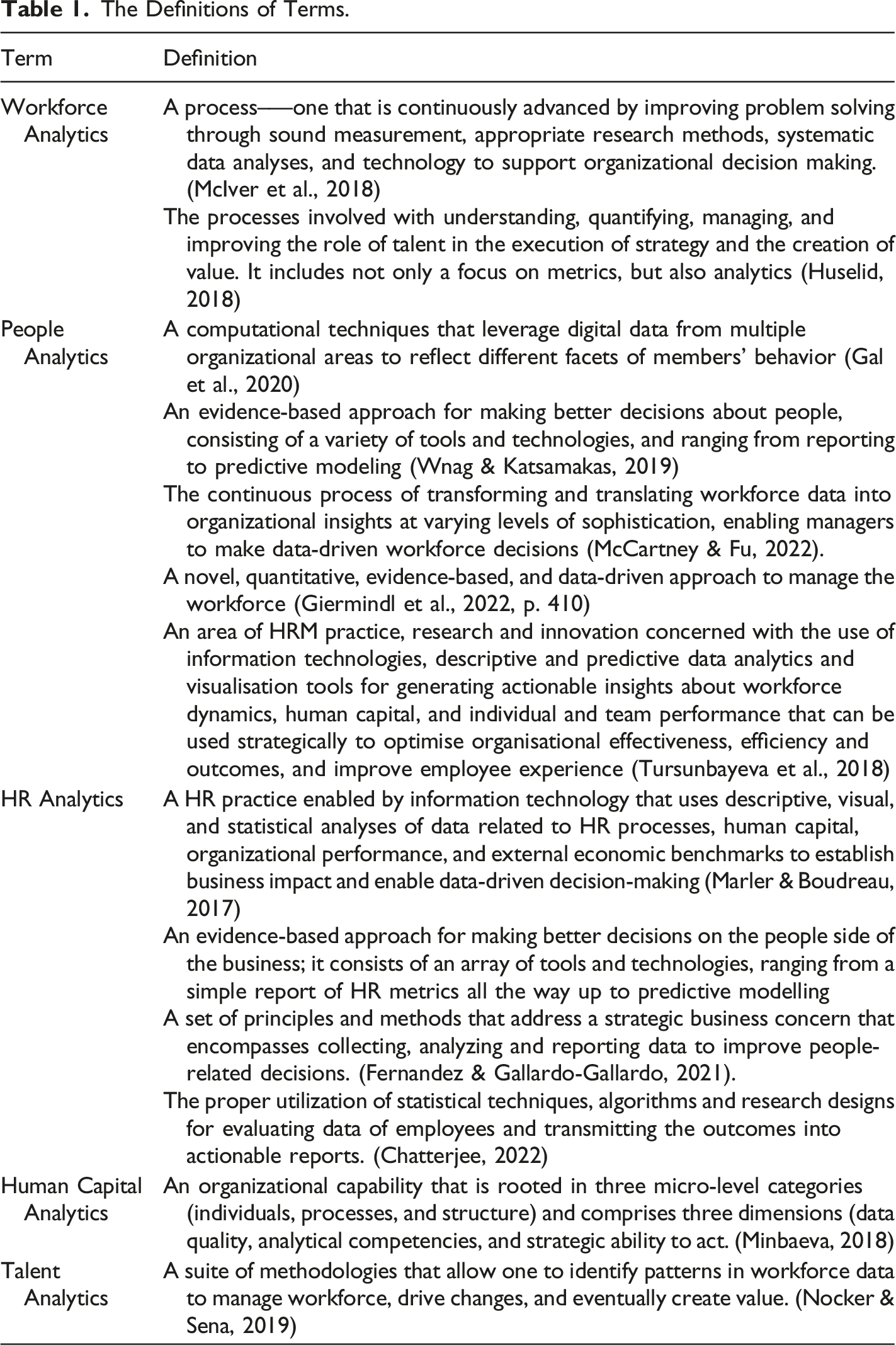
The literature uses various terms to refer to the application of data to improve decision-making: HR analytics, workforce analytics, talent analytics, and people analytics. These terms and their varying usage reflect the emerging nature of this topic (Marler & Boudreau, 2017). Among these terms, “HR analytics” was the term most frequently used (40 times) in the literature reviewed. Human resource analytics has emerged due to technological advances and the growing recognition of the importance of data-driven decision-making. This straightforward term conveys the use of analytics in the HR field. Human resource analytics is limited to HR functions and data from HR information systems, however. The term “workforce analytics” considers the organization’s success and uses business metrics (McIver et al., 2018). “People analytics” (21 times) was the second most frequently used term. The popularity of this term stems in part from Google’s decision to use it when referring to HR analytics (West, 2015). Because “people analytics” encompasses all aspects of workforce management and performance (Yoon, 2021), we believe it is an appropriate term for HRD researchers and practitioners. People analytics goes beyond HR analytics, which is skewed toward HRM, providing a more holistic view of employees and organizations and using an evidence-based or data-driven approach to develop people. Therefore, we use the term “people analytics” throughout our manuscript. The third most frequently used term was “workforce analytics” (nine times), which originated from software vendors such as Workday and SAP’s SuccessFactors (Marler & Boudreau, 2017; van den Heuvel & Bondarouk, 2017). This term was introduced earlier than the others but was not as frequently used. Some researchers argue that “workforce analytics” is a broader term than “HR analytics” because it includes HR issues and issues related to various other functions (e.g., marketing, operations, and finance) in a company (McIver et al., 2018). Compared to other terms, “talent analytics” is rarely used in the literature (five times). “Talent analytics” has become increasingly prevalent in practice since it was introduced in tandem with talent management (Marler & Boudreau, 2017), but it has not been widely adopted in the academic field. Huselid (2018) expressed reluctance to use the term due to its potential cultural ambiguity, as the concept of talent varies in meaning depending on the cultural context. For instance, “talent” is a fairly generic term in North America, whereas in Europe or Asia, it tends to refer specifically to high performers. Finally, “human capital analytics” (four times), “data analytics” (five times), “big data analytics” (four times), and “HRD analytics” (1 time) were each used relatively infrequently. This finding is consistent with that of Google Ngram Viewer (Figure 1), which visualizes the frequency of words in a large corpus of books digitized by Google. According to Google Ngram, “workforce analytics” was initially the most commonly used term, but it was supplanted by “HR analytics.” Google Ngram.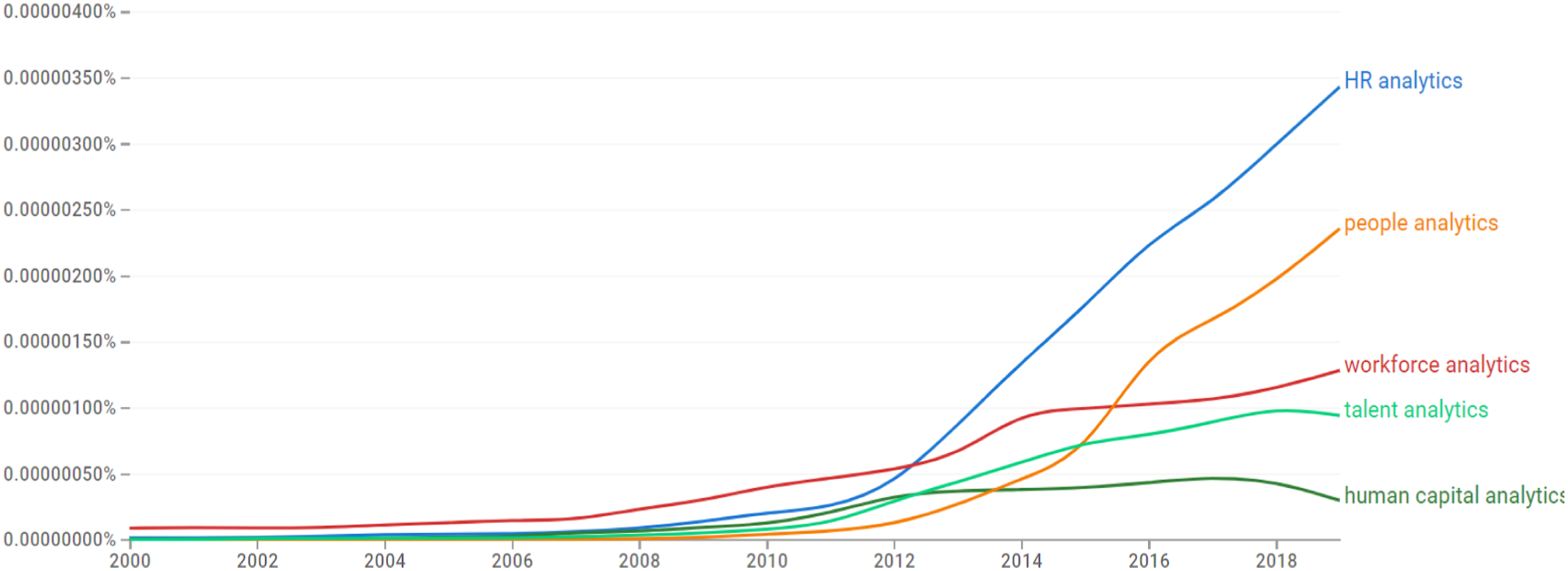
The Definitions of Terms.
Building Blocks.
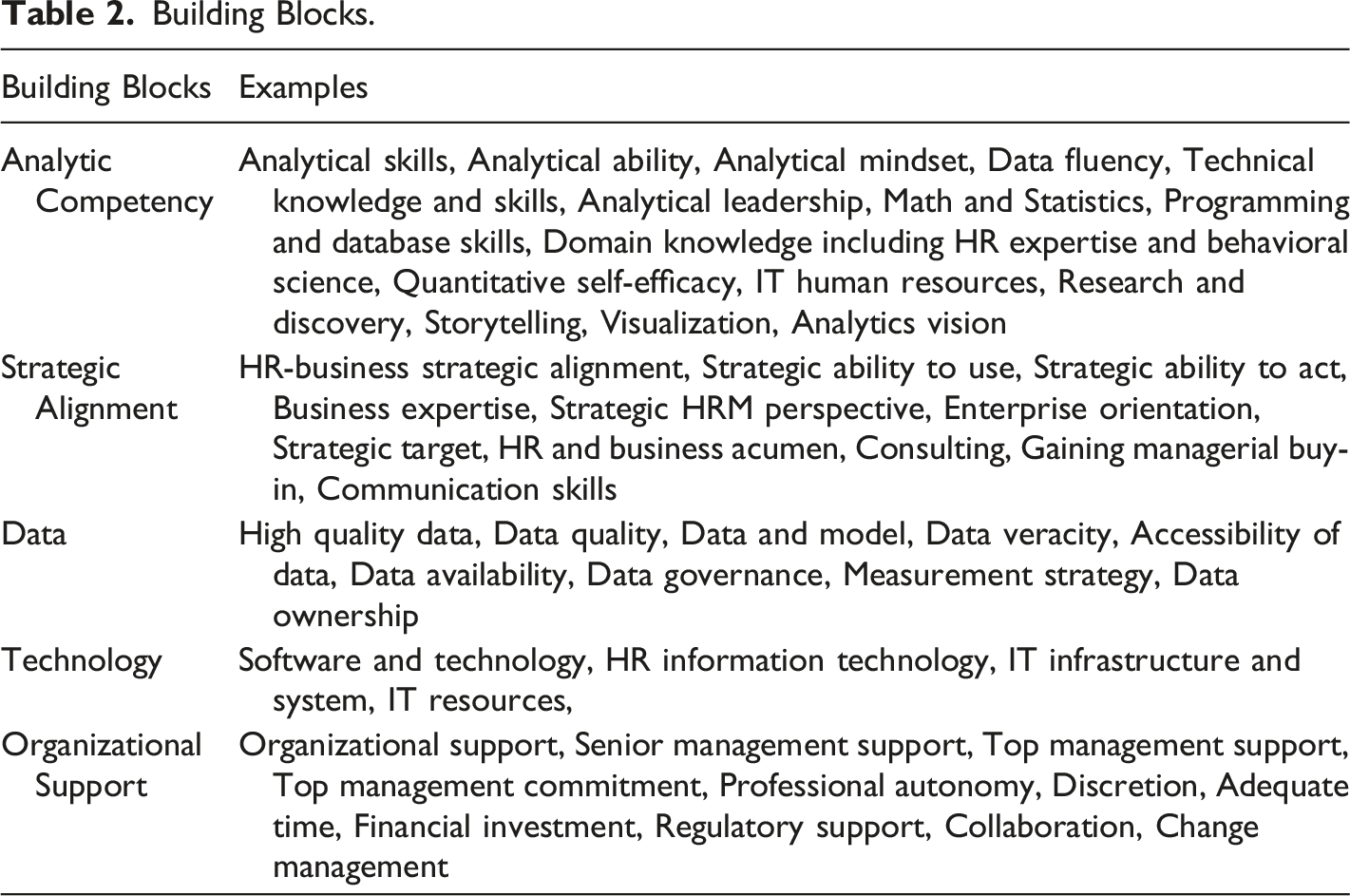
The Building Blocks
Given the increased interest in people analytics in the HR field, numerous researchers have conducted studies to identify the factors that facilitate or impede organizations’ adoption of people analytics (Angrave et al., 2016; Dahlbom et al., 2020; Gurusinghe et al., 2021; Hota, 2021; Peeters et al., 2020; Shet et al., 2021). For example, Shet et al. (2021) proposed a framework elucidating the impediments to HRA adoption in organizations. The researchers identified five key factors—technological, organizational, environmental, data governance, and individual factors—as well as 23 subdimensions that influence the successful implementation of HRA in an organization. Meanwhile, Gurusinghe et al. (2021) identified technological, organizational, and environmental factors that facilitate the adoption of people analytics. After synthesizing the literature, we identified five building blocks essential for creating a robust people analytics foundation (see Table 2). The building blocks are analytic competence, strategic alignment, data, technology, and organizational support.
Analytic Competence
Many researchers argue that analytic competence is the core condition for successful analytics and that advanced analyses lead to better decision-making quality in the HR field (Kryscynski et al., 2018; McIver et al., 2018; Minbaeva, 2018; Strohmeier et al., 2022). However, this is also the most frequently mentioned reason the practice of people analytics has not been widely adopted. “Analytics” refers to the systematic use of data to gain insight (i.e., the process of finding answers within the data). “Analytic competence” refers to the combination of skills, knowledge, and attitudes required to effectively analyze and interpret data. Human resource professionals with analytic competence can use appropriate analytics to test hypotheses, identify appropriate measures, perform necessary analyses, and interpret results (Kryscynski et al., 2018; Minbaeva, 2018). Although information technology (IT) systems enable HR practitioners to collect large volumes of data, processing and transforming the data into a usable format is necessary to extract valuable insights. This is because raw data, on their own, have limited utility and do not provide much insight. Although several talent management software programs such as Workday, ADP Workforce Now, and SAP SuccessFactors can consolidate data from internal databases, their ability to offer insights is restricted to operational reporting (Angrave et al., 2016). More advanced analytical techniques are required to better understand the underlying patterns and relationships within the data. Lismont et al. (2017) observed that organizations with high analytical maturity tend to employ a broad range of analytical techniques and applications.
According to our literature review, analytic competence in people analytics encompasses various skills and abilities, such as analytical skills, analytical ability, an analytical mindset, data fluency, technical knowledge and skills, an analytics vision, analytical leadership, math and statistics ability, programming and database skills, quantitative self-efficacy, storytelling, and visualization. McCartney et al. (2021) found that HR analysts should be familiar with various tools and technologies. Kashive and Khanna (2022) replicated this finding based on a review of 80 job posts from LinkedIn, 30 videos on YouTube, and interviews with HR professionals. Technical knowledge and skills required to use various programs, tools, and systems such as SQL (Structured Query Language), SAP (Systems, Applications & Products in Data Processing), HCM (Human Capital Management), Tableau, MIS (Management Information System), Python, R, Oracle, Java, SAS (Statistical Analysis System), HTML (HyperText Markup Language), Excel, BI (Business Intelligence), ERP (Enterprise Resource Planning), and HRIS (Human Resource Information System) are essential for HR analytics professionals on the job market. In addition, qualitative analysis is important for gaining insight from the data (Lunsford, 2019). Analytic competence in people analytics requires not only the ability to collect and analyze data but also the ability to communicate insights effectively using visualization and storytelling techniques. Visualization enables the presentation of complex and large amounts of data in a clear and concise format, whereas storytelling contextualizes the data and supports data-driven decision-making. Although individual analytic competence is undoubtedly important, it is also crucial to cultivate skills at the organizational level (Huselid, 2018; Minbaeva, 2018).
Strategic Alignment
Although analytic competence is critical for people analytics, generating analytical results using advanced statistical methods is insufficient for business success (McCartney & Fu, 2022; Minbaeva, 2018). Analytics must align with an organization’s strategy to generate meaningful insights that have a strategic impact. This requires a deep understanding of the organization and its strategic goals (Angrave et al., 2016; Bose, 2009; Boudreau & Cascio, 2017; Gurusinghe et al., 2021). Strategic alignment involves ensuring that people analytics are aligned with the organization’s overall business strategy, business model, and culture (McIver et al., 2018). Addressing strategic questions relevant to the organization and implementing solutions based on insights derived from analytics are also crucial aspects of strategic alignment (McCartney & Fu, 2022; McCartney et al., 2021; Rasmussen & Ulrich, 2015). Because strategic alignment, like people analytics, takes an integrated and systemic approach, people analytics can assist in practitioners in making better decisions in complex organizational systems; it can also be used for change management.
The literature describes strategic alignment using various terms, including HR-business strategic alignment, strategic ability use, the strategic ability to act, business expertise, a strategic HRM perspective, enterprise orientation, HR and business acumen, consulting, and others. In their competency model, McCartney et al. (2021) identify HR, business acumen, and consulting ability as essential components. They emphasize the importance of HR analysts who have a solid understanding of HR practices, business operations, and management. Furthermore, they argue that consulting ability is crucial for HR analysts to effectively engage stakeholders, address stakeholders’ needs and concerns, and provide data-driven recommendations and solutions. Although researchers have presented strategic alignment in various terms, its core idea remains: people analysts must use data-driven insights, recommendations, and strategies to support their business partners in achieving organizational performance.
Data
Data constitute the most frequently mentioned element of people analytics. In the wisdom hierarchy (Ackoff, 1989), data refer to symbolic representations of properties related to objects and events that are obtained through observation. Data on leadership, organizational culture, employee engagement, performance, and job satisfaction are generally considered valuable for organizations. However, what constitutes “better” data may vary depending on the organization’s unique context. Human resource data that traditionally have been used in people analytics include demographic information, employee survey responses, compensation information, employment history, diversity and inclusion metrics, and performance appraisal metrics. These data are typically collected from HR systems (Fernandez & Gallardo-Gallardo, 2021; Guo et al., 2021). However, with more advanced technology, organizations can collect vast amounts of diverse data that go beyond the boundaries of the HR domain (van den Heuvel & Bondarouk, 2017). These include location and movement data derived from GPS-based technology; eye-tracking or behavioral data captured using cameras and sensors; network data extracted from emails, calendars, social media platforms, and collaboration tools; and communication data derived from instant messaging systems or electronic recordings (Angrave et al., 2016; Hamilton & Sodeman, 2020; Kane, 2015; McIver et al., 2018; Peeters et al., 2020). Data may be structured, unstructured, longitudinal, cross-sectional, qualitative, or quantitative (Peeters et al., 2020). Researchers have argued that HR practitioners should analyze data from multiple sources, even beyond the organization, to remain relevant and support competitive advantage (Hamilton & Sodeman, 2020; Levenson, 2018; Lismont et al., 2017).
Our literature review reveals that data quality, veracity, accessibility, availability, and governance are essential prerequisites for adopting analytics. Data quality refers to the accuracy, reliability (consistency), timeliness, and completeness of data (McCartney & Fu, 2022; Shet et al., 2021). As the saying “garbage in, garbage out” illustrates, low-quality data such as inconsequential log data or disjointed and fragmented data offer limited value in generating insights, regardless of the size of the data. Strohmeier et al. (2022) found that data veracity is necessary for advanced decision-making support in the HR field, whereas data volume, velocity, and variety are unnecessary. Data accessibility is also important because gaining access to data from other functions is not easy due to the tendency to form silos within organizations (Angrave et al., 2016; Giermindl et al., 2022; Marler & Boudreau, 2017). Building a strategic partnership with key stakeholders can help HR analysts to overcome these data silos (Hamilton & Sodeman, 2020). Data governance refers to the overall data management of an organization to ensure that data are accurate, consistent, and secure (Nocker & Sena, 2019). It includes processes for collecting, storing, sharing, and using data to support decision-making.
Technology
Technology plays a significant role in people analytics by providing the tools and systems necessary for collecting, storing, analyzing, and reporting data. The availability of and access to HR technology significantly impact the effectiveness of HR analytics (McCartney & Fu, 2022). In other words, to derive insights and recommendations from the data, HR analysts must have access to the necessary technological tools and platforms to transform and translate raw data into meaningful information. This includes data collection, storage, cleaning, analysis, visualization, and reporting tools.
In the literature, technology is referred to as HR IT, IT infrastructure, systems, or IT resources. Human resource information technology such as HR information systems has traditionally facilitated analytics by capturing, storing, and providing access to employee data. However, as technology evolves, new tools and systems emerge to enhance the practice of analytics. Margherita (2022) compiled a list of all technology enablers in HR analytics, including artificial intelligence (AI), chatbots, cloud-based systems, employee information systems, HR platforms, and HR databases.
Many researchers have argued that although technology facilitates the implementation of people analytics, it should be viewed as a means to achieve an organization’s goals rather than the main driver (Marler & Boudreau, 2017; van den Heuvel & Bondarouk, 2017). Though technology enables the processing of vast amounts of data and the generation of valuable insights, it is essential to recognize that the successful adoption of people analytics also depends on the organizational culture and leadership support as well as their data or digital literacy (Dahlbom et al., 2020; Zafar et al., in press). Depending on how it is integrated and aligned with broader organizational strategies and HRD objectives, technology may be either a help or a hindrance in the effective implementation of people analytics (McCartney & Fu, 2022; Shet et al., 2021).
Organizational Support
Organizational support is crucial for the successful implementation of people analytics within organizations. It refers to various resources and cultural factors that promote the use of analytics. Senior management support is one of the most important types of organizational support as senior managers can funnel financial and political support to people analytics initiatives (Marler & Boudreau, 2017; Peeters et al., 2020). In a similar vein, successful leadership is essential to leverage analytics effectively. Leaders must set clear goals guiding the use of analytics and ask the right questions to draw meaning and insight from the data. Autonomy, discretion, and time are also important elements of organizational support (Jörden et al., 2022). Jörden and colleagues conducted an ethnographic study of an internal people analytics team at a multinational software corporation. They found that the professionals were pressured to adhere to tight deadlines and meet customized action-oriented requirements from clients (i.e., management), leading to questionable work output. Researchers have argued that people analytics professionals require a high degree of autonomy and discretion as well as sufficient time to improve the quality of their work output.
Types of Analytics
Our literature review identifies two prevailing approaches to classifying the types of people analytics. The most commonly adopted framework classifies people analytics into three types: descriptive, predictive, and prescriptive (Giermindl et al., 2022; King, 2016; Lepenioti et al., 2020).
Descriptive analysis encompasses statistical analysis (e.g., frequency, average, percentage, and sum). Statistics summarize data in meaningful ways to elucidate its characteristics. Examples of data used in descriptive analysis include demographic variables such as gender, age, and average educational satisfaction scores (see Simón & Ferreiro, 2018). Tables and charts are commonly used to present central tendencies (e.g., mean) and variability (e.g., standard deviation), making it easier to comprehend the data. Text mining and social network analysis can also be considered examples of descriptive analysis when they are used describe the characteristics of the data. However, these analysis methods often go beyond describing data (e.g., Guo et al., 2021; Kim et al., 2021), making it difficult to classify the methods neatly.
By discerning significant patterns and relationships within existing data, predictive analysis forecasts events such as employee turnover or future performance. The most representative method of predictive analysis is regression analysis, which can identify variables that predict or lead to turnover or performance improvement. In addition, the pure and the relative influence of individual variables can be estimated from various predictors or causes using statistical control and standardized regression coefficients, respectively. Such information provides the organization with priorities for developing interventions or expanding investments related to specific variables to achieve its goals (Saputra et al., 2022). Conversely, when the purpose of analysis is to identify the cause, the analysis is sometimes referred to as diagnostic analysis.
Finally, prescriptive analysis aims to identify future events’ underlying causes and develop solutions or strategies to address the causes (Saputra et al., 2022). Given that the primary objective of predicting employee turnover is to mitigate such events, drawing a rigid demarcation between predictive and prescriptive analyses does not contribute to the efficacy of the analytical process. For example, estimating the turnover rate using collected data is considered predictive analysis if it focuses on predicting future turnover rates and prescriptive analysis if it focuses on the measures that should be taken to lower turnover rates.
Another framework classifies people analytics as either deductive or inductive in its orientation (McIver et al., 2018). Deductive analysis, which has long been a staple of academic research, involves deriving hypotheses from existing theories and testing these hypotheses through data analysis. Inductive analysis allows researchers to explore novel insights by uncovering meaningful patterns and relationships within existing datasets. Random forests, a method of machine learning, is an example of inductive analysis (McIver et al., 2018).
Each framework offers unique advantages in addressing organizational challenges. However, these classifications of people analytics are not always clear in practice, and some methods may fall into multiple categories. These analytical approaches are useful in that they provide a conceptual framework for understanding different types of data analysis, and the unique contributions of each approach cannot be overstated. However, deriving meaningful insights from data analysis, regardless of approach, is the most critical aspect.
Ethical Issues
Although people analytics offers numerous benefits, some researchers have raised concerns about potential negative consequences (Bryce et al., 2022; Gal et al., 2020; Giermindl et al., 2022; Hamilton & Sodeman, 2020; Tursunbayeva et al., 2022; Weiskopf & Hansen, 2023). Data privacy is a major issue in people analytics (Hamilton & Sodeman, 2020; Tursunbayeva et al., 2022). Traditionally, HR data are treated as sensitive because they contain personal information about employees. Thus, organizations must ensure that these data are protected from misuse. As the boundaries of people analytics expand into the personal domain, concerns arise regarding the perceptions of surveillance, control, and monitoring (Giermindl et al., 2022). Invasive data collection is another issue (Bryce et al., 2022; Giermindl et al., 2022). Organizations can track and monitor employees’ activity in depth when the employees are using their social media accounts at work or even when they are working remotely using company-provided equipment (Isson & Harriott, 2016; Tursunbayeva et al., 2022). This raises concerns about potential violations of employees’ privacy rights, including the possibility of sensitive information being leaked or misused.
Another concern with people analytics is the possibility of data misuse to maintain the status quo or drive a particular agenda, perpetuating existing biases and inequalities. Algorithmic opacity, bias operationalization, discrimination, fairness, and surveillance issues have been raised (Gal et al., 2020; Rasmussen & Ulrich, 2015; Simbeck, 2019; Tursunbayeva et al., 2022; Weiskopf & Hansen, 2023). Algorithmic opacity makes it difficult for employees directly impacted by people analytics outcomes to access the underlying logic of the relevant algorithms or comprehend their intricacies, thus necessitating uncritical acceptance of the results (Faraj et al., 2018; Gal et al., 2020). Algorithms deemed confidential may generate biased outcomes when learned from data reflecting human biases and may be used to justify unsuitable interventions that foster discrimination within organizations (Gal et al., 2017; Giermindl et al., 2022).
Before employing any analytical results, it is crucial to ensure transparent data-sharing practices and verify that no factors have been overlooked and that there is no intentional discrimination. Simbeck (2019) posited that data should be transparent, inspectable, predictable, controllable, and impervious to manipulation. As analytical conclusions based on past data from a certain point in time are subject to change, an overreliance on potentially incomplete data may inadvertently propagate biases from the data to biased decision-making processes. Thus, it is essential to exercise caution when interpreting findings derived from people analytics.
To protect individuals from these risks, the European General Data Protection Regulation provides comprehensive guidelines regarding the processing of data, conditions for consent, rectification, the right to object, automated individual decision-making, restrictions, data security, and data transfer. This regulation may be a useful guide for HRD professionals who are seeking to implement measures to ensure that data are collected, stored, and used ethically and responsibly with proper consideration of employees’ privacy rights. Of course, different countries have different standards regarding privacy rights regarding employee data, adding another layer of complexity to using people analytics in multinational companies.
How Can People Analytics be Applied to the HRD Field?
The HRD field has recently seen significant interest in the adoption of people analytics in response to the practical trend of evidence-based decision-making. Strategic HRD has long been promoted within the HRD field (Garavan, 2007; Greasley & Thomas, 2020), and it comes as no surprise that providing valuable insights to top management based on data analysis and a deep understanding of business garners support from both researchers and practitioners. By harnessing the power of people analytics, HRD professionals can enhance their credibility, improve the effectiveness of their work, and support the organization’s success. In previous research, researchers have highlighted the diverse applications of people analytics to business. In our study, we reviewed the literature and synthesized it from an HRD perspective by selecting and categorizing HRD-related examples and case illustrations according to Gilley et al.’s (2002) framework. Following Gilley, we considered four major HRD domains: individual development, career development, organizational development, and performance management.
Individual Development
Individual development refers to the intentional and systematic process of enhancing the abilities of individuals, with the goal of fostering personal growth and development (Gilley et al., 2002). In traditional training, it is challenging for HRD professionals to meet individual learning needs and evaluating train outcomes. People analytics can enhance the learning experience and be a valuable solution to these challenges (Jiang & Akdere, 2022). Artificial intelligence -powered people analytics facilitates personalized learning by curating learning content and delivery methods to the unique needs and preferences of individual learners (Chaturvedi & Joshi, 2017). Analytics-based dashboards can provide just-in-time and personalized feedback to learners (Nocker & Sena, 2019). McIver et al. (2018) argued that well-designed dashboards and reports can facilitate the ongoing improvement and optimization of training programs and support instructional designers’ or instructors’ decision-making. Furthermore, people analytics can be used to monitor and track learning progress, providing real-time and ongoing feedback to learners and their supervisors (Brock, 2017; Bryce et al., 2022; Holwerda, 2021; Isson & Harriott, 2016). By leveraging data-driven insights, people analytics also enables organizations to assess the impact of training initiatives more accurately and identify areas for improvement. This allows organizations to calculate the effectiveness and return on investment of their training programs (Ben-Gal, 2019; Giacumo & Bremen, 2016). Rasmussen and Ulrich (2015) presented a case in which a company developed a training program for technical talent to fill senior specialist positions. Analytics were used to assess the program’s effectiveness, and the findings showed positive outcomes compared with the control group. People analytics can also be used to support informal learning by providing employees with various learning opportunities. For example, researchers have suggested that social networks and learning data analytics can support ongoing learning and real-time performance by connecting individuals experiencing problems with those who have the expertise to solve them (De Laat & Schreurs, 2013; Giacumo & Bremen, 2016). Overall, people analytics is a data-driven approach that enhances individuals’ formal and informal learning and maximizes the impact of training initiatives.
Career Development
Career development is the ongoing process of engaging in activities that support one in achieving one’s career goals (McDonald & Hite, 2008). Although the responsibility of career development has been transferred from the organization to individuals, HRD is in a position to balance organizational and individual needs (Clarke, 2013). For example, people analytics can be applied to develop tailored employee career plans that align with organizational goals and meet individual development needs. By collecting and analyzing data on employee performance and current competencies, people analytics can be used to provide individuals with AI-based recommendations (e.g., career path information, coaching, training programs) for career planning and development that managers cannot always provide (Chaturvedi & Joshi, 2017). Utilizing people analytics, HRD professionals can select suitable candidates for career development programs and offer AI coaching or mentoring (Bryce et al., 2022). For instance, IBM uses AI to support employee career development by suggesting job opportunities and training programs (Nocker & Sena, 2019). Furthermore, a dashboard that displays a grid with current talent capabilities, needs, and capacities in various areas can provide a comprehensive view of the organization’s workforce and highlight upcoming organizational needs (McIver et al., 2018). By utilizing people analytics for career development, HRD professionals can align their efforts with organizational goals and simultaneously enhance employee engagement and retention.
Organization Development
Organization development (OD) refers to any planned effort to improve organizational performance, capacity, and competitiveness (Gilley et al., 2002). As an action research approach, OD relies on data collection, feedback, and diagnosis (Marshak & Bushe, 2018). Organization development researchers and practitioners use various data collection methods and sources to gather information on organizational issues, performance, and culture. The data are then analyzed and feedback is provided to the client. People analytics can also be used to enhance this action research process. By deploying advanced data collection methods and analytical techniques (e.g., network and sentiment analyses), HRD practitioners can identify the root causes of organizational issues, provide deeper insights to clients, and support stakeholders’ evidence-based decision-making. For instance, natural language processing technology can be used to analyze posts in internal IT systems. This advanced technology helps HRD practitioners identify employees’ moods from massive amounts of data and provides early signals of potential issues (Guo et al., 2021; Isson & Harriott, 2016; Nocker & Sena, 2019). Researchers have also proposed applying people analytics to OD issues such as engagement, turnover, diversity and inclusion, leadership effectiveness, and other relevant factors (McIver et al., 2018; Minbaeva, 2018; Nocker & Sena, 2019). Minbaeva (2018) presented the case of Royal Dutch Shell, in which the workforce analytics team developed metrics to measure diversity and inclusion and assessed diversity and inclusion’s impact on performance. This example demonstrates how people analytics can help organizations make data-driven decisions to improve diversity and inclusion, positively impacting performance and overall business success.
Performance Management
The origin of performance management in the HRD field is human performance technology (HPT), a systemic and results-oriented approach to identifying the root causes of performance issues and providing solutions to improve individual and organizational performance (Gilley et al., 2002; Pershing, 2006). People analytics and HPT both take a systemic approach, use evidence-based methodology, and aim to improve performance. A systemic approach, or an approach that considers the whole picture, is the foundation of HRD and HPT (Kang & Molenda, 2018). People analytics also takes an integrated approach to the organization, with the goal of providing systemic solutions (McIver et al., 2018). Using people analytics, HRD practitioners can add value to organizations by identifying the root causes of performance problems and surfacing hidden issues (Brock, 2017; King, 2016; Levenson, 2018). For example, organizations can use people analytics to identify factors contributing to employee turnover, absenteeism, or unsatisfactory performance and take proactive measures to address them (Sharma & Sharma, 2017). Since people analytics often incorporates predictive analytics, which uses statistical models to predict future outcomes, this proactive approach allows organizations to anticipate and mitigate potential workforce challenges, leading to more effective HCM practices. Additionally, social network analysis can be used to provide insights into how information is shared within an organization and how collaboration patterns evolve over time (Nocker & Sena, 2019; Wang & Katsamakas, 2019). By leveraging social network analysis, organizations can identify employee productivity, collaboration, contribution, and engagement, among other behaviors.
New Research and Practice Directions in People Analytics
The purpose of this study was to identify and synthesize existing findings in the field of HR using an HRD perspective. Based on our literature review, we recommended that the HRD field use the term “people analytics” rather than other terms since “people analytics” denotes the most comprehensive perspective. Moreover, we identified five fundamental components for establishing people analytics within the organization and some ethical issues that should be considered by HRD professionals who wish to implement people analytics. Then application cases of people analytics were categorized according to Gilley’s HRD roles and practices framework. Of course, our study represents only a preliminary examination of people analytics in HRD; many avenues of inquiry remain to be taken up by HRD researchers and practitioners. This final section of the literature review outlines potential avenues for research and practice related to people analytics.
Research Recommendations
As is evident from our literature review, the majority of people analytics studies have been conducted in the field of HRM; we know comparatively little about people analytics in HRD. In this regard, HRD researchers are encouraged to pay attention to people analytics when considering HRD-related topics such as strategic training and development, training program evaluation, learning experiences, leadership development, career development, knowledge sharing, and performance improvement.
First, HRD researchers should pay closer attention to people analytics with the aim of accumulating more empirical evidence of its utility. Even though we categorized exemplary applications of people analytics using the HRD framework from our literature review, many of the examples lacked specific details or empirical evidence. As such, future research should focus on evidence-based people analytics in the HRD field. This can be achieved by collecting data meticulously and systematically, securing employee consent to the collection of data, and ensuring data compatibility. For example, determining the effectiveness of training programs and the relationship between performance and HRD interventions has been a longstanding challenge for researchers, primarily because of the uncertain causality that arises from numerous intervening variables. Employing advanced analytics methods and various data, HRD researchers may find the answers to various questions in the HRD field.
In addition, HRD researchers should take a closer look at knowledge sharing and its inherent network properties. Performance can be measured by comparing how much a knowledge-sharing network has expanded, how centrality has changed, and whether nodes are thicker after implementing HRD interventions (cf. Giacumo & Bremen, 2016). If the performance variable to be measured has a trajectory property, a longitudinal approach might also be considered (i.e., latent growth modeling and growth mixture modeling). In leadership development, for example, leader identity exhibits a j-shaped upward curve (Miscenko et al., 2017) that can be captured by a longitudinal approach. Such an approach is particularly useful in identifying variables that influence longitudinal change.
Second, researchers should develop and provide guidelines to ensure the proper quality, accumulation, arrangement, and segregation of data for HRD practitioners (Jain & Jain, 2020). Contemporary people analytics research emphasizes the quality of data. Our literature review suggested that data are one of the building blocks of people analytics and data quality is the fundamental requirement for adopting analytics (McCartney & Fu, 2022; Shet et al., 2021). Still, there has been little guidance on how to collect or accumulate valid and reliable data. As noted earlier, current technology enables data collection in diverse ways. Surveys represent one of the most prevalent data collection techniques to date for HRD researchers who wish to assess human psychology, emotions, and attitudes. Yet it is often impossible to ascertain the validity or reliability of a survey measurement (Huselid, 2018). For instance, issues may arise from employing measurements of indeterminate origin, selecting or devising items based on personal preferences, or involving subject-matter experts who develop but fail to ensure statistical validity (Robinson, 2018). Utilizing survey measurements that have not been validated in data analysis constitutes a critical concern, as it jeopardizes data quality.
Excessively simplifying data collection can also prove problematic. For example, in the case of surveys, measuring a single construct typically requires three or more items, although some literature suggests that a single item may adequately represent certain constructs (Marsh et al., 1998; Robinson, 2018). Nevertheless, it is crucial to acknowledge that limiting the depth of information via data collection simplicity or data measurement brevity also constrains the depth of analysis. For instance, if a single question were developed to measure job satisfaction—such as “Are you satisfied with your workplace?”—it would be challenging to identify the underlying cause of dissatisfaction. A more detailed inquiry into job satisfaction, supervisor satisfaction, and incentive satisfaction would facilitate a better understanding of the sources of dissatisfaction. From a more microscopic and dynamic perspective, wearable computers can be used to measure the emotions and satisfaction of employees at a high frequency over a short period of time or to collect biometric data; analyzing data collected from various sources will increase the credibility of the results. Importantly, data collection should be streamlined to a level that is sufficient for achieving the intended analytical objectives. It is necessary for future studies to utilize psychometric knowledge to develop and validate measurements that will be of interest to people analytics researchers and practitioners. Such an effort would catalyze the accumulation of empirical evidence supporting people analytics.
Enhancing the data analysis competencies of HRD practitioners in the realm of people analytics is indeed welcome; however, practitioners developing measurements or designing analytical frameworks without the involvement of HRD researchers may prove inefficient. Although analyzing an organization’s proprietary data and devising customized models is certainly advisable, the academic sphere offers a wealth of validated measurements and a corpus of theories that are tested and debated and then either accepted as accurate or dismissed as unfounded. By familiarizing themselves with these academic resources, HRD practitioners can minimize the effort they expend in addressing self-evident or less significant issues. Moreover, conducting studies that reexamine or compare critical variables extracted via random forests using traditional techniques like regression analysis and cross-validation will be possible in the future. This approach will allow HRD researchers to avoid the pitfall of relying solely on the results of exploratory analysis and help them reach more objective conclusions. Finally, incorporating scholarly and theoretical knowledge into HRD practice would bolster the reliability of interpretation outcomes and diminish resistance to novel insights (McIver et al., 2018; Rasmussen & Ulrich, 2015).
Practical Recommendations
People analytics presents an opportunity to bridge the gap between theory and practice in the HRD field. As HRD practitioners are gaining increased exposure to diverse statistical methods, engaging with theories to interpret analytical outcomes provides academics with credible empirical evidence. Concurrently, the people analytics field is anticipated to collect better data, enabling meaningful decision-making and resulting in an accumulation of analytical case studies coauthored by scholars and practitioners. Based on these trends, we recommend the following strategies for HRD practitioners who wish to utilize people analytics.
First, HRD practitioners must understand the organization’s business model well before applying people analytics in the HRD field. As identified in our literature review, strategic alignment is a fundamental building block of people analytics. Beyond possessing data analysis capabilities, HRD practitioners must understand their organizations because alignment with business strategies and impact on performance are critical success factors in people analytics (Fernandez & Gallardo-Gallardo, 2021; Gurusinghe et al., 2021; McCartney et al., 2021; Yoon, 2021). Such an understanding is integral to forging a robust connection among the analysis outcomes, the overarching business model, and organizational performance. It is also highly likely that organizational support issues such as interdepartmental cooperation (Fernandez & Gallardo-Gallardo, 2021) were clearly organized while optimizing people analytics in alignment with the business model. As researchers have cautioned, if people analytics is isolated from the business model, there is an increased risk of these endeavors devolving into mere management fads (Rasmussen & Ulrich, 2015; van den Heuvel & Bondarouk, 2017).
As this discussion suggests, a tunnel view that focuses exclusively on HRD-related variables that are narrow, limited, and unrelated to business should be avoided (van den Heuvel & Bondarouk, 2017). In addition, it is also essential to consider theoretical underpinnings when selecting variables for analysis (McIver et al., 2018) to preclude the overestimation of variables that exhibit high correlations by happenstance yet lack theoretical or practical relevance. Here, HRD practitioners need to collaborate with HRD researchers or refer to HRD research results. For instance, a random forest analysis demonstrated a statistically significant relationship between the availability of a diverse range of snacks in the office and lower employee turnover rates. From an intuitive and logical standpoint, it may be challenging to accept the direct influence of snack variety on turnover. Nevertheless, overreliance on analytical results may lead to forced interpretations, such as the notion that snack variety is an indicator of employee welfare or working conditions for certain employees. To avoid such seemingly plausible yet misguided interpretations, it is advisable to utilize objectively better data, such as workplace satisfaction metrics, from the outset. Impactful analytics should focus on strategic business problem-solving rather than spotting random patterns in large amounts of data (Rasmussen & Ulrich, 2015).
An outline of the data requirements for people analytics can be created by establishing a comprehensive understanding of business models and data literacy. Ascertaining the purpose of the business allows for the distinction between essential and superfluous data, subsequently enabling the establishment of the appropriate data and scale types, measurement techniques, and data collection period. For instance, when assessing leadership competency, evaluations from colleagues and subordinates, which provide insights into demonstrated leadership, hold greater value as data sources than leadership role or tenure. As another example, longitudinal analyses such as latent growth models require data from at least three time points. Organizations must determine the optimal frequency of data collection, as excessively short intervals may impede the detection of growth. In contrast, overly long intervals may demand excessive time investments before yielding results.
Second, HRD practitioners should collect and analyze better data rather than big data. Low-quality data, such as inconsequential log data or disjointed and fragmented information, offer limited value in generating insights, regardless of the data size. Although many studies have emphasized the use of big data, people analytics within the HRD field tends to use small data rather than big data. Big data are characterized by substantial volume, rapid velocity, and wide variety; however, few organizations possess data of such magnitude and diversity (Andersen, 2017; Strohmeier et al., 2022). The application of big data in people analytics may eventually become widespread. However, given the currently limited adoption of people analytics, prioritizing the acquisition of high-quality data is crucial. This is because sophisticated analytics are derived from superior data, which in turn enhances the quality of decision-making processes (Garcia-Arroyo & Osca, 2021; McIver et al., 2018; Strohmeier et al., 2022).
Third, it is necessary for HRD practitioners to cultivate data literacy among people analytics-related employees. Data literacy refers to a comprehensive understanding of data analysis and includes but is not limited to research methodology, mathematics, statistics, and programming languages (Andersen, 2017; Martin-Rios et al., 2017; McIver et al., 2018; Minbaeva, 2018; Rasmussen & Ulrich, 2015). Although extant literature on people analytics has pointed out a lack of expertise in the data analysis itself, in practice the analyst may have lost focus on the target data that proffer vital organizational insights (Levenson, 2011). Data literacy is instrumental in streamlining the selection of pertinent information that aligns with an organization’s strategic trajectory. By cultivating this proficiency, one can effectively harness the vast amount of data dispersed throughout the organization or collected by analysts. This in turn empowers organizations to make informed decisions that optimize performance and talent development. Compared to people analytics, advanced analyses such as longitudinal analysis are not properly utilized (Larsson & Edwards, 2022) and the availability of labor to perform such analyses is insufficient (Fernandez & Gallardo-Gallardo, 2021). Mastery of the aforementioned competencies enables practitioners to analyze and interpret data effectively, thus facilitating data-driven decision-making in HRD.
Fourth, because it is impossible to obtain perfect and complete data, HRD researchers and practitioners must always be vigilant about the “garbage in, garbage out” problem and be prepared to judiciously intervene in the data-driven decision-making process. Exploratory analysis types such as random forest analysis suggest that the computer will know and distinguish between more and less important variables by applying the ensemble technique. However, the data that organizations employ as input for machine learning models are frequently insufficient, potentially compromising the validity of the predictions (Fernandez & Gallardo-Gallardo, 2021; Pape, 2016). For instance, while internal organizational factors might influence an employee’s decision to resign, external factors such as family circumstances or an enticing offer from an external recruiter must also be considered. Lacking data on these external determinants, the prediction of employee turnover based solely on internal organizational information is inherently flawed (McIver et al., 2018), regardless of the data’s diversity and abundance. It is crucial to remember that the results of people analytics may not account for external factors, necessitating careful interpretation and consideration of these limitations when incorporating the findings into decision-making processes. Researchers might consider studying the bias that can occur when people analytics is conducted using only those data available within the organization (e.g., a study on work-life balance only using data gathered by the organization) and alert practitioners to potential problems when external factors are not considered.
Fifth, HRD researchers must establish careful criteria and considerations for data-related decisions. Computers do not analyze data by considering the value or meaning of numbers. It is humans who give value and meaning to data. Therefore, humans need to practice ethical data-related decision-making and anticipate and take responsibility for the ripple effects of analysis results. For example, Amazon’s AI recruitment system has shown a problematic tendency to discriminate against female applicants. The predictive model employed by Amazon analyzed data encoded as binary gender indicators (0 or 1) without considering the variable’s substantive meaning or the potential for gender bias. If there was no intention to make gender-biased decision-making when hiring employees, the gender variable should not have been included as a target for analysis. Analogous to a theater director selecting actors for a performance, an HRD practitioner must curate and analyze high-quality data rather than relying on computational systems to unveil valuable insights from within the data.
Conclusion
In conducting this literature review, we sought to bring HRD researchers’ and practitioners’ attention to people analytics, enhance their understanding of the field, and facilitate research on and the application of people analytics within HRD. Over the years, the discussion of people analytics in HRD scholarship has been limited and sometimes overly optimistic and abstract. We recognize that there may be logical leaps in our vision of people analytics’ applicability to the HRD field and do not rule out the possibility that our subjective views as researchers are overrepresented. Despite this limitation, we believe that our people analytics literature review conducted from the HRD perspective will help bridge the gap between theory and practice, allowing researchers and practitioners to create a synergistic effect. As practitioners continue to enhance their statistical proficiency, there will be a growing need for researchers to interpret data analysis outcomes through theoretical frameworks. Furthermore, as the quality of the data collected from the field improves, a wealth of analytical case studies is expected to emerge, presenting new opportunities for academic collaboration and knowledge accumulation. This collaboration has the potential to enrich and advance the field.
Footnotes
Declaration of Conflicting Interests
The author(s) declared no potential conflicts of interest with respect to the research, authorship, and/or publication of this article.
Funding
The author(s) received no financial support for the research, authorship, and/or publication of this article.
