




Abstract
Embracing new and innovative qualitative methods has helped researchers in a number of fields to access aspects of the lived experience that traditional methods cannot easily reach. This paper explores the use and value of one such method – ‘rich pictures’: a technique whose origins lie in ‘soft systems’ engineering but which has been successfully applied in a broader range of contexts in recent years including health, medicine and education. Despite its use in these disciplines, however, recent studies suggest that HRD research continues to rely on established methods and that uptake of visual methods – and ‘rich pictures’ in particular – is virtually non-existent. The aim of this paper therefore is to shed light on this underused method and encourage HRD researchers to recognize its potential for studying human development.
Introduction
The majority of HRD research remains quantitative (Grenier, 2015); yet, through its ability to capture the individual’s ‘voice’ (Dries & Verbruggen, 2011; Warren, 2005), elicit richer data, and promote deeper insights about the complexity of human life (Lester & O’Reilly, 2015; Skovdal & Cornish, 2015), qualitative research may help to address these issues and so contribute to the advancement of HRD practice and theory (Lester et al., 2020).
Qualitative research methods moreover afford researchers the opportunity to tailor data collection to their chosen theoretical perspective and select from an extensive range of methods (Denzin & Lincoln, 2018). It is not a discipline that has stood still either: while long-established spoken and written methods such as interviewing and storytelling continue to be attractive, new and innovative methods have also been developed (e.g., auto-ethnography, photo-elicitation). One such innovation that has gained traction over the last 20 years – mostly in health/medical and educational research – is the ‘rich pictures’ method (Bell & Morse, 2013a, 2013b).
What is the ‘Rich Pictures’ Method?
Use of diagrams and pictures to facilitate thinking and learning is well-established e.g., Buzan’s (1992) mind-maps. Visual and arts-based methods such as photo-elicitation (e.g., Harper, 2002), photo-voice (e.g., Glaw et al., 2017) and drawing (e.g., Guillemin, 2004) are now evident in a range of fields including education and healthcare (Hurtienne et al., 2022) and have grown in popularity in recent decades as a means of accessing and encapsulating a situation, problem or experience (Black & Warhurst, 2015; Rose, 2014); especially in relation to ‘messy’ aspects of life (Fougner & Habib, 2008).
The ‘rich pictures’ (RP) method is a relatively recent addition to this stable, originating out of Checkland’s 1970s Soft Systems methodology (Checkland & Haynes, 1994); itself an adjunct to mapping approaches used in information technology circles to show connections between various systems. As such, it would seem a pertinent tool for understanding how HRD and other organizational subsystems could be integrated to enhance organizational performance (Blackman et al., 2022). Indeed, Checkland suggested that a systems approach could be usefully applied to any aspect of human and organizational endeavor (Horan, 2000) to gain a different perspective on a situation, problem or idea – our own and others – and could be helpful in bringing thinking into a sharper focus as it becomes available for conscious inspection. This is not to deny that rich pictures reflect an individual’s beliefs rather than facts, but that active inspection can offer greater insight to those who either plan to experience or have already experienced particular phenomena (Butt, 2013).
The ‘rich pictures’ method shares an epistemology common to most participatory methods i.e., a constructivist stance (Bell & Morse, 2013b; Cristancho et al., 2015). Researchers work with participants – individuals and groups – to uncover their thoughts and feelings about an experience or situation and help them make sense of their social reality (Holloway, 2005; Velthuis et al., 2021). Co-construction during the data collection phase also improves researcher and practitioner empathy. By orienting themselves towards the participant’s ‘story’ researchers are able to facilitate greater reflection on the topic under consideration; an approach which is especially helpful when exploring “emotionally charged” experiences and more abstract topics (Cristancho & Helmich, 2019, p. 921). For example, Molinaro et al.’s (2021) study of difficult conversations in a neonatal intensive care unit found that RP “provided the time and cognitive space to reflect” (p. 1532) and enabled participants to see their experiences/situation in a new and different way. Concentrating on a situation not only leads to deeper self-insight but with the help of the researcher (interviewer) participants can disentangle complexity and clarify the scale of a problem or issue (Trede et al., 2019). For instance, Velthuis et al. (2021) showed that concerns and frustrations experienced in one medical school were often shared by educators in other medical schools; the development of a clear pattern of response (e.g., resisting change or refusing to implement policy) then formed the basis of later dialogue and negotiations based on collective, soft, social power.
Viewed as a key “contemporary knowledge elicitation device” by Berg and Pooley (2013, p. 31), the ‘rich pictures’ method involves individuals or groups drawing one or more pictorial, cartoon-like depictions of their ideas, thoughts and feelings in relation to a given situation, event or experience (Cristancho, 2015). Bell and Morse (2013b) describe it as an unstructured approach for “surfacing” (p. 34) what is in an individual’s head i.e., making manifest what is latent, in order to gain a clearer and simpler understanding of complex phenomena. In holding “a mirror up to human experience” (Bell and Morse (2013a, p. 332) individuals and groups can consciously inspect and map connections they might find difficult to express (Cristancho, 2015) and, in the process, gain insights that could otherwise go unrecorded and unrecognized. In line with Bargh’s (2011) unconscious thought theory, more detail and greater clarity can be gained as use of dual modalities (auditory/visual) acts as a kind of distraction from potentially restricted/censored, conscious thought and, therefore, allows participants to access unconscious thought. This then aids greater insight into experiences/perceptions i.e., as participants clarify particular points or marks on the page and add additional imagery, they are able to see links/connections/patterns and/or explore meanings/implications. RP is therefore valuable because it can transcend “language, cultural and educational barriers” (Berg et al., 2017, p. 1343), freeing participants from the constraints of existing narratives. Figure 1, for example, shows how groups of students in three different universities across the UK and Canada thought about ‘desired objects’ they might acquire as a consequence of completing a degree. Example rich picture (Berg et al., 2017).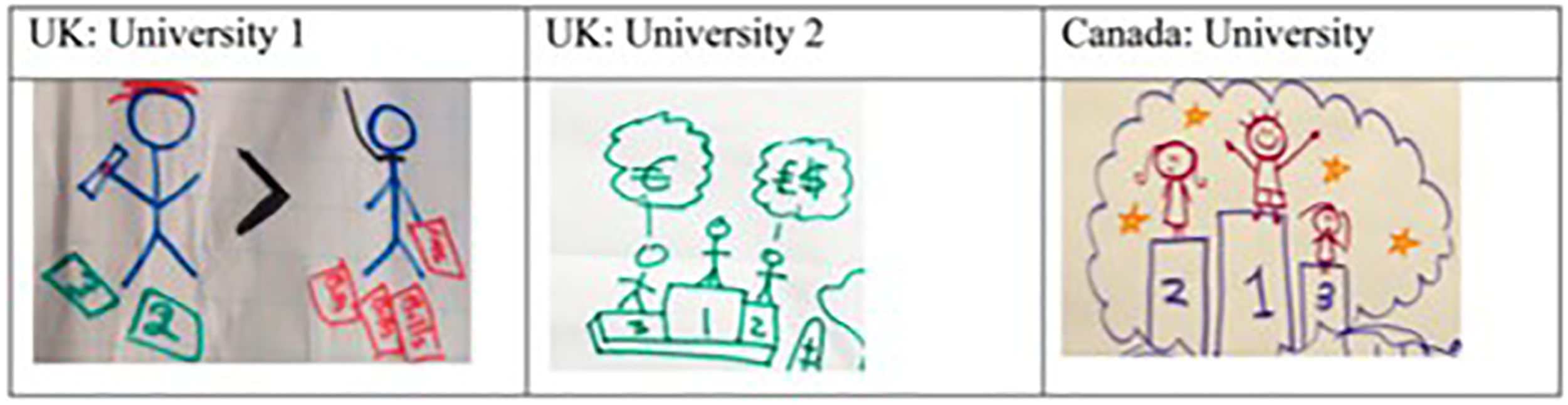
RP Use: Alone or Alongside Another Method
The ‘rich pictures’ method can be used alone (as the primary data collection method) or in conjunction with other methods e.g., interviews. It could therefore be added to the collection of HRD tools such as diagrams and interviews that have been used to promote organizational learning (Stowell, 2022). In examples of its use as a sole data collection method, Bowen and Evans (2015) looked at common features (what was drawn, use of objects and metaphors to represent ‘real-life’, and use of color) across over 800 drawings by children and adults relating to their perception of the concept of knowledge, while Conte and Davidson (2020) analyzed ethnographic fieldnotes to produce RPs of research co-production.
As Manojlovich et al. (2015) state, however researchers can often “fail to recognize that one technique alone cannot capture the phenomenon of interest” (p. 68). While RPs can elicit tacit data about experiences that may be hard to put into words (Crilly et al., 2012; Morse, 2009) – for example how clinicians perceive and respond to complex situations (LaDonna et al., 2018), how medical students handle moral dilemmas (Ribeiro et al., 2021) or how individuals cope with cancer (Bood et al., 2021, 2022) – interviews extend exploration of the topic and can clarify the use and meaning of images. Unsurprisingly then, most RP research involves participants completing a ‘rich picture’ alongside an interview. Interviews generally last between 30 and 45 minutes but can last longer (e.g., van Duin et al., 2021; Velthuis et al., 2021). For instance, van der Goot et al.’s (2020) study of medical students’ workplace motivation gave participants 30 minutes to draw an RP and followed this with a 45-minute semi-structured interview which included probe questions specific to the content of the RP. Helmich et al. (2017) also followed RPs with a semi-structured interview but were more prescriptive and standardized the interview schedule so that all participants were asked the same questions (could you please explain what is in the picture; what led you to choose this scenario; what makes a situation complex for you; what makes it exciting or overwhelming).
Interviews do not necessarily have to take place immediately after the RP has been completed either. Some researchers conduct multiple interviews before asking participants to complete an RP. When exploring factors affecting clinical judgement, for example, Cristancho et al. (2015) interviewed surgeons pre- and post-operation and then invited them to draw a ‘rich picture’ to try to go beyond simple description of tasks and procedures and better access the full experience. On the other hand, when Molinaro et al. (2021) explored how trainees, health professionals and parents experienced a difficult conversation in a neonatal unit they interviewed participants 2 weeks after the RP. At this point they were asked to describe their drawing; explain why they had chosen particular content and their reasoning for selecting particular experiences.
Somewhat unusually, others use interviews as their starting point and then the research team complete a ‘rich picture’ (e.g., Mukotekwa & Carson, 2007). This is a faster and efficient way of gathering data about a system, particularly when there might be challenges such as participants’ willingness to give their time to a study, but of course it is quite a different approach (i.e., the researcher rather than the participant completes the RP) and therefore runs the risk of missing key insights because interpretation of what is important comes from the research team rather than from checking and clarifying with the participants themselves.
Individually Completed or Group ‘Rich Pictures’
The flexible nature of RP (Horan, 2000) means that it is conducive for use by individuals or by groups i.e., collaboratively. As such it could be used to gather feedback on both the group and the individual-level issues often ignored when monitoring organizational development interventions (Van Aken, 2007). Examples of its application with individuals includes Bood et al.’s (2022) study of young peoples’ experience of living with cancer where individual patients were given 30 minutes to complete a ‘rich picture’ then interviewed about why they had drawn particular images. This approach works well for exploring a range of participant ‘situations’ but is particularly helpful when individuals find it difficult to speak about what they have drawn or need additional time and support in opening up.
On the other hand, Bell and Morse (2013b) value its application in group settings as a way of accessing multiple perspectives in relation to group dynamics and hidden aspects of work relationships and interactions which individual ‘actors’ may not be aware of and, therefore, enhance group learning. Group RP works differently to individual RP in that the picture is developed simultaneously by all participants. Participants share access to resources (flipchart paper and pens) and jointly ‘build’ the RP, adding to, extending, and adjusting the image as it is being drawn in order to better understand a problem or situation (Bell & Morse, 2012). The key challenge is for the group to represent the problem as clearly as possible, including links (to other systems, teams) and obstacles; in effect showing the situation as it ‘is’ rather than as it might be. As with individual RP composition, there are no ‘rules’ – other than all group members have access to the resources and that text is kept to a minimum – and therefore how one group explores and completes the task may differ from another. For example, one group may complete an RP faster, or include a different level of detail and complexity. In addition, the make-up of a group could impede or foster creativity and exploration, and according to Wiles and Vicary (2019) possibly “over-ride individual views” (p. 59) including willingness to honestly and openly look at the situation.
Another alternative is that an RP can be completed by an individual or group and then added to by another individual or group. Fougner and Habib (2008) used this approach to explore inter-disciplinary module development and improvement by inviting individual researchers to complete a ‘rich picture’ and then present it to their team. This was seen as an effective way of enabling a variety of voices to be heard. Taking a collaborative approach can also be more productive when discussing and clarifying situations or problems. Participants in this study, however, became suspicious of the RP method, believing that there was a hidden agenda driving the request to add or change individual drawings. The implication here then is that care needs to be taken to clearly explain the purpose of an RP study, and especially the role and involvement of individual actors, and any later steps in the process.
Single and Multiple Time Points
Not all RPs are completed in one sitting: some research involves RPs being completed in a single time point (e.g., Cristancho et al., 2018; LaDonna et al., 2018) but other studies involve completion of multiple RPs across multiple time points (e.g., Trede et al., 2019). Again, this flexibility fits well with HRD, which has change over time at its heart. For example, Kirkpatrick’s model of training evaluation, upon which most evaluation models are still based (Isalamah & Callinan, 2022) advocates repeating evaluation of learning and behavior change at different times (Kirkpatrick, 1996). In Bood et al.’s (2021) study of subjective changes in the experience of cancer patients over time, an RP was completed at the start of the study and a second RP 2-months later. This enabled researchers not only to discover what had changed but to gain a better understanding of patients’ on-going needs. Interestingly, this research also sought to find out about the impact of different RP instructions: one group made a completely new RP the second time around, another looked at their original RP and then made a new one, and a third group simply added to their original RP. Repeated use of RP was found to be helpful for clarifying subjective changes in patient experiences and the preference for making a new or adding to an existing RP depended on whether the existing RP captured the current situation.
How ‘Rich Pictures’ Works in Practice
To capture a situation Checkland (1993) suggested that participants should be asked to keep an open mind and include any information they believe relevant to conveying their perspective – this can include facts, emotions, structures, the individual doing the drawing and any relationships with other individuals, groups or systems (teams, departments, organizations). Checkland also said it is best not to impose a structure or narrative i.e., pre-determine that one element or another in a situation is problematic.
While recognizing that RP is a free-form undertaking and that there are no tightly prescribed ‘rules’, Bell and Morse (2013a) suggest that text should be avoided and if the RP is being drawn by a group the paper needs to be visible to everyone. They also suggest that adding color (using colored pens/pencils), directional arrows and scale (size of objects) can be helpful in conveying a better sense of the ‘story’.
On the other hand, Armson (2011) offers extensive guidance on the purpose and procedure for ‘doing’ RP. In the first place, as some adults may feel embarrassed about their perceived lack of skill when drawing, it can be helpful to offer reassurance that artistic talent is not important. For Armson (2011) the benefits of being able to capture “interconnected fragments” (p. 60) outweigh any perceived risks.
Secondly, participants should be provided with a blank piece of any size of paper, along with pens, pencils or crayons, and asked to represent (draw) everything they know about the experience, event or situation. This can include ‘stick people’ but incorporating contextual detail is also helpful, such as tools, buildings, objects, ideas, beliefs and values, other peoples’ perspectives and any connections between these. Taking a holistic rather than reductionist approach i.e., including ‘messy’ detail, and recognizing multiple perspectives is key. Armson also suggests that it is important to include a personal representation i.e., where the ‘drawer’ features in the situation.
The authors of this article conducted research to understand the ways individuals changing occupation made sense of their career change and how they used informal learning to become at least competent in their new role. RP was used alongside semi-structured interviews as a way to get participants to try to remember more of their experience – to visualize the situations they found themselves in and to depict these. Stick people were used by some participants who found drawing difficult. In Figure 2, for example, an ex-school leader who changed career to work as a senior lecturer in Higher Education has drawn a very simple image depicting the change in the number of students they interact with: from many to a few. RP of changed interactions with others.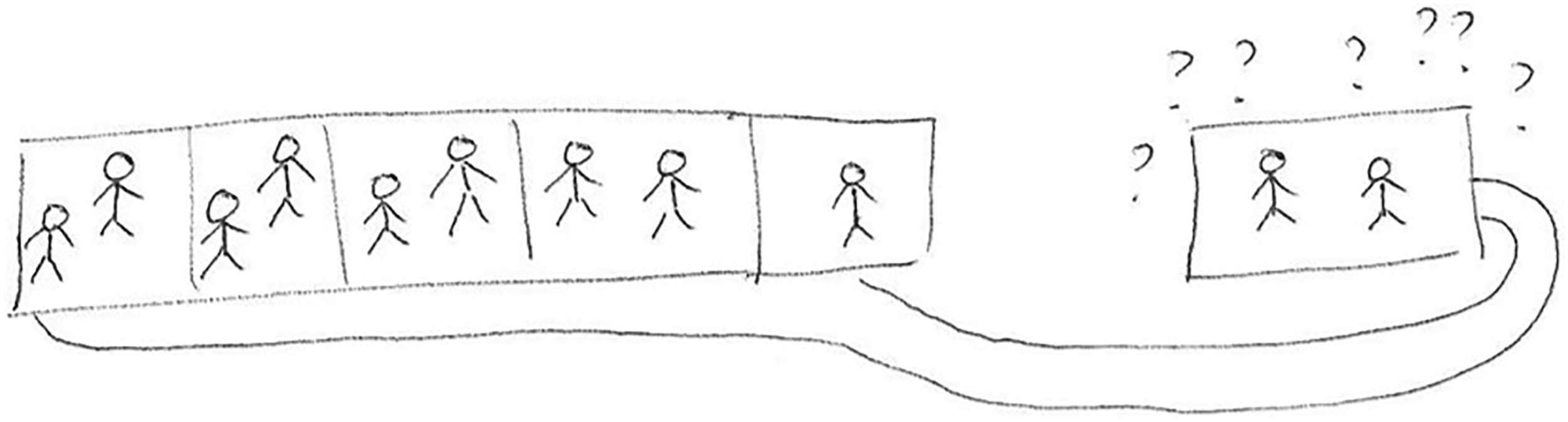
By contrast, Figure 3, offers a more complex depiction of the ‘situation’ – here, another ex-school leader who also entered HE depicts their experience of career change and the psychological discomfort associated with moving from having been an expert in their previous role to becoming a novice in their new role. They also added notes to their RP however, as they found it difficult to convey what they meant in pictures alone i.e., that the box showed their previous experience working in a school where they could easily draw on amassed knowledge and experience versus their new situation which was a ‘blank slate’. As they explained their RP to the researcher, they added an additional depiction of a boat set above waves to illustrate the sense of their new experience being up (positive) and down (negative/stressful). RP showing the psychological discomfort of being a novice in a new career.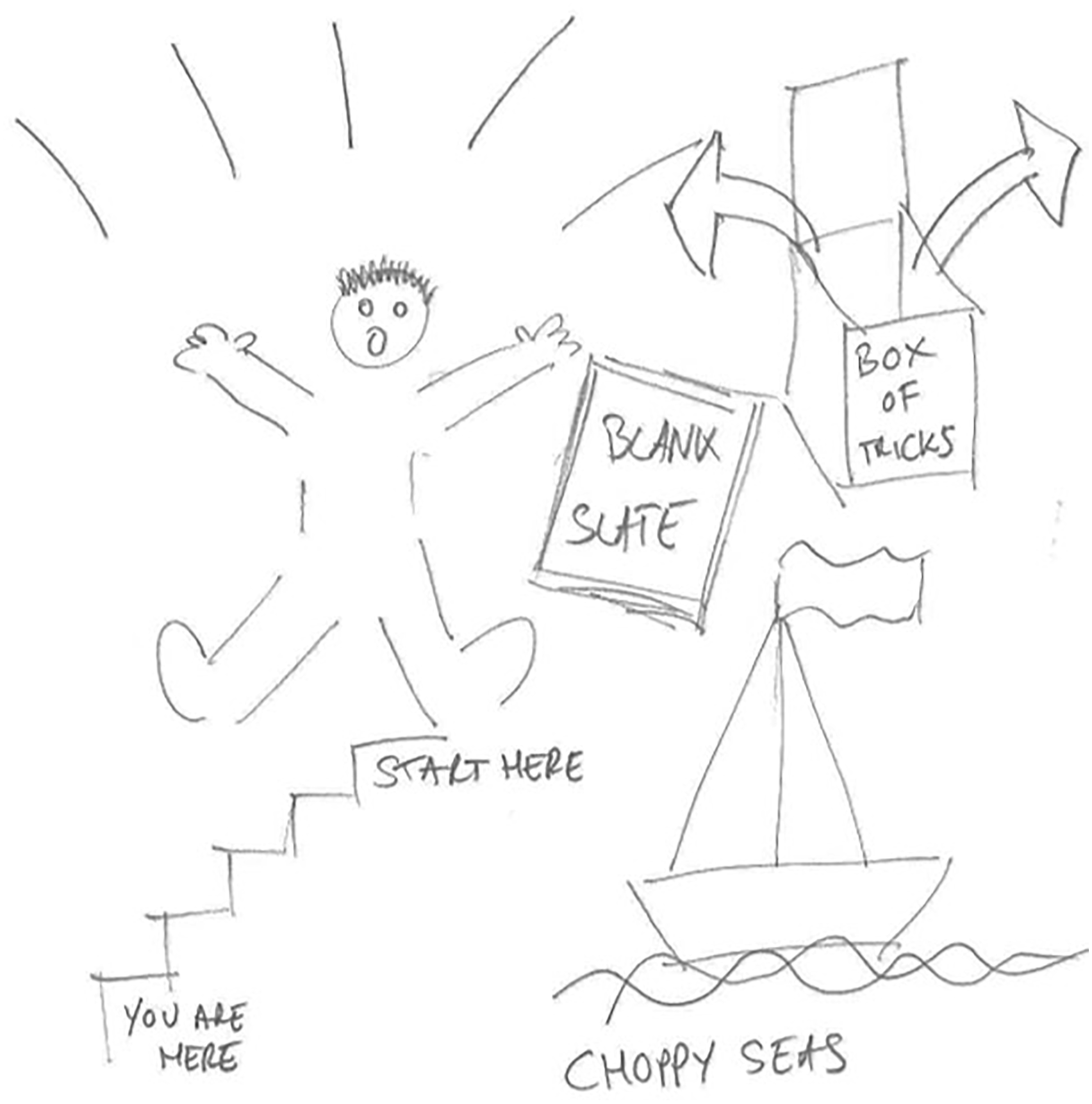
It may not be possible for all RPs to be completed in a single sitting, although most researchers suggest that around 20–30 minutes is sufficient and a short break can also be incorporated if necessary (Armson, 2011; LaDonna et al., 2018; van der Goot et al., 2020). On the other hand, if the RP is going to be left for a longer period and returned to later, it can be useful to give it a title (e.g., A rich picture of …), and a date. Indeed, it can be better not to think of an RP as a finished item, but as “finished for now” (Armson, 2011, p. 67).
Armson (2011) also suggested a few things not to do. Firstly, as there is no perfect picture, practice versions are to be avoided; the ‘raw’, original representation is best. Secondly, individuals should avoid trying to organize or story-board (akin to a comic strip) or represent a single idea. Instead, they should try to capture the complex, comprehensive and messy nature of their experience or situation – in other words, to try to depict multiple storylines and ‘issues’ as they naturally occurred. Thirdly, while words can be used (e.g., speech bubbles or to label an item that is difficult to convey in pictorial form) these should be kept to a minimum. One of the reasons for this is that tacit knowledge is generally deeply personal and embedded (Shamsie & Mannor, 2013), and if experiences or events are quickly written down rather than pondered in terms of the type of image(s) that might represent them, important aspects of the experience could be missed. RPs are a very personal take on a situation or experience, and unrestricted exploration (other than self-censorship) is key. In addition, the authors of this article discovered in their research of occupational change that asking participants to ‘sketch’ rather than ‘draw’ images was more effective as ‘draw’ can suggest the need to present a finished picture, whereas being asked to ‘sketch’ can communicate a looser expectation e.g., that disconnected and incomplete RPs are acceptable.
In contrast to the open, ‘draw whatever you like’ approach outlined above, and responding to Bronte-Stewart’s (1999) call for greater standardization however, Berg and Pooley (2013) suggest that it may be possible to improve RP depictions and subsequent analysis by utilizing ‘shared’ or ‘common’ visual concepts via pre-designed ‘icons’ i.e., signs or symbols that resemble an object or feeling, such as drawing of a square with a triangle on top to depict a house, or a circle containing an upward curve to depict smiling face. Their analysis suggests that while hundreds of icons might appear across individual RPs, fewer (around 30) appear with any regularity and it should therefore be relatively easy for participants to select from these. Pre-set icons can therefore overcome potential challenges arising during interpretation, especially difficulty ascribing meaning to a particular image, and mean that all ‘users’ are speaking (drawing) a common language. However, given that icons cannot be tailored to all situations under consideration their generic nature may constrain use and meaningful interpretation i.e., some participants may wish to add their own images or alter a pre-existing icon. In addition, what a sign or symbol signifies (Chandler, 2007) or how participants might use icons could differ and therefore render interpretation of meaning or identification of themes difficult. This may be remedied through use of a ‘key’, but this would slow down the drawing process and limit the scope or nuance within an RP i.e., individuals would lose the freedom to create a personally meaningful drawing (Checkland, 2000) and, consequently, key details/impressions could be missed. This, of course, reinforces the value of a post-RP interview where the researcher is helped to understand more clearly what the participant has attempted to depict, and the participant has the opportunity to add to or amend their drawing to clarify meaning or the importance of particular images/relationships.
Analysis of ‘Rich Pictures’
Researchers familiar with semiotics will spot the potential overlap between RP analysis and semiotic analysis of significance in signs and symbols (Peirce, 1958; Saussure, 1916). As noted by Barthes (1964) it is possible to interpret beyond the surface or literal to consider the connotation i.e., multiple meanings. This is an important part of visual research, however to date RP has not grounded itself in this theoretical approach (Berg, 2013). This is largely because, when used in conjunction with other methods such as interviews, RPs are a starting place for participant(s) to interpret and explain their meaning – what they signify – to the researcher, rather than for the researcher to interpret their meaning per se. Where the RP is used alone, the existence of multiple meanings may lay RP analysis open to criticism in terms of accuracy (Clark & Morriss, 2017). However, for those who have so far used RP when carrying out exploratory research – to gain a better and possibly deeper sense of a phenomenon prior to potentially conducting more systematic studies – its value lies in promoting reflexive practice on the part of practitioners (e.g., Cristancho et al., 2015) as much as it does in therapeutic terms for participants (e.g., Molinaro et al., 2021).
When used in conjunction with interviews, some RP analysis is completed during the interview phase through a process of co-construction between the participant and researcher. As the researcher asks questions the participant is encouraged to explain the content and meaning of their RP, and their reasons for selecting (and potentially de-selecting) particular images/metaphors. This can elicit a more authentic account (Lincoln & Guba, 1986) from participants but necessitates the researcher having developed – in a relatively short space of time – a level of trust. Care also needs to be taken to check and clarify understanding to be sure that the participant’s ‘voice’ is accurately reflected in notes that are taken. Figure 4, for example, shows an RP taken from authors’ own research into career change where a participant drew a circle which they colored in. By asking the participant to explain what they had drawn and offer examples to illustrate how this might ‘play out’ in reality the researcher was able to gain a deeper appreciation of their experience i.e., the career changer’s willingness to open up to others after changing occupation. The more complete the circle the more willing they were to reveal rather than conceal self-perceived ‘gaps’ in their knowledge, competence, and confidence. Figure 4 shows that 75% of the ‘competence circle’ needed to be filled in before they would reach out to others or disclose learning needs, particularly in relation to their line manager – where the need to avoid being judged was at its highest. RP of ‘competence circle’.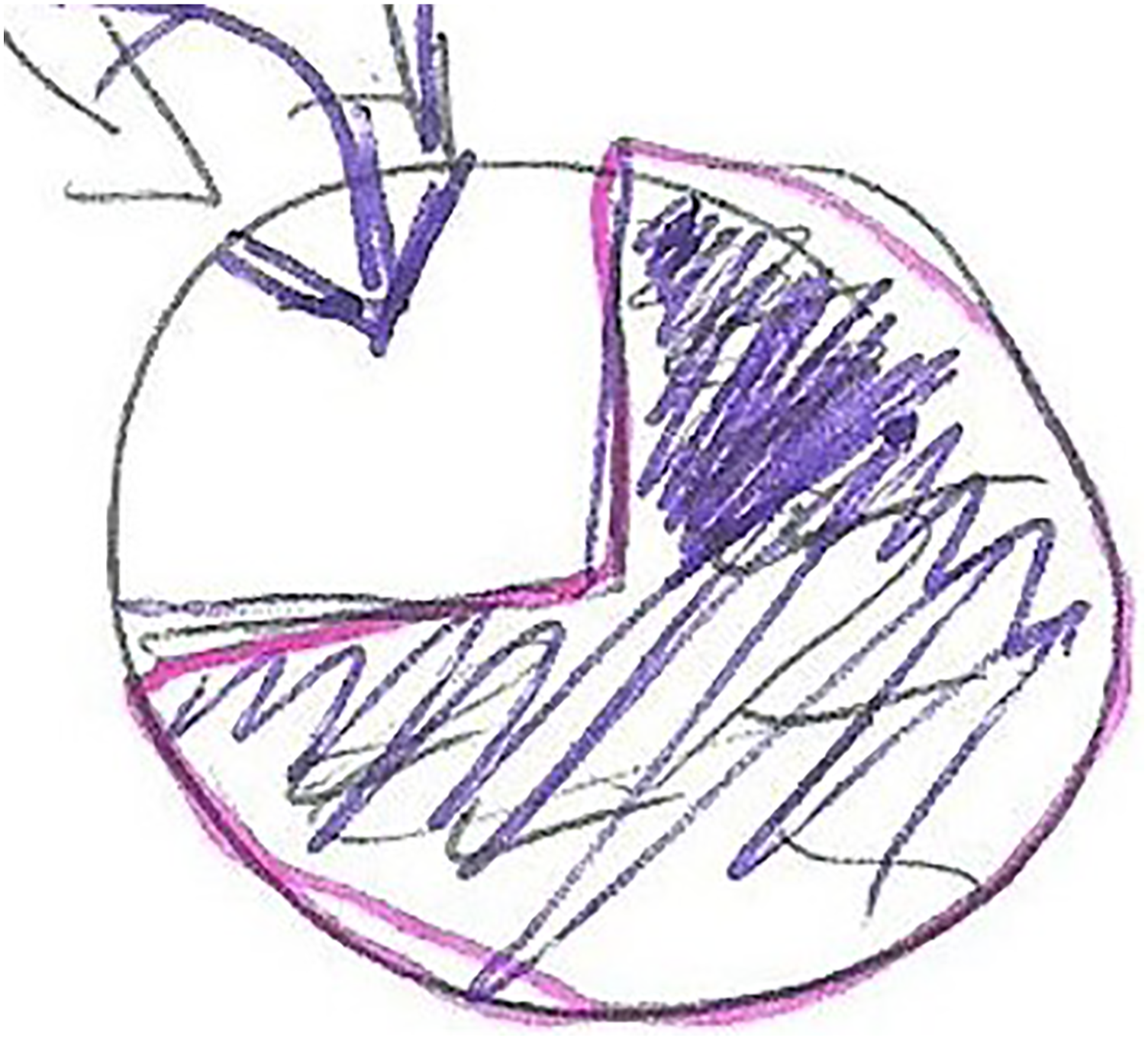
Post-data collection analysis can take a number of forms and across the research looked at in this article includes template analysis (Ribeiro et al., 2021), grounded theory (van der Goot et al., 2020) and content analysis (e.g., Bell & Morse, 2016; Bood et al., 2021; Cristancho et al., 2015). Guidance specific to content analysis of RP data is also provided by Bell and Morse (2013a) who adapted Carney’s (1994) analytical framework. This includes the need to consider the context of the RP, its content (colors, shapes, objects drawn), whether particular aspects dominate, links between individual parts of the RP, the overall content (whether narrowly focused or expansive), and the overall sense emerging from the RP.
Where used with interviews, however, thematic analysis of the ensuing interview transcripts was most prevalent (Braun & Clarke, 2006). But while some researchers’ analysis of RPs was purely thematic (e.g., LaDonna et al., 2018; Molinaro et al., 2021) – where transcripts of the interview data were thematically analyzed and the RPs were simply used as a tool for gaining access to what was revealed in the interview – others adopted a poly-textual approach (Gleeson, 2011) i.e., a combination of thematic and aesthetic analysis (Armson, 2011) where RP and interview data were analyzed in parallel; the interviews via thematic analysis and the RPs aesthetically. Van Duin et al. (2021), for instance, adopted an iterative thematic analysis process involving reading and re-reading interview transcripts; open coding (summarizing each sentence); focused coding (comparing and identifying coding categories across transcripts); connecting coding categories; and sorting into themes. In parallel with this RPs were aesthetically analyzed, where use of space, color, symbols, metaphors and emotions were used to arrive at an overall interpretation.
In relation to the analysis of the RP alone, for example when it is the sole method of data collection, Bell and Morse (2012) offer a useful analytic approach called SAGA: Subjective Assessment of Group Analysis. This enables researchers to assess an RP based on use of colors, lines, shapes and symbols, the mood expressed, and how focused the RP is on the topic or issue being explored and form an overall impression of the extent to which it can be thought of as ‘incoherent’, ‘semi-incoherent’, ‘semi-coherent’ or ‘coherent’. The authors suggest that this can be helpful in terms of judging how clearly a drawing depicts a situation or experience, as well as how easily meaning can be derived, but also remind researchers to be mindful of the fact that RP compositions and their subsequent analysis are subjective, and therefore – as semiotic theory indicates – prone to multiple interpretations.
In addition to individual researcher analysis ‘gallery walks’ were used by some researchers as a way of reducing potential researcher bias. In research by Helmich et al. (2017), for example, individual researchers spent around 30 minutes walking about re-looking at RPs hung in random order in a room and making notes of what they noticed. This was then followed by a lengthy team discussion (circa 2 hours) about their impressions and any subsequent interpretations in order to reach agreement about overall patterns and themes. More specifically, they discussed what they noticed in terms of the size, shape and posture of ‘people’ drawn in the RPs, and the impression of the emotions being conveyed (or attempted) such as positive or negative. Researchers then returned to the interview data to review interpretation of RP meaning to ensure that it was completed as “faithfully as possible” (p. 209). This also involved considering RPs which appeared to depict a different ‘story’ or set of emotions in order to clarify and agree on the overall messages being conveyed.
Transferability is also important i.e., how applicable findings are outside the research context. This can be achieved by selecting sketches which are both illustrative of extracts from the transcript and which articulate key findings i.e., possess the potential to resonate (Tracy, 2010) with individuals who may or may not have experienced specific phenomena such as occupational change. Figure 5, for example, shows a sketch of a bike taken from the author’s own research. The stabilizers here represent the need for scaffolding from a more able colleague during the early stages of occupational change. Transferability of findings.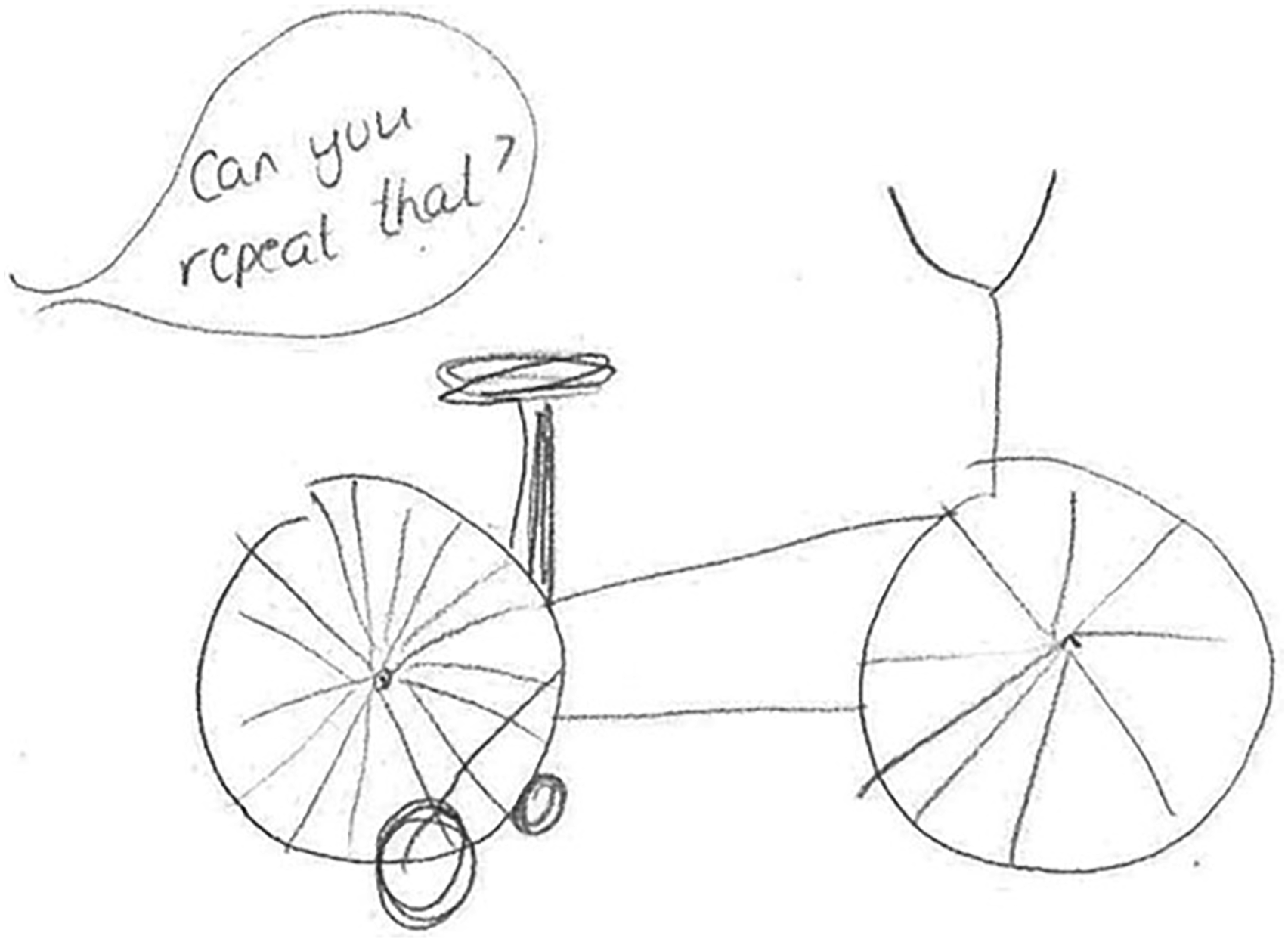
Discussion: The Benefits of the ‘Rich Pictures’ Method
The above analysis has already indicated several ways that RPs might benefit HRD researchers and practitioners. While interviews are valuable in terms of stimulating reflection and helping individuals to organize their thinking on a topic (van der Goot et al., 2020), the RP method is able to access tacit data and more fully capture perceptions and experiences of events, avoids pre-existing narratives, allows relationships between systems to be articulated, and facilitates the foregrounding of emotion. Rather than relying on simple description or procedural details or being limited by the extent to which an individual is able to put an experience into words (Cristancho et al., 2015), RP enables individuals to become aware of and tease out important detail, and potentially reconceptualize links (Mazzetti & Blenkinsopp, 2012) as they emerge during the drawing process; in effect telling a more comprehensive version their ‘story’. Proponents of New Organization Development, for example, have argued that using existing narratives reproduces the status quo and constrains understanding of organizational change (Marshak & Grant, 2008). RP overcomes this barrier through facilitating the development of alternative narratives.
Wagner (2011) also suggests that RP can be useful because the type of thinking and feeling elicited can take numerous forms: how an individual ‘sees’ a situation or experience (perceptions, perspective, emotional content) as well as how they live their life (social and cultural impact, social comparison). In other words, as Whetten (1989, p. 491) states “visual representation often clarifies the author’s thinking and increases the reader’s comprehension”.
RP can also help participants to communicate the complexity and multi-dimensionality of a situation i.e., the various interacting conceptual and physical factors which might act on or influence thoughts, judgment, decisions, reactions or relationships (Velthuis et al., 2021). As already indicated, this systems thinking has been found to be crucial for the effective implementation of HRD. The RP method thus enables individuals to think differently about an experience (LaDonna et al., 2018; Ribeiro, et al., 2021); to visualize and represent the whole system or process (Velthuis et al., 2021). Instead of providing snapshots of smaller or discrete aspects of the phenomenon under review, the drawer (as well as the researcher) gains a holistic impression of what happened or is currently going on i.e., the individual’s experiences and interpretations are seen in relation to their context or environment (van der Goot et al., 2020). Conte and Davidson’s (2020) study of research co-production of a health information management system, for instance, shows that it is easier to identify important components and barriers to producing a piece of research (designing – doing – publishing) when they are presented in picture form because connections and relationships between individuals and their context are easier to identify and can offer a better appreciation of the ‘problem’ and potential solutions.
Another benefit of ‘rich pictures’ is that as an iterative process it has built-in rigor and credibility (Creswell, 2012; Morse, 2015; Tracy, 2010; van Duin et al., 2021). Rigor because the researcher is able to analyze rich and abundant data of a complex phenomenon such as the challenges experienced when training to become a doctor (van Duin et al., 2021), and credibility because thicker description can extend and deepen understanding. Sense making takes place as the picture is drawn, when it is described during interview (if done in conjunction with an interview), as the drawer adds detail/depth in response to probing questions, and as the researcher analyses patterns and themes within and across RPs. This deepens and refines clarity and understanding of phenomena which can be used to extend inquiry about other, related systems e.g., within a team, organization, or inter-organizational process – such as curriculum change in medical schools (Velthuis et al., 2021) – or to understand the same phenomena from another perspective such as another team or organization linked to the primary study e.g., Conte and Davidson (2020). In a related vein, RP can also be extended to become a multi-part process in that a picture can be drawn, shown to others – participants and/or researchers – and developed further (Conte & Davidson, 2020) to tease out and clarify elements that may be confusing; in essence each ‘take’ validates the contents of the picture.
The challenges of Using RP
While some studies involve participants thinking about a ‘live’ situation or experience (e.g., Bood et al., 2021) other research asks participants to draw graphic representations of a past experience (e.g., Helmich et al., 2017; Ribeiro et al., 2021). This presents a challenge for ‘rich picture’ production because creating one from scratch can result in recall bias, where experiences, events, perceptions and feelings are filtered out or simply not remembered at that time. For example, participants may over-simplify or focus on a problem or obstacle they’ve encountered rather the overall situation (Armson, 2011). This is problematic as important detail could be missed, and a partial or distorted ‘picture’ means interpretations, perceived patterns and conclusions will be inaccurate. Ruminating prior to RP completion may not be any better as it could lead to participants constructing a ‘preferred story’ i.e., one that makes most sense or creates less psychological discomfort in the re-telling. Velthuis et al. (2021), however, view thinking time as an advantage: their participants – medical school educators who were asked for their perspective on enacting curriculum reforms and who had been involved and therefore able to consider the situation for a long period of time – were able to provide more detail in relation to the most important or difficult aspects of the situation. From a practical point of view then researchers might consider preparing their participants in advance of taking part in an RP study and asking them to mull over the focal situation or experience. This does not eliminate the risk of some degree of self-censorship but may enable greater and deeper recall, which then helps to build an even richer picture.
For some researchers a major challenge associated with RP – and visual methods in general for that matter – is its subjective nature. This has led many to remain cautious about their use (Denzin et al., 2006; Howe, 2004), perhaps because of a reluctance to adopt unfamiliar and untested approaches compared to the accessibility and greater potential veracity of the spoken word (Bowen & Evans, 2015). This may have some foundation too since, as Rose (2001) states, “visual imagery is never innocent” (p. 32): RPs are subjective statements about a particular aspect of a person’s life and, therefore, prone to reconstruction (selection and deselection) as they emerge for conscious inspection (Bargh, 2011). In other words, when drawing a ‘rich picture’ individuals may experience multiple and competing calls on their attention and while they may believe they are presenting the ‘truth’ this may be far from the case; instead, their representations need to be thought of as fluid rather than fixed, and equivocal rather than certain.
Furthermore, Berg and Pooley (2013) point out that just because an image is personally meaningful it may not be widely recognized i.e., the image makes sense to the drawer alone. Even if the image is easy to understand, its meaning can still be specific to the situation/experience or context being drawn and therefore may not easily align with patterns across other RP data. Researchers using RP may also misinterpret or over-interpret what is produced – either reading something into the picture which is not really there but a manifestation of their own beliefs or experiences of a situation or failing to perceive or acknowledge the ‘weight’ of a participant’s ‘message’. The more complex an RP, of course, the more the challenge of interpretation is amplified. Indeed, Rose (2001) usefully highlights a number of factors that can potentially impact on interpretation of the ‘product’: technological (type of media), composition (how participants represent and organize content), and the social (aspects of the participant’s life which might impact on the ‘product’ such as social relationships, economics and power). This can be tempered to a certain extent through post-RP interviewing, where participants can be asked to explain the meaning of or elaborate on specific aspects of their drawing. ‘Gallery walks’ (Bood et al., 2021; Helmich et al., 2017) and ‘member checking’ (Velthuis et al., 2021), too, can also help as a consensus is reached between researchers and participants about meaning and therefore a more dependable and credible conclusion can be drawn.
In addition, there are a number of ethical considerations. Cristancho and Helmich (2019) spoke of participants potentially sharing more than they might have expected or wanted, particularly in relation to the emotional content of an experience or situation. This is echoed in Ribeiro et al.’s (2021) study of moral dilemmas during medical training, which suggested the need to consider ‘cultural comfort’ i.e., how far certain individuals may be comfortable expressing their emotions. In addition, while asking follow-up questions can encourage additional sketching to augment an RP (Bell & Morse, 2013a) there is also the potential for the context and perceived or actual power dynamics to have an impact (Bowen & Evans, 2015; Fougner & Habib, 2008). Bood et al. (2022), too, highlighted the demanding nature of visual methods. For some types of research – where participants are sharing details of a current situation such as living with advanced cancer – it is important for researchers to build in time for breaks, debrief participants, and offer access to support resources outside the study. Researcher trustworthiness and authenticity is also key (Lincoln & Guba, 1986). Fougner and Habib (2008), for instance, drew attention to the potential for suspicion and distrust of the research process which undoubtedly has an impact on the amount and depth of what is shared. Briefing is therefore essential so that participants are clear about what they are signing up for, such as that RPs are sketches – approximations of their experience/reality – rather than accurate depictions and in studies with extended processes (where RPs are added to by other participants) that sketches are drafts rather than a finished product.
Finally, researcher reflexivity also needs to be considered because of the potential influence this may have before, during or after data collection (Tracy, 2010; Willig, 2001). This is not necessarily something that leads to bias however, but can be advantageous (Berger, 2013; Morse, 2015). Indeed, reflexivity can be viewed as useful since self-awareness may help to advance lines of enquiry and result in more open and complete responses from participants. For example, in Conte and Davidson’s (2020) study, experience of the research production training was viewed as an asset rather than a source of potential bias that participants would need to be protected from. Similarly, Ribeiro et al.’s (2021) research team comprised medical doctors whose experience was used to adapt questioning and encourage participants to extend their thinking in connection with perceptions of the challenges of moral dilemmas.
Implications for HRD Research and Practice
Uses of the ‘Rich Pictures’ Method.
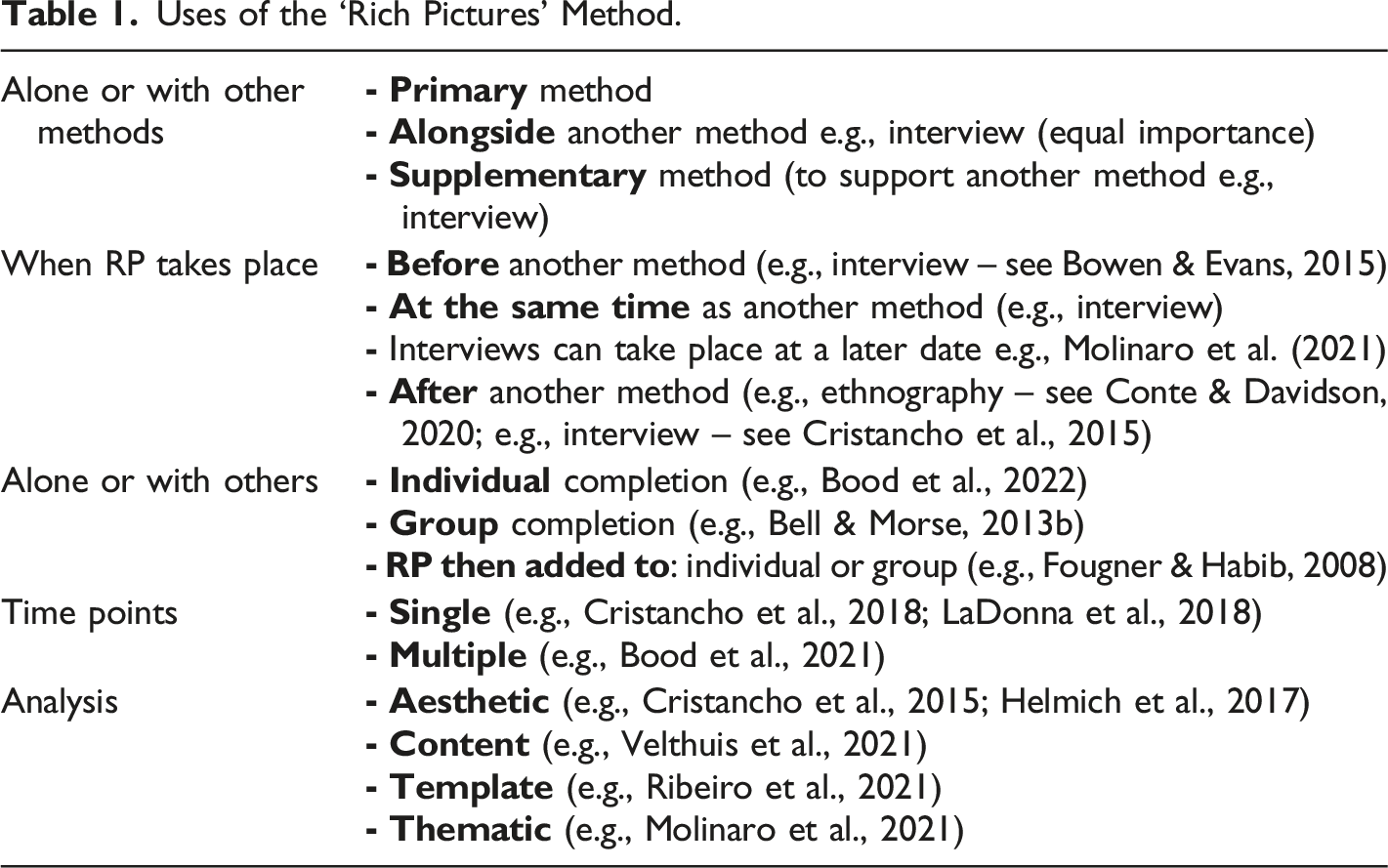
HRD has been defined as “a mechanism in shaping individual and group values and beliefs and skilling through learning-related activities to support the desired performance of the host system” (Wang et al., 2017, p. 1175). However, previous models of and approaches to HRD have been found to be inadequate for the new and fast-evolving organizational environment (Schaupp, 2021; Torraco & Lundgren, 2020). As the above analysis suggests, RP would enable HRD practitioners and researchers and their stakeholders to develop alternative narratives of their role within the system and facilitate a move beyond analysis of discrete procedures to developing understanding of the whole system (Velthuis et al., 2021) to which HRD contributes (Wang et al., 2017). Through accessing tacit knowledge, RP may also enhance understanding of the skills and values individuals and groups currently possess and those the host system requires. In one of the few examples of HRD research to use RP, for example, it was found to be beneficial in identifying the skill and value needs of entrepreneurs (Pretti et al., 2020).
Turning to specific areas of HRD activity, the Academy of Human Resource Development covers eight domains: organization development; training and development; career development; critical human resource development; diversity, equality and inclusion in HRD; cross-cultural human resource development; evaluation in human resource development; and strategic HRD (AHRD, 2022). Through its ability to articulate complex relationships within organizations RP may assist the understanding of organizational development needs and barriers, and the development of strategic HRD interventions which support the achievement of organization-wide goals. Existing research in medical and educational settings has already revealed RP’s capacity to analyze training and development interventions. Moreover, RP could provide a tool for HRD to support the self-directed learning and reflection on which organizations increasingly rely, but for which current HRD interventions are often inadequate (Torraco & Lundgren, 2020).
In relation to diversity, equality and inclusion, RP could create alternative narratives to challenge dominant hegemonies around for example gender (Bierema, 2020) and race (Sisco et al., 2022). In one of the rare usages of ‘rich pictures’ in HRD, timelines were used by black and ethnic minority leaders to reflect on their careers and the positive and negative experiences that had shaped them (Wyatt & Silvester, 2015). This reflection could lead to the creation of new career narratives which overcome the incongruence between personal and professional identities experienced for example by many Black female leaders (Manongsong & Ghosh, 2021). Without reflection, individuals may also become habituated to particular career narratives they have constructed (Hoyer & Steyaert, 2015) which may need to be adapted to provide congruence in new and changing environments (Humphrey & Humphrey, 2020).
Through this ability to create different narratives about experiences, and to relate experiences to their wider context, RP could make a useful contribution to the evaluation of HRD and the development of critical perspectives on HRD, challenging conventional understandings of ‘Human Resource Development’ and its purpose and relationship with other parts of the system, and supporting the creation of alternative, critical narratives. In so doing, it could challenge dominant cultural assumptions about HRD and improve understanding of cross-cultural HRD. This understanding could be further aided by RP’s ability to access unwritten values and assumptions such as those that underpin organizations and national cultures.
Finally, RP can help individuals to reflect on their careers to date to support analysis of career development (Wyatt & Silvester, 2015). In the authors’ own study, RP was a valuable way to access tacit data and make new discoveries about the experience of career change, learning processes and preferences, and regaining career success. This enabled the researcher to respond to points in the interview where career changers found it difficult to articulate feelings or experiences as well as to facilitate exploration of points raised. The RP method was also valuable in helping participants to consciously inspect their own thoughts and assumptions about experiences, events and the feelings associated with these, and to identify, discuss and synthesize patterns that emerged. Indeed, many participants commented on the cathartic nature of the experience which helped them to gain a better understanding of their complex career change experiences such as the emotional roller-coaster associated with temporarily reverting to novice status and their journey towards recapturing career success. In particular they spoke of RP’s ability to bring – sometimes painful – memories, beliefs and perceptions to the surface but in such a way that they were able to clarify their thoughts and feelings, step back and observe themselves in a more objective way and make connections that they had not previously recognized. As a consequence, the somewhat ‘messy’ experiences that participants had of complex career change and their journey towards recapturing success were easier to access.
As the above suggests, as well as facilitating HRD research, RP may also form an HRD intervention in its own right. By offering the opportunity to think differently about experiences, RP can support the reflection that is a key part of the learning process (Kolb & Kolb, 2009), and could indeed be used by career counsellors for this purpose (Wyatt & Silvester, 2015).
Conclusions
Given the identified value of using RP in health and educational research to uncover hidden or previously unrealized aspects of specific experiences (e.g., illness, career transitions) and the added depth this has brought to participants’ and researchers’ understanding, HRD researchers should strongly consider adding the ‘rich pictures’ method to their toolkit. Its application is flexible and wide-ranging and can mean that rather than drawing upon existing narratives participants are helped to access often emotional insights and develop alternative narratives, enhancing theirs and HRD scholars and practitioners’ reflexivity. This therefore offers HRD researchers and practitioners a richer understanding of both individual and organizational realities and could lead to a deeper appreciation of particular obstacles and challenges faced during development, the creation of alternative HRD policies or solutions, and the critical development of the HRD field itself.
Footnotes
Declaration of Conflicting Interests
The author(s) declared no potential conflicts of interest with respect to the research, authorship, and/or publication of this article.
Funding
The author(s) received no financial support for the research, authorship, and/or publication of this article.
