



Abstract
Employee participation in formal and informal learning is essential for the economic viability and competitive advantage of organizations. Therefore, assessing outcomes of competence development activities is important. However, this domain of human resources (HR) practice is often neglected because of factors that are not well understood. Accordingly, this article addresses the question: What factors enable and inhibit HR professionals in assessing outcomes of competence development activities and initiatives? To answer this question, we conducted a review of articles that examine assessment of outcomes of competence development activities. The primary purpose of the review was to identify and categorize enabling and inhibiting factors so that the factors can be better understood by researchers and HR professionals. We also call upon voices from the field, using quotations from HR professionals to illustrate enabling and inhibiting factors. Analysis and synthesis of the literature informed the development of propositions to guide future research.
Keywords
In contemporary business environments, creating conditions that are favorable for learning in organizations is important for individuals’ employability and wellbeing and for the organization’s productivity and innovative capacity (Bohlinger et al., 2015; Jacobs & Park, 2009; Kyndt et al., 2014; Tynjälä, 2013). There is also a persistent view in the literature that the quality and quantity of workplace learning are key factors in creating sustainable and competitive organizations (Noe et al., 2014). Although learning typically occurs spontaneously and naturally (Jeong et al., 2018), organizations can also create conditions that foster learning (Fuller et al., 2007; Skule, 2004) and adopt a range of initiatives aimed at developing employees’ competencies (Ellström & Kock, 2008; van Buuren & Edelenbos, 2013). Since changing conditions require development of new competencies, and competencies tend to atrophy if they are not continually exercised, the knowledge and skills that employees acquire through participating in formal learning activities must be implemented into employees’ daily work (Ellström, 2001).
Formal learning activities, such as classroom-based learning or workshops, aimed at developing employees’ competencies constitute a major investment for many organizations (Aguinis & Kraiger, 2009; Ellström & Kock, 2008; Grossman & Salas, 2011). However, studies show that managers in many organizations maintain an ambiguous position regarding these human capital investments. They perceive competence development as important for improving labor productivity, but rarely conduct rigorous evaluations of competence development initiatives; nor do they investigate the link between competence development initiatives and business results (Aragón-Sánchez et al., 2003). Lack of information concerning outcomes of a competence development initiative leads to difficulties demonstrating the value of the initiative. Consistent with this view, a recent review by Ford et al. (2018) concluded that despite the apparent consensus in the literature that training is beneficial for organizations, there is far less agreement regarding the effectiveness of individual training initiatives in terms of how much learning is typically transferred to the job.
The ability of human resource (HR) professionals to convincingly demonstrate the value of competence development activities and initiatives increases the credibility and status of HR professionals (Amalou-Döpke & Süß, 2014). Thus, it is becoming increasingly important for HR professionals to sharpen their analytical abilities and be able to effectively employ metrics (i.e., measures of key outcomes) to demonstrate the value and effectiveness of competence development initiatives (Angrave et al., 2016; Huselid, 2018; Kryscynski et al., 2018; Marler & Boudreau, 2017). Yet the academic and practitioner literature is replete with the view that competence development activities and initiatives are seldom evaluated for their impact on job and organizational performance (e.g., Bennington & Laffoley, 2012). To cast some light on this conundrum, this article addresses the question: What factors enable and inhibit HR professionals in assessing outcomes of competence development activities and initiatives? To address this question, we conducted a review of articles that examine assessment of outcomes of competence development activities and initiatives. The primary purpose of the review was to identify and categorize the factors that enable and inhibit HR professionals in assessing outcomes of competence development activities and initiatives, so that the factors can be better understood by researchers, and by human resource development (HRD) professionals in particular. We also call upon voices from the field, using verbatim quotations from HR professionals, to illustrate the enabling and inhibiting factors. The article makes a further contribution to the literature by generating propositions that relate to the enabling and inhibiting factors, which can be tested in the field through appropriate research methodologies.
We present our investigation in four stages. First, we discuss the theoretical underpinnings of the article, which comprise key concepts and theories within the fields of HRD and workplace learning. Second, the methodology employed in the study is outlined. Third, based on a review of the articles included in the study, we present our findings and generate research propositions that focus on factors that may enable or inhibit HR professionals’ work in the domain of outcomes assessment of competence development activities in organizations. In the fourth and final part, we discuss the study’s significance, its implications for research and practice, and its limitations before we conclude the article.
Theoretical Background
Competence Development and Related Concepts
In this article, competence development is defined as “an overall designation for the various measures that can be used to affect the supply of competence on the internal labour market (in individual employees, groups of employees or the whole personnel group)” (Ellström & Kock, 2008, p. 7). Thus, competence development refers to the wide array of activities that can be used to increase competence levels among employees. Such activities include formal training and development activities (Salas et al., 2012) and activities associated with changes to work organization with the objective of promoting informal learning at work (Ellström & Kock, 2008). The meaning that we ascribe to competence development approximates the meaning of the term “workplace learning,” which refers to the uptake of learning opportunities whereby employees develop knowledge, skills, and attitudes (Kyndt et al., 2014). The term competence development is also used here to refer to the individual learning processes through which competence is developed. A distinction can, therefore, be made between an organization-related and an individual-related meaning of the term competence development (Ellström & Kock, 2008; Le Deist & Winterton, 2005).
When studying competence development activities in organizations it is beneficial to use the degree of planning and organizing involved to distinguish between two different types of learning activities, namely, formal and informal (Ellström & Kock, 2008; Eraut, 2004). Formal learning typically has the following characteristics: it entails planned and organized learning activities, requires the presence of an instructor, specifies the learning outcomes, is funded mainly by the employer and, typically, is conducted during work hours. Formal learning often also involves participants being certified or awarded a certain grade, as in the case of apprentice training. In practice, formal learning is typically organized through internal or external courses, and the demonstration of specific learning outcomes is often an important aspect of assessing the effectiveness of formal learning activities.
Informal learning (also denoted as work-based learning) is viewed here as intentional, self-initiated, and self-directed learning based on the experiences associated with activities such as asking questions, observing a more experienced colleague or experimenting with new work methods (Cerasoli et al., 2018; Tannenbaum et al., 2010). As used here, informal learning refers to learning that occurs naturally through participation in everyday goal-directed work activities but is subordinated to work activities in the sense that learning is not the primary goal of the activity. As a learning process, informal learning is characterized by a low degree of planning and organizing, which renders assessing the outcomes of participation in informal learning activities challenging.
Another key term used in this article is “learning outcomes.” In this article, learning outcomes refers to sustainable changes in individuals’ knowledge, skills, and attitudes that result from participation in different competence development activities. These may include both formal learning activities, such as courses, and informal learning activities, such as problem-solving during task performance. Moreover, such changes influence individuals’ present and future professional achievements and/or organizational performance (Kyndt et al., 2014). Learning outcomes defined as this type of change can lead to improvements in individuals’ job performance, and potentially team and organizational performance (Aguinis & Kraiger, 2009; Kock & Ellström, 2011; Kyndt et al., 2014).
In sum, while we acknowledge that there are varying perspectives on workplace learning in the literature, in this article we adopt the standpoint of Park and Jacobs (2011), which is that formal and informal competence development activities are its core components. Incorporating the broad notions of formal and informal competence development activities in the literature review will help to capture the breadth of relevant literature. However, the review focuses specifically on factors that enable and inhibit HR professionals in their attempts to assess the outcomes of formal and informal competence development activities.
Assessing Outcomes From Competence Development
Assessing the outcomes of formal competence development beyond the formal learning environment is a challenging task because many factors influence the extent to which learners apply the new knowledge and skills in their on-the-job behaviors (Grossman & Salas, 2011; Kock, 2010). This was noted by Baldwin and Ford (1988), who contended that training-related outcomes were the result of an interaction between trainee characteristics, training design characteristics and conditions in the work environment. Consistent with this contention, Salas et al. (2012) argued that models and methods for assessing outcomes from competence development activities should address this complexity.
One of the most well-known models for evaluating the effectiveness of formal competence development initiatives, both at the individual and organizational levels, was originally proposed by Kirkpatrick (1959). Several other evaluation models have since been proposed by Holton (1996) and Phillips (1996), among others; however, these models are all very similar to Kirkpatrick’s model (Reio et al., 2017). Kirkpatrick made a distinction between four levels of evaluation, namely: (a) participants’ perceptions about the program and its utility; (b) participants’ newly acquired knowledge or skills; (c) job behavior change, meaning that the individual becomes better at carrying out certain tasks; and (d) results, in terms of improved performance at the business level (e.g., a work team’s performance or performance at the organizational level). Kirkpatrick’s model still plays an important role in the way many organizations attempt to assess outcomes from formal competence development activities (Salas et al., 2012), despite the model being subject to strong criticism (Holton, 1996; Reio et al., 2017). Among the many points of criticism, it has been argued that the relations between the four levels are unclear and that learning is seen as a passive, cognitively based linear process of acquiring a certain learning content, which is then transferred to and used in a certain social context that is not further problematized (Ellström & Kock, 2008; Fuller & Unwin, 2011).
Regarding research that has examined the effectiveness of competence development in the form of courses (“training”), Saks and Burke-Smalley (2014) classified this research into two categories, macro-training research (outcomes at the organizational level) and micro-training research (outcomes at the individual level). Further, they underlined the need to integrate these two strands of the training literature.
Formal learning activities (e.g., training) are often associated with a cognitive perspective on learning (Contu & Willmott, 2003). Meanwhile, those who adopt a situated and relational perspective on learning emphasize the importance of viewing competence development as an informal process of participation in task-based and social interaction activities at a workplace (Billett, 2004; Evans et al., 2006). Studies that have examined the outcomes of employee participation in informal learning activities are sparse (Wolfson et al., 2018). This is understandable, since informal learning is unstructured and largely invisible, and learners often lack awareness of such learning (Kyndt et al., 2014). A recent meta-analysis of the antecedents and outcomes of informal learning activities found that such activities are associated positively with three main types of outcomes, namely individuals’ work-related attitudes, acquisition of knowledge and skills, and job performance (Cerasoli et al., 2018).
To summarize, previous research regarding the assessment of outcomes of competence development activities in organizations paints a rather divided picture. The assessment of outcomes of competence development organized as formal learning activities has been relatively more elaborated upon (Ford et al., 2018; Salas et al., 2012). However, the assessment of outcomes from competence development through informal learning activities is less prominent in the literature, and the assessment frameworks and methods need further development (Kyndt et al., 2014; Park & Jacobs, 2011).
The literature review, which is outlined in the next section, sought to uncover the factors that enable and inhibit HR professionals as they endeavor to implement the various methods that are available for assessing the outcomes of formal and informal competence development activities.
Methods
Literature Review
To accomplish our aim of identifying and categorizing factors that may enable and inhibit assessment of competence development outcomes, a literature review was conducted of previous empirical studies that focused on measurement, assessment, and evaluation of outcomes of formal and informal competence development activities. The literature review can be characterized as a systematic and critical review (Grant & Booth, 2009) in the sense that it comprised a comprehensive search process to identify articles, but goes beyond mere description of the identified articles to include a narrative and tabular synthesis of the included studies and a conceptual innovation in the form of research propositions.
Given the increased emphasis on HR accountability and recentness of the emerging focus on the importance of HR metrics (Phillips et al., 2016), a time span of 10 years was chosen. The initial searches began in 2018, but the definitive search was not conducted until 2019; the final timespan thus became 2008 to 2019. Further, the study limited the main source of evidence to academic journals. Accordingly, so-called “gray” literature, such as conference proceedings and book chapters, was excluded.
The following inclusion criteria were used in the selection of articles for review: (a) peer-reviewed articles; (b) articles written in English; (c) articles published in 2008 or later; (d) reported findings from empirical studies; and (e) articles with a focus on assessment, evaluation or measurement of competence development. Articles focusing on teacher–student relationships in traditional education institutions were excluded since they were not relevant from an HR or workplace learning perspective. We also excluded articles that only reported outcomes of competence development activities without shedding light on the process of assessment of such outcomes.
The process of reviewing the articles was guided by the steps for conducting a systematic review proposed by Moher et al. (2009). This process is illustrated in Figure 1.
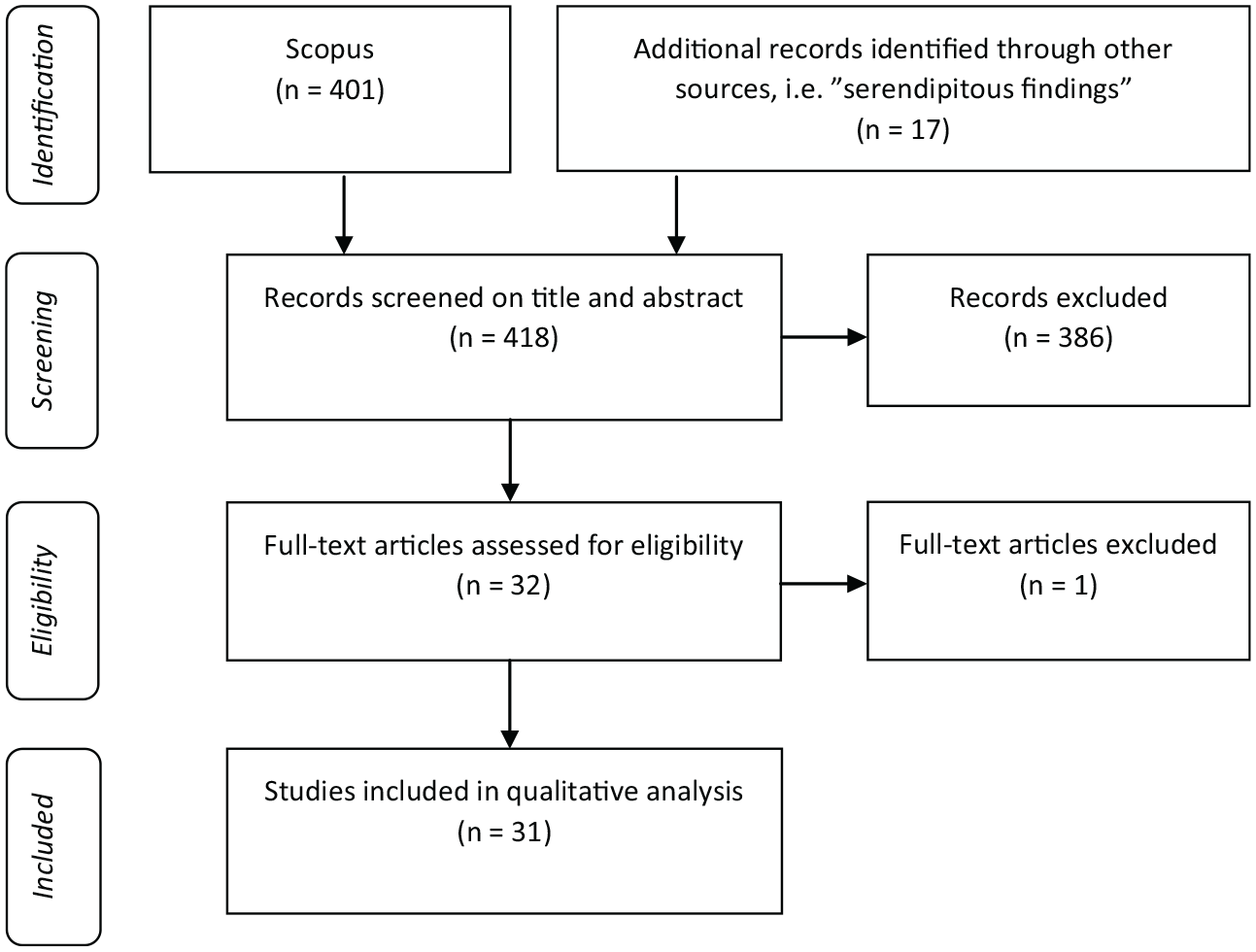
Flow of information through the phases of the literature review (based on guidelines provided by Moher et al., 2009).
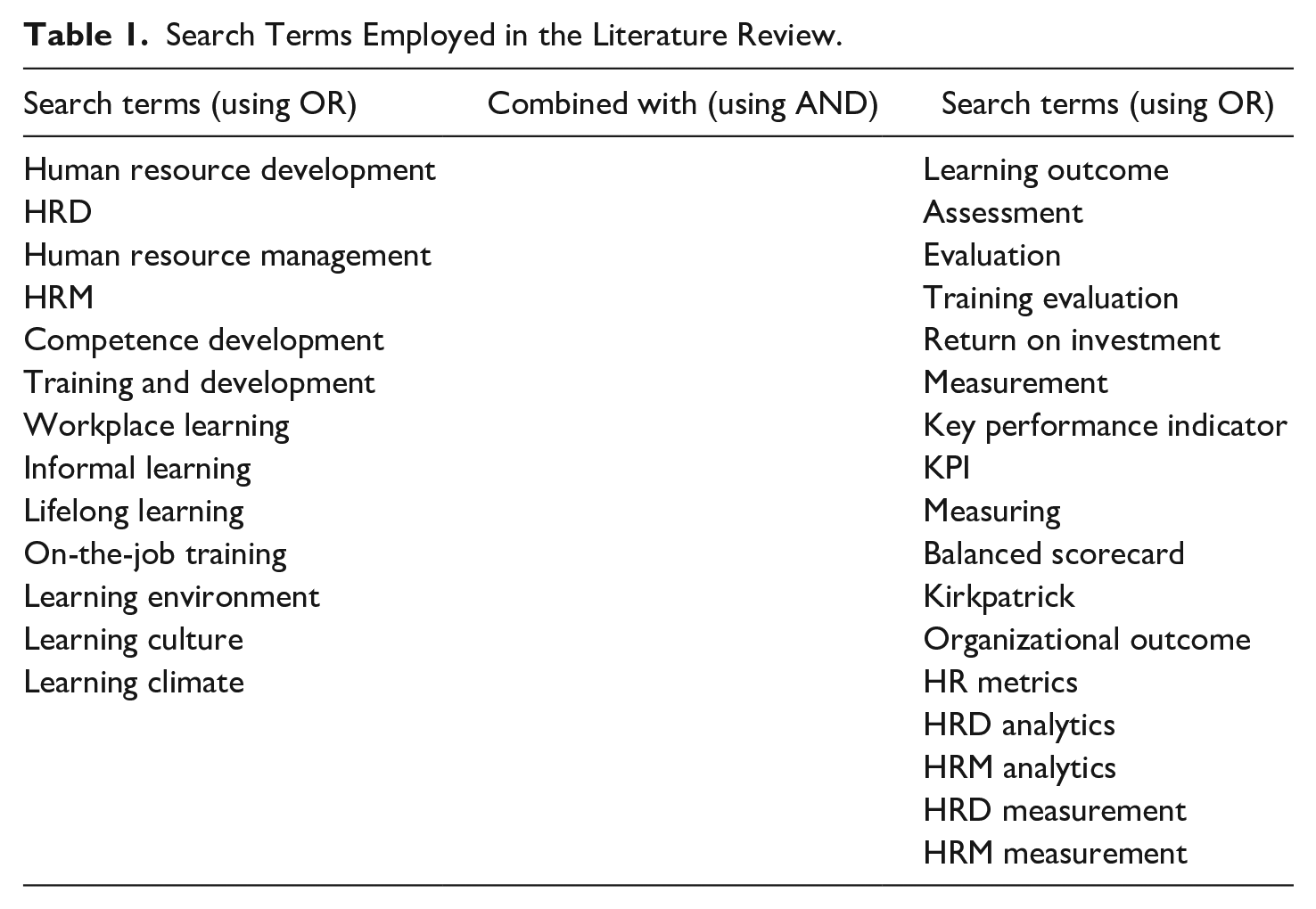
In February 2019, a search was conducted in Scopus. To be consistent with Torraco’s (2016, p. 418) suggestion that the criteria for selecting literature must be “broad enough to capture the breadth of relevant literature,” the search terms in Table 1 were used.
Search Terms Employed in the Literature Review.
In parallel with the Scopus search, a search was conducted in established human resource management (HRM), HRD and workplace learning journals to locate “serendipitous findings” (Callahan, 2014, p. 273), that is, randomly captured texts that were not discovered by the structured search. The journals were all included in the Norwegian Register for Scientific Journals, Series, and Publishers. Examples of the journals searched in this way include: Advances in Developing Human Resources, European Journal of Training and Development, Human Resource Development International, Human Resource Development Quarterly, Human Resource Development Review, Human Resource Management, Human Resource Management Review, Human Resource Management Journal, Industrial and Commercial Training, Journal of Workplace Learning, Vocations and Learning.
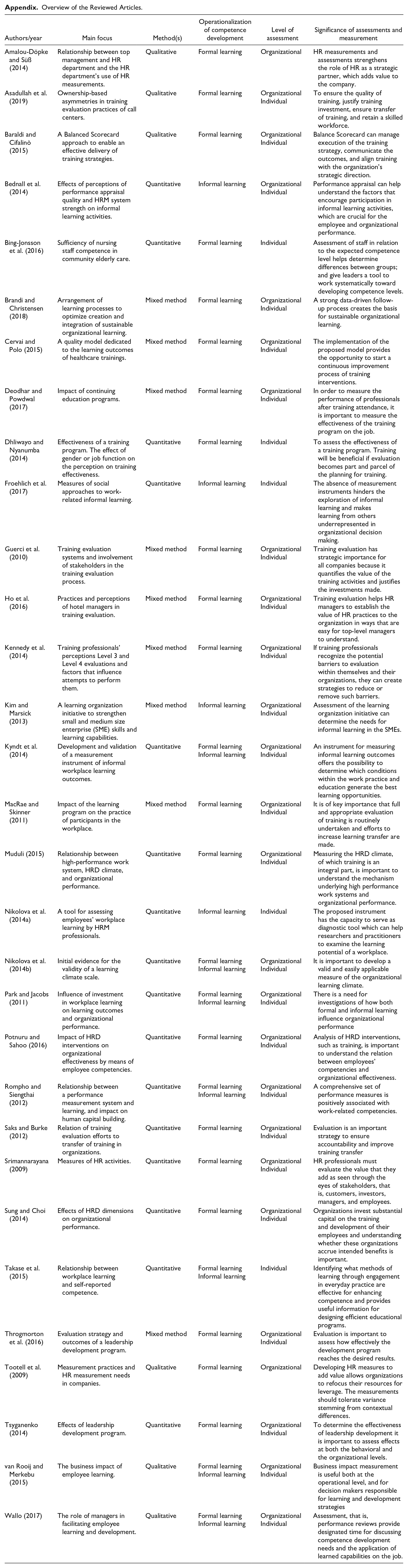
The Scopus search produced 401 articles, and the search to locate serendipitous findings resulted in 17 additional articles, bringing the total number of articles to 418. After screening the titles, abstracts, and keywords, 386 records were excluded and the eligibility of the 32 remaining articles was then examined based on the study’s inclusion and exclusion criteria. Thirty-one articles were selected for in-depth analysis with a focus on results and conclusions. One article was excluded during this stage because it did not report original empirical material of relevance to the purpose of this article. The Appendix contains a summary of the articles included in terms of their focus, the method(s) employed, how competence development was operationalized, the level of assessment undertaken, and the purported rationale for assessment and measurement.
The selected articles were analyzed inductively by two of the authors. The articles were imported into the QSR NVivo software program, which allows users to store, organize, and manage their data, and it facilitates coding and subsequent data analysis. The data analysis followed a four-step process. The first step of the analysis involved reading the full texts of all articles to become familiar with the material. In a second step, basic aspects of the articles were coded (e.g., journal, country, methodology). This step formed the basis for the initial part of our findings, which provides an overview and critique of the prior research. In a third step, we focused on identifying the approaches employed to assess the outcomes of competence development and the enabling and inhibiting factors reported in the texts. Inductive codes were created in NVivo11 as our reading of the articles progressed. During this coding process, passages in the texts were converted into so-called emergent nodes in NVivo 11. The research team then analyzed the relations between these nodes and the analyses generated six overarching categories: (1) top management demands for accountability and their provision of support, (2) HR professionals’ competence and resources, (3) systems and processes for assessment, (4) methods and tools for assessment, (5) the link between competence development activities and organizational goals, and (6) HR professionals’ lack of attention to assessment of informal competence development activities.
Case Study
In this article, quotations from interviews with participants in a case study of a large industrial company in Sweden are used to illustrate the factors that enable and inhibit the assessment of outcomes of competence development. The case study is a research strategy that is suitable for an in-depth investigation of a phenomenon within a real-life context (Yin, 2014). The case organization was purposefully chosen because of the organization’s ongoing work to develop and refine its approaches to assessing the effectiveness of competence development activities. The interviews were conducted with 12 HR professionals in the case organization (10 female, 2 male). Most of these participants had extensive professional experience and had worked in different HR positions.
Findings
Overview and Critique of Prior Research
The search for existing empirical research revealed that the number of studies that explicitly focus on assessment of outcomes of formal and informal competence development activities is limited. Moreover, few of these studies explore how HR professionals perform their work in this domain of HR practice. Rather, most of the studies are reported from the perspectives of managers or external providers of learning and development opportunities.
A macro-level analysis of the articles (see Appendix) shows that the majority (n = 17) were based on quantitative data (e.g., Saks & Burke, 2012; Takase et al., 2015; Tsyganenko, 2014), while only six articles were based on qualitative studies (e.g., Amalou-Döpke & Süß, 2014; Tootell et al., 2009; van Rooij & Merkebu, 2015) and nine combined qualitative and quantitative data (e.g., Brandi & Christensen, 2018; Cervai & Polo, 2015; Dhliwayo & Nyanumba, 2014; Ho et al., 2016; Throgmorton et al., 2016). There was variation regarding both the journals in which the articles were published (24 different journals) and the countries from where data had been collected (20 countries). There was also a large spread of academic disciplines from which these studies stemmed. Most common were studies from education, business administration, health, and nursing disciplines.
In the reviewed articles, competence development was most often operationalized as formal learning activities, such as training. Several of these articles focused on evaluating outcomes of formal competence development initiatives, and it was common for these studies to use quantitative data (Sung & Choi, 2014). Some studies examined specific initiatives, often leadership development (Throgmorton et al., 2016; Tsyganenko, 2014), while others focused more broadly on how competence development relates to organizational performance (Potnuru & Sahoo, 2016). In addition to the use of questionnaires as data collection tools, other quantitative-oriented approaches were employed, such as key performance indicators and balanced scorecards, which were used to assess the effectiveness of competence development initiatives (Baraldi & Cifalinò, 2015; Srimannarayana, 2009; Sung & Choi, 2014).
Another prominent topic in the articles concerned different approaches to assessing employees’ current competencies in relation to competence frameworks—both organization-specific and profession-specific frameworks. These studies also largely relied on quantitative assessment approaches (e.g., Bing-Jonsson et al., 2016; Takase et al., 2015); however, other studies focused on qualitative assessment methods, such as performance reviews and salary discussions (Bednall et al., 2014; Wallo, 2017).
Some studies sought to assess the quantity and quality of the learning that occurs in daily work (Kyndt et al., 2014; Nikolova et al., 2014a, 2014b). The underlying premise of these studies was that learning that occurs in daily work leads to improvements in certain desirable outcomes, which include productivity, innovation, quality, and profitability, but that the connection between learning in daily work and such outcomes has not been sufficiently studied (Park & Jacobs, 2011). In a similar vein, certain studies examined the context for learning—the so-called learning environment—and its effects on different types of outcomes at the individual and organizational levels (Muduli, 2015; Park & Jacobs, 2011; Rompho & Siengthai, 2012).
Overall, our review of previous research shows that the number of empirical studies in this research area is limited. A further limitation of existing studies is that they are mostly cross-sectional. Such approaches do not reflect the reality that outcomes of competence development initiatives, in terms of changes in job and organizational performance, may only emerge after an extended period. Further, existing studies are vague regarding the actual practices employed to assess outcomes of competence development activities and how the implementation of such practices is helped or hindered by contextual factors.
Assessing Competence Development Activities: Enabling and Inhibiting Factors
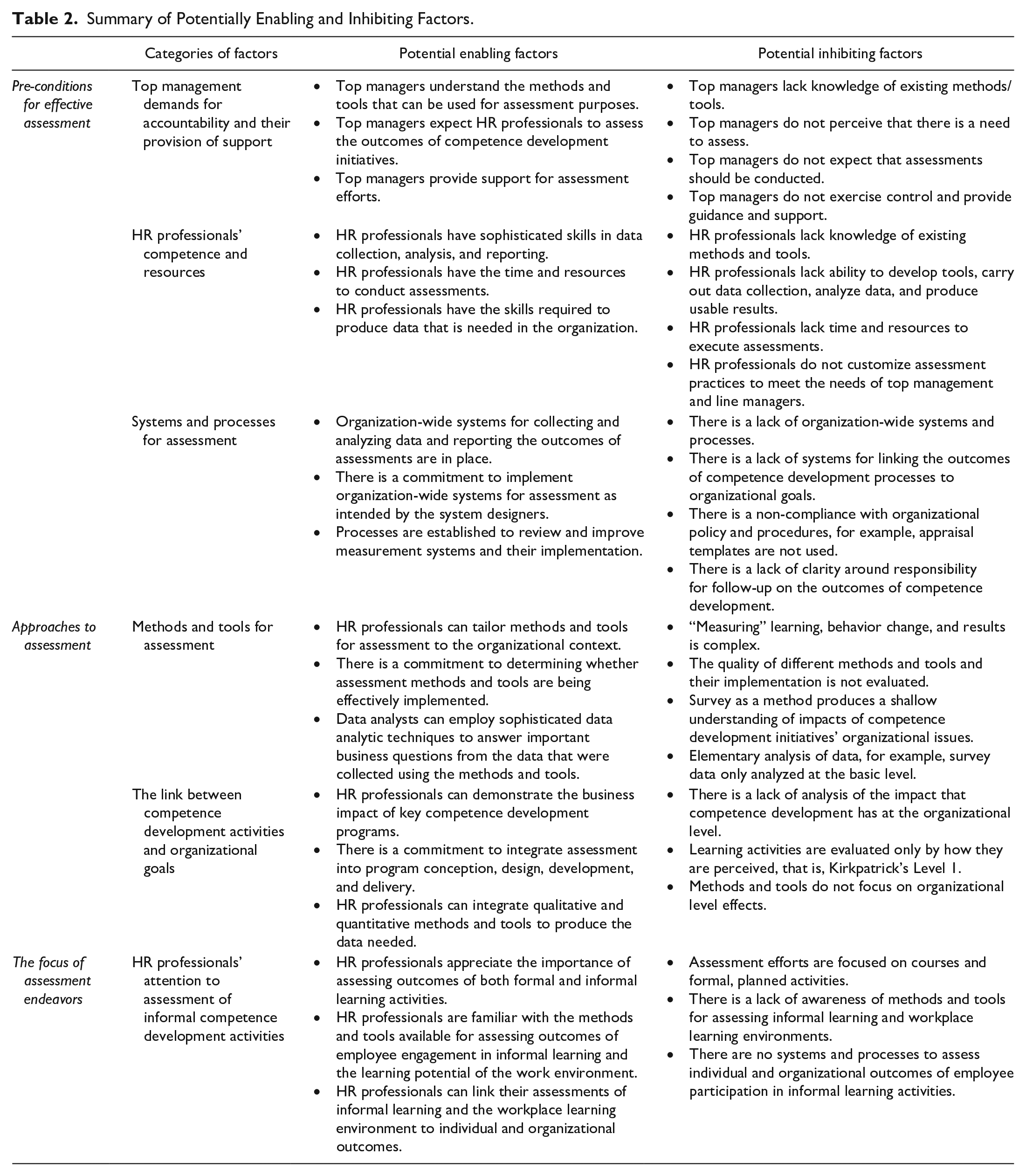
Based on our review of prior research, in this section we present categories of factors that appear to enable or inhibit endeavors relating to assessment of outcomes of competence development activities. The categories of factors are as follows: (1) top management demands for accountability and their provision of support, (2) HR professionals’ competence and resources, (3) systems and processes for assessment, (4) methods and tools for assessment, (5) the link between competence development activities and organizational goals, and (6) HR professionals’ lack of attention to assessment of informal competence development activities. For coherence, these six inductively derived categories can be grouped under three broad headings, namely: pre-conditions for effective assessment (categories 1–3), approaches to assessment (categories 4 and 5), and the focus of assessment endeavors (category 6). Below, we discuss the six categories of factors in the sequence presented here and develop a set of propositions that should be investigated in future research. To relate the categories to the practices of HR professionals, this section also contains illustrations from the case study in the form of quotes from interviews with HR professionals. Table 2 contains a summary of the enabling and inhibiting factors that emerged from the analysis and synthesis of the literature. This is followed by an overview of the findings within each category of enabling and inhibiting factors.
Summary of Potentially Enabling and Inhibiting Factors.
Top management demands for accountability and their provision of support
The central role of the top management team in the facilitation of employees’ learning was emphasized in many of the reviewed articles (Muduli, 2015; Potnuru & Sahoo, 2016; Sung & Choi, 2014; Wallo, 2017) and often highlighted in literature on the characteristics of enabling learning environments (Fuller et al., 2007; Skule, 2004). Similarly, regarding the task of assessing outcomes of competence development activities, the involvement of top management, in terms of their demands for accountability and their provision of support, was also highlighted in the reviewed articles. For instance, in a study of HR measurement practices used in six New Zealand companies, Tootel et al. (2009) found that the amount of support from senior management was crucial for successful implementation of a measurement system and for guaranteeing acceptance and commitment from other key actors in the organizations.
However, if top managers lack commitment and support for the notion of accountability in HR management, this can be an inhibiting factor for HR professionals’ endeavors in the domain of outcomes assessment of competence development (Kennedy et al., 2014). One potential reason for top management’s lack of commitment and support could be their lack of knowledge about the methods and tools that exist for assessment purposes. In the study by Tootel et al. (2009), the participants had limited knowledge of HR methods and tools, which in turn impeded the potential for development of new measurement practices. Similarly, in a study by Ho et al. (2016), the findings revealed that some of the interviewed managers were not aware of the methods and tools available for linking training to business results, and they also exhibited scepticism about the value of training evaluations.
Another potential explanation draws on a more general understanding of, or interest in, the value added by HR professionals (Marler & Boudreau, 2017). For example, according to a study of the exchange relationship between the HR department and top management (Amalou-Döpke & Süß, 2014), the recognition from top managers that HR issues are important had symbolic value for the HR department’s potential to work with HR measurements.
Shortcomings in top managements’ competence and interest in assessments can, of course, affect each other. One consequence of both of these deficiencies is that there is no direct demand for assessments and that there is no clear control or guidance “from above” regarding what is to be assessed and how the assessments should be carried out (Kennedy et al., 2014). This sentiment was echoed by one of the HR professionals in the case study, who believed that when no one asks for assessments, they will not be conducted: That is actually something that I find is lacking. We have a solid foundation for competence development in the company, but we have no assessment because no one is asking for it. . . . There has to be some pressure and demand, someone has to want it, otherwise we tend not to do it. (IP 1)
Assessment activities are therefore likely to be enabled when the top managers of an organization expect that HR professionals must assess outcomes of significant competence development initiatives and when they also provide ongoing support for assessment efforts (Tootell et al., 2009). Further, such support is more likely to be forthcoming when the top managers are conversant with assessment methods and tools (Amalou-Döpke & Süß, 2014; Tootell et al., 2009).
In accordance with the above arguments, we propose the following:
Human resource professionals’ competence and resources
The second category of factors relates to the HR professionals themselves, and especially to their competences and resources. Conducting assessments requires the knowledge and skills to design instruments, collect data, analyze data, and report the findings (Levenson, 2011; Marler & Boudreau, 2017; Rasmussen & Ulrich, 2015). When HR professionals lack knowledge and skills in these areas it impedes their work in the domain of assessment of outcomes of competence development activities (Kennedy et al., 2014). In this regard, the overall tone in the literature is quite negative, with several claims being made that HR professionals in general do not have the knowledge and skills to effectively employ measures and analytics, which involves using advanced analytical methods to make data-driven HRM decisions (Angrave et al., 2016). This is deemed a major reason that HR measures and analytics are not more widely implemented in organizations (Angrave et al., 2016; Marler & Boudreau, 2017). Minbaeva (2017) even argued that some HR accounting teams claim to be carrying out analytics when they are in fact only conducting a very basic descriptive analysis.
Similarly, in one of the reviewed articles (Tootell et al., 2009), the stakeholders in the studied organizations believed that the HR professionals did not possess the necessary skills to collect and analyze data, especially concerning the impact of training on the bottom line. This lack of skill was an impediment to the design and implementation of effective measures in terms of fit, appropriateness and meeting organizational needs. In the case study, one of the participants acknowledged her lack of data collection analysis competencies: I’m not good at constructing surveys, I mean I understand how to do it technically, but I don’t have the statistical knowledge of what kind of questions to use or what background variables to include to be able to do certain types of analyses. I mean, we really should be able to do this ourselves, to construct templates that are good and thought through. (IP2)
In addition to the competence deficiencies of HR professionals, there is also a resource problem, since a significant work effort is typically required to create and manage a comprehensive measurement and evaluation system. Findings from a study by Amalou-Döpke and Süß (2014) indicated that enough resources must be allocated to the HR department by top management to provide the personnel and infrastructure needed for conducting assessments and HR analytics. In the study by Tootell et al. (2009), insufficient time to design and implement assessments, as well as the substantial cost of data collection, particularly for large qualitative assessment projects, were identified as factors that inhibited assessment efforts. Similarly, in a study by Kennedy et al. (2014), a lack of resources, such as time and budget, were reported as a reason for not conducting training evaluation.
Moreover, Amalou-Döpke and Süß (2014) argued that another important aspect of the HR professionals’ competences and use of resources is that they need to have an accurate understanding of their key stakeholders’ needs. In other words, HR personnel need to understand what types of assessments and analysis will create value for their internal customers, such as managers and employees. During the case study, a statement by one of the respondents provided an example of being on the receiving end of unhelpful statistics concerning competence development: We got a report the other day with a bunch of numbers and figures that I don’t really know what to make of, because no one is asking for them. So, someone has put in a lot of time to produce these number, but they are not used, because the managers’ main interest lies in the ability to deliver the products, and then, unfortunately, competence development is not a priority. (IP6)
Thus, HR professionals’ assessment work will be more effective if they have the capabilities to accurately determine the information needs of stakeholders. Further, their performance in the domain of assessing outcomes of competence development initiatives and activities will be enhanced if they have the skills that are required for data collection, analysis, and reporting writing. However, they also require the time and other resources necessary to complete assessment work (Amalou-Döpke & Süß, 2014; Ho et al., 2016; Tootell et al., 2009).
Consistent with the foregoing arguments, we propose the following:
Systems and processes for assessment
The third category of factors is linked in part to the previously presented factors in the sense that it concerns the importance of common systems and processes for assessments, which can be traced back to both top management’s shortcomings in taking ownership of the assessment process and the competency deficiencies of the HR professionals. In this context, systems refer to organization-wide systems for collecting, analyzing, and reporting data, while processes denotes a means for reviewing, improving, and implementing measures (c.f. Huselid, 2018; Kennerley & Neely, 2003). In the literature, at least three dimensions can be identified regarding how systems and processes affect the possibilities of working with assessments of outcomes of competence development.
First, it seems that there is often a lack of overall performance measurement systems in organizations (Rompho & Siengthai, 2012) that link competence development processes to the organization’s business goals (Aragón-Sánchez et al., 2003). For example, based on a study of hotel managers in the United States, Ho et al. (2016) concluded that the implementation of standardized training evaluation systems would help ensure that trainers are capable of evaluation at all levels in the Kirkpatrick model.
Second, the lack of overall systems for the assessments of outcomes of competence development in organizations can lead to each individual or department “re-inventing the wheel,” instead of implementing widely agreed-upon methods and tools. Further, lack of processes for reviewing and improving assessment methods (e.g., observation) and tools (e.g., behavior checklist) can impede continuous improvement in assessment of outcomes of competence development activities (Kennerley & Neely, 2003).
Third, despite the existence of organization-wide systems for assessment, deficiencies can still arise if the methods and tools for assessment are not implemented as intended in daily work (Ho et al., 2016). To illustrate, one of the case study participants commented that the company’s templates for performance appraisal dialogues with the employees were not used by all managers: There is a template for performance appraisal on our intranet . . . but if you would ask the managers out here, I reckon that there are probably as many different homemade templates as there are managers. (IP6)
A lack of consistency in implementing the organization’s documented HR practices can lead to difficulties when comparing metrics from different parts of the organization and create ambiguity regarding what should be followed up, how it should be followed up and who is responsible for doing so (Ho et al., 2016). Such a lack of consistency in the implementation of practices across the organization is illustrated in a comment made by a case study participant: There are structures in some places, but there is nothing central that sort of holds everything together; instead, it’s more up to each division or department to take responsibility. (IP 5)
Therefore, an important enabling factor is ensuring an organization-wide system is in place for collecting and analyzing data and reporting the outcomes of assessments. Further, there must be a commitment across the organization to implement the system as intended by the system designers. Additionally, assessment work will be more effective if there are established processes within the organization to review and improve measurement systems and their implementation over time (Kennerley & Neely, 2003).
In accordance with the foregoing arguments, we propose the following:
Methods and tools for assessment
The fourth category of factors can be linked to the methods and tools used for assessments and the importance of adopting a best-fit approach when implementing them. The review of articles showed that there is no shortage of assessment methods and tools, such as scales, questionnaires, and key performance indicators, that could potentially be used (e.g., Kim & Marsick, 2013; Kyndt et al., 2014; Srimannarayana, 2009), but there are no simple solutions or “best practices” that could be implemented without first being adapted to an organization. Rather, each method and tool needs to be developed, tested, and evaluated to ensure fit to the organizational context (Tootell et al., 2009; van Rooij & Merkebu, 2015).
Despite the availability of such assessment methods and tools, it is often challenging to convincingly link competence development activities to specific outcomes. For instance, it is very difficult to claim that an observed outcome originates from a specific competence development activity. This is partly because there may be non-identified, confounding factors that affect the outcomes of competence development activities (Baldwin & Ford, 1988; Kock, 2010). A long-term perspective is also required, rendering an unambiguous cause–effect relationship very hard to establish (Aragón-Sánchez et al., 2003). According to Throgmorton et al.’s (2016) study of evaluation of leadership development programs, outcomes of such competence development initiatives are difficult to evaluate because leader development can be attributed to other unconnected influences. The authors also argue that it is more difficult to measure the impact of an initiative that includes many developmental components over the course of several months in comparison with a single development program of short duration.
Further, evaluating whether assessment methods and tools are being effectively implemented seems to be often neglected in practice. One example is the performance appraisal interview, which is a core HR activity and an important method for determining whether employees are applying learned capabilities in their jobs (Bednall et al., 2014). However, performance appraisal interviews are seldom examined from a quality standpoint. For example, Wallo (2017) found that much of the time during interviews is often focused on social talk rather than on discussions relating to whether employees are applying trained capabilities in their jobs, the nature of employees’ learning needs and opportunities for competence development. This lack of attention to quality of implementation is illustrated by the case study participants’ comments. In the case study organization, the appraisal interview was the main method of assessment. However, according to the respondents, while controls were in place to ensure that they had been implemented, the quality of the appraisal interviews was not evaluated: We have the yearly performance review interviews that you’re supposed to have, all the managers. And that is something that we do follow-up, I mean if you’ve done the interview, but if the things agreed upon in the interview are implemented, or if the employee or manager is satisfied with the interview, that is not something we assess. (IP 5)
Another problem related to specific methods is that surveys often produce a shallow understanding of the impacts of competence development initiatives. Throgmorton et al. (2016) argued that qualitative evaluation methods can elicit experiences and stories that communicate impact in more compelling ways than can survey data alone. Thus, combining quantitative and qualitative evaluation methods may produce more useful evaluation data. However, it can be argued that in many cases it is the quality of the analysis, rather than the quality of quantitative data, that is the problem. For example, there may be several possibilities for more advanced statistical analyses that are not being conducted (Angrave et al., 2016; Huselid & Minbaeva, 2019; Minbaeva, 2017). According to one of the case study respondents, this seemed to be the case for other types of data collected in the organization: and then the results of the course evaluation could be used better because I think that we collect a lot of information that we never even look at. (IP 5)
Thus, assessment of competence development activities is enabled when data analysts have the capabilities to employ sophisticated data analytic techniques to answer important business questions arising from the data collected using the methods and tools. Further, assessment is facilitated when HR professionals can tailor methods and tools for assessment to the organizational context and when they are committed to ensuring that assessment methods and tools are implemented effectively across the organization (Tootell et al., 2009).
Consistent with the arguments presented in the above section, we propose the following:
The link between competence development activities and organizational goals
The fifth category of factors relates to a prevalent view that HR professionals typically use assessment approaches that do not clearly link the outcomes of competence development activities to organizational goals (Aragón-Sánchez et al., 2003). In the reviewed articles, the authors often make this argument with reference to Kirkpatrick’s (1959) well-known levels of training evaluation, that is, reaction, learning, behavior, and results (Asadullah et al., 2019; Deodhar & Powdwal, 2017; Dhliwayo & Nyanumba, 2014; Guerci et al., 2010; Kennedy et al., 2014; MacRae & Skinner, 2011; Saks & Burke, 2012). Throgmorton et al. (2016) extolled the value of a model, such as the Kirkpatrick model, because it resonates with both trainers and organizational stakeholders. When HR professionals use assessment approaches that do not link the outcomes of competence development activities to organizational goals, then it is difficult to demonstrate that the investment in competence development produces a return. Further, such an approach to assessment may also inhibit transfer of learning. For example, in their study of the relationship between training evaluation and the transfer of learning in Canadian organizations, Saks and Burke (2012) showed that when the third and fourth of Kirkpatrick’s levels were evaluated, the likelihood of transfer of learning to the workplace increased. Without transfer, learning remains at the individual level and is not transferred to the job and colleagues and thus will not have effects at the organizational level (Salas et al., 2012). When levels three and four are neglected, it becomes difficult to demonstrate the value of a specific competence development initiative. Designers of developmental initiatives therefore need to focus on the desired outcomes at both the individual and organizational level (Throgmorton et al., 2016). This finding of the review is illustrated by case study participants’ comments, in which they mainly reported examples of assessments that targeted level one in Kirkpatrick’s model: If we attend a course, there is an evaluation in that course but there is no follow-up of the effect after a few weeks, months or years. It’s just directly after the course. (IP6)
The review of the empirical studies revealed several methods and tools for evaluating levels three and four in Kirkpatrick’s model. Nevertheless, it is probably unrealistic to think that there is a single “best measurement model” that can be used on its own to assess outcomes at all four levels (van Rooij & Merkebu, 2015), or as Tootell et al. (2009) put it, there is no “holy grail.” Rather, a combination of qualitative and quantitative approaches is probably needed to produce valid and reliable assessments (Sung & Choi, 2014). However, an important point emphasized in previous research is that those who are responsible for assessment of outcomes of competence development activities must at an early stage determine the desired outcomes at both the individual and organizational levels, which is not always easy to establish (Throgmorton et al., 2016).
Therefore, assessment of competence development is enabled when HR professionals are willing and able to demonstrate the business impact of key competence development programs. However, this requires a commitment to integrate assessment considerations into program conception, design, development, and delivery. Further, assessment is facilitated when HR professionals can skilfully integrate qualitative and quantitative methods and tools to produce the required data.
In accordance with the foregoing arguments, we propose the following:
HR professionals’ lack of attention given to assessment of informal competence development activities
The sixth and final category of factors relates to the tendency of HR professionals to focus their evaluation efforts on formal competence development activities, without paying enough attention to evaluating outcomes of informal learning activities (Park & Jacobs, 2011). Research has shown that formal learning needs to be supplemented and integrated with learning that takes place informally in daily work (Ellström, 2001). Based on their study of the influence that investment in workplace learning has on organizational performance in South Korean companies, Park and Jacobs (2011) argued that combinations of formal and informal learning activities should be considered by HR professionals to maximize the effectiveness of workplace learning. Learning could be improved by linking formal and informal learning because workplace learning occurs through dynamic interaction between formal and informal learning.
Given that informal learning is integrated with daily work and is often implicit, it is a type of learning that cannot be measured in a precise way. However, since it makes the largest contribution to the development of employees’ competence, it needs to be acknowledged and valued within organizations (Cerasoli et al., 2018). While the development of validated scales to measure the quantity and quality of informal learning has been neglected in previous research (Froehlich et al., 2017), there have been several promising recent attempts to develop validated scales (Froehlich et al., 2017; Kim & Marsick, 2013; Kyndt et al., 2014; Nikolova et al., 2014a; Wolfson et al., 2018). Nonetheless, most of these scales are not easy to employ in practice, and cross-analyzing levels of employee participation in informal learning activities with individual and organizational outcomes requires advanced knowledge of statistical methods, which HR professionals on the whole seem to lack.
Research shows that it is necessary to develop organizational support systems for both formal and informal learning, which is important to foster the application of knowledge and continuous learning in daily work in various ways (Kraimer et al., 2011). There are many key elements to an environment conducive to learning, such as tasks with high learning potential, a work organization that stimulates collaboration, opportunities for career development, and support for learning from managers and leaders (Fuller et al., 2007; Skule, 2004; Wallo, 2017). The learning potential of a work environment is not easy to assess because of the wide array of factors influencing learning in the workplace, but there have been some attempts at developing valid scales (e.g., Kim & Marsick, 2013; Muduli, 2015). This lack of attention to the assessment of informal learning in daily work is illustrated by a case study participant’s comment: When it comes to daily learning, we don’t have any follow-ups on that, and we don’t have any measurements on what the managers should promote. (IP6)
Hence, assessment of competence development that occurs through employee participation in informal learning activities is enabled if HR professionals appreciate the importance of assessing outcomes of both formal and informal learning activities. Additionally, HR professionals must be familiar with the methods and tools available for assessing outcomes of both employee participation in informal learning and the learning potential of the work environment. However, HR professionals must also have the capabilities to link their assessments of informal learning and the workplace learning environment to individual and organizational outcomes.
Based on the arguments presented above, we propose the following:
Discussion
As noted, the credibility and status of HRM and HRD professionals is to a large degree contingent upon their ability to convincingly demonstrate the value of their activities and initiatives (Amalou-Döpke & Süß, 2014; Huselid, 2018). However, there is a pervasive view in the literature that HRD activities and initiatives aimed at facilitating learning are seldom evaluated for their impact on job and organizational performance (Aragón-Sánchez et al., 2003; Bennington & Laffoley, 2012; Wolfson et al., 2018). To help explain this conundrum, we conducted a review of empirical articles that examine assessment of the outcomes of competence development activities and initiatives. Our aim was to identify and categorize the enabling and inhibiting factors that were noted in these studies so that the factors can be better understood by researchers and HRD professionals.
Significance of the Study
Given that our findings were generated from the existing literature, the findings are in part consistent with the findings of studies included in the review; however, our findings also extend the literature in several ways. First, the present study contributes to the field of HRD by enhancing current understanding of the complex collection of factors that potentially influence the propensity of HRD professionals to assess the outcomes of competence development activities in their organizations. The review advances current understanding by building upon the existing literature through synthesis and categorization of the wide array of factors that are thought to influence the likelihood that HRD professionals will assess the outcomes of competence development activities.
Second, through our analysis, synthesis, and categorization of factors, we contribute to a shift in focus away from the predominant emphasis on inhibiting factors by foregrounding factors that are likely to enable the assessment endeavors of HRD professionals. Developing an understanding of these enabling factors is important given the pressing need for HRD professionals to demonstrate the business impact of HRD investments (Phillips et al., 2016).
Third, based on our analysis and synthesis of the literature, we generated propositions that will hopefully stimulate additional studies concerning factors that enable and inhibit assessment endeavors. Further, we have formulated the propositions in ways that are intended to encourage researchers to overcome a tendency to conceptualize competence development activities as comprising mainly formal education and training. Therefore, the propositions should prompt researchers to tackle in addition the complex issue of factors that enable and inhibit the evaluation of outcomes of informal workplace learning activities (Ellström & Kock, 2008; Kock & Ellström, 2011). Revealing these factors is important because informal learning accounts for most of all learning experienced by employees (Cerasoli et al., 2018). Finally, Table 2, which summarizes key factors influencing assessment of outcomes of competence development activities, can be used by organizations as a self-assessment tool to evaluate and improve their assessment endeavors.
Implications for HRD Research
Based on the literature review presented in the article, several implications for research in the field of HRD can be identified. First, while our review of the empirical literature is comprehensive, we do not claim that it is exhaustive. For example, the review included only peer-reviewed journal articles based on empirical work. A new review that includes works from both the academic and practitioner domains might yield richer insights into assessment of outcomes of competence development activities.
Second, in general, the findings of the literature review underline the need for increased empirical research on the phenomenon of interest (i.e., factors influencing assessment of outcomes of competence development). The review showed that among the sparse body of research, most studies used quantitative methods. Research using qualitative approaches would thus help to cast light on the multiple factors influencing assessment practices. In this regard, the 11 propositions that were generated from the findings of the literature review are well suited for investigation using the case study methodology (Yin, 2014). In this instance, the case refers to top managers, HRD professionals and line managers involved in assessment within their specific organizational setting. More precisely, longitudinal data are needed because of the significant time lags between the commencement of a competence development initiative and the potential impacts of the initiative on both job performance and organizational results. Ideally, future case studies should utilize multiple methods, such as interviews, observation, and document analysis, to triangulate data about factors influencing assessment, with a view to strengthening the trustworthiness and validity of the findings (Eisenhardt, 1989).
Researchers who are interested in designing and executing applied research projects that use the latest advances in methods and tools to develop practical solutions for problems faced by organizations should consider the application potential of QSR NVivo. This computer-assisted data analysis software can be utilized to manage and organize the data sets that were generated to assess outcomes of competence development. Using QSR NVivo can increase the robustness and reliability of the analysis and thus produce credible results on the outcomes of HRD activities and initiatives (Houghton et al., 2017).
Implications for Practice
The findings regarding pre-conditions for effective assessment suggest that assessment efforts are likely to be impeded by three main factors: (1) lack of top management commitment to assessment, (2) absence of organization-wide measurement systems and processes for reviewing and improving such systems, and (3) HRD professionals’ lack of ability and resources necessary to perform in the domain of assessment. An important implication of these findings for HRD professionals is that they should take the initiative to address these impediments. For example, developing partnership relationships with key managers is a potentially effective strategy to increase management commitment and gain management support to introduce organization-wide systems and processes (Ulrich et al., 2012). Further, HRD professionals who are keen to develop their assessment capabilities can obtain help through HR education providers and consultancy firms that are implementing HR analytics programs because of the increased emphasis on HR accountability (Huselid, 2018).
The findings regarding approaches to assessment have at least two important implications for HRD professionals. First, they must adopt a best-fit approach and learn to skilfully combine the wide array of methods and tools that are available for assessment, rather than seek to uncover a universalistic, best-practice assessment model (Tootell et al., 2009; van Rooij & Merkebu, 2015). Second, designers of competence development initiatives must determine desired outcomes of such initiatives at the individual and organizational levels early in the design process. Using such an approach should increase the likelihood that information will be collected on all four types of outcomes in the Kirkpatrick framework.
The findings regarding the focus of assessment efforts suggest that HRD professionals must devote much more attention to the assessment of outcomes of informal learning activities. Increased attention to this type of assessment is warranted given that informal learning makes a far greater contribution to employees’ competence development than does structured, formal learning (Cerasoli et al., 2018). Further, HRD professionals’ work in the domain of assessment of outcomes of informal learning activities should be enabled by the recent development of validated tools to assess the learning potential of the workplace (e.g., Nikolova et al., 2014a) and the frequency of employee engagement in informal learning activities (e.g., Wolfson et al., 2018).
Conclusion
Employee participation in formal and informal learning is essential for the economic viability and competitive advantage of organizations (Noe et al., 2014). Therefore, assessing the outcomes of competence development activities and initiatives is critical. However, there is a widespread view that this domain of HRD practice is often neglected in organizations because of several factors that are not well understood. Accordingly, the related literature is heavily skewed toward a focus on factors that inhibit the uptake and effective implementation of assessment practices.
The review highlighted that HRD professionals are being exhorted to align learning with business objectives and to assess the outcomes of their competence development activities and initiatives. However, rigorously assessing outcomes of the wide array of approaches to competence development that is typically found in organizations is a complex undertaking and requires high-level knowledge and skills relating to formal measurement and assessment processes. Overall, HRD professionals seem to be lacking such knowledge and skills. Further, for measurement and assessment processes to be effectively implemented, HRD professionals need top management to adopt a results-based philosophy and provide their ongoing support to HRD professionals’ assessment endeavors. Additionally, the organization must have in place the appropriate systems and processes. Finally, the review demonstrated that the measurement and formal assessment of competence development through informal (unstructured) learning processes has received limited attention and is an area that is ripe for further research.
Footnotes
Appendix
Overview of the Reviewed Articles.
| Authors/year | Main focus | Method(s) | Operationalization of competence development | Level of assessment | Significance of assessments and measurement |
|---|---|---|---|---|---|
| Amalou-Döpke and Süß (2014) | Relationship between top management and HR department and the HR department’s use of HR measurements. | Qualitative | Formal learning | Organizational | HR measurements and assessments strengthens the role of HR as a strategic partner, which adds value to the company. |
| Asadullah et al. (2019) | Ownership-based asymmetries in training evaluation practices of call centers. | Qualitative | Formal learning | Organizational Individual |
To ensure the quality of training, justify training investment, ensure transfer of training, and retain a skilled workforce. |
| Baraldi and Cifalinò (2015) | A Balanced Scorecard approach to enable an effective delivery of training strategies. | Qualitative | Formal learning | Organizational Individual |
Balance Scorecard can manage execution of the training strategy, communicate the outcomes, and align training with the organization’s strategic direction. |
| Bednall et al. (2014) | Effects of perceptions of performance appraisal quality and HRM system strength on informal learning activities. | Quantitative | Informal learning | Organizational Individual |
Performance appraisal can help understand the factors that encourage participation in informal learning activities, which are crucial for the employee and organizational performance. |
| Bing-Jonsson et al. (2016) | Sufficiency of nursing staff competence in community elderly care. | Quantitative | Formal learning | Individual | Assessment of staff in relation to the expected competence level helps determine differences between groups; and give leaders a tool to work systematically toward developing competence levels. |
| Brandi and Christensen (2018) | Arrangement of learning processes to optimize creation and integration of sustainable organizational learning. | Mixed method | Formal learning | Organizational Individual |
A strong data-driven follow-up process creates the basis for sustainable organizational learning. |
| Cervai and Polo (2015) | A quality model dedicated to the learning outcomes of healthcare trainings. | Mixed method | Formal learning | Organizational Individual |
The implementation of the proposed model provides the opportunity to start a continuous improvement process of training interventions. |
| Deodhar and Powdwal (2017) | Impact of continuing education programs. | Mixed method | Formal learning | Organizational Individual |
In order to measure the performance of professionals after training attendance, it is important to measure the effectiveness of the training program on the job. |
| Dhliwayo and Nyanumba (2014) | Effectiveness of a training program. The effect of gender or job function on the perception on training effectiveness. | Quantitative | Formal learning | Individual | To assess the effectiveness of a training program. Training will be beneficial if evaluation becomes part and parcel of the planning for training. |
| Froehlich et al. (2017) | Measures of social approaches to work-related informal learning. | Quantitative | Informal learning | Individual | The absence of measurement instruments hinders the exploration of informal learning and makes learning from others underrepresented in organizational decision making. |
| Guerci et al. (2010) | Training evaluation systems and involvement of stakeholders in the training evaluation process. | Mixed method | Formal learning | Organizational Individual |
Training evaluation has strategic importance for all companies because it quantifies the value of the training activities and justifies the investments made. |
| Ho et al. (2016) | Practices and perceptions of hotel managers in training evaluation. | Mixed method | Formal learning | Organizational Individual |
Training evaluation helps HR managers to establish the value of HR practices to the organization in ways that are easy for top-level managers to understand. |
| Kennedy et al. (2014) | Training professionals’ perceptions Level 3 and Level 4 evaluations and factors that influence attempts to perform them. | Mixed method | Formal learning | Organizational Individual |
If training professionals recognize the potential barriers to evaluation within themselves and their organizations, they can create strategies to reduce or remove such barriers. |
| Kim and Marsick (2013) | A learning organization initiative to strengthen small and medium size enterprise (SME) skills and learning capabilities. | Mixed method | Informal learning | Organizational Individual |
Assessment of the learning organization initiative can determine the needs for informal learning in the SMEs. |
| Kyndt et al. (2014) | Development and validation of a measurement instrument of informal workplace learning outcomes. | Quantitative | Formal learning Informal learning |
Organizational Individual |
An instrument for measuring informal learning outcomes offers the possibility to determine which conditions within the work practice and education generate the best learning opportunities. |
| MacRae and Skinner (2011) | Impact of the learning program on the practice of participants in the workplace. | Mixed method | Formal learning | Organizational Individual |
It is of key importance that full and appropriate evaluation of training is routinely undertaken and efforts to increase learning transfer are made. |
| Muduli (2015) | Relationship between high-performance work system, HRD climate, and organizational performance. | Quantitative | Formal learning | Organizational Individual |
Measuring the HRD climate, of which training is an integral part, is important to understand the mechanism underlying high performance work systems and organizational performance. |
| Nikolova et al. (2014a) | A tool for assessing employees’ workplace learning by HRM professionals. | Quantitative | Informal learning | Individual | The proposed instrument has the capacity to serve as diagnostic tool which can help researchers and practitioners to examine the learning potential of a workplace. |
| Nikolova et al. (2014b) | Initial evidence for the validity of a learning climate scale. | Quantitative | Formal learning Informal learning |
Organizational Individual |
It is important to develop a valid and easily applicable measure of the organizational learning climate. |
| Park and Jacobs (2011) | Influence of investment in workplace learning on learning outcomes and organizational performance. | Quantitative | Formal learning Informal learning |
Organizational Individual |
There is a need for investigations of how both formal and informal learning influence organizational performance |
| Potnuru and Sahoo (2016) | Impact of HRD interventions on organizational effectiveness by means of employee competencies. | Quantitative | Formal learning | Organizational Individual |
Analysis of HRD interventions, such as training, is important to understand the relation between employees’ competencies and organizational effectiveness. |
| Rompho and Siengthai (2012) | Relationship between a performance measurement system and learning, and impact on human capital building. | Quantitative | Formal learning Informal learning |
Organizational Individual |
A comprehensive set of performance measures is positively associated with work-related competencies. |
| Saks and Burke (2012) | Relation of training evaluation efforts to transfer of training in organizations. | Quantitative | Formal learning | Organizational Individual |
Evaluation is an important strategy to ensure accountability and improve training transfer |
| Srimannarayana (2009) | Measures of HR activities. | Quantitative | Formal learning | Organizational Individual |
HR professionals must evaluate the value that they add as seen through the eyes of stakeholders, that is, customers, investors, managers, and employees. |
| Sung and Choi (2014) | Effects of HRD dimensions on organizational performance. | Quantitative | Formal learning | Organizational Individual |
Organizations invest substantial capital on the training and development of their employees and understanding whether these organizations accrue intended benefits is important. |
| Takase et al. (2015) | Relationship between workplace learning and self-reported competence. | Quantitative | Formal learning Informal learning |
Individual | Identifying what methods of learning through engagement in everyday practice are effective for enhancing competence and provides useful information for designing efficient educational programs. |
| Throgmorton et al. (2016) | Evaluation strategy and outcomes of a leadership development program. | Mixed method | Formal learning | Organizational Individual |
Evaluation is important to assess how effectively the development program reaches the desired results. |
| Tootell et al. (2009) | Measurement practices and HR measurement needs in companies. | Qualitative | Formal learning | Organizational | Developing HR measures to add value allows organizations to refocus their resources for leverage. The measurements should tolerate variance stemming from contextual differences. |
| Tsyganenko (2014) | Effects of leadership development program. | Quantitative | Formal learning | Organizational Individual |
To determine the effectiveness of leadership development it is important to assess effects at both the behavioral and the organizational levels. |
| van Rooij and Merkebu (2015) | The business impact of employee learning. | Qualitative | Formal learning Informal learning |
Organizational Individual |
Business impact measurement is useful both at the operational level, and for decision makers responsible for learning and development strategies |
| Wallo (2017) | The role of managers in facilitating employee learning and development. | Qualitative | Formal learning Informal learning |
Organizational Individual |
Assessment, that is, performance reviews provide designated time for discussing competence development needs and the application of learned capabilities on the job. |
Declaration of Conflicting Interests
The author(s) declared no potential conflicts of interest with respect to the research, authorship, and/or publication of this article.
Funding
The author(s) received no financial support for the research, authorship, and/or publication of this article.
