




Abstract
Organizations have a marked interest in fostering team learning to manage performance and innovation. However, practitioners and researchers currently lack coherent knowledge on which drivers are effective at fostering team learning. Along with team learning, we also focus on the emergent states of psychological safety, shared cognition, team potency/efficacy, and cohesion, previously related to team learning. In this meta-analysis, we include 50 quantitative studies providing information on 4,778 teams of professionals across manufacturing, product development, academic research and teaching, health care, and professional services. First, we find that team learning correlates positively, if moderately, with four organization-level drivers: top-level leadership, organizational culture, job resources, and organizational infrastructure. Second, two of these drivers also correlate robustly with team emergent states: organizational culture and job resources. These findings provide specific levers and estimates of relative influence to guide managerial practice and future research on team learning.
Keywords
In a time of global competition, restructuring, fast technological changes, and limited resources, organizations increasingly rely on teams to engage in ongoing learning (Decuyper et al., 2010; Edmondson, 2012). Senge (1990) first popularized the idea that teams are the fundamental learning units within any organization, and since then, research has repeatedly demonstrated that team learning effectively drives performance and innovation (e.g., Bell et al., 2012; Mathieu et al., 2007; Sivasubramaniam et al., 2012). However, in fostering team-level learning, organizations face inherent uncertainty. Teams act as (semi)autonomous systems within an organization; their engagement in learning depends on the social dynamics between individual team members and between the team and their wider environment (Bell et al., 2012; Decuyper et al., 2010). This means that organizations only have an indirect influence on team-level dynamics.
Recent reports by organizations, such as Accenture (2018) and IBM (2017) on how learning and development can become drivers for innovation, are evidence of increasing interest in this question. Both reports highlight learning to cope with technological developments, suggesting that creating an effective learning environment is critical for organizational performance and survival. Along with the McKinsey & Company (2013) report on essentials of innovation performance, such reports highlight top-level leadership, organizational culture, and resources as key drivers of team-level learning, but unfortunately do not rely on empirical evidence.
Decuyper et al.’s (2010) seminal review of team learning research identified two dominant definitions of team learning in the tradition of organizational behavior research on interpersonal group processes. This research stream focuses on behaviors displayed by teams that are associated with outcomes of team learning. such as improved efficiency, task mastery, innovation, or quality of performance (Edmondson et al., 2007). The first definition is based on Edmondson’s (1999) work on team learning. She defines team learning as “an ongoing process of reflection and action, characterized by asking questions, seeking feedback, experimenting, reflecting on results, and discussing errors or unexpected outcomes of actions” (p. 353). This definition specifies a broad range of behaviors through which teams develop new knowledge. The second definition on team learning finds its roots in the work of Van den Bossche et al. (2006). They take a narrower approach and define team learning as the interaction among members of the group and the characteristics of their discourse is considered the process through which mutual understanding and shared cognition is reached. This social process of building mutually shared cognition is called the learning behavior of the team. (p. 495)
Based on these two definitions, in this review, we focus on behaviors displayed by teams who collectively share and process information and knowledge held by individuals or provided by the environment through baseline conversational behaviors like sharing and co-construction, and/or through higher level behaviors such as shared reflection, exchanging feedback, experimenting, and engaging in constructive conflict.
Research on fostering such team learning behaviors has resulted in several conceptualizations and a series of team-learning models taking into account the different roles of drivers for team learning (Bell et al., 2012; Decuyper et al., 2010; Edmondson, 1999; Van den Bossche et al., 2006). These models specify that the processes and behaviors teams engage in when learning are driven by, and generate a set of, emergent states. These states are defined as “constructs that characterize properties of the team that are typically dynamic in nature, and vary as a function of team context, inputs, processes, and outcomes” (Marks et al., 2001, p. 357). Emergent states are distinct yet intertwined with team learning behaviors; they are inputs and outputs at the same time that can foster or hinder team learning (Ilgen et al., 2005; Marks et al., 2001). Ilgen et al. (2005) highlight this interaction between team processes, emergent states and the wider context, stating that “these interactions change the team, team members, and their environments in ways more complex than is captured by simple cause and effect perspectives” (p. 519). Consequently, fostering team learning can take place either directly or indirectly by supporting the development and maintenance of emergent states that support teams in engaging in continuous learning.
Academic research on organization-level drivers of team learning and emergent states has produced evidence on a wide range of drivers, such as leadership styles, general organizational support, empowerment, organizational politics, and knowledge management systems (e.g., Bresman & Zellmer-Bruhn, 2013; Cabeza Pullés et al., 2013; Edmondson & Nembhard, 2009; Hu & Liden, 2011; Li et al., 2014; Shaner et al., 2016). Generally, these studies find positive relationships with team learning, yet findings are distributed across the domains of management and leadership, organizational behavior, social psychology, and domain-specific research, for example, in health care and teaching. This wide range of studies use different methods, approaches, measurements, and terminologies, and cover significantly different settings, tasks, and team types. To date, research on drivers of team learning has focused mostly on the team level without taking organizational drivers into account (Sivasubramaniam et al., 2012). Relatively few studies, such as Edmondson (1999) and Bresman and Zellmer-Bruhn (2013), specifically include the organizational level in their models. In their view, teams depend on resources provided by the wider environment (Edmondson, 1999), and can benefit from the wider organizational structure (Bresman & Zellmer-Bruhn, 2013). These drivers are introduced as crossing the boundary between the organizational and the team level, creating favorable conditions for teams to engage in learning behaviors. They provide opportunities for organizations to actively foster team learning.
Currently, literature on organization-level drivers of team learning is scattered and lacks a coherent framework for advancing research and practice. In this study, we first conduct a systematic literature review to create a comprehensive overview of organization-level drivers studied in relation to team learning. In a second step, we apply meta-analysis to synthesize prior findings with two goals in mind. First, we discern the relative effectiveness of different drivers across studies, which allows us to formulate specific recommendations for managerial practice. Second, meta-analysis allows us to test for robustness of extant findings, informing future research on team learning drivers.
Theoretical Background and Research Question Development
Multilevel Models of Team Learning
Since Edmondson’s (1999) seminal study on team learning, four dominant models have been developed, conceptualizing team learning, drivers, and outcomes, as well as the relationships between them (Bell et al., 2012; Decuyper et al., 2010; Edmondson, 1999; Van den Bossche et al., 2006). Figure 1 summarizes these four conceptual models’ four common elements: inputs, states, processes, and outcomes. At the core of each model lies the behaviors and processes through which teams learn, along with emergent states that are conceptualized either as inputs (Edmondson, 1999; Van den Bossche et al., 2006), outputs (Bell et al., 2012), or as interacting with team learning over time (Decuyper et al., 2010). In line with the Input–Mediator–Output–Input (IMOI) model approach by Ilgen et al. (2005), in this study, we consider team learning behaviors and emergent states as interacting and reinforcing each other over time. Consequently, in addressing the question how organizations can actively foster team learning, we also take into account that organizations can influence emergent states to support team learning. In this conceptualization, we explore a direct path from organization-level drivers to team learning, and an indirect path through emergent states.
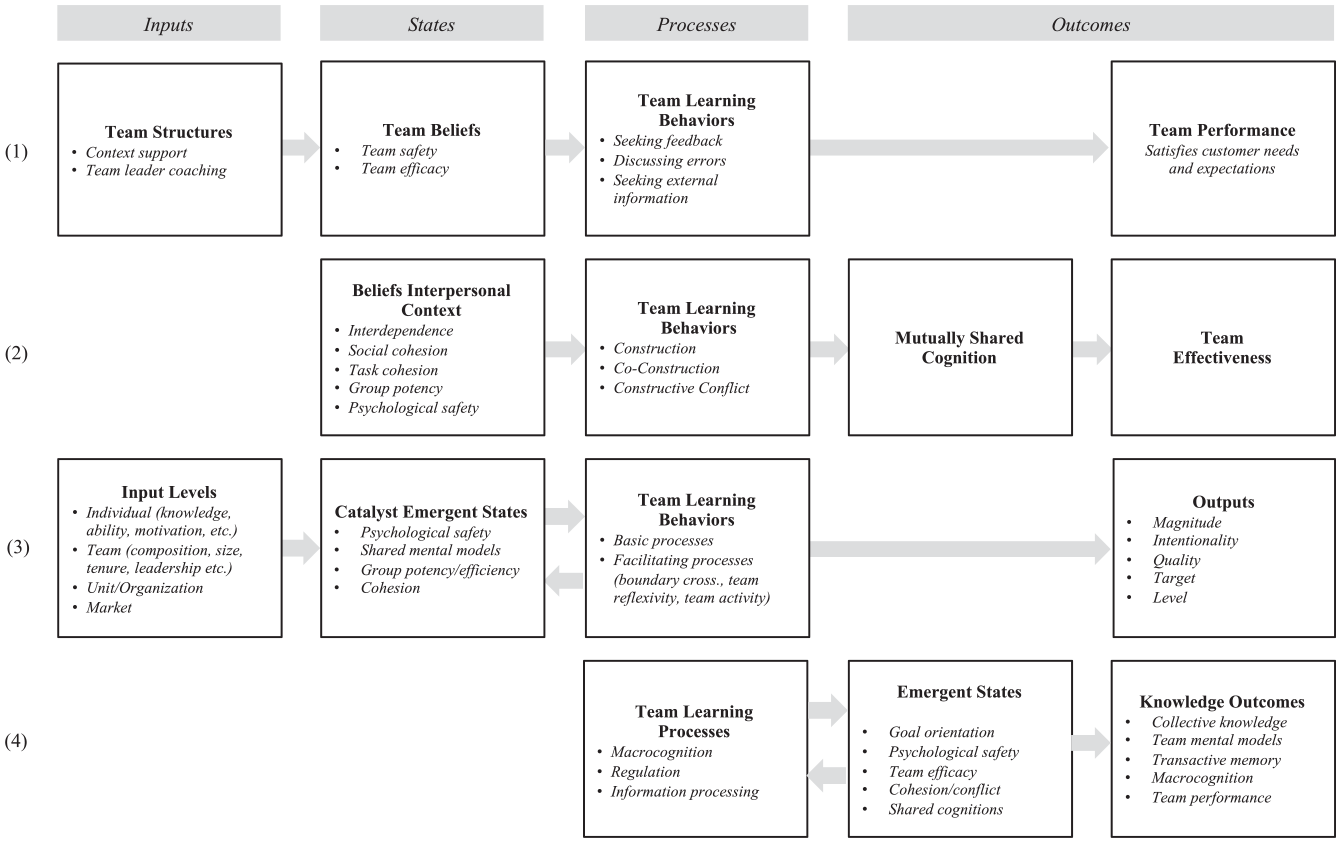
Overview of landmark models of team learning: (1) Edmondson (1999), (2) Van den Bossche et al. (2006), (3) Decuyper et al. (2010), and (4) Bell et al. (2012).
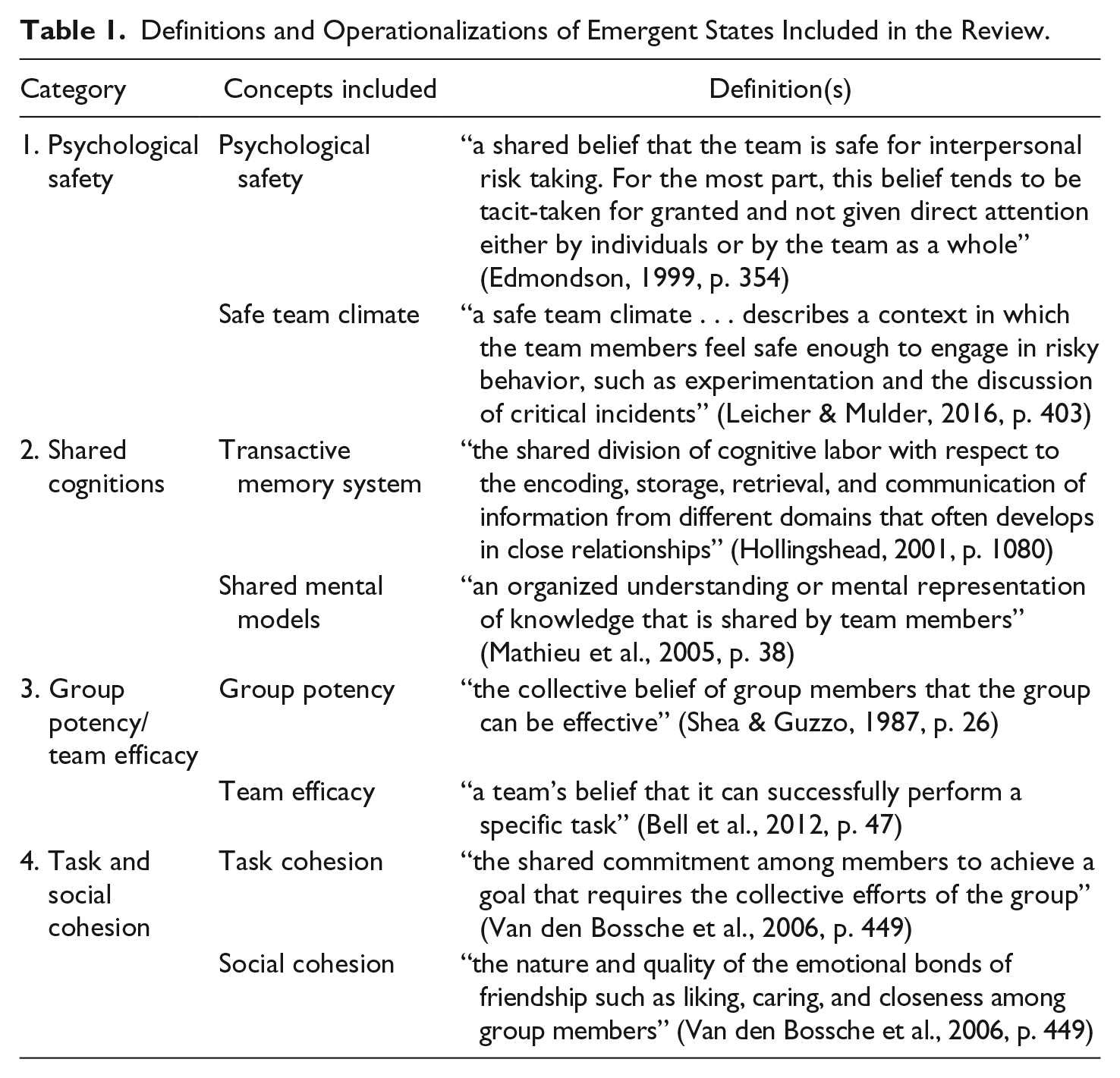
The two earlier models by Edmondson (1999) and Van den Bossche et al. (2006) include the emergent states of psychological safety, team efficacy, interdependence, social cohesion, task cohesion, and group potency. Van den Bossche et al. (2006) also specify mutually shared cognition, a shared understanding of the task and dynamics at hand. The latter two models (Bell et al., 2012; Decuyper et al., 2010) list a wide range of emergent states, such as psychological safety, shared mental models, transactive memory systems, shared norms and competencies, and team culture and identity (Decuyper et al., 2010), as well as goal orientation, collective knowledge, and macrocognition (Bell et al., 2012). We compared the emergent states mentioned in the four team learning models and selected all states that are included more than once. Consequently, the eight emergent states on this initial list are thoroughly underpinned theoretically and expected to be most widely studied, leading to sufficient and relevant studies to be included in this review. In the next step, the definitions for each of the eight selected emergent states were collected either from the studies presenting the original team learning models or from references cited by the four papers presenting team learning models. Definitions were grouped based on the relationship between them as discussed in the original team learning model studies and the selected references. For example, task and social cohesion were frequently studied together and are often defined in relation to each other (e.g., Decuyper et al., 2010; Van den Bossche et al., 2006). This procedure resulted in four categories of emergent states to be included in this review: psychological safety, shared cognitions, group potency/team efficacy, and task and social cohesion. Table 1 defines these emergent states. We expect a positive relationship between each category of emergent states and team learning, based on their close conceptual integration, as well as on extant findings of positive relationships between both concepts (Collins & Parker, 2010; Edmondson, 1999; Veestraeten et al., 2014). This forms the baseline research question in this review.
Definitions and Operationalizations of Emergent States Included in the Review.
Organization-Level Drivers of Team Learning
Organizations that wish to encourage team learning either directly or indirectly via the emergent states need to know which drivers exist and which are most effective. This notion rests on the nested nature of teams within their wider environment. At the organizational level, teams are inherently embedded in a system of culture and values, of shared constraints and opportunities (Decuyper et al., 2010; Edmondson & Nembhard, 2009). The left side of Figure 1 shows that two of the four conceptual models specify drivers beyond the team’s immediate control that can either foster or hinder team learning behaviors (Decuyper et al., 2010; Edmondson, 1999). Edmondson (1999) includes context support at the organizational level, referring to the provision of resources and information to teams. Based on an extensive review of extant literature, Decuyper et al. (2010) lists 10 inputs at the organizational level, including organizational strategy, knowledge management, resources, rewards, and organizational structure. Their review does not, however, systematically synthesize findings. Another source adds some insight into potential organization-level drivers of team learning. In their seminal review on team effectiveness, an outcome of team learning, Mathieu et al. (2007) highlight human resource (HR) systems (including incentives, resources, and training), openness climate, and multiteam systems coordination. Combining these two lists of drivers by matching definitions and use in extant literature, we formulate three tentative categories to be further explored in the systematic review: HR systems (including incentives and formal training), organizational structure and culture (including strategy, formal structures, and values), and knowledge management (formal and informal practices). Notably, both Decuyper et al. (2010) and Mathieu et al. (2007) explicitly mention their surprise at how little evidence on organization-level drivers was available at the time of publishing.
By synthesizing organization-level drivers of team learning behavior through a systematic literature review, we can formulate specific implications for practice, making extant research accessible to both researchers and practitioners alike. In making this choice, we rely on the large number of studies that have confirmed the relevance of team learning and emergent states for performance (for reviews, see Decuyper et al., 2010; Mathieu et al., 2005; Shaner et al., 2016), as well as on research that views team learning in improved performance, such as steeper learning curves when dealing with new procedures/technologies, or higher task mastery (for a review of these approaches, see Edmondson et al., 2007). Starting with the tentative categories of HR systems, structure and culture, and knowledge management as organization-level drivers of team learning, we will create a comprehensive list of drivers based on the available research, which we will group as an output of this review and as an input for researching the following two research questions formalizing the direct and the indirect path for managing team learning:
Method
Systematic Literature Review Approach
We conducted a systematic literature review following the steps laid out by Petticrew and Roberts (2006). After specifying the research questions and conceptual model, we defined the search terms for the three research questions and selected appropriate databases. Next, we formulated the inclusion and exclusion criteria for selecting relevant studies, followed by the method for extracting relevant effect sizes.
Based on the observation that evidence on the three research questions is dispersed across different bodies of literature, we focused on five large databases: Business Source Complete (361 hits, 9% relevant studies identified), PsycARTICLES (130 hits, 4% relevant studies identified), PsycINFO (500 hits, 10% relevant studies identified), Psychology and Behavioral Sciences Collection (100 hits, 7% relevant studies identified), and the more general Web of Science (2,070 hits, 3% relevant studies identified). Articles were searched in the first quarter of 2019.
For RQ1, we searched for the four categories of emergent states and the subfactors defined in Table 1 in direction to team learning. We also included studies using the labels group learning, collaborative learning, and cooperative learning, as long as they matched the definition in any of the four models, in line with the reviews by Bell et al. (2012) and Decuyper et al. (2010). This resulted in the following search operations: psychological safety / transactive memory / shared mental model / shared cognition / potency / efficacy / cohesion AND team learn* / collab* learn* / coop* learn* / group learn* NOT student, classroom. For RQ2, we deliberately kept the search broad by including the operator organi*, 1 which includes both British and American spelling. Just as with RQ1, we paired this operator with team learning along with the synonyms specified by Decuyper et al. (2010), resulting in the following search operations: organi* AND team learn* / collab* learn* / coop* learn* / group learn* NOT student, classroom. For RQ3, we included studies that correlated measures of organization-level drivers (searched for with the organi* operator) with emergent states of the four groups specified in Table 1 found through the following search operations: organi* AND psychological safety / transactive memory / shared mental model / shared cognition / potency / efficacy / cohesion NOT student, classroom.
For each of the searches performed, we recorded the number of hits per database and screened the titles and abstracts for the following inclusion criteria. Full-texts were accessed when they (a) studied professionals in actual or realistic work settings, given that findings in student-based lab studies may differ significantly from professional settings (e.g., Veestraeten et al., 2014); (b) included correlation coefficients between two or more variables of interest; (c) were published in academic, peer-reviewed journals; (d) with accessible full texts; and (e) were published in English to ensure accessibility for all readers. In the next step, the selected full texts were scanned and further exclusions were made based on the following criteria. Studies were excluded when (a) definitions of team learning or emergent states did not match the framework laid out in this study; (b) virtual teams were studied, based on differences in communication and trust building (Schulze & Krumm, 2017); (c) concepts were not measured at the appropriate level (e.g., distinction between team and organizational level); (d) students were placed in work-based simulators without relevant experience; and (e) when commercial tools were tested, which limits comparability across studies. Figure 2 outlines the process and records the number of articles at each stage of the search process.
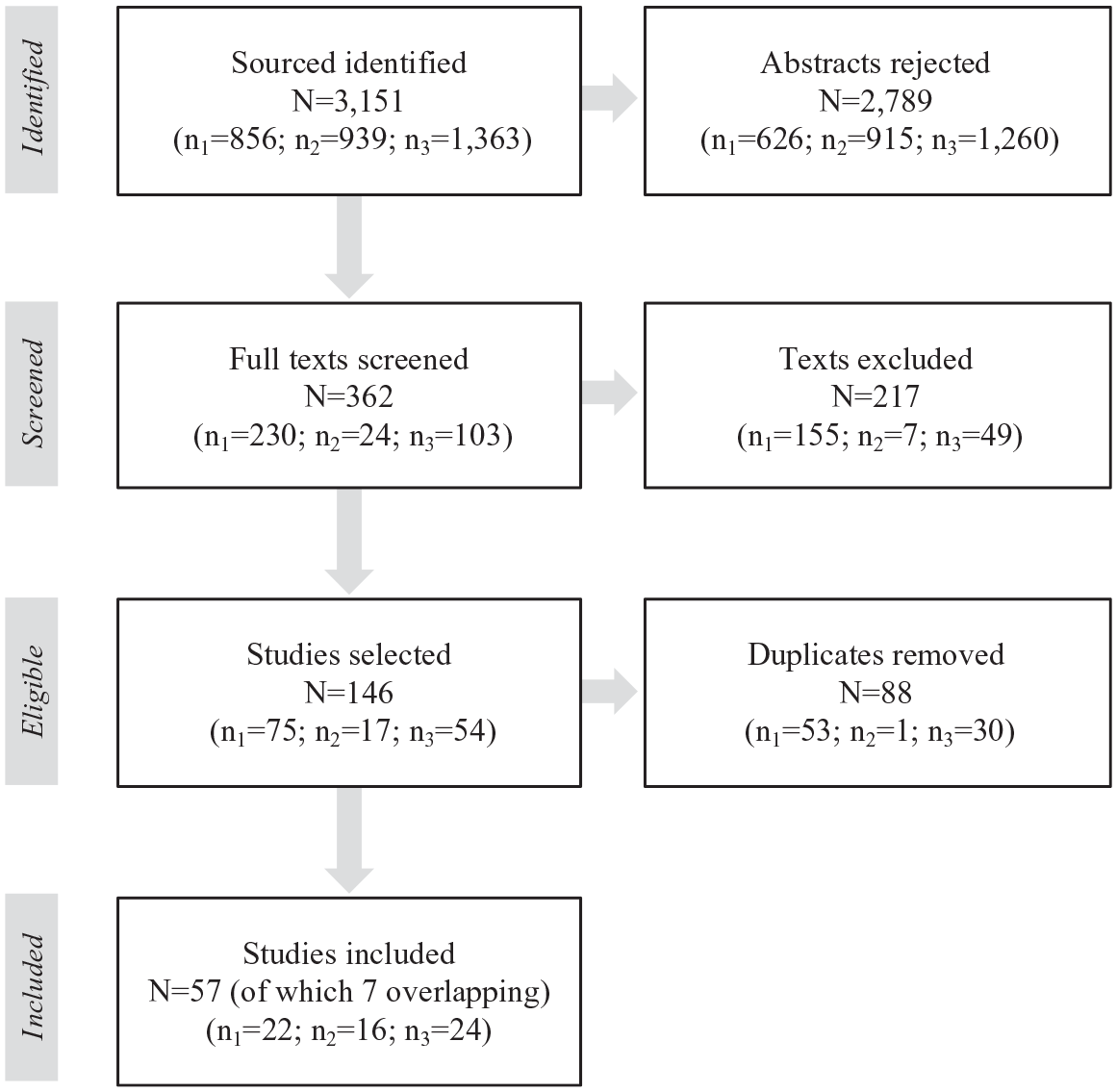
Flowchart of identified and included studies.
Data Analysis
All selected articles were uploaded into ATLAS.ti and for each article we coded the following information: (a) the research question; (b) sample size, context, and country of data collection; (c) definitions of team learning, emergent states, and organization-level drivers; and (d) correlations between the three groups of variables included in this review. Based on the correlation coefficients and sample sizes, we conducted meta-analyses using Meta-Essentials (Suurmond et al., 2017) to provide an indication of the combined effect sizes associated with different organizational drivers and emergent states. We based our analysis on a random-effects model in which we assume that effect sizes vary randomly across studies (Field & Gillett, 2010). This choice was based on the research done by Field (2005), who collected evidence leading him to conclude that random-effect models best represent studies in the social sciences. For RQ3, we apply subgroup analysis in which we collate effect sizes according to the emergent states they pertain to. We use the following rules of thumb to interpret the findings: a correlation of 0.10 (explaining 1% of variance) is considered small, 0.30 (explaining 9% of variance) is considered medium, and 0.50 (explaining 25% of variance) is considered large (in line with Koeslag-Kreunen et al., 2018), and we consider an I2 > 75% as large (in line with Borenstein et al., 2009), capturing the variance across studies that is due to heterogeneity between and within the studies included.
Results
Overview of Selected Studies
Following the steps outlined in Figure 2, we identified 57 relevant studies, N = 22 for RQ1, N = 16 for RQ2, and N = 24 for RQ3. We found that seven studies were relevant to more than one research question, leading to 50 unique studies identified. Each of the studies selected is described in Table 2, including the sample, setting, location of data collection, and which concepts are studied in relation to the three research questions. The earliest study identified for each research question is Edmondson (1999), who formalized the team learning construct and a research instrument widely used by follow-up studies. Of the 50 studies identified, nine were published before 2010, and 24 were published in the past 5 years alone. We also found that since Edmondson’s milestone study, the topics of team learning and emergent states have been addressed in a variety of fields: Most studies were published in the management and leadership literature (N = 21), followed by psychology and setting-specific journals (N = 8, each), HR management/development and professional learning (N = 5, each), and organizational behavior and team-centered journals (N = 3).
Overview of Studies Included in the Systematic Literature Review (Chronologically).
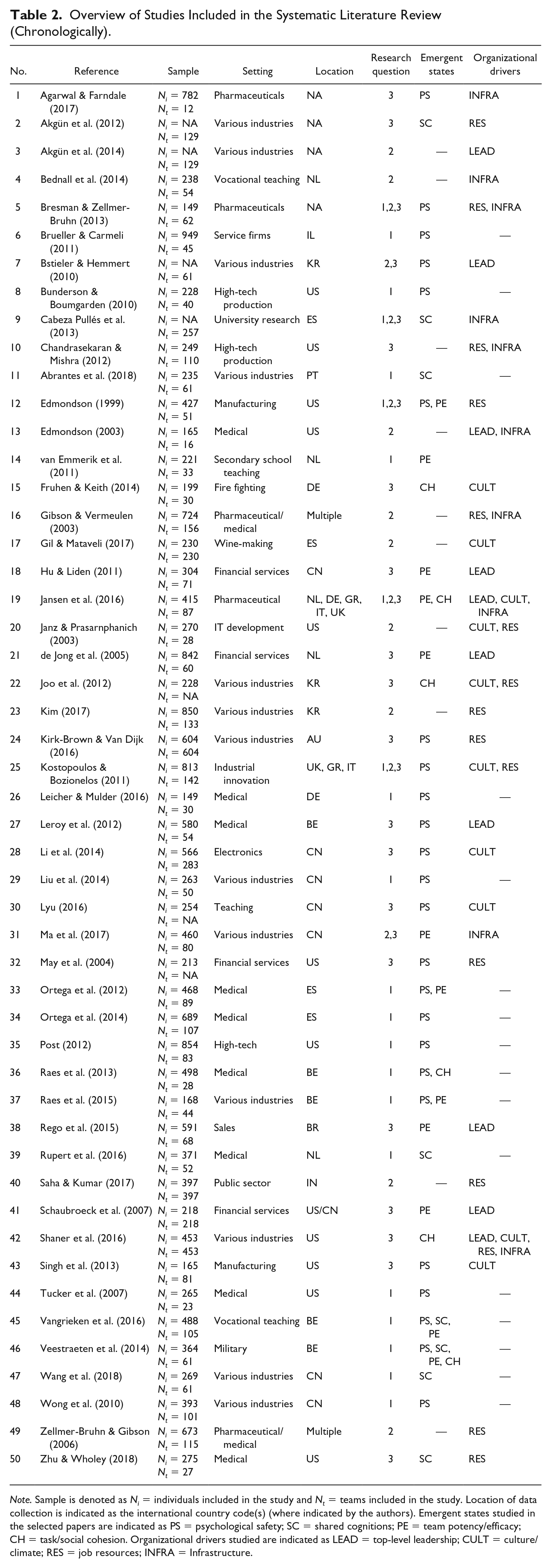
Note. Sample is denoted as Ni = individuals included in the study and Nt = teams included in the study. Location of data collection is indicated as the international country code(s) (where indicated by the authors). Emergent states studied in the selected papers are indicated as PS = psychological safety; SC = shared cognitions; PE = team potency/efficacy; CH = task/social cohesion. Organizational drivers studied are indicated as LEAD = top-level leadership; CULT = culture/climate; RES = job resources; INFRA = Infrastructure.
RQ1: Emergent States as Drivers of Team Learning
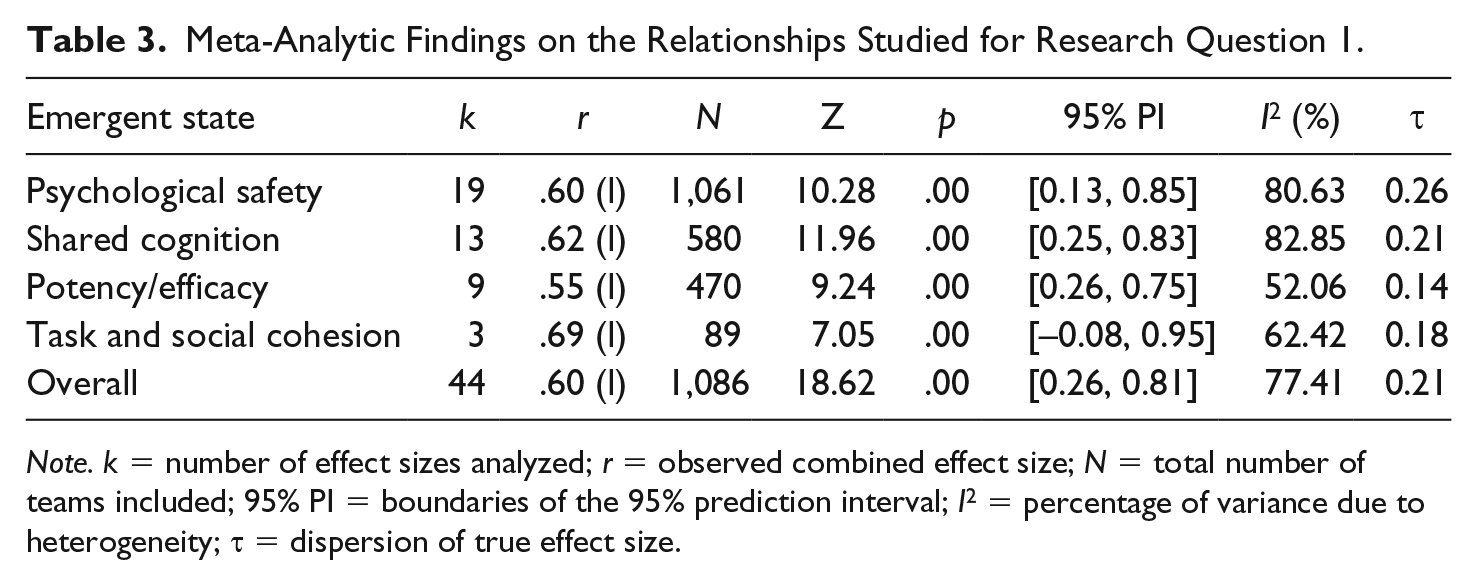
The first research question focuses on exploring what is known about the relationship between emergent states and team learning, resulting in 22 studies identified and analyzed. Table 3 reports the results of the meta-analysis for each of the emergent states of (a) psychological safety, (b) shared cognitions, (c) group potency/team efficacy, and (d) task and social cohesion.
Meta-Analytic Findings on the Relationships Studied for Research Question 1.
Note. k = number of effect sizes analyzed; r = observed combined effect size; N = total number of teams included; 95% PI = boundaries of the 95% prediction interval; I2 = percentage of variance due to heterogeneity; τ = dispersion of true effect size.
Psychological safety
We identified 16 studies that explored the relationship between team learning and psychological safety (see Table 2). The findings for the psychological safety–team learning relationship are unanimously positive. Table 3 reports a large weighted correlation of r = .60 (Z = 10.28, p = .00), associated with a large percentage of heterogeneity between and within studies (I2 = 80.63%, τ = 0.26; PIlower [prediction interval] = 0.13, PIupper = 0.85), a robust combined effect size that explains around 36% of variance.
Shared cognitions
A smaller number of six studies focused on the relationship between team learning and shared cognitions, including transactive memory systems (Cabeza Pullés et al., 2013; Rupert et al., 2016; Wang et al., 2018), mutually shared cognitions (Vangrieken et al., 2016; Veestraeten et al., 2014), and shared temporal cognitions (Abrantes et al., 2018). Overall, Table 3 illustrates a large and robust correlation between shared cognition and team learning (r = .62, Z = 11.96, p = .00), along with a high percentage of heterogeneity between and within studies (I2 = 82.85%, τ = 0.21; PIlower = 0.25, PIupper = 0.83), explaining around 38% of variance.
Group potency/team efficacy
We identified four studies that focus on group potency (Ortega et al., 2012; Raes et al., 2015; van Emmerik et al., 2011; Vangrieken et al., 2016; Veestraeten et al., 2014), and three studies focusing on team efficacy (Edmondson, 1999; Jansen et al., 2016; van Emmerik et al., 2011), with the van Emmerik et al. (2011) study including both potency and efficacy. Table 3 shows that overall potency and efficacy have a large weighted correlation with team learning of r = .55 (Z = 9.24, p = .00). Findings for this relationship have a low heterogeneity (I2 = 52.06%, τ = 0.14; PIlower = 0.26, PIupper = 0.75), explaining around 31% of variance in team learning. Splitting these findings up between the two subconcepts, we find that the weighted correlation for group potency is r = .62 (Z = 8.06, p = .00; I2 = 58.20%, τ = 0.15), higher than the correlation for team efficacy with r = .47 (Z = 11.58, p = .00; I2 = 0.00%, τ = 0.00). This difference should be interpreted with care, given the small number of available effect sizes.
Task and social cohesion
Finally, we found only three studies that provided correlations between task/social cohesion and team learning (Jansen et al., 2016; Raes et al., 2013; Veestraeten et al., 2014). The overall weighted correlation was r = .69 (Z = 7.05, p = .00; see Table 3), along with low heterogeneity between and within studies (I2 = 62.42%, τ = 0.18). However, due to the low number of observed correlations, the combined effect size is not robust (PIlower = −0.08; PIupper = 0.95). Based on the current state of extant literature, we are thus unable to draw a reasonably certain conclusion on the strength of the relationship between task and social cohesion and team learning.
Summary of findings for RQ1
To summarize the findings on the first research question, we find large and positive relationships between the four emergent states and team learning with an overall r = .60 (Z = 18.62, p = .00; I2 = 77.41%, τ = 0.21; PIlower = 0.26, PIupper = 0.81). Meta-analytic subgroup analysis reveals that distinguishing between the four emergent states contributed significantly to better understanding the findings on RQ1 (ω2 = 0.15; Pseudo R2 = .18). With the exception of social cohesion, we found strong positive relationships between emergent states and team learning.
RQ2: Organization-Level Factors as Drivers of Team Learning
For the second research question, we investigated which drivers at the organizational level have been studied in relation to team learning. Overall, we identified 16 studies that fit the inclusion and exclusion criteria, of which six studies included more than one driver. In a first step, we scanned these 16 articles, together with the studies identified for RQ3, to create an overview of organization-level drivers of team learning. Based on the tentative list of organization-level drivers derived from Decuyper et al. (2010) and Mathieu et al. (2007), two of the authors have discussed and grouped all drivers found in the studies that meet the review’s criteria. Figure 3 illustrates the resulting four categories including their underlying facets.
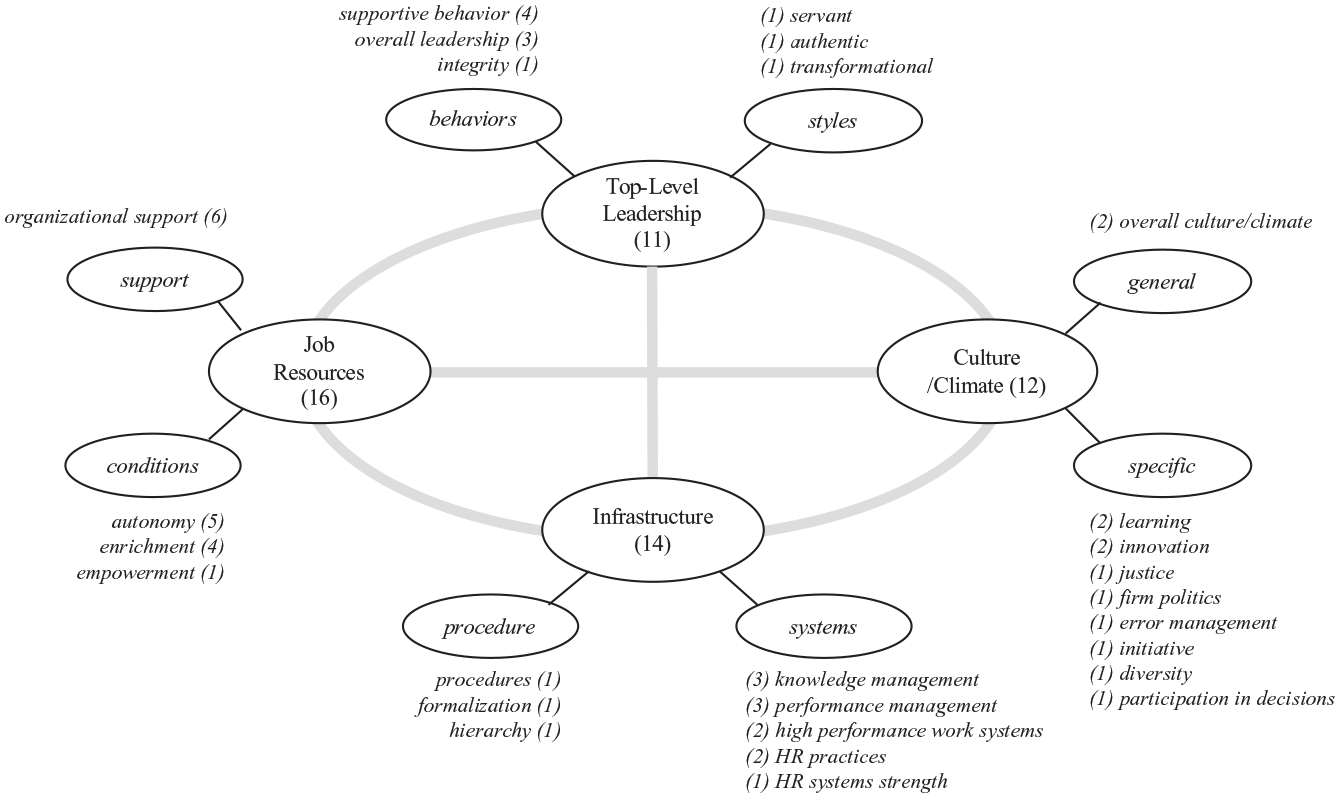
Organizational drivers of team learning and emergent states identified.
The first driver is top-level leadership. In contrast to studies on team leadership (e.g., Koeslag-Kreunen et al., 2018), top-level leadership refers to leadership above the actual team level. This leadership includes supportive behaviors, integrity, and specific leadership styles. A second set of studies explores the role of organizational culture, the abstract values guiding behaviors, and climate, perceptions of observable signs of the underlying culture (Bates & Khasawneh, 2005). In this group, some studies include general measures of culture and climate, while others focus on specific subcultures/subclimates, such as learning, error management, or justice. The third group of studies focuses on the conditions under which the teams operate. These job resources include the support teams receive from their organization, but also the conditions afforded to teams (following the conceptualization of job resources by Bakker & Demerouti, 2007). These conditions include autonomy, empowerment, and enrichment afforded to teams. Finally, a group of studies included elements of an organization’s infrastructure. This broad category includes both measures of organizational procedures describing the wider team context, and systems for managing performance and appraisal, knowledge and information. These four categories extend and regroup the tentative groupings based on the two relevant reviews by Decuyper et al. (2010) and Mathieu et al. (2007).
These four categories of organization-level drivers of team learning are inherently interrelated as discussed in the studies selected for this review. Top-level leadership can actively enable a supportive organizational culture/climate (Bstieler & Hemmert, 2010; Joo et al., 2012), job resources (Janz & Prasarnphanich, 2003; Kostopoulos & Bozionelos, 2011), and can influence how infrastructure supports their vision (Gil & Mataveli, 2017). Janz and Prasarnphanich (2003) also emphasize that job resources will only be effective if they align with the wider organizational culture/climate. Finally, infrastructure can support organizational culture/climate (Gil & Mataveli, 2017; Lyu, 2016), the effectiveness of job resources (Janz and Prasarnphanich, 2003), and infrastructure can support top-level leadership in implementing their vision (Bednall et al., 2014).
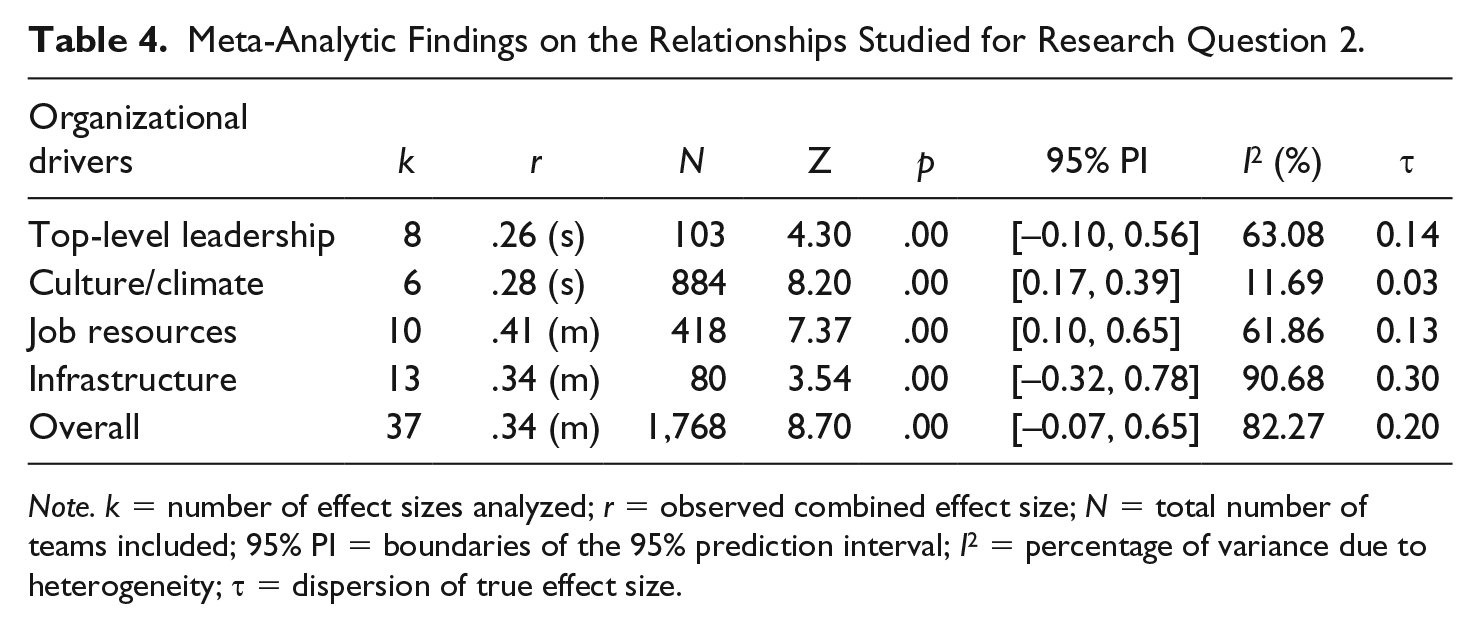
Having established which organization-level drivers have been related to team learning in extant literature, the second research question explores what is known about the relationships between (a) top-level leadership, (b) organizational culture/climate, (c) job resources, and (d) organizational infrastructure and team learning. The meta-analytic results for RQ2 are reported in Table 4.
Meta-Analytic Findings on the Relationships Studied for Research Question 2.
Note. k = number of effect sizes analyzed; r = observed combined effect size; N = total number of teams included; 95% PI = boundaries of the 95% prediction interval; I2 = percentage of variance due to heterogeneity; τ = dispersion of true effect size.
Top-level leadership
Of the 16 studies identified for exploring RQ2, four studies focused on the relationship between top-level leadership and team learning (Akgün et al., 2014; Bstieler & Hemmert, 2010; Edmondson, 2003; Jansen et al., 2016). All four studies explore the facet of supportive behavior (Figure 3). Overall, we find a small weighted correlation of r = .26 (Z = 4.30, p = .00) with reasonable heterogeneity (I2 = 63.08%, τ = 0.14; PIlower = −0.10, PIupper = 0.56), explaining around 7% of variance as reported in Table 4.
Organizational culture/climate
Five studies focused on the relationship between organizational culture/climate and team learning (Gil & Mataveli, 2017; Jansen et al., 2016; Janz & Prasarnphanich, 2003; Kostopoulos & Bozionelos, 2011; Saha & Kumar, 2017). Janz and Prasarnphanich (2003) take a holistic approach and measure organizational climate, covering the degree to which an organization is willing to take risks, provides rewards, the warmth felt by members and the support provided overall. The other three studies focus on specific elements of culture and climate, such as organizational learning (Gil & Mataveli, 2017), innovation, and learning (Kostopoulos & Bozionelos, 2011), and participation in organizational judgment (Saha & Kumar, 2017). Overall, we find a small weighted correlation of r = .28 (Z = 8.20, p = .00) with very little heterogeneity between and within studies (I2 = 11.69%, τ = 0.03; PIlower = 0.17, PIupper = 0.39) as reported in Table 4, explaining around 8% of variance.
Job resources
Seven papers studied the relationship between various job resources and team learning (Bresman & Zellmer-Bruhn, 2013; Edmondson, 1999; Gibson & Vermeulen, 2003; Janz & Prasarnphanich, 2003; Kim, 2017; Kostopoulos & Bozionelos, 2011; Zellmer-Bruhn & Gibson, 2006). Overall, we find a medium weighted correlation of r = .41 (Z = 7.37, p = .00) with reasonable heterogeneity left between and within studies (I2 = 61.86%, τ = 0.13; PIlower = 0.10, PIupper = 0.65) explaining around 17% of variance in team learning as reported in Table 4. Three of these papers focus on general support at the organizational level (Edmondson, 1999; Kim, 2017; Kostopoulos & Bozionelos, 2011), for which we find a medium weighted correlation of r = .42 (Z = 4.31, p = .00) with relatively high heterogeneity (I2 = 77.44%, τ = 0.19). The other five studies focused specifically on the conditions of autonomy and empowerment afforded to the team (Bresman & Zellmer-Bruhn, 2013; Gibson & Vermeulen, 2003; Janz & Prasarnphanich, 2003; Zellmer-Bruhn & Gibson, 2006), which are associated with a lower weighted correlation for autonomy and empowerment with r = .38 (Z = 7.36, p = .00) with low heterogeneity (I2 = 31.78%, τ = 0.07).
Organizational infrastructure
Finally, six studies explored the relationship between various measures of organizational infrastructure and team learning (Bednall et al., 2014; Bresman & Zellmer-Bruhn, 2013; Cabeza Pullés et al., 2013; Edmondson, 2003; Gibson & Vermeulen, 2003; Ma et al., 2017). The overall weighted r is medium-sized at .34 (Z = 3.54, p = .00) with high heterogeneity (I2 = 90.68%, τ = 0.30), explaining around 12% of variance as reported in Table 4. Five of the six studies study aspects of the systems facet of infrastructure. Three studies focus on HR practices, including high-performance HR practices (Ma et al., 2017), HR system strength (Bednall et al., 2014), and HR management in general (Cabeza Pullés et al., 2013), and two studies focus on knowledge and information management (Edmondson, 2003; Gibson & Vermeulen, 2003). Only one study, Bresman and Zellmer-Bruhn (2013), included information on the second facet of procedure by studying the degree to which procedures are structured at the organizational level.
Summary of findings for RQ2
For the second research question, we identified four organization-level drivers of team learning previously studied with professional samples. The overall correlation across all studies is a medium-sized .34 (Z = 8.70, p = .00), just over half of the overall correlation found between the emergent states and team learning. Heterogeneity across drivers and studies is substantial (I2 = 82.27%, τ = 0.20; PIlower = −0.07, PIupper = 0.65) as reported in Table 4. We found the strongest and most robust correlation between job resources and team learning, and specifically for support provided by the wider organizational context with an estimated R2 of .17, followed by infrastructure (R2 = .12) and culture/climate (R2 = .09), and finally, top-level leadership (R2 = .07). Only the findings for culture/climate and job resources are robust.
RQ3: Organization-Level Factors as Drivers of Emergent States
The final research question explores whether organizations can foster team learning not just directly, but indirectly by supporting the four emergent states included in RQ1. Twenty-four studies were identified as reporting correlations between organizational drivers of the four groups illustrated in Figure 4 and one or more of the four emergent states; psychological safety, shared cognition, potency/efficacy, and task and social cohesion. Six studies include more than one organizational driver, and two study more than one emergent state. Table 5 reports the meta-analytic findings for the four groups of organization-level drivers, combined across emergent states as well as sorted across those states where more than two effect sizes were identified. Figure 4 further specifies the relationships found between the four organizational drivers and the four emergent states.
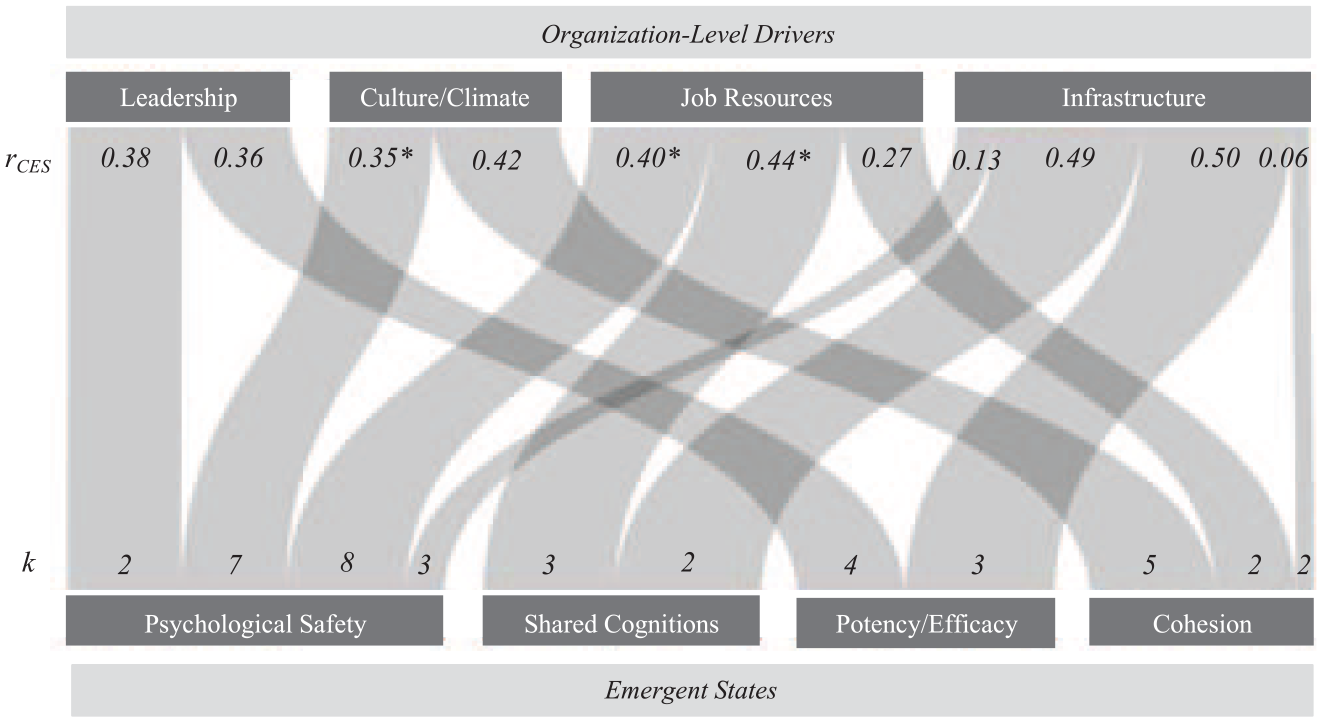
Meta-analytic relationships between organization-level drivers and emergent states.
Meta-Analytic Findings on the Relationships Studied for Research Question 3.
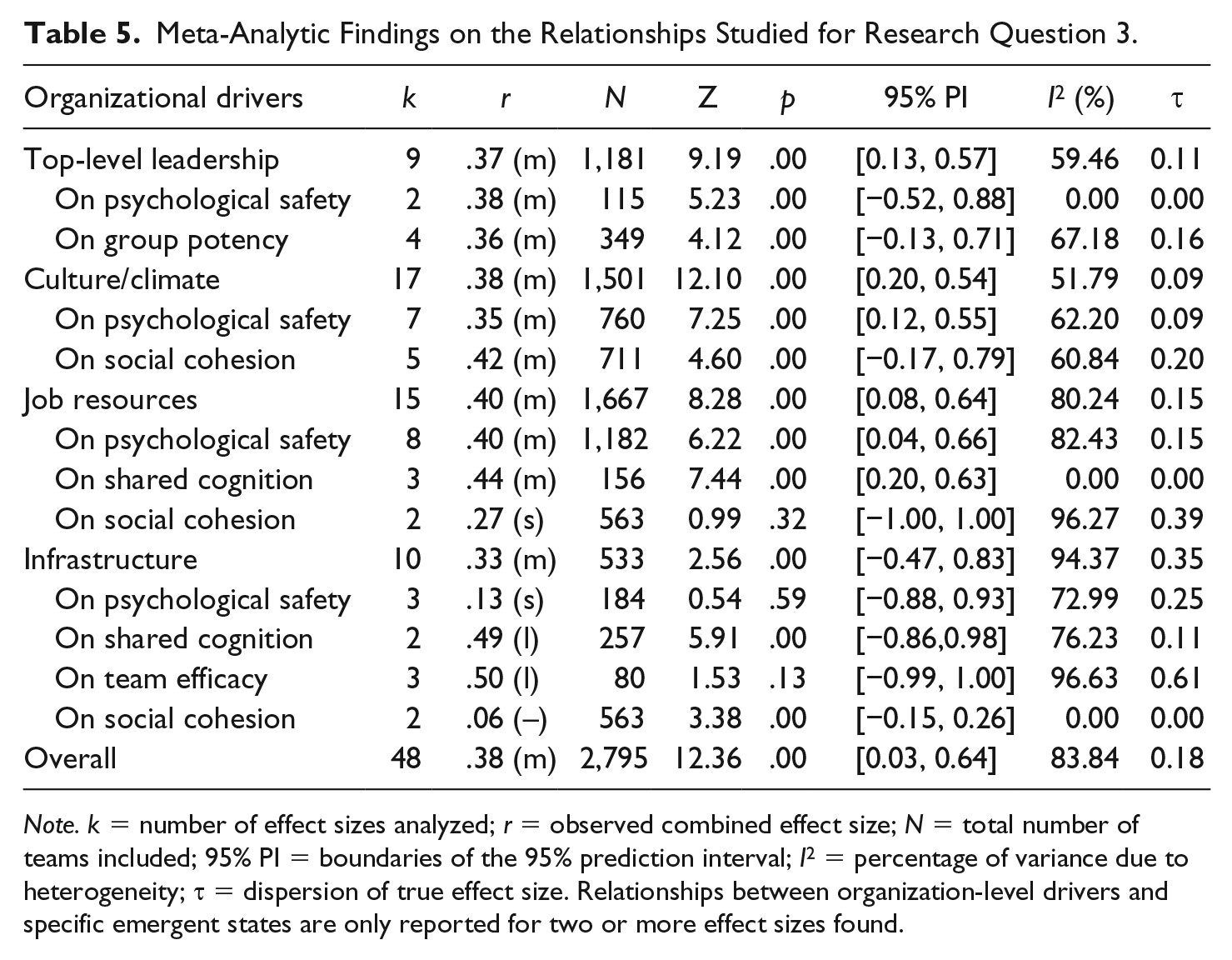
Note. k = number of effect sizes analyzed; r = observed combined effect size; N = total number of teams included; 95% PI = boundaries of the 95% prediction interval; I2 = percentage of variance due to heterogeneity; τ = dispersion of true effect size. Relationships between organization-level drivers and specific emergent states are only reported for two or more effect sizes found.
Top-level leadership
Of the 24 studies identified under RQ3, eight studies explored the relationship between top-level leadership and the emergent states of psychological safety (Bstieler & Hemmert, 2010; Leroy et al., 2012), shared cognition (Cabeza Pullés et al., 2013), group potency (de Jong et al., 2005; Hu & Liden, 2011; Schaubroeck et al., 2007), and social cohesion (Shaner et al., 2016). Overall, we find a medium weighted correlation of r = .37 (Z = 9.19, p = .00) with reasonable heterogeneity (I2 = 59.46%, τ = 0.11; PIlower = 0.13, PIupper = 0.57), a robust finding explaining around 14% of variance as reported in Table 5. This is double the variance explained by top-level leadership in team learning directly, indicating that leadership can have a higher impact on team learning by fostering team emergent states such as psychological safety and potency. Effect sizes on the relationship between top-level leadership and the emergent states of psychological safety/group potency are reported in Figure 4. Notably, neither of these subrelationships are robust.
Organizational culture/climate
We identified seven studies that report correlations between organizational culture/climate and emergent states: four of these studies include psychological safety (Kostopoulos & Bozionelos, 2011; Li et al., 2014; Lyu, 2016; Singh et al., 2013) and three include task and social cohesion (Fruhen & Keith, 2014; Joo et al., 2012; Shaner et al., 2016). Across these studies, we find a weighted correlation of r = .38 (Z = 12.10, p = .00) with reasonable heterogeneity (I2 = 51.79%, τ = 0.09; PIlower = 0.20, PIupper = 0.54 as reported in Table 5), explaining around 14% of variance, 6% more variance than of team learning directly. For culture/climate, we calculated combined effect sizes for two of the four emergent states: a robust combined effect size for psychological safety and a nonrobust combined effect size for social cohesion (reported in Figure 4). We conclude that culture/climate relates to team learning both directly and indirectly, with a higher variance explained via emergent states.
Job resources
For the organizational driver of job resources, we identified 10 relevant studies. Six of these studies focused on psychological safety (Bresman & Zellmer-Bruhn, 2013; Chandrasekaran & Mishra, 2012; Edmondson, 1999; Kirk-Brown & Van Dijk, 2016; Kostopoulos & Bozionelos, 2011; May et al., 2004), two on shared cognition (Akgün et al., 2012; Zhu & Wholey, 2018), one on team efficacy (Edmondson, 1999), and three on social cohesion (Chandrasekaran & Mishra, 2012; Shaner et al., 2016). Across these emergent states, we find a medium weighted correlation of r = .40 (Z = 8.28, p = .00) with high heterogeneity (I2 = 80.24%, τ = 0.15; PIlower = 0.08, PIhigher = 0.64, as reported in Table 5), explaining around 16% of variance. Multiple effect sizes were identified for three of the four emergent states, and we identified robust combined effect sizes for psychological safety and shared cognition, and a nonrobust finding for social cohesion (illustrated in Figure 4).The relationships between job resources and the emergent states are the strongest relationships of the four organizational drivers identified, and job resources correlate equally with team learning and with emergent states.
Organizational infrastructure
For the final organizational driver, we identified seven studies that focus on the relationship between organizational infrastructure and emergent states: three studies focused on psychological safety (Agarwal & Farndale, 2017; Bresman & Zellmer-Bruhn, 2013; Chandrasekaran & Mishra, 2012), one included shared cognitions (Cabeza Pullés et al., 2013), one focused on team efficacy (Ma et al., 2017), and the final two studies included social cohesion (Chandrasekaran & Mishra, 2012; Shaner et al., 2016). One of these studies falls into the procedure facet as illustrated in Figure 3, studying formalization (Bresman & Zellmer-Bruhn, 2013). The other studies relate to the systems facet, including the role of incentives (Chandrasekaran & Mishra, 2012; Shaner et al., 2016) and HR practices (Agarwal & Farndale, 2017; Cabeza Pullés et al., 2013; Ma et al., 2017). We calculated the overall weighted correlation for the infrastructure—emergent state relationship: r = .33 (Z = 2.56, p = .00) with high heterogeneity (I2 = 94.37%, τ = 0.35; PIlower = −0.47, PIupper = 0.83) as reported in Table 5. Several effect sizes were found for correlations between infrastructure and psychological safety, shared cognition, team efficacy, and social cohesion, none of them robust (illustrated in Figure 4). For infrastructure overall, this is the lowest observed correlation among the four organizational drivers in relation to emergent states. The explained variance of around 11% is similar to the 12% explained in relation to team learning.
Summary of findings for RQ3
To summarize the findings for RQ3, the overall meta-analysis finds a weighted correlation of r = .38 (Z = 12.36, p = .00; I2 = 83.84%, τ = 0.18; PIlower = 0.03, PIupper = 0.64) as reported in Table 5, which is only slightly larger than the overall weighted correlation between organizational drivers and team learning. In comparing meta-analytic findings for the four organizational drivers, job resources correlate most strongly with emergent states, followed by both top-level leadership and culture/climate. All three correlations are robust. The correlation for infrastructure was the lowest and not robust, as evidenced by the predictive interval reported in Table 5. We conclude that organizations are best served by fostering team learning directly through providing support and resources to teams, and creating a supportive organizational culture/climate. Team learning is best fostered indirectly via the emergent states through top-level leadership, and by providing a supportive infrastructure.
Discussion
In this meta-analytic literature review, we explored how organizations can foster team learning either directly or through the emergent states of psychological safety, shared cognition, group potency/team efficacy, and task and social cohesion. We reviewed 50 quantitative articles studying professional teams to establish which drivers of team learning have been studied at the organizational level and what is known about the relationships between these drivers, team learning, and the emergent states. A summary of the meta-analytic findings is illustrated in Figure 5, highlighting the multilevel nature of the relationships explored.
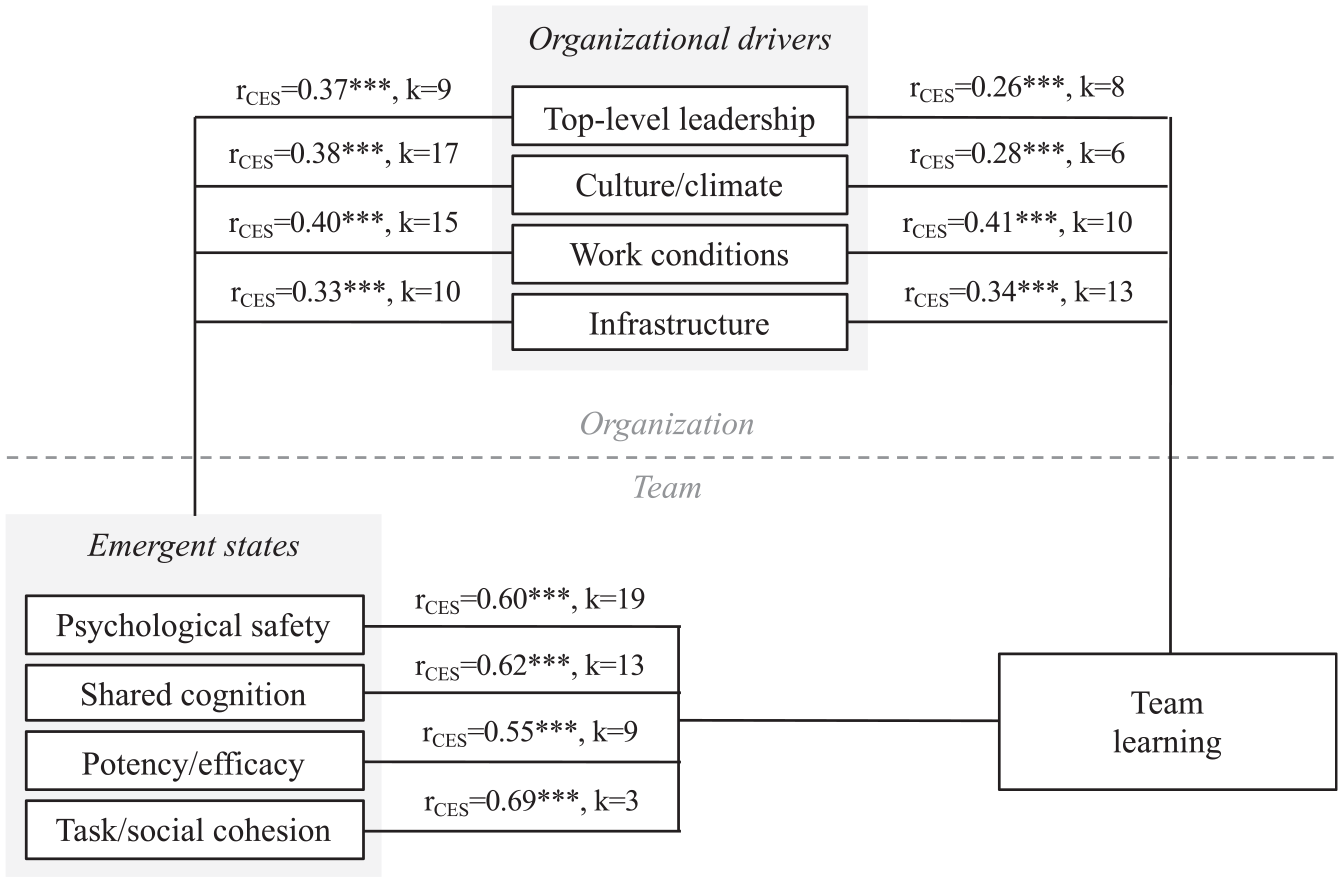
Overview of variable groups and combined effect sizes.
A central outcome of this review is the identification of four distinct organization-level drivers of team learning and emergent states: top-level leadership, organizational culture/climate, job resources afforded to teams, and organizational infrastructure. Meta-analyses of the relationships between these four organization-level drivers and team learning reveal two robust relationships. First, job resources correlated most strongly with team learning, explaining around 17% of variance, and especially general support was valuable for fostering team learning. Second, organizational culture/climate correlated positively and consistently with team learning, explaining around 8% of variance, with the largest correlations found for an overall supportive culture (Jansen et al., 2016) and for a knowledge-centered climate (Janz & Prasarnphanich, 2003). The relationships between the other two organization-level drivers of top-level leadership and infrastructure and team learning were not robust based on the large heterogeneity within and between studies. Overall, the correlations identified are small or medium-sized and only explain about one third of the variance explained by the emergent states. Our findings show that the impact of organization-level drivers on team learning is significant and robust when providing supportive job resources and creating a supportive organizational culture/climate.
In addition to these direct relationships between organization-level drivers and team learning, we also explored an indirect path via team emergent states. The results for the meta-analyses reveal three robust relationships between the emergent states and top-level leadership, organizational culture/climate, and job resources. Again, we found the highest correlation for job resources, explaining around 16% of variance, the same as the correlations with team learning. Specifically, the relationships between job resources and psychological safety and shared cognitions were found to be robust. Second, organizational culture/climate explained around 14% of variance in emergent states, 6% more than of team learning. A supportive culture was found to effectively foster team learning indirectly and robustly through psychological safety. Third, top-level leadership is robustly correlated with all four emergent states with an emphasis on group potency/team efficacy, explaining 14% of variance, 7% more than of team learning, suggesting a second indirect way of fostering team learning. However, the relationships between top-level leadership and psychological safety and task/social cohesion were not found to be robust. Finally, just as with team learning, the relationship between infrastructure and emergent states is not robust and also explains the least variance, with 11% of variance explained of team learning and no robust relationships with any of the emergent states studied.
Theoretical Implications
The organization-level drivers of team learning along with the combined effect sizes further specifies existing team learning models (Bell et al., 2012; Decuyper et al., 2010; Edmondson, 1999; Van den Bossche et al., 2006). Teams do not exist in a vacuum; they perform and learn in an organizational context that determines guidance, values, and support, along with facilitative structures, that have the potential to amplify team learning and emergent states, but that may also limit a team’s potential. To acknowledge this context to team learning, we propose that models of team learning (as outlined in Figure 1) should be specific in the following three ways.
First, an explicit relationship should be added between drivers of team learning and emergent states, adding to Decuyper et al.’s (2010) focus on the relationship between inputs and team learning behaviors. The results of our meta-analysis show that inputs at the organizational level can have a direct and an indirect effect on team learning behaviors. Not only does this conceptualization afford opportunities for fostering team learning, it also takes into account that inputs may have an indirect effect. Based on Ilgen et al. (2005), the IMOI model, we emphasize the need to consider the relationships between all inputs and all mediators.
Second, team learning behaviors and emergent states should be conceptualized as interacting over time (in line with Ilgen et al., 2005; Marks et al., 2001), allowing for a positive as well as a negative spiral. This temporal perspective is currently understudied in the literature on team learning. Based on Ilgen et al.’s (2005) IMOI model, including time in a conceptual manner can provide valuable insights into how (a) team behaviors and states change and affect each other over time and (b) that these changes imply the need for different support over time to realize a team’s full potential.
Third, based on the findings in this review, we propose that models of team learning should carefully specify the nested nature of team learning between the individual, the team, and the organizational level. Several studies included in this review call for the increased use of multilevel models that account for interactions between drivers at different levels with team learning and/or emergent states (e.g., Bstieler & Hemmert, 2010; Fruhen & Keith, 2014; Kostopoulos & Bozionelos, 2011), while others call for including control variables at the different levels (Akgün et al., 2012; Chandrasekaran & Mishra, 2012; Hu & Liden, 2011). Making the different conceptual levels studied explicit allows further research on sources of variance in team learning, to understand conditional effects and relationships between drivers of team learning at the individual, the team, the organization, and the wider environment.
Implications for Future Research on Team Learning
In the current review, we identify several relationships that were either not robust, or for which very few correlations could be identified. These relationships should be substantiated by further research. For top-level leadership, we found a nonrobust relationship with team learning, and only few correlations could be identified between leadership measures and the four emergent states. For organizational culture/climate, we found insufficient correlations with the emergent states of shared cognition, potency/efficacy, and task and social cohesion. In addition, we did not find overlap in the cultural concepts studied in this category of papers included, warranting further evidence on the different facets of culture/climate. Job resources is the driver most studied facet to date. Yet, we found too few correlations to evaluate the resource-potency/efficacy relationship, and very few correlations were identified for the emergent states of shared cognition and task/social cohesion. Research on infrastructure, however, is currently underdeveloped. Based on the available effect sizes, a nonrobust relationship is identified with team learning, and with all four of the emergent states. More research is therefore needed that shares a common definition of team learning and/or the emergent states, along with elements of organizational infrastructure.
From the studies reviewed, we identify two main suggestions for future research designs. The first suggestion is balancing nuance and generalizability. This is illustrated by the recommendation to consider teams’ and organizations’ wider (cultural) context (Akgün et al., 2012; Bednall et al., 2014; Bstieler & Hemmert, 2010; Ma et al., 2017), while Gibson and Vermeulen (2003) warn that without properly accounting for the characteristics of the contexts included, the collected data may lack detail and nuance. We recommend that future research explicitly considers the nested nature of team learning between the individual as well as the organizational level. The second suggestion focuses on generating causal insights by including time as an explicit factor in the study design through experimental manipulations and/or longitudinal designs. Examples of longitudinal setups can be found in the studies by Bednall et al. (2014), Bstieler and Hemmert (2010), and by Zhu and Wholey (2018), even though this approach is not a guarantee for meaningful variance, as illustrated by Zhu and Wholey (2018). Future research on team learning can generate valuable insights in changes to teams’ needs and causal links between drivers, behaviors, and states by designing for time as a factor in one’s study.
Limitations of the Current Review
The results of this meta-analytic review need to be interpreted in the light of the following limitations. First, the selection criteria in this review paid specific attention to the different levels of variables included. Studies were included in which team learning and emergent states were measured and aggregated at the team level, and drivers were conceptualized and measured at the organizational level. One limitation we encountered here was that not all studies make the measurement levels explicit, which may have caused us to exclude relevant studies. Second, in each of the included studies, concepts were defined in line with the theoretical framework established. We deliberately chose broad definitions to gather sufficient relevant evidence given the small number of studies available per research question and given differences in terminology across research domains. Despite these broad definitions, matching study definitions to the conceptual framework retain a subjective dimension. Third, some of the studies included very broad conceptualizations of, for example, culture (Janz & Prasarnphanich, 2003) or HR practices (Ma et al., 2017). We chose to include these overall effects in the review in view of the limited number of studies available, yet this may limit the robustness of findings across potential future studies. Fourth, we found substantial heterogeneity of correlations between and across studies included in the review, as reported in the results section. This heterogeneity is due in part to the application of broad definitions, along with the choice to include studies across cultural settings, across task types and professions. Due to the limited number of sample sizes across these characteristics, we were not able to conduct robust analyses across professions/team tasks/team types. With more studies emerging over time, we would suggest taking these factors into account as moderators in the meta-analysis. Especially for the relationships currently identified as nonrobust, we expect relevant insights for practice and future research.
Implications for Practice
Fostering team learning from the organizational level requires understanding two core questions: (a) “which drivers are effective at fostering team learning?” and (b) “who has influence over these drivers and can shape them to optimally support learning at the team level?” Having synthesized all 50 studies in this review, we formulate practical implications with respect to each of the four organization-level drivers identified, including suggestions for top-level and team leaders, as well as for support functions, depending on their circle of influence.
Based on the findings in the reviewed studies, top-level leaders should determine and communicate core shared values and behaviors (e.g., Edmondson, 1999; Flores et al., 2012), they should demonstrate ongoing commitment to participation, people, and productivity (Wong et al., 2010), and they should continuously socialize and develop effective leaders internally, focusing on authentic features and leaders’ orientation toward fostering learning (Rego et al., 2015; Wong et al., 2010). However, their influence on teams is indirect, often through the role of the team leader—if behaviors and values enacted at different organizational levels do not match, then the effectiveness diminishes (Cha & Edmondson, 2006). Top-level leaders should be supported by HR professionals in their efforts to foster leadership development, as well as to supervise and coach internal and external talent (Bednall et al., 2014; Bresman & Zellmer-Bruhn, 2013; Joo et al., 2012).
The studies included in this review recommend that an organization’s culture/climate is fostered by leaders at all levels who act as observable role-models, for example, through openly learning from errors (Joo et al., 2012; Rego et al., 2015), by displaying flexibility in approaches (Rego et al., 2015), and by speaking up (Li et al., 2014)—in short, by consistently giving the right example. This recommendation echoes advice derived from the wider organizational culture literature (e.g., Baird et al., 1999; Bligh et al., 2018). HR and other support functions can support the development and maintenance of an organization’s culture/climate by aligning leader actions with how the organization’s infrastructure is implemented, communicated, and used (Gil & Mataveli, 2017; Lyu, 2016).
When deciding on which resources to afford to teams for learning, evidence from the studies reviewed shows that next to providing general support for team learning, including physical resources, information, and rewards (Edmondson, 1999); organizations should provide teams with autonomy, task enrichment, and team empowerment, for example, through setting stretch goals, job sharing, and skills training, where needed, as well as initiating regular reflection within the team (Bresman & Zellmer-Bruhn, 2013; Chandrasekaran & Mishra, 2012; Leroy et al., 2012). At the same time, Jansen et al. (2016) warn that top-level leadership should carefully choose when to intervene at the team level so as not to limit autonomy. For additional insights on the relationship between team leadership and team learning, please refer to Koeslag-Kreunen et al.’s (2018) meta-analysis.
The final organization-level driver of team learning is infrastructure, including both procedures and formalization of roles and tasks, as well as (IT) systems that facilitate the exchange of knowledge, performance management (including incentives and promotion) and HR practices (e.g., Ma et al., 2017; Shaner et al., 2016). This driver is critically determined by support functions within an organization (e.g., Bstieler & Hemmert, 2010; Gil & Mataveli, 2017), yet appears not to have a significant direct effect on team learning, or indirectly via emergent states. Based on the interrelationships between organization-level drivers of team learning, studies by, for example, Ma et al. (2017) emphasize that systems and behaviors/values need to be aligned for either dimension to work as intended. This requires close collaboration between support and leadership functions across organizational levels.
Conclusion
Organizations wishing to foster learning at the team level can do so effectively through providing teams with resources such as autonomy and enrichment, next to general support of money and time. These resources should be provided in a supportive, learning-driven culture shaped by engaged, supportive leaders that are connected with their teams to create the best possible conditions for teams to engage in continuous learning, either directly or, even more effectively, by enabling teams to develop psychological safety, shared cognition, potency/efficacy, as well as social and task cohesion. Creating this system of conditions for effective team learning requires close alignment of different functions within an organization, bringing leadership and HR together to achieve a shared goal.
Footnotes
Acknowledgements
We would like to thank Piet Van den Bossche and Roger Meuwissen for their helpful feedback.
Declaration of Conflicting Interests
The author(s) declared no potential conflicts of interest with respect to the research, authorship, and/or publication of this article.
Funding
The author(s) disclosed receipt of the following financial support for the research, authorship, and/or publication of this article: This literature review was carried out as part of a research project funded by the Foundation for Auditing Research.
