



Abstract
Institutionalized persons with dementia often lack access to meaningful activity, which can lead to agitation, loneliness, and depression. Engagement in activity may improve negative symptoms but is difficult in most settings. In this study, we investigated the degree to which the Reading Buddies Program, in which occupational therapy graduate students read books with residents with dementia, engaged residents. We further assessed whether the level of engagement was affected by various parameters, including those related to interaction, environment, attention, attitude, and activity. The primary outcome measure was engagement percentage–duration of time the book was read divided by duration of time the person with dementia engaged with the book. As expected, increased attention, attitude, and activity parameters were associated with increased engagement. None of the environmental parameters significantly affected engagement. Overall, we found that reading with persons with dementia led to a very high level of engagement and appeared to reduce negative symptoms.
Significance Statement
The Reading Buddies Program contributes to the advancement of knowledge within the field of dementia in a number of ways. (1) Trainees gain experience-based learning essential to evolving care models in advanced dementia. (2) Residents with dementia participate in initiating individualized activities by mobilizing student trainees. (3) Even persons with late-stage dementia show the capacity for engagement in meaningful activities. (4) Engagement in meaningful activities reduces negative symptoms in residents with advanced dementia.
Introduction
Persons with dementia often lack access to engagement in meaningful activity,1-3 which can lead to agitation, loneliness, and depression.4,5 Engagement has been shown to improve negative symptoms and increase quality of life. 6 Previous studies have engaged persons with dementia in many different ways such as recreational activities, structured activities, sensory stimulation, exercise, music, and pet visits.7-9 For a related review, see Cohen-Mansfield et al, 2009. 10 Meeting the resident-centered needs of individuals in long-term care dementia programs is difficult to accomplish. 11 Residents with late-stage dementia often have difficulty navigating and benefiting from group-based activity programming due to communication and other challenges.12-14 As a result, more one-to-one interaction is desirable, although often unrealistic given workload challenges and staffing patterns.15,16
One potential individualized activity for persons with dementia is reading. Extant data regarding reading and dementia principally focuses on reading as an activity which may be protective against the development or progression of cognitive impairment17-19 or reading as a measure of cognitive performance in persons with dementia.20,21 Limited extant data about reading as a meaningful activity for persons with dementia (which is the focus of our work) suggests that reading may enhance the quality of life and well-being of persons with dementia. 22 Shared reading, or reading in groups, may be particularly beneficial; however, this is an understudied area. 23
The Reading Buddies Program (RBP) capitalizes on academic partnership with an occupational therapy (OT) graduate program to provide a service-learning opportunity for Veterans with late-stage dementia, thereby making one-to-one intervention possible. Students were encouraged to spend 45 min interacting and reading with their assigned Veteran. Students were paired, allowing 1 to observe while the other implemented the intervention. See Trudeau and Gately 24 for full program details.
In the present study, we investigated the degree to which reading books with persons with dementia engaged them and assessed how interaction parameters, environmental parameters, attention parameters, attitude parameters, and activity parameters affected the level of engagement. The primary outcome measure was the engagement percentage, which was calculated by dividing the duration of time the person with dementia was engaged with the book by the duration of time the book was read to the person. We hypothesized that as reading duration increased, engagement duration would increase. It was also hypothesized that as attention levels increased, attitude levels increased, or as activity increased, the overall percent of engagement would also increase. We also tested whether interaction parameters (whether or not the person was transferred to a new location for reading, whether or not they were interrupted by the reader, whether or not they were interrupted by someone else, whether or not they refused the book) or environmental factors (the location, the number of people around, the noise level, the light level) affected engagement.
Materials and Methods
All persons with dementia who participated in the study were Veterans residing in a long-term care setting with varying degrees of dementia, including end-stage dementia. The protocol was reviewed and deemed exempt by the VA Bedford Health Care System Institutional Review Board (Protocol number 1670058). There were 167 readers (each paired with an observer) that presented a total of 1624 books. The data from 1 book was eliminated from the analysis because the Veteran was sleeping, and no values were recorded. Readers typically presented 1 or more books during each visit.
For each book that was presented by the reader, the observer filled out an Observational Measurement of Engagement form10,25 that was adapted for the Reading Buddies Program (RBP; this form is provided in the Appendix). Thus, the unit of analysis is each book that was presented to the Veteran. Books were selected by the reader from a wide range of choices (eg, 101 Christmas Ornaments, American Tall Tales, Extraordinary Boston, Life Classic Faces, Princess and the Beggar, The Odyssey).
For each session, the observer filled out 1 OME form for each book (using a pen or pencil and stopwatch). Observers were instructed to remain unobtrusive while observing the interaction between the reader and the Veteran, and to complete the form during their observation. Observers were permitted to take time after the session to complete the form, if necessary. Most items on the form were self-explanatory, but there were instructions for completing specific items. For the title of the book, observers were instructed to put the exact and complete name of the book read to the Veteran. For the time, they were instructed to note the time the book was introduced, rather than the time the session began. They were instructed that duration was the amount of time that the person with dementia was occupied with or involved with the book, regardless of appropriateness of behaviors (and to begin timing after presentation of the book). Observable behaviors indicative of involvement included the Veteran visually focused on the book, physically occupied with the book, turning their body towards the book, or changing their body position or handling the book.
The terms attention and attitude on the form were also defined. Attention was described as occurring when persons with dementia were focused on the book with indicative observable behaviors including eye contact, eye tracking, visual scanning, or facial, motoric, or verbal feedback (eg, manipulating, holding). Attitude was described as the amount of excitement and expressiveness towards the book with indicative observable behaviors including positive or negative facial expressions (eg, smiling, laughing, frowning), positive or negative verbal content (eg, cursing, screaming), or positive or negative physical movement towards the book (eg, pushing it away, throwing the book).
On the OME form, for a given reader–observer pair on a specific date, “Book #” referred to the sequence the books were presented (ie, 1 referred to the first book presented, 2 referred to the second book presented, and so on). As book numbers were sometimes left blank or entered incorrectly by observers (eg, starting the book sequence on number 2 instead of 1, entering the same book number for multiple books in the same session), book number was corrected based on the date and specific time each book was introduced (ie, the correct book number was reconstructed based on other available data). Otherwise, the data was not altered in any way.
Fields on the OME form were sometimes not filled out or filled out with numbers other than those within the prespecified values; these fields were not included in the analysis. As this created data with unequal sample sizes, statistical analysis using all the viable data was conducted with weighted ANOVAs (which take unequal sample sizes into account). For all statistical comparisons, the number of datapoints (N) in each condition and corresponding degrees of freedom were reported (see Results). In addition to a Pearson correlation to compare engagement duration and reading duration, 18 statistical tests (weighted ANOVAs) were conducted to assess whether percent engagement, the primary outcome measure, was affected by other variables. Given this relatively large number of statistical tests, a conservative Bonferroni corrected P-value of less than .0026 (.05/19) was required to achieve statistical significance for each test. In cases where the independent variable had more than 2 levels, a hierarchical statistical analysis approach was conducted, where follow-up paired tests were conducted to determine which factors were driving the main effect.
Results
Figure 1 shows the values of all the Reading Buddy parameters. The average reading duration (17.11 min) and engagement duration (14.12 min) values were well above zero, and the average engagement percentage (81.99%), the primary outcome measure, was very high (Figure 1A). Between 1 and 2 books, on average, were read to persons with dementia on each date. The average occurrence of interaction was either modest (transfer, interrupted by reader) or low (interrupted by someone else, refused book; Figure 1B). Average environmental values were intermediate (Figure 1C). Average attention and attitude values indicated that persons with dementia were somewhat attentive or attentive with somewhat positive attitudes (Figure 1D). Average activity values showed that participants engaged in a little activity, and all values were well above zero (Figure 1E). As expected, engagement duration and reading duration were highly and significantly correlated (Figure 2). Reading Buddy parameter values (mean, standard error, SE, and number of participants, N, reported as relevant). (A) Duration and book parameters. (B) Interaction parameters. (C) Environmental parameters. (D) Attention and attitude parameters. (E) Activity parameters. Engagement duration as a function of reading duration (in minutes; statistical results at the top, asterisk indicates significant result, corrected for multiple comparisons, number of participants, N, to the right; points were slightly jittered).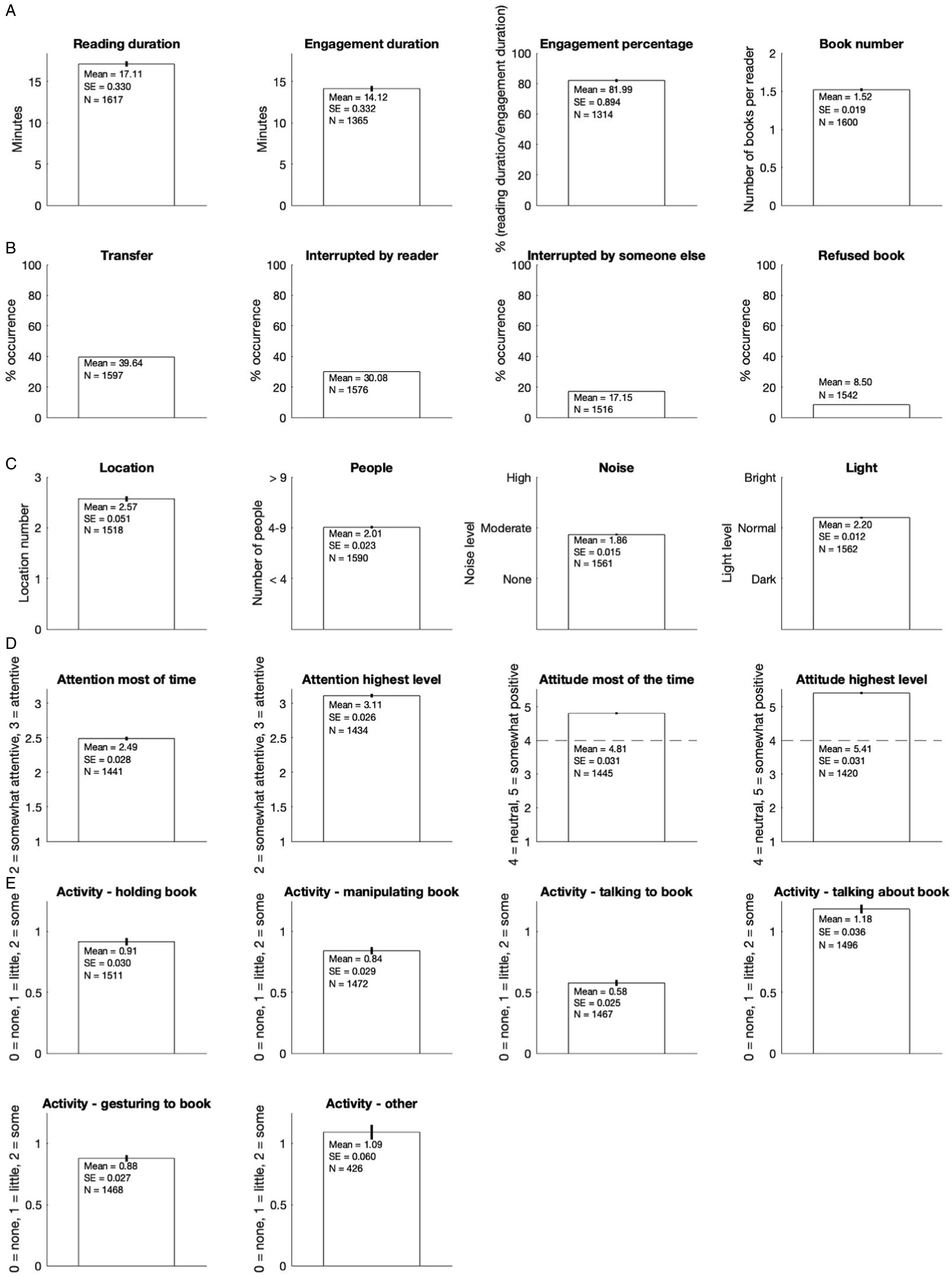
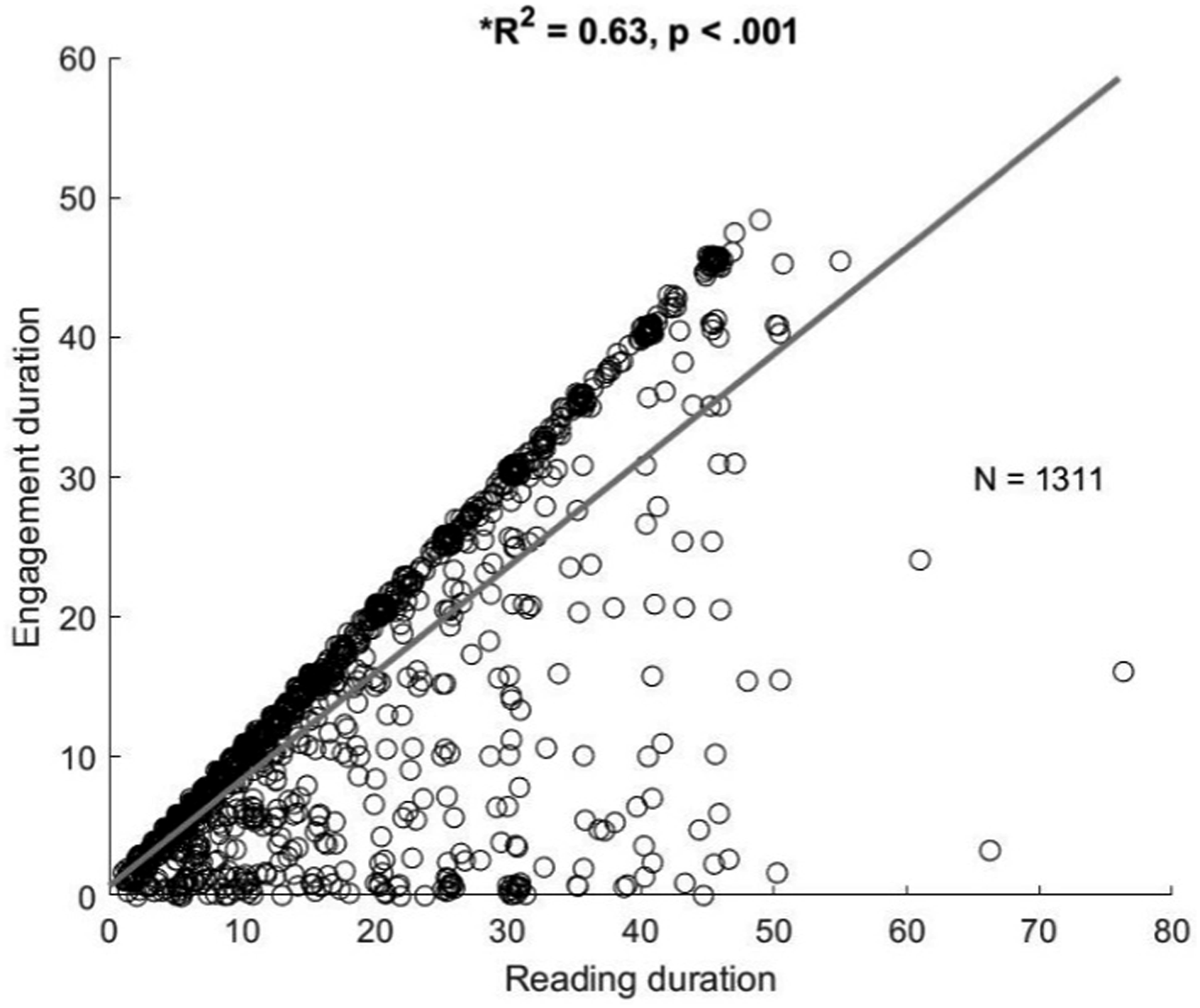
Figure 3 shows engagement percentage as a function of interaction parameters. Moving persons with dementia to a different location before starting the intervention significantly increased the engagement percentage (from 79.59% to 85.96%), suggesting that arousing a sedentary individual for activity by moving them may prime the pump for engagement. On the other hand, at times, residents were engaged in other activities when the students arrived, resulting in being interrupted by the reader, which significantly decreased engagement percentage (from 84.21% to 76.79%). Being interrupted by someone else, such as a nurse to administer medications during the session, or the person with dementia refusing the book did not significantly affect engagement. The latter finding is important as it suggests persons with dementia will usually engage despite initially refusing the book. Engagement percentage as a function of interaction parameters (mean, standard error, SE, and number of participants, N, shown within each bar; statistical results at the top, asterisk indicates significant result, corrected for multiple comparisons).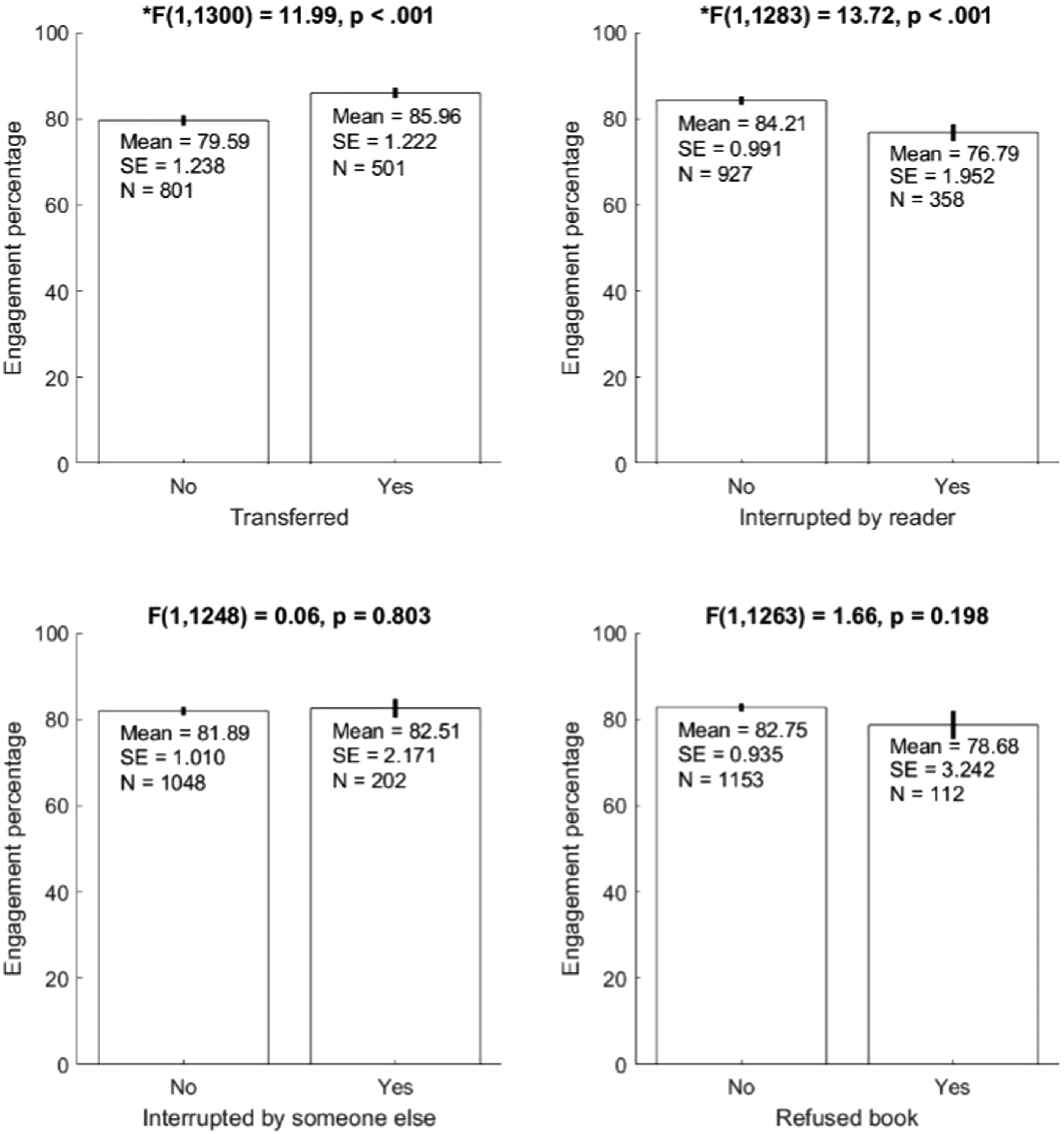
Figure 4 shows engagement percentage as a function of environmental factors. None of the environmental factors had a significant effect on engagement percentage (corrected for multiple comparisons). However, it is notable that the number of people around did yield significance at the P < .05 (uncorrected) level, which might suggest an intermediate number (4-9) people around reduces engagement as compared to a lower or higher number of people around. Engagement percentage as a function of environmental parameters (mean, standard error, SE, and number of participants, N, shown within each bar; statistical results at the top, asterisk indicates significant result, corrected for multiple comparisons).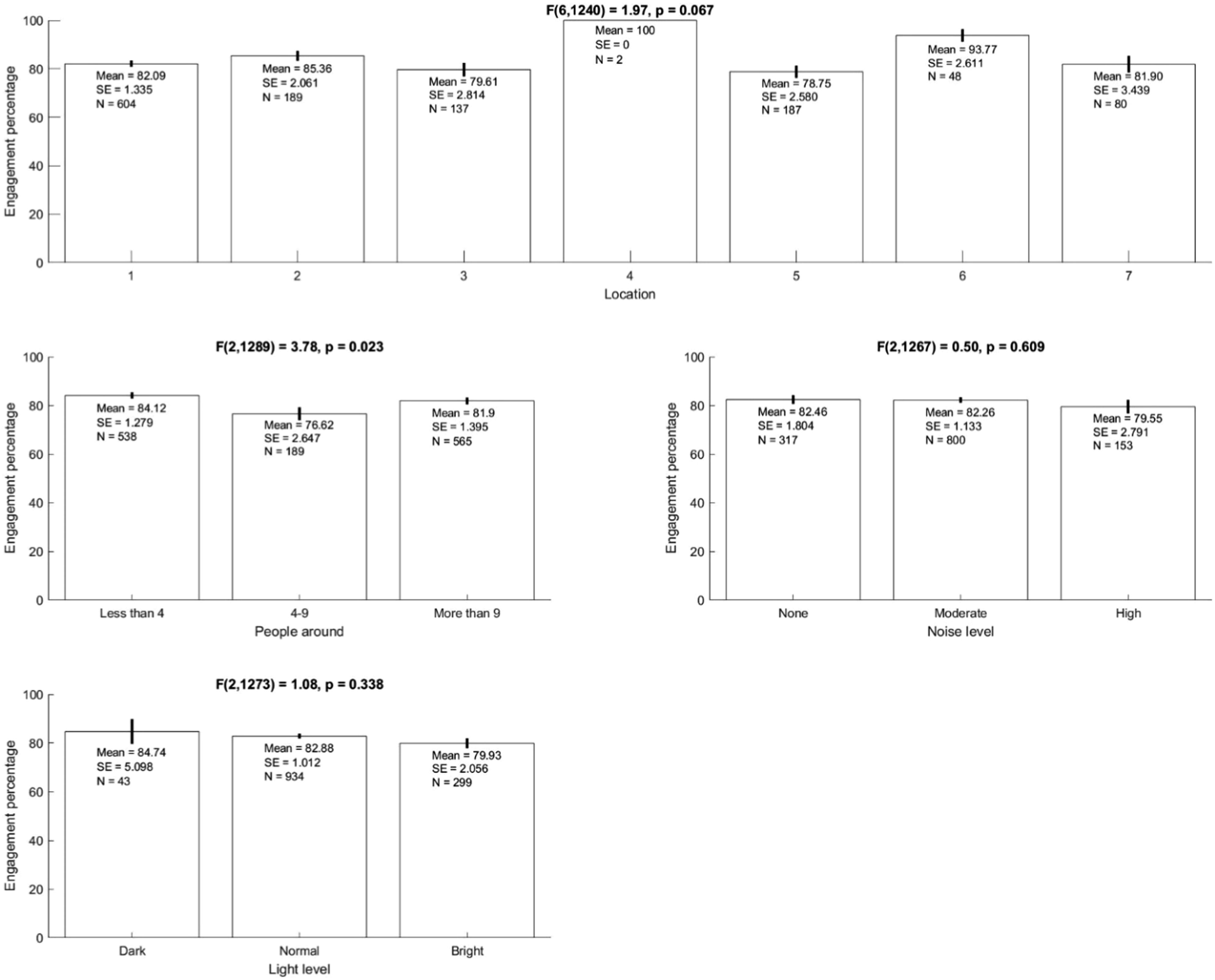
Figure 5 shows engagement percentage as a function of attention and attitude parameters. Overall, as expected, increasing attention (from not attentive to somewhat attentive to attentive to very attentive) and increasing attitude (at least from neutral to somewhat positive to positive to very positive) was associated with a systematic increase in engagement. Both attention most of the time and attention highest-level values significantly increased engagement percentage. Follow-up paired comparisons, for both attention parameters, showed that there was a significant difference between all neighboring levels of attention (for attention highest level, somewhat attentive vs attentive P < .01; all other P-values <.001). Engagement percentage as a function of attention and attitude parameters (mean, SE, and number of participants, N, shown within or above each bar; statistical results at the top, asterisk indicates significant result, corrected for multiple comparisons).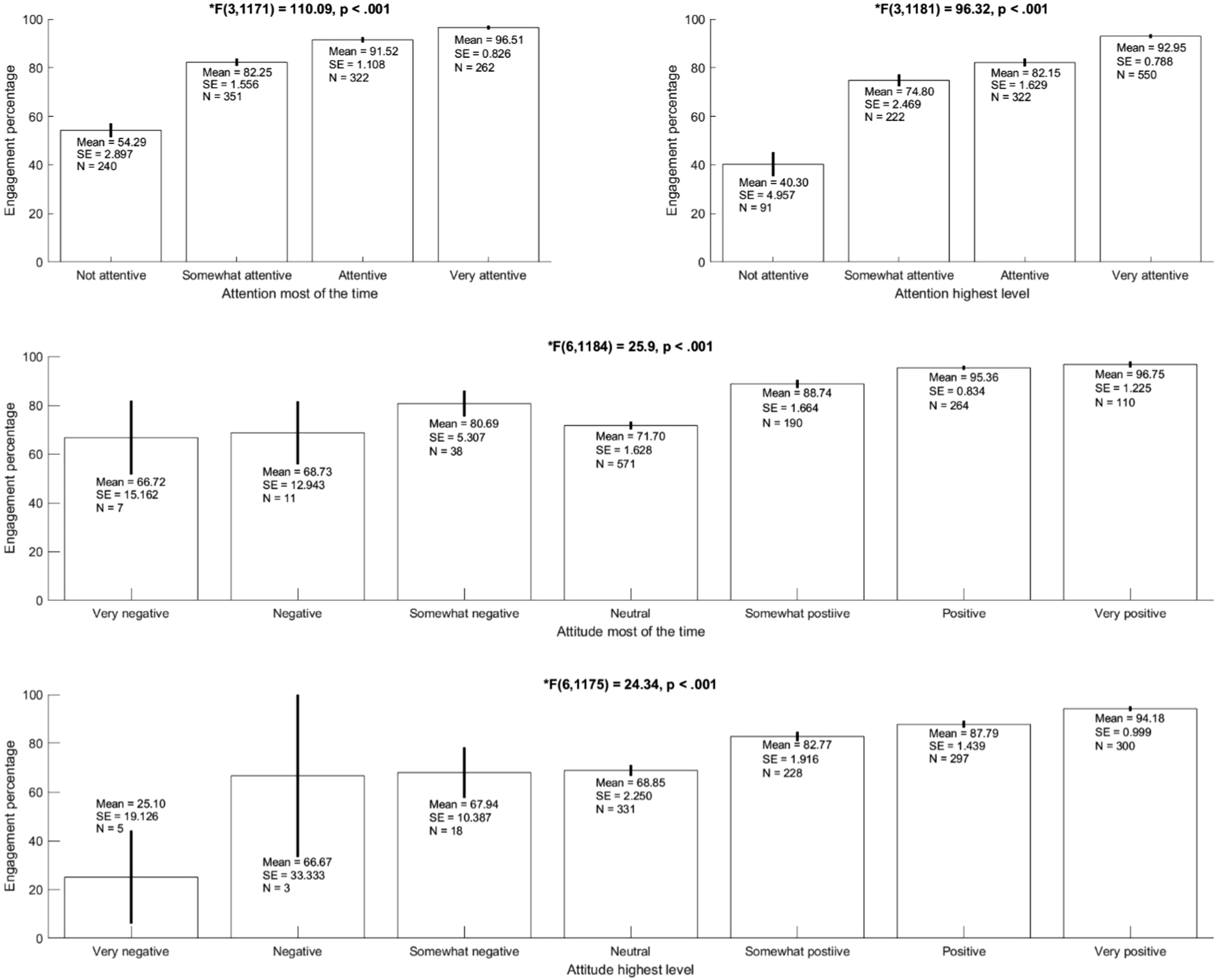
Both attitude most of the time and attitude highest-level values also significantly impacted engagement percentage. Follow-up paired comparisons for the attitude most of the time parameter showed that the corresponding significant main effect was driven by significant differences between the neutral and somewhat positive conditions along with the somewhat positive and positive conditions (both P-values <.001). Follow-up paired comparisons for the attitude highest-level parameter showed that the corresponding significant main effect was driven by significant differences between the neutral and somewhat positive conditions (P < .001), the somewhat positive and positive conditions (P < .05), and the positive and very positive conditions (P < .001). Although there were no significant differences for negative attitude values, this may have been due to the relatively low number and high variability of participants in these conditions.
Figure 6 shows engagement percentage as a function of activity parameters. As expected, across all parameter values, increasing activity was associated with a systematic increase in engagement. For the holding-book activity parameter, follow-up paired comparisons showed that there were significant differences between the none and a-little conditions (P < .05) along with the some and most-or-all conditions (P < .001). For the manipulating-book activity parameter, follow-up paired comparisons showed that there was a significant difference between the none and a-little conditions (P < .05). For the talking-to-book activity parameter, follow-up paired comparisons showed that there were significant differences between the none and a-little conditions (P < .05) along with the a-little and some conditions (P < .01). For the talking-about book activity parameter, follow-up paired comparisons showed that there were significant differences between the none and a-little conditions (P < .001), a-little and some conditions (P < .01), and the some and most-or-all conditions (P < .05). For the gesturing-to book activity parameter, follow-up paired comparisons showed that there were significant differences between the none and a-little conditions (P < .001) along with the a-little and some conditions (P < .001). For the other activity parameter, follow-up paired comparisons showed that there was a significant difference between the some and most-or-all conditions (P < .001). Engagement percentage as a function of activity parameters (mean, standard error, SE, and number of participants, N, shown within each bar; statistical results at the top, asterisk indicates significant result, corrected for multiple comparisons).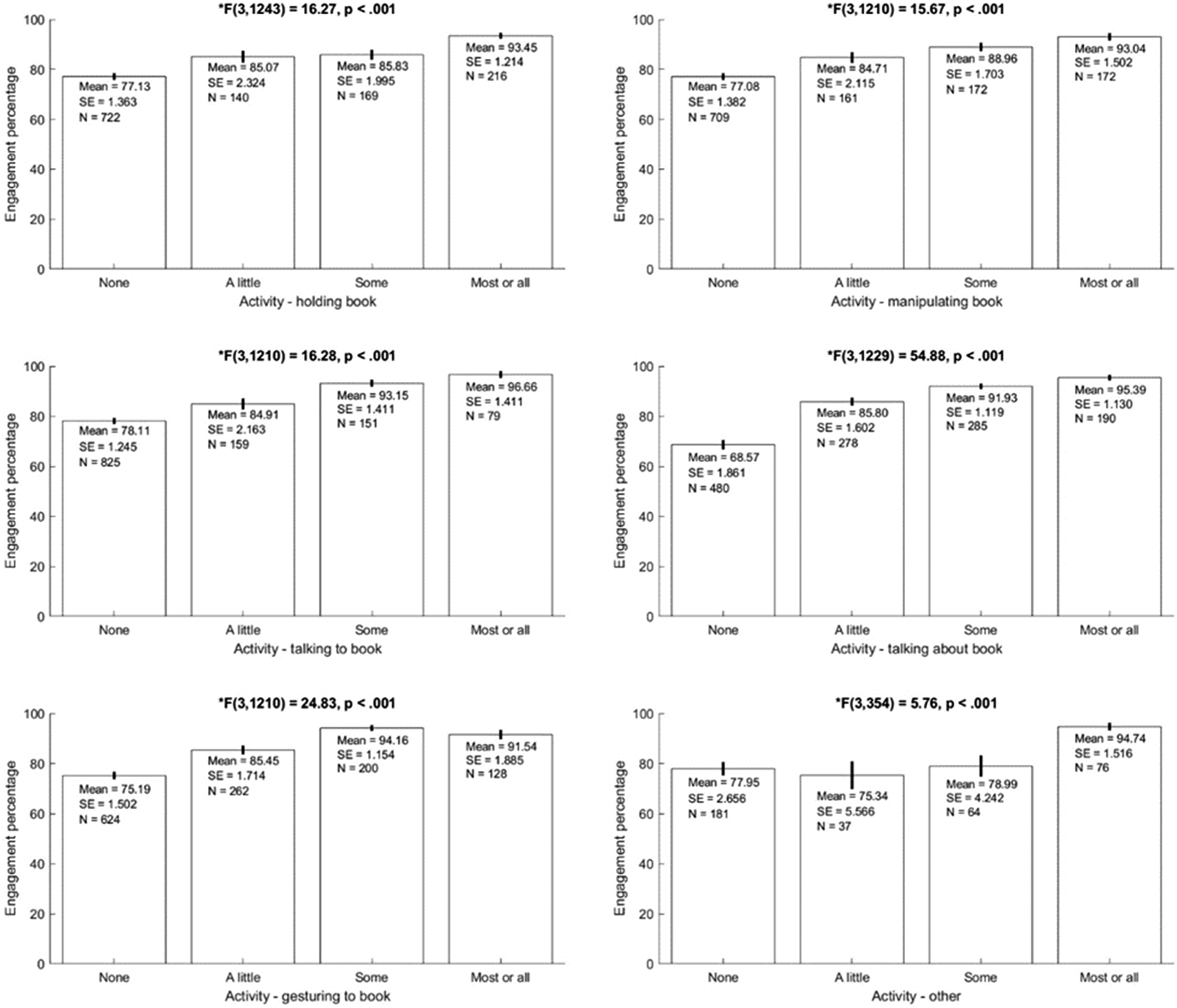
As a final test, we assessed whether some readers might be impaired at engaging persons with dementia. However, a histogram of the number of readers as a function of engagement percentage showed no evidence that there was an appreciable number of poor readers (Figure 7). This would have been shown by a marked increase in the number of readers in the 0-10% engagement bin. Number of readers binned by engagement percentage (bin width = 10%).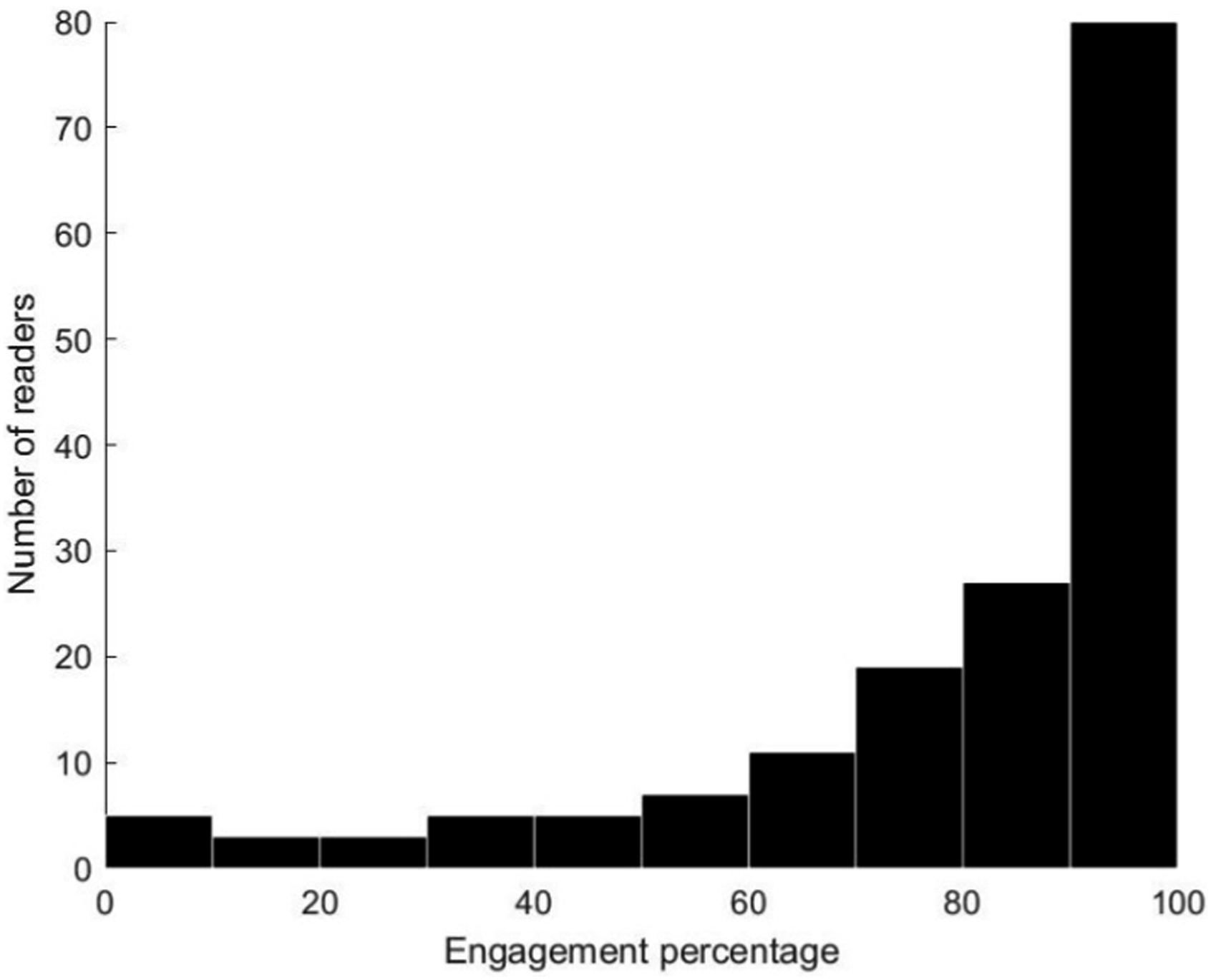
Discussion
In the present study, we investigated the degree to which the Reading Buddies Program, which involves reading books to inpatient residents with dementia, engaged persons with dementia. We also assessed how interaction parameters, environmental factors, attention and attitude parameters, and activity parameters affected the level of engagement. As expected, engagement duration and reading duration were highly correlated, illustrating that the longer one reads to a person with dementia the longer the duration of engagement. This aligns with evidence that while people with dementia can engage in structured activity, those with late-stage dementia may engage for shorter durations and require more cuing than those in the early-moderate stages. 14
Regarding interaction parameters, we found that transferring persons with dementia increased engagement, while the student interrupting the resident from another activity decreased engagement with the reading activity. That is, expecting persons with advanced dementia to quickly transition between two different activities may negatively affect ability to engage. Interestingly, being interrupted by someone else once the session had been initiated, or the person with dementia initially refusing the book, had no significant effect on engagement, with the latter indicating that persons with dementia will usually engage even after refusing to do so. It is clinically important to appreciate that while refusals are common for residents with cognitive impairment (particularly refusals of care for those with more advanced dementia),26,27 persons with dementia may say “no” or refuse offered activities because they are unable to process the expectations and demands of the invitation.
None of the environmental parameters significantly affected engagement (corrected for multiple comparisons). However, the number of people did significantly reduce the engagement percentage at the P < .05 level (uncorrected for multiple comparisons), which replicated a previous result. 28 It may be that an intermediate number (4-9) of people around is particularly distracting (more so than lower or higher numbers of people). This may relate to the fact that more people may increase the level of noise, and noise levels in nursing home settings have been shown to affect residents’ ability to engage. 29 Given that transferring persons with dementia increased the level of engagement, it may be prudent to transfer persons with dementia from an environment with 4‐9 people to an environment with either a higher or lower number of people in the surroundings. That said, this finding did not reach the a priori level of significance required to correct for multiple comparisons in the present study; thus, this is a topic for future research.
As expected, an increase in attention, attitude, and activity parameters was associated with an increase in engagement. Given that these parameters were correlational, it was not possible to determine the direction of causality. For instance, it cannot be determined whether a person with dementia with a positive attitude had a higher engagement duration because of their pre-existing attitude or whether they had a more positive attitude because reading to them produced a high level of engagement. Future studies could investigate this by obtaining a baseline measure of attention, attitude, and activity, and assessing how these values change after the reading intervention.
Conclusions
The current study aimed to investigate whether the Reading Buddies Program was an effective way to engage persons with late-stage dementia. We found that reading with persons with dementia led to a very high level of engagement, and that the persons with dementia were generally attentive and had a positive attitude. Reading to persons with dementia provides a simple, cost effective way to engage them in meaningful activity, and may reduce levels of agitation, loneliness, and depression.
Footnotes
Declaration of Conflicting Interests
The author(s) declared no potential conflicts of interest with respect to the research, authorship, and/or publication of this article.
Funding
The author(s) received no financial support for the research, authorship, and/or publication of this article.

Data Availability Statement
Data sharing not applicable to this article as no datasets were generated or analyzed during the current study.
Appendix