Human beings have always pursued a prolonged lifespan, while the aging of the nervous system is associated with a large variety of diseases. Pathological aging of the nervous system results in a series of neurodegenerative diseases and can cause disability and death in the elderly. Therefore, there is an urgent need for the prevention and treatment of nervous system aging. Chinese herbal medicines have a long history, featuring rich and safe ingredients, and have great potential for the development of anti-aging treatment. We searched the publications on PubMed with key words “anti-aging of the nervous system” and “Chinese herbal medicine” in recent 10 years, and found sixteen Chinese herbal medicines. Then by comparing their popularity of use as well as active components based on the research articles, five common Chinese herbal medicines namely Ginseng Radix, Lycii Fructus, Astragali Radix, Coptidis Rhizoma and Ginkgo Folium, were confirmed to be the most related to anti-nervous system aging and neural degenerative diseases. At the same time, the active ingredients, research models, action mechanisms and curative effects of these five common Chinese herbal medicines were reviewed. From the five common Chinese herbal medicines reviewed in this paper, many encouraging effects of Chinese herbal medicines on treating nervous system aging and related diseases were revealed and more potent herbs would be explored with the help of the proposed possible mechanisms.
Aging is a transformational factor in major chronic diseases and a key factor for the development of age-related diseases. Since ancient times, people have pursued health and longevity by delaying aging and improving the quality of life. Aging itself is not a disease but predisposes to senile diseases. Particularly, the aging of the nervous system causes a large number of diseases.1 Nervous system aging is divided into peripheral nervous system aging and central nervous system aging. Neurodegenerative diseases are conditions that result from the loss of neurons2 and/or myelin sheath3 in the brain and spinal cord. Moreover, aging is the strongest risk factor for most neurodegenerative diseases,4,5 the most common being Alzheimer’s disease6 and Parkinson’s disease.7 Despite the rising incidence among the elderly, effective drugs for these diseases are still lacking. Due to the rapidly aging population, scientists around the world have been searching for the causes and underlying mechanisms of aging-related diseases, as well as methods to delay aging and prolong lifespan.
Recently, more and more studies have demonstrated the potential of Chinese herbal medicine in anti-aging treatment.8-10 Chinese herbal medicines typically make use of safe ingredients and offers unique solutions to many intractable diseases.11,12 Many prescriptions for prolonging lifespan have been described in ancient Chinese medicine books. In contrast, modern medical research has focused on extracting the active ingredients from anti-aging Chinese herbal medicines and studied their anti-drug mechanisms and clinical availability. For example, the main active ingredients astragalus polysaccharides (APS) and Astragaloside IV which contained in Astragali Radix, extracted from astragalus13,14 have obvious anti-aging effects and can also effectively enhance immunity. A well-known life-prolonging holy product, Ginseng Radix, also exert anti-aging effects through various mechanisms,15 such as neuroprotective and neuroregulatory effects.16 After reviewing the references published in the recent 10 years, five most studied Chinese herbal medicines, including Ginseng Radix, Lycii Fructus, Astragali Radix, Coptidis Rhizoma and Ginkgo Folium were summarized in this paper. We proceeded to summarize the active ingredients, research models, mechanisms, and therapeutic effects of these commonly used Chinese herbal medicines.
Nervous System Aging and Neurodegenerative Diseases
Aging is a progression deterioration of fitness caused by deleterious factors, influenced by genetic, environmental, and stochastic processes. From the evolutionary perspective, aging occurs due to the evolutionary restriction maintained by the body, which leads to the accumulation of injuries.17 Aging is associated with the loss of functional reserves, reduced homeostasis, and decreased regenerative capacity of aging tissues over time. Tissue-specific stem cells, their niches, and regenerative changes in systemic cues regulating stem cell activity contributed to this process.18 Senescence can be divided into cellular senescence, which involves a permanent state of cell cycle arrest serving as a defence mechanism from unnecessary damage,19 and individual aging, where the accumulation of the senescent cells leads to overall human senescence.20 Individual senescence is characterized by a gradual decline in bodily function. Aging is a significant risk factor for various common diseases, including nervous system diseases, diabetes, cardiovascular diseases, and cancer21 chronic age-related diseases account for approximate half of all human deaths.
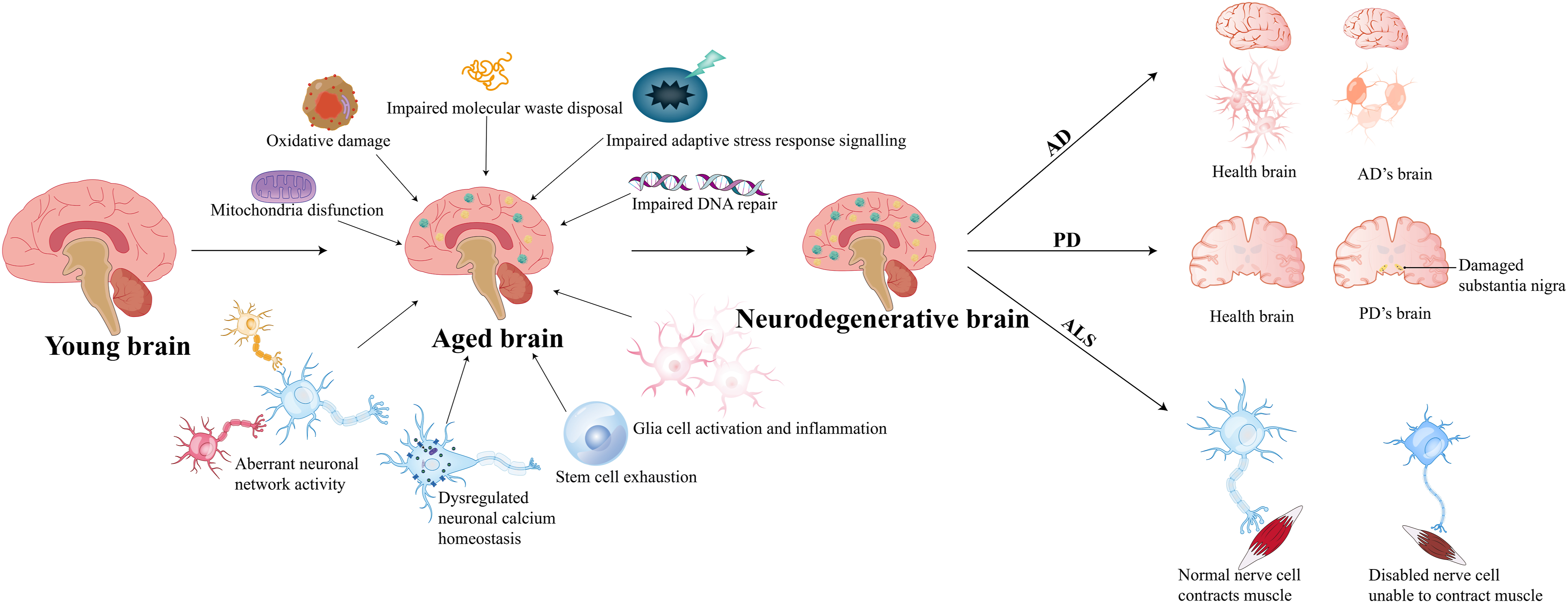
Aging has a significant impact on both the central nervous system and peripheral nervous system. The regenerative capacity of the peripheral nerve diminishes with aging, resulting in the emergence of neuropathies, that impede normal bodily function. This decline can be attributed to the diminished ability of Schwann cells to maintain and regenerate the aging nerves.22 Schwann cells play a crucial role in peripheral nerves regeneration and facilitate the repair of various tissues.23 Brain aging mostly refers to central nervous system aging, which differs from other organs because neurons are highly differentiated cells that can no longer undergo mitosis while still having a limited lifespan.24 In the process of physiological brain aging, a series of structural and functional changes occur, including brain atrophy, a decrease in neurochemical transmitters, loss of neuronal synapses and a decline in cognitive function.25 At cellular and molecular level, Mattson and Arumugam have postulated nine hallmarks of brain aging: mitochondrial dysfunction, oxidative damage, impaired molecular waste disposal, impaired adaptive stress response signalling, impaired DNA repair, aberrant neuronal network activity, dysregulated neuronal calcium homeostasis, stem cell exhaustion, and glia cell activation and inflammation26 (Figure 1).
Nine hallmarks of brain aging at cellular level and the neurodegenerative diseases.
Under the combined action of some internal and external factors, the nervous system may gradually progresses from physiological aging to pathological aging, which may lead to the development of neurodegenerative diseases27 (Figure 1). Pathological brain aging is characterized by early synaptic destruction and synaptic loss, which leads to abnormal anatomical and functional white-matter connection defects and progressive cognitive decline.28 Neurodegenerative diseases are caused by the entanglement of neuron fibers and the loss of neurons. In addition, the damage and reduced production of neural stem cells (NSCs)29 can also cause neurodegenerative diseases. Alzheimer's disease (AD), Parkinson’s disease (PD) and amyotrophic lateral sclerosis (ALS) are three major neurodegenerative diseases.30,31 Neurodegenerative diseases are characterized by three pathological features. The first is the accumulation of pathological proteins caused by the imbalance of intracellular homeostasis,32 such as A amyloid β-protein in AD33 and Tau protein tangles,34 etc. The second is neuroinflammation mediated by microglia,35 and the third is neuronal death.36 Most neurodegenerative diseases usually manifest in the elderly, as aging is the most important risk factor for the development of neurodegenerative diseases and the hallmarks of aging are underline the onset of neurodegenerative diseases.4
Chinese Herbal Medicines in Nervous System Aging and Related Neurodegenerative Diseases
In traditional Chinese medicine, health and longevity are intricately related to the balance of yin and yang, strong innate endowment and adequate nutrition after birth. The innate origin lies in the kidney, whereas the acquired origin lies in the spleen (stomach). For example, Wang Chong pointed out in The Lunheng Self-discipline: “To keep one’s self-tranquility, to keep one’s self-restraint in due course, to keep one’s mind quiet, to love essence and self-protection, to be guided by appropriate drugs, so that one’s life can be prolonged, and one will not grow old.” In addition, applying Chinese herbal medicines to delay aging and senility can prevent diseases. Many kinds of anti-aging Chinese herbal medicines have been mentioned in ancient books, such as the earliest medical book Shennong Materia Medica. After thousands of years of exploration and research, Chinese medicine scientists have identified numerous anti-aging Chinese herbal medicines. These herbs have been extensively studied and evaluated for their effectiveness in managing neurodegenerative diseases. For example, Yang, Wenting et al.37 analyzed clinical trial data and concluded that Chinese herbal medicine could be recommended for routine use in AD patients, as it may treat AD by enhancing adult hippocampal neurogenesis by activating multi-signal pathways. Therefore, AD patients could benefit from follow-up treatment with Chinese herbal medicine. Chinese herbal medicines can also regulate the signal pathway related to the pathological progress of AD,12 regulate crosstalk between pathways through a multitarget, and finally improve the cognitive impairment of AD patients. Furthermore, Chinese herbal medicines can also improve Parkinson's disease (PD). Yin, Rong et al.38 summarized the potential targets of bioactive compounds or herbal extracts from Chinese herbal medicines in treating PD, reporting herbs or their bioactive components for drug development. Although the research of Chinese herbal medicines' active ingredients for the treatment of neurodegenerative diseases is still in the preliminary exploration stage,39 Chinese herbal medicine offers a unique theory and rich experience in anti-aging treatment. Exploring the mechanism of Chinese herbal medicine in anti-aging and its role in senile diseases could lead to the development of effective treatments for neurodegenerative diseases.
Five Typical Chinese Herbal Medicines for treating Nervous System Aging and Related Neurodegenerative Diseases
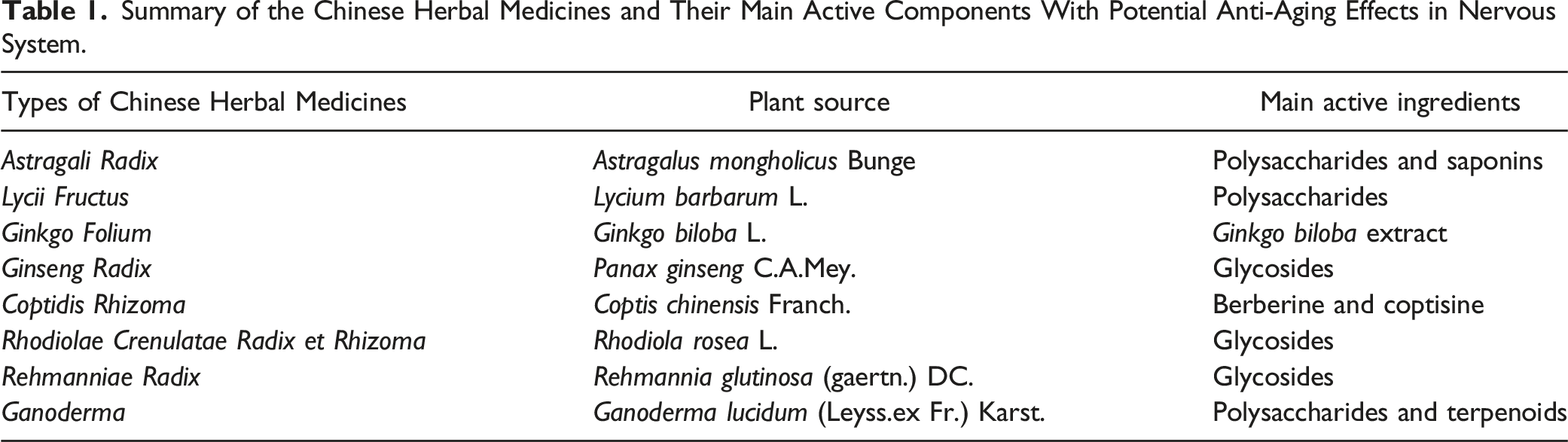
At present, hundreds of anti-aging Chinese herbal medicines have been reported. However, the Compendium of Materia Medica lists about 60 “top grade” anti-aging Chinese herbal medicines, such as Ginseng Radix and Ganoderma lucidum. And, we conducted a comprehensive search for the articles on anti-aging Chinese herbal medicines in PubMed over the past decades. As a result, we identified 25 Chinese herbal medicines with potential anti-aging effects. After reviewing the titles and abstracts, we selected 96 articles related to the treatment of nerve aging and neurodegenerative diseases, involving 15 Chinese herbal medicines. To provide a more visual representation of the popularity of these anti-aging herbs, we created a pie chart (Figure 2) that displays the names of Chinese herbal medicines and the corresponding number of research articles. In addition, we summarized the active components of the top 8 most studied Chinese herbal medicines in Table 1.
Pie chart with Chinese herbal medicines name and number of documents.
Summary of the Chinese Herbal Medicines and Their Main Active Components With Potential Anti-Aging Effects in Nervous System.
Types of Chinese Herbal Medicines
Plant source
Main active ingredients
Astragali Radix
Astragalus mongholicus Bunge
Polysaccharides and saponins
Lycii Fructus
Lycium barbarum L.
Polysaccharides
Ginkgo Folium
Ginkgo biloba L.
Ginkgo biloba extract
Ginseng Radix
Panax ginseng C.A.Mey.
Glycosides
Coptidis Rhizoma
Coptis chinensis Franch.
Berberine and coptisine
Rhodiolae Crenulatae Radix et Rhizoma
Rhodiola rosea L.
Glycosides
Rehmanniae Radix
Rehmannia glutinosa (gaertn.) DC.
Glycosides
Ganoderma
Ganoderma lucidum (Leyss.ex Fr.) Karst.
Polysaccharides and terpenoids
The most effective compounds which have potential anti-aging effects in nervous system are flavonoids, terpenoids, saponins, and polysaccharides40 and berberine.41 By comparing the number of research articles and their active components of the 15 Chinese herbal medicines, we identified the five Chinese herbal medicines that best aligned the criteria of this review. There herbals are Ginseng Radix, Lycii Fructus, Astragali Radix, Coptidis Rhizoma and Ginkgo Folium. This review summarizes the active ingredients, mechanisms and efficacy of five typical Chinese herbal medicines in anti-nervous system aging and related neurodegenerative diseases.
Ginseng Radix
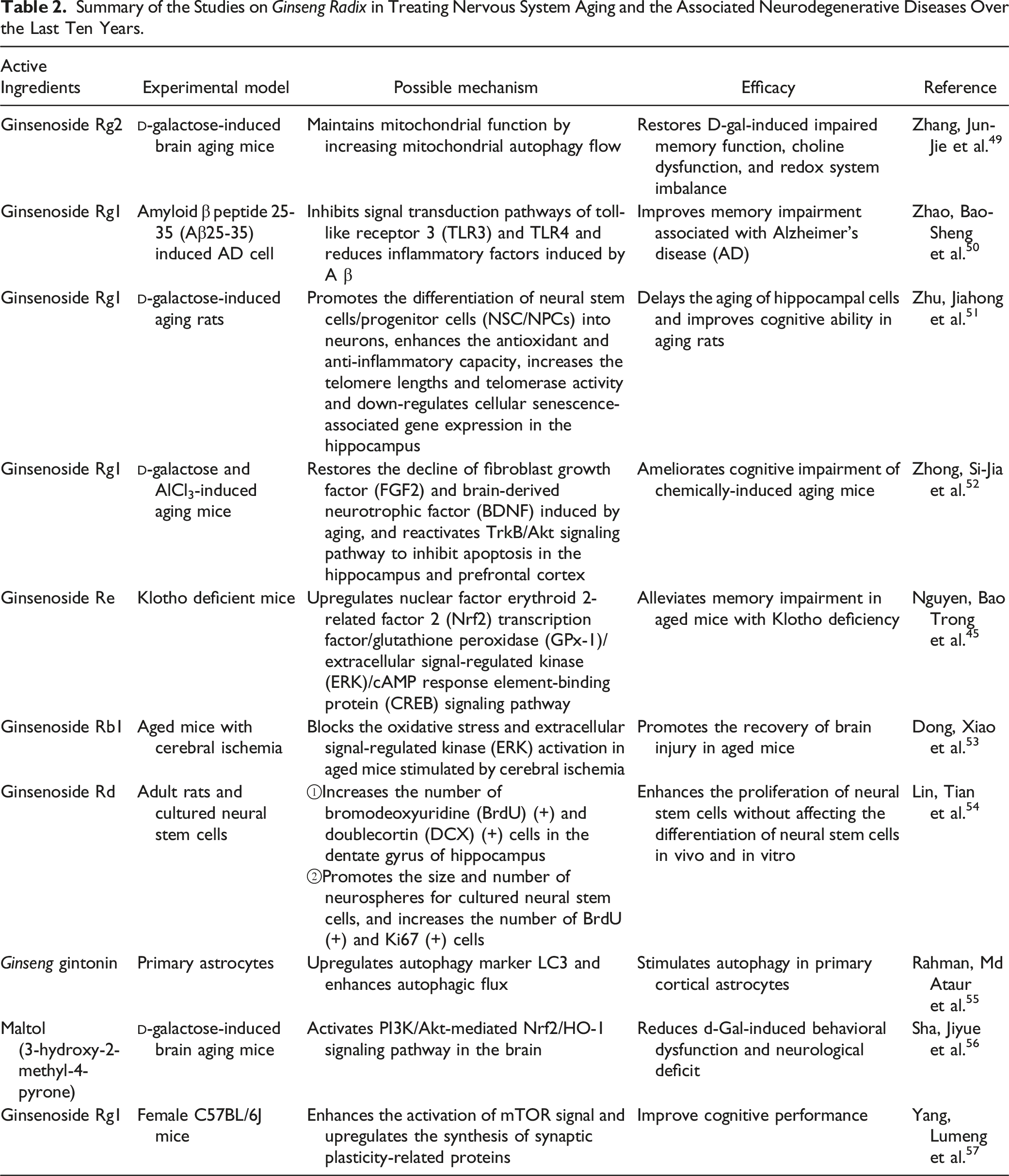
Ginseng Radix is a popular herbal medicine that has been used in Chinese herbal medicine for more than 2000 years. Its first use was recorded in Shennong Herbal Classic in ancient China. Ginseng Radix and its components, especially ginsenosides, are not only effective against aging but also beneficial against aging-related neurological diseases. Ginsenoside exhibits anti-apoptosis, anti-oxidation and anti-inflammatory properties, making it effective in protecting the central nervous system against the neurodegenerative diseases associated with aging.42 The neural tissue loss and subsequent decline in cognitive function are often observed with advancing age. Ginseng Radix is extensively used and studied due to its enhancement in cognition and stress-relieving effects.43 For example, Ginsenoside Rg1 has been shown to delay cognitive decline caused by the production of Aβ, protein kinase A/cyclic AMP responsive element binding protein (PKA/CREB) activity, and brain-derived neurotrophic factor (BDNF) content in the brain.44 Furthermore, Ginsenoside Re was shown to alleviate cognitive impairment in mice.45 Additionally, Ginsenosides Rb46 and Rd47 exhibit robust neuroprotective and regulatory effects. Many Ginsenosides play an active role in anti-aging, especially in the anti-aging of the nervous system,48 highlighting Ginseng Radix as the most promising Chinese medicine in the anti-aging field. Studying the active ingredients and anti-aging mechanism of Ginseng Radix is of great significance. Table 2 summarizes the studies on Ginseng Radix in treating nervous system aging and the associated neurodegenerative diseases over the last 10 years.
Summary of the Studies on Ginseng Radix in Treating Nervous System Aging and the Associated Neurodegenerative Diseases Over the Last Ten Years.
Active Ingredients
Experimental model
Possible mechanism
Efficacy
Reference
Ginsenoside Rg2
d-galactose-induced brain aging mice
Maintains mitochondrial function by increasing mitochondrial autophagy flow
Restores D-gal-induced impaired memory function, choline dysfunction, and redox system imbalance
Promotes the differentiation of neural stem cells/progenitor cells (NSC/NPCs) into neurons, enhances the antioxidant and anti-inflammatory capacity, increases the telomere lengths and telomerase activity and down-regulates cellular senescence-associated gene expression in the hippocampus
Delays the aging of hippocampal cells and improves cognitive ability in aging rats
Restores the decline of fibroblast growth factor (FGF2) and brain-derived neurotrophic factor (BDNF) induced by aging, and reactivates TrkB/Akt signaling pathway to inhibit apoptosis in the hippocampus and prefrontal cortex
Ameliorates cognitive impairment of chemically-induced aging mice
①Increases the number of bromodeoxyuridine (BrdU) (+) and doublecortin (DCX) (+) cells in the dentate gyrus of hippocampus ②Promotes the size and number of neurospheres for cultured neural stem cells, and increases the number of BrdU (+) and Ki67 (+) cells
Enhances the proliferation of neural stem cells without affecting the differentiation of neural stem cells in vivo and in vitro
Lycii Fructus is extracted from the dried fruit of Lycium barbarum L. Lycium barbarum L. has a history of more than 2000 years in China as a traditional herb and food supplement. Lycium barbarum polysaccharide (LBP) is the main active component of Lycii Fructus, which delays nervous system aging by inhibiting the production or aggregation of amyloid β-protein (Aβ), reducing the production of amyloid β-protein (Aβ) peptide, exerting neuroprotection, decreasing neuronal morphology changes, and exerting antioxidative and anti-apoptosis effects.58-63Lycium barbarum polysaccharide (LBP) also has a remarkable curative effect on Alzheimer’s disease and Parkinson’s disease.64 Furthermore, the fruit extract of Lycii Fructus is an anti-aging ingredient65-67 that increases the expression of antioxidant-related genes, reduces Aβ deposition and reduces the levels of Aβ oligomer. In addition, the fruitless Lycium barbarum bud extract can also be used to treat Alzheimer’s disease by inhibiting Aβ fibrillation and decomposing Aβ fibers.68 The water extract of Lycium barbarum has neuroprotective effects on AD mice by improving cholinergic function.69Table 3 summarizes the studies on Lycii Fructus in treating nervous system aging and the associated neurodegenerative diseases over the last 10 years.
Summary of the Studies on Lycii Fructus in Treating Nervous System Aging and the Associated Neurodegenerative Diseases Over the Last Ten Years.
Active ingredients
Experimental model
Possible mechanism
Efficacy
Reference
Lycium barbarum polysaccharide (LBPs)
Ovariectomy (OVX) mouse
Downregulates the Toll-like receptor 4 (TLR4)/noncanonical nuclear factor-kappaB (NF-κB) signaling pathway associated mRNAs and proteins, decreases the inflammatory response and reduces neuronal injury
Reduces neuroinflammation and neuronal injury and relieves cognitive impairment of OVX female mice
Increases mitochondrial membrane potential (MMP) and IκB expression, inhibits [Ca2+]i elevation and suppresses apoptotic markers such as NF-κB, IL-6, and Toll-like receptor 4 (TLR4) overexpression
Increases cell ability and decreases impairment of neuronal morphology
Phenolic compounds in fruit of Lyciumruthenicum Murr.
Network-based pharmacological strategy
Activates succinate dehydrogenase subunit (SDHA, SDHB and SDHC) of mitochondrial electron transfer chain complex II, and ATP5A1 and ATP5B containing mitochondrial electron transfer chain complex V
Maintains the dynamic balance of mitochondrial function and reduces cell apoptosis
Inhibits Aβ fibrillation and decomposes the formed Aβ fibers, reduces glial hyperplasia and inflammatory cytokine release, and improves oxidative stress in the brain
H2O2-treated PC12 cells in vitro and in CoCl2-treated rats in vivo
Inhibits the H2O2-induced decrease in nuclear factor erythroid 2-related factor 2 (Nrf)2 and heme oxygenase (HO)-1 expression and binding of Nrf2 to the promoters of HO-1
Coptidis Rhizoma is composed of many alkaloids, including berberine, palmatine, ephedra, cotisin and episcopolamine, among which berberine is the main compound.41 Berberine can inhibit cholinesterase activity, Aβ production and tau hyperphosphorylation,76 thus reducing neuronal damage and apoptosis. Berberine’s small size allows it to effectively cross the blood-brain barrier, acting on a number of molecular targets. Many scholars77-79 have found that berberine has broad potential in the treatment of neurodegenerative diseases. However, its benefits have only been discovered in recent years, so only a few studies have been performed on the subject. Table 4 summarizes the studies on Coptidis Rhizoma in treating nervous system aging and the associated neurodegenerative diseases over the last 10 years.
Summary of the Studies on Coptidis Rhizoma in Treating Nervous System Aging and Associated Neurodegenerative Diseases Over the Last Ten Years.
Coptis chinensis rhizome water extract (CRE) and coptisine (COP)
Neuroblastoma SH-SY5Y cells
Strengthens the thioredoxin defense system against oxidative stress by downregulating thioredoxin-interacting protein (TXNIP) gene expression and reduces the decrease of cell viability, MMP and apoptosis induced by tert butyl hydroperoxide
In recent years, a growing number of studies have focused on the treatment of neurodegenerative diseases by Astragali Radix. The main components of Astragali Radix are Astragalus polysaccharides (APS), astragaloside, flavonoids, saponins, alkaloids, etc.88Astragali Radix polysaccharide89 and Astragaloside IV90 are the main active ingredients of Astragali Radix in preventing and treating neurodegenerative diseases. Astragalus polysaccharides can inhibit the increase of astrocytes and the activation of microglia, reverse the structural damage of mitochondria, increase the level of reactive oxygen species, promote the formation of autophagy cells against neurodegenerative diseases, and exert antioxidant and anti-aging effects.91-95 Moreover, Astragaloside IV plays an anti-aging role by inhibiting oxidation and apoptosis, regulating calcium balance and exerting anti-inflammatory properties. In addition, Astragaloside IV promotes mitochondrial autophagy, thus reducing the accumulation of damaged mitochondria and the production of mitochondrial reactive oxygen species.14,96-103 To conclude, the mechanism of Astragali Radix against aging-related neurodegenerative diseases mainly involves anti-neurotoxicity, anti-neuroinflammation and anti-oxidation. Astragali Radix is a dietary herb, applied with many potential signal regulations, including neurotransmitters and receptors, anti-inflammatory activity, inhibiting amyloid aggregation, inducing myelin repair and neurogenesis, and activating signal pathways related to neurological diseases.104Table 5 summarizes the studies of Astragali Radix in treating nervous system aging and the associated neurodegenerative diseases in the recent 10 years.
Summary of the Studies on Astragali Radix in Treating Nervous System Aging and the Associated Neurodegenerative Diseases Over the Last Ten Years.
Active ingredients
Experimental model
Possible mechanism
Efficacy
Reference
Astragalus polysaccharides (APS)
APP/PS1 mice
Activates Nrf2 channel
Improves the cognitive ability of APP/PS1 mice, reduces apoptosis and Aβ accumulation
Reduces the increase of astrocytes and the activation of microglia in the vicinity of plaques, and improves the reactivity of astrocytes with high-fat diet and low-dose injection of streptozotocin (HFSTZ) aggravation in APP/PS1 mice
Ameliorates peripheral metabolic stress, vascular inflammation and neuroinflammation
Reduces motor dysfunction, increases the proportion of TH-positive cells, reverses the damage to the mitochondrial structure, inhibits reactive oxygen species (ROS), and increase mitochondrial membrane potential
Promotes autophagy in cells, increases the conversion of LC3-I protein to LC3-II protein, down-regulates the protein expression of pAKT and p-mTOR, and up-regulates the protein expression of PTEN.
Prevents LPS-induced activation of PKB and NFκ B, resulting in down-regulation of inducible nitric oxide synthase (iNOS), cyclooxygenase-2 (COX-2), tumor necrosis factor (TNF) and interleukin-1β (IL-1β) in BV2
Protects the synaptic ultrastructure, maintains synaptic function, increases acetylcholine concentration in the hippocampus, promotes the normalization of electroencephalogram (EEG) signals, and restores brain function
Protects rat hippocampus from microwave-induced structural and functional injuries
Long culture-induced replicative senescence model and lipopolysaccharide/1-methyl-4-phenylpyridinium (LPS/MPP)-induced premature senescence model and PD mouse model
Inhibits astrocyte senescence via promoting mitochondrial autophagy
Inhibits the interaction of tau protein hyperphosphorylation, synaptic defects, neuroinflammation and ptosis via regulating proliferator-activated receptorγ (PPARγ)
Inhibits TLR4/NF-κB signaling pathway and protects neurons from cell death mediated by microglia by transforming microglia from inflammatory M1 to anti-inflammatory M2 phenotype
Protects neurons from microglia-mediated cell damage
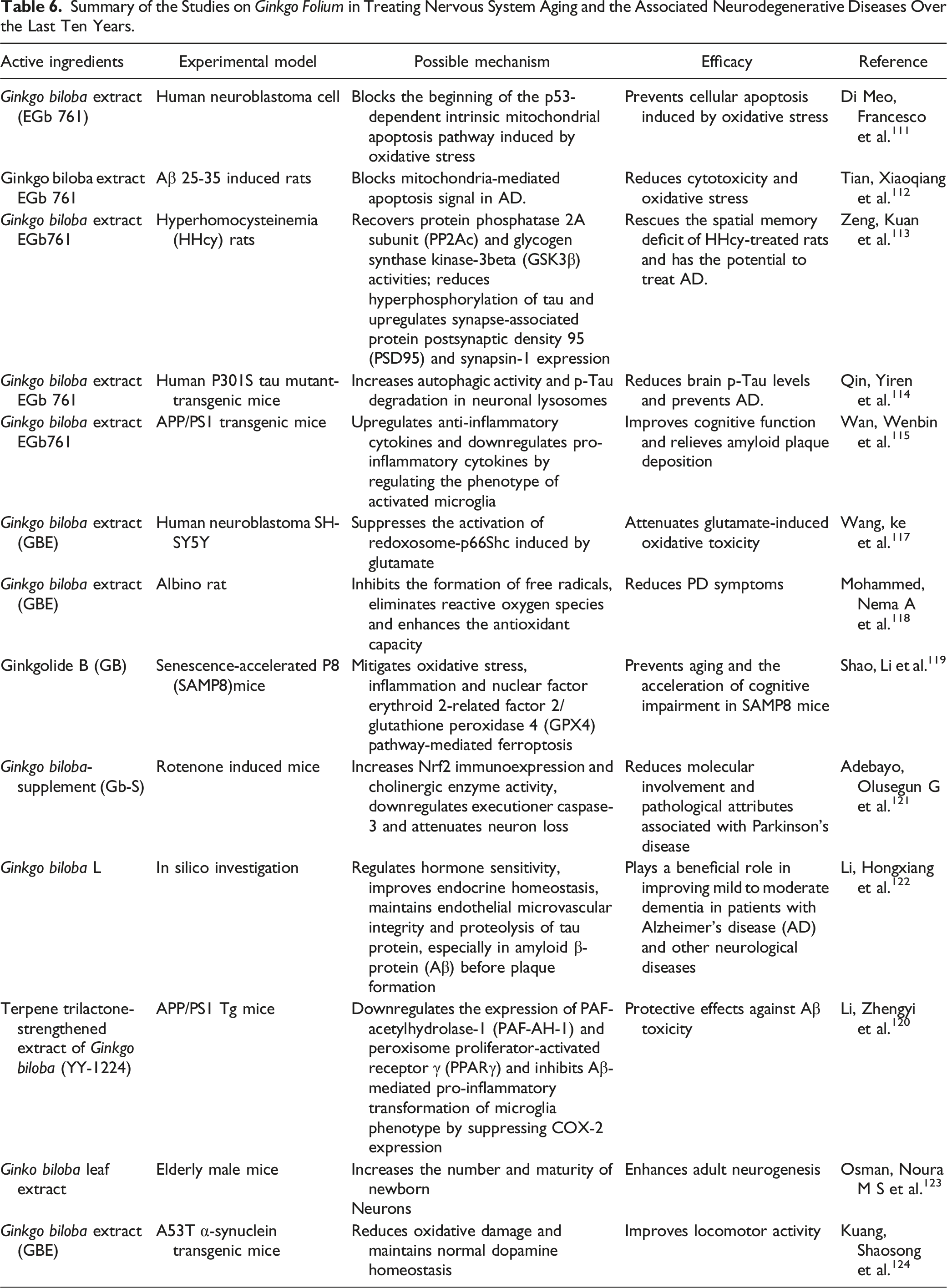
Ginkgo biloba L. is the oldest existing tree species in the world, which can be traced back to the Permian period, about 286 to 248 million years ago. Ginkgo Folium extract has been widely used to treat central nervous system and cardiovascular diseases.109,110 The active substances of Ginkgo Folium are mainly divided into two categories: EGb761and GBE. The Ginkgo Folium extract EGb761 can prevent neurodegenerative diseases by blocking the mitochondrial-mediated apoptosis signal,111,112 reducing the hyperphosphorylation of tau protein and increasing the degradation of p-Tau.113,114 Furthermore, it regulates the phenotype of activated microglia, up-regulating anti-inflammatory cytokines and down-regulating pro-inflammatory cytokines.115 Growing evidence116 shows the therapeutic potential of GBE in Alzheimer's disease (AD). Among herbal extracts, the Ginkgo biloba extract (GBE) is one of the most studied herbs for cognitive impairment and AD. GBE can inhibit the formation of free radicals, exert antioxidant effects, reduce neuronal damage and reduce the occurrence of inflammatory reactions.117-119 In addition, some scholars extracted a new compound-YY1224, which can inhibit the pro-inflammatory transformation of microglia mediated by Aβ and protect against Aβ toxicity.120 Furthermore, Ginkgo biloba L. leaves have high yields, abundant raw materials, low prices and easily available extracts. Therefore, they are suitable for drug development and mass production. Table 6 summarizes the studies on Ginkgo Folium in treating nervous system aging and the associated neurodegenerative diseases over the last 10 years.
Summary of the Studies on Ginkgo Folium in Treating Nervous System Aging and the Associated Neurodegenerative Diseases Over the Last Ten Years.
Active ingredients
Experimental model
Possible mechanism
Efficacy
Reference
Ginkgo biloba extract (EGb 761)
Human neuroblastoma cell
Blocks the beginning of the p53-dependent intrinsic mitochondrial apoptosis pathway induced by oxidative stress
Prevents cellular apoptosis induced by oxidative stress
Recovers protein phosphatase 2A subunit (PP2Ac) and glycogen synthase kinase-3beta (GSK3β) activities; reduces hyperphosphorylation of tau and upregulates synapse-associated protein postsynaptic density 95 (PSD95) and synapsin-1 expression
Rescues the spatial memory deficit of HHcy-treated rats and has the potential to treat AD.
Regulates hormone sensitivity, improves endocrine homeostasis, maintains endothelial microvascular integrity and proteolysis of tau protein, especially in amyloid β- protein (Aβ) before plaque formation
Plays a beneficial role in improving mild to moderate dementia in patients with Alzheimer's disease (AD) and other neurological diseases
Terpene trilactone-strengthened extract of Ginkgo biloba (YY-1224)
APP/PS1 Tg mice
Downregulates the expression of PAF-acetylhydrolase-1 (PAF-AH-1) and peroxisome proliferator-activated receptor γ (PPARγ) and inhibits Aβ-mediated pro-inflammatory transformation of microglia phenotype by suppressing COX-2 expression
The Similar and Different Cellular Mechanisms of These Five Chinese Herbal Medicines on Anti-Nervous System Aging
At cellular and molecular level, Mattson and Arumugam had postulated certain nine hallmarks of brain aging. In this review, five Chinese herbal medicines are involved in seven of these nine hallmarks (Table 7). Interestingly, these five Chinese herbal medicines all contain ingredients to play roles in repairing mitochondrial dysfunction and reducing oxidative damage. Specially, Ginseng Radix, Lycii Fructus, Astragali Radix and Ginkgo Folium contain ingredients that prevent glia cells activation and neuroinflammation. Moreover, Ginseng Radix,Lycii Fructus and Astragali Radix aid in restoring the transmission of adaptive stress response signals. These common characteristics are observed among the five Chinese herbs discussed in this review. However, each herb also possesses unique properties comparied to the other four. For example, Ginseng Radix can prevent stem cell depletion, Astragali Radix can repair aberrant neuronal network activity, and Lycii Fructus can regulate neural calcium homeostasis.
It is important to note that these hallmarks of brain aging are interconnected and operate within intricate signaling pathways and regulatory systems. Thus, the markers of brain aging do not occur in isolation.26 Considering these interindenpendence of these hallmarks, combination therapies with multiple durgs may be more effective. For example, Shenqi Yizhi granules125 are made of Ginseng Radix and Astragali Radix and Ren, Jianting et al. found that Shenqi Yizhi granules significantly increased the expression of proteins in energy metabolism, stress response, cytoskeleton, synaptic transmission, signal transduction, amino acid metabolism and other aspects. However, due to the complex composition and synergistic action of these herbals, the specific mechanism remains to be explored. Liang, Wenyi et al.126 discovered that Ginkgo biloba extract increased ginsenoside uptake in the brain of rats through LC-MS/MS analysis. They also found that EGb increased blood-brain barrier permeability by activating A1 adenosine receptor signaling pathway, thus enhancing the uptake of ginsenoside in the brain, and the combination of Ginseng Radix and Ginkgo biloba produced better effects Table 7.
Summary of the Anti-Aging Mechanisms of Five Chinese Herbs That Play a Role in Cellular Aging Hallmarks. (Chinese Herbal Medicine Pictures are Sourced From Network).
Ginseng Radix
Lycii Fructus
Coptidis Rhizoma
Astragali Radix
Ginkgo Folium
①Repair mitochondrial dysfunction.
① Repair mitochondrial dysfunction.
① Repair mitochondrial dysfunction.
① Repair mitochondrial dysfunction.
① Repair mitochondrial dysfunction.
②Reduce oxidative damage.
②Reduce oxidative damage.
② Reduce oxidative damage.
③ Reduce oxidative damage.
②Reduce oxidative damage.
③Prevent the activation of glia cells and prevent neuroinflammation.
③Prevent the activation of glia cells and prevent neuroinflammation.
④ Prevent the activation of glia cells and prevent neuroinflammation.
② Prevent the activation of glia cells and prevent neuroinflammation.
④Restore the transmission of some adaptive stress response signals.
④Restore the transmission of some adaptive stress response signals.
⑤ Restore the transmission of some adaptive stress response signals.
⑤Prevent stem cell exhaustion.
⑤Regulate neural calcium homeostasis.
⑥ Repair aberrant neuronal network activity.
Conclusion and Prospect
Aging is a universal biological process characterized by the accumulation of aging cells,127 and is associated with many neurodegenerative diseases.16 Senescence cells play an important role in the etiology of aging and age-related diseases in mammals.128 Slowing down aging by controlling and reducing the number of aging cells is the basis of anti-aging, while pathological aging leads to persistent and harmful changes in organisms. Despite the increasing prevalence of neurodegenerative diseases, no effective treatment is available for these diseases.129 However, multiple Chinese herbal medicine compounds present a promising potential in slowing down aging and preventing neurodegenerative diseases. Many Chinese herbal medicines exert their anti-aging effects through multiple mechanisms. Among the five typical Chinese herbal medicines listed in this review, the anti-aging mechanisms mainly involve reducing the production and aggregation of Aβ, preventing tau hyperphosphorylation, anti-neurotoxicity, repairing mitochondrial dysfunction, and reducing oxidative damage, eliminating free radicals to play an antioxidant role, and increasing the formation of anti-neurodegenerative disease cells.
The use of Chinese herbal medicine demonstrates effective control over the early signs of neurodegenerative diseases, and can serve as a preventive intervention. This approach avoids the toxic and side effects associated with western medicine while significantly improves the patient compliance. Moreover, Chinese herbal medicine contains hundreds of compounds, and whether there is synergistic effect between each component has not been well studied. At present, more active components should be separated and screened from Chinese herbal medicine, similar to the discovery of artemisinin for treating malaria. However, this extraction process may lead to the loss of valuable components. In addition, the Ginkgo Folium mentioned in this review highlights that the individual component extracted from plants may not be as effective as the whole extract. Many studies investigating the effective function of Ginkgo Folium primarily focus on the Ginkgo biloba extract (GBE). If the single component is not as effective as the whole extract, the establishment of a comprehensive quality standard system becomes crucial to facilitate the prompt clinical application of herbal medicines. The proposal of quality markers of Chinese medicines130 can provide insights to address this issue. Due to the various components responsible for the respective mechanisms, the extraction difficulty of individual compounds also varies. Moreover, among the chemical components of Chinese herbal medicine with anti-aging properties, saponins and polysaccharides are the most prevalent, and the most effective components and mechanisms should be prioritized. Nevertheless, the active components of many extracts have not been identified yet. Further research is required to develop effective treatments for aging and neurodegenerative diseases based on Chinese herbal medicine. In addition, based on the promising outcomes of certain Chinese medicine formulations, combining specific Chinese herbal medicines may yield a more potent and synergistic effect. However, due to the intricate nature of the herbal ingredients and the unclear interactions between them, the development of further research necessitates a more comprehensive solution.
Supplemental Material
Supplemental Material - Anti-Aging of the Nervous System and Related Neurodegenerative Diseases With Chinese Herbal Medicine
Anti-Aging of the Nervous System and Related Neurodegenerative Diseases With Chinese Herbal Medicine by Xiaohui Du, Nanbin Lou, Sinan Hu, Ruopeng Xiao, Chu Chu, Qiankai Huang, Lin Lu, Shanshan Li, Jing Yang in American Journal of Alzheimer’s Disease & Other Dementias®
Footnotes
Authorship Contribution Statement
Jing Yang and Shanshan Li: Conceptualization, Designing, Writing-review and editing. Chu Chu: Revising-the revised manuscript. Nanbin Lou, Sinan Hu, Ruopeng Xiao: Screening and gathering - articles. Qiankai Huang: Drawing the Figure 1. Lin Lu: Revising the language. Xiaohui Du: Writing- original draft, Writing-review and editing, Writing-the revised manuscript.
Declaration of Conflicting Interest
The author(s) declared no potential conflicts of interest with respect to the research, authorship, and/or publication of this article.
Funding
The author(s) disclosed receipt of the following financial support for the research, authorship, and/or publication of this article: This work was supported by the This work was supported by the National Natural Science Foundation of China (Grant number 81901154) and Zhejiang Basic Public Welfare Research Program (Grant number LGD22H250001).
ORCID iD
Jing Yang
Supplemental Material
Supplemental material for this article is available online.
Appendix
References
1.
NentwichLMGrimmnitzB. Neurologic emergencies in the elderly. Emerg Med Clin. 2016;34(3):575-599. doi:10.1016/j.emc.2016.04.009
2.
AdaikkanCMiddletonSJMarcoA, et al.Gamma entrainment binds higher-order brain regions and offers neuroprotection. Neuron. 2019;102(5):929-e938. doi: 10.1016/j.neuron.2019.04.011
3.
JäkelSAgirreEMendanha FalcãoA, et al.Altered human oligodendrocyte heterogeneity in multiple sclerosis. Nature Feb. 2019;566(7745):543-547. doi:10.1038/s41586-019-0903-2
4.
HouYDanXBabbarM, et al.Ageing as a risk factor for neurodegenerative disease. Nat Rev Neurol. 2019;15(10):565-581. doi:10.1038/s41582-019-0244-7
5.
AhnKLeeSJMook-JungI. White matter-associated microglia: new players in brain aging and neurodegenerative diseases. Ageing Res Rev. 2022;75:101574. doi:10.1016/j.arr.2022.101574
6.
VintersHV. Emerging concepts in Alzheimer’s disease. Annu Rev Pathol. 2015;10:291-319. doi:10.1146/annurev-pathol-020712-163927
LiCSDengHBLiDDLiZH. Advances and challenges in screening traditional Chinese anti-aging materia medica. Chin J Integr Med. 2013;19(4):243-252. doi:10.1007/s11655-013-1432-8
9.
XueFLiXQinLLiuXLiCAdhikariB. Anti-aging properties of phytoconstituents and phyto-nanoemulsions and their application in managing aging-related diseases. Adv Drug Deliv Rev. 2021;176:113886. doi:10.1016/j.addr.2021.113886
10.
YangCZhangWDongX, et al.A natural product solution to aging and aging-associated diseases. Pharmacol Ther. 2020;216:107673. doi:10.1016/j.pharmthera.2020.107673
11.
ChenJXuJHuangPLuoYShiYMaP. The potential applications of traditional Chinese medicine in Parkinson’s disease: a new opportunity. Biomed Pharmacother. 2022;149:112866. doi:10.1016/j.biopha.2022.112866
12.
DingMRQuYJHuBAnHM. Signal pathways in the treatment of Alzheimer's disease with traditional Chinese medicine. Biomed Pharmacother. 2022;152:113208. doi:10.1016/j.biopha.2022.113208
13.
ZhengYRenWZhangLZhangYLiuDLiuY. A review of the pharmacological action of Astragalus polysaccharide. Front Pharmacol. 2020;11:349. doi:10.3389/fphar.2020.00349
14.
XiaMLXieXHDingJHDuRHHuG. Astragaloside IV inhibits astrocyte senescence: implication in Parkinson’s disease. J Neuroinflammation. 2020;17(1):105. doi:10.1186/s12974-020-01791-8
HoYSSoKFChangRC. Anti-aging herbal medicine-How and why can they be used in aging-associated neurodegenerative diseases?Ageing Res Rev. 2010;9(3):354-362. doi:10.1016/j.arr.2009.10.001
17.
KirkwoodTB. Understanding the odd science of aging. Cell. 2005;120(4):437-447. doi:10.1016/j.cell.2005.01.027
McHughDGilJ. Senescence and aging: causes, consequences, and therapeutic avenues. JCB (J Cell Biol). 2018;217(1):65-77. doi:10.1083/jcb.201708092
21.
KubbenNMisteliT. Shared molecular and cellular mechanisms of premature ageing and ageing-associated diseases. Nat Rev Mol Cell Biol. 2017;18(10):595-609. doi:10.1038/nrm.2017.68
22.
BüttnerRSchulzAReuterM, et al.Inflammaging impairs peripheral nerve maintenance and regeneration. Aging Cell. 2018;17(6):e12833. doi:10.1111/acel.12833
23.
CattinALBurdenJJVan EmmenisL, et al.Macrophage-Induced blood vessels guide Schwann cell-mediated regeneration of peripheral nerves. Cell. 2015;162(5):1127-1139. doi:10.1016/j.cell.2015.07.021
24.
IsaevNKStelmashookEVGenrikhsEE. Neurogenesis and brain aging. Rev Neurosci. 2019;30(6):573-580. doi:10.1515/revneuro-2018-0084
25.
PetersR. Ageing and the brain. Postgrad Med. 2006;82(964):84-88. doi:10.1136/pgmj.2005.036665
26.
MattsonMPArumugamTV. Hallmarks of brain aging: adaptive and pathological modification by metabolic states. Cell Metabol. 2018;27(6):1176-1199. doi:10.1016/j.cmet.2018.05.011
27.
Wyss-CorayT. Ageing, neurodegeneration and brain rejuvenation. Nature. 2016;539(7628):180-186. doi:10.1038/nature20411
28.
IshiiRCanuetLAokiY, et al.Healthy and pathological brain aging: from the perspective of oscillations, functional connectivity, and signal complexity. Neuropsychobiology. 2017;75(4):151-161. doi:10.1159/000486870
29.
KaiseTFukuiMSuedaR, et al.Functional rejuvenation of aged neural stem cells by Plagl2 and anti-Dyrk1a activity. Genes Dev. 2022;36(1-2):23-37. doi:10.1101/gad.349000.121
30.
DuggerBNDicksonDW. Pathology of neurodegenerative diseases. Cold Spring Harbor Perspect Biol. 2017;9(7). doi:10.1101/cshperspect.a028035
31.
KovacsGG. Concepts and classification of neurodegenerative diseases. Handb Clin Neurol. 2017;145:301-307. doi:10.1016/b978-0-12-802395-2.00021-3
32.
ChakrabortyPRivièreGLiuS, et al.Co-factor-free aggregation of tau into seeding-competent RNA-sequestering amyloid fibrils. Nat Commun. 2021;12(1):4231. doi:10.1038/s41467-021-24362-8
33.
ThalDRWalterJSaidoTCFändrichM. Neuropathology and biochemistry of Aβ and its aggregates in Alzheimer’s disease. Acta Neuropathol. 2015;129(2):167-182. doi:10.1007/s00401-014-1375-y
34.
WangYMandelkowE. Tau in physiology and pathology. Nat Rev Neurosci. 2016;17(1):5-21. doi:10.1038/nrn.2015.1
35.
LengFEdisonP. Neuroinflammation and microglial activation in Alzheimer disease: where do we go from here?Nat Rev Neurol. 2021;17(3):157-172. doi: 10.1038/s41582-020-00435-y
36.
ChiHChangHYSangTK. Neuronal cell death mechanisms in major neurodegenerative diseases. Int J Mol Sci. 2018;19(10):3082. doi:10.3390/ijms19103082
37.
YangWTZhengXWChenS, et al.Chinese herbal medicine for Alzheimer’s disease: clinical evidence and possible mechanism of neurogenesis. Biochem Pharmacol. 2017;141:143-155. doi:10.1016/j.bcp.2017.07.002
38.
YinRXueJTanY, et al.The positive role and mechanism of herbal medicine in Parkinson’s disease. Oxid Med Cell Longev. 2021;2021:9923331. doi:10.1155/2021/9923331
39.
HanXZhaoSSongH, et al.Kaempferol alleviates LD-mitochondrial damage by promoting autophagy: implications in Parkinson's disease. Redox Biol. 2021;41:101911. doi:10.1016/j.redox.2021.101911
40.
PhuHTThuanDTBNguyenTHDPosadinoAMEidAHPintusG. Herbal medicine for slowing aging and aging-associated conditions: efficacy, mechanisms and safety. Curr Vasc Pharmacol. 2020;18(4):369-393. doi:10.2174/1570161117666190715121939
41.
XuZFengWShenQ, et al.Rhizoma Coptidis and berberine as a natural drug to combat aging and aging-related diseases via anti-oxidation and AMPK activation. Aging Dis. 2017;8(6):760-777. doi:10.14336/ad.2016.0620
42.
de Oliveira ZanusoBde Oliveira dos SantosARMiolaVFBGuissoni CamposLMSpillaCSGBarbalhoSM. Panax ginseng and aging related disorders: a systematic review. Exp Gerontol. 2022;161:111731. doi:10.1016/j.exger.2022.111731
43.
YangYRenCZhangYWuX. Ginseng: an nonnegligible natural remedy for healthy aging. Aging Dis. 2017;8(6):708-720. doi:10.14336/ad.2017.0707
44.
ShiYQHuangTWChenLM, et al.Ginsenoside Rg1 attenuates amyloid-β content, regulates PKA/CREB activity, and improves cognitive performance in SAMP8 mice. J Alzheim Dis. 2010;19(3):977-989. doi:10.3233/jad-2010-1296
45.
NguyenBTShinEJJeongJH, et al.Ginsenoside Re attenuates memory impairments in aged Klotho deficient mice via interactive modulations of angiotensin II AT1 receptor, Nrf2 and GPx-1 gene. Free Radic Biol Med. 2022;189:2-19. doi:10.1016/j.freeradbiomed.2022.07.003
46.
NiNLiuQRenH, et al.Ginsenoside Rb1 protects rat neural progenitor cells against oxidative injury. Molecules. 2014;19(3):3012-3024. doi:10.3390/molecules19033012
47.
WangBFengGTangC, et al.Ginsenoside Rd maintains adult neural stem cell proliferation during lead-impaired neurogenesis. Neurol Sci. 2013;34(7):1181-1188. doi:10.1007/s10072-012-1215-6
48.
ZhaoJNWangRFZhaoSJWangZT. Advance in glycosyltransferases, the important bioparts for production of diversified ginsenosides. Chin J Nat Med. 2020;18(9):643-658. doi:10.1016/s1875-5364(20)60003-6
49.
ZhangJJChenKCZhouY, et al.Evaluating the effects of mitochondrial autophagy flux on ginsenoside Rg2 for delaying D-galactose induced brain aging in mice. Phytomedicine. 2022;104:154341. doi:10.1016/j.phymed.2022.154341
50.
ZhaoBSLiuYGaoXYZhaiHQGuoJYWangXY. Effects of ginsenoside Rg1 on the expression of toll-like receptor 3, 4 and their signalling transduction factors in the NG108-15 murine neuroglial cell line. Molecules. 2014;19(10):16925-16936. doi:10.3390/molecules191016925
51.
ZhuJMuXZengJ, et al.Ginsenoside Rg1 prevents cognitive impairment and hippocampus senescence in a rat model of D-galactose-induced aging. PLoS One. 2014;9(6):e101291. doi:10.1371/journal.pone.0101291
52.
ZhongSJWangLGuRZZhangWHLanRQinXY. Ginsenoside Rg1 ameliorates the cognitive deficits in D-galactose and AlCl3-induced aging mice by restoring FGF2-Akt and BDNF-TrkB signaling axis to inhibit apoptosis. Int J Med Sci. 2020;17(8):1048-1055. doi:10.7150/ijms.43979
53.
DongXZhengLLuSYangY. Neuroprotective effects of pretreatment of ginsenoside Rb1 on severe cerebral ischemia-induced injuries in aged mice: involvement of anti-oxidant signaling. Geriatr Gerontol Int. 2017;17(2):338-345. doi:10.1111/ggi.12699
54.
LinTLiuYShiM, et al.Promotive effect of ginsenoside Rd on proliferation of neural stem cells in vivo and in vitro. J Ethnopharmacol. 2012;142(3):754-761. doi:10.1016/j.jep.2012.05.057
ShaJYZhouYDYangJY, et al.Maltol (3-hydroxy-2-methyl-4-pyrone) slows d-galactose-induced brain aging process by damping the Nrf2/HO-1-Mediated oxidative stress in mice. J Agric Food Chem. 2019;67(37):10342-10351. doi:10.1021/acs.jafc.9b04614
57.
YangLZhangJZhengKShenHChenX. Long-term ginsenoside Rg1 supplementation improves age-related cognitive decline by promoting synaptic plasticity associated protein expression in C57BL/6J mice. J Gerontol Biol Sci Med Sci. 2014;69A(3):282-294. doi:10.1093/gerona/glt091
58.
ZhengXWangJBiF, et al.Protective effects of Lycium barbarum polysaccharide on ovariectomy-induced cognition reduction in aging mice. Int J Mol Med Jul. 2021;48(1). doi:10.3892/ijmm.2021.4954
59.
ZhaoPMaNTChangRY, et al.Mechanism of Lycium barbarum polysaccharides on primary cultured rat hippocampal neurons. Cell Tissue Res. 2017;369(3):455-465. doi:10.1007/s00441-017-2648-2
60.
ChenWChengXChenJ, et al.Lycium barbarum polysaccharides prevent memory and neurogenesis impairments in scopolamine-treated rats. PLoS One. 2014;9(2):e88076. doi:10.1371/journal.pone.0088076
61.
WuJChenTWanF, et al.Structural characterization of a polysaccharide from Lycium barbarum and its neuroprotective effect against β-amyloid peptide neurotoxicity. Int J Biol Macromol. 2021;176:352-363. doi:10.1016/j.ijbiomac.2021.02.016
62.
ZhouLLiaoWChenXYueHLiSDingK. An arabinogalactan from fruits of Lycium barbarum L. inhibits production and aggregation of Aβ42. Carbohydr Polym. 2018;195:643-651. doi:10.1016/j.carbpol.2018.05.022
63.
ZhouYDuanYHuangS, et al.Polysaccharides from Lycium barbarum ameliorate amyloid pathology and cognitive functions in APP/PS1 transgenic mice. Int J Biol Macromol. 2020;144:1004-1012. doi:10.1016/j.ijbiomac.2019.09.177
64.
XingXLiuFXiaoJSoKF. Neuro-protective mechanisms of Lycium barbarum. NeuroMolecular Med. 2016;18(3):253-263. doi:10.1007/s12017-016-8393-y
65.
LuoZYuGChenX, et al.Integrated phytochemical analysis based on UHPLC-LTQ-Orbitrap and network pharmacology approaches to explore the potential mechanism of Lycium ruthenicum Murr. For ameliorating Alzheimer’s disease. Food Funct. 2020;11(2):1362-1372. doi:10.1039/c9fo02840d
66.
YeMMoonJYangJ, et al.The standardized Lycium chinense fruit extract protects against Alzheimer׳s disease in 3xTg-AD mice. J Ethnopharmacol. 2015;172:85-90. doi:10.1016/j.jep.2015.06.026
67.
BaiXLLuoYJFanWQZhangYMLiaoX. Neuroprotective effects of Lycium barbarum fruit extract on Pink1(B9)Drosophila melanogaster genetic model of Parkinson’s disease. Plant Foods Hum Nutr2022;78(1):65-75. doi:10.1007/s11130-022-01016-8
68.
LiuSYLuSYuXL, et al.Fruitless wolfberry-sprout extract rescued cognitive deficits and attenuated neuropathology in Alzheimer's disease transgenic mice. Curr Alzheimer Res. 2018;15(9):856-868. doi:10.2174/1567205015666180404160625
69.
HuXQuYChuQLiWHeJ. Investigation of the neuroprotective effects of Lycium barbarum water extract in apoptotic cells and Alzheimer's disease mice. Mol Med Rep. 2018;17(3):3599-3606. doi:10.3892/mmr.2017.8310
70.
ZhouHDingSSunC, et al.Lycium barbarum extracts extend lifespan and alleviate proteotoxicity in Caenorhabditis elegans. Front Nutr. 2021;8:815947. doi:10.3389/fnut.2021.815947
71.
MengJLvZGuoM, et al.A Lycium barbarum extract inhibits β-amyloid toxicity by activating the antioxidant system and mtUPR in a Caenorhabditis elegans model of Alzheimer's disease. Faseb J Feb. 2022;36(2):e22156. doi:10.1096/fj.202101116RR
72.
CaoSDuJHeiQ. Lycium barbarum polysaccharide protects against neurotoxicity via the Nrf2-HO-1 pathway. Exp Ther Med. 2017;14(5):4919-4927. doi:10.3892/etm.2017.5127
73.
LiuJBaumLYuS, et al.Preservation of retinal function through synaptic stabilization in Alzheimer’s disease model mouse retina by Lycium barbarum extracts. Front Aging Neurosci. 2021;13:788798. doi:10.3389/fnagi.2021.788798
74.
GaoHYuanXWangZGaoQYangJ. Profiles and neuroprotective effects of Lycium ruthenicum polyphenols against oxidative stress-induced cytotoxicity in PC12 cells. J Food Biochem. 2020;44(1):e13112. doi:10.1111/jfbc.13112
75.
ZhouZQFanHXHeRR, et al.Lycibarbarspermidines A-O, new dicaffeoylspermidine derivatives from wolfberry, with activities against Alzheimer’s disease and oxidation. J Agric Food Chem. 2016;64(11):2223-2237. doi:10.1021/acs.jafc.5b05274
76.
WangZYangYLiuM, et al.Rhizoma Coptidis for Alzheimer’s disease and vascular dementia: a literature review. Curr Vasc Pharmacol. 2020;18(4):358-368. doi:10.2174/1570161117666190710151545
77.
JiangWLiSLiX. Therapeutic potential of berberine against neurodegenerative diseases. Sci China Life Sci. 2015;58(6):564-569. doi:10.1007/s11427-015-4829-0
78.
FanDLiuLWuZCaoM. Combating neurodegenerative diseases with the plant alkaloid berberine: molecular mechanisms and therapeutic potential. Curr Neuropharmacol. 2019;17(6):563-579. doi:10.2174/1570159x16666180419141613
79.
ChengZKangCCheS, et al.Berberine: a promising treatment for neurodegenerative diseases. Front Pharmacol. 2022;13:845591. doi:10.3389/fphar.2022.845591
80.
DurairajanSSLiuLFLuJH, et al.Berberine ameliorates β-amyloid pathology, gliosis, and cognitive impairment in an Alzheimer’s disease transgenic mouse model. Neurobiol Aging. 2012;33(12):2903-2919. doi:10.1016/j.neurobiolaging.2012.02.016
81.
KaufmannDKaur DograATahraniAHerrmannFWinkM. Extracts from traditional Chinese medicinal plants inhibit acetylcholinesterase, a known Alzheimer’s disease target. Molecules. 2016;21(9). doi:10.3390/molecules21091161
82.
LiYGuanSLiuC, et al.Neuroprotective effects of Coptis chinensis Franch polysaccharide on amyloid-beta (Aβ)-induced toxicity in a transgenic Caenorhabditis elegans model of Alzheimer’s disease (AD). Int J Biol Macromol. 2018;113:991-995. doi:10.1016/j.ijbiomac.2018.03.035
83.
FriedemannTSchumacherUTaoYLeungAKSchröderS. Neuroprotective activity of coptisine from coptis chinensis (Franch). Evid base Compl Alternative Med: eCAM. 2015;2015:827308. doi: 10.1155/2015/827308
84.
FriedemannTOttoBKlätschkeK, et al.Coptis chinensis Franch. exhibits neuroprotective properties against oxidative stress in human neuroblastoma cells. J Ethnopharmacol. 2014;155(1):607-615. doi:10.1016/j.jep.2014.06.004
85.
ChenYChenYLiangYChenHJiXHuangM. Berberine mitigates cognitive decline in an Alzheimer’s Disease Mouse Model by targeting both tau hyperphosphorylation and autophagic clearance. Biomed Pharmacother. 2020;121:109670. doi:10.1016/j.biopha.2019.109670
86.
FriedemannTYingYWangW, et al.Neuroprotective effect of coptis chinensis in MPP[formula: see text] and MPTP-induced Parkinson’s disease models. Am J Chin Med. 2016;44(5):907-925. doi:10.1142/s0192415x16500506
87.
XieMGuSHongY, et al.Study on the mechanism of Coptis chinensis Franch. And its main active components in treating Alzheimer's disease based on SCFAs using Orbitrap Fusion Lumos Tribrid MS. J Ethnopharmacol. 2023;311:116392. doi:10.1016/j.jep.2023.116392
88.
LiuPZhaoHLuoY. Anti-aging implications of Astragalus membranaceus (huangqi): a well-known Chinese tonic. Aging and disease. 2017;8(6):868-886. doi:10.14336/ad.2017.0816
89.
LiXTZhangYKKuangHX, et al.Mitochondrial protection and anti-aging activity of Astragalus polysaccharides and their potential mechanism. Int J Mol Sci. 2012;13(2):1747-1761. doi:10.3390/ijms13021747
90.
NiGXLiangCWangJDuanCQWangPWangYL. Astragaloside IV improves neurobehavior and promotes hippocampal neurogenesis in MCAO rats though BDNF-TrkB signaling pathway. Biomed Pharmacother. 2020;130:110353. doi:10.1016/j.biopha.2020.110353
91.
QinXHuaJLinSJ, et al.Astragalus polysaccharide alleviates cognitive impairment and β-amyloid accumulation in APP/PS1 mice via Nrf2 pathway. Biochem Biophys Res Commun. 2020;531(3):431-437. doi:10.1016/j.bbrc.2020.07.122
92.
HuangYCTsayHJLuMK, et al.Astragalus membranaceus-polysaccharides ameliorates obesity, hepatic steatosis, neuroinflammation and cognition impairment without affecting amyloid deposition in metabolically stressed APPswe/PS1dE9 mice. Int J Mol Sci. 2017;18(12):2746. doi:10.3390/ijms18122746
93.
LiuHChenSGuoCTangWLiuWLiuY. Astragalus polysaccharide protects neurons and stabilizes mitochondrial in a mouse model of Parkinson disease. Med Sci Mon Int Med J Exp Clin Res. 2018;24:5192-5199. doi:10.12659/msm.908021
94.
TanYYinLSunZ, et al.Astragalus polysaccharide exerts anti-Parkinson via activating the PI3K/AKT/mTOR pathway to increase cellular autophagy level in vitro. Int J Biol Macromol. 2020;153:349-356. doi:10.1016/j.ijbiomac.2020.02.282
95.
LuoTQinJLiuM, et al.Astragalus polysaccharide attenuates lipopolysaccharide-induced inflammatory responses in microglial cells: regulation of protein kinase B and nuclear factor-κB signaling. Inflamm Res. 2015;64(3-4):205-212. doi:10.1007/s00011-015-0798-9
96.
ZhaoLSunYYuCet al.Astragaloside protects rat brain from microwave-induced functional injuries via restoring acetylcholine and normalizing electroencephalogram. Environ Sci Pollut Control Ser. 2020;27(32):40787-40794. doi:10.1007/s11356-020-07915-0
97.
WangXGaoFXuWet al.Depichering the effects of astragaloside IV on AD-like phenotypes: a systematic and experimental investigation. Oxid Med Cell Longev. 2021;2021:1020614. doi:10.1155/2021/1020614
98.
CostaIMLimaFOVFernandesLCBet al.Astragaloside IV supplementation promotes a neuroprotective effect in experimental models of neurological disorders: a systematic review. Curr Neuropharmacol. 2019;17(7):648-665. doi:10.2174/1570159x16666180911123341
99.
YuJGuoMLiYet al.Astragaloside IV protects neurons from microglia-mediated cell damage through promoting microglia polarization. Folia Neuropathol. 2019;57(2):170-181. doi:10.5114/fn.2019.86299
100.
LiuXZhangJWangSQiuJYuC. Astragaloside IV attenuates the H2O2-induced apoptosis of neuronal cells by inhibiting α-synuclein expression via the p38 MAPK pathway. Int J Mol Med. 2017;40(6):1772-1780. doi:10.3892/ijmm.2017.3157
101.
SunQJiaNWangWJinHXuJHuH. Protective effects of astragaloside IV against amyloid beta1-42 neurotoxicity by inhibiting the mitochondrial permeability transition pore opening. PLoS One. 2014;9(6):e98866. doi:10.1371/journal.pone.0098866
102.
ChenFYangDChengXY, et al.Astragaloside IV ameliorates cognitive impairment and neuroinflammation in an oligomeric Aβ induced Alzheimer’s disease mouse model via inhibition of microglial activation and NADPH oxidase expression. Biol Pharm Bull. 2021;44(11):1688-1696. doi:10.1248/bpb.b21-00381
103.
LiuHHuangFWuHet al.Isoastragaloside I inhibits NF-κB activation and inflammatory responses in BV-2 microglial cells stimulated with lipopolysaccharide. Int J Mol Med. 2017;40(4):1270-1276. doi:10.3892/ijmm.2017.3114
104.
Abd Elrahim Abd ElkaderHTEssawyAEAl-ShamiAS. Astragalus species: phytochemistry, biological actions and molecular mechanisms underlying their potential neuroprotective effects on neurological diseases. Phytochemistry. 2022;202:113293. doi:10.1016/j.phytochem.2022.113293
105.
GuoLYShiFLLiMSunJHLiCGLiuZX. Astragalus protects PC12 cells from 6-hydroxydopamine-induced neuronal damage: a serum pharmacological study. Chin J Physiol. Jan-Feb. 2021;64(1):24-31. doi:10.4103/cjp.Cjp_50_20
106.
ShkondrovAKrastevaIBucarFKunertOKondeva-BurdinaMIonkovaI. A new tetracyclic saponin fromAstragalus glycyphyllos L. and its neuroprotective and hMAO-B inhibiting activity. Nat Prod Res. 2020;34(4):511-517. doi:10.1080/14786419.2018.1491040
107.
LiHShiRDingF, et al.Astragalus polysaccharide suppresses 6-hydroxydopamine-induced neurotoxicity in Ccenorhabditis elegans. Oxid Med Cell Longev. 2016;2016:4856761. doi:10.1155/2016/4856761
108.
LiXYangSWangS, et al.Regulation and mechanism of Astragalus polysaccharide on ameliorating aging in drosophila melanogaster. Int J Biol Macromol. 2023;234:123632. doi:10.1016/j.ijbiomac.2023.123632
109.
XieLZhuQLuJ. Can we use Ginkgo biloba extract to treat Alzheimer’s disease? Lessons from preclinical and clinical studies. Cells. 2022;11(3):479. doi:10.3390/cells11030479
110.
NowakAKojderKZielonka-BrzezickaJ, et al.The use of Ginkgo biloba L. As a neuroprotective agent in the Alzheimer’s disease. Front Pharmacol. 2021;12:775034. doi:10.3389/fphar.2021.775034.
111.
Di MeoFCucinielloRMargarucciS, et al.Ginkgo biloba prevents oxidative stress-induced apoptosis blocking p53 activation in neuroblastoma cells. Antioxidants. 2020;9(4):279. doi:10.3390/antiox9040279
112.
TianXZhangLWangJ, et al.The protective effect of hyperbaric oxygen and Ginkgo biloba extract on A?25?35-induced oxidative stress and neuronal apoptosis in rats. Behav Brain Res. 2013;242:1-8. doi:10.1016/j.bbr.2012.12.026
113.
ZengKLiMHuJ, et al.Ginkgo biloba extract EGb761 attenuates hyperhomocysteinemia-induced AD like tau hyperphosphorylation and cognitive impairment in rats. Curr Alzheimer Res. 2018;15(1):89-99. doi:10.2174/1567205014666170829102135
114.
QinYZhangYTomicI, et al.Ginkgo biloba extract EGb 761 and its specific components elicit protective protein clearance through the autophagy-lysosomal pathway in tau-transgenic mice and cultured neurons. J Alzheim Dis. 2018;65(1):243-263. doi:10.3233/jad-180426
115.
WanWZhangCDanielsenM, et al.EGb761 improves cognitive function and regulates inflammatory responses in the APP/PS1 mouse. Exp Gerontol. 2016;81:92-100. doi:10.1016/j.exger.2016.05.007
116.
SinghSKSrivastavSCastellaniRJPlascencia-VillaGPerryG. Neuroprotective and antioxidant effect of Ginkgo biloba extract against AD and other neurological disorders. Neurotherapeutics. 2019;16(3):666-674. doi:10.1007/s13311-019-00767-8
117.
WangKNiJZhuXZhuLLiYZhouF. Ginkgo biloba extract protects human neuroblastoma SH‑SY5Y cells against oxidative glutamate toxicity by activating redoxosome‑p66Shc. Exp Ther Med. 2021;22(3):951. doi:10.3892/etm.2021.10383
118.
MohammedNAAbdouHMTassMAAlfwuairesMAbdel-MoneimAMEssawyAE. Oral supplements of Ginkgo biloba extract alleviate neuroinflammation, oxidative impairments and neurotoxicity in rotenone-induced parkinsonian rats. Curr Pharmaceut Biotechnol. 2020;21(12):1259-1268. doi:10.2174/1389201021666200320135849
119.
ShaoLDongCGengDHeQShiY. Ginkgolide B protects against cognitive impairment in senescence-accelerated P8 mice by mitigating oxidative stress, inflammation and ferroptosis. Biochem Biophys Res Commun. 2021;572:7-14. doi:10.1016/j.bbrc.2021.07.081
120.
LiZYChungYHShinEJ, et al.YY-1224, a terpene trilactone-strengthened Ginkgo biloba, attenuates neurodegenerative changes induced by β-amyloid (1-42) or double transgenic overexpression of APP and PS1 via inhibition of cyclooxygenase-2. J Neuroinflammation. 2017;14(1):94. doi:10.1186/s12974-017-0866-x
121.
AdebayoOGAduemaWEmmanuelMU, et al.The anti-Parkinson potential of gingko biloba-supplement mitigates cortico-cerebellar degeneration and neuropathobiological alterations via inflammatory and apoptotic mediators in mice. Neurochem Res. 2022;47(8):2211-2229. doi:10.1007/s11064-022-03600-5
122.
LiHSunXYuFXuLMiuJXiaoP. In silico investigation of the pharmacological mechanisms of beneficial effects of Ginkgo biloba L. On Alzheimer’s disease. Nutrients. 2018;10(5):589. doi:10.3390/nu10050589
123.
OsmanNMAmerASAbdelwahabS. Effects of Ginko biloba leaf extract on the neurogenesis of the hippocampal dentate gyrus in the elderly mice. Anat Sci Int. 2016;91(3):280-289. doi:10.1007/s12565-015-0297-7
124.
KuangSYangLRaoZ, et al.Effects of Ginkgo biloba extract on A53T α-synuclein transgenic mouse models of Parkinson's disease. Can J Neurol Sci/J Can Sci Neurol. 2018;45(2):182-187. doi:10.1017/cjn.2017.268
125.
RenJWeiDAnHZhangJZhangZ. Shenqi Yizhi granules protect hippocampus of AD transgenic mice by modulating on multiple pathological processes. J Ethnopharmacol. 2020;263:112869. doi:10.1016/j.jep.2020.112869.
126.
LiangWXuWZhuJet al.Ginkgo biloba extract improves brain uptake of ginsenosides by increasing blood-brain barrier permeability via activating A1 adenosine receptor signaling pathway. J Ethnopharmacol. 2020;246:112243. doi:10.1016/j.jep.2019.112243
127.
HeSSharplessNE. Senescence in health and disease. Cell. 2017;169(6):1000-1011. doi:10.1016/j.cell.2017.05.015
128.
KowaldAKirkwoodTBL. Senolytics and the compression of late-life mortality. Exp Gerontol. 2021;155:111588. doi:10.1016/j.exger.2021.111588.
RenJLZhangAHKongLet al.Analytical strategies for the discovery and validation of quality-markers of traditional Chinese medicine. Phytomedicine. 2020;67:153165. doi:10.1016/j.phymed.2019.153165
Supplementary Material
Please find the following supplemental material available below.
For Open Access articles published under a Creative Commons License, all supplemental material carries the same license as the article it is associated with.
For non-Open Access articles published, all supplemental material carries a non-exclusive license, and permission requests for re-use of supplemental material or any part of supplemental material shall be sent directly to the copyright owner as specified in the copyright notice associated with the article.